It’s kind of scary that lobotomies used to be viewed as being a legitimate medical treatment.
Enjoy!
It’s kind of scary that lobotomies used to be viewed as being a legitimate medical treatment.
Enjoy!
Our regularly scheduled review of Friday the 13th: The Series will not be posted tonight so that we might bring you this special presentation….
My retro television reviews will return next week. For tonight, check out 1984’s Contact For Life, an earnest and actually pretty well-acted short film about teenagers and drunk and driving. Yes, that is William Zabka in the thumbnail below. I imagine that Zabka is the main reason most people would watch this film today. He plays a slightly nicer version of Johnny Lawrence in this film. Be careful about getting too attached to him.
The film also features a hockey practice where everyone apparently practices getting hurt by deliberately falling on the ice and then slamming against a wall. Ouch! That game will never make sense to me. (Sorry, Leonard.)
Without further ado, here is Contract For Life!
Our regularly scheduled review of St. Elsewhere will not be posted today so that we may bring you this special presentation….
My retro television reviews will return next week but for now, check out this 1984 production of You Can’t Take It With You, starring the great Jason Robards. Back in 1938, this play served as the basis of a perfectly charming Frank Capra film. (It also won best picture of the year.) This filmed version of the play’s Broadway revival is just as charming.
And now, without further ado, here is You Can’t Take It With You….
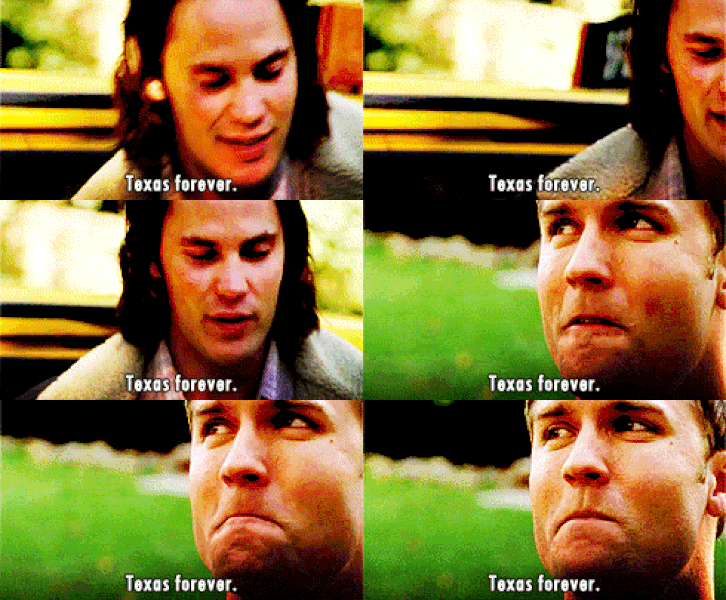
4 Or More Shots From 4 Or More Films is just what it says it is, 4 shots from 4 of our favorite films. As opposed to the reviews and recaps that we usually post, 4 Shots From 4 Films lets the visuals do the talking!
Today, I celebrate my home state!
4 Shots From 4 Texas Films
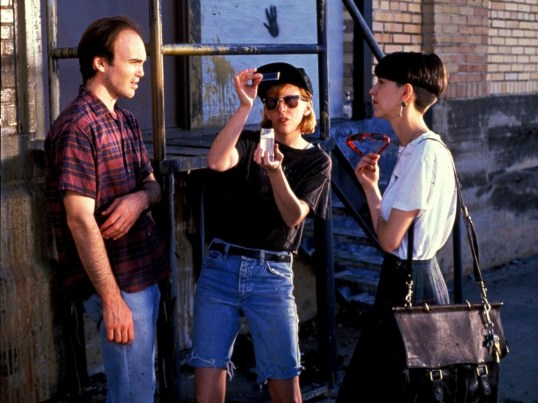
Slacker (1991, dir by Richard Linklater, DP: Lee Daniel)
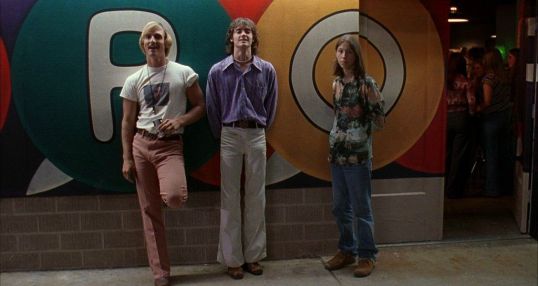
Dazed and Confused (1993, dir by Richard Linklater, DP: Lee Daniel)
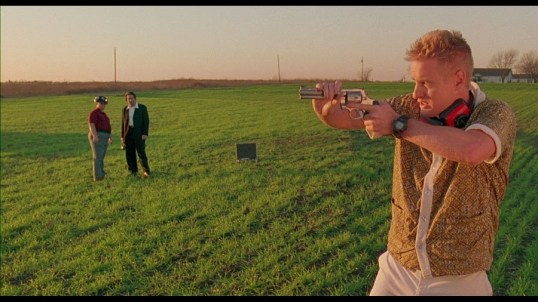
Bottle Rocket (1996, dir by Wes Anderson, DP: Robert Yeoman)

Rushmore (1998, dir by Wes Anderson, DP: Robert Yeoman)
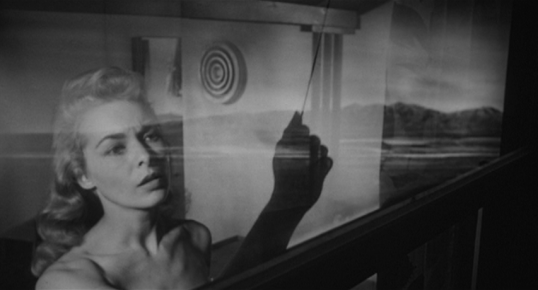
Touch of Evil (Universal 1958)
As some of our regular readers undoubtedly know, I am involved in a few weekly watch parties. On Twitter, I host #FridayNightFlix every Friday and I co-host #ScarySocial on Saturday. On Mastodon, I am one of the five hosts of #MondayActionMovie! Every week, we get together. We watch a movie. We tweet our way through it.
Tonight, at 10 pm et, I will be hosting #FridayNightFlix! The movie? 1958’s Touch of Evil, a true classic!
If you want to join us this Friday, just hop onto twitter, start the movie at 10 pm et, and use the #FridayNightFlix hashtag! I’ll be there tweeting and I imagine some other members of the TSL Crew will be there as well. It’s a friendly group and welcoming of newcomers so don’t be shy.
Touch of Evil is available on Prime!
See you there!
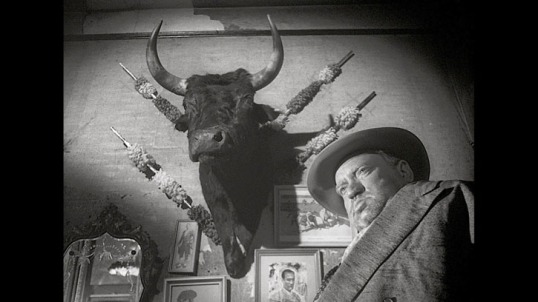
Touch of Evil (1958, dir by Orson Welles, DP: Russell Metty)
I like the cat.
Enjoy!
TSL’s review of Highway to Heaven will not be posted tonight so that we may bring you this special presentation….
My retro television reviews will return next week but until then, enjoy this blast from the past. 1973’s Rookie of the Year stars 11 year-old Jodie Foster as Sharon Lee, who causes some controversy when she joins her brother’s little league team. I picked out this program specifically for my sister, Erin, who loves baseball the way that I love movies!
It’s strange to think, while watching this, that Jodie Foster was just three years away from creating even more controversy with her Oscar-nominated role in Martin Scorsese’s Taxi Driver.
And now, here is Rookie of the Year….
Malibu, CA will not be reviewed tonight so that we might bring you this special presentation….
My retro television reviews will return next week but, for now, why not enjoy something even better than me discussing my hatred of Malibu, CA? 1982’s Wait Until Dark is a videotaped record of a stage production of Frederick Knott’s classic play about a blind woman who is menaced by three criminals. (I assume it was filmed for PBS. According to Lettrboxd, this aired on television on June 20th, 1982.) This play was famously adapted into an Audrey Hepburn film in 1967. The production below gives us a chance to see how the suspense plays out in a theatrical setting. The cast, including Katharine Ross and Stacy Keach, is excellent!
And now, here is Wait Until Dark….

It took me a while to really appreciated Jackie Brown.
I was nineteen and in college when I first watched the movie. A friend rented it and we watched it with the expectation that it would be another Tarantino film that would be full of violence, fast music, and stylish characterizations. And, of course, Jackie Brown did have all three of those. But it was also a far more melancholy film than what we were expecting and compared to something like Kill Bill, Jackie Brown definitely moved at its own deliberate pace. That’s a polite way of saying that, at times, the film seemed slow. It seemed like it took forever for the story to get going and, even once it became clear that Jackie Brown (Pam Grier) and Max Cherry (Robert Forster) were going to steal from Ordell Robbie (Samuel L. Jackson), it still felt like an oddly laid back heist. Robert de Niro, the film’s biggest star, played a guy who seemed to be brain dead. Bridget Fonda brought an interesting chaotic energy to the film but her character was disposed of in an almost off-hand manner. The whole thing just felt off. I appreciated the performances. I appreciated the music on the soundtrack. But I felt like it was one of Tarantino’s weaker films.
As I’ve gotten older, I’ve come to better appreciate Jackie Brown. First released in 1997 and adapted from a novel by Elmore Leonard, Jackie Brown finds Quentin Tarantino at his most contemplative. Indeed, Tarantino wouldn’t direct anything quite as humanistic until he did Once Upon A Time In Hollywood. If the heist seemed rather laid back, that’s because Jackie Brown really isn’t a heist film. It’s a film about aging, starring two icons of 70s exploitation. Robert Forster was 56 when he played bail bondman Max Cherry while Pam Grier was 48 when she was cast as Jackie Brown, the flight attendant turned smuggler. Jackie and Max two middle-aged people faced with a world that doesn’t really make much sense to them anymore. (Obviously, it’s easier for me to understand them now than it was when I was nineteen and I felt like the future was unlimited.) Max bails people out of jail and it’s obvious that he still has a shred of idealism within him. He actually does care about the people he gets out of jail and he’s disgusted by Ordell’s callous attitude towards the people who work for him. Jackie is a flight attendant who, when we first see her, looks like she could have just stepped out of a 1970s airline commercial. Ripping off Ordell isn’t just something that she’s doing for revenge or to protect herself, though there’s certainly an element of both those motivations in her actions. This is also her chance to finally have something for her. Jackie and Max are two lost souls who find each other and wonder where the time is gone. All of those critics who have wondered, over the years, when Quentin Tarantino would make a mature movie about real people with real problems need to rewatch Jackie Brown.
Of course, it’s still a Quentin Tarantino film. And that means we get a lot of scenes of Samuel L. Jackson talking. This is one of Jackson’s best performances. Ordell is definitely a bad guy and most viewers will be eager to see him get his comeuppance but, as played by Jackson, he’s also frequently very funny and definitely charismatic. One can understand how Ordell lures people into his trap. Jackson loves to watch video tapes of women shooting guns. He allows De Niro’s Louis to crash at his place and the scene where Ordell realizes that Louis is thoroughly incompetent is brilliantly acted by both men. And then you have Bridget Fonda, as a force of pure sunny chaos. Jackson, De Niro, and Fonda are definitely a watchable trio, even if the film rightly belongs to Pam Grier and Robert Forster.
The older I get, the more I appreciate Jackie Brown. This is the film where Tarantino revealed that there was more to his artistic vision than just movie references and comic book jokes. This film takes Tarantino’s style and puts it in the real world. It’s Tarantino at his most human.
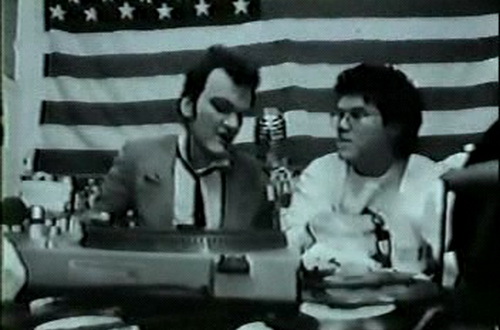
Clocking in at 37 minutes (largely because the majority of the film’s script was either not filmed or the footage itself was lost), My Best Friend’s Birthday tells the story of …. well, it’s not easy to say exactly what it tells the story of.
Clarence (Quentin Tarantino) and Mickey (Craig Hamann) are two pop culture-obsessed radio DJs. Clarence tries to snort cocaine while on the air but it turns out to just be itching powder. The two of them spend a good deal of time talking about the movies that they love. There’s a scene where Clarence has a conversation with an older man (played by Allen Garfield, who was Tarantino’s acting teacher at the time) who appears to be some sort of exploitation filmmaker. It’s not always easy to keep track of what Clarence and Mickey are doing, largely because the film’s soundtrack is noticeably muddy. Mickey is dumped by his girlfriend, Pandora (Linda Kaye), right before his birthday. (Mickey comes home to find Pandora gathering up all of her belongings.) Clarence, looking to give his friend a birthday that will cheer him up, ends up hiring a sex worker named Misty Knight (Crystal Shaw), who got into the business after being inspired by Nancy Allen’s performance in Dressed To Kill. Misty has a pimp named Clifford (Al Harrell). Mickey keeps getting interrupted whenever he tries to take a shower. The movie is full of scenes that are linked by everyone’s shared love of pop culture but it never really comes together as a truly coherent story. Again, this could be because the film was meant to 70-80 minutes long but only 37 minutes appears to have been filmed.
It’s not a totally hopeless film. Taken individually, the scenes are are generally blocked out well. Director Quentin Tarantino, who was still working as a video store clerk when he and his friends attempted to make this movie, obviously had a good instinct for camera angels and editing even before he hit it big. That said, the film is still undeniably amateurish. The sound quality is terrible. The actors, most of whom were not professionals, struggle with their dialogue. Tarantino gave himself a big role and, to put it charitably, Tarantino has always been a better director than actor. Not surprisingly, Allen Garfield does well in his fast-talking role and Tarantino himself is better in the Gardfield scenes that he is in the rest of the film. Crystal Shaw is likable as Misty Knight, bringing some much needed energy to her scenes.
This is a film that one watches solely because of who directed it. If the film has actually been completed, it would have been Tarantino’s first movie. By most accounts, the film was shot over four years and, eventually, everyone got bored with it and moved on. It’s perhaps for the best as My Best Friend’s Birthday, with its grainy black-and-white imagery and it sometimes forced humor, feels more like a Kevin Smith film than a Tarantino film. (Or at least, that’s the feeling one gets from the surviving footage. Clarence and Misty’s relationship is a lot like the relationship between Clarence and Alabama in True Romance so who knows where My Best Friend’s Birthday would have ended up going.) That said, if you’re a fan of Tarantino, this film makes for an interesting watch. It’s a chance to see Tarantino when he was young and still finding his voice. It’s a project that doesn’t work but there’s enough hints of Tarantino’s talent to make it must-viewing for fans of his work.
 Through the Shattered Lens