10 Films For The Week (7/6/25)


America, Hell Yeah!

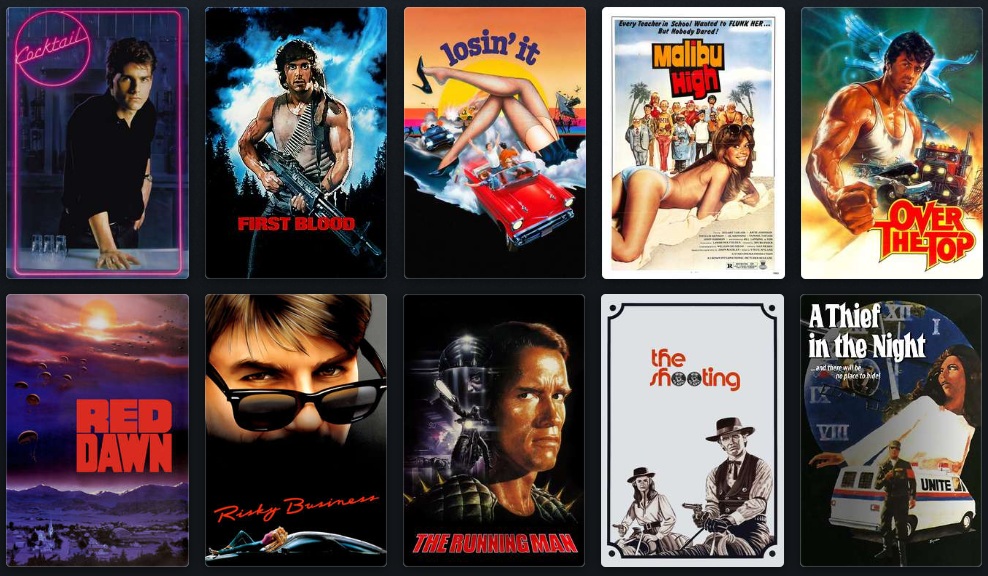
As I always do, I celebrated Independence Day by watching one of the greatest films ever made, the original Red Dawn (1984).  The communists land in America and try to take over and, sadly, they succeed to a large extent.  However, a group of high school students led by Patrick Swayze and Charlie Sheen refuse to go down without a fight.  Say it with me, “Wolverines!”  This film really doesn’t get the respect that it deserves.  Not only is it well-acted but, despite it’s reputation, it doesn’t glamorize war.  Most of the Wolverines do not survive.  C. Thomas Howell, the most committed of the Wolverines, loses a bit of his soul and goes from being a fresh-faced high school student to someone who can execute a former friend without a moment’s hesitation.  While evil Russian William Smith plots to destroy the rebels, Ron O’Neal comes to respect their dedication.  Still, in the end, the best thing about this film is that it’s shamelessly patriotic and unapologetically anti-communist.  “Avenge me!” Harry Dean Stanton yells and you better do it.  The film can be found on Max.

Warren Oates, Hell Yeah!

Yesterday was the birthday of the great character actor Warren Oates.  Brad reviewed two of his films and Jeff shared a scene from Strips.  I would like to recommend the enigmatic 1966 western The Shooting (1966).  Deliberately paced and philosophically-minded, this film features Oates in a leading role.  Millie Perkins and Jack Nicholson (who wrote the screenplay) make for a wonderfully menacing duo of villains.  The Shooting can be found on Tubi.

Sylvester Stallone, Hell Yeah!

Today is Sylvester Stallone’s birthday.  As far as I’m concerned, Stallone’s best performance was in First Blood (1982).  The sequels, which were a bit more simplistic and jingoistic than the first film, have tended to overshadow just how good Stallone was as a troubled veteran who just wanted to get a cup of coffee and who found himself being thrown in jail for refusing to “go across the border.”  Of course, it’s not just Stallone who is great in First Blood.  Brian Dennehy and Richard Crenna were, arguably, never better than when they played Sheriff Teasle and Col. Troutman.  First Blood was one of the first films to really be sympathetic to the plight of the Vietnam veteran.  Rambo may snap and destroy an entire town but, after what he’s put through, you won’t blame him.  First Blood is on Tubi!

Of course, if you really want a fun and wonderfully absurd Stallone film, check out the arm wrestling epic, Over The Top (1987).  Stallone is Hawk, a truck driver who makes his living as an arm wrestler.  Robert Loggia tries to Stallone’s son away so Stallone has to prove himself to be the world’s greatest arm wrestler.  I distrust anyone who doesn’t love Over The Top It can be viewed on Tubi.

Tom Cruise, Hell Yeah!

If you’re still in the mood to celebrate Tom Cruise’s birthday, Losin’ It (1982) features Cruise as a teenager in the 60s who goes down to Mexico with his friends so that he can …. well, lose it.  While the comedy is often predictable, Losin’ It is still an amiable enough film and Cruise gives a likable performance and his character has a really sweet romance with Shelley Long.  The great John Stockwell is also in the film.  Director Curtis Hanson went on to do L.A. ConfidentalLosin’ It is on Tubi!

It’s become fashionable to criticize Risky Business (1983), released a year after Losin’ It, for being a materialistic film but …. eh, screw that.  Between the soundtrack, the surreal direction, Guido the Killer Pimp, and Tom Cruise bringing out the sunglasses at night, Risky Business is one of the best films of the 80s and it can be viewed on AMC+’s Prime Channel.

In Cocktail (1988), Tom Cruise  is the last barman poet!  A guilty pleasure for sure but a pleasure, nonetheless.  Cocktail can be viewed on AMC+.

The Running Man, Hell Yeah!

There’s a remake of The Running Man coming out this year.  I’ll live it to you to decide whether or not that’s a necessary thing.  I will say that the original Running Man (1987) holds up very well, as both an action film and a media satire.  You can smell the cigarettes and gin whenever Richard Dawson is on screen.  The Running Man can be viewed on Tubi.

Beach Fun, Hell Yeah!

Saturday was National Bikini Day.  If you missed your chance to celebrate, you can make up for it be watching Malibu High (1979), a film from the legendary production company, Crown International.  It’s all fun and games the beach until a young woman is dumped by her boyfriend and decides to become a professional assassin.  Malibu High can be viewed on Tubi.

The End of the World, Hell Yeah!

If you’re in the mood for some end of the world action, the low-budget, independently made A Thief In The Night (1972) is currently on Tubi, along with its sequels, A Distant Thunder, Image of the Beast, and The Prodigal PlanetA Thief In The Night is not necessarily a great film but it does have a few moments of dream-like intensity.  And it’s short!  It can be viewed on Tubi.

Click here for last week’s entry!


Retro Television Review: Homicide: Life On The Street 3.16 “Law & Disorder”


Welcome to Retro Television Reviews, a feature where we review some of our favorite and least favorite shows of the past!  On Sundays, I will be reviewing Homicide: Life On The Street, which aired from 1993 to 1999, on NBC!  It  can be viewed on Peacock.

This week, Munch gets away with murder.

Episode 3.16 “Law & Disorder”

(Dir by John McNaughton, originally aired on February 24th, 1995)

This week’s episode of Homicide gets off to a strange start, with a cameo from Chris Noth as Law & Order‘s Detective Mike Logan.  (Logan appeared early in the history of Law & Order, before North became known as the ill-fated Mr. Big on Sex And The City.)  Logan is transporting a prisoner to Baltimore and that prisoner is played by none other than John Waters!  Meeting Pembleton at the Amtrak station, Logan proceeds to bitch about Baltimore.  Pembleton bitches about New York.  Waters comments that Edgar Allan Poe hated New York.  When Pembleton says that Waters will be heading to prison but at least it will be a Baltimore prison, Waters says that’s why he didn’t fight extradition.  It’s a cute scene, though, as I watched it, I was struck by just how better of an actor Andre Braugher was than Chris Noth.  Noth delivered all of his line like a TV actor.  Braughter delivered his dialogue like a poet.

As for the rest of the show, we get several plotlines.  Bayliss is investigating the death of Gordon Pratt but, because Pratt shot Bolander, Felton, and Howard, none of his fellow detectives are that concerned about solving his murder.  Bayliss comes to suspect that it was a homicide detective who shot Pratt.  He asks Pembleton, Lewis, and Munch for their alibis and none of them really have a good one.  Myself, I think it’s pretty obvious that Much shot Pratt.  Munch’s hero-worship of Bolander, his anger after Pratt walked out of the station, all of it pretty much makes him the main suspect.  Lewis, who is still struggling to come to terms with Crosetti’s suicide, seems like he would be more likely to deal with his anger by drinking.  Even if he doesn’t want to admit it, Pembleton is too much of a wannabe Jesuit to do the eye for an eye thing.  Munch, though …. yeah, there’s no way Munch didn’t kill Gordon Pratt.  John Munch is a murderer.  (Okay, to be clear, the show leaves it ambiguous and never outright states that Munch was the killer but it’s still kind of obvious.)

And he gets away with it.  Bayliss tells Giardello that he’s followed-up every lead and that the Pratt case is just going to have remain open and go cold.  “Won’t help your clearance level,” Giardello shrugs.  It’s a decision that’s going to haunt Bayliss but the show suggests that Bayliss sees it as a sort of cosmic justice.  Before announcing that the case is going to go cold, Bayliss has a conversation with Pembleton and, of course, Bayliss brings up the Adena Watson case.  The Arabist got away with killing Adena Watson so Bayliss is going to let someone — Munch, let’s be honest — get away with killing Gordon Pratt.

Munch isn’t just a murder suspect in this episode.  He’s also a laughing-stock as a nude photo of him from his hippie days is the centerpiece of a photography exhibition that’s being put on by an ex-girlfriend (Valerie Perrine).  It was kind of strange, watching the episode go from Much being a suspected murderer to Munch being the comedic relief.  Still, I always enjoy it when the show remembers that Munch is basically a drug-addled survivor of the 60s.

Felton returns to the squad room, cleared for light duty.  He insists on going out to a crime scene with Giardello, leading to Felton stumbling around, making a fool of himself, and then throwing up afterwards.  Giardello informs Felton that he’s not a good detective in his current state but then again, Giardello adds, Felton has never been a good detective.  Ouch!  That’s harsh.  Of course, it’s also true.  As I’ve said before, I would not want sweaty, racist, borderline illiterate Beau Felton investigating the murder of anyone close to me.

Finally, Pembleton and Lewis investigated an apparently random shooting.  Pembleton thought the gunshot came from the projects.  Lewis insisted that the gunshot came from the white side of the neighborhood.  It turned out Lewis was right but Pembleton was unapologetic, saying he would investigate the case the exact same way if he had to do it all over again.  Watching this storyline, I found myself thinking about how black characters on television often feel interchangeable and they rarely have much of a personality beyond being a white person’s idea of what their black best friend might be like.  Homicide featured three prominent black characters — Lewis, Pembleton, and Giardello — and all three of them are portrayed as being unique individuals with their own different ways of viewing the world, the job, and each other.  Even today, when every television show is desperate to make sure everyone knows how “committed to diversity” they are, it’s rare to see a network show like Homicide, where black characters are portrayed as being individuals as opposed to just stereotypes.  This is something for which Homicide definitely deserves a bit more credit.

This was a good episode.  It appears the murder of Gordon Pratt will never be solved.  Of course, we all know Much did it.

Scene That I Love: The Rocky III Training Montage


Today, we celebrate Sylvester Stallone’s birthday with one of the most definitive montages of the 1980s.  From 1982’s Rocky III (which was directed by Stallone himself), here is the famous Rocky/Apollo training montage.

4 Shots From 4 Films: Special Sylvester Stallone Edition


4 Or More Shots From 4 Or More Films is just what it says it is, 4 shots from 4 of our favorite films. As opposed to the reviews and recaps that we usually post, 4 Shots From 4 Films lets the visuals do the talking!

Today, the Shattered Lens wishes a happy birthday to Sylvester Stallone!  It’s time for….

4 Shots From 4 Sylvester Stallone Films

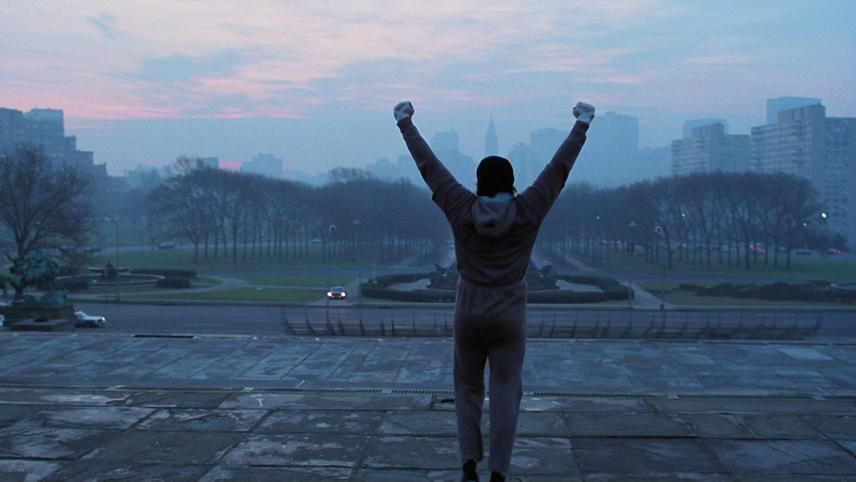
Rocky (1976, dir by John G. Avildsen, DP: James Crabe)

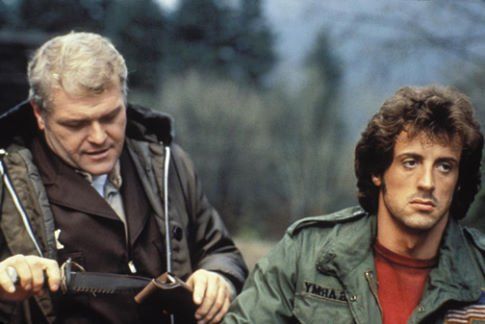
First Blood (1982, dir by Ted Kotcheff, DP: Andrew Laszlo)

Rocky III (1982, dir by Sylvester Stallone, DP: Bill Butler)

Rambo: First Blood Part II (1985, dir by George Pan Cosmatos, DP: Jack Cardiff)


Late Night Retro Television Review: Check It Out! 3.21 “Educating Leslie”


Welcome to Late Night Retro Television Reviews, a feature where we review some of our favorite and least favorite shows of the past!  On Saturdays, I will be reviewing the Canadian sitcom, Check it Out, which ran in syndication from 1985 to 1988.  The entire show is currently streaming on Tubi and Peacock!

This week, Leslie pursues a dream but there’s a demon in a bottle getting in the way…. (*cue the dramatic music*)

Episosde 3.21 “Educating Leslie”

(Dir by Alan Erlich, originally aired on February 7th, 1988)

Leslie has a chance to win an acting scholarship.  The only problem is that his acting coach, Darla Fontaine (Corrine Conley), is an alcoholic who believes her glory days are far behind her.  Leslie pours out her liquor, convinces her to give life another chance, and wins the scholarship after putting on a putty nose and delivering a monologue from Cyrano De Bergerac.

This episode is certainly not something that I would normally expect from Check It Out! but there it is.  Check It Out! has, over the course of three seasons, been a consistently silly show, one that featured Howard getting into impossibly dumb situations and the majority of the cast just going along with the weirdness of it all.  There was one episode, during the first season, where Edna thought she was pregnant and cried when she discovered she wasn’t.  Up until this episode, that was the only dramatic moment to be found in Check It Out!

It’s a bit odd that, for it’s second-to-last episode, Check It Out! would do an episode that goes so strongly against the usual style of the series but Check It Out! was never a particularly consistent show and the fact that Sean Roberge’s stockboy makes an appearance in this episode after a long absence suggests that this episode was probably meant to air earlier in the season than it did.  As well, Viker is prominently featured in this episode but no one mentions the fact that, just last week, his wife gave birth.

As for the episode itself, it was a bit overwritten and Corrine Conley overacted in the role of the alcoholic diva.  But, as usual when he was given a spotlight episode, Aaron Schwartz nailed it as Leslie and elevated every scene that was in.

This episode ends with Leslie winning his scholarship.  As next week’s episode is just a clip show, one could argue that, as a series, Check It Out! ended with Leslie finally achieving his dream.  That’s not a bad ending.

Next week …. the finale!

Retro Television Review: The American Short Story Episode 5: Bernice Bobs Her Hair


Welcome to Retro Television Reviews, a feature where we review some of our favorite and least favorite shows of the past!  On Saturdays, I will be reviewing The American Short Story, which ran semi-regularly on PBS in 1974 to 1981.  The entire show can be purchased on Prime and found on YouTube and Tubi.

This week, we have an adaptation of the short story that brought F. Scott Fitzgerald his first great literary success.

Episode #5 “Bernice Bobs Her Hair”

(Dir by Joan Micklin Silver, originally aired in 1976)

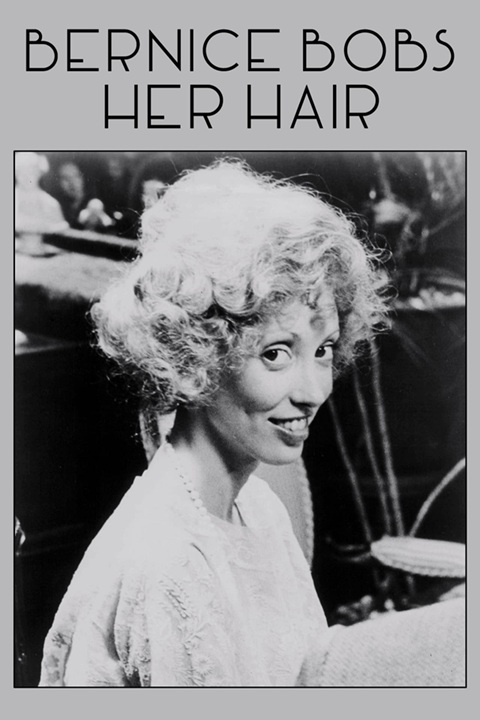
In this adaptation of a short story by F. Scott Fitzgerald, Shelley Duvall plays Bernice.  Bernice is a socially awkward young woman from the country who, at the start of the glorious 1920s, spends the summer in the city with aunt (Polly Holliday) and her popular cousin, Marjorie (Veronica Cartwright).  Though initially annoyed with having to watch over her cousin, Marjorie eventually decides to teach Bernice how to be a “society girl.”  Marjorie teachers her how to flirt and, even more importantly, Marjorie spreads a rumor that Bernice is not only going to get her hair bobbed (which, at that time, was associated with being a flapper) but she’s going to let all the boys watch.  Bernice goes from being seen as someone who is boring to being someone who is daring and rebellious.  The rumor of her bobbing her hair gives Bernice a mystique, one that will only last as long as there’s a possibility of it happening.

Soon, all of the boys are interested in Bernice and Bernice becomes even more popular than Marjorie.  Marjorie, with her long braids and her cultivated manners, watches in jealousy and horror as the boy across the street, Warren (Bud Cort), suddenly goes from liking Marjorie to liking Bernice.  Marjorie is herself in love with Warren, though one gets the feeling that the love was more about the idea of Warren pining for her than any real desire to be with him.  Realizing that the key to Bernice’s popularity is due to her unfulfilled promise to get hair bobbed, Marjorie tricks Bernice into actually doing it.  Suddenly, Bernice is no longer as popular and her aunt is no longer comfortable with her being seen as a member of the family.  The party invitations dry up and Marjorie once again claims her place as the long-haired society queen.  Bernice prepares to return home but she has one more trick up her sleeve before she leaves.

I liked this one.  Joan Micklin Silver gets wonderful performances from her cast and shows that she, more than even Robert Altman, understood how to best utilize Shelley Duvall’s quirky screen presence.  While this adaptation is dominated by Duvall, I also really enjoyed Bud Cort’s earnest eccentricity as Warren.  (“I’m getting old.” — 19 year-old Warren.)  Finally, Veronica Cartwright gave an intelligent performance, one that kept Majorie from just becoming a one-dimensional villain.  A look at the mystique of popularity and the way that social standards are casually accepted and rarely questioned, Bernice Bobs Her Hair works as both a wonderful short story and a witty short film.

Live Tweet Alert: Watch The Last Man On Earth With #ScarySocial!


As some of our regular readers undoubtedly know, I am involved in a few weekly live tweets on twitter.  I host #FridayNightFlix every Friday, I co-host #ScarySocial on Saturday, and I am one of the five hosts of #MondayActionMovie!  Every week, we get together.  We watch a movie.  We tweet our way through it.

Tonight, for #ScarySocial, I will be hosting 1964’s The Last Man On Earth!

If you want to join us on Saturday night, just hop onto twitter, start the film at 9 pm et, and use the #ScarySocial hashtag!  The film is available on Prime and Tubi!  I’ll be there co-hosting and I imagine some other members of the TSL Crew will be there as well.  It’s a friendly group and welcoming of newcomers so don’t be shy!