Late Night Retro Television Review: Degrassi High 2.10 “Showtime Part One”


Welcome to Late Night Retro Television Reviews, a feature where we review some of our favorite and least favorite shows of the past!  On Sunday, I will be reviewing the Canadian series, Degrassi High, which aired on CBC and PBS from 1989 to 1991!  The series can be streamed on YouTube and Tubi

This week, tragedy comes to Degrassi.

Episode 2.10 “Showtime, Part One”

(Dir by Kit Hood, originally aired on January 21st, 1991)

When last we saw Claude Tanner, Caitlin was dumping him because he left her behind when the police showed up at the nuclear facility that they were vandalizing.  Claude then refused to go to court to support her, saying that his parents wouldn’t understand.  That was during the first season.

Other than appearing in the opening credits, Claude was not in the first nine episodes of the second season of Degrassi High.  When he did return in tonight’s episode, he made Degrassi history.

When we first see Claude, he’s wearing what appears to be a pirate shirt and he’s looking over a piece of paper.  His beard is a bit thicker.  His earing is a lot bigger.  When he sees Caitlin, he tries to talk to her.  Caitlin tells him to get lost and then asks Maya why Claude just can’t leave her alone.

Claude is auditioning for the school talent show.  He reads a monologue that he’s written, one about an ice queen who makes the entire world dark.  Lucy and Bronco tell him that his monologue is too depressing for the show.  Claude accuses all of the students of being sheep and storms out of the auditorium.

The next day, Claude gives Caitlin a flower, goes to his locker and retrieves a gun, and then shoots himself in the washroom.  His body is later discovered by Snake.

Over the course of Degrassi’s long history, many students would die.  Tragically, Claude would not be the only one to commit suicide.  One was shot while trying to shoot up the school.  The class clown was stabbed to death by a student from a rival high school.  Another died in a car accident.  However, Claude was the first.

And I have to say that I was really impressed with how Degrassi High handled Claude’s suicide.  Snake was traumatized.  Caitlin was left feeling numb.  Some students talked about how much Claude was hurting and also about their own struggles with depression.  Lucy and Spike both said that Claude’s actions were selfish and that he killed himself at school because he wanted to hurt all of the other students.  When it comes to Claude, I have to admit that I find myself agreeing with Lucy and Spike.  When Caitlin returns home from school, she finds a bouquet of flowers and a note from Claude waiting for her.  In the note, Claude says that he loved her and the words are obviously meant to make her feel responsible for his death.  The episodes ends with Caitlin throwing the flowers away.  Claude would probably say that proves that Caitlin doesn’t care about him.  I think it proves that Claude was a jerk who killed himself specifically to get back at Caitlin.

That doesn’t make Claude’s suicide any less tragic.  Any suicide is a tragedy, especially when the person in question hasn’t even reached adulthood.  As one of Claude’s friends says in this episode, Claude was sad and he didn’t feel he had anyone he could talk to.  That is a tragedy and sadly, even though this episode aired over 30 years ago, there’s a lot of people who still feel that way.  We live in a world where more and more people view life as being not a gift but instead a burden.  It’s sad.  Myself, I’m a strong believer in life and finding things to love.  I love my boyfriend.  I love my sisters.  I love writing.  I love movies.  I love cats.  I love knowing that, even when I’m at my lowest, happiness is in the future.  Most importantly, I love myself.  Never give up.

This episode was sensitive and thought-provoking and Degrassi as its best.  Next week, the fallout from Claude’s suicide continues.

Song of the Day: Raiders March by John Williams


Since today is the birthday of Harrison Ford, it seems only appropriate that today’s song of the day should come from John Williams’s score of one of Ford’s best films, Raiders of the Lost Ark!

Here is Raiders March, composed by John Williams.

Retro Television Review: Homicide: Life On The Street 3.17 “The Old and the Dead”


Welcome to Retro Television Reviews, a feature where we review some of our favorite and least favorite shows of the past!  On Sundays, I will be reviewing Homicide: Life On The Street, which aired from 1993 to 1999, on NBC!  It  can be viewed on Peacock.

This week, Bolander and Howard return to Homicide.

Episode 3.16 “The Old and the Dead”

(Dir by Michael Fields, originally aired on March 3rd, 1995)

When Giardello discovers that Colonel Granger (Walt MacPherson) has been hiring his brother-in-law’s shady plumbing firm to do unnecessary repairs at the city’s police stations, he leaks the story to the press.  When the scandal forces Granger out, Captain Barnfather is promoted to replace him.  Giardello thinks that, with his years of experience, he’ll be the obvious replacement for Barnfather.  Instead, the captain position is offered to Russert.  As Barnfather explains it, the mayor is aware that the majority of the voters in Baltimore are women.  When Giardello mentions that even more of the voters are black, Barnfather explains that the mayor’s leadership team already has a black man, him.

Giradello is not happy and he doesn’t hold back from letting Russert know about his displeasure.  I have to say that I respected Giardello for not holding back.  Russert has less experience than Giardello and, from what we’ve seen of her, she doesn’t appear to be as good at her job as Giardello is.  I mean, let’s be honest.  Russert had an affair with Beau Felton, of all people!  It’s a little bit hard to respect her judgment.

While Giardello was once again failing in his efforts to move up, both Howard and Bolander returned to duty.  Howard, on light duty, still manages to solve a case.  Bolander, meanwhile, is now wearing a hat to cover up the surgery scars that crisscross his head.  Ned Beatty, as usual, gave a good performance as Bolander.  I like Ned Beatty.  For some reason, I’ve never really liked Stanley Bolander.  I think it might be because he’s always complaining about something.  Maybe it’s because I’m still annoyed by the amount of unnecessary time that the first season spent on Bolander’s love life.  Or maybe it’s because Munch is devoted to the guy and Bolander still treats him like crap every chance that he gets.  For whatever reason, Bolander has always just kind of annoyed me.  That was the case with this episode.  I’m not saying I felt good about it.  Bolander was shot in the head and nearly died!  He has every right to be grumpy.  But there is just a part of me that is like, “If you hate your job so much, just retire.  Otherwise, stop bitching about everything!”

Finally, Bayliss and Felton worked surprisingly well together as they investigated a skeleton found in someone’s backyard.  It turned out that two men has never reported the death of their father so that they could continue to collect his social security checks.

As much as I complain about Bolander, this was not a bad episode.  This was a good example of an episode where the mysteries and plotlines were less important than just watching everyone in the cast play off of each other.  As of this season, the ensemble has really come together as a tight unit and each character has really come to life as an individual.  That’s one reason why I enjoyed watching Bayliss and Felton work together.  It was interesting to see how they interreacted and to compare it to how Bayliss worked with Pembleton and Felton with Howard.

Finally, this episode featured a cute cameo from the late Tim Russert, who is introduced as being Megan’s cousin.  Felton says that he never misses Meet the Press.  For some reason, I doubt that.

Late Night Retro Television Review: Check It Out! 3.22 “For The Book”


Welcome to Late Night Retro Television Reviews, a feature where we review some of our favorite and least favorite shows of the past!  On Saturdays, I will be reviewing the Canadian sitcom, Check it Out, which ran in syndication from 1985 to 1988.  The entire show is currently streaming on Tubi and Peacock!

We all knew this day would come.  It’s time for the final episode of Check It Out!

Episode 3.22 “For The Book”

(Dir by Alan Erlich, originally aired on February 14th, 1988)

Cobbs is celebrating its 50th anniversary and its putting together a commemorative book of memories.  Howard calls the staff into his office and asks them what they think should be included in the book.

“Remember that time….” Christian starts and yes, it’s a clip show.

The final episode of Check It Out! is indeed a clip show.  Really, it’s not a terrible way for the show to go out.  For 30 minutes, the show relives what the writers believed were the best moments of season 3.  (There were a few clips from seasons one and two but, for the most part, this episode was dominated by recent clips.)  Some of the clips — like Howard doing a vaudeville routine — went on for way too long.  Some, like Marlene filling in as Howard’s secretary, did not go on long enough.  It was a typical clip show.

And so ends Check It Out!  What can I say about this show?  The first season was okay.  The second season was a trainwreck.  The third season was uneven but, overall, surprisingly good.  The show was built around Don Adams but it was the supporting characters — Aaron Schwartz, Jeff Pustil, Kathleen Laskey, Gordon Clapp — who got most of the laughs.  Looking back, I really can’t think of any episodes of Check It Out! that really stand-out in my mind.  The show was the epitome of pleasant but unmemorable entertainment.

Next week, we’ll have a new show here.  For now, let’s end things with the Check It Out! theme song.

Lisa Marie’s Week In Television: 7/6/25 — 7/12/25


Back by popular demand, here’s a few thoughts on what I watched this week.

Big Brother (24/7. CBS, Paramount+, Pluto)

Yep, Big Brother is back.  I skipped last season because my Dad was dying and I really wasn’t in the mood for reality television.  I back this season though and I’m covering things over at the Big Brother Blog!

Gordon Ramsay’s Secret Service (Hulu)

I binged the latest Gordon Ramsay series on Tuesday.  I’m not really sure how Gordon Ramsay watching taped footage of a restaurant was all that different from what he usually does on Kitchen Nightmares but whatever.  We live in a conspiracy-crazed age and I guess Ramsay taking advantage of that.  This show killed my appetite.  I don’t care if Gordon helped out the owners, every restaurant featured on this show should be closed down and burned to the ground.

It’s Always Sunny In Philadelphia (Wednesday Night, FX)

17 seasons!  That’s how long It’s Always Sunny In Philadelphia has been on the air.  It’s one of the most consistently funny shows on television and the cast is brilliant.  It’s one of the few shows that has ever made me laugh so hard that I actually fell of the couch.  (Actually, it managed to do twice but both times, it was because Frank injured himself.)  That said, the first two episodes of the new season didn’t do much for me but the problem was more with me than with the show.  The premiere, in which we saw the Gang’s side of their visit with Abbott Elementary, was a victim of my own sky high expectations.  The second episode, in which Frank slipped into a coma and Dee had to watch over him, brought back a lot of painful memories of sitting at my Dad’s beside when he went into hospice care.  Even when he slipped into his final coma, I still kept telling myself that he was going to wake up at any moment and just be fine.  It’s not the show’s fault.  These episodes just weren’t for me.

Planet Rock (Night Flight Plus)

This is an interview show that is now on Night Flight Plus.  I watched on episode on Friday night and the raw, unfiltered interview …. eh.  I have ADD, I can only listen to people talk for so long.

The Prisoner (Night Flight Plus)

Jeff and I have been watching this classic and enigmatic show with our friend Pat.  It stars Patrick McGoohan as a nameless man who might be a secret agent.  After he has an argument with his boss, he finds himself trapped in a mysterious village.  We watched the second episode on Saturday morning.  Jeff and Pat have seen the whole show before but this is a first time viewing for me.  I’m enjoying it so far.  Rover, the big balloon security thingee, is cute!  The second episode features Leo McKern chewing up the scenery.  It was very entertainign.

Snub (Night Flight Plus)

I watched an episode on Friday night.  This music show, from the 90s I believe, had a sort of underground feel to it that I appreciated.


10 Movies For The Week (7/12/25)


Who doesn’t love Tom Hanks?

Tom Hanks celebrated his birthday this week.  Here’s a few of his films that you can find online.

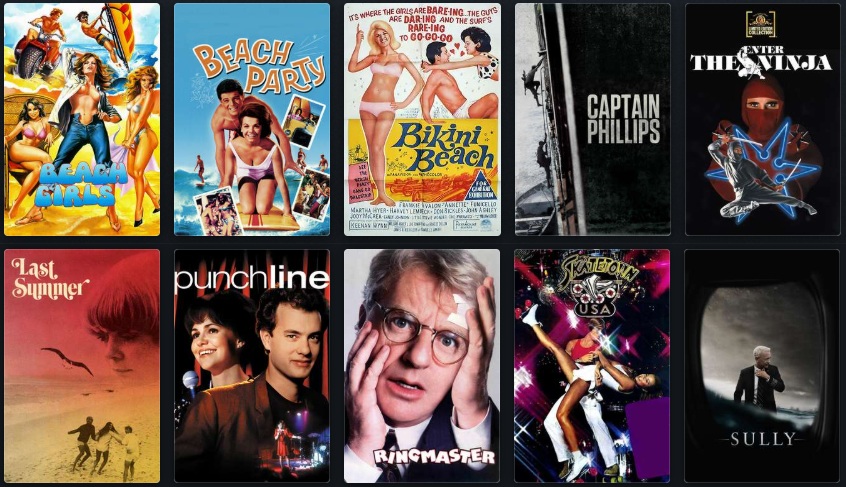
Directed by Clint Eastwood, Sully (2016) features Tom Hanks in the role airline pilot Chesley Sullenberger.  The film not only recreates Sullenberger’s famous landing in the Hudson but also the subsequent attempts by the government to scapegoat Sully for the incident.  This film features one of Hanks’s best performances, bringing humanity to a man who, on cultural level, was viewed as being almost a mythological hero.  Hanks is likable and, this being an Eastwood film, the government is portrayed as being both corrupt and incompetent.  What’s not to like?  Sully is on HBOMAX.

When it comes to Tom Hanks, it’s hard to pick his best performance.  I would probably go with Captain Phillips (2013), featuring Hanks as the captain of a boat that is taken prisoner by modern-day pirates.  Like Sully, this film is based on a true story and, as he did in Sully, Hanks brings to life a character based on a real-life person.  The final scene is devastating and features some of the best acting that I’ve ever seen from anyone.  Somehow, Hanks was not nominated for Best Actor for his performance here.  Captain Phillips can be viewed on Netflix.

Punchline (1988) is a bit of an oddity.  Sally Field is miscast as a housewife trying to make it as a stand-up.  That said, Tom Hanks gives a strong and dramatic performance as a self-centered and self-destructive comic.  Punchline can be viewed on Tubi.

It’s Summer!

It’s summer!  I just got back from my vacation.  (I took it a month early because I needed to be back here to start my summer job of covering Big Brother for the Big Brother Blog.)  If you can’t get to the beach this summer, you can at least watch both Beach Party (1963) and Bikni Beach (1964) on Tubi and discover how people used to celebrate the summer months.  Yes, both of these films are undeniably dated and a bit corny but who cares?  Sometimes, it’s fun to watch something from a more innocent era.  Beach Party and Bikini Beach are both on Tubi.

If you want a slightly racier beach party, The Beach Girls (1982) is a Crown International production that features all of the nudity (male and female), raunchy humor, and drug jokes that you could hope for.  That said, it also features a very likable and energetic cast.  It can be viewed over at the Internet Archive.

If you’re looking for a slightly more sinister vacation, Last Summer (1969) features Richard Thomas, Bruce Davison, and Barbara Hershey as three rich kids and Catherine Burns as the insecure girl who tries to hang out with them.  Hershey and Burns both give outstanding performances and the end result is a creepy and disturbing coming-of-age story.  It can be viewed at the Internet Archive.

Odds and Ends

Enter The Ninja (1981) features my man, the one and only Franco Nero, as a ninja!  This is a film that represents everything that made Cannon great.  Plus, how can you resist Franco, literally winking at the camera?  Enter The Ninja is on Prime.

Skatetown USA (1979) is the greatest film that “ever rolled!”  Okay, maybe not the greatest but can you resist Patrick Swayze cracking a whip while rolling around on roller skates?  Skatetown USA can be viewed at the Internet Archive.

Finally, if you want to see just how strange fame can be, check out Ringmaster (1998), a film that “celebrates” Jerry Springer.  (Jerry appears as a version of himself.)  Bizarrely enough, this film does feature two truly good performances, from Jaime Pressly and Molly Hagan as a trailer park mother and daughter who appears on Jerry’s show.  Ringmaster is on Prime.

Click here for last week’s recommendations!

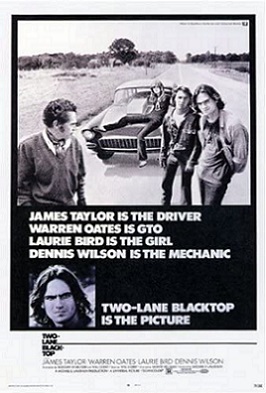
The Unnominated #18: Two-Lane Blacktop (dir by Monte Hellman)


Though the Academy of Motion Picture Arts and Sciences claim that the Oscars honor the best of the year, we all know that there are always worthy films and performances that end up getting overlooked.  Sometimes, it’s because the competition too fierce.  Sometimes, it’s because the film itself was too controversial.  Often, it’s just a case of a film’s quality not being fully recognized until years after its initial released.  This series of reviews takes a look at the films and performances that should have been nominated but were, for whatever reason, overlooked.  These are the Unnominated.

The 1971 road film, Two-Lane Blacktop, is a movie about four people whose real names are never revealed.  Indeed, their names are never as important as what they’re driving.

Named after his car, GTO (Warren Oates) is a talkative man who likes to brag on himself and who picks up hitchhikers so he can talk to them.  We don’t learn much about GTO’s background.  For someone who talks as much as he does, GTO doesn’t reveal much about who he is when he’s not driving.  It’s easy to imagine him as a salesman, traveling across the country and desperately trying to make his quota before the sun goes down.  With the way that he picks up hitchhikers and his need to convince everyone of his own skill and prowess behind the wheel, it’s easy to imagine that he’s probably recently divorced and still dealing with suddenly being on his own.  He seems to have something to prove, not only to everyone around him but especially to himself.  One gets the feeling that the life he had suddenly collapsed and he took to the road to escape it all but he still hasn’t reached the point where he can handle truly being alone.  For all of his talk, it doesn’t take long to notice that GTO isn’t quite as worldly as he claims he is.

A chance meeting leads to GTO getting into a cross-country race with The Driver (James Taylor) and the Mechanic (Dennis Wilson), two young men who are driving a 1955 Chevy and who make their money by engaging in street races.  (They’re also quick to steal a license plate when no one’s looking.)  The Driver and the Mechanic don’t talk a lot and, when they do, it’s in terse and somewhat awkward sentences.  (Both Taylor and Wilson were musicians who made their acting debut with this film.  Their natural stiffness and lack of emotion works well for their characters.)  The Driver and the Mechanic seem to communicate solely through driving.  They pick up The Girl (Laurie Bird) and both the Driver and the Mechanic seem to have feelings for her but it’s pretty obvious that their true love will always be for their car.

Two-Lane Blacktop is a road movie, a movie that really doesn’t have much of a plot (the cross-country race soon ceases to be a real race) but which does have some beautiful footage of America in 1971 and an outstanding performance from the great character actor, Warren Oates.  Easy Rider was advertised as being a film about a man who looked for America and couldn’t find it.  That’s actually a better description of Two-Lane Blacktop, a film about three uniquely American men who have embraced the car culture that is at the center of life in America but who are still, more or less, lost in their home country.  Oates, always talking and refusing to give up or even acknowledge the fact that he doesn’t really know much about how cars work, represents the so-called silent majority.  Wilson and Taylor are the next generation, their long-hair branding them as outsiders while their skill with a car and their desire win represents what we’re told is the best of the American competitive spirit.  What makes the film unsettling is the feeling that all three of them are using their cars as a way to avoid dealing with the reality of their lives.

Two-Lane Blacktop may sound a bit pretentious and it is.  The metaphors get a bit heavy-handed.  That said, as directed by Monte Hellman, it’s both a gorgeous travelogue and a valuable time capsule, a document of life in the late 60s and early 70s.  Hellman directed the film on the road.  When we see the Mechanic stealing a license plate so no one down south will know that he and the Driver are actually from California, it’s a powerful scene because it was actually filmed on location, in the South.  This isn’t a film that was shot on a backlot.  This is a film that was shot across America and it captures the country at a time when, much like today, no one was really sure what the future held for its politics or its culture.  It may be a film about three men who are obsessed with cars but it’s also a portrait of a country in an almost directionless state of turmoil.

Two-Lane Blacktop was promoted as being the next Easy Rider but it turned out to be a notorious box office failure.  James Taylor and Dennis Wilson never did another movie.  Warren Oates continued as a busy character actor while Laurie Bird died of an intentional drug overdose in 1979.  Director Monte Hellman’s directorial career continued but his days of being courted by the major studios were over.  However, as the years passed, audiences started to discover Two-Lane Blacktop and now, it’s considered to be a cult classic.

Given its failure at the box office, Two-Lane Blacktop was ignored by the Academy.  The Oscar for Best Picture went to another film that featured a memorable car chase, The French Connection.  While Two-Lane Blacktop may not have deserved to win Best Picture (not over nominees like The French Connection, The Last Picture Show, Fiddler on the Roof, and A Clockwork Orange), it certainly is far more memorable movie than the fifth film nominated that year, Nicholas and Alexandra.  If nothing else, Warren Oates deserved a nomination for his supporting performance.  The Academy may not have embraced Two-Lane Blacktop but, fortunately, film lovers eventually would.

Previous Entries In The Unnominated:

  1. Auto Focus 
  2. Star 80
  3. Monty Python and The Holy Grail
  4. Johnny Got His Gun
  5. Saint Jack
  6. Office Space
  7. Play Misty For Me
  8. The Long Riders
  9. Mean Streets
  10. The Long Goodbye
  11. The General
  12. Tombstone
  13. Heat
  14. Kansas City Bomber
  15. Touch of Evil
  16. The Mortal Storm
  17. Honky Tonk Man

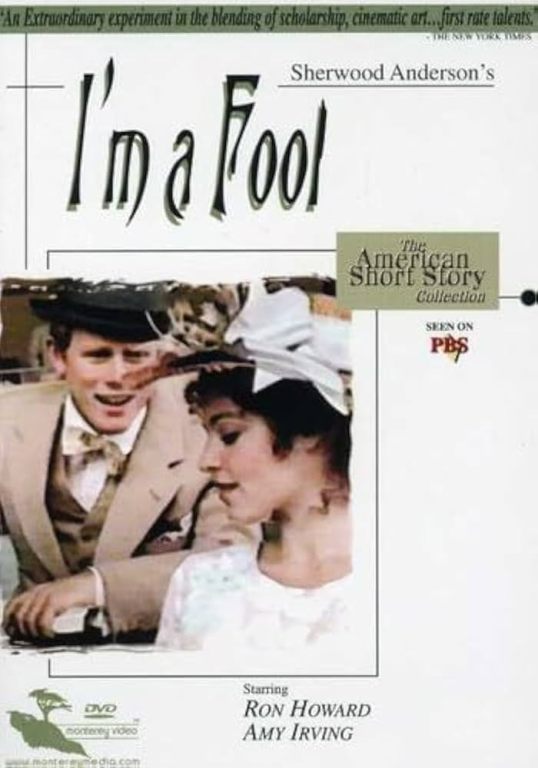
Retro Television Review: The American Short Story Episode 6: “I’m A Fool”


Welcome to Retro Television Reviews, a feature where we review some of our favorite and least favorite shows of the past!  On Saturdays, I will be reviewing The American Short Story, which ran semi-regularly on PBS in 1974 to 1981.  The entire show can be purchased on Prime and found on YouTube and Tubi.

This week, after an introduction from Henry Fonda, The American Short Story presents a short film about a young man discovers that he’s a fool.

Episode 6 “I’m A Fool”

(Dir by Noel Black, originally aired in 1977)

In this adaptation of a Sherwood Anderson short story, Ron Howard (back in his younger days, before he became better-known as a director) stars as Andy.  Andy is a young man who runs away from his safe and comfortable life in search of adventure.  He gets a job as a “swipe,” which was apparently what people used to call the folks who took care of the horses at a racetrack.  He and an older black man named Burt (Santiago Gonzalez) travel the racing circuit in Ohio and form a tentative friendship.  Burt can tell that, for all of his attempts to come across as being tough and worldly, Andy is a virgin who gets drunk easily and who has no idea what the real world is like.

Andy claims to be a proud member of the working class but then he meets a pretty and rich girl named Lucy (Amy Irving).  Andy introduces himself as being Walter, the son of a wealthy stable owner.  Andy and Lucy spend the day together and Andy comes to realize that he loves her and that she seems to love him as well.  But then Andy realizes that she only knows him as Walter and that it’s too late to tell her the truth.  “I’m a fool,” Andy says before leaving with Burt.

This 35-minute short film featured good performances from Ron Howard and Amy Irving and some lovely shots of the countryside, showing why a life of wandering through rural Ohio might appeal to a young person searching for meaning.  There’s a great scene in a bar where the outclassed Andy tries to prove himself to a bunch of snobs by drinking whiskey and smoking a cigar.  Unfortunately, the strength of Sherwood Anderson’s original short story is that it puts us straight into Andy’s head and allows us to see the thought process that led to him coming up with his foolish lie.  Despite featuring narration from Ron Howard, this adaptation doesn’t really accomplish that and, as a result, the viewer is always on the outside looking in.

It’s not a bad adaptation but it can’t beat sitting down and reading the original story.