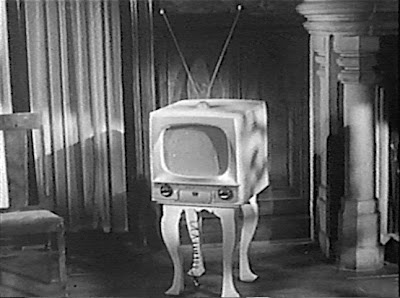
1957’s Final Curtain is a short, 22-minute film in which a mysterious man (Duke Moore) wanders around a creepy and seemingly abandoned theater. While Dudley Manlove (who played Eros the Alien in Plan Nine From Outer Space) provides narration, the man sees many strange things in the theater. What is real and what is merely a hallucination? Watch to find out!
Final Curtain was envisioned, by director Edward D. Wood, as being the pilot for a horror anthology series. Though none of the networks were interested in buying Wood’s proposed series, Wood considered Final Curtain to be his finest film and it certainly is a bit more atmospheric than the typical Wood film. The role of the mysterious man was written for Bela Lugosi but, after Lugosi passed away, Duke Moore was cast in the role instead.
1963’s The Sadist opens with three teachers driving to a baseball game.
Ed (Richard Alden), Doris (Helen Hovey), and Carl (Don Russell) are planning on just having a nice night out but their plans change when they have car trouble out in the middle of nowhere. They pull into a gas station/junkyard that happens to be sitting off the side of the road. The teachers look for the owner of the gas station or at least someone who works there. Instead, what they find is Charlie Tibbs (Arch Hall, Jr,) and bis girlfriend, Judy Bradshaw (Marilyn Manning).
Charlie is carrying a gun and he demands that the teachers repair their car and then give it to him so that he and Judy can continue their journey across the country. Charlie has been switching cars frequently, largely because the cops are looking for him. That’s because Charlie has been killing people all up and down the highway. The intellectual teachers find themselves being held hostage by Charlie and Judy, two teenagers who may not be as smart as them but who have the killer instinct that the teachers lack.
It’s interesting to watch The Sadist after watching Eegah! Arch Hall, Jr. and Marilyn Manning played boyfriend and girlfriend in that one as well but neither Hall nor Manning were particularly credible in their roles. Hall seems uncomfortable with the whole teen idol angle of his role while Manning seemed a bit too mature for the role of a teenager. In The Sadist, however, they’re both not only believable but they’re terrifying as well.
Charlie and Judy are almost feral in their ferocity, with both taking a disturbing glee in taunting the teachers. Charlie kills without blinking and Judy enjoys every minute of it. It’s easy to imagine Charlie and Judy at a drive-in showing of Eegah!, laughing at the sight of the caveman getting gunned down by the police and never considering that violence in real life is different from killing in the movies. The teachers discover that it’s impossible to negotiate with Charlie and that Charlie’s promise not to try to kill them if they fix the car is ultimately an empty one. And yet the teachers, dedicated to education and trying to reach even the most difficult of students, struggle to fight back. They’re held back by their conscience, something that Charlie does not possess. It’s intelligence vs instinct and this film suggests that often, intelligence does not win.
It’s a pretty intense and dark film, one that makes great use of that junkyard setting and which is notable for being the first film to feature the cinematography of Vilmos Zsigmond. For those who appreciate B-movies, it’s memorable for showing that, when he wasn’t being pushed to be a squeaky-clean hero who sang sappy ballads in films directed by his father, Arch Hall, Jr. actually was capable of giving a very good performance.
The Sadist was based on the true-life crimes of Charlie Starkweather and Caryl Ann Fugate. Interestingly enough, their crimes also inspired Terence Malick’s Badlands.
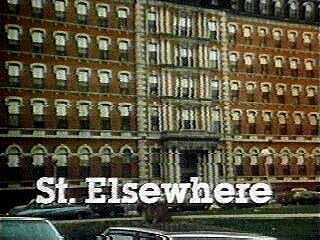
Welcome to Retro Television Reviews, a feature where we review some of our favorite and least favorite shows of the past! On Fridays, I will be reviewing St. Elsewhere, a medical show which ran on NBC from 1982 to 1988. The show can be found on Hulu and, for purchase, on Prime!
This week, St. Elsewhere tries something different.
Episode 2.19 “The Women”
(Dir by Bruce Paltrow, originally aired on March 28th, 1984)
Four women share a room at St. Eligius.
Evelyn Milbourne (Eva La Galliene) is elderly, headstrong, and rich. She’s also about to lose her independence as it’s clear that she can no longer live on her own.
Rose Orso (Brenda Vacarro) is only in her 40s but is already showing signs of dementia. She struggles to remember who she is. Her husband is becoming a stranger. At one point, she grabs some scissors. At first, it seems like she might be planning on attacking one of the other women. Instead, she cuts her hair and doesn’t do a very good job of it.
Paige (Blythe Danner) is in for a nose job and she tells a lot of stories about her glamorous life outside of the hospital. Towards the end of the episode, she confesses that she’s actually a pathological liar who got her nose job because she didn’t have anything better to do.
The fourth woman never speaks. She’s in a coma. She dies in the middle of the night and is rolled out of the room with disturbing efficiency.
This episode was basically a play. A few of the regulars got scenes of their own but, for the most part, the action stayed in that one hotel room and it focused on the four women. When I first realized what this episode was going to be like, I really thought I was going to hate it. It seemed like the sort of thing that would bring out the worst in the show’s writers. Instead, it turned out to be a very well-done and extremely well-acted episode, one that reminded the viewer that every patient has their own story. After spending most of this season focusing on the doctors, The Women announced that the patients matter too.
Gregory Walcott appeared in a lot of good films over the course of his long career. He had supporting roles in major blockbusters. He was a friend and frequent collaborator of Clint Eastwood’s. In 1979, he played the sheriff in the Oscar-nominated Norma Rae.
That said, he will probably always be most remembered for playing Jeff, the patriotic pilot, in Ed Wood’s 1957 masterpiece, Plan Nine From Outer Space. Walcott gave probably as good a performance as anyone could in Plan 9, though that didn’t prevent the film from wrong being declared one of the worst ever made. Walcott, for most of his career, was not a fan of Plan 9 but, in the years before he passed away in 2015, Walcott’s attitude towards the film mellowed considerably. He even appeared in Tim Burton’s Ed Wood.
In this scene from Plan 9, Walcott shows how to deal with a smug alien.
That was one of the first thoughts I had while watching 2024’s Manson: Summer of Blood. The film opens with Charles Manson (Wes Gillum) sitting in a prison cell, with his long scraggly hair and his gray beard. (Actor Wes Gillum doesn’t really look like Manson but he does possess a certain resemblance to Josh Brolin.) Manson is being interviewed about his crimes by an almost unnaturally calm man named Jacob Cohen (Joseph Boehm).
Manson goes through the usual facts of his early life. He talks about not knowing who his father was. He talks about spending the majority of his life in prison. Even before he became famous as the leader of the Family, Manson was a career criminal. Manson talks about trying to pursue a musical career in Los Angeles. He kisses Dennis Wilson’s feet. He gets angry when he feels that record producer Terry Melcher (Chad Bozarth) cheated him out of a record deal. He talks about picking up hitchhikers and making them a part of the Family. And, as he speaks, he uses all of the familiar phrases. He talks about how the members of the Family are “your children.” Blah blah blah blah.
For all the attention that Charles Manson was given over the course of his life, he was essentially a third-rate intellect who picked up a few key phrases in the 50s and 60s and repeated them ad nauseum. Manson’s words and justifications meant nothing but, because he said them so often and they were slightly more poetic than the usual career criminal blathering, there were people got into their heads that Manson was some sort of rebel philosopher. The truth of the matter was that the only people dumber than Manson were the ones who decided to live with him at Spahn Ranch.
Unfortunately, dumb people can still hurt people. That was certainly the case with Charles Manson. The film depicts the murders of Gary Hinman, Sharon Tate, Jay Sebring, Abigail Folger, Voytek Frykowski, and, to a lesser extent, Leno and Rosemary LaBianca. It’s difficult to watch and that’s the way it should be. I remember, when Once Upon A Time In Hollywood came out, there were a lot of people who objected to Rick Dalton setting “Sadie” on fire in his pool. If those people knew even the slightest details of what Sadie — real name: Susan Atkins — actually did and said to Sharon Tate and her unborn child, they would understand why she got exactly what she deserved in Tarantino’s reimagining of that terrible night.
As for Manson: Summer of Blood, my initial reaction while I was watching it was that it was another movie that exploited a real life tragedy. I found myself wondering why we should care what Charles Manson had to say about himself and his crimes. But that was before the final ten minutes of the film. The final ten minutes of the film features a wonderful twist, one that truly gave that old bore Manson the ending that he deserved. I’m still not sure that we needed another film about Charles Manson and his crimes but I do know it would be nice if most serial killer films ended the same way was Manson: Summer of Blood.
Today would have been the 101st birthday of the pioneering indie director, Edward D. Wood, Jr!
Today’s song of the day is the theme from Tim Burton’s 1994 biopic of the director. In my opinion, this remains Burton’s first film. Burton also directed the musical video below while the great Toni Basil choreographed. And, best of all, the dancer is named Lisa Marie!
This October, I’m going to be doing something a little bit different with my contribution to 4 Shots From 4 Films. I’m going to be taking a little chronological tour of the history of horror cinema, moving from decade to decade.
Today, we continue our look at the 1940s.
4 Shots From 4 Horror Films
House of Frankenstein (1944, dir by Erle C. Kenton)
The Uninvited (1944, dir by Lewis Allen)
House of Dracula (1945, dir by Erle C. Kenton)
The Picture of Dorian Gray (1945, dir by Albert Lewin)
First released in 1962, Eegah! has a reputation for being one of the worst films ever made.
Usually, whenever I come across a film with that type of reputation, my natural instinct is to be a contrarian and to argue that the film is not so much bad as its just misunderstood. I can’t really do that with Eegah!Eegah! is a legitimately bad movie, though I don’t know if I’d call it one of the worst. It’s a low budget vanity project and, quite frankly, I think snarkiness is better directed at big budget vanity projects. Eegah! is bad but it’s also bad enough to be entertaining in a train wreck sort of way and there’s something to be said for that.
While driving at night, 30 year-old teenager Roxy Miller (Marilyn Miller) runs over Eegah (Richard Kiel), a giant caveman who has somehow gone unnoticed up until that moment. Eegah runs off into the desert. Roxy tells her boyfriend, Tom (Arch Hall, Jr.) and Tom’s father, Robert (Arch Hall, Sr., who also directed) about her encounter. While Tom plays his guitar and sings a sappy ballad, Robert goes into the desert in search of Eegah. When Robert doesn’t return, Tom and Roxy grab a dune buddy and head into the desert.
Roxy finds Eegah and Robert first. Eegah grabs Roxy and takes her to a nearby cave, where Robert is waiting for them. Eegah can’t speak and does most of his communication by swinging around a club and being a bit too handsy. (There’s one painting on the wall of his cave but it’s not very good.) Eegah, despite his fearsome appearance, seems to actually be pretty amiable. But then he falls in love with Roxy and becomes rather possessive. When Roxy gives Robert a shave, the bearded Eegah demands a shave as well. He’s fairly handsome without the beard but still, it’s hard not to get grossed out by the way he tries to lick up the thick shaving cream that’s covering his face.
Eventually, Tom rescues Roxy and Robert and not a minute too soon! There’s a party in town and Tom and his band are scheduled to play! Eegah, upset that Roxy has left him, picks up his club, puts on his best animal skin, and heads into town on a rampage!
Eegah (and, yes, I’m dropping the exclamation point) was produced and directed by Arch Hall, Sr. (He receives a story credit as well.) It was actually one of many movies that Hall Sr. made, all in an effort to make his son into a film star. In Eegah, Arch Hall, Jr. performs two songs and dances with Roxy. The film positions him as a teen idol but Hall, Jr. doesn’t seem to be particularly comfortable with the role. Of course, it doesn’t help that he’s working with an absolutely terrible script.
I do, however, appreciate the performance of Richard Kiel as Eegah. Kiel does the best that anyone could with the role, playing him as being giant who simply doesn’t understand that you can’t walk around with the a club in public without someone calling the police. Poor Eegah! He doesn’t even know what the police are.
Eegah! (yeah, I’ll return it’s exclamation point for the next-to-last paragraph) is a film that is so ineptly done and poorly written that it becomes rather fascinating to watch. It’s boring only if you’re the type who can’t appreciate terrible dialogue, terrible camera placement, and the type of acting that can only be found in a film that was directed, produced, and essentially written by one guy trying to make his reluctant son into a star.
Arch Hall, Jr. was far less interested in being a star and instead became a pilot and pursued his love of flying. As for Richard Kiel, he went on to play Jaws, one the greatest of the James Bond henchmen.
Today, we pay respect to Edward D. Wood, Jr. on the date of his birth. He was born 101 years ago today.
Some films need no introduction and that’s certainly the case with Wood’s 1957 masterpiece, Plan 9 From Outer Space.
Plan9 is a film like no other, a film that mixes UFOs with zombies and which ends with a rather sincere plea for world peace. When Eros the Alien explains that the Solarnite bomb could destroy the entire universe, the film’s hero, airline pilot Jeff, doesn’t point out that Eros’s logic doesn’t make sense. Instead, he just says that he’s glad that America is the one that has the bomb. “You’re stupid! Stupid minds!” Eros shouts before Jeff flattens him with one punch. Go Jeff! Don’t take any backtalk from that judgmental alien!
From Criswell’s introduction to Tor Johnson’s rise from the dead to Lyle Talbot casually standing with his hands in his pockets while a UFO explodes above him, Plan9 is a true classic of some sort.
As some of our regular readers undoubtedly know, I am involved in a few weekly watch parties. On Twitter, I host #FridayNightFlix every Friday and I co-host #ScarySocial on Saturday. On Mastodon, I am one of the five hosts of #MondayActionMovie! Every week, we get together. We watch a movie. We tweet our way through it.
Tonight, at 10 pm et, I will be hosting #FridayNightFlix! The movie? Career Opportunities!
If you want to join us this Friday, just hop onto twitter, find Career Opportunities on Prime, start the movie at 10 pm et, and use the #FridayNightFlix hashtag! I’ll be there happily tweeting. It’s a friendly group and welcoming of newcomers so don’t be shy.


 Through the Shattered Lens