Book Review: How To Be A Superhero by Mark Edlitz


Who has not wanted to be a super hero?  When I was growing up, I wanted to be an X-Man until I realized that I would rather be the first American to play the Doctor on Doctor Who.  Over the years, many actors and actresses have actually gotten to be super heroes on both the small and big screen.  Some of them, like Hugh Jackman, became stars as a result.  Others, like Adam West and anyone who has ever played Superman, spent the rest of their career dealing with being typecast.  Of course, a few, like George Clooney, were lucky to survive the experience with any sort of career at all.

How To Be A Super HeroIn the new book How To Be A Superhero, Mark Edlitz interviews 30 actors, asking them what it was like to be a hero and how the experience changed (or did not change) their lives and careers.  Edlitz is a good interviewer and all of the conversations are full of interesting tidbits and trivia but what really sets this book apart is the wide variety of people who Edlitz interviews.

While Edlitz interviews everyone who you would expect to be interviewed in a book like this (Adam West, The Adventures of Superman’s Jack Larson, Dean Cain, Clark Gregg, Tom Hiddleston, and others), he also finds the time to speak to and acknowledge some of the lesser known heroes.  John Wesley Shipp and John Haymes Newton (who, in the early 90s, respectively played The Flash and Superboy) both share bittersweet memories of only getting to play their iconic heroes for one season.  Helen Slater reflects on playing the title character in 1984’s Supergirl.  In one of the book’s best interviews, Nicholas Hammond talks about playing Spider-Man on TV in the 1970s and how, as a result of getting into the role, he once tried to foil an actual mugging.  The cast of Roger Corman’s Fantastic Four share their disappointment when they discovered that their movie was never going to be released.  Even Chip Zien, who voiced Howard the Duck, offers up a few less-than-positive memories.

Not everyone that Edlitz interviewd wore a costume.  Leonard Nimoy, in one of his final interviews, assures Edlitz that Spock would win a fight against Kirk.  George Lazenby talks about coming to terms with the experience of briefly being James Bond.  Roger Moore’s memories are much more light-hearted.

Edlitz also speaks with some of the people who worked behind the scenes.  Especially interesting is his interview with screenwriter Tom Mankiewicz, who talks about what it was like to write for both James Bond and Superman.  Among many other stories, Mankiewicz tells how he introduced Sean Connery and Christopher Reeve at a party.  When Reeve asked what he should do if Superman turned out to be a hit, Connery advised him to hire a good lawyer and sue the producers for more money.

Insightful and always enjoyable to read, How To Be A Superhero is a book that belongs in the library of anyone who has ever dreamed of being a hero.

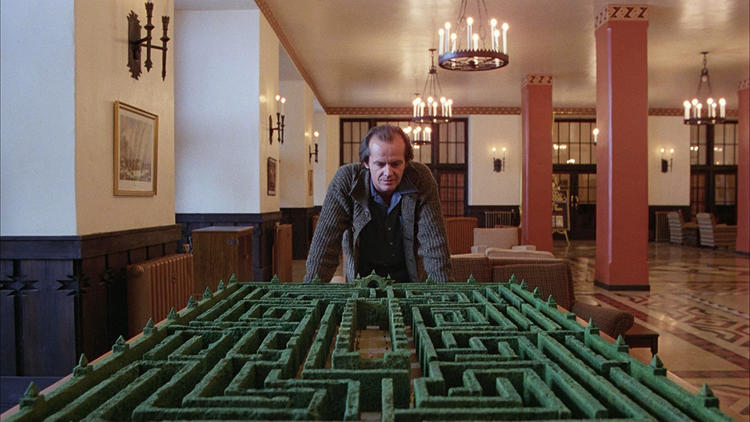
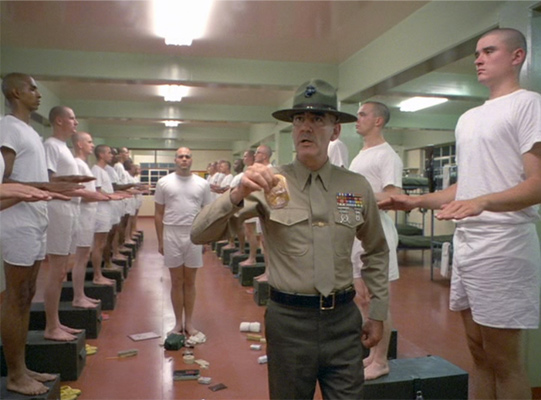
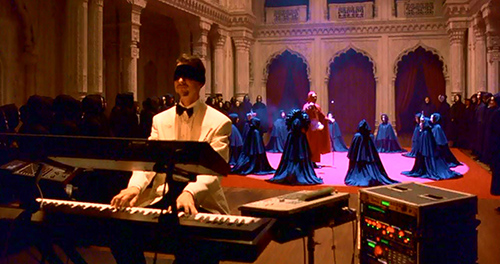
4 Shots From 4 Films: A Clockwork Orange, The Shining, Full Metal Jacket, Eyes Wide Shut


These 4 shots from 4 films are in honor of Stanley Kubrick’s birthday.

4 Shots From 4 Films

A Clockwork Orange (1971, directed by Stanley Kubrick)

A Clockwork Orange (1971, directed by Stanley Kubrick)

The Shining (1980, directed by Stanley Kubrick)

The Shining (1980, directed by Stanley Kubrick)

Full Metal Jacket (1987, directed by Stanley Kubrick)

Full Metal Jacket (1987, directed by Stanley Kubrick)

Eye Wide Shut (1999, directed by Stanley Kubrick)

Eyes Wide Shut (1999, directed by Stanley Kubrick)


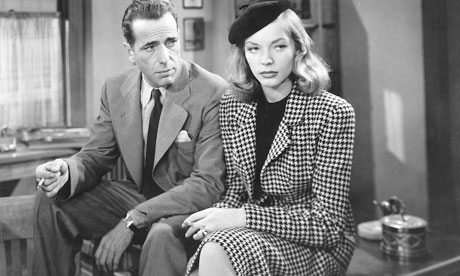
4 Shots From 4 Films: The Big Sleep, The Lady In The Lake, The Long Goodbye, The Big Sleep


Happy belated birthday, Raymond Chandler.  These four shots from four films show four different versions of Chandler’s most famous creation, P.I. Philip Marlowe.

Four Shots From Four Films

The Big Sleep (1946, directed by Howard Hawks)

The Big Sleep (1946, directed by Howard Hawks)

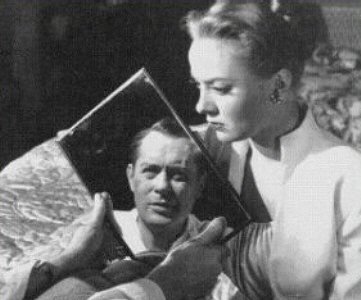
The Lady In The Lake (1947, directed by Robert Montgomery)

The Lady In The Lake (1947, directed by Robert Montgomery)

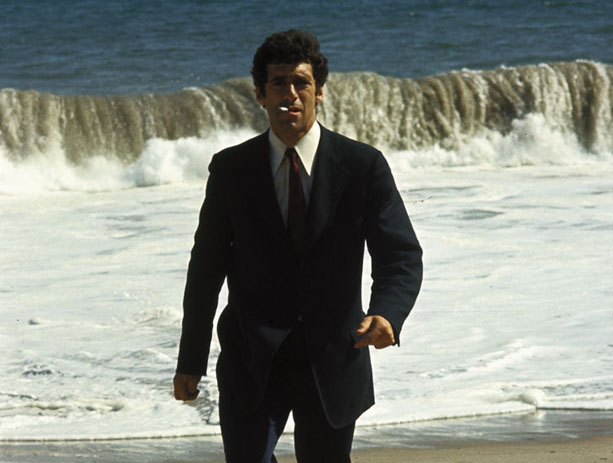
The Long Goodbye (1973, directed by Robert Altman)

The Long Goodbye (1973, directed by Robert Altman)

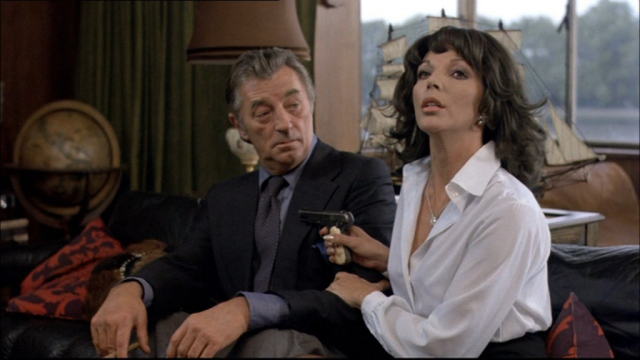
The Big Sleep (1978, directed by Michael Winner)

The Big Sleep (1978, directed by Michael Winner)


In Memory of Alex Rocco


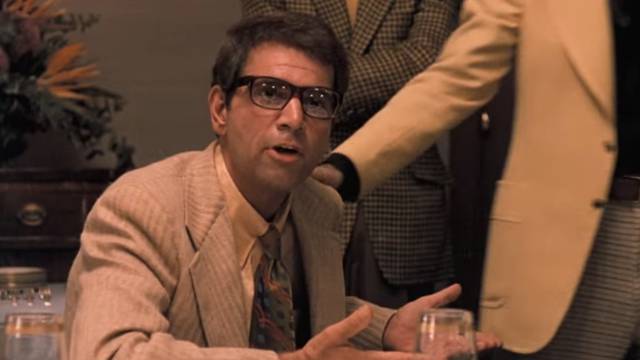
Alex Rocco

Alex Rocco, the gravelly voiced actor who died last Saturday, had something that set him apart from other tough guy actors.  Alex Rocco had life experience.

As a young man living in Boston, Rocco was associated with members of the infamous Winter Hill Gang.  In 1961, a member of the Charleston Mob named George McLaughlin allegedly made a pass at Rocco’s girlfriend.  Two other members of the Winter Hill Gang retaliated by beating up McLaughlin, setting off the Irish Mob War of the 1960s.  By the time the war ended, the Charleston Mob had been eradicated and Alex Rocco had relocated to California, where he worked as a bartender and took acting lessons from Leonard Nimoy.

Alex Rocco was best known for appeared in The Godfather as Moe Greene, the Las Vegas “businessman” who made his bones while Michael Corleone was still going out with cheerleaders.  However, Alex Rocco’s career began long before The Godfather, when he played a gangster in the Batman TV series and made his feature debut in Russ Meyer’s Motropsycho! 

In 1973, Alex Rocco returned to Boston, playing a bank robber in The Friends of Eddie Coyle.  This sadly underrated crime film was based on the real life history of the Winter Hill Gang.  When stars Robert Mitchum and Peter Boyle wanted to research their roles, it was reportedly Alex Rocco who arranged for them to spend time with their real-life counterparts.

Rocco did not just play gangsters.  He also appeared as cops in films like The Boston Strangler, Detroit 9000, and The Stunt Man.  However, for many, Alex Rocco’s best non-gangster role will always be providing the voice of studio head Roger Meyers, Jr. on The Simpsons.  Meyers was just as determined to make cartoons and protect his father’s legacy as Moe Greene was to keep the Corleones out of Las Vegas.

So, for one last time, let us put on our glasses and tell Bart and Lisa to “mail it to me next week when I might have cared.”  Rest in peace, good gentleman.  Thank you for the memories.

5 Heroes From Marvel’s Golden Age Who Deserve Their Own Movie


Timely-Comics-Marvel-Bucky-Captain-America-Red-Skull-Sub-Mariner

Captain America is the best remembered and most prominent hero from the Golden Age of Marvel Comics (or, as the company was known back then, Timely Comics).  One reason why Captain America: The First Avenger was so successful was because it exploited the nostalgia that audiences had for that golden age, a time when the world was united against the greatest evil known to man and there was no doubt who was fighting for good and who was fighting for evil.

However, Captain America was not the only Marvel super hero fighting gangsters and Nazis during the 1940s.  If Marvel Studios ever decides to take another trip back to World War II, these five Golden Age heroes would be worthy additions to the MCU.

The Blonde Phantom
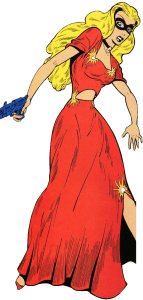
The Blonde PhantomCreated by Stan Lee and artist Syd Shores and first introduced in 1946, The Blonde Phantom was a part of Marvel’s post-war attempt to appeal to young female readers.

Originally from Hoboken, New Jersey, Louise Grant was the secretary to private detective Mark Mason.  Bored with her job and in love with Mark, Louise would regularly grab a .45 caliber pistol, don the sultry disguise of the Blonde Phantom, and help her boss solve his cases.  While Mark barely noticed his loyal secretary, he fell in love with the Blonde Phantom.

It would be tricky to reimagine the Blonde Phantom from a modern perspective but I think it could be done.  Instead of emphasizing Louise’s unrequited crush on the sexist Mark, a modern Blonde Phantom film would focus on how becoming the Blonde Phantom allows Louise to discover her own inner strength.  As Agent Carter proved, there is an audience for a strong female character in a period setting.

Claire Voyant

Claire_Voyant_(Earth-616)Introduced in 1940 and created by George Kapitan and Harry Sahle, Claire Voyant (who was also known as The Black Widow, long before the first appearance of Natasha Ramanoff) is considered to be the first costumed female super hero and also one of the darkest.

A medium, Claire is possessed by Satan and used to put a curse on the Wagler Family.  After most of the family is killed in a car accident, the sole remaining Wagler shoots and kills Claire.  Claire immediately goes to Hell, where Satan himself gives her the power to kill by simply touching her victim’s forehead.  Satan then sends Claire back among the living, on a mission to kill evil doers so that Satan can claim their souls before they have a chance to repent and ask for forgiveness.

Along with her dark origin story and her flirtatious relationship with Satan, Claire Voyant was distinguished by both her lack of remorse when it came to killing and for having the sharpest eyebrows of almost any character from the Golden Age.  As the star of her own MCU film, she would provide an interesting contrast to the wholesomeness of Captain America.

The Destroyer
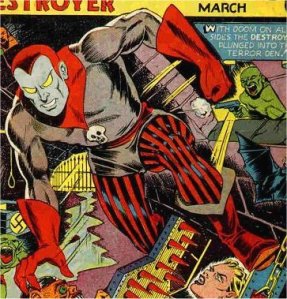
The DestroyerA journalist-turned-spy, Keen Marlow was captured behind-the-lines in Nazi Germany.  Held in a prison-of-war camp, Marlow met Prof. Eric Schmitt, an anti-Nazi German scientist who had created a serum that was similar to the one that was used to transform frail Steve Rogers into Captain America.  After taking the serum, Marlow donned a mask and a dark costume and used his new powers to battle the Nazis from within Germany.

The Destroyer was a popular character during the Golden Age, though he was never as prominent as Captain America, The Human Torch, or the Submariner.  The Destroyer became far more interesting when his origin was retconned in the 1970s and it was revealed the Keen Marlow was an alias used by British aristocrat Brian Falsworth.  Before the start of World War II, Falsworth had been a prominent supporter of appeasement.  By becoming The Destroyer, Falsworth both defended his country and sought redemption.  When Falsworth eventually took on yet another costumed identity (Union Jack), his friend Roger Aubrey took over the role of the Destroyer.

The Destroyer was one of the first super hero characters to be created by Stan Lee.  Not only is his origin similar to Captain America’s (Cap was introduced in March of 1941 and the Destroyer made his debut nine months later) but it is also a forerunner to Iron Man’s.

Namor the Submariner

SubmarinerNamorCreated by artist and writer Bill Everett, Namor was the son of human boat captain Leonard McKenzie and Fen, the daughter of the emperor of the undersea kingdom of Atlantis.  As a hybrid, Namor had the ability to live under water but, with his human appearance, he could also go above the surface and safely mix with human society as well.  While the arrogant and hot-tempered Namor had little use for humanity (with the exception of New York City policewoman Betty Dean), he did side with the Allies in the war against the Nazis.

Despite being a prominent member of the Marvel Universe for over 70 years, Namor has yet to even appear in a movie.  Not only was he one of the most popular of the Marvel Golden Age heroes but his battle with the original Human Torch has regularly been cited as being the birth of the Marvel Universe.  Unlike many Golden Age characters, Namor remains active today, sometimes fighting for humanity and sometimes trying to destroy it.

There have been efforts to make a movie about Namor but, so far, none of them have been successful.  Marvel Studios president Kevin Feige has said that there are many deals and contracts that need to be sorted out before it can be definitely determined who owns the rights to the character.  It will probably be a while before the Submariner swims to a theater near you.

The Phantom Reporter
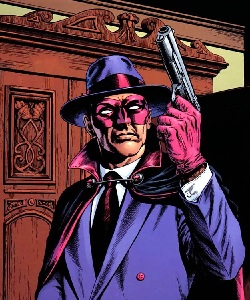
The Phantom ReporterThe Phantom Reporter is actually Dick Jones, a former all-American fullback who was also a college boxing, wrestling, and fencing champion.  As a reporter, Dick always tried to protect those who could not defend themselves.  When he couldn’t help them as a journalist, he would put on a mask, a suit, and a cape and he would battle evildoers.

The Phantom Reporter only appeared in one Golden Age comic book, 1941’s Daring Mystery Comic Books #3.  65 years later, he was brought back as one of the lead characters in The Twelve, a limited series about a group of World War II super heroes who, after spending decades in suspended animation, are revived in the 21st Century.  Returning to his career as both a costumed hero and a journalist, The Phantom Reporter also develops an unlikely relationship with Claire Voyant.

The perfect Phantom Reporter movie would be a cross between the screwball comedy of The Front Page and the heroics of Captain America.  It would be a reminder that not all heroes have super powers.  Some of them just have the desire to do the right thing.

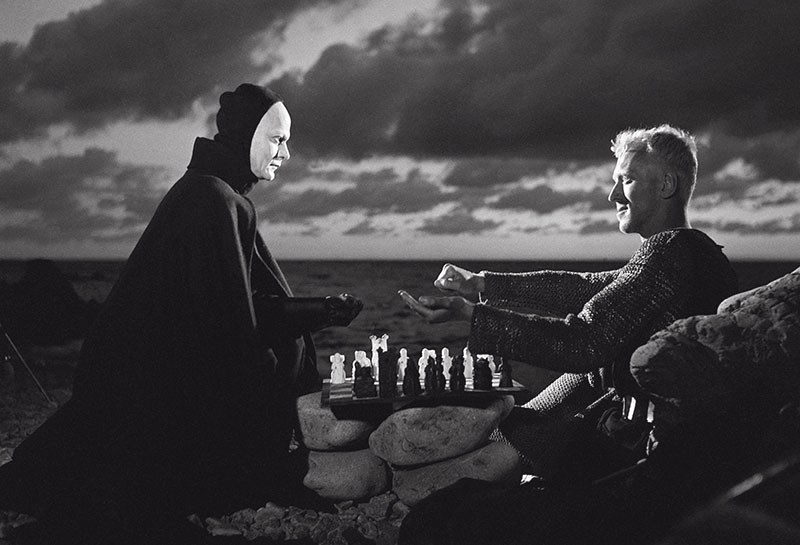
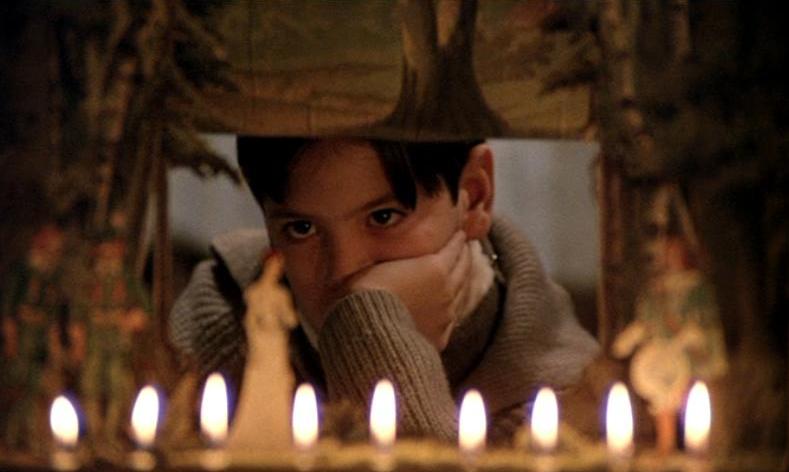
4 Shots From 4 Films: The Seventh Seal, Persona, Scenes From A Marriage, Fanny And Alexander


Happy birthday, Ingmar Bergman.

4 Shots From 4 Films


The Seventh Seal (1957, directed by Ingmar Bergman)

The Seventh Seal (1957, directed by Ingmar Bergman)

Persona (1966, directed by Ingmar Bergman)

Persona (1966, directed by Ingmar Bergman)

Scenes From A Marriage (1973, directed by Ingmar Bergman)

Scenes From A Marriage (1973, directed by Ingmar Bergman)

Fanny and Alexander (1982, directed by Ingmar Bergman)

Fanny and Alexander (1982, directed by Ingmar Bergman)


Appreciating Ray Bradbury’s The Martian Chronicles


the-martian-chroniclesFirst published in 1950, Ray Bradbury’s The Martian Chronicles is a collection of 28 short stories about humans exploring and colonizing Mars while those left behind on Earth destroy each other in a never-ending atomic war.  When I first read it back in middle school, it blew my mind.  When I reread it this weekend, I discovered that it still holds up.  65 years after first being published, The Martian Chronicles is still a classic of American literature.

When Ray Bradbury died in 2012, many obituaries called him a “science fiction writer.”  Bradbury always resisted that label, saying in one interview, “First of all, I don’t write science fiction. I’ve only done one science fiction book and that’s Fahrenheit 451, based on reality. It was named so to represent the temperature at which paper ignites. Science fiction is a depiction of the real. Fantasy is a depiction of the unreal. So Martian Chronicles is not science fiction, it’s fantasy. It couldn’t happen, you see? That’s the reason it’s going to be around a long time – because it’s a Greek myth, and myths have staying power.”  There is very little science to be found in The Martian Chronicles.  Humans travel between Earth and Mars via rockets and the trip only takes a matter of days.  Characters frequently ride boats down the water-filled Martian canals.  Humans have little trouble breathing on Mars and only occasionally complain about the thin atmosphere.  Bradbury is not interested in Mars as a real place.  Instead, he uses Mars as a way to explore what humanity would do if given a second chance.

The humans who come to Bradbury’s Mars all have one thing in common.  All of them are fleeing an imperfect Earth.  Some, like the members of the first three expeditions, come to Mars as explorers.  Some, like the troubled Jeff Spender, seek to learn from Martian civilization.  Others, like Sam Parkhill, come to Mars to make money.  Fathers Peregrine and Stone come to Mars in search of a new world in which to spread the word of God.  Mr. Stendahl comes to Mars to escape government oppression.  Others come to escape the wars of Earth.  Throughout The Martian Chronicles, characters deal with issues that are just as relevant today as they were in 1950.  Bradbury’s vision of human society is not a positive one, especially when compared to his Martians.

martianchronicles2All of the short stories are linked by the human characters’ struggle to come to terms with Martian society.  After killing the members of the first three expeditions, the Martian race is wiped out by chicken pox, a disease that did not exist on Mars until the arrival of the humans.  Only a few survive and go into hiding, watching as human move into their old cities and set up their own civilization.  Ghost-like, the Martians and their dead society haunt every story in The Martian Chronicles.

There are a few stories in The Martian Chronicles that have not aged well.   The Silent Towns, in which a man named Walter Gripp is horrified to discover that one of the last women left on Mars is overweight, is a mean-spirited and unpleasant story to read.  But the collection’s best stories — And The Moon Be Still As Bright, The Third Expedition,  Usher II, The Off Season, The Million-Year Picnic, Night Meeting, and especially There Will Come Soft Rains — still hold up as entertaining and thought-provoking works of speculative fiction.

In 1980, The Martian Chronicles was turned into a miniseries.  I will be watching and reviewing it later this week.

Film Review: The Greatest (1977, dir by Tom Gries and Monte Hellman)


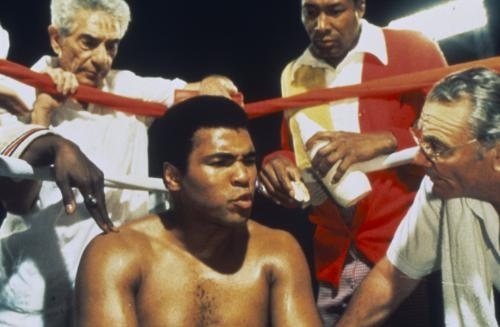
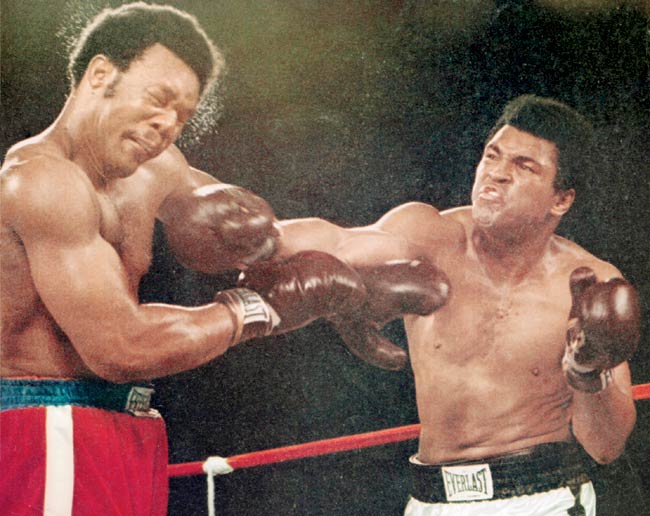
the_greatest_1977_portrait_w858The Greatest opens with 18 year-old Cassius Clay (played by Chip McAllister as a teenager and, as an adult, by Muhammad Ali himself) winning the light heavyweight gold medal at the 1960 Rome Olympics.  Returning home to Kentucky, Clay discovers that not even a gold medal can protect him from racism.  Angered after a restaurant refuses to serve him and his friend, Clay throws his gold medal into the Ohio River.  Under the training of Angelo Dundee (Ernest Borgnine), Clay turns pro and defeats Sonny Liston (Roger E. Mosley) for the heavyweight championship.  Inspired by Malcolm X (James Earl Jones), Clay also joins the Nation of Islam and changes his name to Muhammad Ali.  As heavyweight champion, Ali battles not only his opponents in the ring but racism outside of it.  The Greatest follows Ali as he loses his title for refusing to be drafted and concludes with the famous Rumble in the Jungle, where Ali won the title back from George Foreman.

Sadly, Muhammad Ali has never been the subject of a truly great feature film.  Even Michael Mann’s Ali failed to really capture the mystique that made Ali into such an iconic figure.  The Greatest is interesting because Ali plays himself.  Unfortunately, The Greatest proves that Ali may have been a great showman but he was not a natural actor.  You only have to watch the scene where Ali tries to hold his own with Robert Duvall to see just how stiff an actor Muhammad Ali really was.  Ali’s best scenes are the ones where he is trash talking his opponents or training.  The film opens with Ali jogging while George Benson sings The Greatest Love Of All, a scene that is made all the more poignant when you compare the athletic and confident Muhammad Ali of 1977 with the frail, Parkinson’s stricken Ali of today.

29Muhammad-Ali-1Instead of recreating any of Ali’s legendary fights, The Greatest instead uses actual footage of the matches.  The real life footage is the best part of the film.  After all these years, Ali’s fights against Sonny Liston, Joe Frazier, Ken Norton, and George Foreman remain exciting to watch.  Otherwise, The Greatest is too episodic and low budget to do justice to Muhammad Ali’s story.

If you want to see a truly great film about Ali and his legacy, watch the 1996 documentary When We Were Kings, 2009’s Facing Ali or 2013’s The Trials of Muhammad Ali.  Ali is such an iconic figure that it may be impossible for any feature film to properly do justice to his life and legacy.  These three documentaries come close.

(Director Tom Gries died during the filming of The Greatest.  The movie was completed by Monte Hellman.)

In Praise of Easy Rider’s Captain America


1969 was a watershed year for both America and the movies.  While the war in Viet Nam dragged on and turmoil raged at home, movie audiences watched as two generations of Fondas appeared in movies about the American dream.  In Sergio Leone’s Once Upon A Time In The West, Henry Fonda played Frank, a gunslinger so ruthless that he shoots a child during his first scene.  In They Shoot Horses, Don’t They?, daughter Jane Fonda played a woman struggling to survive the Great Depression.  And, in Easy Rider, Peter Fonda played Captain America.

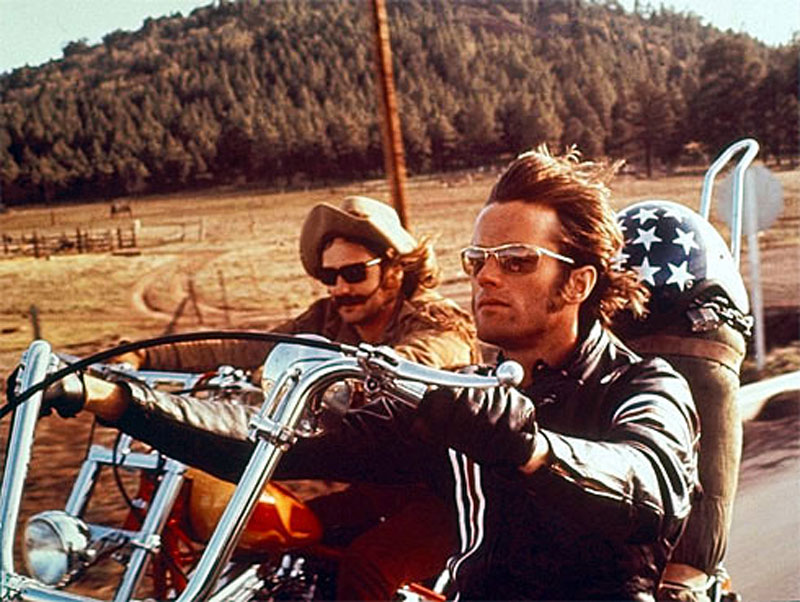
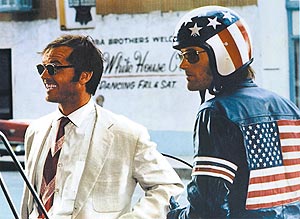
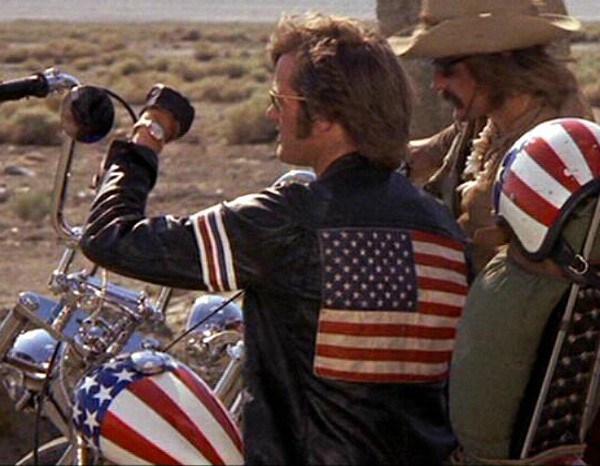
Peter FondaThe Captain America of Easy Rider should not be mistaken for the super soldier played by Chris Evans.  Instead, this Captain America is actually Wyatt Williams, a motorcycle rider who is planning on going to Mardi Gras with his friend Billy (Dennis Hopper, who also directed).  Wyatt is nicknamed Captain America because he wears a leather jacket with an American flag on the back.  It is an appropriate nickname because Wyatt represents everything that is good about America.

When we first meet Captain America, he and Billy are engaged in a business transaction, bringing to mind the old saying that the business of America is business.  They are selling cocaine to none other than Phil Spector.  Taking Spector’s money, Wyatt stuffs it into a plastic tube that he keeps hidden in his motorcycle’s fuel tank.  It is no coincidence that the fuel tank is decorated with the stars and bars.

Peter-Fonda-and-Dennis-Hopper-in-Easy-RiderHaving made their money, Wyatt and Billy ride across the country to celebrate.  At the start of their journey, Wyatt takes off his watch and leaves it on the ground, declaring that time has no meaning to a man who has freedom.  If you replaced their motorcycles with horses, there would be little to distinguish Wyatt and Billy from the American outlaws who might show up in an old Henry Fonda western.

On their way to New Orleans, Wyatt and Billy interact with many different people.  If the always paranoid and nervous Billy represents America’s worst impulses, Wyatt represents the best.  When Wyatt and Billy eat dinner with a rancher and his family, Wyatt alone appreciates what the rancher has accomplished and says, “You’ve got a nice place. It’s not every man that can live off the land, you know. You do your own thing in your own time. You should be proud.”  When they later stop off at a ramshackle hippie commune, Wyatt is the one who says, in the best tradition of American optimism, that “They’ll make it.”

EasyRider2When they stop to pick up a hitchhiker and then later when alcoholic lawyer George Hanson (Jack Nicholson) joins them on their trip, it’s always Wyatt who volunteers to share his bike.  (Billy always rides alone.)  Whenever they stop for the night, it is always the generous Wyatt who offers to share his grass with whomever is traveling with them.  When George smokes for the first time, Wyatt is the one who teaches him.  It is the stoned George who tells Wyatt and Billy that they represent freedom.

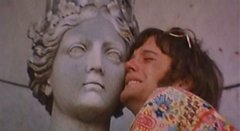
It is only after George is beaten to death by a group of rednecks that Wyatt loses his optimistic outlook and his generous spirit.  George’s death opens Wyatt’s eyes in much the same way that the turmoil of the 1960s did for the rest of America.  After George’s murder, Wyatt loses his faith in himself.  When he and Billy reach New Orleans, Mardi Gras is a letdown.  When he takes the acid that was given to him by the hitchhiker, Captain America’s journey becomes a bad trip both figuratively and literally.

0603-peter-fonda-and-easy-riderjpg-b0f5351afb0a53df_mediumWhile Billy insists that they had a great time in New Orleans (in much the same way that some insist that America is just as strong a nation as it has ever been), Wyatt knows the truth.  “We blew it,” Wyatt says, speaking for the entire nation.

Despite his mistakes and despite having blown it, Wyatt, much like America itself, remains good at heart.  When Captain America dies at the end of the film, it is because he is trying to protect his friend Billy.  In the best American tradition, he sacrifices himself to protect another.

This Independence Day, let us all take a few moment to appreciate Wyatt Williams, the man known as Captain America.

Wyatt Williams (aka Captain America) RIP

Wyatt Williams (aka Captain America) RIP


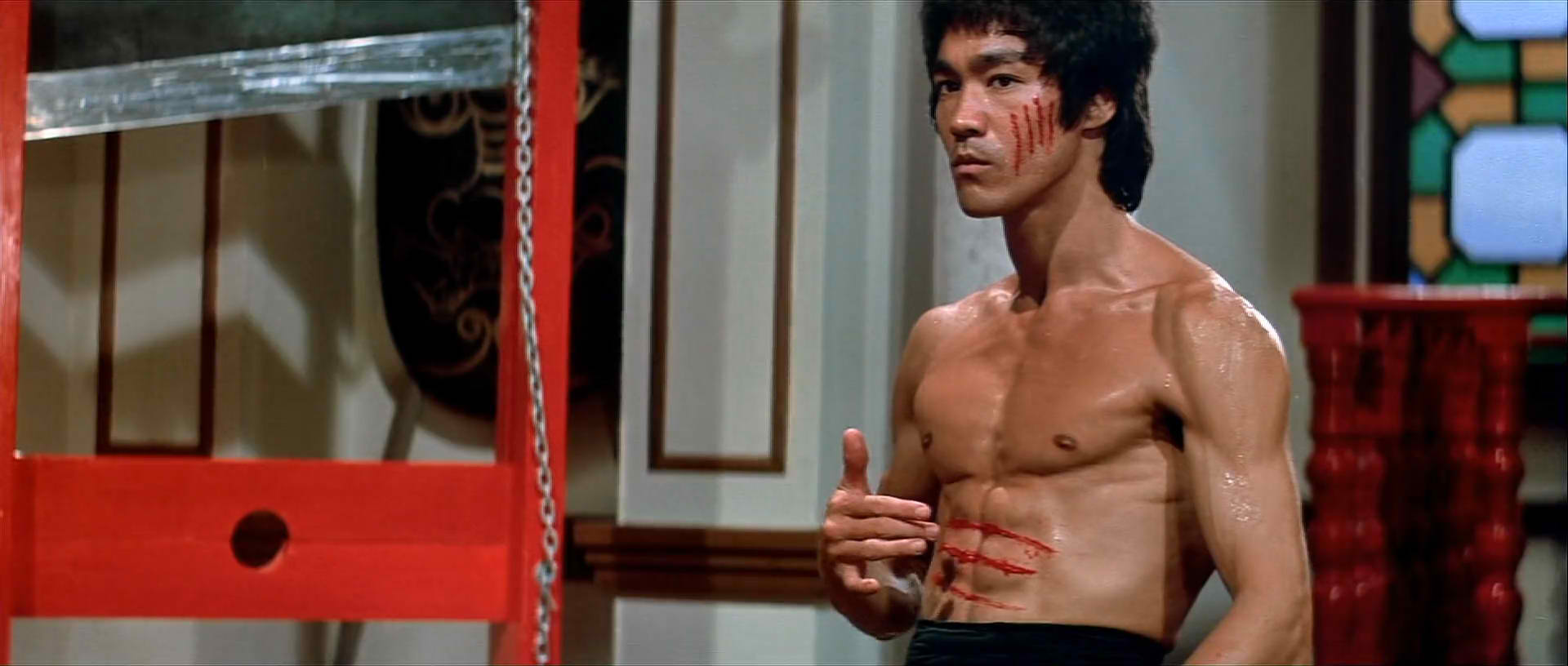
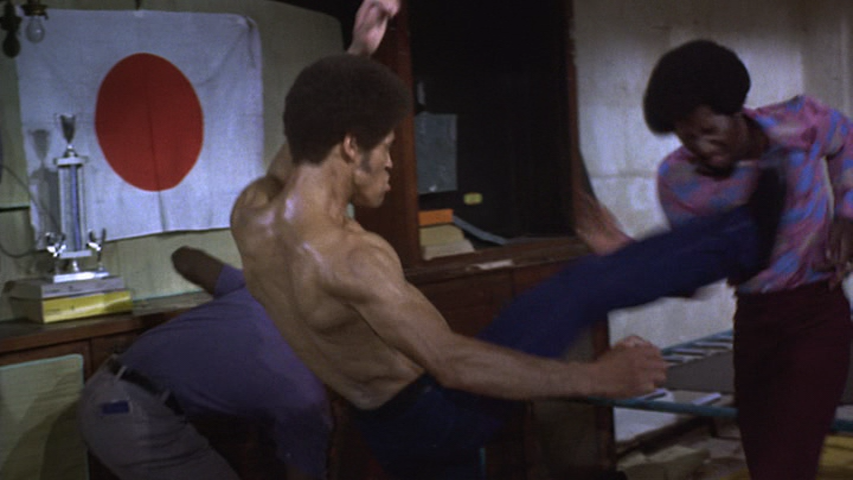
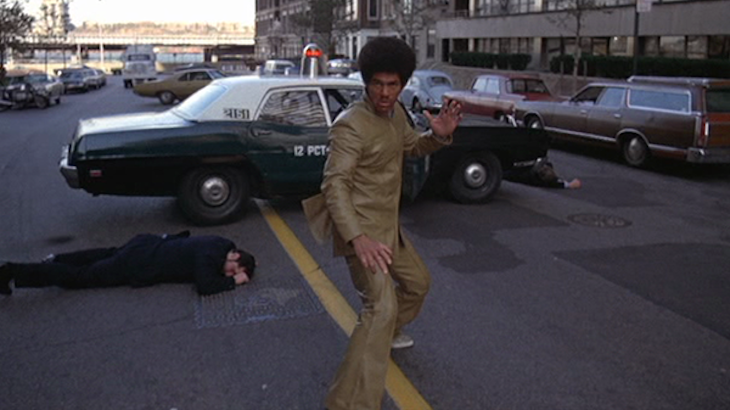
4 Shots From 4 Films: Enter the Dragon, Lady Snowblood, Black Belt Jones, Three The Hard Way


Everyone, at some point in his life, has wanted to learn karate.  The films featured below are a big reason why.

4 SHOTS FROM 4 FILMS

Enter the Dragon (directed by Robert Clouse, 1973)

Enter the Dragon (directed by Robert Clouse, 1973)

Lady Snowblood (directed by Toshiya Fujita, 1973)

Lady Snowblood (directed by Toshiya Fujita, 1973)

Black Belt Jones (directed by Robert Clouse, 1974)

Black Belt Jones (directed by Robert Clouse, 1974)

Three The Hard Way (directed by Gordon Parks, Jr., 1974)

Three The Hard Way (directed by Gordon Parks, Jr., 1974)