Film Review: Firehouse (1973, directed by Alex March)


Firefighter Shelly Forsythe (Richard Roundtree) has just been assigned to a new firehouse and, from the minute he shows up, it’s trouble.  Not only is he resented for taking the place of a popular (if now dead) firefighter but he’s also the first black to have ever been assigned to that firehouse.  Led by angry racist Skip Ryerson (Vince Edwards), the other firemen immediately distrust Forsythe and subject him to a grueling hazing.  However, Forsythe is determined to prove that he’s just as good as any white firefighter and refuses to be driven out.  While the firehouse simmers with racial tensions, a gang of arsonists is setting buildings on fire.

Firehouse does not have much of a plot but what little it does have, it deals with in a brisk 72 minutes.  Forsythe shows up for his first day.  Everyone hazes him.  Forsythe gets mad.  There’s a big fire.  And then the movie ends, without resolving much.  Ryerson is still a racist and Forsythe is still mad at almost everyone in the firehouse.  The characters are all paper thin and most of the fire fighting scenes are made up of grainy stock footage.  What does make the film interesting is the way that it handles the causal racism of almost every white character.  Ryerson, for instance, comes across as being an unrepentant racist but the film suggests that this is mostly due to him being too stubborn to change his ways and that Ryerson’s not that bad once you get to know him.  When Andrew Duggan’s fire chief instructs Forsythe not to take any of the constant racial remarks personally, Firehouse portrays it as if Duggan is giving good and reasonable advice.  The mentality was typical for 1973 but wouldn’t fly today.

One reason why Firehouse ends so abruptly is because it was a pilot for a television series.  At the time Firehouse aired, it had been only two years since Roundtree starred as John Shaft and NBC hoped that to recapture that magic on a weekly basis.  However, it would take another year before the Firehouse television series went into production and, by that time, Roundtree had left the project.  In fact, with the exception of Richard Jaeckel, no one who appeared in the pilot went on to appear in the short-lived TV series.

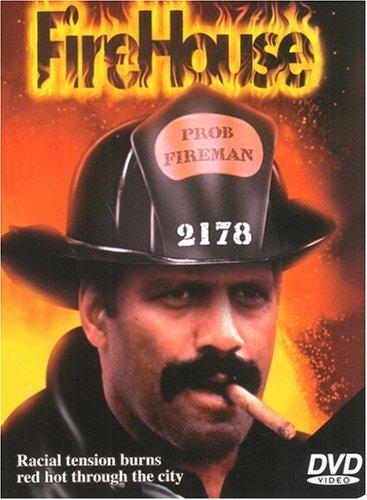
The DVD of Firehouse is infamous for featuring a picture of Fred Williamson on the cover, in which Williamson is smoking a cigar and wearing a fireman’s helmet.  Williamson does not appear anywhere in Firehouse and I can only imagine how many people have sat through Firehouse expecting to see a Fred Williamson blaxploitation film, just to discover that it was actually a Richard Roundtree television pilot.  Firehouse probably would have been better if it had starred Fred Williamson.  Roundtree’s good but sometimes, you just need The Hammer.
Music Video of the Day: Too Late For Goodbyes by Julian Lennon (1984, directed by Sam Peckinpah)


Not surprisingly, a lot of people have assumed that Julian Lennon was singing about his father, John Lennon, in this song.  Julian, himself, has denied that interpretation, saying that this song was just his way of dealing with a breakup and nothing more.

Like yesterday’s video, Too Late For Goodbyes was directed by Sam Peckinpah, the notorious director behind The Wild Bunch, Straw Dogs, and Pat Garrett and Billy The Kid.  It was directed at a time when Peckinpah’s Hollywood career was nearly over, having been sabotaged by too many fights with the studios and too many rumors about his drug and alcohol-intake.  His two videos for Julian Lennnon would be Peckinpah’s final work as a director.  He died just a few months after they were released.

In the UK, Too Late For Goodbyes was Julian Lennon’s first single and was followed by Valotte.  In the United States, the order was reversed and Too Late For Goodbyes came out after Valotte.  To date, Too Late For Goodbyes is the most successful single that Julian Lennon has ever released.  It reached #1 on the U.S. Adult Contemporary Chart and stayed there for two weeks.

Enjoy!

Film Review: Cocaine and Blue Eyes (1983, directed by E.W. Swackhamer)


When San Francisco-based private investigator Michael Brennen (O.J. Simpson) gives a ride to Joey Crawford (John Spencer) on Christmas Eve, he doesn’t know that it’s going to lead to the biggest case of his career.  When Joey asks Michael to help him track down his ex-girlfriend, Michael assumes that Joey would never be able to pay for his investigative services.  But one week later, Michael gets something in the mail from Joey.  Inside the envelope, there’s a picture of both Joey’s ex and a thousand dollar bill.  Ever after he discovers that Joey was mysteriously killed the night before, Michael decides to take on the case.  His investigation will take him not only to Joey’s ex but it will also lead to him uncovering a drug ring that involves one of San Francisco’s most prominent families.
Simpson not only starred in this made-for-TV movie but he also served as executive producer.  Watching the movie, it’s obvious that it was meant to serve as a pilot for a Michael Brennen TV series and it’s also just as obvious why that series never happened.  O.J. Simpson was not a terrible actor but, ironically for someone who set records as an NFL player, there was nothing tough about him.  Simpson may be playing a two-fisted, cash-strapped P.I. but, in every scene, he comes across like he can’t wait to hit the golf course.  Simpson’s pleasant demeanor may have served him well in other areas of his life but it didn’t help him with this role.  Whenever Simpson has to share a scene with John Spencer, Candy Clark, Cliff Gorman, or any of the other members of this film’s surprisingly talented supporting cast, Simpson’s bland screen presence and lack of gravitas becomes all the more apparent.

Of course, when seen today, the main problem with Cocaine and Blue Eyes is that it’s impossible to watch without thinking, “Hey, didn’t the star of this movie get away with killing his wife and an innocent bystander?”  Even the most innocuous  of lines take on a double meaning when they’re uttered by O.J. Simpson.  It doesn’t help that the movie opens with Michael visiting his estranged wife and their children on Christmas Eve and getting chased around the neighborhood by a guard dog.  When the movie was made, this scene was probably included so that O.J. could show off some of the moves that made him a star at UCLA and with the Bills.  Seen today, the scene takes on a whole different meaning.

Without O.J. Simpson, Cocaine and Blue Eyes could easily pass for being an extended episode of Magnum P.I., Simon and Simon, or any other detective show from the 80s.  With Simpson, it becomes a pop cultural relic.  I don’t think it’s ever been released on DVD but it is available on YouTube, where it can be viewed by O.J. Simpson completists everywhere.

Music Video of the Day: Vallotte by Julian Lennon (1984, directed by Sam Peckinpah)


I am as shocked as anyone to discover that this sedate video was directed by the director who was known (affectionately or not) as Bloody Sam but indeed it was.

Valotte was the first U.S. single from Julian Lennon, a musician whose talent was often overshadowed by the fact that he was the son of John and Cynthia Lennon.  John divorced Cynthia, leaving her for Yoko Ono, when Julian was only five years old and, by his own admission, Julian’s feelings towards his father have often been mixed.  (Paul McCartney reportedly wrote what would become Hey Jude in an attempt to console Julian after the divorce.)  When Julian Lennon pursued his own musical career, many reviewers spent more time discussing Julian’s physical and vocal resemblance to his father than his music.

As for the song, it was a ballad about finding love and not, as many have incorrectly assumed, a song about Julian’s relationship with John.  The song was initially written at a French chateau known as the Manor de Valotte, which is how the song got its name.  The single was subsequently recorded at Muscle Shoals Sound Studio in Alabama.  The line, “Sitting on a pebble by the river playing guitar” is a reference to the location of the studio.

As for Sam Peckinpah, both his career and his health were in decline when he directed this video.  Peckinpah made a huge impression in the late 60s and early 70s with films like The Wild Bunch and Straw Dogs but, by the time the 80s came around, the critics had turned on him and his abuse of drugs and alcohol had become so notorious that he couldn’t get a job in Hollywood.  Peckinpah directed both this video and Lennon’s follow-up, Too Late For Goodbyes.  His work on the videos was critically acclaimed but unfortunately, Peckinpah would pass away shortly after they were released.

Enjoy!

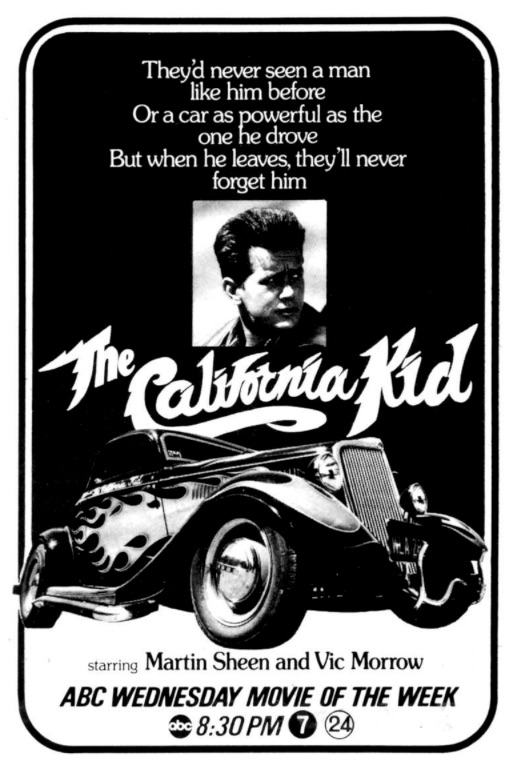
Automotive Stardom: The California Kid (1974, directed by Richard T. Heffron)


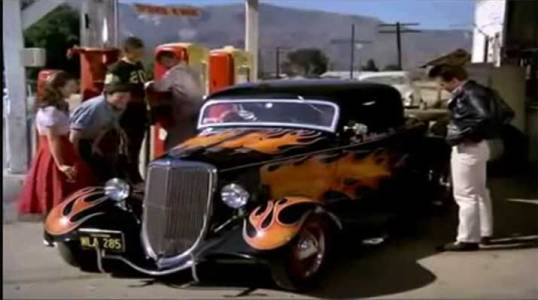
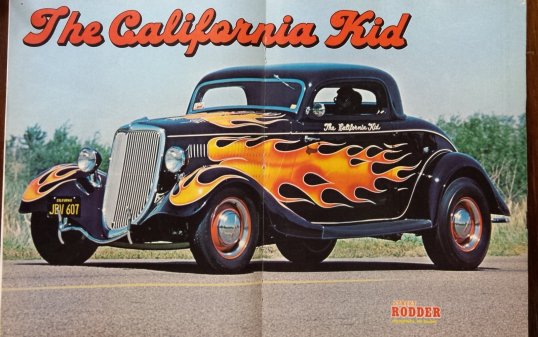
In 1973, a customized 1934 Ford three-window coup appeared on the cover of the November issue of Custom Rod.  The car had been created by legendary customizer Pete Chapouris and it was called The California Kid.  The cover caught the attention of television producer Howie Horowitz, who thought that maybe the car could become a star.

A year later, the car starred in it’s own made-for-TV movie.  Naturally, that movie was called The California Kid.

The California Kid takes place in 1958 in the small town of Clarksberg.  Clarksberg is known for being a town that does not tolerate speeders.  Sheriff Roy Childress (Vic Morrow) lost his wife and daughter to a speeder and, ever since, he’s become a fanatic about making sure that people respect the speed limits.  He’ll give a ticket to anyone who he sees going too fast.  He’ll even impound your car.  And if you don’t learn your lesson or if you try to outrun him, he’ll get behind your car, give it a push, and send both you and your vehicle plunging over the side of a mountain.

That’s what happens to Don McCord (Joe Estevez), a Marine who was just trying to get back to back to his base on time.  After Don and his car go over the side of a cliff, the official ruling is that it was an accident.  However, Don’s brother, Michael (Martin Sheen, real-life brother of Joe Estevez), doesn’t buy that.  Determined to prove that his brother was murdered, Micheal rolls into town, behind the wheel of the California Kid.

The California Kid is a typical 70s car chase movie.  There’s not much going on other than the sheriff chasing the Michael and the California Kid.  Martin Sheen coasts through the movie, doing the James Dean impersonation that he perfected in the previous year’s Badlands and Vic Morrow plays his thousandth sadistic authority figure.  The supporting cast is full of familiar names who don’t get to do much.  Michelle Phillips plays the waitress who falls in love with Martin Sheen.  (It’s always a waitress.)  Stuart Margolin is Morrow’s deputy and keep an eye out for Nick Nolte, playing a mechanic.  Interestingly, The California Kid was written by Richard Compton who, a year later, would direct Notle in his first starring role in the 1975 car chase film, Return to Macon County.  Of course, the real star of the movie is the car and the California Kid earns its star billing.  The movie might not be anything special but there’s no way you can watch it and not want to drive that car.

This is a made-for-TV movie so you won’t hear any profanity and the characters are all as simple can be.  However, there are enough shots of cars going over cliffs to keep chase enthusiasts entertained.

Film Review: Blood Red (1989, directed by Peter Masterson)


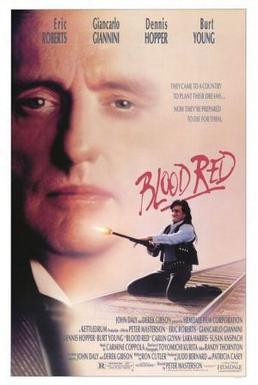
The time is the 1890s.  The place is California.  Sicilian immigrant Sebastian Collogero (Giancarlo Giannini) has just been sworn in as an American citizen and owns his own vineyard.  When Irish immigrant William Bradford Berrigan (Dennis Hopper) demands that Sebastian give up his land so Berrigan run a railroad through it, Sebastian refuses.  Berrigan hires a group of thugs led by Andrews (Burt Young) to make Sebastian see the error of his ways.  When Sebastian ends up dead, his wayward son, Marco (Eric Roberts), takes up arms and seeks revenge.

Have you ever wondered what would have happened if the famously self-indulgent directors Michael Cimino and Francis Ford Coppola teamed up to make a movie about the American Dream?  The end result would probably be something like Blood Red.  Like Cimino’s The Deer Hunter and Heaven’s Gate, Blood Red begins with a lengthy celebration (in this case, in honor of Sebastian’s naturalization ceremony) that doesn’t have much to do with the rest of the film but which is included just to make sure we know that what we’re about to see is more than just a mere genre piece.  Like many of Coppola’s films, Blood Red features a tight-knit family, flowing wine, and a score composed by Carmine Coppola.  The only difference between our hypothetical Cimino/Coppola collaboration and Blood Red is that the Cimino/Coppola film would probably be longer and more interesting than Blood Red.  Blood Red is only 80 minutes long and directed by Peter Masterson, who seems lost.  There’s a potentially interesting story here about two different immigrants fighting to determine the future of America but it gets lost in all of the shots of Eric Roberts flexing his muscles.

For an actor known for his demented energy, Eric Roberts is surprisingly dull as the lead but Blood Red is a film that even manages to make veteran scenery chewers like Dennis Hopper and Burt Young seem boring.  (Hopper’s bizarre attempt at an Irish brogue does occasionally liven things up.)  The cast is full of familiar faces like Michael Madsen, Aldo Ray, Marc Lawrence, and Elias Koteas but none of them get to do much.  Of course, the most familiar face of all belongs to Eric’s sister, Julia.  Julia Roberts made her film debut playing Marco’s sister, Maria.  (Because the film sat on the shelf for three years after production was completed, Blood Red wasn’t released until after Julia has subsequently appeared in Mystic Pizza and Satisfaction.)  She gets three lines and less than five minutes of screen time but she does get to briefly show off the smile that would later make her famous.  Today, of course, that smile is the only reason anyone remembers Blood Red.

Music Video of the Day: Everybody’s Crazy by Michael Bolton (1985, directed by Wayne Isham)


“I’ll be honest with you, I love his music, I do, I’m a Michael Bolton fan. For my money, I don’t know if it gets any better than when he sings “When a Man Loves a Woman”.

— Bob (John C. McGinley) in Office Space (1999)

Yeeeesh!

I guess we can put this one in the “It Seemed Like A Good Idea At The Time” file.  In 1985, your aunt’s favorite adult contemporary singer, Michael Bolton, tried to change his image by recording a hard rock album.  The end result was Everybody’s Crazy and a title track that attempted to mix easy listening with hard rock.

It also led to this video, which starts with Michael Bolton telling his manager that “normal” is only something that people are until you get to know them.  “Everybody’s crazy,” and I guess Michael Bolton is including himself in that.  It’s not that Bolton doesn’t have an adequate voice as that there’s nothing dangerous about him and hard rock has to be dangerous.  In this video, Bolton comes across as such a goof that he makes Kip Winger look like James Hetfield.

Bolton did at least bring in some talent for the video.  For instance, he got Bruce Kulick, who was then with KISS, to play guitar on the song and he brought in Wayne Isham to direct the video.  Wayne Isham’s one of the busiest music video directors around.  If your favorite singer or band was around in the 80s or 90s, chances are that Wayne Isham directed one of their videos.

Enjoy!


Music Video of the Day: Blister in the Sun by Violent Femmes (1997, directed by Evan Bernard)


When Blister in the Sun was first released in 1983, there were no music video.  In fact, there weren’t many listeners.  While the song was an immediate hit on college radio, it wasn’t until the late 80s and the 1990s, when all of those people who worked at the college stations got jobs programming “alternative” and “modern rock” stations, that Blister in the Sun really became a radio mainstay.

It wasn’t until John Cusack decided that he wanted to use the song in Grosse Pointe Blank that Blister in the Sun finally got a music video.  The video combines clips of John Cusack and Alan Arkin from the film with a totally new story involving the lead singer of Violent Femmes, Gordon Gano, attempting to assassinate Socks the Cat.  Socks was the White House pet during the Clinton years and it says something about the difference between 1997 and 2019 that this video could be made at all.  At the end of the video, Gano is arrested in a theater showing Grosse Pointe Blank, in much the same way that Lee Harvey Oswald was arrested in a theater that was showing War Is Hell.

As for the song’s lyrics, Gano has said that they were about drug abuse and not, as many listeners speculated, masturbation.  The famous “Big Hands” line was a reference to Gano’s insecurity about his small hands and his fear that his girlfriend would leave him for someone who had bigger hands.  As Gano once told the Village Voice, “I don’t think there’s a whole lot to understand with the lyrics.”

Enjoy!

Music Video of the Day: I Lost On Jeopardy by Weird Al Yankovic (1984, directed by Frances Delia)


Based on Greg Kihn Band’s Jeopardy, I Lost On Jeopardy was an early song parody from the master of the form, Weird Al Yankovic.

Today, Jeopardy is an American institution but, at the time this video was filmed, it was considered to be a nostalgic memory.  The original Jeopardy ran from 1964 to 1975, with Art Fleming as the host and Don Pardo as the announcer.  (Famously, Pardo went from announcing for Jeopardy to announcing for Saturday Night Live.)  This video was shot on the original Jeopardy set, with Fleming and Pardo playing themselves.  As you can tell, Jeopardy has changed considerably from what it once was.  The version of Jeopardy that we all know and revere, with Alex Trebek at the helm, would not start until three months after the release of this video.

After Weird Al is kicked out of the studio, the man in the convertible is played by Greg Kihn, in a parody of the ending of the original video for Jeopardy.  At the time, Kihn told The Washington Post that he didn’t mind the parody and that it was his idea to appear at the end of the video.  As Kihn put it, “It was a vote of confidence.  If you’re not well-enough known to be parodied, well, you’re just not well-enough known.”

This attitude seems to be true of most musicians whose songs have been parodied by Weird Al over the years.  It helps that Weird Al rarely pokes fun at the original artist or the subject matter of the original song.  It seems like one of the easiest ways to get a bad reputation is to complain about Weird Al parodying one of your songs.  For instance, just take a look at Coolio (if you can find him).

This video was directed by Francis Delia, who also directed videos for Wall of Voodoo, The Bangles, and Timothy B. Schmit.

Music Video of the Day: Jeopardy by Greg Kihn Band (1983, directed by Joe Dea)


Though he may not be a household name, Greg Kihn has been making and recording music since 1972 and he has a cult following to this day.  His biggest hit came in 1983, with the song Jeopardy.  With the help of this popular video, Jeopardy reached the number two spot on the Billboard Hot 100 Chart with only Michael Jackson’s Beat It keeping it from reaching number one.

In the video, Kihn plays a man who is on the verge of getting married but, after he has a dream in which the entire wedding party is transformed into a bunch of monsters, he gets cold feet.  Fortunately, his bride-to-be got cold feet at the same time and, when they both find themselves in the same car, they drive off for a life of happy, unwedded bliss.

The video was directed by Joe Dea, who also directed two videos for Krokus and who has since gone on to be a very active television director.

One final note: This video and song were popular enough to inspire an early Weird Al parody, I Lost On Jeopardy.

Enjoy!