It’s No Westworld: Futureworld (1976, directed by Richard T. Heffron)


Two years after the Westworld “incident,” (in which a group of robots malfunctioned and murdered hundreds of humans), Delos Amusement Park has reopened and is accepting guests.  Westworld has been permanently shut down but guests can still go to Romanworld and Medeivalworld (despite the fact that it was in Medievalworld that the whole robot rebellion started in the first place).  Delos has added two new worlds: Spaworld and Futureworld.  Spaworld is a spa for people who want to think young and Futureworld is the world of the future, which looks much like 1976, the year that this film was made.

Two reporters, Chuck Browning (Peter Fonda) and Tracy Ballard (Blythe Danner), have been invited to cover the grand reopening of Delos and to hopefully generate some good publicity.  Chuck, however, has reason to believe that there’s something sinister happening at Delos.  While Tracy is busy fantasizing about Yul Brynner, Chuck discovers that Delos is using Futureworld to clone diplomats.

At the end of Futureworld, Peter Fonda gives everyone the finger and that’s really cool but otherwise, this is a forgettable sequel to Westworld.  The whole point of the original Westworld was that the robots didn’t know they were robots but, in Futureworld, the robots not only know what they are but they’re also superfluous to the plot.  There’s no robot revolution in Futureworld nor is there any of Crichton’s concerns about technology run amok.  Instead, it’s all about clones and a predictable political conspiracy.

The main issue facing the makers of this film was how could they do a sequel to Michael Crichton’s unexpected hit when Westworld‘s main attraction, Yul Brynner’s robot gunslinger, was thoroughly destroyed at the end of the first film.  It would not make any sense for anyone to have reactivated the robot.  Their solution was to bring Brynner in for a cameo in which he appeared in one of Tracy’s dreams.  Sadly, why they thought it was a good idea to have Tracy develop an erotic fixation on a killer robot and then, just as abruptly, abandon the idea is not for us to know.  They would have been better off leaving Brynner out of the film entirely because his presence just reminds us that Futureworld is no Westworld.
Game Review: Suspended: A Cryogenic Nightmare (1983, Infocom)


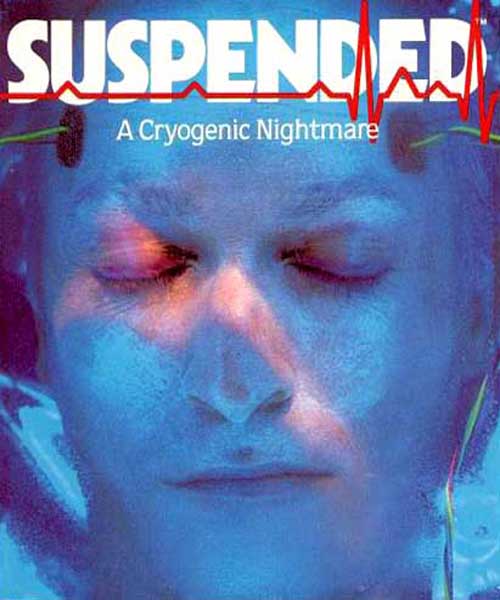
Welcome to the future.  On the planet of Contra, an Earth colony is run by a self-maintaining system that is housed in a gigantic facility.  The system is responsible for everything from transportation to keeping the weather hospitable for the colonists.  You are at the center of the system.  You have been placed in suspended animation so that your mind can serve as the Central Mentality that keeps the entire system from falling apart.  It’s a job that’s meant to last for 500 years but the rewards are great.

Unfortunately, there’s been an earthquake and the complex has been damaged.  Though you are still in suspended animation, you know that you have to repair the complex before the angry colonists shut you down.  Since you’re in stasis, you have to direct five robots to do all the work.  Each robot has its own “personality” and unique way of describing each room in the complex.  You’ll have to figure out how to get the robots to work together before all of you get shut down permanently.

Suspended is one of the most difficult text adventures that I’ve ever played.  Since each robot can only tell you certain things about each room in the facility, the game often depends on getting the right robots in the right room at the right time.  If you can pull that off, the damage itself is often easy to fix but it’s not always easy to guess which robot will be useful in which situation.  In typical Infocom fashion, there’s also a time limit to the game and making too many mistakes can make it impossible to get things done before time expires.  For most players, winning this game will come down to trial-and-error and frequent saving.  The game is so complex, though, that you feel really damn good when you actually manage to figure it all out.

Suspended can be found at various archival and abandonware sites online, including here.

Snakes On A Vacation: Curse II: The Bite (1989, directed by Frederico Prosperi)


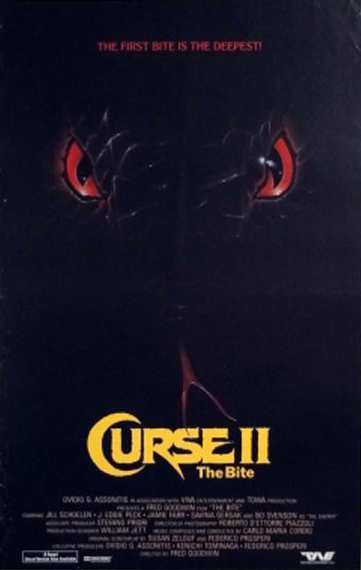
Clark (J. Eddie Peck) and his girlfriend, Lisa (Jill Schoelen), are vacationing in New Mexico.  It’s a romantic getaway, except for all of the snakes.  Clark manages to save Lisa from one snake through the use of his trusty rifle but then he himself gets bitten once they go to a motel.  Luckily, traveling salesman Harry Morton (Jamie Farr!) has a suitcase that’s full of anti-snake venom antidotes.  Unfortunately, the one that Harry gave to Clark doesn’t do much good because not only does the bite on Clark’s arm get worse but it starts to turn into a snake!  In fact, his entire body is full of snakes, just trying to slither out!  It’s a vacation from Hell as Lisa tries to find a cure for Clark, Clark tries to control his serpent-like instincts, and Harry tries to find the young couple so that they don’t sue him.

This is an unrelated sequel to a film called The Curse.  In fact, it’s probable that this film was just called The Bite until the first Curse did slightly better at the box office than anyone expected.  The two films share not a single character or plot point in common.  There’s not really even a curse in this so-called sequel!  Clark’s problems are all due to the snake being radioactive.  (Once again, science is to blame.)  It’s a typically cheesy, low-budget 80s horror film but it does have a few things to recommend it.  The special effects range between being enjoyably cheap and effectively gross.  Jamie Farr is entertaining as Harry Morton and seems to be happy to not be playing Klinger again.  The truckers that Harry enlists to help him search for Lisa and Clark are all colorful characters and they are a little more interesting than the usual horror movie canon fodder.  Bo Svenson also has a good cameo as the sheriff.

Best of all, the film features one the greatest scream queens of the late 80s and early 90s, Jill Schoelen.  Schoelen is best remembered for her role in The Stepfather but she actually appeared in several horror movies between 1987 and 1993.  As she was in almost all of her roles, Jill Schoelen is both sexy and believable in The Bite.  She had a talent for making even the worse dialogue sound natural and that was a talent that The Bite gave her many chances to display.

The Bite is hardly a great film but, by the standards of late 80s cable fare, it’s undeniably entertaining.


Silent Hill Memories


I was sixteen when Silent Hill first came out for the Playstation.

From the first minute I played it, I was hooked and Silent Hill would go on to become the first video game that I ever seriously got into.  I would study the game.  I would go online, in those early days of the world wide web, to read the theories of other players and visit the occasional Geocities-hosted fan page.  I actually got very upset when innocent nurse Lisa Garland was lost to the town’s curse.  I was also amazed to discover that the game’s storyline and ending could change depending on whether or not I saved Cybil Bennett.  A video game with multiple endings that went beyond just “good” and “bad?”  This was a big deal back in 1999!

Looking back after all these years, there are four main things that I remember about Silent Hill.

First off, and I know I’m not alone,I remembered the opening and especially the music that played during the scenes of Harry Mason driving down that foggy road:

Secondly, I remember the scenes that played after the game’s ending, which featured all of Silent Hill‘s characters blowing their lines, missing their cues, and laughing about it.  Today the animation may look primitive but back in 1999, seeing this at least provided some comfort if you got one of the bad endings, especially the “bad” ending where you defeated the monster but your daughter died (“Thank you, Daddy … goodbye.”) and then you ended up dead in your car.

I remember the nearly legendary fifth ending of the game, in which Harry Mason ended up getting abducted by aliens.  In the days before YouTube, when you had to trust word-of-mouth, there were some people who insisted that this ending was just an urban legend while there were others who couldn’t stop bragging about how they had gotten the alien ending while the rest of us just had to settle for the “saved the world and your daughter” ending.  When I finally managed to get the UFO ending, I was so happy that I felt like I was the one who had been abducted by aliens.

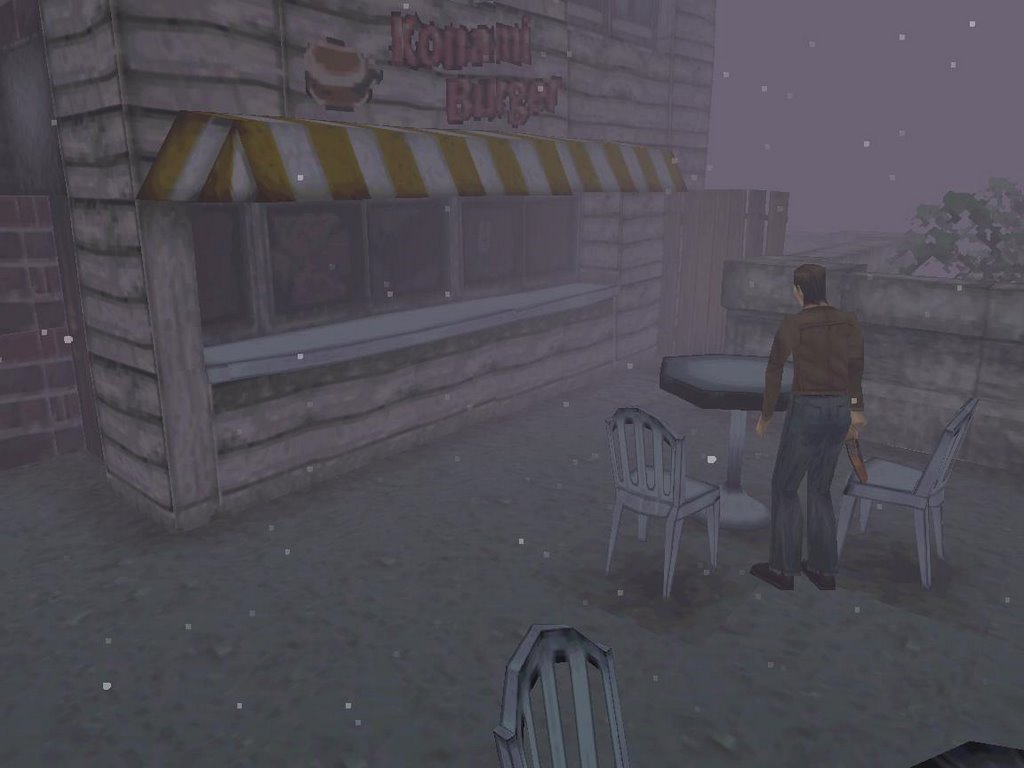
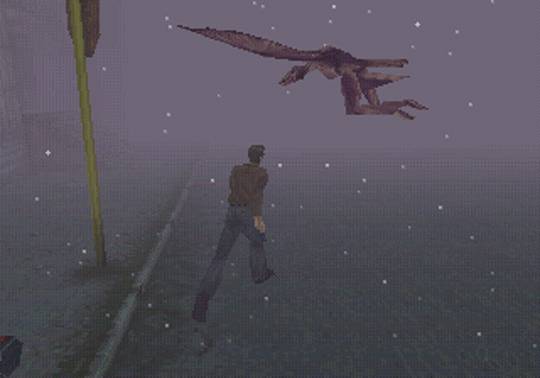
Finally, the main thing I remember about Silent Hill is that I was never very good at it.  I was the player who always ended up getting lost and walking around in a circle.  I can’t remember how many times I played before I managed to not die in the diner.  As soon as I heard the radio static that indicated that I was about to get attacked, I started to run because I know I wasn’t a good enough shot to fight off any of the game’s monsters.  Harry Mason was searching for his daughter and I was probably the worst possible person to lead him in that search because I somehow always managed to get Harry killed.  It didn’t matter how many times I played the game, I never really got good at it.  Even when I finally managed to get the best ending possible, it was only after saving and reloading the game a countless number of times.

I may have never been good at the game but I still enjoyed leading Harry to his death and occasionally to one of the good endings.  Silent Hill is what taught me that there was more to video games than just jumping and shooting and for that, I will be forever thankful.

Oedipus Mess: Rivals (1972, directed by Krishna Shah)


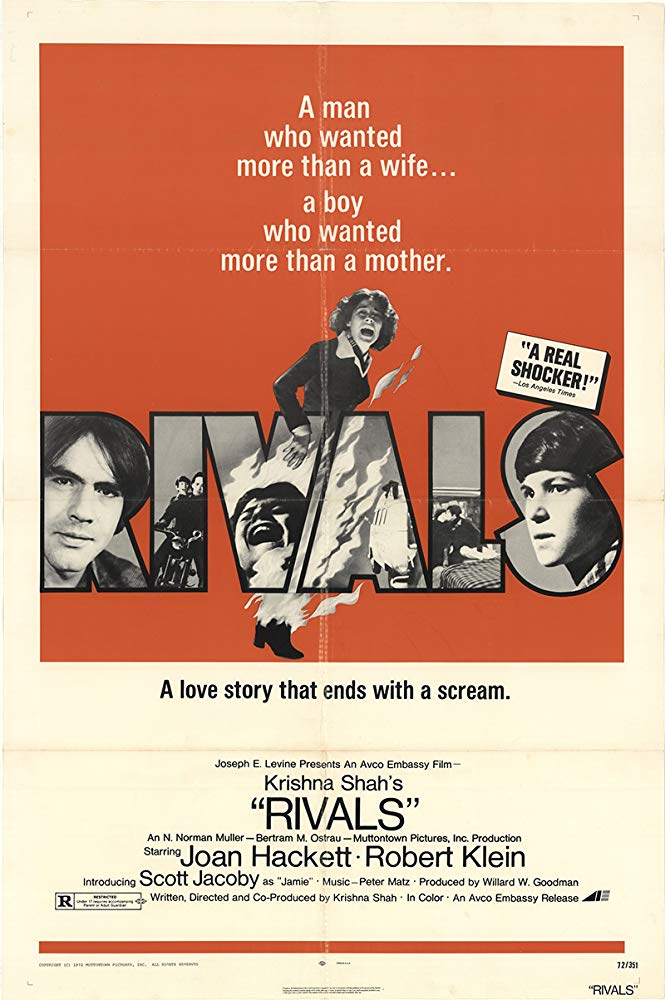
Christine (Joan Hackett) is a young single mother and widow who lives in New York City.  She has a son, Jamie (Scott Colomby, playing a ten year-old even though he’s obviously a teenager).  Jamie is an aspiring director who make a film of his classmates running around the playground while wearing Richard Nixon masks.  Jamie, who is described as having a genius IQ, is also unhealthily obsessed with his mother, which the film, via flashback, links to her taking a shower in front of him while he was still potty training.

Jamie is not happy when Christine meets Peter (Robert Klein), a loudmouth who gives tours of the city to New York residents only.  If you’re from out-of-town, don’t even try to get in Peter’s microbus.  Peter and Christine start to date and then, eventually, they get married.  Despite the fact that his older babysitter wants to have an affair with him, Jamie remains obsessed with his mother and refuses to accept Peter as his stepfather.  Peter knows that Jamie doesn’t like him and eventually gives up on trying to win him over.  What Peter doesn’t know is that Jamie has come up with an elaborate scheme to murder him.

Rivals is the type of strange and messy film that could only have been made in 1972.  I guess it would be considered to be a mix of a horror movie and a psychological thriller but the tone of Rivals is all over the place so it’s hard to know what the film is trying to say about Jamie or his mother.  Throughout the film, there are sudden montages that seem to have little to do with the plot.  For instance, the film comes to a halt so we can spend several minutes watching as Peter attempts to harangue people into getting in his bus.  Peter is supposed to be likable but he comes across as being so obnoxious that it is easy to see why Jamie would not want him for a stepfather.  As for Jamie, he’s supposed to be ten but looks like he should be starting middle school so his obsession with sex is never as shocking as it should be.  The ludicrous subplot about his babysitter goes nowhere and just seems to disappear.  The one bright spot in the film is Joan Hackett as Christine.  Hackett does the best she can with her inconsistent role and she’s the one person in Rivals who you will actually care about.

Rivals is a mess, perhaps worth seeing only for the location footage of New York in the early 70s.  Otherwise, this is a forgotten film that does not need to be remembered.

Game Review: The Witness (1983, Infocom)


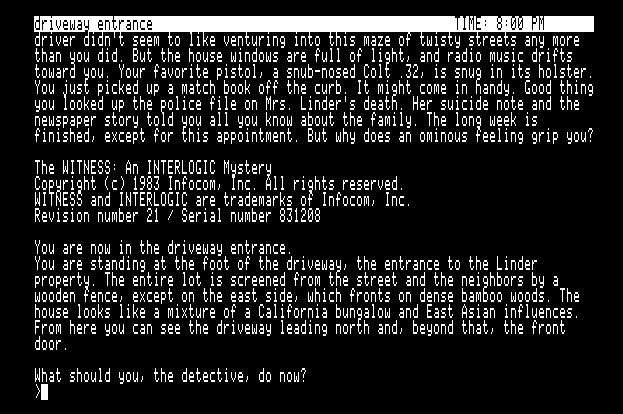
You are a detective, working in 1930s Los Angeles.  One night, you and your assistant, Sgt. Duffy (remember him from Deadline?) are called to the home of Freeman Linder.  Linder is a soldier of fortune whose wife has recently died under mysterious circumstances.  After you arrive and assuming that you are smart enough to follow Linder into his study, he tells you to have a seat while he explains why he needs to be protected from a man named Stiles.  If you don’t take a seat, you’ll end up getting a bullet that was originally meant for Linder.  If you do take your seat, you’ll witness Linder getting shot by an unseen assailant.  You now have 12 hours to explore the house, interrogate all of the suspects (there aren’t many of them), and figure out who murdered Freeman Linder!

The Witness was Infocom’s follow-up to its fabulously successful murder mystery, Deadline.  The Witness is a much simpler and much easier game, though it’s still a good deal of fun.  If Deadline seemed like a big budget MGM extravaganza, The Witness is an entertaining Warner Bros. B-movie.  The mystery at the heart of The Witness is not difficult to solve.  It’s mostly a case of making sure that you’re in the right place at the right time to witness certain events and also making sure that you do certain things in the right order.  The mystery may be easy to solve but getting all of the evidence necessary for a conviction can be tough.

As with most Infocom games, The Witness is well-written and full of memorable details.  The game is set on February 9th, 1938 and, if your detective turns on the radio, he’ll hear programs that actually aired on that date.  The game’s author, Stu Galley, even researched 1930s slang to give the game’s dialogue an authentic feel.  It’s a fun if not particularly difficult game.

The Witness can currently be played over at the Internet Archive.

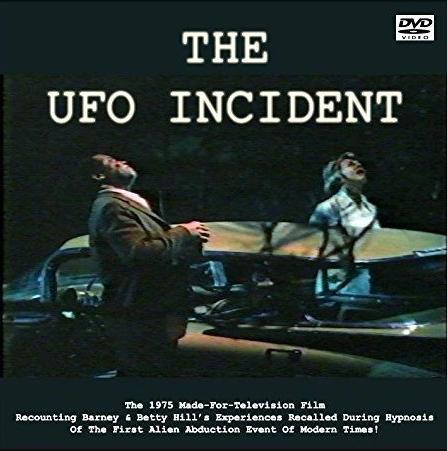
The Story of the Hills: The UFO Incident (1975, directed by Richard A. Colla)


Betty and Barney Hill (played by Estelle Parsons and James Earl Jones) are a happily married couple living in New Hampshire in the mid-60s.  They are both haunted by something that happened two years previously, while they were on vacation.  They both remember something appearing in the sky over their car but they can’t remember anything that happened afterwards.  They are both haunted by nightmares and a strong feeling that something terrible most have happened to them.  Finally, they meet with Dr. Benjamin Simon (Barnard Hughes), who places them both under hypnosis.  Only then does a clear picture start to emerge of what Betty and Barney believe happened as they both describe being abducted and experimented upon by aliens.

The UFO Incident is a very sober and serious account of the Hills’s abduction.  It never takes a clear side as to whether Betty and Barney are remembering something that actually happened or if they’re just remembering elaborate dreams.  That works to the film’s advantage, though it might disappoint those looking for a more dramatic take on the subject.  This is a made-for-TV movie so don’t expect much from the special effects and the alien costumes look disappointingly cheap.  The important thing, though, is that the film treat the Hills and their story with respect and James Earl Jones gives one of his best and most relatable performances as Barney.  The film is as much about how even a good marriage can be threatened by stressful times as it is about the UFOs.

The UFO Incident is based on the non-fiction book, The Interrupted Journey by John G. Fuller, which purported to tell the story of the Hills and their abduction.  The Hills were two of the first people to come forward with a story about being abducted by aliens.  Much of the common elements that can be found in stories about alien abductions, like the little grey men, the medical experimentation, and the amnesia afterwards, began with the Hills’s account of what they believed happened to them in 1961.  The Hills, who were active and highly respected in their community, were considered to be unusually credible witnesses, though Dr. Simon ultimately decided that Barney’s recollections of being on the UFO were probably influenced by Betty’s descriptions of her nightmares.  Barney, himself, died in 1969, three years after the book was published.  Betty remained active in the UFO community until her death in 2004.

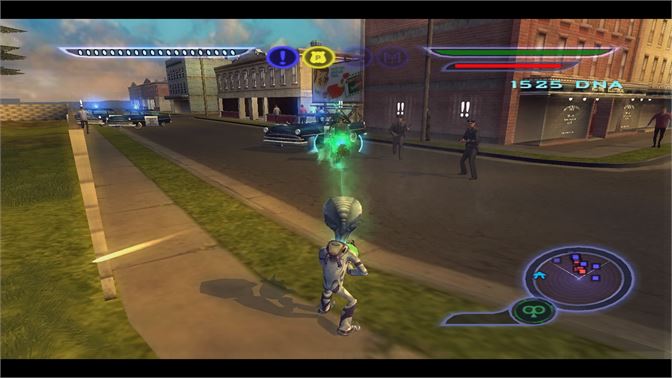
Retro Game Review: Destroy All Humans! 2 (2006, THQ)


Yesterday, I wrote about how excited I am about the prospect of once again getting to play Destroy All Humans! when the remake of the game is rereleased in 2020.

But why stop with there?  Why not follow that up by remaking Destroy All Humans! 2?

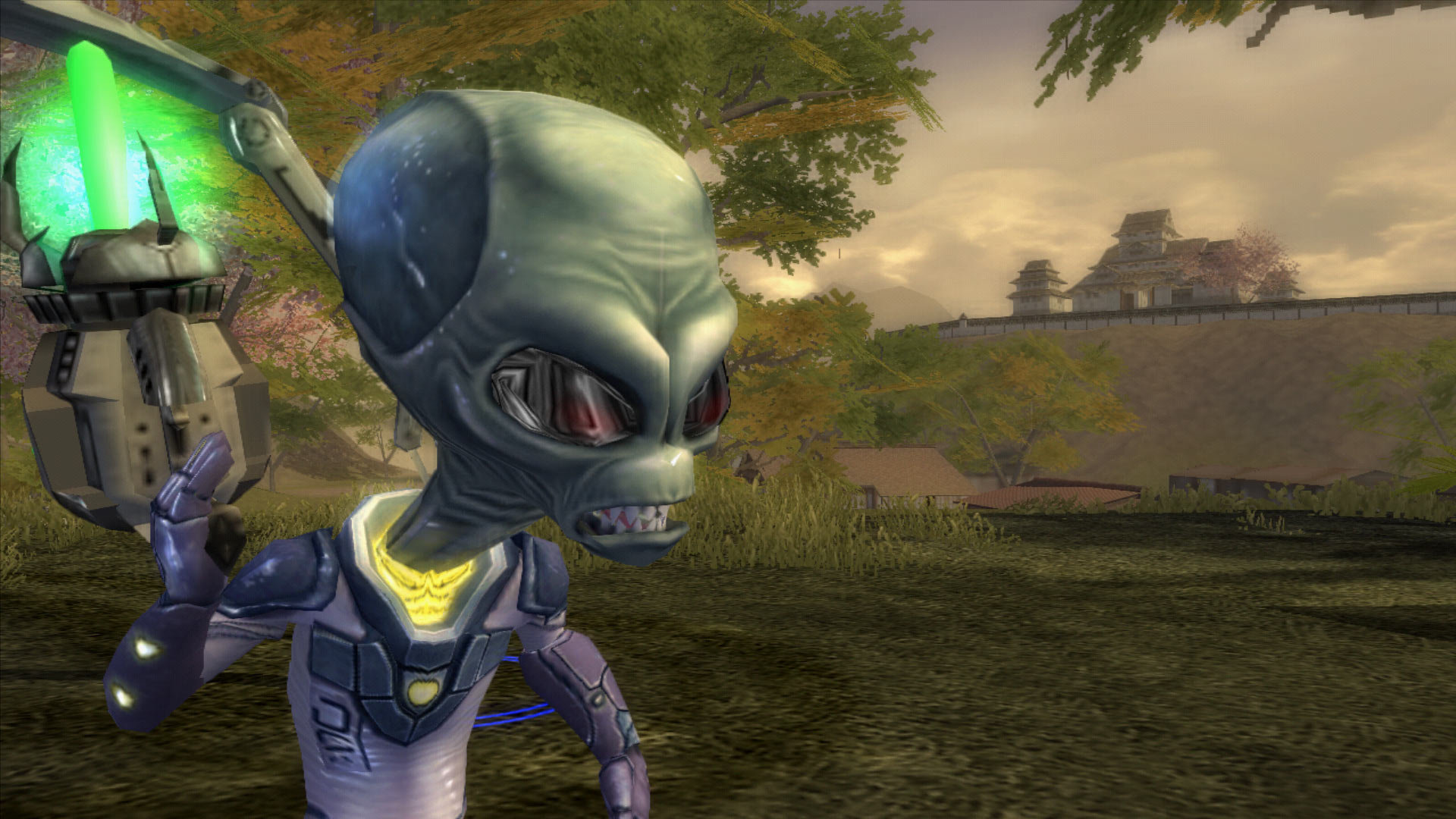
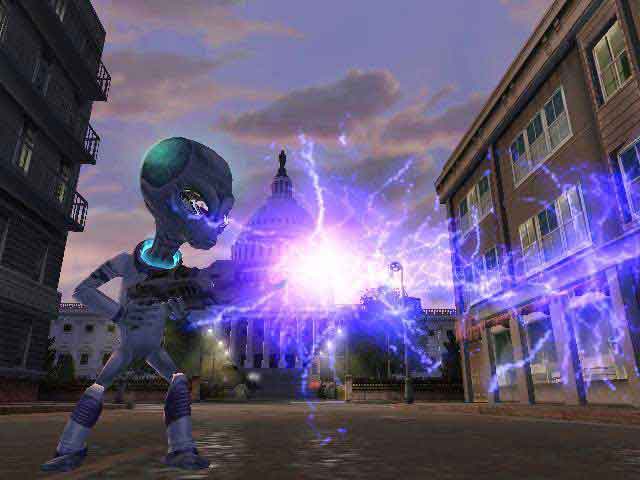
Destroy All Humans! 2 picks up ten years after the end of Destroy All Humans!  It is now 1969 and the world is swinging.  The latest Crypto clone is still disguised as the President of the United States and he is having a ball.  Of course, then the KGB decides to ruin it all by launching a nuclear missile at the Furon mothership.

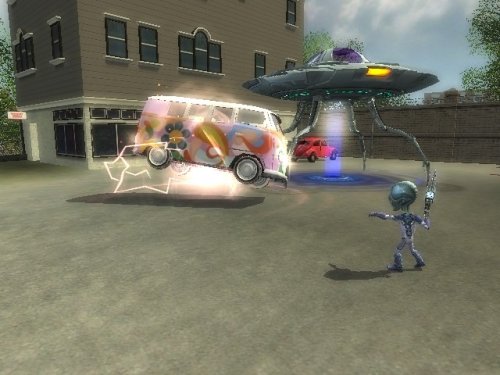
With the mothership destroyed and Pox reduced to being an ill-tempted hologram, Crypro must figure out not only what the KGB is planning but he must also get revenge for the destruction of the mothership and the death of his commander.  Destroy All Humans! 2 spans the globe, with Crypto going from San Francisco to London to Tokyo to Siberia with the game’s climax taking place on the moon.  Along the way, Destroy All Human! 2 parodies everything from hippies to Godzilla to James Bond.  This is a fun and humorous game that could be played all the way through in just a couple of sessions.  Along with having everything that the first game had, Destroy All Humans! 2 also has some new features.  My favorite was the ability to force hippies, schoolgirls, and other innocent bystanders to forget about me by making them suddenly hear acid rock.  Of course, it’s also a sandbox game so, if you don’t feel like concentrating on the plot, you can just focus your energies on destroying all humans!

Destroy All Humans! 2 is another game that I used to play nonstop on my Xbox.  My Xbox is still in working condition but my controller has seen better days so, whenever I play the game nowadays, I have to keep an eye on Crypto to make sure he doesn’t take off running towards the left side of the screen.

So, how about it?  If 2020 is going to be the year of the Destroy All Humans! remake, how about following up with a remake of Destroy All Humans! 2?

After all, we need Crypto now more than ever!


Missed Opportunities: Alien Nation (1988, directed by Graham Baker)


Alien Nation starts out with an intriguing premise but sadly doesn’t do enough with it.

In 1988, a spaceship lands in Mojave Desert.  Inside are 300,000 humanoid aliens, known as the Newcomers.  Intended to serve as intergalactic slaves, the Newcomers are now stuck on Earth.  (Of course, in the view of many humans, it’s Earth that’s stuck with them.)  Three years later, the Newcomers have settled in Los Angeles and they have adopted human names.  Some of them, like businessman William Harcourt (Terrence Stamp), have become successful and have been accepted by the human establishment.  The majority remain second-class citizens, facing discrimination and feeling alone in a world that doesn’t seem to want them.

Detective Matthew Sykes (James Caan) does not like the Newcomers but, after his partner is killed by one of the aliens, he ends up working with one.  Sam Francisco (Mandy Patinkin) is the first Newcomer to have been promoted to the rank of detective and is eager to prove himself.  Sykes renames him George and enlists him to investigate a series of recent Newcomer deaths.  Sykes’s real goal is to use Francisco’s Newcomer connections to investigate the death of his partner.  What the two of them discover is that the deaths are linked to a drug called Jabroka, which has no effect on human but was previously used to keep the Newcomers enslaved.

Alien Nation starts out with an intriguing premise.  I love the early scenes of Sykes driving down the streets of Los Angeles and seeing Newcomer prostitutes, Newcomer families, and even a Newcomer dance studio.  There is a lot promise in those scenes and they capture the feeling of a familiar world that has been irrevocably changed.  Both Caan and Patinkin give good performances and the alien makeup is still impressive.  Unfortunately, once Sykes and George start their investigation, the movie becomes a standard-issue police movie with a plot that could easily have been lifted from a Lethal Weapon rip-off.  So many interesting ideas are left unexplored, making Alien Nation an intriguing missed opportunity.  (There was later a television series based on the movie, which explored the Newcomer culture in greater detail.)

Alien Nation still has a strong cult following and I wouldn’t be surprised if it influenced District 9.  In 2016, it was announced that Jeff Nichols would be writing and directing a remake.  Nichols seems like the ideal director for a film like this and this is the rare case of a remake that I’m actually looking forward to.

Retro Game Review: Destroy All Humans! (2005, THQ)


I’m looking forward to 2020 for one reason and one reason only and it’s not the presidential election.

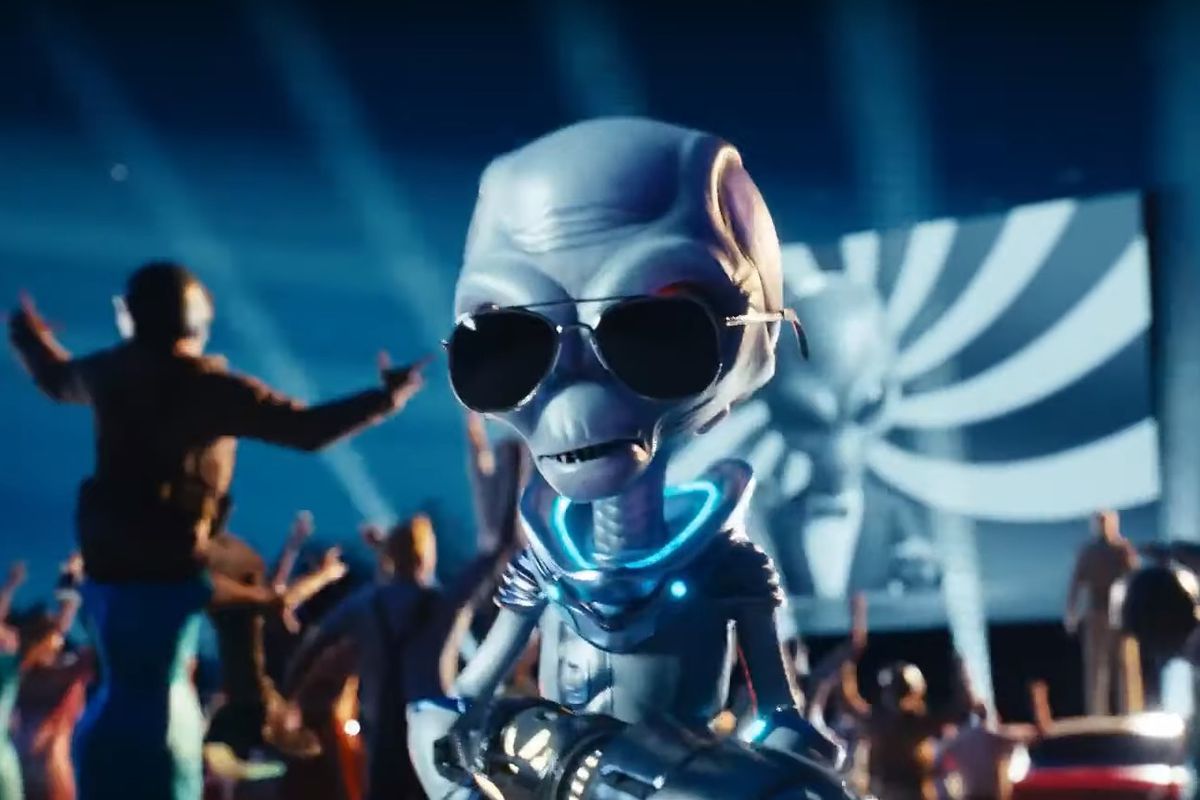
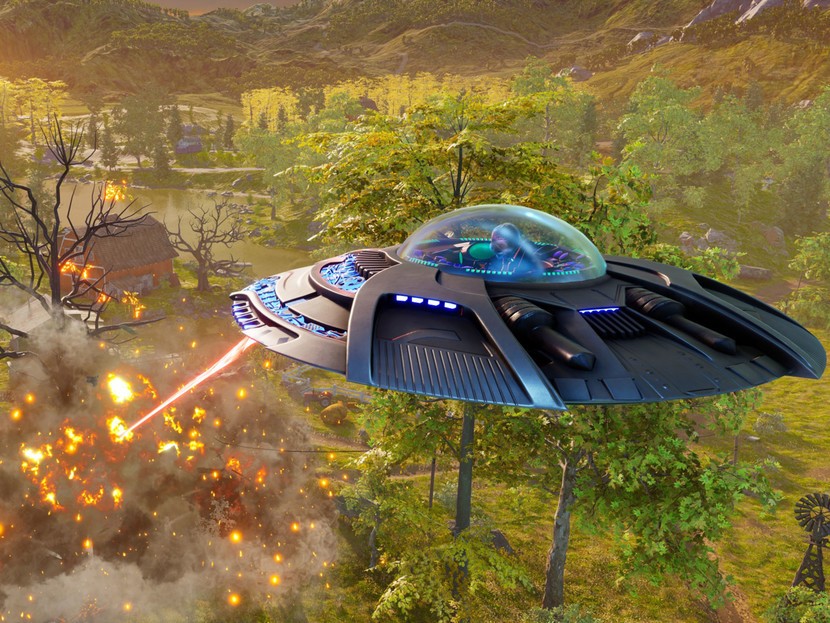
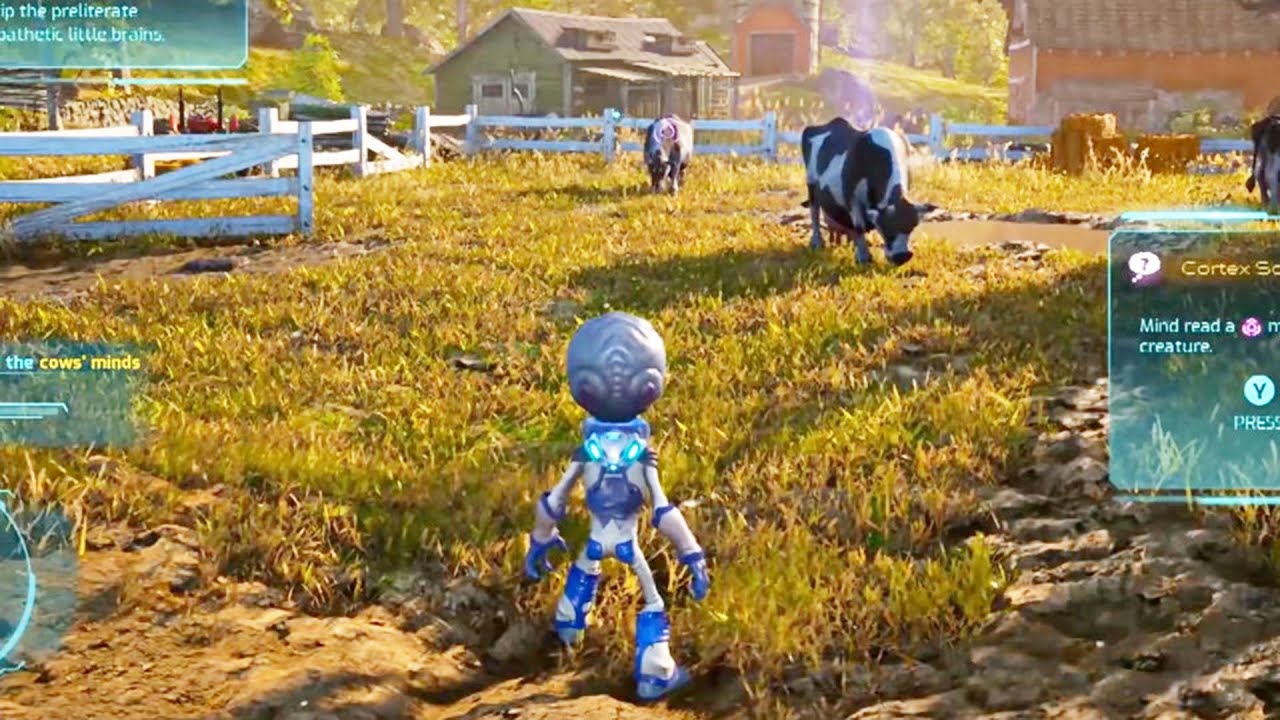
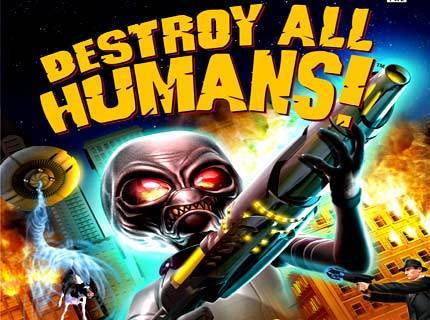
No, I’m looking forward to 2020 because that’s when I’ll finally be able to play Destroy All Humans! again!  The classic alien invasion game will be getting a full remake in 2020 and, once again, players will be able to help Crypto steal Furon DNA and conquer the planet.  It probably won’t be a minute too soon, either.  If 2019 is any indication, 2020 is a year that’s probably going to inspire a lot of people to wish they could beam up to their spaceship and blow things up.  With the remake of Destroy All Humans!, they should have the opportunity to do just that without causing any real world damage!

Back in the day (the 2005 day), Destroy All Humans! was the best reason to have either an Xbox or Playstation 2.  Crypto was a little grey man who sounded suspiciously similar to Jack Nicholson.  He came to Earth in 1959, on a quest to harvest brain stems, blow up cows, disrupt pool parties, and battle a mysterious government agency known as Majestic.  Though the game had a storyline and missions, it was also a sandbox game.  Once a location was unlocked, you could revisit and blow it up whenever you wanted to.  I lost track of how many times I took out Turnipseed Farm.  Being an industrious race, the humans always rebuilt as soon as you flew away.  It never seemed to occur to them to add any extra security precautions, no matter how many times you returned.

Because the game was set in 1959, it featured a full-on barrage of pop cultural references.  Crypto could read minds and it turned out that people all over America were thinking about Marilyn Monroe, Elvis, and whether or not they really liked Ike.  Crypto could also temporarily disguise himself as a human but, after a certain amount of time, he always reverted back to his original form.  If he reverted back while surrounded by humans, panic would ensue as the humans shouted that they were being invaded by “space commies!”

Of course, Earth was a dangerous place in the 1950s and it was common for Crypto to get killed.  Luckily, every time he died, a new Crypto clone took over and was even more eager to destroy all humans!

This was my favorite game on the Xbox and it’s one of the few that I really miss playing.  (I still have the game and the Xbox.  While the Xbox works, the controller’s seen better days and, whenever I do play one my old Xbox games, it seems like I spend the majority of the game trying to keep characters like Crypto and Tommy Vercetti from running over to the left side of the screen.)  I’m looking forward to once again taking control of Crypto and invading this lousy planet!

Is it 2020 yet?

(By the way, Case Wright once reviewed Tom Abernathy, the writer of Destroy All Humans!  Read that interview here.)