Halloween Scenes I Love: Spider-Man Goes To ESU’s Halloween Party in PS4’s Spider-Man


Not all good Halloween scenes have to come from a movie.  Sometimes, they can come from a video game!

One of my favorite missions in PS4’s Spider-Man is Back To School.  That’s where you, as Spider-Man, have to search the Empire State University Halloween Party for an Oscorp scientist named Dr. Delaney and rescue him from Mister Negative and the Demons.  Because it’s a Halloween party, you should be able to search for Delaney without anyone realizing that you’re the Spider-Man.  The bad news is that, again because it’s a Halloween party, almost every party goer is dressed up like one of your enemies.  And when Mister Negative does attack, it turns out that a drunk college student dressed up like the Rhino can be almost as dangerous as the actual Rhino!

You Have To Pay The Bills Somehow: The Maddening (1995, directed by Danny Huston)


Because her husband’s a dick who spends too much time working and not enough time taking the day off, Cassie (Mia Sara) grabs her five year-old daughter, Samantha (Kayla Buglewicz) and heads off for her sister’s house.  When Cassie stops at a gas station to fill up the car, she’s spotted by seedy Roy Scudder (Burt Reynolds!).  Roy puts down his cigar long enough to tamper with her car.  When it breaks down a few miles down the role, Roy drives up and offers Cassie and Samantha a ride back to his place, where he can fix her car or where she can at least call for hep.  Not realizing that she’s in a direct-to-video horror movie, Cassie accepts.

Big mistake!  Roy’s wife, Georgina (Angie Dickinson!), has not been the same since the mysterious death of her son and Georgina and Roy’s other child, Jill (Candace Huston, daughter of the film’s director and granddaughter of John Huston), needs a playmate.  Roy has decided that Samantha fits the bill.  Cassie is locked in a room while Samantha is turned into Jill’s slave and Roy deals with the angry ghost of his abusive father (William Hickey!).

You have to feel bad for Burt Reynolds.  He made this film at a time when his career was in decline.  His TV show was no longer on the air.  Boogie Nights was still two years away.  The man had bills to pay.  Can you blame Burt for accepting any role that came his way, especially if it meant a chance to co-star with Angie Dickinson and be directed by the son of John Huston?  Reynolds was famous for hating even his good films so you can only imagine what he must have thought about The Maddening.  Fortunately, since Burt was playing a total psycho in The Maddening, he could at least channel his feeling into the role.  Throughout ever minute of The Maddening, Burt is totally and thoroughly unhinged and angry in the way that only the former number one star in America could be upon having to settle for a role in a direct-to-video horror film.  He yells at his ghost father.  He slits throats.  He beats people into unconsciousness.  He does everything that a normal movie psycho does but, when he does it, it’s even more memorable because he’s Burt Reynolds.  Burt and Angie Dickinson playing the type of role that Bette Davis would have played for Robert Aldrich in the 60s are not just the main reasons to watch this movie.  They’re the only reasons.

This was Burt’s only horror film and it’s too bad that it couldn’t have been a better one.  But if it helped Burt keep the lights on during the lean years of the early 90s, good.

Game Review: Dwelling: Insomnia (2014, 0vr)


This piece of interactive fiction is a strange game.  I’m not quite sure how else to describe it.

The premise is a simple one.  Each night, you try to sleep.  Every night, you are awoken by someone or something pounding on your door.  Every.  Single.  Night.  In Choose Your Own Adventure fashion, you are given a set of options.  Do you try to go back to sleep or do you go to the door?  Do you look through the peephole or do you return to bed?  Open the door or hide?  Left or right?  At every step, you’re given the option to explore further or to try to return to safety.  The problem is that if you make the wrong choice, you might make it back to your apartment in one piece but you’re still going to be woken up the following night.  Make the right choice and something bad might still happen to you but at least you’ll no longer be woken up in the middle of the night.

What makes the game so strange is the way that it constantly loops back to the beginning, until you finally make the “right” choices.  The only thing that changes is the number that lets you know how many nights you’ve been woken up by someone pounding at your door.  Is someone really knocking at your door or are you stuck in some sort of time loop or permanent dream state? Having played the game and gotten to the end, I am still not sure.

The game itself is well-written and vivid enough to justify its placement in the horror genre.  It can be played here.

Panther’s Revenge: Night Creature (1978, directed by Lee Madden)


Axel McGregor (Donald Pleasence) is a world-famous author and big game hunter who, while on a hunt in the steamy jungles of Thailand, is maimed by a ferocious panther.  With both his body and pride wounded, Axel posts a reward for the panther, demanding that it be captured and brought to his private island estate.  When the panther is delivered, Axel plans to set it free so that he can hunt and kill it and regain his lost virility.  Unfortunately, as soon as McGregor sets the panther free, unexpected guests show up at the island, Axel’s two daughters (Nancy Kwan and Jennifer Rhodes), his granddaughter (Lesly Fine), and an obnoxious tour guide named Ross (Ross Hagen).  The panther proves to be harder to hunt than Axel was expecting and soon, one daughter has been killed and another daughter suffers a fate worse than death when she becomes Ross’s default love interest.

Night Creature is a strange film.  It was obviously made as a part of the nature-gone-wild cycle that started in the wake of Jaws but, once the daughters arrive at the island, there are several lengthy stretches where the movie concentrates more on the love triangle between Ross and the daughters than on the panther.  When the panther does show up, the attack scenes are so confusingly shot that it is difficult to be sure what has really happened.  Director Lee Madden goes overboard with slow motion shots of the panther stalking its prey and an attempt to introduce some psychic bond between Axel and the panther largely falls flat.

At least we get Donald Pleasence, playing one of his twitchy roles and suffering another extended nervous breakdown.  Night Creature may not offer much but it does have one of the best Pleasence freakouts ever captured on film.  It’s always a pleasure to watch Pleasence chew the scenery, especially when he’s joined by panther.

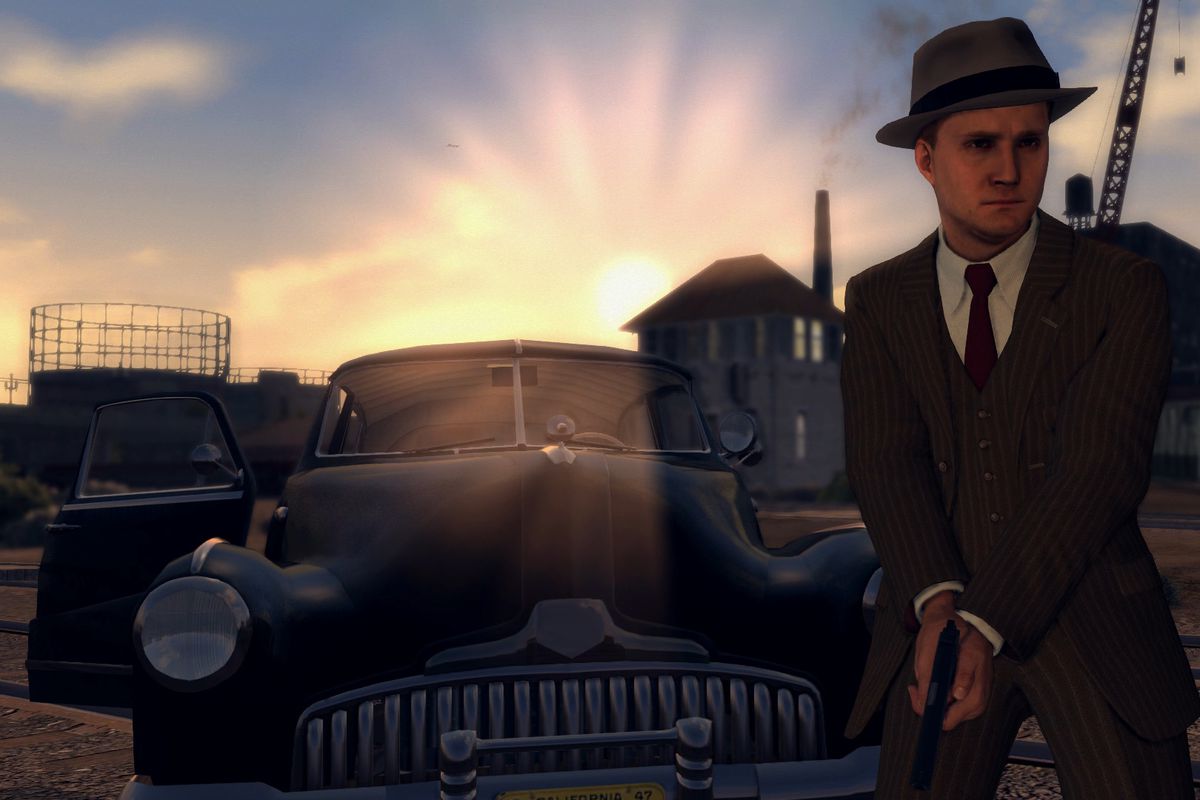
Retro Game Review: L.A. Noire (2011, Rockstar Games)


(This review is based on my experience replaying L.A. NoireBe sure to reread Leonard Wilson’s review, from when the game was originally released.)
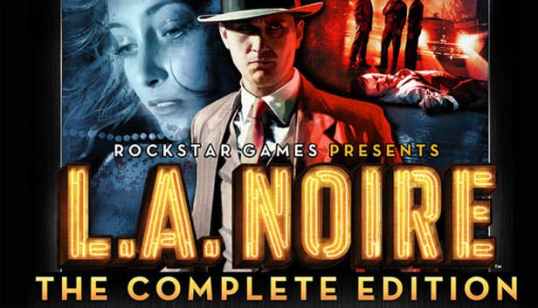
I recently replayed L.A. Noire, a game that I enjoyed when it was first released in 2011.  I was curious to see if, after eight years, it still held up.  The first time I played L.A. Noire, it was on the Xbox 360.  For the replay, I used the version that was released for the PS4.  This version included extra rewards and cases that were not originally included in the game.

L.A. Noire takes place in Los Angeles in the years immediately following World War II.  For the majority of the game, you control the actions of Cole Phelps, a decorated USMC veteran who works his way up through the LAPD.  He starts as a uniformed policeman before being promoted to detective.  The game follows him through three different department until, as a result of a personal scandal, he ends up being demoted down to arson.  Along the way, Phelps learns the truth about the Black Dahlia murderer and gets involved in the deadly aftereffects of a morphine heist.  Through a series of flashbacks, we also discover that Phelps may not be the war hero that everyone thinks that he is.  Cole’s an interesting hero because he’s so openly ambitious and judgmental that he is sometimes easy to dislike.  Nearly everyone who works with Cole in the game either beings their partnership disliking him or grows to dislike him over time.  Cole can be abrasive but he also has a strong moral sense and, when he says that he’s a better detective than his partners, he has a point.  From the start, the games teases us about Cole’s inevitable downfall but, when it actually does happen, it catches both Cole and the player by surprise.

L.A. Noire is an open world game, meaning that Phelps can temporarily abandon a case and spend some time walking and driving around Los Angeles.  The game’s recreation of 1947 Hollywood is impressive but, when compared to other open world games, there’s not much to do when you’re not actually on a mission.  This isn’t like Grand Theft Auto, where you can spends weeks mugging people and stealing cars until deciding to return a phone call so that you can get your next task.  L.A. Noire is a story-centered game so be prepared to spend most of your time searching crime scenes for clues, going back to the police station to pick up lab reports, and interrogating suspects.

When L.A. Noire first came out, it was the interrogation scenes that received the most attention.  The game used MotionScan technology and 32 cameras to capture every possible facial expression of the actors appearing in the game.  When you ask someone a question, you can watch their expressions while they answer and make the determination whether they’re lying or telling the truth, as well as whether to be a good cop or a bad cop.  You can watch an liar refuses to make eye contact with you or as an innocent man sweats out an aggressive questioning.  It puts you right in the world of the game, though I was disappointed to discover that wrongly accusing someone of lying doesn’t actually have much of an effect on how each case ends.
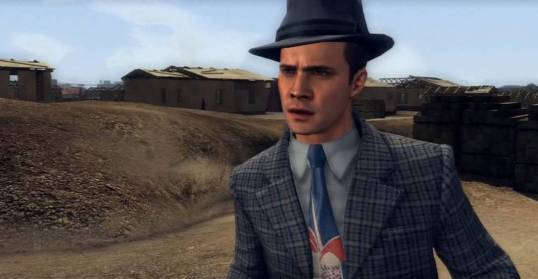
The main flaw with L.A. Noire‘s stoy is that, during the final fourth of the game, a new character is introduced.  Jack Kelso served with Cole in the Marines and knows the truth about Cole’s wartime “heroism.”  For the final few cases, Jack replaces Cole as the playable character and Cole is reduced to supporting him.  Because Jack is written to be perfect and basically has none of Cole’s flaws, he’s also not a very interesting protagonist.  Switching from playing Cole to Kelso bothered me the first time that I played L.A. Noire and it bothered me even more when I replayed it.  A final cut scene, which revealed that Kelso knew more than he originally let on, did not help.

Fortunately, the rest of the game still held up very well.  The cases are all challenging without being impossible to solve and the game does a great job of recreating the atmosphere of classic California noirs like Chinatown and L.A. Confidential.  Cole, his partners, and all of the suspects are vividly written and voiced characters and the cases that Cole works for Homicide are just creepy enough to make this game appropriate for October playing.  Be careful chasing the Black Dahlia killer into the catacombs.  I didn’t bother to pay attention to where I was going and I spent an hour running around in circles before I finally found him and promptly got gunned down.
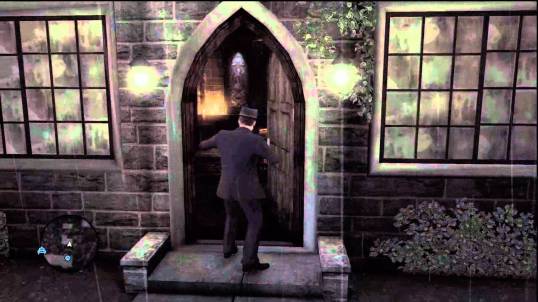
There are puzzles to be solved and suspects to be pursued.  This game may mostly be about interrogating people and analyzing clues but it does have its share of car chases.  Fortunately, if you fail to complete an action scene too many times in a row, the game will give you the option of just skipping it.  When you’re working with a partner and heading to a crime scene, that game also give you the option of telling your partner to drive to the location.  That’s something I, being among the directionally challenged, appreciated.

However, if you do enjoy driving through a video game, L.A. Noire‘s recreation of Los Angeles in the 40s has much to recommend it.  Driving through the game’s version of Los Angeles, you’ll find plenty of evidence of America’s post-World War II optimism.  New houses are being constructed.  Innocent young women are hanging out on every street corner, looking to become a star.  The theater marquees advertise movies like Odd Man Out.   All of the famous Hollywood landmarks are lovingly recreated.  An early case leads to you searching for clues behind the Hollywood sign.  Another case actually leads to a firefight at the old Intolerance set while yet another case tests how much attention you’ve been paying by requiring you to solve a series of riddles that will lead you from one landmark to another.  In the tradition of Raymond Chandler and James Ellroy, L.A. Noire challenges you to take a look at what’s happening underneath Los Angeles’s pleasing surface.

As a game, L.A. Noire holds up well.  I won’t hold my breath for that sequel that was promised seven years ago but I did enjoy replaying it.

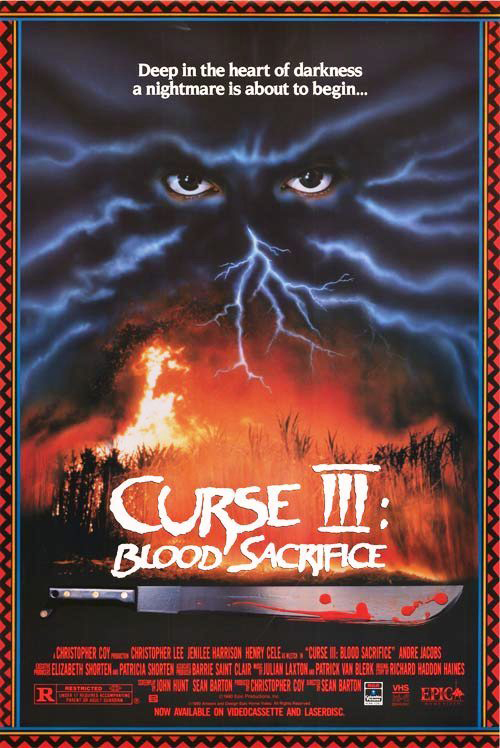
Save The Goat!: Curse III: Blood Sacrifice (1991, directed by Sean Barton)


Having absolutely nothing to do with either of the Curse films that preceded it, Curse III: Blood Sacrifice takes place in South Africa during the 1950s.  American Elizabeth (Jenilee Harrison) has just married plantation owner Geoff Armstong (Andre Jacobs) and is still struggling to adjust to living in Africa.  When her sister, Cindy (Jennifer Steyn), comes over for a visit, she and Elizabeth stumble across what appears to be a native ceremony.  When they realize that the local witch doctor is about to sacrifice a goat, Cindy steps on and grabs the goat.  Not happy at being interrupted and needing to make a sacriice to atone for an earlier murder, the witch doctor places a curse on Elizabeth and her entire family.  Later, a rubbery fishman stalks the plantation, using a machete to kill every colonialist it comes across.

Curse III is the best of the Curse films, though that may not be saying much.  The film is largely a standard slasher with a super natural twist, right down to the first victims being horny teens.  However, both the setting and the 1950s time period make the film slightly more interesting than the usual 90s, direct-to-video horror fare, with the curse being the result of a cultural misunderstanding and many of the victims too blinded by their own prejudices to realize how much trouble they are in.  Making what would turn out to be both his first and last film as a director, acclaimed editor Sean Barton showed that he knows how to put together an effective “stalking” scene, wringing out all the atmosphere that he could from that plantation.  Best known for co-starring in the later seasons of Three’s Company, Jenilee Harrison is adequate if not particularly memorable in the lead role but the film is, not surprisingly, stolen by Christopher Lee,  who plays a local doctor and who lends Curse III whatever gravitas it may have.

Game Review: The Last Half of Darkness (1989, SoftLab Laboratories)


Today, I was planning to take a look back at L.A. Noire but, due to last night’s storms, I lost power right as I was about to start composing my thoughts.  The power has since come back but, rather than do a rush job on one of my favorite games, I’m going to hold off on posting about L.A. Noire until tomorrow or Wednesday.

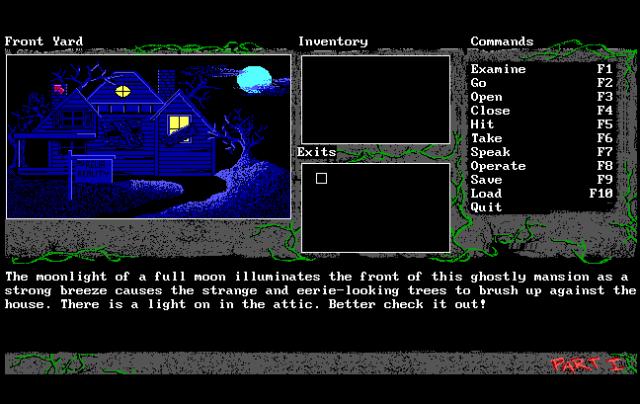
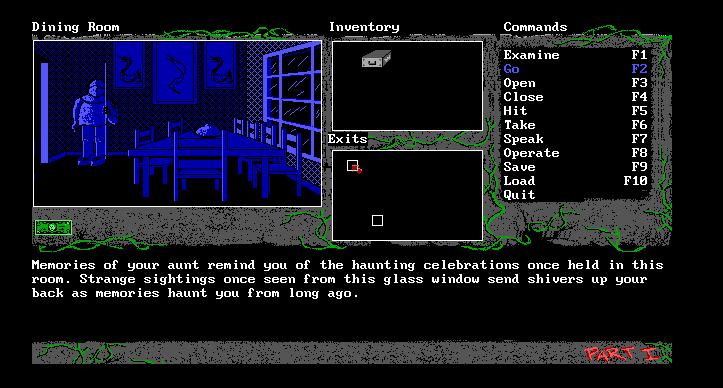
Instead, for today, I’ll recommend The Last Half of Darkness, a haunted house game that can be played at the Internet Archive.  In The Last Half of Darkness, you are searching the home of your late aunt.  Your aunt was a voodoo witch and you stand to inherit her considerable estate if you can finish the potions that she was working on and also solve the mystery of her death.  To do that, you are going to have to go through and search her home.  The problem is that you are not alone.  Open the right door and you will find the secret to returning life to the dead.  Open the wrong closet or cabinet and prepare to meet your fate at the fangs of a snake or the hands of an angry ghost.

The Last Half of Darkness is a challenging game that is also a lot of fun, assuming that you can get the hang of the game’s point-and-click interface.  Instead of typing out your commands, you click on a list of options that are on the right side of the screen.  You then have to click on the picture of whatever object you want to pick up or direction you want to head.  It took me a while to get used to it but, once I did, it barely bothered me.

This is a good game, full of wit and atmosphere and puzzles that require some concentration but which are not impossible to solve.  For those of you like me who sometimes need to cheat to win a game, here’s a helpful walk-through.

The game itself can be played by clicking here.

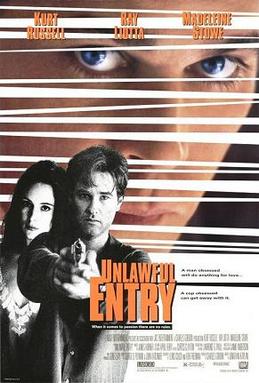
Who Watches The Watchmen: Unlawful Entry (1992, directed by Jonathan Kaplan)


The upscale and complacent life of Michael and Karen Carr (Kurt Russell and Madeleine Stowe) is interrupted one night when a burglar breaks into their home via their skylight.  The intruder briefly holds a knife to Karen’s throat before taking off.  Shaken by the encounter, the Carrs are very happy when a seemingly friendly cop, Officer Pete Davis (Ray Liotta). offers to help them cut through all the red tape and get a security system installed in their house.

At first glance, Pete seems like the perfect cop but actually, he’s a mentally unstable fascist who quickly becomes obsessed with Karen.  When Pete offers Michael his nightstick so that Michael can use it on the man who earlier broke into his house, Michael refuses.  That’s all that Pete needs to see to decide that Michael’s not a real man and that Karen would be better off with him.  Even after Michael orders Pete to stay away from his home, Pete continues to drop by so that he can spy on the couple.  When Michael complains, Pete frames him by planting cocaine at his house.  When Michael says that he’s innocent, no one believes him.  Why would they?  Pete’s a decorated cop who is keeping the streets safe.  Michael is just a homeowner.  While Michael sits in jail, the increasingly violent and unhinged Pete makes plans to make Karen his own.

“Who watches the watchmen?” as the old saying goes.  Unlawful Entry is an efficient and no-nonsense thriller that was ahead of its time as far as its portrayal of a policeman abusing his authority is concerned.  Jonathan Kaplan was trained in the Roger Corman school of filmmaking so he doesn’t waste any time getting to the story and he even finds a role for Dick Miller.  Ray Liotta, fresh off of his performance in Goodfellas, is perfectly cast as the manipulative and misogynistic Pete while Kurt Russell is once again the ideal everyman.  Madeleine Stowe, who was one of the best actresses of the 90s, does not get to do much beyond be menaced but she does it well.  Whatever happened to Madeleine Stowe?  Kurt Russell’s career is still going strong and Ray Liotta still appears regularly in gangster movies and Chantix commercials.  Isn’t it about time for a Madeleine Stowe comeback?

Game Review: Eat Me (2017, Chandler Groover)


Copyright Chandler Groover

Eat Me is both one of the strangest and most delicious text adventures that I’ve ever played.

You are a very hungry child being held captive in a dungeon.  Fortunately, your manacles are very tasty.  For that matter, so is the door to your cell, probably because it’s made out of a cheesecake.  If you want to go for a more minimal meal, the skeleton of the prisoner who was in the cell before you is also available for snacking.  In fact, as the player soon discovers, everything in this dungeon can be eaten.  That includes the doors, the instruments of torture, the bodies of the other prisoners, and the guards.  If you’re going to escape you better start eating.

There are a few things that stand out about Eat Me.  One thing is that the solution to almost every problem is to eat.  Some things are easier to eat than others but eating is always the safest way to go.  The other is that it’s a very well-written game, with very tasty descriptions of each room, each object, each person, and, of course, each bite.  Some of the descriptions are downright tasty while others are not something you should read on a full stomach.  None of the NPCs in the game really want to be eaten but, in the end, it’s either you or them.

For those ready to start their meal, Eat Me can played online here.

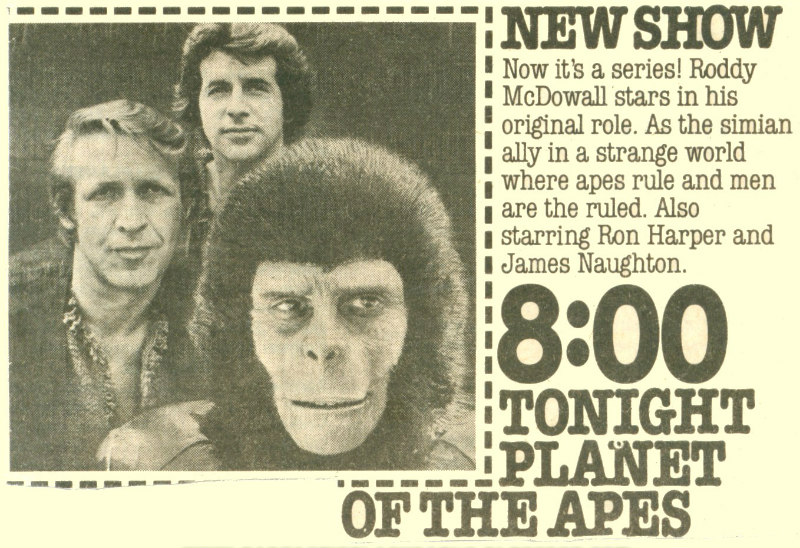
Great Moments In Television History: Planet of the Apes The TV Series


On September 13th, 1974, audiences that tuned into CBS saw the premiere of a new TV show with a familiar premise.

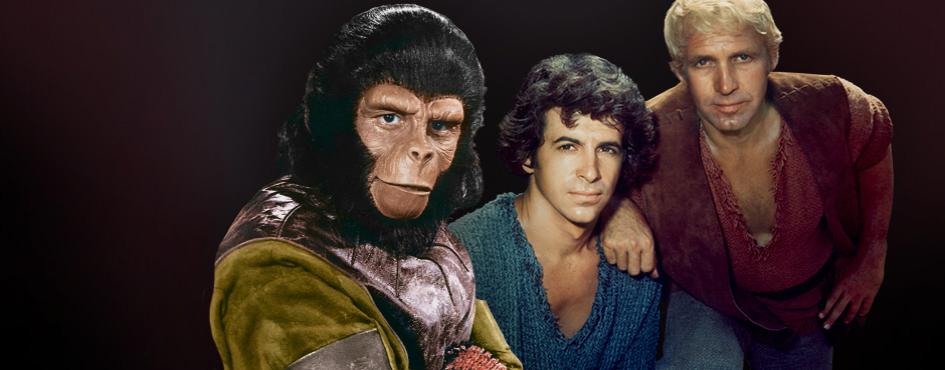
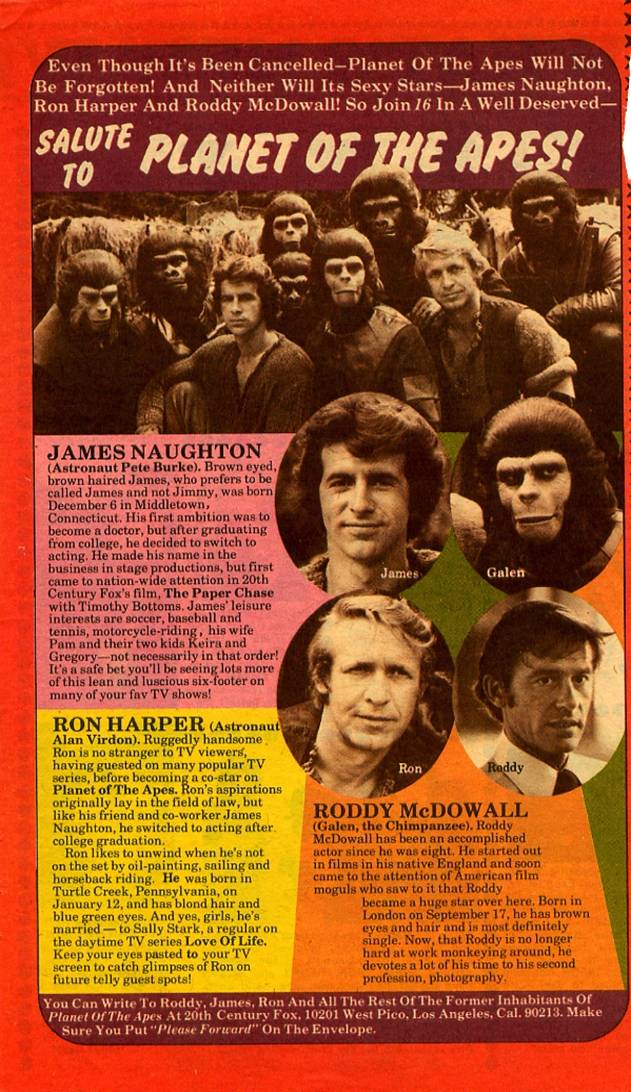
The episode opened with a spaceship crashing on an Earth-like planet.  One of the astronauts was killed.  Two of the astronauts — Alan Virdon (Ron Harper) and Peter Burke (James Naughton) — survived.  Virdon and Burke discovered that the planet was inhabited by humans who, despite it being the year 3085, were living in medieval villages.  The humans were kept in a state of serfdom by the Apes who ruled the planet.  The Apes spoke English and had formed their own society of militaristic gorillas and scientific-minded chimpanzees.  Looking through an old book, Virdon and Burke discovered that they had crash landed on Earth, far in the future!

You know the drill.  Planet of the Apes was based on the famous series of films, with the first pilot episode featuring Virdon and Burke discovering in less than an hour what took Charlton Heston a journey into the forbidden zone to figure out.  Because the humans had “blown it up,” the Earth was now ruled by Apes!

As fugitives from ape justice, Virdon and Burke spent the next fourteen episodes being pursued by the fanatical General Urko (Mark Lenard), who was determined to capture the two astronauts before they revealed that Apes had not always been the planet’s masters.  Traveling with Virdon and Burke was a sympathetic chimpanzee named Galen (Roddy McDowall).  Usually just one step ahead of Urko, Virdon, Burke, and Galen traveled from village to village, seeking a way to fix their spaceship so that they could escape the Planet of the Apes.

Planet of the Apes got off to a strong start with an exciting and concise first episode but the series quickly ran out of gas.  Because Virdon, Burke, and Galen had to flee to a new village at the end of every episode, the show was never able to devote much time to exploring the most intriguing thing about the original Planet of the Apes films, the culture of a world where humans were subservient to apes.  Because Virdon and Burke were largely interchangeable with little in the way of backstory or personality, the show very quickly ran out of a stories to tell.  It didn’t take long for Planet of the Apes to start repeating itself with multiple episodes in which Virdon or Burke got involved in local village drama before Urko showed up and forced them to flee again.

There were some good moments, though.  Probably the highlight of the series was the third episode of the series, The Trap.  In this episode, Virdon, Burke, Galen, and Urko all reach the ruins of San Francisco at the same time.  After an earthquake buries Burke and Urko in a subway tunnel, the two of them are forced to work together to survive.  Burke and Urko make an unexpectedly good team and Urko seems like he’s on the verge of a change of heart when he spots an old poster for the San Francisco zoo, one that features a caged gorilla being gawked at by humans.  Urko’s angry reaction to seeing the poster is well-acted by Mark Lenard and, for a few minutes, his obsession with capturing Virdon and Burke can be understood.  It wouldn’t last but, in that moment, Urko went from being just another villain to being a complex character with his own clearly defined motivations.

The show also benefited from Roddy McDowall, who, by this point, was an expert at acting while wearing chimpanzee makeup.  McDowall brought heart and humor to the role of Galen, even if he was too often treated like a servant by Burke and Virdon.  Whenever the two humans were scared to go out in public, they sent Galen off to gather information.  Galen did a good job but he still deserved better.

Finally, Planet of the Apes had one of the coolest opening title sequences of all time!  Take a look:

Though cancelled after only 14 episodes, Planet of the Apes The Television Series lives on.  Episodes can currently be seen on MeTV.