4 Shots From 4 Films: Special Kurt Russell Edition


4 Shots From 4 Films is just what it says it is, 4 shots from 4 of our favorite films. As opposed to the reviews and recaps that we usually post, 4 Shots From 4 Films lets the visuals do the talking!

Today, we wish a happy 69th birthday to the patron saint of all thing that are cool about the movies, the one and only Kurt Russell!

And here to help us do that are:

4 Shots From 4 Films

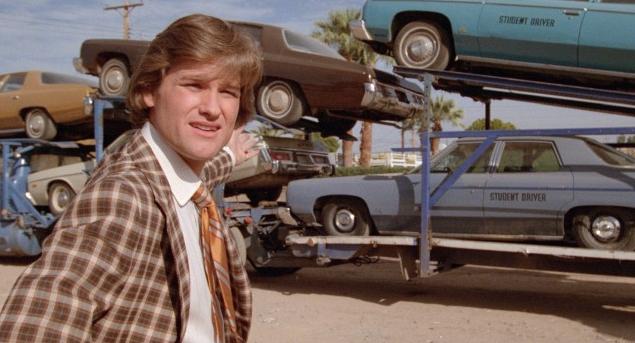
Used Cars (1980, directed by Robert Zemeckis)

Escape From New York (1981, directed by John Carpenter)

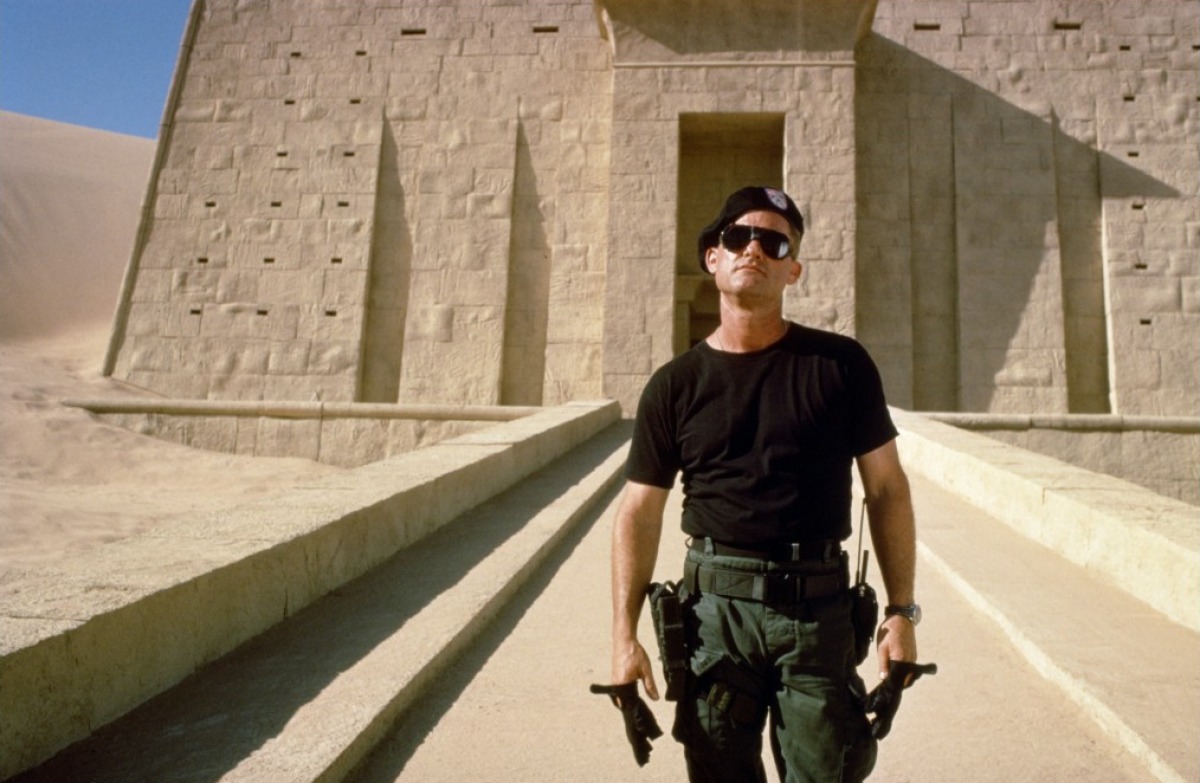
Stargate (1994, directed by Roland Emmerich)

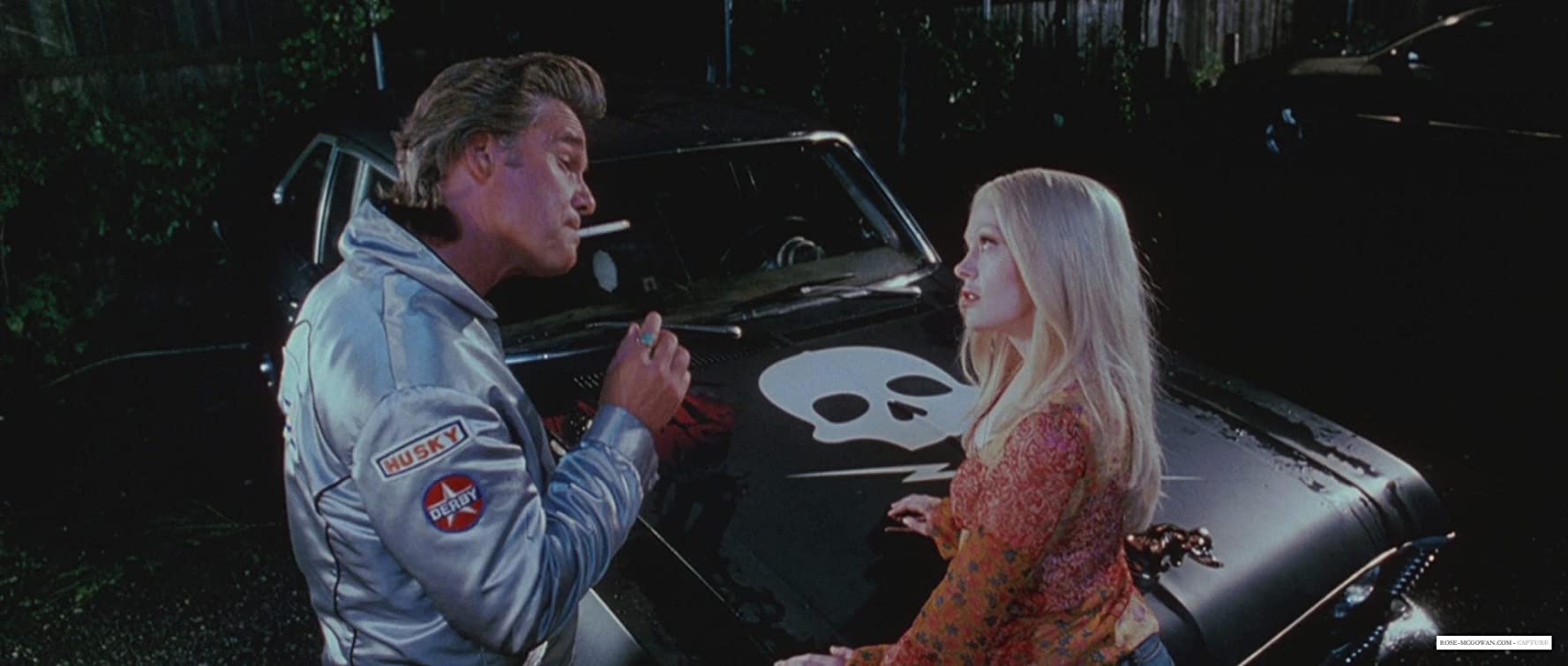
Death Proof (2007, directed by Quentin Tarantino)

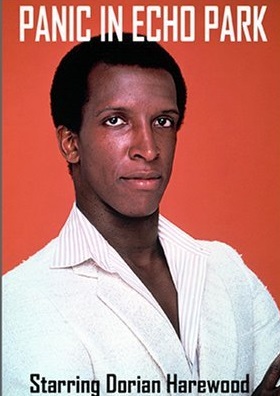
Panic in Echo Park (1977, directed by John Llewellyn Moxey)


Dr. Michael Stoner (Dorian Harewood) is a young, black doctor who works in a hospital located in a poverty-stricken Los Angeles neighborhood that has a high crime rate.  Stoner’s got the education and the talent to be working in an upscale hospital and making a lot of money but it’s more important to Stoner that he give something back to the community.  Stoner is a doctor who cares and he has no hesitation letting everyone know it.  When he meets a wealthy plastic surgeon at a party, he tells him that he should come down to Stoner’s hospital and try his hand at fixing up bullet holes.  The plastic surgeon doesn’t react well to the suggestion.

Stoner is convinced that there’s an epidemic breaking out in the Echo Park neighborhood but he can’t get anyone to listen to him.  No one cares about what happens in Echo Park.  When Stoner deduces that the illness is being caused by dirty tap water, he still can’t get anyone to listen to him.  He yells at people at parties and everyone ignores him.  He goes to the press and the media refuses to cover the story.  The corporate weasels who are responsible for poisoning the water don’t care about anything other than money.  Stoner talks about his problems to a young man who is in a coma and he gets no response.

Finally, Stoner is forced to enlist the help of a group of local teenagers who are making a documentary about life in their neighborhood.  Dr. Stoner may not always be polite but he gets results.

Directed by John Llewellyn Moxey, Panic In Echo Park is a made-for-TV movie and much like Where Have All The People Gone? (which was also directed by Moxey), it seems like it was probably envisioned as being a pilot for a weekly series.  Watching the film, it’s easy to imagine Dr. Stoner getting mad on a weekly basis.  Like most made-for-TV movies, it’s predictable and the characters are all either too obviously good or too obviously evil.  However, Dorian Harewood (who is probably best known for getting shot over and over again in Full Metal Jacket) gives a good performance as Dr. Stoner.  He doesn’t get to do much other than yell at people but Harewood does it well.  Today, a story involving people getting sick from dirty tap water does not seem far fetched (do they have clean water in Flint, yet?) and the scenes where Dr. Stoner orders people to be put into “quarantine” feel disturbingly like the evening news.

Music Video of the Day: Locked In by Judas Priest (1986, directed by Wayne Isham)


Since we’re all locked in for the time being, it makes sense that today’s music video of the day should be for Judas Priest’s Locked In.

This video makes about as much sense as any heavy metal band from the 80s did.  Rob Halford is being held prisoner in a medieval castle where he is apparently being tortured by a bunch of living skeletons.  The other members of Judas Priest decide to ride their motorcycles over to the castle and then break in so that they can save him.  Heavy metal videos of the 80s often feel like what you would get if the members of Monty Python had decided to follow up The Meaning of Life with Monty Python’s Mad Max.  That certainly seems to be the case here and the members of the band spend so much time mugging to the camera that there is little doubt that they were in on the joke.  David Coverdale would have taken this seriously but not the members of Judas Priest.

This video was one of the many to be directed by Wayne Isham.  According to his entry at IMDb, Wayne’s motto is “No Wayne, no pain!”

Enjoy!


Where Have All The People Gone? (1974, directed by John Llewellyn Moxey)


Steve Anders (Peter Graves) and his teenage children, David (George O’Hanlon, Jr.) and Deborah (Kathleen Quinlan), are exploring a cave in the mountains of California when they experience a sudden earthquake.  After managing to escape from the cave and meeting a man who tells them about how there was a bright flash of light in the sky before the earthquake, the three of them come down from the mountain and discover that there does not appear to be anyone around.  Instead, where people once stood, there are now only piles of clothes and white dust.  Where have all the people gone?

As the Anders try to make their way back home to Malibu, they discover that the entire world has changed.  Towns are completely deserted and once friendly animals are now viscous and hostile.  While Steve tries to keep his children from giving up hope, he also tries to find the answer to the question, where have all the people gone?

This film, which is only a little over an hour long, was made for NBC.  Though the film’s short running time can sometimes make it feel rushed, Where Have All The People Gone? is still a effectively creepy movie from made-for-television specialist John Llewellyn Moxey.  Though it’s always difficult to accept an actor like Peter Graves as being anyone other than Peter Graves, he actually did a pretty good job playing the confused father and there are some good scenes where both of his children deal with thing in their own way.  (David refuses to get emotional.  Deborah does the opposite.  Only Steve understands the importance of mixing emotion with reason.)  When they do finally find another survivor, she’s played by Verna Bloom and the scene where they come across her sitting in her car, apparently catatonic, is really well-handled.

Though the film does eventually explain where all the people have gone, it still has an unsatisfying, open-ended ending.  It wouldn’t surprise me if this film was meant to be pilot for a potential televisions series because it ends with the promise of future adventures.  A weekly tv series would have allowed the Anders family to find more survivors and more angry animals but instead, the story ends with everyone still unsure as to what type of world they’re about to inherit.

If you’re one of those who is stuck inside right now, Were Have All The People Gone? is reasonably diverting and is available on YouTube and Prime.

Music Video of the Day: Leader of the Pack by Twisted Sister (1985, directed by Marty Callner)


Since today is Dee Snider’s 65th birthday, it makes sense that today’s music video of the day would come to us from Twisted Sister.  It might not make as much sense for that video to be for their cover of Leader of the Pack, which is widely considered to be one of the worst covers of the 80s.  Personally, I think both the cover and the video are a good example of Snider’s sense of humor.  Watching this, it’s hard to believe that Snider and the band were once considered to be a threat to young minds.  I may be picking Leader of the Pack because I think its underrated or I might be picking it because Valerie already did the video for I Wanna Rock.  Take your pick.

The Leader Of The Pack video is from the 80s and it features something that I always love to see in videos from that era: bad green screen special effects.  The anti-Twisted Sister notes from Mom and Dad float through the video like a weatherman superimposed in front of a map of the continental United States.

The video is about a girl who apparently only has room in her heart for Twisted Sister and Leonard Nimoy.  Just check out that giant poster of Spock that she’s got in her bedroom.  Her parents are probably alright with her love of Spock but they can’t stand the thought of their daughter liking Twisted Sister, probably because they think that Tipper Gore has a point about labeling music.  As for the girl, she may be in love with the leader of the pack (Dee, of course) but that doesn’t make her a good driver.  Not only does she wreck that bulky car but she barely survives.  Was it all worth it?

Just ask Bobcat Goldthwait, who plays her boss for some reason.  Goldthwait is instantly recognizable.  I haven’t been able to find the name of the girl in the video, though she looks familiar to me.

This video was directed by Marty Callner, who directed videos for everyone.

Enjoy!

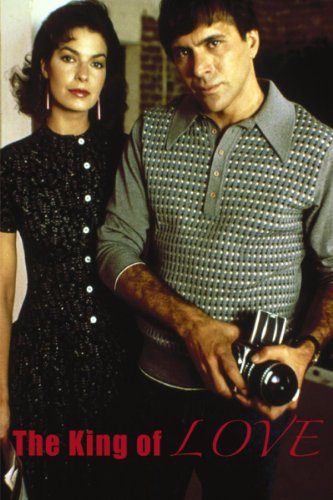
The King of Love (1987, directed by Anthony Wilkinson)


From the depths of the 80s comes this soapy film about a publisher played by Nick Mancuso whose father issues fuel not only his rise but also his fall.  When the movie starts, Mancuso is dying because he’s been shot by an unknown assassin but he still needs someone to give him some answers before he can give up the mortal coil.  Much like Dutch Schultz deliriously babbling about his dog Biscuit after getting fatally wounded, Mancuso spends his last minutes flashing back to how he became America’s most controversial magazine publisher.

In a ruthless and methodical fashion, Mancuso rose up the ranks from being just a lowly photographer to being the publisher of Love, a magazine that may remind you of Playboy and Penthouse but which is definitely not either one because it’s called Love.  Because sex and nudity sells, Love grows to be a billion dollar empire but, along the way, Mancuso uses and alienates everyone who gets close to him.  With his outspoken views on politics and his advocacy for free love and personal freedom, he also become the number one enemy of anti-pornography crusaders everywhere.  Only his partners, Nat (Michael Lerner) and Annie (Sela Ward), are willing to stay with him, mostly because they’re both in love with him.

Mancuso is obsessed with running a rival publisher out of business.  Jack Kraft (Rip Torn) is just a ruthless as Mancuso and he also might be his father.  In fact, everything that Mancuso does is because he wants to get revenge on Jack for not being there for him as he was growing up, even though he doesn’t have any definite proof that Jack is actually his father and Jack refuses to say whether he is or isn’t.  As Mancuso lies on his death bed, Jack stops in for one last visit.  Mancuso finally asks Jack flat-out if he’s his father.  “I don’t know,” Jack answers, as the film draws to a close.  I know that’s a big spoiler but it probably does not matter because this film has never been released on video and it probably never will be.  My mom has a copy on VHS tape, which she recorded when it originally aired in 1987.  It even has the original commercials.  It’s possible my mom may have the only copy of this film in existence, I don’t know.

The King of Love‘s attempt to be daring and racy is sabotaged by its origin as a made-for-TV movie from the 80s.  There may be a lot of talk about sex but you’re not going to see or hear anything that could have gotten ABC fined by the FCC.  What’s most interesting about The King of Love is the way that the film combines the personas of the three most famous adult magazine publishes.  Mancuso dresses like Bob Guccione, spouts Hugh Hefner’s philosophy, and ultimately suffers Larry Flynt’s fate.  Otherwise, the movie’s not very interesting at all but it is also ways enjoyable to watch Rip Torn play an arrogant bad guy and Michael Lerner manages to overcome a bad script and give an effective performance as Mancuso’s conflicted second-in-command.

4 Shots From 4 Bloody Films: Special Michael Caine Edition


4 Shots From 4 Films is just what it says it is, 4 shots from 4 of our favorite films. As opposed to the reviews and recaps that we usually post, 4 Shots From 4 Films lets the visuals do the talking!

Today is the 87th birthday of the great actor and icon of all things British, Michael Caine!

Caine is famously prolific and, when it comes to picking shots from his films, it’s hard to narrow them down to just four.  At a certain point in his career, the big joke about Michael Caine was that he would appear in literally everything.  He even missed accepting his first Oscar in person because he was busy filming Jaws: The Revenge.  Not surprisingly, it was after Jaws: The Revenge that Caine started to become more discriminating when it came to picking his films.

Despite the fact that he’s now a bit more careful about picking roles that allow him to show off his considerable talent as opposed to just supplying him with an easy paycheck, Caine remains a busy actor.  In his autobiography, Blowing the Bloody Doors Off, Caine wrote that he plans to keep acting as long as he is physically and mentally able to do so.  I look forward to seeing what future, great performances Michael Caine is going to give us.

For now, here are:

4 Shots From 4 Films

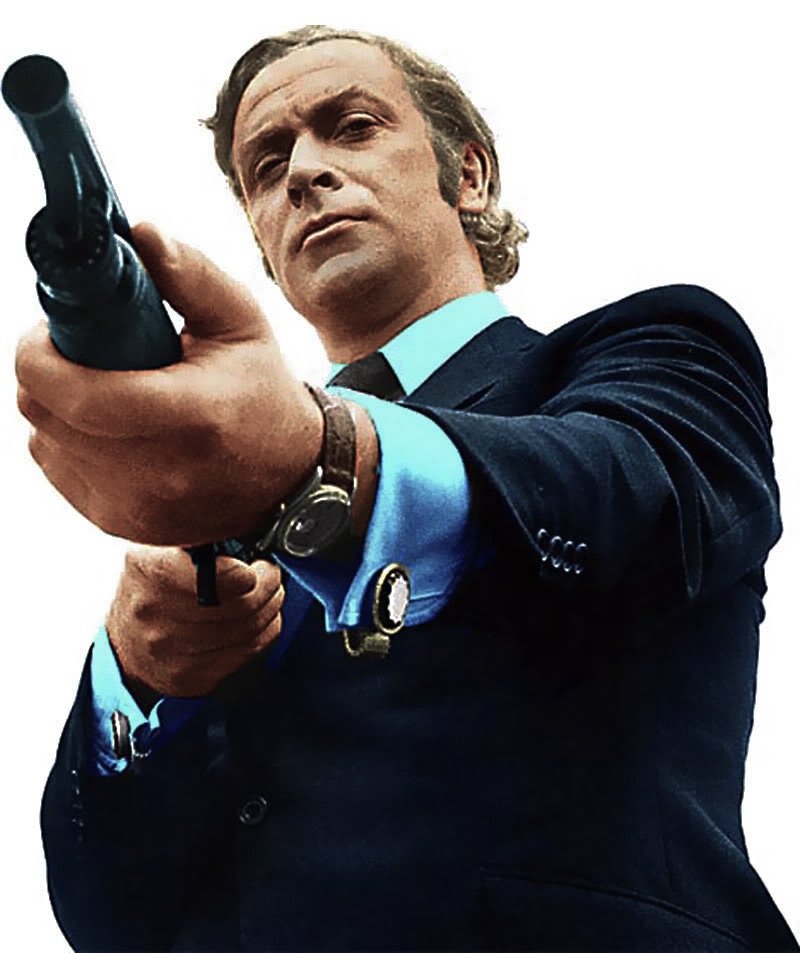
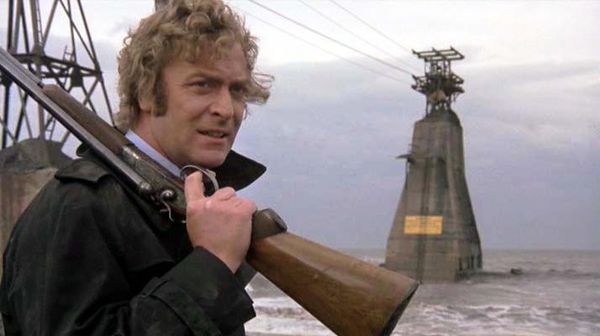
Get Carter (1971, directed by Mike Hodges)

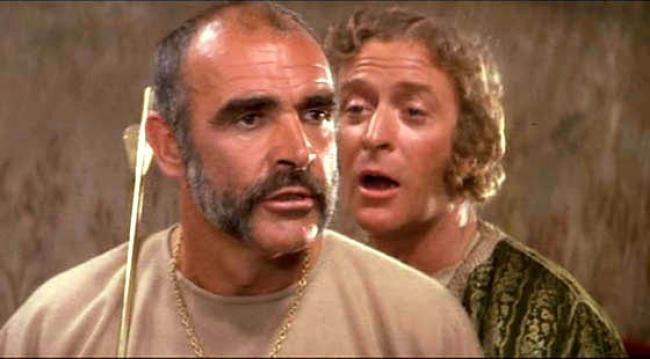
The Man Who Would Be King (1975, directed by John Huston)

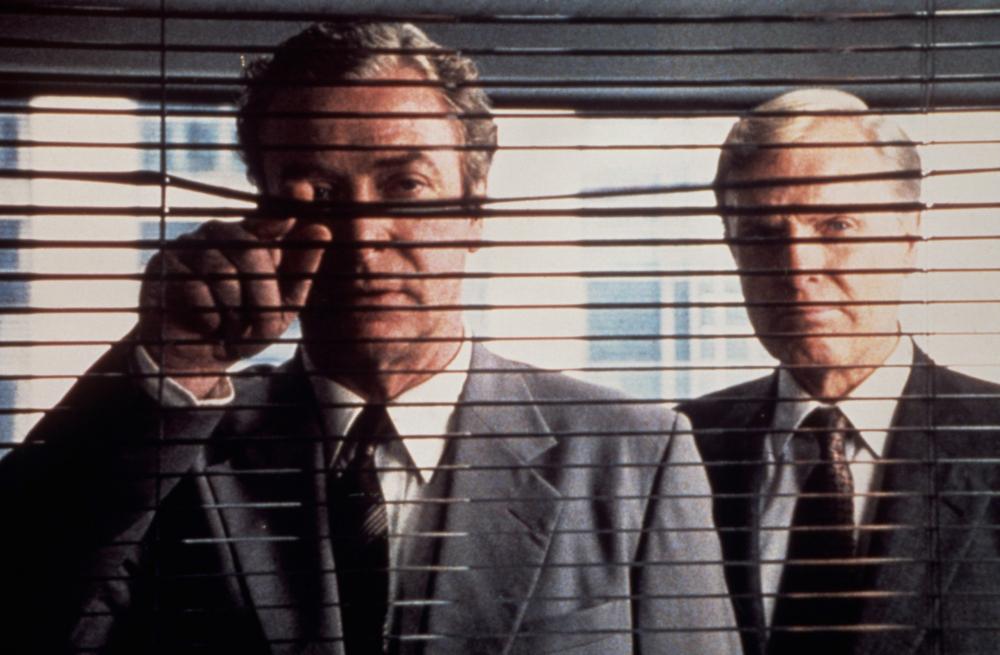
A Shock to the System (1990, directed by Jan Egleson)

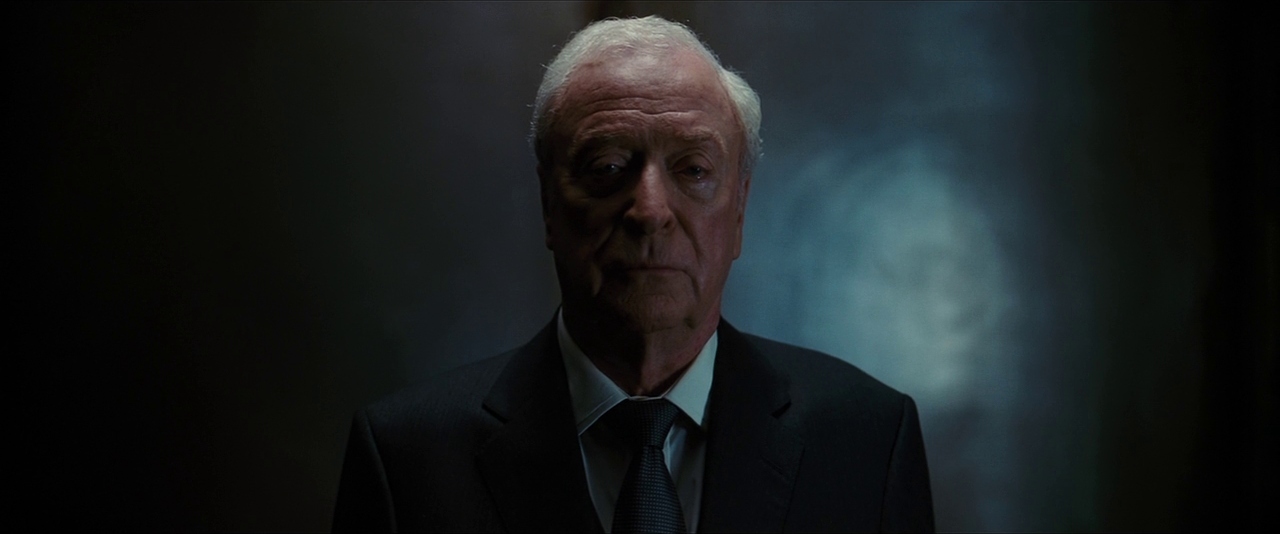
The Dark Knight Rises (2012, directed by Christopher Nolan)


Cinemax Friday: Hard Vice (1994, directed by Joey Travolta)


Who doesn’t love some Hard Vice?

Someone’s killing businessman in Las Vegas and it’s up to the vice squad to figure out who.  Captain Bronski (James Gammon) knows that his cops are going to need some help so he brings in a detective named Joe (Sam J. Jones).  Joe is a tough-talking, hard-drinking modern day cowboy who even owns a hat.  He doesn’t think that women should be investigating major crimes and that brings him into conflict with his new partners, especially Andrea (Shannon Tweed).

Despite not being happy about having to work together, Joe and Andrea put aside their differences long enough to investigate the murders and fall in love.  They discover that all of the men used the same escort service.  Could the murderer be a pimp named Tony (Branscombe Richmond, who played Bobby Sixkiller on Renegade) or could it be a renegade prostitute (played by Rebecca FerattI) who is called Christy in the movie but who is listed as being named Allison in the end credits?  Or could it be someone closer to the vice squad?

Hard Vice is a typical late night Cinemax crime movie, heavy on the neon and the synthesized music but light on unexpected plot twists.  There are still a few things about the movie that set it apart from other movies of the era.  First off, this movie features a man armed only with a handgun managing to blow up a helicopter.  Secondly, even though the film is set in the 90s, the vice squad is stuck using bulky computers from the 80s and the scene where they use the computer to look up information on the victims has to be seen to be believed.  Finally, any movie that brings Shannon Tweed and Rebecca Feratti together is worthy of a little appreciation.  Toss in Sam J. Jones and James Gammon sounding like he’s been smoking six packs of cigarettes a day and you’ve got a film that’s almost worth watching.

Hard Vice was directed by Joey Travolta, who is best known for being John’s younger brother.  This was the first film he ever directed and, checking with the imdb, I was surprised to discover that he’s directed a lot more since.  Joey’s direction in Hard Vice isn’t that bad, though Las Vegas is one of those cities where it’s probably impossible not to come up with an interesting shot or two if you’re filming there.  Travolta tosses in a few flash forwards to make sure that we know we’re watching a real film and not just your run-of-the-mill neo-noir.  They don’t add much to the plot but when you’re trying to establish your auteur credentials, I guess you do what you have to do.

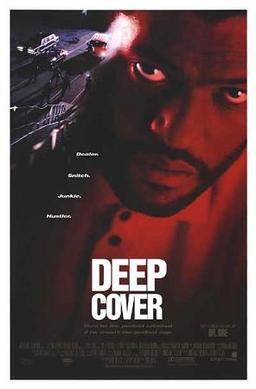
Deep Cover (1992, directed by Bill Duke)


When Russell Stevens was 10 years old, he saw his father get gunned down while holding up a liquor store.  Now, 20 years later, Russell (Laurence Fishburne) is a cop who is so straight that he doesn’t even drink.  But because of his father’s background, a psychological profile that indicates Russell is unique suited to understand how the criminal mind works, and the fact that he has no loved ones at home, he is recruited to work undercover.  His weaselly handler, Carver (Charles Martin Smith), explains that going undercover means that Russell is going to have to become a criminal 24/7.  He can’t just do his job for 8 hours a day and then go back to his normal life at night.

With the government’s money, Russell sets himself up as a dealer, buying and selling the drugs that are destroying his community.  It does not take long before Russell meets David Jason (Jeff Goldblum), a lawyer and aspiring drug kingpin.  At first, David makes Russell as being an undercover cop but, after Russell is arrested by the righteous but clueless Detective Taft (Clarence Williams III), David changes his mind and brings Russell into the operation.  The line between being a cop and a criminal starts to blur, especially after David and Russell start to bond over their mutual dislike of their boss, Felix (Gregory Sierra).  It doesn’t take long for Russell to get in over his head.

There have been a lot of films made about undercover cops losing themselves in their new criminal identity but few take the story to its logical conclusion like Deep Cover does.  Russell may start out as a straight arrow but, by the end of the movie, he’s killed a dealer in cold blood and broken his own personal pledge to never do cocaine himself.  He also discovers that David is often a more trustworthy partner than his own colleagues in law enforcement.  Fishburne and Goldblum both give excellent, spot-on performances as Russell and David and they’re supported by an able cast of weasels and tough guys.  I especially liked Charles Martin Smith’s performance as Carver.  (When Russell asks Carver if he’s ever killed a man, Carver laughs and says that he went to Princeton “just to avoid that shit.”)  Gregory Sierra is also great in the role of Felix and I loved that, of all people, Sidney Lassick played one of Felix’s henchmen.  That’s like seeing John Fiedler play the Godfather.

One of the best crime thrillers of the 90s, Deep Cover is not only a detective film but it’s also a politically-charged look at why America’s war on drugs was doomed to failure.  No sooner does Russell get into position to catch the man behind Felix’s operation than he’s told to drop the case because the State Department thinks that the drug lord could be politically helpful to them in South America.  As Russell discovers, the War on Drugs is more interested in taking out the soldiers on the streets than the generals in charge.  While men like Carver sit in their offices and move people around like pieces on a chess board, people like Russell are left to clean up the mess afterward.
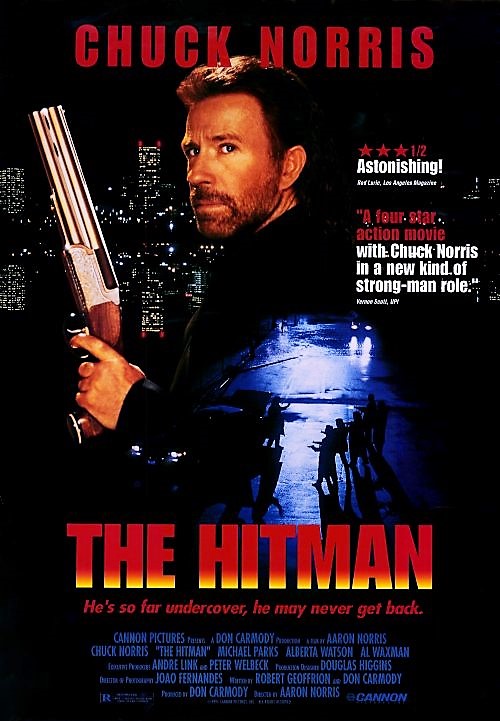
The Hitman (1991, directed by Aaron Norris)


When cop Cliff Garrett (Chuck Norris) gets shot by his corrupt partner, Ronny Delaney (Michael Parks), he dies and nearly gets to go to heaven.  However, at the last minute, the doctor’s manage to bring Cliff back to life.  Since everyone believes Cliff to be dead, his superiors come up with a brilliant plan.  What if Cliff changes his name to Grogan, grows his hair long, and goes undercover as a hitman?

Cliff’s up for it and is soon working for an Italian mobster named Marco Luganni (Al Waxman).  Marco wants to eliminate all of the other mobsters in town but he also has to deal with a bunch of drug-dealing Iranians who are trying to move in on his territory.  Cliff soon works his way into the inner circle and plays all sides against each other.  What’s strange is that Cliff manages to fool everyone into thinking that he’s Grogan despite the fact that all he’s really doing is wearing his hair long.  In fact, the only person who he doesn’t fool is his former partner, Delaney.  Delaney is not happy to discover that Cliff is still alive and sets out to take him out once and for all.

Because this is a Chuck Norris film, there’s a subplot where Cliff helps a bullied youth named Tim (Salim Grant) learn how to stick up for himself.  One thing that set Chuck Norris apart from other 80s action heroes is that Chuck always tried to teach all the kids in the audience of his R-rated films a good lesson about staying off drugs, standing up to bullies, and not doubting the American way.  I always have mixed feelings about this aspect of Chuck’s films because the message scenes usually don’t fit in with the rest of the narrative and it’s always questionable if a film featuring Chuck killing people is the right place for a wholesome life lesson but, at the same time, Chuck is so sincere that these scenes usually feature his best acting.  When Tim beats up a bully and then Chuck beats up the bully’s father, it really makes you realize that someone missed an opportunity by not making a movie where Chuck Norris played a computer science teacher who prepared his students not just for a career in STEM but also taught them how to put the members of football team in their place.  In the case of The Hitman, the crime subplot and the bullying subplot come together when Delaney decides to use Tim to strike at Cliff.

The Hitman is one of Chuck’s later films, which means the budget is lower than the films he did for Cannon and the action scenes are not as elaborate.  Chuck’s brother, Aaron, directs and he does okay but he’s no Joe “Missing In Action” Zito or Menahem “Delta Force” Golan.  The fight scenes are competently done in a workmanlike manner but they’re never as exciting as what we’ve come to expect from the Norris brand.  The main appeal here is to see Chuck Norris and Michael Parks in the same movie.  Chuck, as always, underplays while Parks, as always, overplays and it’s always entertaining to watch them go at each other.  Otherwise, The Hitman is for Chuck completists only.