Even before the release of Licorice Pizza, it was clear that Paul Thomas Anderson’s Haim videos constituted some of the best short films of the past decade. They were the perfect collaboration between a group of artists.
I’ve always liked Haim because they remind me of me and my sisters.
Enjoy!
[Verse 1] Tryin’ to get on top But it’s never easy Mastered my own luck But it wasn’t easy I’m tryin’ to feel alright Around all these people I try, but I’m just numb This time
[Chorus] Deepest cut that I can’t feel Found a grip on the steering wheel I know a piece’s stuck You can sit down if you don’t mind me standin’ up (Mind me standin’ up) I know I was too good to pass (Too good to pass) So me and you caused a chain reaction (Chain reaction) I’ll take the smallest crumb But I’ll never get back what I lost track of
[Verse 2] Laugh when I’m still cryin’ Yeah, you know the deal Burn but it’s still fine (Huh) Yeah, you know the deal Can’t redeem my love That’s such a steal But you can’t say I’m not tryin’ This time
[Chorus] Deepest cut that I can’t feel Found a grip on the steering wheel I know a piece’s stuck You can sit down if you don’t mind me standin’ up (Mind me standin’ up) I know I was too good to pass (Too good to pass) So me and you caused a chain reaction (Chain reaction) I’ll take the smallest crumb But I’ll never get back what I lost track of Oh, I’ll never get back what I lost track of I’ll never get back what I lost track of I’ll never get back what I lost track of
[Outro] I’ll never get back what I lost track I’ll never get back what I lost track I’ll never get back what I lost track I’ll never get back but I’ve lost track
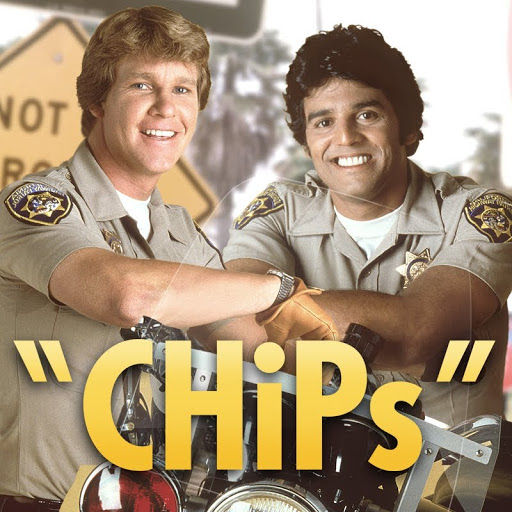
Welcome to Late Night Retro Television Reviews, a feature where we review some of our favorite and least favorite shows of the past! On Mondays, I will be reviewing CHiPs, which ran on NBC from 1977 to 1983. The entire show is currently streaming on Prime!
This week, we say goodbye to a member of the highway patrol. Excuse while I wipe the tears away from my myopic eyes.
Episode 5.11 “Concours d’Elegance”
(Dir by John Patterson, originally aired on December 13th, 1981)
This is it. This the final episode to feature the character of Steve McLeish.
Played by a pre-transition Caitlyn Jenner, Steve was introduced as a replacement for Ponch while Erik Estrada was recovering from a stunt gone wrong. Once Ponch rejoined the series, there really wasn’t much for Steve to do but he still stuck around for a few episodes. He only appears for a few minutes in this episode. He arrests some joyriding teens who are constantly trying to get older people to buy them liquor. Maybe they should have asked Steve. He always seemed like was eager to please.
(I should mention that both of the “teens” appear to be in their 30s.)
I’m going to miss Steve, largely because Jenner’s bland performance was so bad that it actually became rather fascinating to watch. In this episode, he continues to deliver his lines with a puppy-dog earnestness that can’t disguise his total inability to show any emotion beyond wide-eyed wonderment.
As for this episode, it featured Baker and Ponch getting involved with a rich family. While matriarch Hannah Chadway (Claudette Nevins) tries to see Baker up with her niece, sleazy Anthony Chadway (Gary Graham) is illegally selling cars and using the family’s charity as a front. At one point, Hannah offers Baker a private security job. Baker turns her down. Couldn’t he have at least put in a word for his friend Steve? Ponch and Baker eventually take it upon themselves to tell Hannah that she needs to get her spoiled family under control. Hannah realizes they’re right. Personally, I would have told Ponch and Baker that it was really none of their business but that’s just me.
This episode feature two slow motion crashes, both of which are so severe that everyone involved should have been killed. (One accidents features not one but two cars flying through a trailer as it explodes.) Oddly, no one is seriously injured. I’m getting the feeling that CHiPs may not have always been a realistic show.
Welcome to Retro Television Reviews, a feature where we review some of our favorite and least favorite shows of the past! On Mondays, I will be reviewing Miami Vice, which ran on NBC from 1984 to 1989. The entire show can be purchased on Prime!
This week, Crockett and Tubbs are burned out.
Episode 17 “Freefall”
(Dir by Russ Mayberry, originally aired on May 12th, 1989)
As this episode begins, we find Crockett and Tubbs at their most cynical. After five years as partners, they’ve seen a lot of bad guys go down. They’ve seen a lot of innocent people die. Larry Zito was killed by drug dealers. Switek has developed a gambling addiction. Gina has shot numerous men in cold blood. Trudy was kidnapped by aliens. Castillo has never once smiled. None of it seems to make any difference.
When the government approaches them and orders Crockett and Tubbs to go into a war-torn island country and smuggle out dictator General Manuel Borbon (Ian McShane), Crockett is not happy about the assignment. Tubbs, however, believes that the government is telling the truth about Borbon having information that could take down the world’s biggest drug cartel. The government, for their part, think that Crockett and Tubbs have the undercover experience to pull off the operation. Has the government not noticed that Crockett and Tubbs have had their covers blown in nearly every episode?
Of course, it turns out that the government is lying. They just wanted Borbon out of the country so he wouldn’t reveal what he knows about American intelligence’s activities in Central America. Crockett and Tubbs manage to get Borbon to Miami but they then find themselves under constant attack from the drug gangs that want Borbon dead. Borbon proves to be untrustworthy. Because of his gambling addiction, Castillo suspects that Switek may have sold out his partners. Switek responds by tracking down three hitmen and gunning them down. Did Switek sell out Crockett and Tubbs? The answer isn’t clear but it does seem like his time as a detective is coming to an end.
Finally, Tubbs and Crocket do what they have to do. They go on a “suicide” mission that involves them firing their weapons at Borbon’s sea plane until it explodes. Borbon is killed and so are several of his American associates. When the CIA man in charge of the operation threatens to have their badges, Crockett and Tubbs toss their badges on the ground. Castillo offers to back them up if they chose to stay on the force. Tubbs says thanks but no thanks. Tubbs is going back to New York. Crockett is heading further south, presumably to live in the Florida everglades.
And so, Miami Vice ends.
Except it doesn’t! There were four so-called “lost episodes” that aired in syndication. We’ll take a look at them over the next four weeks.
As for Freefall, it’s not a terrible conclusion to the story of Crockett and Tubbs. It stays true to the cynicism that ran though the entire series. Crockett and Tubbs finally admit that the War on Drugs is a sham and they quit. It’s a shame that Gina and Trudy didn’t get to do much in the finale. I wasn’t happy with the idea of Switek being a traitor but it actually did work for his character. Switek had been spiraling ever since Zito was killed. This episode has a lot of surprisingly violent action, the show’s trademark political subtext, and Johnson and Thomas bringing their characters to life one last time.
Apparently, this episode was originally envisioned as ending with both Crockett and Tubbs dying. That actually would have been a totally appropriate ending as both characters have often seemed as if they had a death wish. However, the network turned down that idea because they were hoping to do a spin-off series. Crockett and Tubbs were spared by the higher-ups. The series ends — or it would end if not for the four extra episodes — with Crockett and Tubbs speeding through the streets of Miami and it’s had not to feel that’s the way it should be.
“Those who cling to death; live. Those who cling to life; die.” – Caine
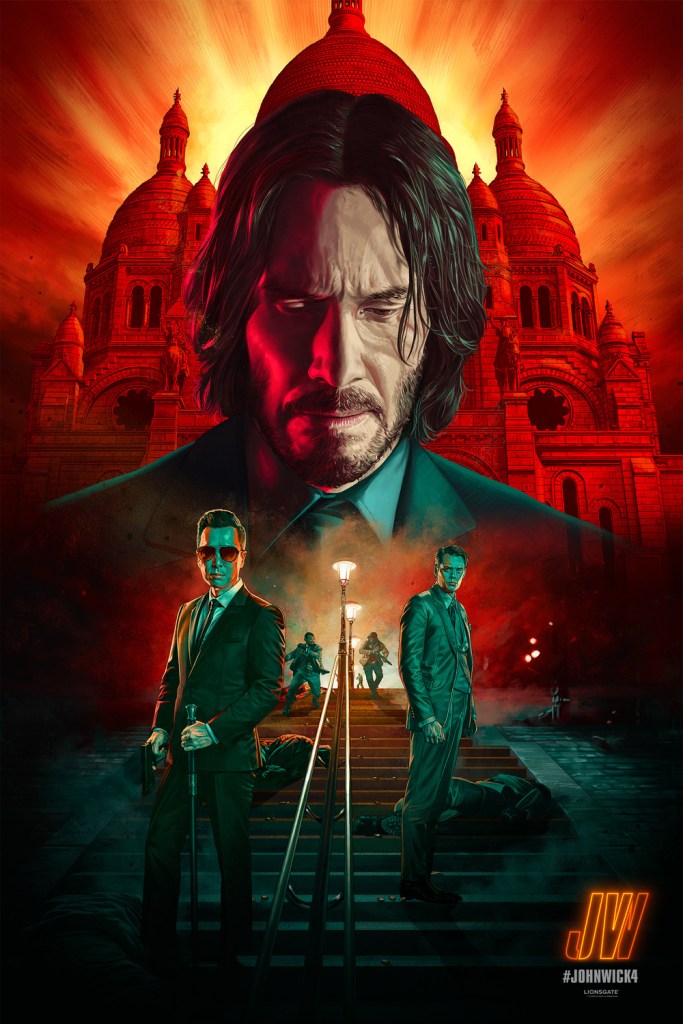
John Wick: Chapter 4 is the kind of action movie that doesn’t just lean into the spotlight—it steps into it, throws a flak vest over its suit, and then spends the next three hours filleting an entire world of assassins with brutal, balletic precision. At this point in the franchise, you’re either all‑in on the rules of the High Table, the Continental, and Wick’s endless mourning for his wife Helen, or you’re just here for the sheer spectacle of seeing Keanu Reeves beat up a continent’s worth of bad guys. The film not only respects that split audience, it tries really hard to satisfy both with a mix of operatic emotion, globe‑trotting locations, and a ridiculous amount of meticulously choreographed carnage.
One of the first things that stands out in John Wick: Chapter 4 is how much the world has expanded since the first film. The script doesn’t reinvent the core idea—Wick wants out, the system wants him broken, and the only way he can be free is by killing his way to the top—but it does layer on new zones, new factions, and a whole supporting cast of assassins who feel like they’re pulled out of their own B‑movies. From Morocco to Berlin, from New York to Paris, the film leans into a kind of hyper‑theatrical world‑building where every hotel lobby, nightclub, and underground fighting arena looks like it was designed by a comic‑book artist with a fetish for brutalism and neon lighting. That’s not a bad thing; it makes the universe feel lived‑in, even if it occasionally borders on self‑parody. The film also shuffles in a few fresh faces that give the usual assassin lineup some new flavors, including Donnie Yen as Caine, the stoic, blind assassin who carries both lethal efficiency and a quiet moral weight; Hiroyuki Sanada as the disciplined Shimazu, whose traditional demeanor and craftsmanship with a sword add a very grounded, almost old‑world element to the chaos; and Rina Sawayama as the high‑ranking assassin Akira, whose presence brings a mix of ruthless professionalism and a genuinely intriguing emotional arc that doesn’t feel like an afterthought.
There’s also Scott Adkins playing against his usual type as Killa Harkan, the head of the German Branch of the High Table, showing up in a surprisingly decent‑looking fat suit that gives him a grotesquely imposing presence while still hinting at the physicality audiences know from his other action roles. The character leans into the film’s tendency toward the theatrical, but he’s not just a walking gag; he fits into the world as one of the more visually exaggerated enforcers of the High Table’s rule. Alongside him, Shamier Anderson brings a lean, relentless energy as the Tracker, Wick’s shadowy, almost dog‑like pursuer whose loyalty to the system makes him more than just another interchangeable goon, while Marko Zaror crops up in the Berlin arena sequences as a brutal, wiry fighter whose style adds yet another distinct flavor to the movie’s unusually diverse fight roster. Taken together, these additions don’t just pad the body count; they give the film a sense that the John Wick universe is big enough to host everyone from classical swordsmen to modern martial‑arts specialists and even a few horror‑movie‑style fanatics, all orbiting the same doomed man.
The villain this time around is the Marquis Vincent Bisset de Gramont, played by Bill Skarsgård, and he’s the kind of High Table emissary who exists purely to make John’s life harder while reminding the audience that the system is more bureaucratic than it is mysterious. He’s got the cold, manipulative air of a corporate executive who’s never actually touched a gun but still has the power to ruin people’s lives on paper. His presence allows the film to spend more time on the politics of the assassin underground, which in turn forces John to pull in a wider network of allies, return favors, and, in a few cases, rebuild old friendships that were already on thin ice. That network includes the Bowery King, Caine, and the rest of the new cast, all of whom add texture to the usual slug‑fest even if the plot’s core emotional arc is still very much about a man who keeps remembering the wife he can’t get back.
Where Chapter 4 really flexes its muscles is in the action, and nowhere is that more obvious than in the extended Paris set‑piece that basically becomes the film’s centerpiece. It starts on the open city streets at night, with Wick already on the move, guns blazing and bodies piling up as the camera weaves through car‑chase energy and close‑quarters shoving. The chaos then escalates when the sequence shifts to the Arc de Triomphe roundabout, where the circular layout turns the whole area into a spinning, three‑dimensional shooting gallery. Cars whip around the monument, bullets ricochet off stone and metal, and the sheer spatial awareness of the choreography makes it feel like you’re watching a real‑time videogame map being systematically cleared in concentric circles, except the “map” is an iconic piece of Parisian infrastructure.
The escalation doesn’t stop there. The action migrates into a mostly empty, half‑abandoned apartment complex that feels like a brutalist concrete maze, each floor and hallway turning into a new arena for sprinting, reloading, and last‑minute dodges. The geography of the building becomes a character of its own, with shots that snake down stairwells, peer through doorways, and frame John as a lone figure ducking and weaving through a vertical death‑trap. It’s inside this apartment complex that the film drops one of its most memorable visual flourishes: a frenetic, prolonged shootout using dragon’s breath shotgun shells—incendiary rounds that send flaming pellets spraying outward—captured from an isometric, top‑down angle that directly evokes the look of indie action‑game favorites like The Hong Kong Massacre. The camera rides high above each room as Wick storms through, watching clusters of fire and bullets explode outward in geometric patterns, turning the interior layout into a living level map. It’s a moment that feels less like traditional cinema and more like a loving, hyper‑stylized homage to the way videogames can turn gunplay into a choreographed light show.
The final stretch of this extended Paris gauntlet is the brutal climb up the Rue Foyatier stairway to the Sacré‑Cœur steps, where the film’s choreographic and camera work reach their most expressionistic peak. The wide shots of Paris looming below, the narrowing of the stairway itself, and the way the camera sometimes drifts into an almost dreamlike, slightly elevated angle all combine to make the sequence feel like an endurance ritual rather than just another fight. By the time Wick reaches the top—after being hurled back down and forced to claw his way up again—the audience feels just as exhausted as he looks, which is exactly the point.
That’s part of what makes the film work when it isn’t just going hand‑to‑hand with you for nearly three hours. Beneath all the shooting and stabbing, John Wick: Chapter 4 is also quietly insistent on the idea that this is a tragedy. John Wick isn’t just a guy who happened to fall into a secret society of killers; he’s a man who has been reshaped by grief, loss, and the realization that every compromise he’s made along the way has only made his cage tighter. The film doesn’t over‑explain this; instead, it lets you watch him limp, cough up blood, and drag his battered frame through one more ambush, as if his body is the only thing strong enough to keep him breathing. The supporting characters—especially those tied to the High Table or to his past, including the newer faces like Caine, Shimazu, Akira, Killa Harkan, the Tracker, and the arena fighters—get a few moments to show that they’re not just cannon fodder, either. They have responsibilities, hierarchies, and codes that clash with the arbitrary cruelty of the Table, even if most of them still end up in the path of Wick’s bullets.
On the flip side, the movie is also unapologetically aware of how silly it is. There’s a knowing winking about the dialogue, the neon‑lit set designs, and the way lines like “You have until sunrise” are delivered with the gravity of a Shakespearean prophecy. The film doesn’t try to make you forget that this is ultimately a high‑end first‑person‑shooter turned into a live‑action ballet. It leans into the absurdity of escalating stakes, the way the world keeps conspiring to throw more and more assassins at John, and the fact that even when he’s bleeding out, he still insists on finishing a fight with a signature flourish. For some viewers, that will feel like a strength, a kind of self‑aware celebration of the genre. For others, it’ll feel like the moment the franchise tips from cool to camp, especially when the pacing starts to drag a bit in the middle section and the mix of formal duels, fat‑suited branch leaders, and endless negotiations begins to feel a little overstuffed.
The film’s length is its biggest liability. At around 169 minutes, John Wick: Chapter 4 is not shy about giving you more than enough time to live inside its world, but it also doesn’t always feel like it needs every last minute. The middle act, in particular, spends a lot of time on formalities, treaties, duels, and metaphysical negotiations with the High Table, which can slow the momentum when what you really want is for John to do another hallway‑fight or another truck‑pile‑up. There are times when the script feels like it’s stretching itself out to keep the spectacle going rather than tightening the storytelling, and that’s when the silliness of it all—like the deliberately over‑the‑top presence of Killa Harkan and the packed gallery of new faces—can start to work against the emotional weight the film is trying to build. A leaner, more ruthless edit would probably make the overall experience feel sharper and more focused.
Still, there’s a lot to admire in what the film manages to pull off. The sound design, the camera work, and the way the choreography is almost always shot in wide, relatively clear takes all combine to make the action feel substantial rather than edited into incomprehensible chaos. The supporting cast—Donnie Yen, Hiroyuki Sanada, Rina Sawayama, Scott Adkins, Shamier Anderson, Marko Zaror, and others—add texture and personality to a world that could otherwise feel like a series of interchangeable goons. They’re not just there to get shot; they’re there to give the film a sense of a larger, more complicated ecosystem of killers, each with their own rules and reasons.
In the end, John Wick: Chapter 4 is less a strict narrative continuation and more of a cinematic endurance event. It doesn’t reinvent the franchise, but it pushes the Wick formula into more extreme, more theatrical, and more emotionally committed territory. It’s messy in places, overstuffed in others, but it also has a few moments of pure, jaw‑dropping action that will probably end up in “best of the decade” lists among genre fans, especially that Paris mega‑set‑piece that starts on open streets, spirals through the Arc de Triomphe, invades an empty apartment complex for that dragon’s‑breath top‑down firefight, and climaxes on the Rue Foyatier stairs. If you’re someone who cares about emotional coherence and tight plotting, the film will probably test your patience. If you’re someone who’s here for the ballet of bullets, the operatic bloodshed, the eccentric new cast, and the sight of Keanu Reeves refusing to stay down no matter how many times the universe tries to kill him, then John Wick: Chapter 4 is a pretty satisfying send‑off—or at least a very loud, very stylish stop on the way there.
Weapons used by John Wick throughout the film
Glock 34 (TTI Combat Master Package) – His primary pistol early on, including the Morocco sequence against the new Elder and during the Osaka Continental battle.
Agency Arms Glock 17 – Used by Wick during the garden fight at the Osaka Continental after he takes it off a High Table enforcer.
TTI Pit Viper – The “hero gun” of the movie, custom‑built for Chapter 4, used heavily in the Paris staircase and duel lead‑up sequences.
Thompson Center Arms Encore pistol – custom-made single-shot pistols created specifically for the Sacre-Couer duel.
TTI Dracarys Gen‑12 – The dragon’s‑breath shotgun he grabs during the Paris apartment sequence, used in the isometric top‑down “videogame” style scene.
Spike’s Tactical Compressor carbine – Used by Wick after he takes it from High Table enforcers during the Osaka Continental fight.
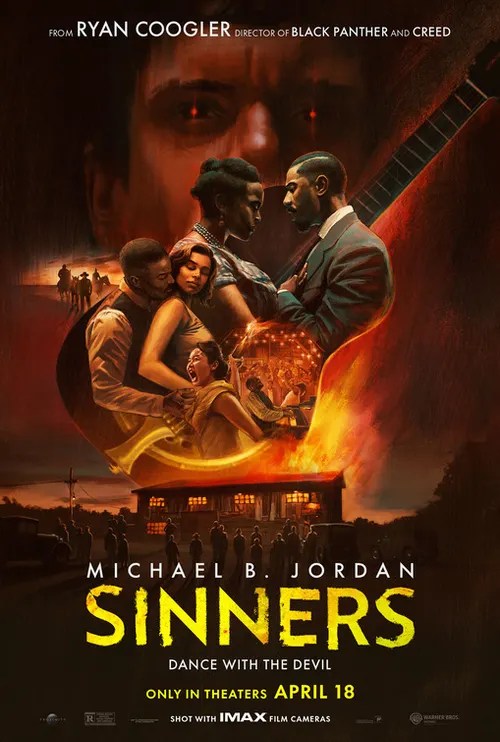
It was a good night for Sinners. Victories at both the Actor Awards and the Eddie Awards would seem to indicate that the film has a shot at pulling off an upset. Still, One Battle After Another won with both the DGA and PGA and it probably still has to be considered front runner.
Here are the winners, listed in bold. I slept through the ceremony because I took some pain killers for my ankle.
OUTSTANDING PERFORMANCE BY A CAST IN A MOTION PICTURE Frankenstein Hamnet Marty Supreme One Battle After Another Sinners
OUTSTANDING PERFORMANCE BY A MALE ACTOR IN A LEADING ROLE Timothée Chalamet – Marty Supreme Leonardo DiCaprio – One Battle After Another Ethan Hawke – Blue Moon Michael B. Jordan – Sinners Jesse Plemons – Bugonia
OUTSTANDING PERFORMANCE BY A FEMALE ACTOR IN A LEADING ROLE Jessie Buckley – Hamnet Rose Byrne – If I Had Legs I’d Kick You Kate Hudson – Song Sung Blue Chase Infiniti – One Battle After Another Emma Stone – Bugonia
OUTSTANDING PERFORMANCE BY A FEMALE ACTOR IN A SUPPORTING ROLE Odessa A’zion – Marty Supreme Ariana Grande – Wicked: For Good Amy Madigan – Weapons Wunmi Mosaku – Sinners Teyana Taylor – One Battle After Another
OUTSTANDING PERFORMANCE BY A MALE ACTOR IN A SUPPORTING ROLE Miles Caton – Sinners Benicio del Toro – One Battle After Another Jacob Elordi – Frankenstein Paul Mescal – Hamnet Sean Penn – One Battle After Another
OUTSTANDING PERFORMANCE BY AN ENSEMBLE IN A DRAMA SERIES The Diplomat Landman The Pitt Severance The White Lotus
OUTSTANDING PERFORMANCE BY A MALE ACTOR IN A TELEVISION MOVIE OR LIMITED SERIES Jason Bateman – Black Rabbit Owen Cooper – Adolescence Stephen Graham- Adolescence Charlie Hunnam – Monster: The Ed Gein Story Matthew Rhys – The Beast In Me
OUTSTANDING PERFORMANCE BY AN ENSEMBLE IN A COMEDY SERIES Abbott Elementary The Bear Hacks Only Murders in the Building The Studio
OUTSTANDING PERFORMANCE BY A MALE ACTOR IN A DRAMA SERIES Sterling K. Brown – Paradise Billy Crudup – The Morning Show Walton Goggins – The White Lotus Gary Oldman – Slow Horses Noah Wyle – The Pitt
OUTSTANDING PERFORMANCE BY A FEMALE ACTOR IN A COMEDY SERIES Kathryn Hahn – The Studio Catherine O’Hara – The Studio Jenna Ortega – Wednesday Jean Smart – Hacks Kristen Wiig – Palm Royale
OUTSTANDING PERFORMANCE BY A FEMALE ACTOR IN A TELEVISION MOVIE OR LIMITED SERIES Claire Danes – The Beast In Me Erin Doherty – Adolescence Sarah Snook – All Her Fault Christine Tremarco – Adolescence Michelle Williams – Dying For Sex
OUTSTANDING PERFORMANCE BY A MALE ACTOR IN A COMEDY SERIES Ike Barinholtz – The Studio Adam Brody – Nobody Wants This Ted Danson – A Man On The Inside Seth Rogen – The Studio Martin Short – Only Murders in the Building
OUTSTANDING PERFORMANCE BY A FEMALE ACTOR IN A DRAMA SERIES Britt Lower – Severance Parker Posey – The White Lotus Keri Russell – The Diplomat Rhea Seehorn – Pluribus Aimee Lou Wood – The White Lotus
OUTSTANDING STUNT ENSEMBLE IN A MOTION PICTURE F1
Frankenstein Mission: Impossible — The Final Reckoning
One Battle After Another
Sinners
OUTSTANDING STUNT ENSEMBLE IN A TELEVISION SERIES
Andor Landman The Last of Us
Squid Game
Stranger Things
Hi, everyone! Tonight, on twitter, I will be hosting one of my favorite films for #MondayMania! Join us for 2012’s Teenage Bank Heist!
You can find the movie on Prime and Tubi and then you can join us on twitter at 9 pm central time! (That’s 10 pm for you folks on the East Coast.) See you then!
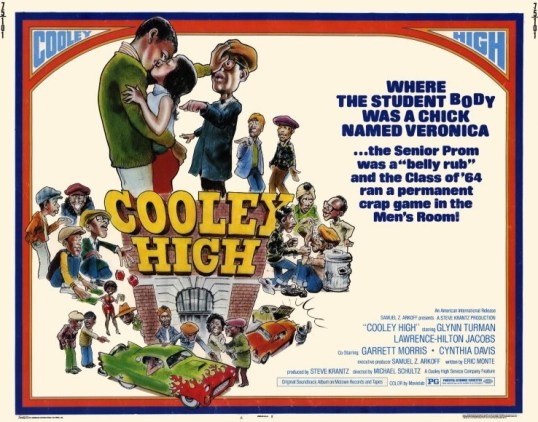
A friend of mine recently watched Cooley High for the first time. We both agreed that the film ends on two powerful musical notes, first with It’s So Hard To Say Goodbye playing over the scenes of Cochise’s funeral and then with today’s song of the day playing over the scenes of Preach literally running towards his future.
Here is Reach Out (I’ll Be There) by The Four Tops.
I always enjoy it when good actors go totally over-the-top and that is certainly the case with today’s scene that I love. In 1976’s Logan’s Run, the normally very reserved Michael York tries to let the people of the City know that “you can live! LIIIIIIIIIIIIIVE!”
Actually, as much as I enjoy York’s performance here, what truly makes the scene memorable is the way that everyone just ignores him and shuffles off to “renewal,” despite Logan’s attempts to convince them that they “don’t have to DIE!” Logan’s Run is often dismissed as being a campy but enjoyable sci-fi film but, in this scene, we get a good portrayal of what a brainwashed populace truly looks like.
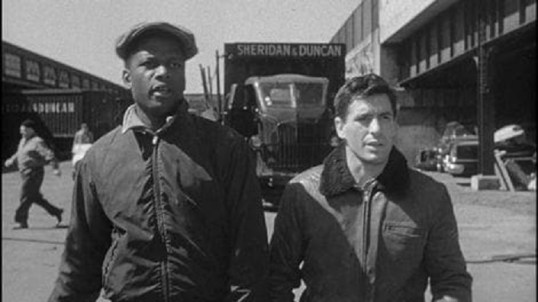
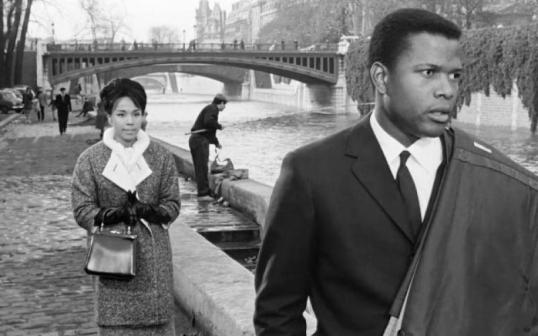
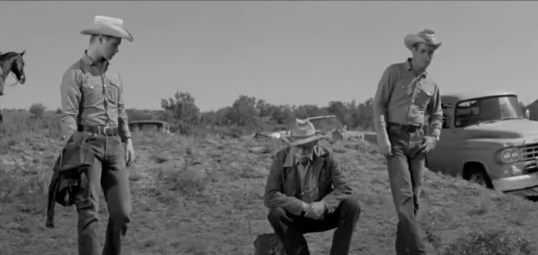
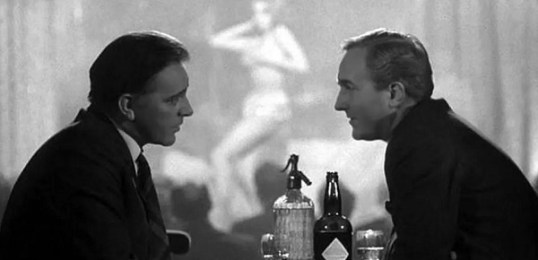
4 Shots From 4 Films is just what it says it is, 4 shots from 4 of our favorite films. As opposed to the reviews and recaps that we usually post, 4 Shots From 4 Films lets the visuals do the talking!
On this day, 112 years ago, Martin Ritt was born in New York City. Like many of the Hollywood directors who came to prominence in the 1950s, he started his directorial career in the theater before moving over to live TV. In 1952, his television career was derailed when he was accused of being a communist. Blacklisted, it would be five years before Ritt could get another directing job. When he did start to work again, he moved from television into the movies, starting with 1957’s Edge of the City. Perhaps due to his own experiences, his films always had a social conscience and always defended the individual against corrupt corporations and governments. In 1976, he directed one of the first films about the Hollywood blacklist, The Front.
As a director, Ritt was known for his skill with actors. More than anyone, he played a huge role in making stars out of both Paul Newman and Sally Field. He was also one of the few directors to understand how to harness Richard Burton’s self-destructive tendencies and, as a result, Burton gave one of his best performances in Ritt’s adaptation of The Spy Who Came In From The Cold.
It’s time for….
4 Shots From 4 Martin Ritt Films
Edge of the City (1957, dir by Martin Ritt, DP: Joseph Brun)
Paris Blues (1961, dir by Martin Ritt, DP: Christian Matras)
Hud (1963, dir by Martin Ritt, DP: James Wong Howe)
The Spy Who Came In From The Cold (1965, dir by Martin Ritt, DP: Oswald Morris)



 Through the Shattered Lens