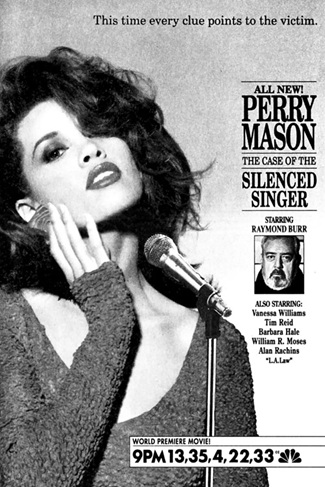
When singer Terri Knight (Vanessa Williams) is shot and murdered, her husband and manager, Jack (Tim Reid), is arrested. It’s a good thing that Jack’s professor in law school was Perry Mason (Raymond Burr)! Perry and Ken Malansky (William R. Moses) take the case and investigate to see who silenced the singer. (Does Perry know anyone who hasn’t been accused of murder? Someone even tried to fame Della!)
This Perry Mason movie was slightly different than those that came before it. It was full of flashbacks, showing how Terri became a star and went from being nice and innocent to being a diva. Every time that Perry or Ken would interrogate someone, it would lead to scene of Vanessa Williams wearing a wig and playing Terri at a different time in her life and career. There was also a lot singing and the movie actually seemed to be more focused on the music and showing Terri’s rise to fame than it did on solving the actual mystery. It was was if Perry Mason got dropped into the middle of a production of Dreamgirls. It didn’t really work for me because Terri wasn’t an interesting enough character to carry the flashbacks but it was still interesting to see a Perry Mason movie trying to do something different.
The most memorable thing about this movie was Angela Bassett, playing a fellow singer and a former friend of Terri’s. She even told off Perry Mason at one point! It was early in her career but it was easy to see that, from the start, Angela Bassett was obviously going to be a star.
There are some Poverty Row westerns that even I can’t defend.
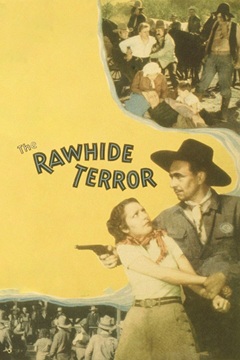
A group of bandits, disguised as Indians, attack a pioneer family. The father and the mother are killed but their twin boys survive. One wanders into the wilderness while the other stays with the remains of his family and waits for help. Years later, the town of Red Dog is thriving, with the former bandits as its leading citizens. Someone has been gunning down the former bandits. The townspeople demand that Sheriff Luke (Edmund Cobb) do something about the man that they’ve nicknamed the Rawhide Killer. First, however, Luke has to deal with Jim Briggs (William Barrymore), who has been abusing his son (Tommy Bupp). It also turns out that Jim Briggs is the Rawhide Killer and he’s looking for vengeance against those who killed his parents. Jim’s brother also lives in the town. Guess who!
The Rawhide Terror gets off to a good start with the bandit attack but it falls apart soon afterwards. I don’t know if it was just because I was watching a bad print but the sound quality was terrible and the lack of an original score really highlighted just how boring it is to watch men silently ride their horses from one side of the screen to the other. This movie was only 47 minutes long and half of it was made up of shots of people riding horses. Add some really bad acting and you’ve got a western that was bad even by the standards of a 1934 second feature.
Two men are credited with directing the film, though the production was actually supervised by Victor Adamson, the father of the notorious schlock filmmaker, Al Adamson.
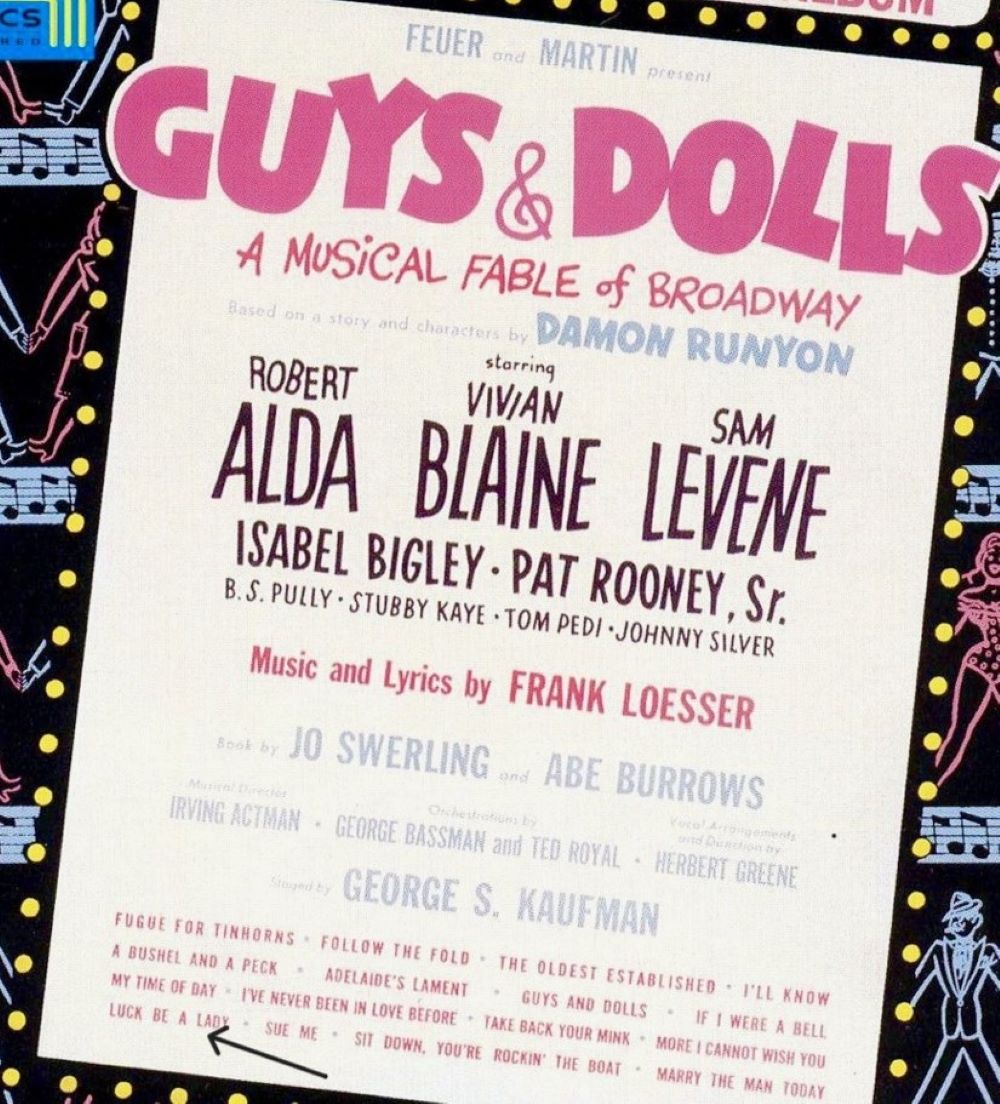
In The Wrangler, using Robert Alda’s original version of “Luck Be a Lady” from Guys and Dolls hits differently than the more famous Sinatra take. Alda’s rendition, coming from the Broadway stage, is less smooth and more desperate—it’s a man bargaining with luck, not charming her. That’s a crucial difference in Fallout’s world. When Alda’s voice drifts through the smoky ruin of The Wrangler, it feels like an echo from a long-dead civilization—one where people still believed that fortune was something you could negotiate with. It grounds the scene in Fallout’s favorite tension: the clash between old optimism and new despair.
Thematically, the original version suits Fallout’s tone better. Sinatra’s version oozes control and self-assurance, while Alda sings with the anxious rhythm of someone clinging to hope. In the episode, that anxiety fits the stakes perfectly—characters gambling with their lives, exchanging trust for survival, and hoping the “lady” of luck doesn’t turn her back at the wrong moment. The Broadway earnestness becomes a tragic counterpoint to the brutality around it, emphasizing how fragile that old-world faith in luck or charm truly is.
By choosing Alda over Sinatra, the show subtly reframes what “luck” means in this universe. It’s not style or swagger—it’s survival by the skin of one’s teeth. The song’s theatrical flair feels almost haunting in a world where the audience is gone and the casino’s collapsed. Yet that’s what gives the moment its punch: Fallout has always used nostalgia as both soundtrack and satire, and with Alda’s pleading vocals hanging in the air, The Wrangler reminds us that sometimes, luck isn’t a lady at all—it’s just what’s left when everything else runs out.
Luck Be a Lady
They call you Lady Luck But there is room for doubt At times, you’ve had a very unlady-like way of running out You’re on this date with me The pickin’s have been lush And yet before this evening is over You might give me the brush
You might forget your manners You might refuse to stay And so the best that I can do is pray
Luck be a lady tonight Luck be a lady tonight Luck if you’ve ever been a lady to begin with, luck be a lady tonight
Luck let a gentleman see How nice a dame you can be I know the way you’ve treated other guys you’ve been with Luck, be a lady with me
A lady doesn’t leave her escort It isn’t fair, it isn’t nice A lady doesn’t wander all over the room And blow on some other guy’s dice Let’s keep this party polite Never get out of my sight Stick me with me baby, I’m the fella you came in with Luck, be a lady tonight
Luck, let a gentleman see Just how nice, how nice a dame you can be I know the way you’ve treated other guys you’ve been with Luck be a lady with me
A lady doesn’t leave her escort It isn’t fair, and it’s not nice A lady doesn’t wander all over the room And blow on some other guy’s dice So let’s keep the party polite Never get out of my sight Stick with me baby, I’m the guy that you came in with Luck be a lady Luck be a lady Luck be a lady, tonight
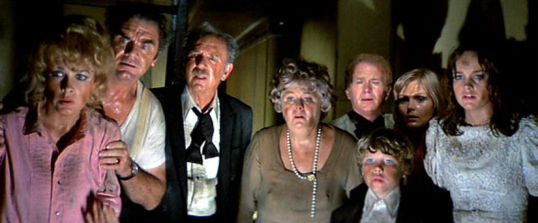
Under attack from a drone, George Kennedy does what any responsible pilot would do. He opens up the cockpit window — while in flight! — and fires off a flare gun. Meanwhile, Alain Delon does some Top Gun-style moves with a commercial airliner. No wonder Eddie Albert and Jimmie Walker look so alarmed! Beyond the “don’t try this at home” narrative logic, this scene is definitely worth it for the shots of the passengers reacting.
4 Shots From 4 Films is just what it says it is, 4 shots from 4 of our favorite films. As opposed to the reviews and recaps that we usually post, 4 Shots From 4 Films is all about letting the visuals do the talking.
Today, we pay honor to one of my favorite genres, the disaster film!
It’s time for….
4 Shots From 4 Disaster Films
The Poseidon Adventure (1972, dir by Ronald Neame, DP: Harold E. Stine)
The Towering Inferno (1974, dir by John Guillermin and Irwin Allen, DP: Fred J. Koenekamp and Joseph Biroc)
Airport 1975 (1974, dir by Jack Smight, DP: Philip H. Lathrop)
The Swarm (1978, dir by Irwin Allen, DP: Fred J. Koenekamp)


 Through the Shattered Lens