Here are the 2025 nominations of the Phoenix Critics Circle!
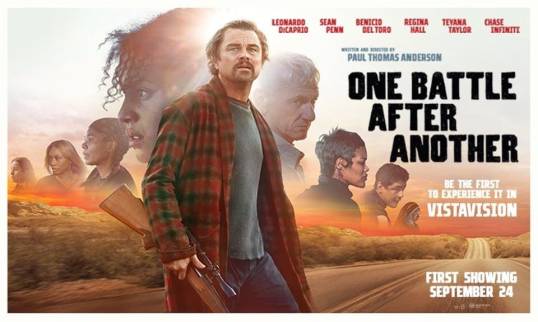
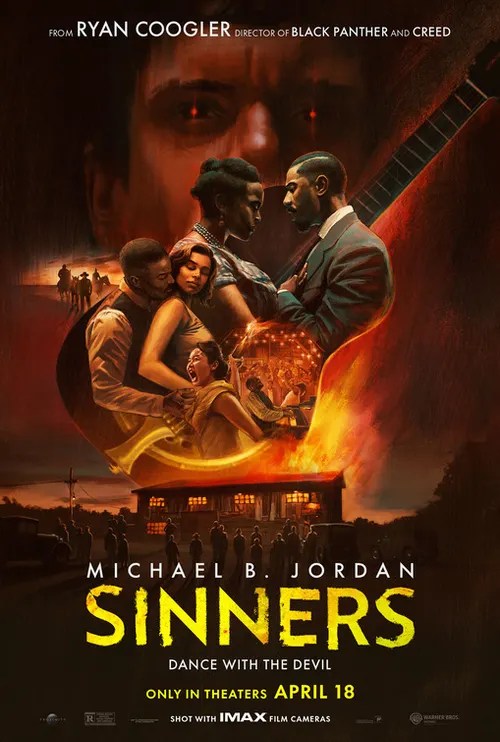
BEST PICTURE HAMNET IT WAS JUST AN ACCIDENT ONE BATTLE AFTER ANOTHER SENTIMENTAL VALUE SINNERS
BEST COMEDY FILM THE BALLAD OF WALLIS ISLAND BUGONIA FRIENDSHIP THE NAKED GUN RENTAL FAMILY
BEST SCIENCE FICTION FILM BUGONIA COMPANION FRANKENSTEIN MICKEY 17 THE RUNNING MAN
BEST HORROR FILM 28 YEARS LATER BRING HER BACK SINNERS THE UGLY STEPSISTER WEAPONS
BEST ANIMATED FILM ELIO KPOP DEMON HUNTERS PREDATOR: KILLER OF KILLERS ZOOTOPIA 2
BEST DOCUMENTARY DEAF PRESIDENT NOW! LILITH FAIR: BUILDING A MYSTERY ORWELL: 2+2=5 PREDATORS THE PERFECT NEIGHBOR
BEST FOREIGN LANGUAGE FILM IT WAS JUST AN ACCIDENT NO OTHER CHOICE THE SECRET AGENT SENTIMENTAL VALUE SIRAT
BEST ACTOR IN A LEADING ROLE TIMOTHEE CHALAMET, MARTY SUPREME LEONARDO DICAPRIO, ONE BATTLE AFTER ANOTHER JOEL EDGERTON, TRAIN DREAMS OSCAR ISAAC, FRANKENSTEIN MICHAEL B. JORDAN, SINNERS
BEST ACTRESS IN A LEADING ROLE JESSIE BUCKLEY, HAMNET ROSE BYRNE, IF I HAD LEGS I’D KICK YOU CHASE INFINITI, ONE BATTLE AFTER ANOTHER JENNIFER LAWRENCE, DIE MY LOVE RENATE REINSVE, SENTIMENTAL VALUE
BEST ACTOR IN A SUPPORTING ROLE BENICIO DEL TORO, ONE BATTLE AFTER ANOTHER JACOB ELORDI, FRANKENSTEIN DELROY LINDO, SINNERS SEAN PENN, ONE BATTLE AFTER ANOTHER STELLAN SKARSGARD, SENTIMENTAL VALUE
BEST ACTRESS IN A SUPPORTING ROLE ODESSA A’ZION, MARTY SUPREME INGA IBSDOTTER LILLEAAS, SENTIMENTAL VALUE AMY MADIGAN, WEAPONS WUNMI MOSAKU, SINNERS TEYANA TAYLOR, ONE BATTLE AFTER ANOTHER
BEST DIRECTOR PAUL THOMAS ANDERSON, ONE BATTLE AFTER ANOTHER PARK CHAN-WOOK, NO OTHER CHOICE RYAN COOGLER, SINNERS JAFAR PANAHI, IT WAS JUST AN ACCIDENT JOACHIM TRIER, SENTIMENTAL VALUE
BEST SCREENPLAY PAUL THOMAS ANDERSON, ONE BATTLE AFTER ANOTHER RYAN COOGLER, SINNERS JAFAR PANAHI, IT WAS JUST AN ACCIDENT JOACHIM TRIER & ESKIL VOGT, SENTIMENTAL VALUE EVA VICTOR, SORRY, BABY
BEST CINEMATOGRAPHY MICHAEL BAUMAN, ONE BATTLE AFTER ANOTHER AUTUMN DURALD ARKAPAW, SINNERS ADOLPHO VELOSO, TRAIN DREAMS KIM WOO-HYUNG, NO OTHER CHOICE
BEST SCORE ALEXANDRE DESPLAT, FRANKENSTEIN JONNY GREENWOOD, ONE BATTLE AFTER ANOTHER LUDWIG GORANSSON, SINNERS KANGDING RAY, SIRAT
BEST STUNT COORDINATION FRANKENSTEIN MISSION: IMPOSSIBLE – THE FINAL RECKONING ONE BATTLE AFTER ANOTHER SINNERS WEAPONS
Actor/writer/director John Cassavetes was born on this day in 1929. While he had an amazing career, I first saw him in his Oscar nominated performance as doomed military convict Victor Franko in THE DIRTY DOZEN. In celebration of what would have been his 96th birthday, enjoy this scene from Director Robert Aldrich’s classic World War II film! All I can say is, if you’re going to get your ass kicked in a movie, you might as well get it kicked by Charles Bronson, Jim Brown and Clint Walker!
“Christ! Whatever happened to right and wrong!? Whatever happened to the people!? Whatever happened to justice!?” — Clyde Shelton
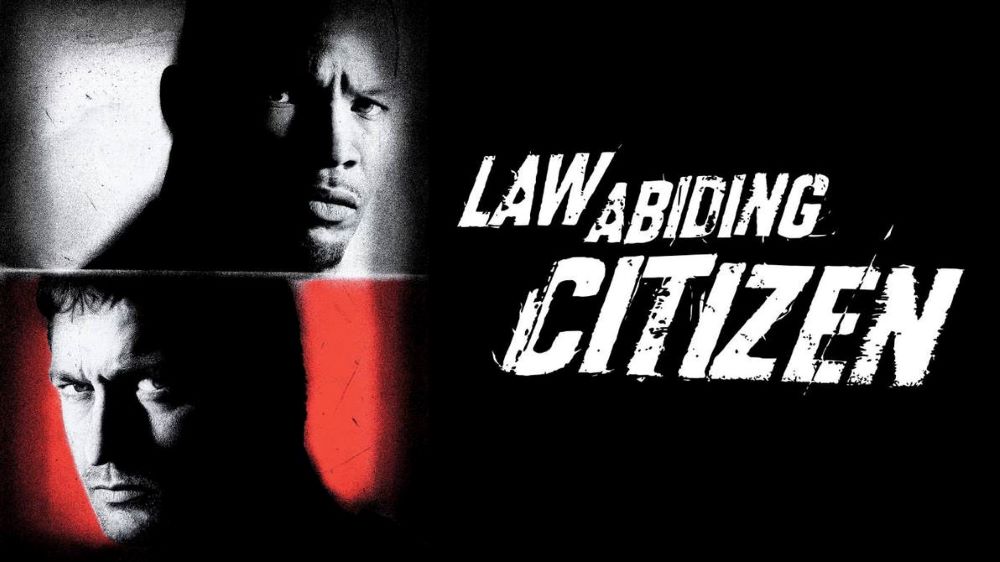
Law Abiding Citizen is one of those thrillers that grabs you right from the start and refuses to let go, even as it spirals into moral chaos. Directed by F. Gary Gray and released in 2009, the film pits two central performances—Gerard Butler as Clyde Shelton and Jamie Foxx as Nick Rice—against each other in a brutal chess match of justice, revenge, and control. On the surface, it’s a revenge thriller about a man wronged by a broken justice system. But dig a little deeper, and it becomes a dark commentary on the limits of law, the manipulation of morality, and the ethics of punishment. It’s not perfect—it veers toward implausibility at times—but it’s undeniably gripping, stylishly cold, and lingers in your mind long after the credits roll.
The film begins with a horrifying scene that immediately sets the tone for what’s to come. Clyde Shelton, an inventor and family man, watches helplessly as his wife and young daughter are brutally murdered in their home. When the killers are caught, Assistant District Attorney Nick Rice cuts a deal that lets one murderer go free in exchange for testifying against his partner. The decision, made in the name of efficiency and legal pragmatism, destroys Clyde’s faith in the justice system. Ten years later, when the murderer is executed under mysterious and gruesome circumstances, Clyde resurfaces—not as a grieving victim but as a brilliant, calculated force determined to expose the system’s corruption in the most explosive way imaginable.
What makes Law Abiding Citizen so effective early on is its sympathy play. The audience initially feels the same fury Clyde does. We understand his pain and disillusionment, and for a brief moment, we want him to succeed in making the system accountable. Butler captures that emotional transition perfectly—from quiet devastation to methodical vengeance. The scene where Clyde calmly watches his first victim die, having orchestrated the man’s death with near-surgical precision, is shocking yet disturbingly satisfying. This is where the film hooks its audience: it asks whether revenge can ever be justified when justice fails.
But as the killings pile up and Clyde’s plan grows more elaborate, that empathy begins to slip. The real tension of the film lies in that moral gray space—where Clyde’s righteous anger turns monstrous. His war isn’t just against the criminals but against the entire justice system, targeting judges, lawyers, and anyone he sees as complicit. Nick Rice, on the other hand, becomes the face of that system. He’s young, successful, and smug—a prosecutor obsessed with his win-loss record. Jamie Foxx’s performance gives Rice an icy veneer of confidence that slowly cracks as Clyde’s campaign escalates. The interplay between these two men—the avenger and the pragmatist—is the film’s heartbeat. It’s less about who will win and more about whether either man can still claim moral authority when the dust settles.
From a narrative standpoint, Law Abiding Citizen is structured like a dark puzzle. Each scene unveils another layer of Clyde’s intelligence and ruthlessness. The tension comes not from knowing who’s doing it—we know—but from wondering how he’s doing it. The film’s most audacious twist is that Clyde continues orchestrating murders even while locked in a high-security prison cell. This push toward psychological warfare turns the story into a cat-and-mouse game with shades of Seven and The Silence of the Lambs. However, where those films maintained a clear thematic direction, Law Abiding Citizen sometimes stumbles under the weight of its ambition. The logic of Clyde’s omnipotence starts to stretch believability, and the film sacrifices realism for spectacle. Still, it’s hard to look away when the spectacle is this sharp and aggressive.
Visually, F. Gary Gray directs with a crisp, metallic style. The cinematography uses muted tones and sharp contrasts to reflect the film’s moral ambiguity. The more the story dives into Clyde’s schemes, the colder and more sterile the visuals become, echoing his detachment from human empathy. The editing is snappy and kinetic, especially during the interrogation scenes and courtroom exchanges. Brian Tyler’s score underscores the tension with brooding, pulsing beats that heighten the sense of dread. Every technical element supports the emotional core—revenge as obsession, intelligence as a weapon.
Gerard Butler, best known for roles that highlight his physicality, delivers one of his most controlled performances here. His portrayal of Clyde is chilling because of how calm it is. He doesn’t yell or flail; his menace is intellectual. Even in scenes where the dialogue leans toward theatrical monologues about justice and morality, Butler maintains focus, grounding the performance in conviction rather than chaos. Jamie Foxx, meanwhile, brings subtlety to Nick Rice. His transformation from ambitious lawyer to shaken moralist is gradual. By the final act, Nick’s self-assurance has eroded into doubt—about the system, his choices, and his own complicity. Foxx and Butler’s dynamic never feels forced; it’s built on escalating tension, mutual respect, and bitter irony.
Where Law Abiding Citizen truly provokes is in its ethical questioning. What does justice mean when the system serves convenience instead of truth? Is it right to play by the rules if those rules protect the guilty? Clyde’s crusade, as twisted as it becomes, emerges from a very real frustration—one viewers can sympathize with, especially in a world full of technicalities that favor the powerful. But the film also serves as a warning. In trying to dismantle corruption, Clyde becomes its reflection. His vigilante justice ultimately mirrors the same indifference he condemns. By the time the film reaches its explosive climax, viewers are left torn—not cheering for Clyde’s punishment, but not wanting him to win either. This ambiguity gives the film an edge that lingers long after the credits roll.
That said, the story’s final act is where opinions tend to divide. Once strategy gives way to spectacle, the film trades nuance for action. The ending, while satisfying in terms of closure, feels somewhat abrupt and simplified compared to the build-up. The moral complexity that defined the first two acts begins to blur into a conventional revenge-thriller showdown. Still, even in its imperfections, the film sustains a dark fascination. It never feels lazy or hollow—it’s just that its ideas might have deserved a slightly more refined execution.
Despite its narrative stretches, Law Abiding Citizen remains a standout in the late-2000s thriller landscape. It’s unapologetically intense, dramatically charged, and philosophical enough to make its explosions feel earned rather than gratuitous. The film thrives on its contradictions: it condemns violence while indulging in it, critiques the system while sensationalizing its collapse. For all its over-the-top plotting, the emotional truth stays intact—when justice becomes negotiable, vengeance becomes inevitable. And whether viewers side with Clyde or Nick, the uneasy feeling the film leaves behind is its greatest triumph.
At its core, Law Abiding Citizen is less about revenge and more about control—who wields it, who loses it, and how the pursuit of it can consume both sides. F. Gary Gray’s direction, backed by two commanding performances, turns what could’ve been a formulaic thriller into something more charged and psychological. It’s a film that asks uncomfortable questions about morality, justice, and the price of vengeance, even if its answers are messy. And maybe that’s the point—justice, like humanity, rarely fits into a clean equation.
Here are the 2025 nominations of the Chicago Film Critics Association!
BEST PICTURE
It Was Just an Accident
Marty Supreme
One Battle After Another
Sinners
Train Dreams
BEST DIRECTOR
Paul Thomas Anderson – One Battle After Another
Ryan Coogler – Sinners
Mona Fastvold – The Testament of Ann Lee
Jafar Panahi – It Was Just an Accident
Josh Safdie – Marty Supreme
BEST ACTOR
Timothée Chalamet – Marty Supreme
Leonardo DiCaprio – One Battle After Another
Joel Edgerton – Train Dreams
Ethan Hawke – Blue Moon
Michael B. Jordan – Sinners
Wagner Moura – The Secret Agent
BEST ACTRESS
Jessie Buckley – Hamnet
Rose Byrne – If I Had Legs I’d Kick You
Jennifer Lawrence – Die, My Love
Amanda Seyfried – The Testament of Ann Lee
Tessa Thompson – Hedda
BEST SUPPORTING ACTOR
Benicio del Toro – One Battle After Another
Jacob Elordi – Frankenstein
Delroy Lindo – Sinners
Sean Penn – One Battle After Another
Stellan Skarsgard – Sentimental Value
BEST SUPPORTING ACTRESS
Odessa A’Zion – Marty Supreme
Nina Hoss – Hedda
Inga Ibsdotter Lilleaas – Sentimental Value
Amy Madigan – Weapons
Wunmi Mosaku – Sinners
Teyana Taylor – One Battle After Another
BEST ORIGINAL SCREENPLAY
Blue Moon by Robert Kaplow
It Was Just an Accident by Jafar Panahi
Marty Supreme by Ronald Bronstein & Josh Safdie
Sinners by Ryan Coogler
Sorry, Baby by Eva Victor
BEST ADAPTED SCREENPLAY
Hamnet by Chloe Zhao & Maggie O’Farrell
No Other Choice by Park Chan-wook – Lee Kyoung-mi – Don McKellar – & Jahye Lee
One Battle After Another by Paul Thomas Anderson
Train Dreams by Clint Bentley & Greg Kwedar
Wake Up Dead Man by Rian Johnson
BEST ANIMATED FEATURE
Arco
Boys Go to Jupiter
KPop Demon Hunters
Little Amelie or the Character of Rain
Zootopia 2
BEST DOCUMENTARY
Cover-Up
My Undesirable Friends – Part 1 – Last Air in Moscow
The Perfect Neighbor
Predators
Put Your Soul on Your Hand and Walk
BEST FOREIGN LANGUAGE FILM
It Was Just an Accident
No Other Choice
The Secret Agent
Sentimental Value
Sirat
BEST ART DIRECTION/PRODUCTION DESIGN
Frankenstein
Marty Supreme
One Battle After Another
The Phoenician Scheme
Sinners
BEST CINEMATOGRAPHY
Dan Laustsen – Frankenstein
Lukasz Zal – Hamnet
Michael Bauman – One Battle After Another
Autumn Durald Arkapaw – Sinners
Adolpho Veloso – Train Dreams
BEST COSTUME DESIGN
Kate Hawley – Frankenstein
Lindsay Pugh – Hedda
Ruth E. Carter – Sinners
Malgorzata Karpiuk – The Testament of Ann Lee
Paul Tazewell – Wicked: For Good
BEST EDITING
Jon Harris – 28 Years Later
Stephen Mirrione & Patrick J. Smith – F1: The Movie
Ronald Bronstein & Josh Safdie – Marty Supreme
Kim Sang-beom & Kim Ho-bin – No Other Choice
Andy Jurgensen – One Battle After Another
BEST ORIGINAL SCORE
Rob Mazurek – The Mastermind
Jonny Greenwood – One Battle After Another
Ludwig Goransson – Sinners
Daniel Blumberg – The Testament of Ann Lee
Bryce Dessner – Train Dreams
BEST USE OF VISUAL EFFECTS
Avatar: Fire and Ash
Frankenstein
Mickey 17
Mission: Impossible — The Final Reckoning
Sinners
MILOS STEHLIK AWARD FOR BREAKTHROUGH FILMMAKER
Mary Bronstein – If I Had Legs I’d Kick You
Sarah Friedland – Familiar Touch
Carson Lund – Eephus
James Sweeney – Twinless
Eva Victor – Sorry, Baby
MOST PROMISING PERFORMER
Miles Caton – Sinners
Chase Infiniti – One Battle After Another
Abou Sangare – Souleymane’s Story
Tonatiuh – Kiss of the Spider Woman
Eva Victor – Sorry, Baby
The African American Film Critics Association has announced its picks for the best of 2025! And here they are:
AAFCA’S TOP 10 FILMS OF THE YEAR
1. Sinners (Warner Bros.)
2. One Battle After Another (Warner Bros.)
3. Hedda (Amazon MGM)
4. Frankenstein (Netflix)
5. Hamnet (Focus Features)
6. Wicked: For Good (Universal Pictures)
7. F1 (Apple/Warner Bros.)
8. One of Them Days (Sony Pictures Releasing)
9. The Knife (Relativity Media)
10. The Smashing Machine (A24)
BEST ACTOR – Michael B. Jordan – Sinners (Warner Bros.) BEST ACTRESS – Tessa Thompson – Hedda (Amazon MGM) BEST SUPPORTING ACTRESS – Wunmi Mosaku – Sinners (Warner Bros.) BEST SUPPORTING ACTOR – Damson Idris – F1 (Apple/Warner Bros.) BEST DOCUMENTARY – The Perfect Neighbor (Netflix) BEST ANIMATED FEATURE – KPop Demon Hunters (Netflix) BEST DIRECTOR – Ryan Coogler – Sinners (Warner Bros.) BEST WRITING – Ryan Coogler – Sinners (Warner Bros.) EMERGING FACE (ACTOR) – Miles Caton – Sinners (Warner Bros.) EMERGING FACE (ACTRESS) – Chase Infiniti – One Battle After Another (Warner Bros.) BEST INDEPENDENT FEATURE – Hedda (Amazon MGM) BEST ENSEMBLE – Sinners (Warner Bros.) BEST LIVE ACTION SHORT – The Rebel Girls BEST DOCUMENTARY SHORT – Hoops, Hopes & Dreams BEST ANIMATED SHORT – Black Man, Black Man BEST MUSIC – Ludwig Göransson – Sinners (Warner Bros.)
Today’s holiday movie is …. well, it’s a little bit odd.
Santa Claus is a 1959 Mexican film that reminds us that before he became an advertising icon, Nicholas Claus was a Catholic saint. According to this film, St. Nick also apparently lives in outer space with a bunch of singing children. His best friend is Merlin and he apparently gets along with Vulcan, the Roman God of fire, as well.
Perhaps angered by the way that Santa is beloved by children of all races and figures of all mythologies, Lucifer orders a little demon named Pitch to go to Earth and turn the children against Santa.
So yeah, Santa Claus is really weird. However, if you’ve ever wanted to see a movie where Santa is revealed to be a God-like action hero who holds the fate of the world in his hands, this is the film for you!
Today’s scene that I love comes from 1957’s Paths of Glory. In this scene, Colonel Dax (Kirk Douglas) fights a losing battle to save the lives of three soldiers who have been accused of cowardice after refusing to take part in a suicidal attack during World War I.
Douglas not only starred in this film but his also production company also helped to finance it. The film was co-written and directed by Stanley Kubrick.
4 Or More Shots From 4 Or More Films is just what it says it is, 4 shots from 4 of our favorite films. As opposed to the reviews and recaps that we usually post, 4 Shots From 4 Films lets the visuals do the talking!
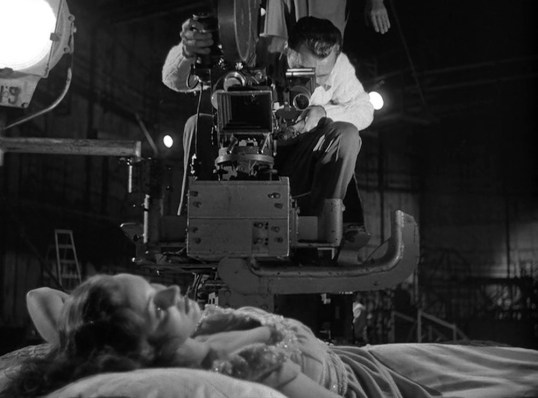
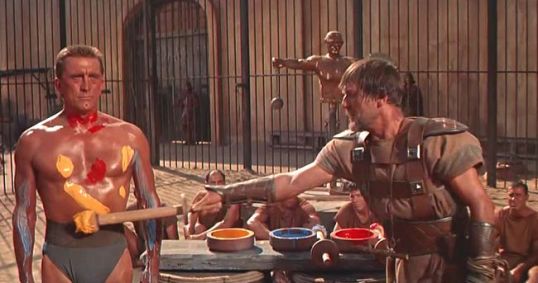
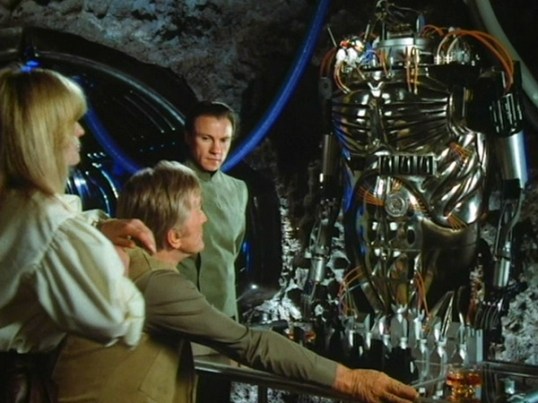
Today would have been the 109th birthday of actor Kirk Douglas! It’s time for….
4 Shots From 4 Kirk Douglas Films
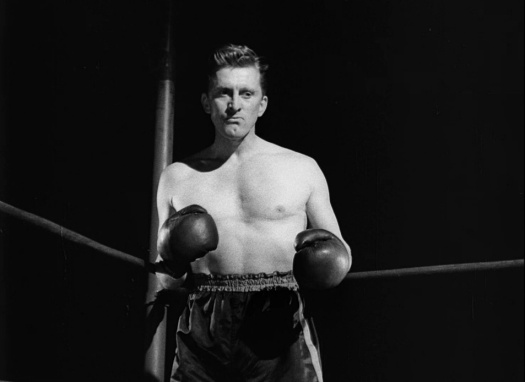
Champion (1949, dir by Mark Robson, DP; Franz Planer)
The Bad and the Beautiful (1952, dir by Vincente Minnelli, DP: Robert L. Surtees)
Spartacus (1960, dir by Stanley Kubrick, DP: Russell Metty)
Saturn 3 (1980, dir by Stanley Donen, DP: Billy Williams)


 Through the Shattered Lens