It’s always a good to start the day with Kim Wilde.
Enjoy!
It’s always a good to start the day with Kim Wilde.
Enjoy!
Welcome to Late Night Retro Television Reviews, a feature where we review some of our favorite and least favorite shows of the past! On Fridays, I will be reviewing Freddy’s Nightmares, a horror anthology show which ran in syndication from 1988 to 1990. The entire series can be found on Tubi!
This week, dreams continue to come true in Springwood, Ohio. Freddy continues to show up in very short host segments because I guess he doesn’t have anything better to do. And I continue to find ways to pad out my reviews for a show that there’s really not much to be said about. It happens. Some shows are interesting and take chances and other shows just recycle the same thing over and over again. Anyway, let’s get to it….
Episode 1.17 “Love Stinks”
(Dir by John Lafia, originally aired on February 26th, 1989)
Adam (John Washington) is a high school jock who has a chance to join the White Sox and who has a girlfriend named Laura (Tamara Glyn). When his parents go out of town, Adam throws a house party. The party goes wrong when he finds himself unable to say the words “I love you,” to Laura. Laura leaves him and Adam has a one-night stand with Loni (Susanna Savee). Soon, Adam finds himself drifting in-and-out of a dream state. He sees Laura chopping him up with meat cleaver. He sees his parents come home and he notices that his father is missing a finger. Loni ruins his interview with the baseball scout. It’s all because Adam can’t say “I love you,” but suddenly, Adam wakes up in bed and hears the party still going on downstairs and realizes it was all a dream. He runs downstairs and grabs Laura and says, “I love you!” Except, Laura now looks like Loni. And when his parents show up and say they brought someone to meet him, it turns out to be Loni except Loni now looks like Laura.
Meanwhile, Adam’s slacker friend Max (Georg Olden) gets a job at Mr. Cheesy Pizza. He’s working for his hated uncle, Ralph (Jeffery Combs). When Max’s girlfriend disappears, Max is horrified to discover that she’s become a part of the special sauce that Ralph uses to make the pizza’s so memorable. Don’t worry, it’s all just a dream. Except, in the waking world, the pizza oven explodes and kills Ralph. Max apparently decides to take a lesson from his dream and makes tasty use of Ralph’s remains.
By the admittedly low standards of Freddy’s Nightmares, this episode wasn’t that bad. Though the first story was incoherent, it still captured the feeling of being scared of commitment. The second story was predictable but at least it featured Jeffrey Combs doing his sociopathic nerd thing. This episode held my interest. That said, almost every episode pretty much has the exact same “It was just a dream” plot twist. At this point, it’s no longer a shock when someone suddenly opens their eyes and breathes a sigh of relief. Even Freddy seems kind of bored with it all.
My house sits near two cemeteries.
To the East, there’s a cemetery that sits near a bus stop. It’s surrounded by a fence and, judging from the gravestones that I’ve seen, it was last used in 1917. It was a private cemetery, one that functioned as the final resting place for the members of one of the families who founded my hometown. To the west, there’s a park that is home to another private cemetery. It’s also surrounded by a fence. That fence wasn’t always there but it went up a few years ago because people were vandalizing the tomb stones and breaking the statues that had stood there for over a hundred years. How sick to do you have to be vandalize a graveyard?
Occasionally, when I’m near either one of the two cemeteries, I’ll take some time to look at the names on the headstones. The names are of people who I will never know. I’ll never know what they were like to live with or to eat dinner with. I’ll never know what hobbies occupied their time. I’ll never know what books they read. I’ll never know who they were. But I will always know that someone cared enough to erect a tombstone to let the world that person had once been alive. I will always know that, at some point, they were alive and they were a part of society.
I thought about those two cemeteries as I watched Train Dreams. Based on the award-winning novella by Denis Johnson, Train Dreams stars Joel Edgerton as Robert Grainier. At the start of the film, the narrator (Will Patton) tells us that Grainier lived for 80 years and he spent most of his life in Idaho. He never saw the ocean. He was an orphan who never learned who his parents were, when he was born, or how he came to be placed on a train in the late 19th century. The film follows Grainier as he goes from dropping out of school to working as a logger to marrying Gladys (Felicity Jones). He builds a cabin for Gladys to live in while he’s away looking for work. He and Gladys have a daughter named Kate.
Growing up at a time when the frontier had only recently been tamed and when death was considered to be acceptable risk for the men cutting down trees and laying down railroad tracks, Robert sees his share of disturbing things. As a child, he comes across as a mountain man who is slowly dying. Working for the railroad, he watches as one of his co-workers is casually tossed off a bridge. Later, the elderly and kind-hearted Arn Peebles (William H. Macy) is mortally injured in a random accident. When loggers die, their boots are hammered into a tree. Years, later those same trees are cut down and the boots are forgotten. And yet, for all the danger in Robert’s life, there are the moments that make it all worth it. Robert always returns home to his cabin and to the embrace of Gladys and the sight of his daughter growing up. He always returns to his family until he can’t anymore. As he ages, Robert isolates himself from civilization and becomes semi-legendary in the nearby town. But, as always, legends are eventually forgotten.
Visually, it’s a hauntingly beautiful film. The scenery is stunning, even while Robert and his fellow loggers are busy changing it by chopping down trees. But there’s always a hint of danger hiding behind the beauty. A forest fire brings an eerie, orange tint to the sky but it also destroys many lives and dreams. Joel Edgerton gives a strong performance as Robert, proving once again that he’s one of the few actors who can star in a period piece without looking out-of-place. Edgerton’s performance gives the film the humanity needed to keep it from becoming purely a film about visuals. As Robert, Edgerton rarely yells or shows much emotion at all. But his eyes tell us everything that we need to know.
With its stunning visuals, its narration, and its emphasis on nature, Train Dreams owes an obvious debt to Terence Malick. That said, it’s not quite as thematically deep as Malick’s best films. Whereas Malick would have been concerned about Robert’s place in both the universe and the afterlife, Train Dreams is more content to focus on Robert’s 80 years in Idaho (and occasionally Spokane). Whereas Malick often seems to be daring his audience to walk out, Train Dreams is very much about keeping you watching as Robert grows old. That’s not necessarily a criticism, of course. It’s just an acknowledgment that Train Dreams is the rarest of all creatures, an arthouse film that’s also a crowd pleaser. It doesn’t alienate its audience but it does so at the cost of the risks that make Malick’s later films so fascinating, if occasionally frustrating. That said, Train Dreams does stick with you. I’ll be thinking about the final 20 minutes for quite some time.
Train Dreams tells the story of a man — one of many — who may have been forgotten by history but who mattered during his 80 years on this Earth. In the end, Robert Grainier serves as a stand-in for all the people who lived their lives as American rapidly changed from being a frontier to being a superpower. The world may forget him but the viewer never will.
Welcome to Retro Television Reviews, a feature where we review some of our favorite and least favorite shows of the past! On Fridays, I will be reviewing St. Elsewhere, a medical show which ran on NBC from 1982 to 1988. The show can be found on Daily Motion.
This week, the hospital is a depressing place.
Episode 3.2 “Playing God: Part Two”
(Dir by Bruce Paltrow, originally aired on September 26th, 1984)
There was a lot going on in this episode.
Sister Domenica demanded that Sister Theresa be taken off of life support and she threatened to sue the hospital if it didn’t happen. This led to Dr. Westphall telling another long and depressing story about his dead wife. I don’t mean to be flippant about anyone’s tragedies but it’s hard not to notice that almost everything seems to lead to Westphall telling a depressing story. Westphall is one of the most saddest television characters that I’ve ever come across.
The nurses are closer to striking. A labor negotiator named Richard Clarendon (Herb Edelman) is brought in by the nurses and it’s hard not to notice that he looks a lot like Helen Rosenthal’s ex-husband. I think I can already guess where this is heading.
A sick child was brought in by a woman (Tammy Grimes) who claimed to be his fairy godmother. This gave Fiscus an excuse to get a consultation from Kathy Martin, who has abandoned the morgue for psychiatry and who is no longer dressing exclusively in black.
At home, Dr. Craig struggled with impotence. At the hospital, Dr. Ehrlich gave an awkward lecture about whether or not one can have sex after heart surgery.
The firefighters are still recovering from their burns.
Clancy got an abortion, despite Morrison’s objections.
And yet, all that drama was overshadowed by the fact that the Dr. Peter White — the drug-addicted rapist who nearly killed more than a few patients due to his own incompetence — is once again walking the halls of St. Eligius. White won his lawsuit. I’m not really sure that I understand what the basis of his lawsuit was. St. Eligius could only ask a select number of residents to return and, even if you overlook the fact that White was accused of rape, it’s not as if Dr. White was ever an especially competent doctor. It would seem that just his struggle with drug addiction would be enough to justify not asking him to return. And yet, somehow, Dr. Peter White is once again a resident at St. Eligius. (The ruling was probably handed down by a Carter judge.)
“You just can’t admit that you were wrong about me!” White snaps at Westphall.
Westphall replies that White is a terrible human being and not worthy of being a doctor and that he will not be allowed to work with any patients at the hospital. And, for once, I wanted to cheer Dr. Westphall. He may be depressing but he understands exactly who and what Peter White is.
Whatever the future may hold for the hospital, I have a feeling that it’s not going to be happy. Two episodes in and the third season has already settled into a pit of melancholy. That said, melancholy is perhaps the right mood for a medical show. When it comes to hospitals, there aren’t many happy endings.
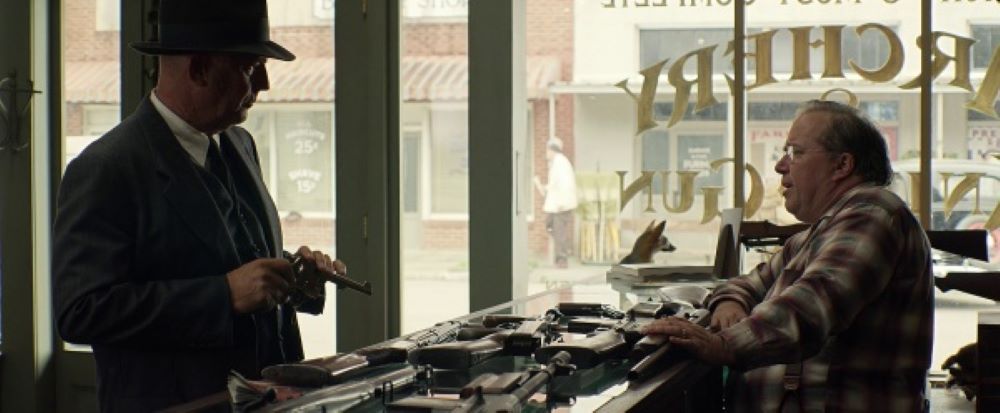
I reviewed the film The Highwaymen (directed by John Lee Hancock) earlier this week and there was always one scene from the entire film that I always go back to rewatching. It’s pretty much a sequence where Texas Ranger Frank Hamer (played by Kevin Costner) stops by a local gun store and begins naming off pistols and rifles that he wants to examine.
It’s a random scene, but it also shows how much has changed from how American treated the purchase and ownership of guns during the Prohibition and gangland era of the late 20’s and early 30’s. This was a time when any adult could go into a store and purchase any type of gun (from pistols, rifles, shotguns and all the way up to machine guns) as long as they had the money. No license required to purchase whatever one desired and no waiting period and background check.
All of this would just a month after the deaths of Bonnie and Clyde as depicted in the film when Congress would pass the National Firearms Act of 1934 when certain firearms would be heavily restricted (such as short-barreled shotguns, machine guns, short-barreled rifles aka submachine guns, etc.) requiring specific licenses and up to restricted for law enforcement use-only.
This scene shows a time that was still holding onto the ways of the frontier and the Old West, but was about to end as the government began to centralize regulation on the federal level and away from the states. It’s a scene that on its own was a small random one that almost borders on the ridiculous as Hamer just names off guns after guns then answering the store owner’s question of which he would buy with a simple answer of “all of them.”
I also love this scene being a gun enthusiast who has his own large collection. What I wouldn’t give to be able to just do what Frank Hamer did in this scene. Though my wallet would cry if I was given the chance.
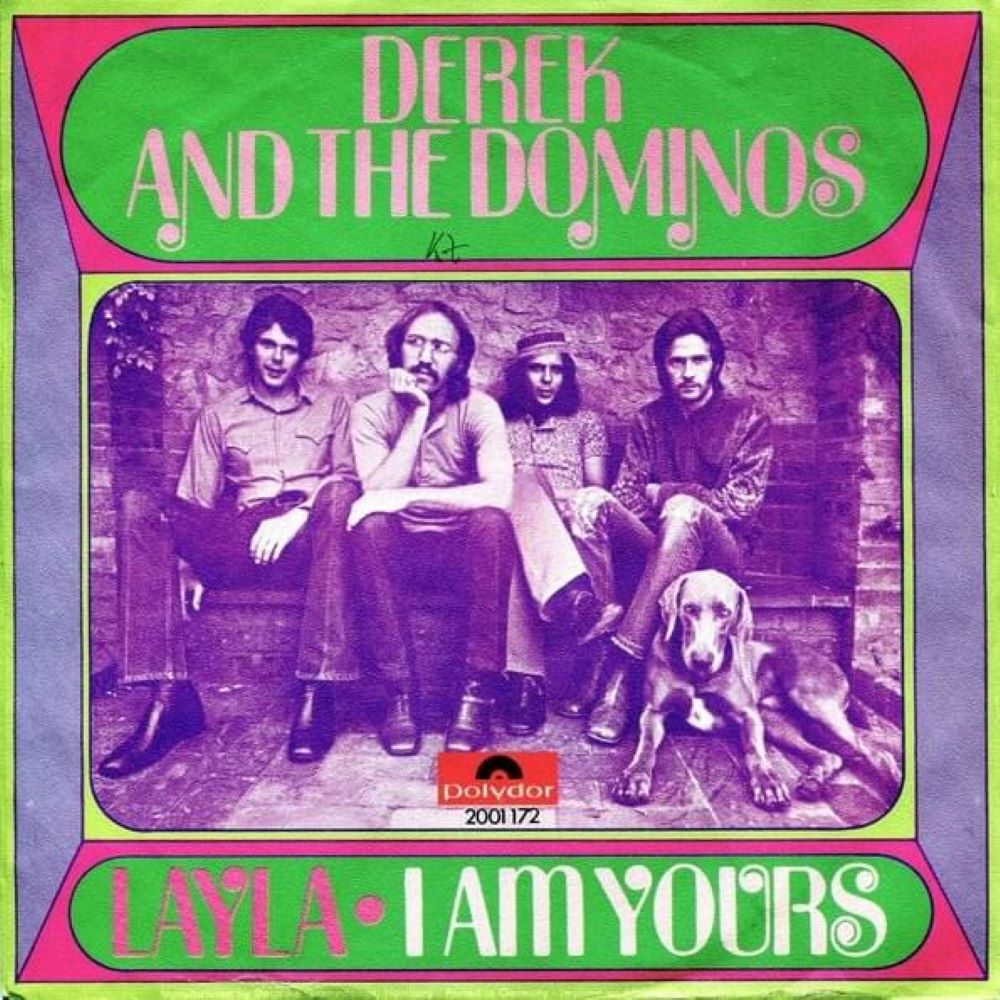
“Layla” is still one of those solos guitar players treat like a rite of passage. It’s not just the famous riff; the way Clapton and Duane Allman tear into the lead lines makes the whole first half feel like it’s permanently on the edge of falling apart, in the best way. The solo really starts to bloom once the main riff gives way to the verse lead around the 2:20 mark, with the piano-driven section kicking in later at about 3:10 on the original studio version.
A big part of why musicians and fans rate it so highly is the balance between flash and feel. The bends, slides, and quick little runs are impressive, but they always come back to short, singable phrases instead of just running scales. Allman’s slide work, especially those pushed, “beyond the fretboard” high notes, is a huge talking point among players because it sounds wild and emotional while still landing dead-on pitch.
People also love how the solo feels like one long emotional unraveling rather than a neat, contained spotlight moment. The guitar gradually hands things over to the piano section instead of ending on a standard rock climax, so the solo feels like it spills into that second movement of the song. That journey—from searing, tangled guitar lines to that almost resigned, melodic outro—is a big reason “Layla” keeps showing up on “greatest solos” lists and in conversations between working guitarists and casual fans alike.
Layla
What’ll you do when you get lonely
And nobody’s waiting by your side?
You’ve been running and hiding much too long
You know it’s just your foolish pride
Layla
You’ve got me on my knees
Layla
I’m begging, darling, please
Layla
Darling, won’t you ease my worried mind?
I tried to give you consolation
When your old man had let you down
Like a fool, I fell in love with you
You turned my whole world upside down
Layla
You’ve got me on my knees
Layla
I’m begging, darling, please
Layla
Darling, won’t you ease my worried mind?
Let’s make the best of the situation
Before I finally go insane
Please, don’t say we’ll never find a way
And tell me all my love’s in vain
Layla
You’ve got me on my knees
Layla
I’m begging, darling, please
Layla
Darling, won’t you ease my worried mind?
Layla
You’ve got me on my knees
Layla
I’m begging, darling, please
Layla
Darling, won’t you ease my worried mind?
[guitar solo]
Great Guitar Solos Series
As some of our regular readers undoubtedly know, I am involved in a few weekly watch parties. On Twitter, I host #FridayNightFlix every Friday and I co-host #ScarySocial on Saturday. On Mastodon, I am one of the five hosts of #MondayActionMovie! Every week, we get together. We watch a movie. We tweet our way through it.
Tonight, at 10 pm et, I will be hosting #FridayNightFlix and celebrating the event’s 5th birthday with an encore presentation! The movie? 2010’s Easy A!
If you want to join us this Friday, just hop onto twitter, find Easy A on Prime, start the movie at 10 pm et, and use the #FridayNightFlix hashtag! I’ll be there happily tweeting. It’s a friendly group and welcoming of newcomers so don’t be shy.
See you there!

by Erin Nicole
I saw this precious bird in our backyard one day. I had to get a picture. He was nice enough pose.
If the Bowman sisters formed a band….
(Seriously, they rock!)
Enjoy!
Welcome to Late Night Retro Television Reviews, a feature where we review some of our favorite and least favorite shows of the past! On Thursdays, I will be reviewing Highway to Heaven, which aired on NBC from 1984 to 1989. The entire show is currently streaming on Tubi and several other services!
This week …. oh, where to begin?
Episode 4.23 “Heaven Nose, Mr. Smith”
(Dir by Michael Landon, originally aired on March 30th, 1988)
This episode was bad.
How bad?
Let me count the ways.
This just wasn’t a good episode. The story just feels unfinished.
Next week, season 4 comes to a close!
 Through the Shattered Lens