Late Night Retro Television Review: Freddy’s Nightmares 1.2 “It’s A Miserable Life”


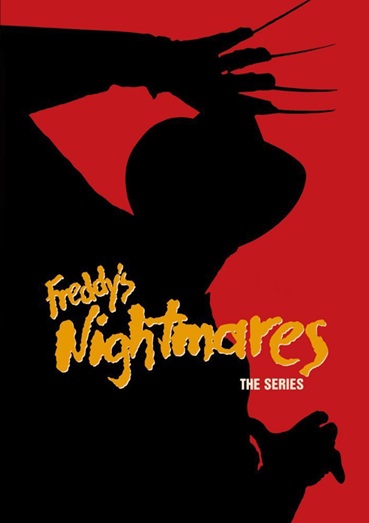
Welcome to Late Night Retro Television Reviews, a feature where we review some of our favorite and least favorite shows of the past! On Fridays, I will be reviewing Freddy’s Nightmares, a horror anthology show which ran in syndication from 1988 to 1990. The entire series can be found on Plex!
Let’s see what’s happening in Springwood!

Episode 1.2 “It’s A Miserable Life”

(Dir by Tom McLoughlin, originally aired on October 16th, 1988)

Bryan Ross (a young John Cameron Mitchell, giving a performance that really can’t be described as being anything less than lousy) is the son of the owner of the Beefy Boy hamburger joint in Springwood, Ohio.  Bryan wants to go to college.  His dad (Peter Iacangelo) and his mom (Annie O’Donnell) want him to take over the family business and join them in singing “Chew me, eat me, you can’t beat me.”

Bryan is working the overnight shift alone when a scruffy man (Michael Melvin) pulls up to the drive-through on his motorcycle and threatens to kill him.  Bryan passes out but, when he wakes up, he’s got a throbbing headache and he keeps seeing blood dripping on the floor.  Bryan’s girlfriend, Karyn (Lar Park Lincoln, giving a good performance), takes Bryan home.  At his house, Bryan discovers his mom and dad are acting weird.  Bryan tries to convince his parents to let him leave home.  Dad tries to stick his head in the oven.  Mom tries to seduce her son and then climbs into the refrigerator.  On the radio, there’s a news story about “another” drive-by shooting.  What could it all mean!?

Oh, you know what it all means.  Even if you haven’t watched the episode, you know that the motorcycle man obviously shot Bryan in the head and everything that happens after Bryan leaves Beefy Boy is just his dying vision.  It’s not a bad idea but it’s ineffectively executed.  We don’t really know enough about Bryan or his parents for Bryan’s hallucination to carry any impact and, from what we do see, they all appear to be broadly-drawn caricatures.   This episode also commits the sin of introducing a memorable character — the man on the motorcycle — and then not exploring just who or what he was meant to be.

Bryan’s story was wrapped up in 20 minutes.  The second half of the episode dealt with Karyn.  Shot in the same drive-by attack that killed Bryan, Karyn ended up at the hospital and …. well, I guess her story was another collection of hallucinations that really didn’t add up to much.  The story was effective because hospitals are scary and Lar Park Lincoln gave a better performance than John Cameron Mitchell did in his story.  That said, the entire story was basically Karyn getting upset because everyone kept saying that her parents were on their way.  Finally, Karyn finally revealed that — you guessed it! — her parents were dead and that they died at the same hospital where she was taken after getting shot.  As the episode ended, Karyn saw her parents standing in the doorway and screamed and thrashed around in bed while the doctor and nurse tried to calm her.  And …. that was it.  I mean, is Karyn dead?  Is that why her parents showed up?  Is Karyn hallucinating again?  Much like a drunk frat boy, this story didn’t reach a climax as much as it just stopped.

As for Freddy, he showed up to introduce each story.  There was a cool moment where he emerged from the restaurant’s fry cooker.  For the hospital scene, he put on scrubs.  He didn’t actually interact with either Bryan or Karyn but he still took credit for their suffering.  I think Freddy was just bragging on himself.

This episode was pretty uneven.  For the most part, I’m just glad I don’t live in Springwood.
Brad’s Scene of the Day – Paul Kersey meets Machete!


In honor of the 111th birthday in cinema heaven of director J. Lee Thompson, I’ve chosen to share a scene from one of his last few movies, the action packed sequel, DEATH WISH 4: THE CRACKDOWN (1987). Actors Charles Bronson and Danny Trejo crossed paths a couple of times in the late 80’s when Bronson was near the end of his legendary career and Trejo was at the very beginning of his. This scene is interesting as it presents Bronson using a wine bottle as a weapon instead of an huge gun! Enjoy my friends!

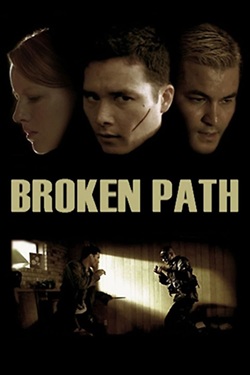
Broken Path (2008, directed by Koichi Sakamoto)


Jack Ellis (Johnny Yong Bosch) spends all of his time moving from town to town, never staying long enough to make lay down permanent roots.  His wife, Lisa (Pamela Walworth), finally convinces him to stop running and to move into a ranch house with her.  That turns out to be a mistake because the ranch house is soon overrun by ninjas who have some sort of grudge against Jack and who appear to have lascivious intentions towards his wife.

Once the movie deals with a few talky sequences at the beginning, Broken Path becomes one long fight sequences with Jack taking on the home invaders one-by-one.  The fight scenes are all exciting choreographed and appropriately brutal, with a lot of blood being spilled by both Jack and his enemies.  This is not one of those martial arts film where people somehow manage to survive the most brutal of beatings without having a scratch on them.  The entire home invasion plays out, more or less, in real time.  This is a movie with a 70-minute fight scene.  If that’s the sort of thing that you’re into, Broken Path is extremely exciting.  If you want more nuance than just people fighting, this might not be the film for you.

From what I understand, Broken Path never got a proper theatrical or video release in the United States but it can be found on YouTube.


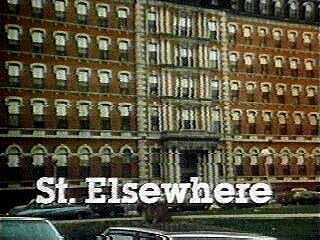
Retro Television Review: St. Elsewhere 2.9 “AIDS and Comfort”


Welcome to Retro Television Reviews, a feature where we review some of our favorite and least favorite shows of the past! On Fridays, I will be reviewing St. Elsewhere, a medical show which ran on NBC from 1982 to 1988.  The show can be found on Hulu and, for purchase, on Prime!

This week, St. Elsewhere makes history.

Episode 2.9 “AIDS and Comfort”

(Dir by Victor Lobl, originally aired on December 21st, 1983)

A city councilman named Anthony Gifford (Michael Brandon) has checked into St. Eligius under an assumed name.  He’s complaining about fatigue.  His lymph nodes are swollen.  His immune system seems to be shutting down.  Dr. White and Dr. Westphall look at the man’s x-rays and Dr. White says that it looks like Gifford might be suffering from a newly discovered disease that no one knows much about.  The name of that disease is AIDS.

“Could he be …. gay?”  Dr. White asks.

Westphall initially scoffs.  He points out that Gifford is married and has two children.  When Gifford is asked directly about his personal life, he admits to having affairs but is quick to say that they were all with women.  Westphall later says that Gifford is either lying or they’ve discovered something entirely new about the virus and they need to call the CDC….

Today, with all we know about HIV and AIDS, it’s a bit jarring to hear some of the dialogue in this episode.  Doing some research, I discovered that this was the first ever episode of network television to deal with the AIDS epidemic and that it aired at a time when there were still a lot of unanswered questions about how the disease was spread.  (For instance, the episode aired shortly after the HIV virus has been discovered.)

When words get out that Gifford is a patient at the hospital and that he has AIDS, panic erupts.  No one donates to the hospital’s blood drive because they’re scared the needles have somehow gotten infected.  Even usually sympathetic characters — like Luther and Dr. Fiscus — refuse to be anywhere near the isolation ward.  Gifford’s doctor, Peter White, requests that Gifford’s case be given to another doctor.  Later, White asks everyone is Westphall is mad at him.  Morrison replies that White acted unethically.  White blames his wife and her fears of him contracting the disease by being in the same room as Gifford.  (Not surprisingly, White is also the one who, because he won’t stop whining about his job, is responsible for word spreading about Gifford having AIDS.)

After spending nearly the entire episode denying it, Gifford finally admits to having had affairs with other men.  As he leaves the isolation ward, he’s besieged by reporters.  Getting in the elevator, he sees that someone has spray-painted “AIDS” on the wall.  Before he leaves, he asks Westphall how long he has.  Westphall grimly replies that most AIDS patients die within two years.

Later, while talking to Dr. Craig and Nurse Rosenthal, Westphall says, “Yeah, I know that’s how I felt about it at first. Then I started to think, Who am I? Why should any of us be penalized, fatally, for choosing a certain lifestyle, especially when you realize that it all boils down to chance anyway? And I tell you something I don’t give a damn for all this talk about morality and vengeful gods and all that. If you have AIDS, you’re sick, you need help. That’s all that matters. And that’s why we’re here, right?”

And yes, it’s a bit jarring to hear Westphall refer to being a gay as a “choosing a certain lifestyle,” but you again you have to consider when this episode aired and that it was also the first network television show to feature a storyline about AIDS.  When this episode aired, saying that “If you have AIDS, you’re sick, you need help …. that’s all that matters,” took a certain amount of courage.  For many viewers, this episode was probably the first they ever really heard about AIDS.

This episode dealt very honestly with AIDS.  It actually helped that all of the character didn’t have the type of “perfect” reaction that television shows often present characters as having.  Even Dr. Westphall, usually presented as being this show’s beacon of moral clarity, had to deal with his own prejudices.  When it comes to a controversial topic, television shows too often portray their lead characters as being saints.  This episode portrayed the staff of St. Elsewhere as being flawed and imperfect and, as such, it was a very effective and thought-provoking hour.

Live Tweet Alert: Join #FridayNightFlix for Wild Thing!


As some of our regular readers undoubtedly know, I am involved in a few weekly watch parties.  On Twitter, I host #FridayNightFlix every Friday and I co-host #ScarySocial on Saturday.  On Mastodon, I am one of the five hosts of #MondayActionMovie!  Every week, we get together.  We watch a movie.  We tweet our way through it.

Tonight, at 10 pm et, I will be hosting #FridayNightFlix!  The movie?  1987’s Wild Thing!

If you want to join us this Friday, just hop onto twitter, start the movie at 10 pm et, and use the #FridayNightFlix hashtag!  I’ll be there happily tweeting.  It’s a friendly group and welcoming of newcomers so don’t be shy.

Wild Thing is available on Prime and Tubi!

See you there!

Scenes That I Love: The Underground Chaos From Skyfall


Today, the Shattered Lens wishes a happy birthday to director Sam Mendes!

Now, it’s true that Sam Mendes won an Oscar for directing American Beauty and he probably came close to winning a second one for his work on 1917.  However, my favorite Mendes film remains Skyfall.  Skyfall is one of the best of the Bond films and I say this as someone who was never really a fan of Daniel Craig’s mopey interpretation of the character.  Based on his previous films, Sam Mendes may not have been the first name that come to mind when people talked about someone who could make a great Bond film but, with Skyfall, he did just that.

Here, in a scene that I love, James Bond pursues Silva (Javier Bardem) through the London Underground.  It’s very suspenseful, very droll, and, most importantly, very British.

4 Shots From 4 Films: Special J. Lee Thompson Edition


4 Or More Shots From 4 Or More Films is just what it says it is, 4 shots from 4 of our favorite films. As opposed to the reviews and recaps that we usually post, 4 Shots From 4 Films lets the visuals do the talking!

111 years ago today, the director J. Lee Thompson was born in Bristol, England.  Though he never quite got the respect that he deserved while he was alive (though he did receive an Oscar nomination for The Guns of Navarone and later won fame as one of the few directors that Charles Bronson actually liked), J. Lee Thompson has since been recognized as a master of genre filmmaking and as someone who was not afraid to add a little subversive subtext to his films.  From The Guns of Navarone to the later sequels of Planet of the Apes to working with Charles Bronson and Robert Mitchum, Thompson was one of the best.

In honor of the man and his legacy, here are….

4 Shots From 4 J. Lee Thompson Films

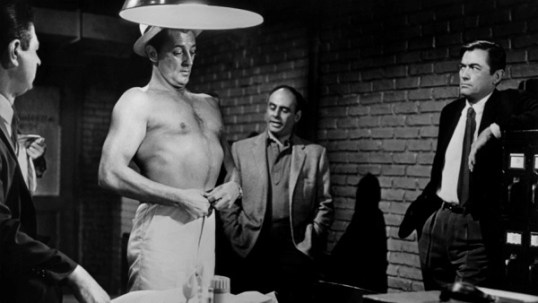
Cape Fear (1962, dir by J. Lee Thompson, DP: Sam Leavitt)

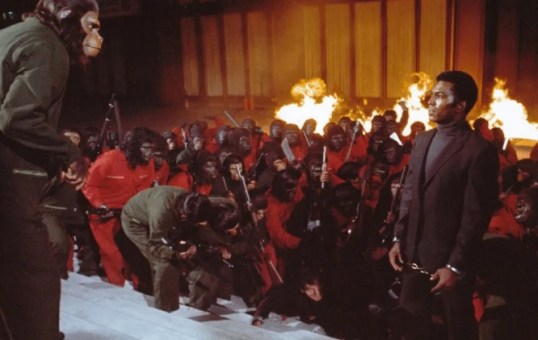
Conquest of the Planet of the Apes (1972, dir by J. Lee Thompson, DP: Bruce Surtees)

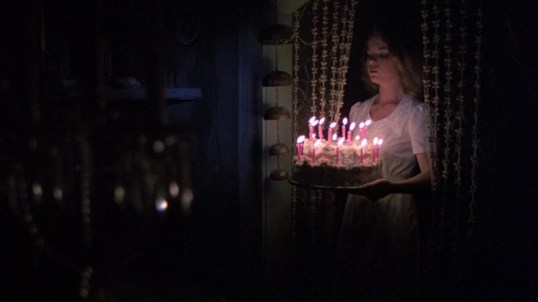
Happy Birthday To Me (1981, dir by J. Lee Thompson, DP: Miklos Lente)

10 To Midnight (1983, dir by J. Lee Thompson, DP: Adam Greenberg)