Retro Television Review: 3 By Cheever 1.2 “O Youth And Beauty!” (dir by Jeff Bleckner)


Welcome to Retro Television Reviews, a feature where we review some of our favorite and least favorite shows of the past!  On Saturdays, I will be reviewing 3 By Cheever, which ran on PBS in 1979.  The entire show can be purchased on Prime and found on YouTube.
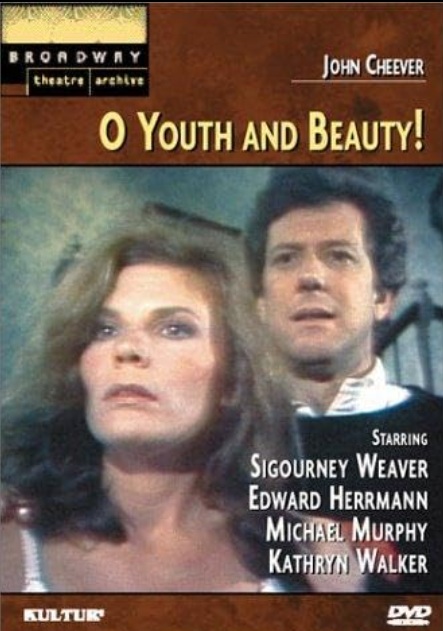
Episode 1.2 “O Youth and Beauty!”

(Dir by Jeff Bleckner, originally aired on October 31st, 1979)

Back in the day, Cash Bentley (Michael Murphy) was an athletic marvel.  He was a track star who could jump the hurdles with ease and who everyone in high school looked up to.  Now, however, he’s 40 years old and he feels lost.  He’s aging and a new generation of young people have come along.  They certainly have no idea who Cash Bentley used to be.

At drunken neighborhood parties, Cash insists on recreating his youth by having his hosts set up their furniture like an obstacle course.  Giving them a starter’s pistol that he insists be fired to signify the start of the race, Cash will run through the house, jumping over chairs and couches and tables while everyone cheers.  Unfortunately, Cash’s luck runs out and he ends up breaking his leg during one of his demonstrations.

Forced to get around on crutches, Cash feels isolated from the rest of the world.  He doesn’t get a promotion because his bosses say they need someone who can start traveling immediately.  When all of his neighbors get on the train that is heading into the city at the usual morning time, a hobbled Cash arrives late and is forced to wait alone for the next one.  His wife, Louise (Kathryn Walker), gets a job working at a boutique to help pay the bills.  She says that maybe she’ll make enough that they’ll be able to take a vacation.  At the neighborhood parties, no one wants to deal with Cash and his broken leg.  His athleticism was all he had left.  It was what he was known for.  It was the source of all his confidence.  Now that he doesn’t have that, he’s lost.

Eventually, his legs comes out of the cast and he insists that Louise set up all the furniture in the house so that he can run another obstacle race.  He gives Louise the starter’s pistol and insists that she fire it when it’s time for him to start.  The scene cuts to the outside of their suburban home.  The sound of one gunshot upsets the calm.  Later, Louise and her children are seen moving out of the house.  Cash is nowhere to be seen.

The episode ends ambiguously.  Those who are familiar with the original John Cheever short story know that Louise shot Cash and that no one was sure whether she meant to do it or not.  The movie cuts away before the gun is actually fired.  For all we know, Cash did the obstacle course and then just never returned home.

O Youth and Beauty is one of John Cheever’s most acclaimed short stories.  The screen adaptation features an excellent performance from Kathryn Walker but the scenes of Cash running the furniture obstacle course are probably something that worked better on the page and in the reader’s imagination than when actually presented on film.  Michael Murphy is almost too confident and handsome as Cash.  The role calls for a former jock slowly going to seed and desperately trying to hold onto his youth whereas Murphy looks like he’s still in peak athletic form.  Murphy does a good job portraying Cash’s depression and his alienation after he breaks his leg but, physically, he still seems miscast in the role.

Edward Herrmann and Sigourney Weaver, who were the center of last week’s episode, make a brief appearance in this one, hovering in the background of the neighborhood’s endless parties.

Next week, we finish up 3 By Cheever.

4 Shots From 4 Films: Special Joseph Kosinski Edition


4 Or More Shots From 4 Or More Films is just what it says it is, 4 shots from 4 of our favorite films. As opposed to the reviews and recaps that we usually post, 4 Shots From 4 Films lets the visuals do the talking!

Today, TSL wishes a happy birthday to director Joseph Kosinski!  It’s time for….

4 Shots From 4 Joseph Kosinski Films

Tron: Legacy (2010, dir by Joseph Kosinski, DP: Claudio Miranda)

Oblivion (2013, dir by Joseph Kosinski, DP: Claudio Miranda)

Only The Brave (2017, dir by Joseph Kosinski, DP: Claudio Miranda)

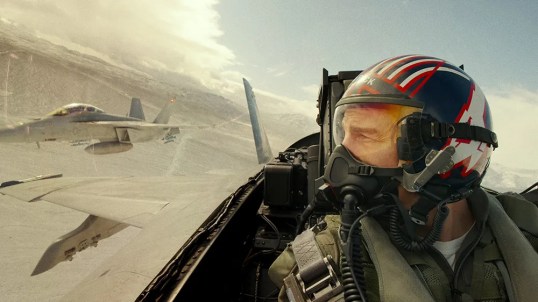
Top Gun: Maverick (2022, dir by Joseph Kosinski, DP: Claudio Miranda)

Film Review: The Jackpot (dir by Walter Lang)


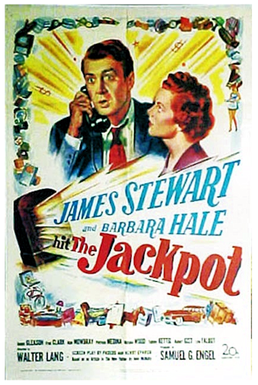
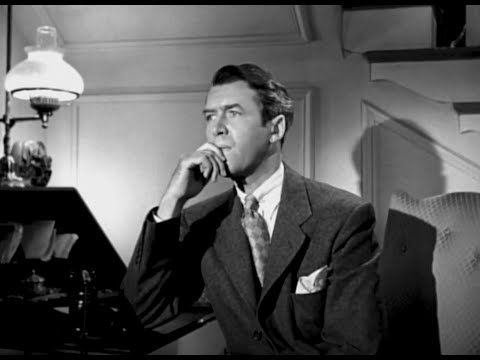
In 1950’s The Jackpot, James Stewart plays Bill Lawrence.

Bill has a job at a department store.  He’s not the manager but he’s still a respected member of the staff and who knows?  Maybe his boss (Fred Clark) will give him a promotion someday.  He lives in a big, two-story home with his wife, Amy (Barbara Hale).  He and Amy have two children, one of whom is played by a 12 year-old Natalie Wood.  By all appearances, Bill is doing pretty good for himself.  At one point, it’s mentioned that makes a grand total of $7,500 a year.

That definitely caught my attention.  “I make more than that!” I snapped at the screen.  I pulled up an inflation calculator and I discovered that $7,5000 in 1950 is the equivalent of — wait for it — $102,000 today!  (Technically, I still make more than that but still, it’s six figures.)

When Bill answers a phone call from a radio station and guesses the correct answer to a trivia question, he wins $24,000-worth of prizes.  (I didn’t bother to figure out how much that $24,000 would be be in 2025 dollars but we can safely assume that it would be quite a bit.)  Unfortunately, a lot of the prizes end up costing more than their worth.  Bill wins a side of beef , 7,500 cans of soup, and a 1,000 fruit trees but he doesn’t win anywhere to store it all.  He also wins a maid, an interior designer, a pony, a swimming pool, a trip to New York, and a session with portrait painter Hilda (Patricia Medina).  He also ends up with an income tax bill for $7,000.  Remember, he only makes $7,500 a year.  Damn the IRS!

Realizing that he’s going to have to sell the majority of his winnings, Bill loses his job when he’s caught trying to sell to the store’s customers.  Needing money to pay off his tax bill, he tries to pawn a diamond ring and ends up getting arrested.  With his anniversary coming up, he asks Hilda to paint a portrait of Amy from his description of her but Bill ends up spending so much time with Hilda that Amy becomes convinced that he’s having an affair.

Basically, one terrible thing after another happens to Bill, all the result of having won a contest.  (The film is loosely based on a true story, with James Gleason playing a fictionalized version of the reporter who wrote the original story.)  The movie’s a comedy but, as with the majority of the films that James Stewart made after World War II, there’s a sense of melancholy running through it.  Even before he wins the money, Bill doesn’t seem satisfied with his life.  Much like George Bailey, he’s restless and wondering if there will ever be more to his life than just his house in the suburbs and his job in the city.  Also, like George, Bill learns to appreciate what he has as the result of getting what he wants and discovering that he was happier before.  Few actors were as skilled at capturing ennui and dissatisfaction as Jimmy Stewart.  The Jackpot is a silly comedy but it’s also an effective portrait of a middle-aged man trying to find peace with the way his life has turned out.  That’s almost entirely due to Stewart’s likable but honest performance.

The Jackpot may not be one of Stewart’s most-remembered films but it’s entertaining, with the supporting cast all providing their share of laughs while Stewart provides the film with a heart.  The film may be a comedy but it’s also a look at America and Americans adjusting to life in the years immediately following World War II.  Suddenly, abundance is everywhere but, as Bill Lawrence, not without a price.

Live Tweet Alert: Join #ScarySocial for Alligator!


As some of our regular readers undoubtedly know, I am involved in a few weekly live tweets on twitter.  I host #FridayNightFlix every Friday, I co-host #ScarySocial on Saturday, and I am one of the five hosts of #MondayActionMovie!  Every week, we get together.  We watch a movie.  We tweet our way through it.

Tonight, at 9 pm et, Deanna Dawn will be hosting #ScarySocial!  The movie?  1980‘s Alligator!  

If you want to join us this Friday, just hop onto twitter, start the movie at 9 pm et, and use the #ScarySocial hashtag!  I’ll be there tweeting and I imagine some other members of the TSL Crew will be there as well.  It’s a friendly group and welcoming of newcomers so don’t be shy.

Alligator is available on Prime!

See you there!

Late Night Retro Television Review: Friday the 13th: The Series 3.11 “Year of the Monkey”


Welcome to Late Night Retro Television Reviews, a feature where we review some of our favorite and least favorite shows of the past! On Fridays, I will be reviewing Friday the 13th: The Series, a show which ran in syndication from 1987 to 1990. The entire series can be found on YouTube!

This week, Friday the 13th features an international adventure!

Episode 3.11 “Year of the Monkey”

(Dir by Rodney Charters, originally aired on January 15th, 1990)

Mushashi (John Fujioka) is a modern-day samurai who owns a cursed tea kettle.  When Jack, Micki, and Johnny come by his dojo in search of the kettle, Mushashi says that he will give it to them if they can prove that they are “honorable” by retrieving three cursed monkey statues that are currently in the possession an elderly businessman named Tanaka (Robert Ito).

Tanaka, however, has given the three wise monkey statues (“See No Evil,” “Hear No Evil,” and “Speak No Evil”) to his three children, Michiko (Tia Carrere), Koji (Leonard Chow), and Hitoshi (Von Flores).  Tanaka explains that each statue will challenge it’s owner.  Those who react in an honorable way will inherit Tanaka’s fortune.  Those who are dishonorable will get nothing.

Jack, Micki, and Johnny split up to retrieve the monkeys.  Johnny goes to New Yok to get Hear No Evil from Hitoshi.  Micki goes to Hong Kong to retrieve See No Evil from Koji.  Jack gets to stay in Canada (or Chicago or wherever this show is supposed to be taking place) so that he can retrieve Speak No Evil from Michiko.  What they don’t know is that Tanaka is several hundred years old.  Every time one of his children fails a monkey test, Tanaka gets a little bit younger.

It’s all about honor and dishonor and the code of the samurai in this week’s episode.  To be honest, it’s a bit of a mess.  First off, the title refers to the Chinese Zodiac but, other than our three regulars, all of the characters are meant to be Japanese.  Secondly, it’s never really clear how the cursed monkeys decide what is honorable and what is dishonorable.  Hitoshi uses his monkey to hear the thoughts of those around him and to take advantage of them.  That’s definitely dishonorable.  But then Koji is declared to be dishonorable even though his monkey did something on its own, without Koji telling it to.  Michiko refuses to use her monkey to her own advantage and is judged to be honorable.  She is told that it is now her duty to kill her father but instead, she commits suicide because killing her father would be dishonorable.  Then, Tanaka is eventually judged to be dishonorable because he stabs Musashi while Mushasi is not holding a weapon but that’s just because Mushashi dropped his sword at the very least minute.  It seems like Mushashi should be the dishonarable one for going out of his way to trick Tanaka.

My point is that this was a confusing episode.  The monkey were actually kind of cute but their powers made no sense.  I’m also not sure why experienced world traveler Jack decided to send Micki to Hong Kong instead of going himself.  In the end, this episode was pretty silly, despite the cool monkeys and the samurai-themed finale.

Scene That I Love: The Meteor Hits Hong Kong


Today’s scene that I love is a chaotic scene in which a fragments of a meteor cause a tidal wave to crash over Hong Kong.  It’s chaos on a budget in 1979’s Meteor!  This scene was actually filmed in Los Angeles and featured cardboard cut-outs of buildings in a big water tank.