Retro Television Review: The Love Boat 1.1 “Captain & The Lady/Centerfold/One If By Land….”


Welcome to Retro Television Reviews, a feature where we review some of our favorite and least favorite shows of the past!  On Wednesdays, I will be reviewing the original Love Boat, which aired on ABC from 1977 to 1986!  The series can be streamed on Paramount Plus!

Welcome aboard, it’s love!

Produced by Aaron Spelling, The Love Boat is one of the signature shows of the 70s and the 80s.  Each week, the Pacific Princess would set off for a different location with a different group of guest stars.  Typically, each episode would feature three stories.  One story would be silly fun.  One story would be a dramedy.  And then one story would typically feature a member of the Love Boat crew either falling in love or worrying about losing their job.  It was a tremendously silly show but, from the episodes I’ve seen, it was also very likable.  If nothing else, the ship looked really nice.

While the passengers changed from week-to-week, the crew largely remained the same.  During the show’s first season, the crew was made up of:

Captain Merrill Stubing (Gavin MacLeod), who started out as a stern, no-nonsense captain but who became significantly nicer and a good deal goofier as the series progressed,

Adam “Doc” Bricker (Bernie Kopell), the ship’s doctor who hit on every woman who boarded the boat and who probably would have been an HR nightmare if the show actually took place in the real world,

Gopher (Fred Grandy), the ship’s purser who …. well, I’m not sure what a purser does but hopefully it wasn’t too important of a job because Gopher was always getting into weird situations,

Isaac (Ted Lange), the ship’s bartender who spent the entire cruise getting people drunk,

and Julie (Lauren Tewes), the cheerful cruise director.

And, of course, we can’t forget the true star of the show, the theme song!

Before the series, there were three made-for-television movies: The Love Boat (1976), The Love Boat II (1976), and finally The New Love Boat (1977).  These movies served as pilots for the show.  The first movie featured an entirely different cast playing the ship’s crew.  Kopell, Lange, and Grandy first played their roles in The Love Boat II.  MacLeod and Tewes came aboard in The New Love Boat.  Unfortunately, these pilots aren’t available on Paramount Plus but, fortunately, the rest of the series is.

So, let’s set sail on a course for adventure with the first episode of The Love Boat!

Episode 1.1 “Captain & The Lady/Centerfold/One If By Land….”

(Directed by Richard Kinon, Stuart Margolin, and Alan Rafkin, originally aired on September 24th, 1977)

The Pacific Princess is about to set sail but all is not right on the cruise ship that some call The Love Boat.

Ginny O’Brien (Brenda Sykes) just wants to get away from her longtime boyfriend, Ronald (Jimmie Walker).  Ginny wants to marry Ronald but Ronald just wants to have a good time.  When Ginny boards the cruise, Ronald decides to follow her.  The only problem is that the cruise is sold out and Ronald can’t break the law by stowing away.  (I was actually surprised that didn’t happen.  I can imagine The Love Boat writers room descending into chaos as the writers argued about whether or not it was too early to do a stowaway story.)  Ronald decides to follow the Love Boat from port to port, just so he can show Ginny that he is committed to something.  Ginny ends up spending her entire cruise wondering if Ronald is going to be make it to every port.  To me, it felt as if her cabinmate (Suzanne Somers) seemed to be kind of annoyed about getting sucked into all of Ginny’s personal drama but that could just be projection on my part.  I know that I would certainly get annoyed by it.

Meanwhile, Congressman Brad Brockway (Shelly Novack) has set sail with his fiancée, Sandy (Meredith Baxter-Birney).  When Sandy was younger, she posed for a sleazy photographer.  Now that she’s engaged to the Congressman, a tabloid has published those pictures.  Sandy spends the entire cruise trying to keep Brad from seeing any copies of the magazine.  The only problem is that the magazine is sold in ship’s gift shop!  (Did most cruise ships sell adult magazines in their gift shop?  I supposed it’s possible.  It was the 70s….)  Sandy manages to get almost every copy of the magazine but misses the copy that Doc keeps in his examination room.  Doc looks at the pictures and tells her that she has nothing to be ashamed of because the pictures look good.  That really wasn’t her main concern, Doc.  Anyway, it turns out that the Congressman doesn’t care.  Personally, I would have preferred that the story had ended with Sandy announcing that she was the one who didn’t care.
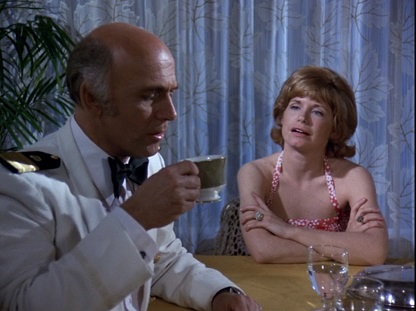
Finally, Captain Stubing is a nervous wreck because an executive of the cruise line named Aubrey Skogstad (Robert Symonds) is on the cruise and so is his wife, Stacy (Bonnie Franklin).  While Aubrey is quiet and polite, Stacy proceeds to tell every member of the crew that they are inadequate and that she will personally make it her duty to get them all fired.  It turns out that Stacy is hostile because she’s Captain Stubing’s ex-wife.  Since Captain Stubing is still new to the ship and has kept himself aloof from the rest of the crew, they wonder if he’ll ever stand up for them.  Eventually, the captain tells Stacy off and, in doing so, he finally wins the loyalty of his crew.  Yay!

Anyway, the first episode of The Love Boat was very, very 70s.  The only thing that could have made it more 70s would have been a disco ball on the lido deck.  Fortunately, as our long-time readers know, I’m a total history nerd so I enjoyed the show as a floating time capsule.  It’s one thing to watch a movie that’s set in the 70s and which features everyone going out of their way to bring to life every stereotype.  It’s another thing to actually view something that was specifically made during the time period.

Unfortunately, the stories and the passengers themselves were pretty forgettable.  The whole thing about the Stacy and the Congressman was slightly interesting just because, with the rise of social media, everyone’s got smutty pictures out there now.  For the most part, though, this first episode was about introducing Captain Stubing and the crew and the cast did display a good deal of chemistry together.  They were all likable.  Even Doc Bricker, with his stash of cruise porn, seemed to be well-intentioned.  They came across as people who most viewers would want to take a cruise with, which is exactly what the show required to be a success.

Next week …. more love, more 70s fashion, and more intrusive laugh tracks as we set sail on another voyage!

Scenes I Love: Lonesome Rhodes Reveals His True Self In A Face In The Crowd


The director Elia Kazan was born 113 years ago, in what was then the Ottoman Empire and what is today Turkey.  Though he died in 2003, Kazan has remained a controversial figure and there’s still a lot of debate over what his artistic legacy should be.  As a director, he revolutionized both Broadway and Hollywood.  He made films about topics that other directors wouldn’t touch and he played a huge role in making Marlon Brando a star and popularizing the method.  (I’ll allow you to decide whether that’s a good or a bad thing.)  He won two Oscars and he’s been cited as an influence by some of the most important directors of the past century.

Kazan was also a former communist who, at the height of the 50s red scare, testified in front of the HUAC and who “named names.”  Kazan often claimed that he only identified people who had already been named.  Many of his former colleagues, however, felt that Kazan had betrayed them and never forgave him.  Though Kazan always denied it, many felt that his decision to name names had more to do with settling personal scores than with any actual concern about national security.  Not helping matters was that Kazan’s 1954 film, On The Waterfront, was widely viewed as being Kazan’s attempt to justify being an informer.  Indeed, Kazan’s post-HUAC films seemed to alternate between thinly veiled attempts to paint himself as a hero and attempts to remind people that he was still a liberal.

That adds an interesting subtext to his best film, 1957’s A Face In The Crowd.  In this film, Andy Griffith plays Lonesome Rhodes, the type of down-home entertainer who would probably have been quite popular with the supporters of HUAC.  A reporter played by Patricia Neal falls in love with Lonesome and helps him become a celebrity with a national following but, too late, she discovers that Rhodes is hardly the folksy and naïve country boy that she originally believed him to be.  Instead, he’s a master manipulator who, drunk on his own power and fame, makes plans to transform himself into a political power.  Lonesome is portrayed as being a down-home fascist, a countryfied version of the infamous Father Charles Coughlin.  At the same time, one could also argue that Rhodes, with his seething contempt for the people who follow him, was also meant as a commentary on the people who claimed to represent the workers but who only saw them and their struggle as a means to an end. 

A Face In The Crowd may have been Kazan’s attempt to remind his detractors that he was still a man of the Left but it’s far more interesting as a work of prophecy.  There’s really not much difference between Lonesome Rhodes and the modern day celebrities and influencers who are currently famous simply for being famous and who, for the right amount of money and ego-stroking, are more than willing to propagandize for one side or the other.

In this wonderfully acted and directed scene, Lonesome Rhodes gets drunk on his own power and reveals just how corrupt his outlook has become.  Making this scene all the more powerful is that it’s easy to imagine our current leaders springing something like Secretary of National Morale on us today.

8 Shots From 8 Films: Special Dario Argento Edition


4 Or More Shots From 4 Or More Films is just what it says it is, 4 shots from 4 of our favorite films. As opposed to the reviews and recaps that we usually post, 4 Shots From 4 Films lets the visuals do the talking!

Today, the Shattered Lens wishes a happy birthday to one our favorite directors, the great Dario Argento!  It’s time for….

8 Shots from 8 Dario Argento Films

The Bird With The Crystal Plumage (1970, dir by Dario Argento, DP: Vittorio Storaro)

Deep Red (1975, dir by Dario Argento, DP: Luigi Kuveiller)

Suspiria (1977, dir by Dario Argento, DP: Luciano Tovoli)

Inferno (1980, dir by Dario Argento, DP: Romana Albani)

Tenebrae (1982, dir by Dario Argento, DP: Luciano Tovoli)

Phenomena (1985, dir by Dario Argento, DP: Romano Albani)

The Stendhal Syndrome (1996, dir by Dario Argento, DP: Giuseppe Rotunno)

Sleepless (2001, dir by Dario Argento, DP: Ronnie Taylor)

Music Video of the Day: Send Me An Angel by Scorpions (1991, directed by ????)


This music video from the German group Scorpions has an old west theme that fits the song well.  Send Me An Angel is Scorpions at their most soulful and showed audiences outside of Germany that the band was capable of much more than just singing about being rocking you like a hurricane.

This song was included on Scorpions’s 11th studio album, Crazy World.  It was the 4th and final single to be released off the album and it went on to become one of Crazy World‘s signature tunes.  While the song peaked at #44 at the U.S. Billboard Hot 100 and at #22 in the UK, it was a huge hit for the band in the rest of Europe.  It was especially popular in Belgium, proving once again that Belgians just have better taste in music than the rest of the world.

Enjoy!

Retro Television Review: Fantasy Island (dir by Richard Lang)


Welcome to Retro Television Reviews, a feature where we review some of our favorite and least favorite shows of the past!  On Tuesdays, I will be reviewing the original Fantasy Island, which ran on ABC from 1977 to 1996.  The entire show is currently streaming on Tubi!

Ah, Fantasy Island!

There have been several versions of Fantasy Island.  In the late 90s, there was a version that featured Malcolm McDowell as the somewhat aloof owner of the island.  More recently, there was a movie that featured Michael Pena as the owner of the Island and which tried to turn the whole thing into a horror franchise.  It wasn’t very good.  And right now, there’s a show on Fox that features Roselyn Sanchez as the grand niece of the island’s original owner.  The Fox series is about to start its second season.  It’s a bit silly, which is why I kind of love it.

And then there’s the Fantasy Island that started it all, the Aaron Spelling-produced series that ran from 1977 to 1984 on ABC and which has lived on in reruns and on streaming platforms like Tubi.  Both the original series and all of its subsequent spin-offs took place on a mysterious tropical island where people would pay to live out their fantasies.  In the original series, the island was run by Mr. Roarke (Ricardo Montalban), who wore a white suit and encouraged everyone to smile whenever the guests arrived.  Serving as Mr. Roarke’s second-in-command was Tattoo (Herve Villechaize), who was 3’11, always wore a matching white suit, and announced the arrival of the plane by ringing a bell and shouting, “The plane, the plane!”  Of course, each week would bring in a different group of guest stars.  They would come to the island with a fantasy and, hopefully, they would learn that reality was the only fantasy that they needed.

All seven seasons of the original Fantasy Island are currently streaming on Tubi.  However, if you want to see the 1977 pilot film that started it all, you have to go to YouTube.

In many ways, the 90-minute pilot film feels like a typical episode of Fantasy Island.  It’s interesting to see that the show’s basic premise and format was already set in stone when the pilot was filmed.  (Pilots are notorious for often being dramatically different from the shows that they were created to sell.)  The pilot opens with the plane arriving (and yes, from the start, Tattoo rings the bell and shouts, “The plane!”) and three guests meeting Mr. Roarke.  Our three guest stars are Bill Bixby, Hugh O’Brian, and Eleanor Parker.  Bixby plays Arnold Greenwood, a former war correspondent who wants to be reunited with Francesca (Sandra Dee), the woman with whom he fell in love during World War II.  O’Brian is Paul, a famous big game hunter who wants to be hunted for once.  Eleanor Parker is Eunice Hollander Barnes, one of the world’s richest women.  She wants to fake her death so she can see who, from her life, would actually mourn her and who would just try to steal her fortune.

If the pilot’s format is the same as the series that followed, the general tone is somewhat different.  Mr. Roarke is an almost sinister figure, one who doesn’t really seem to think much of his guests and who is quick to point out that no one gets a fantasy until they’ve paid him the required $50,000.  (That’s $50,000 in 1970s money.  I have to admit that when Mr. Roarke first mentioned how much the fantasies cost, I was like, “Hey, I could afford this place!”)

Consider the story of the hunter.  Paul wants to be hunted because he’s suicidal.  His real fantasy is to die.  The night before Paul’s fantasy is to begin, Michelle (Victoria Principal) shows up at Paul’s room.  Michelle explains that Mr. Roarke has hired her to provide Paul with companionship during the night.  Unfortunately, Michelle ends up handcuffed to Paul and, as a result, she’s hunted along with him!  Now, you could argue that Mr. Roarke did this to teach Paul to think about someone other than himself.  But what if Paul hadn’t learned the lesson?  Then Michelle would be dead too!  What would Mr. Roarke do then?  Just have Tattoo dump the bodies in the lagoon?  “To hell with you, Roarke!” Paul yells and who can blame him?

And then there’s our war correspondent, Arnold.  Arnold’s fantasy seems simple enough but then it turns out that the reason he lost contact with Francesca is because he murdered her!  As a result of his fantasy, Arnold not only relives the first time he met Francesca but also how their relationship ended.  The entire experience leaves Arnold laughing like a madman as his sanity slips away.

As for Eunice’s story, it’s pretty stupid.  She dresses up like a maid so that she can listen to what people have to say about her once they think she’s dead.  It’s like an episode of Undercover Boss.  At least former Kennedy in-law Peter Lawford makes an appearance as Eunice’s husband.  Eunice ends up far less traumatized than either Paul or Arnold but she still had to fake her death to come to peace with her life.

The pilot is entertaining.  One can understand why it would lead to a series.  The island is lovely to look at.  Even with the somewhat sinister tone of two of the stories, it’s still impossible to watch the pilot without wondering what type of fantasy you would pursue if you went to the Island.  For me, that’s always been the main appeal of all of the various versions of Fantasy Island.  Still, it’s interesting that the fantasies themselves are less comforting than what I think many would expect on account of the show’s reputation.  For all the criticism that Blumhouse received for their reinterpretation of Fantasy Island, they were not the first to imagine Mr. Roarke as being somewhat less than benevolent.  Of course, when the actual series started, Mr. Roarke was a far friendlier host.

Next week, the series begins and hopefully, no further guests are traumatized to the point of catatonia.

Music Video of the Day: Playground Twist by Siouxsie and the Banshees (1979, directed by Clive Richardson)


In this music video for Playground Twist, Siouxsie and the Banshees show that, despite it’s fearsome reputation, punk rock could be just as fun as any school playground song.  The children who appeared in this video probably had no idea that they were dancing with the woman who Bill Grundy was attempting to hit upon when Steve Jones of the Sex Pistol called him a “dirty sod” on live British television.  The British tabloids labeled this exchange and the entire interview between Grundy and the Sex Pistols as being “the filth and the fury.”

This was one of several videos that Clive Richardson did for Siouxsie and the Banshees.  He also directed videos for several other groups that were a prominent part of the New Wave scene, including Depeche Mode, Tears for Fears, and Adam and the Ants.

Enjoy!

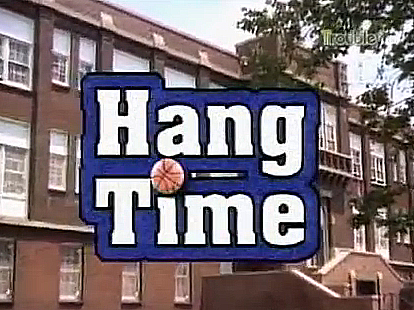
Retro Television Review: Hang Time 1.1 “The Pilot” and 1.2 “Trouble in Paradise”


Welcome to Retro Television Reviews, a feature where we review some of our favorite and least favorite shows of the past!  On Mondays, I will be reviewing Hang Time, which ran on NBC from 1995 to 2000.  The entire show is currently streaming on YouTube!

Hang Time!  I’ll always remember my friends at Hang Time!

Imagine California Dreams if it took place in Indiana and if, instead of music, everyone was obsessed with basketball.  That’s Hang Time!

Produced by Peter Engel, Hang Time followed the adventures of the Deering High School basketball team.  Somewhat notoriously, the cast regularly changed from season to season, with only two members of the cast sticking with the show for every season.  The first season featured:

David Hanson as Chris Atwater, the star of Deering High’s basketball team,

Daniella Deutscher as Julie Connor, the newest member of the team,

Chad Gabriel as Danny Mellon, the quirky member of the team who had a crush on Julie,

Megan Parlen as Mary Beth Pepperton, the materialistic head cheerleader who was dating Chris,

Robert Michael Ryan as Earl Hatfield, the dumb country boy who loved basketball and worked as a mall security guard,

Christian Belanvis as Michael Maxwell, who had a lot of talent and an ego to match,

Hillary Tuck as Samantha Morton, the hyper organized team manager,

and

Reggie Theus as Bill Fuller, a former pro player who returned to his old high school to coach the team.

Season one of Hang Time also had an absolutely horrid theme song, one that was luckily abandoned after the season ended.

Episode 1.1 “The Pilot”

(Directed by Howard Murray, Originally aired on September 9th, 1995)

Oh my God, this was bad….

I mean, pilots are usually bad because the characters aren’t as nuanced as they will later be and the initial storyline usually tries to hard to establish everyone’s role in the show’s hierarchy.  Veteran retro television viewers know better than to expect anything good from an episode with the dreaded title of “The Pilot.”

That said, the pilot of Hang Time was really, really bad.  The show itself was never exactly good but it did eventually develop an oft-kilter charm.  But none of that charm is present in the first episode of the show.

Julie Connor (Daniella Deutscher) transfers to Deering High and tries out for the school’s basketball team.  A girl playing basketball!?  GASP!  Anyway, Julie turns out to be a slightly above average basketball player and wins a place on the team and …. well, that’s about it.  It would probably seem like more of an accomplishment if it appeared that there was any real competition when it came to getting on the team.  Instead, only a handful of people seem to be interested in playing basketball and at least a few of them seem to be …. well, kind of short.

I understand that Reggie Theus was a former basketball player-turned-actor.  Judging from this pilot, as an actor, he was a very good athlete.

Episode 1.2 “Trouble in Paradise”

(Directed by Howard Murray, Originally aired on September 16th, 1995)

“You should be home, baking a Cake!” a drunk basketball fan yells at Julie when she and Chris attend a pro basketball game.  Julie challenges the jerk to a game.  Chris tries to maintain calm.  Unfortunately, it gets both Julie and Chris on TV, which leads to Mary Beth and Danny getting jealous.

Bleh.  This was a dumb episode.  Mary Beth, who doesn’t care about basketball, was the only character to whom I could relate.

The first two episodes of Hang Time felt like California Dreams, without the music.  Hang Time would eventually develop a style of its own, with Megan Parlen especially proving herself to be a capable comedic actress.  But that style really isn’t present in much of the first season.

Next week: The Deering Tornadoes finally play a game!

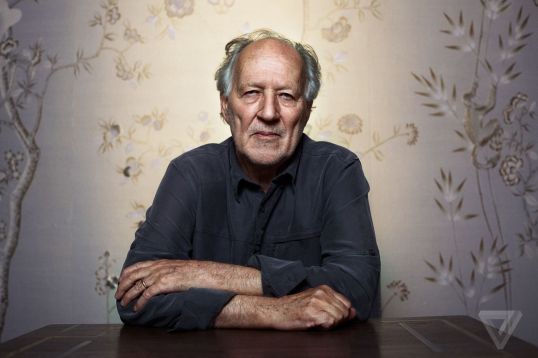
8 Shots From 8 Films: Special Werner Herzog Edition


4 Or More Shots From 4 Or More Films is just what it says it is, 4 shots from 4 of our favorite films. As opposed to the reviews and recaps that we usually post, 4 Shots From 4 Films lets the visuals do the talking!

Today, the Shattered Lens wishes a happy birthday to one our favorite directors, the great Werner Herzog!  It’s time for….

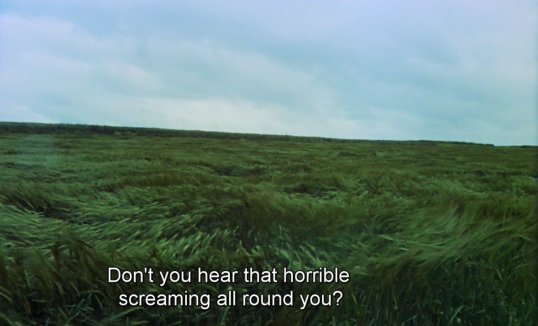
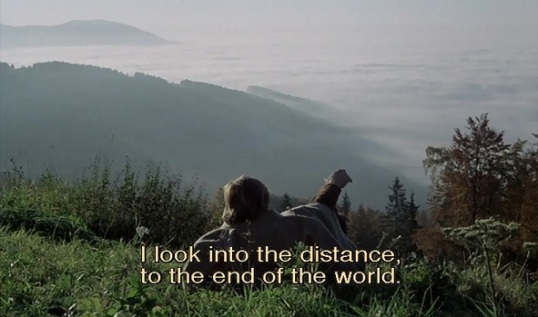
8 Shots From 8 Werner Herzog Films

Fata Morgana (1971, dir by Werner Herzog, DP: Jörg Schmidt-Reitwein)

Aguirre The Wrath of God (1972, dir by Werner Herzog. DP: Thomas Mauch)

The Enigma of Kaspar Hauser (1974, dir by Werner Herzog, DP: Jörg Schmidt-Reitwein)

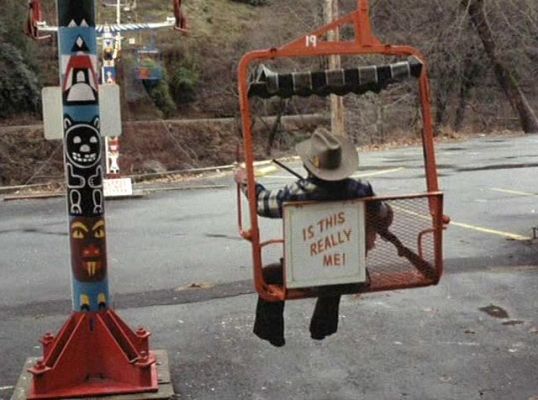
Heart of Glass (1976, dir by Werner Herzog, DP: Jörg Schmidt-Reitwein)

Stroszek (1977, dir by Werner Herzog, DP: Thomas Mauch)

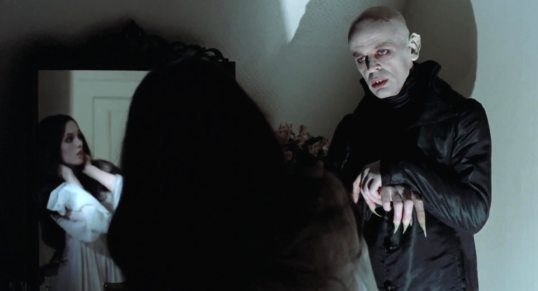
Nosferatu The Vampyre (1979, dir by Werner Herzog, DP: Jörg Schmidt-Reitwein)

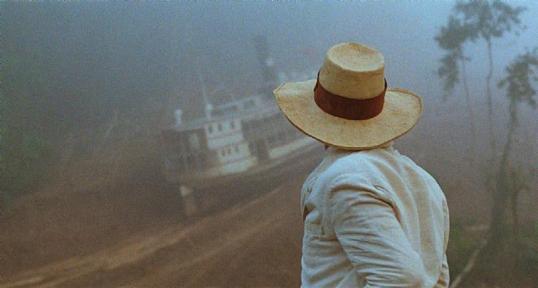
Fitzcarraldo (1982, dir by Werner Herzog, DP: Thomas Mauch)

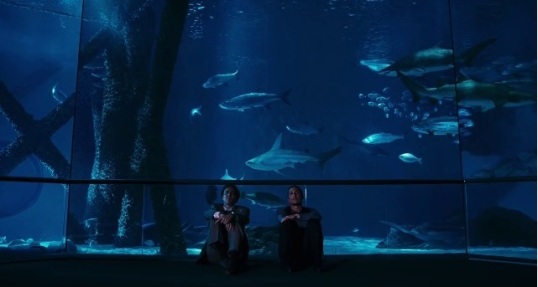
Bad Lieutenant: Port of Call New Orleans (2009, dir by Werner Herzog, DP: Peter Zeitlinger)