Book Review: Shooting Midnight Cowboy: Art, Sex, Loneliness, Liberation, and the Making of a Dark Classic by Glenn Frankel


As you can probably guess from the title, Glenn Frankel’s Shooting Midnight Cowboy: Art, Sex, Loneliness, Liberation, and the Making of a Dark Classic is all about the making of one of the darkest films to ever win the Oscar for Best Picture, Midnight Cowboy.

Released in 1969 and based on a novel by James Leo Herlihy, Midnight Cowboy stars Jon Voight as Joe Buck.  Joe is a simple-minded but handsome man from a small-town in Texas.  After both he and his girlfriend are raped by some local rednecks, Joe puts on his cowboy hat, hops in a bus, and heads for New York City.  Joe figures that he can make a lot of money as a hustler but he soon discovers that New York is a far more dangerous, nightmarish, and depressing place than he ever realized.  Not only is he not smart enough to make it as a hustler but he’s not even the only cowboy hanging out around Times Square.  Eventually, Joe meets Ratso Rizzo (Dustin Hoffman), who has a bad leg, a hacking cough, and the worst apartment in New York.  Joe and Rizzo become unlikely roommates and eventually, they even become friends.  (And depending on how you interpret certain scenes and lines of dialogue, they might even become more.)  Rizzo helps Joe to survive in New York but Rizzo himself is dying.  Not even a chance to hang out with a group of Warhol superstars can cure Rizzo of what ails him.  Rizzo wants to see Florida and Joe wants to get out of New York.  How far will Joe go to escape and save his only friend?

Midnight Cowboy was controversial when it was first released, with some critics calling it a masterpiece and other claiming that the film was a symbol of America’s cultural and moral decay.  It went on to become the first and only X-rated film to win Best Picture.  Midnight Cowboy‘s victory over films like Hello Dolly! and Anne of the Thousand Days was seen as a sign that mature and adult-themed films could actually find both acclaim and an audience.  Midnight Cowboy‘s success helped to bring Hollywood into the modern era.  For many, it was also responsible for establishing New York as being the dirty and heartless city that would appear in so many of the films that followed.  Indeed, there’s many different lessons that one can take from Midnight Cowboy but the main one seems to be that everyone should stay the heck out of New York.  Seen today, Midnight Cowboy is no longer all that shocking and director John Schlesinger occasionally seems to be trying too hard to establish his auteur credentials.  But the film’s story still remains effective, as do the lead performances of Hoffman and Voight.  Though being very much a film of its time, Midnight Cowboy is still watchable today.  It’s not only an effective film but it’s also a milestone in Hollywood history.

As for Shooting Midnight Cowboy, it tells you pretty much everything you need to know about both the film and the controversy that has surrounded it over the years.  Starting with the novel that was written by James Leo Herlihy, Shooting Midnight Cowboy meticulously follows the production of the film, exploring not only how both Voight and Hoffman came to star in the film but also how these two very competitive actors came together to create an unforgettable portrait of an unlikely friendship.  It also explores everything from director John Schlesinger’s efforts to bring his vision to life to the concerns that mainstream audiences would refuse to see the film because of its adult context to the writing of the film’s famous theme song, Everybody’s Talkin’.  Perhaps the most harrowing chapter deals with the ordeal that Jennifer Salt suffered through while playing the small role of Joe Buck’s Texas girlfriend, Annie.  Shooting Midnight Cowboy puts the movie into its proper historical and cultural context, showing how the film commented on the issues of the time while also telling a story that remains effective even when viewed outside of the 60s.  It makes for an interesting and informative read, for both the film lover and the cultural historian.
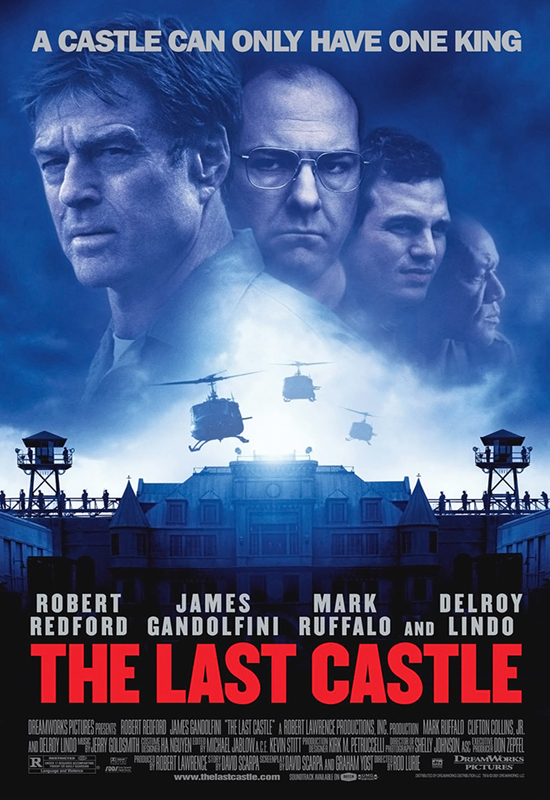
The Last Castle (2001, directed by Rod Lurie)


It’s Redford vs. Gandolfini in The Last Castle!

The last castle of the title is a United States Military Prison, one that was originally constructed during the Civil War and which resembles a castle, but with one big difference. Castles were originally designed to keep people from entering. The purpose of this castle is to keep people from leaving.

Colonel Ed Winter (James Gandolfini) is the prison’s commandant, a martinet who has never served in war but who keeps a collection of bullets and weapons in his office. Eugene Irwin (Robert Redford) is the newest inmate. Irwin was a highly respected general until he disobeyed a presidential order and eight of his men died as a result. Irwin has been stripped of his rank and sentenced to ten years. He tells Winter that he just wants to do his time and then go home. That’s fine with Winter, until he overhears Irwin disparaging his collection of battlefield memorabilia.

At first, Irwin tries to lay low.  Even when he sees firsthand that Winter is a sadist who manipulates the inmates and who isn’t above ordering his guards to kill an inmate in order to make a point, Irwin tries to stay uninvolved.  But eventually, Irwin’s natural military instincts kick in and he leads the prisoners in a revolt against Col. Winter.

The Last Castle requires a healthy suspension of disbelief.  Irwin brings the inmates together by reminding them that they were once soldiers and that, even when serving time in a military prison, they’re apart of a grand tradition of soldiers who have been court-martialed.  He soon has them saluting and standing at attention and walking in formation.  The movie overlooks the fact that most of the prisoners were sentenced to the prison by men much like General Irwin.  The idea that all of them are just waiting for someone to once again start barking orders at them just doesn’t seem plausible.  Instead, it seems more likely the Irwin, as a former general, would be the least popular inmate in a prison that’s full of enlisted men who feel that they were screwed over the army.  In the end, Irwin asks the prisoners to sacrifice a lot but, in the end, it doesn’t matter how heroically he’s framed in each scene or how much the music swells on the soundtrack, Iwin’s rebellion seems like its more about ego than anything else.  Even if it means getting rid of Col. Winter, would any of the inmates realistically be willing to die for Eugene Irwin?

At the same time, The Last Castle is worth watching just to see James Gandolfini face off against Robert Redford.  Gandolfini plays his role with the type of neurotic energy that only a method actor is capable of capturing while Redford is his typical move star self.  The contrast between their two styles of acting translates well into the contrast between Winter and Irwin’s philosophy of leadership.  Among the inmates, Mark Ruffalo and Clifton Collins, Jr. both have early roles.  Of the two, Ruffalo gets to play the only character in the film with a hint of moral ambiguity and he runs with it.  Clifton Collins, Jr., meanwhile, plays a character whose fate will be obvious to anyone who has ever seen a film before.  The Last Castle has its moment but it’s never a surprising movie.

The Last Castle ends with a spontaneous display of patriotism, one that is effective but also feels implausible and out-of-place.  It’s the perfect way to sum up this frustrating but occasionally diverting film. 


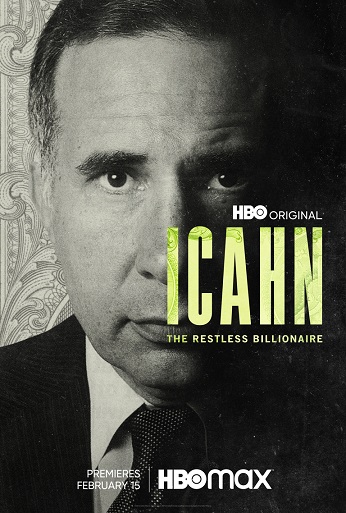
Film Review: Icahn: The Restless Billionaire (dir by Bruce David Klein)


Before I actually talk about Icahn: The Restless Billionaire, I should probably confess something.  Well, actually, this is a reconfession because I explain this every time that I review any movie or documentary the deals with stocks and investments and big shorts and corporate takeovers and all the rest.  The Stock Market confuses the heck out of me.

Seriously, I have no idea how it works.  Everything that I hear about it just confuses me.  How can you invest money that you don’t have in order to make or lose money that might not actually exist?  How can people keep buying stock in the same company?  It just seems like a company should eventually run out of stock.  And what is stock anyways?  And don’t even get me started on this whole thing where people can apparently secretly buy everyone’s stock and then force a company’s founder to resign or sell the company itself.  That’s just weird to me.

I will also admit that I actually do own stock.  I didn’t buy any of it.  Some of it, I inherited.  Some of it was gifted to me.  Some of it, I got through work.  Off the top of my head, I really couldn’t tell you much about any of the stock that I own.  I’ve been told that my stock’s doing well, which is fine with me.  Nobody ever tells me if my stocks aren’t doing well, which is also fine with me.  I don’t really need that pressure.

Some people, however, love the pressure.  Carl Icahn, for instance, has made billions by playing with the stock market and by taking over struggling companies and then selling them for a profit.  Icahn’s detractors call him a pirate or a raider.  Icahn claims that he’s an activist, taking over poorly managed companies and then selling them for a profit so that people, like me, who have no idea how any of this works can also make a profit.  (And, of course, Icahn makes a huge amount of money off of it as well.)  Carl Icahn is thought to have been one of the role models for Wall Street’s Gordon Gekko.  Consider that Wall Street was released in 1987 and you can see just how long Carl Icahn has been doing this.

Icahn: The Restless Billionaire is a documentary about both the man and his controversial career.  It delves a little into his childhood and features plenty of scenes of Icahn at his mansions and in his ornate office.  For the most part, though, it’s a collection of scenes of Icahn and some of his associates discussing the various takeovers and battles that Icahn has been involved with over the years.  The documentary is unapologetically pro-Icahn.  If you’re expecting to see AOC or Bernie pop up and start going on about taxing the rich or condemning billionaires, you’re out of luck.  In fact, the documentary is so pro-Icahn that it almost feels like a relic from a different era.  For that matter, so does Carl Icahn.  Icahn is happily pro-capitalism and he makes no apologies for that.  A lot of viewers aren’t going to be used to seeing that in a contemporary documentary, especially not one produced by HBO.  Myself, I’m a fan of capitalism and free enterprise so it didn’t bother me and the documentary, at the very least, worked as a change of pace.  Still, I can’t help but imagine that a lot of my friends would have ended up throwing something at the TV.

Carl Icahn is obviously a smart guy and he’s made a lot of money.  I enjoyed looking at the house.  At the same time, he’s not exactly the most charismatic billionaire in the world and the scenes that attempt humanize him come across as being stiff and staged.  The documentary is probably at its best when its just Icahn and his associates talking about the battles that he’s fought.  I honestly couldn’t follow what they were talking about but I also couldn’t deny that they all seemed to be having fun.

Scene That I Love: The Opening of Mulholland Drive (Happy Birthday, Angelo Badalamenti)


Happy birthday, Angelo Badalamenti!

This great composer is probably best known for his dream-like and haunting work for the films of David Lynch.  Among the many songs and musical pieces that he’s done for Lynch, he composed the jitterbug music that opened David Lynch’s 2001 film, Mulholland Drive.  The scene below features the perfect mix of Lynch’s visual vision and Badalamenti’s musical ear.  What I especially like about this scene is that the music starts out as a very cheerful and vaguely generic but then it grows steadily more ominous as the scene plays out.

Here it is.  The haunting opening of one of the best films of the current century:

4 Shots From 4 Films: Special Stardom Edition


4 Or More Shots From 4 Or More Films is just what it says it is, 4 shots from 4 of our favorite films. As opposed to the reviews and recaps that we usually post, 4 Shots From 4 Films lets the visuals do the talking!

With the Oscars approaching, it seems appropriate to pay tribute to stardom with 4 shots from 4 films!

4 Shots From 4 Films About Being A Star

Mulholland Drive (2001, dir by David Lynch, DP: Peter Deming)

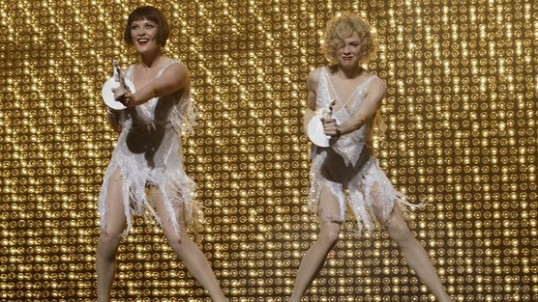
Chicago (2002, dir by Rob Marshall, DP: Dion Beebe)

Maps to the Stars (2014, dir by David Cronenberg, DP: Peter Suschitzky)

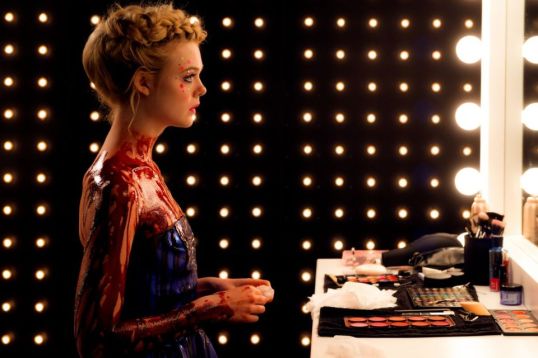
The Neon Demon (2016, dir by Nicolas Winding Refn, DP: Natasha Braier)

Music Video of the Day: Somehow You Do, performed by William Shatner (2021, dir by John Ottman)


Today, the Shattered Lens wishes a happy 91st birthday to William Shatner!  Not only is William Shatner an actor, a director, a writer, a famed wit, and a legendary Canadian but he’s also a singer!

Here is William Shatner performing Somehow You Do.  This song was written by Diane Warren and the video was directed by John Ottman.

Enjoy!

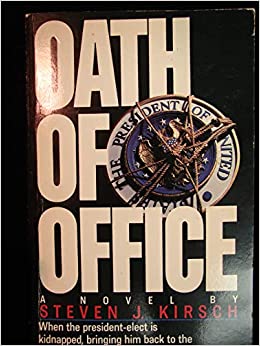
Novel Review: Oath of Office by Steven J. Kirsch


Last week, I returned to exploring my aunt’s old collection of paperback books and I read Oath of Office, a political thriller that was originally published way back in 1988.

U.S. Sen. Jonathan Starr has just been elected to the presidency of the United States of America.  As the first Jewish person to win the presidency, Starr is set to make history as soon as he’s sworn in.  However, there’s a problem.  Starr’s been kidnapped!  The morning after his upset victory, Starr finds himself in the trunk of a car and later confined to a cell.  With no knowledge of who has kidnapped him or what his ultimate fate is going to be, Starr can only wait and have numerous flashbacks to the events that led to him winning the presidency.

Meanwhile, the man that Starr defeated, President Sutherland, is trying to figure out who is behind the kidnapping.  Was Starr abducted by the Russians?  Or perhaps the kidnapping is the work of one of the Middle Eastern terrorist groups who is trying to thwart Sutherland’s efforts to bring peace to region?  Maybe it’s the senator from Texas whose dialogue consists of stuff like, “Ah’ve been workin’ on this deal …. we’ll git it through befo’ the election.”  (That’s an actual quote from the book, by the way.  It seems like it would have been simpler just to say that the man had an accent but some writers just have to be cute about things.)  There’s a lot of possibilities but we know that Starr’s kidnapping was masterminded by an imprisoned mobster, largely because the book tells us early on.  I personally would have dragged out the suspense but no matter!

While secret service agent Andy Reynolds is trying to track Starr down, the Speaker of the House is plotting to take power for himself.  He and his people have come across what they believe to be a loophole in the Constitution, which will keep the electoral college from being able to vote for either Starr or his running mate.  In which case, the Speaker will automatically become president as soon as the incumbent’s term expires.  So, yes, this is another political thriller where the plot largely hinges on a reading of the Constitution that any halfway experienced attorney would easily be able to shoot down.

As you can probably guess, this book has its flaws.  According to the blurb on the back, this was the author’s first novel and I have no idea if he ever wrote a second one.  There are a lot of points in the story that don’t ring true, especially in the flashbacks to Starr’s early political career and the author has a bad habit of telling us things as opposed to showing them.  And, of course, there’s that terrible attempt to capture the Texas accent.  Don’t even get me started on that. 

That said, the idea behind the book is an interesting one.  Only two people of Jewish descent have ever been nominated by a major political party.  Barry Goldwater was an Episcopalian while Joseph Liebermann found himself being opposed by the anti-Semites in his own party.  Of course, neither one of those men made it to the White House.  Oath of Office does make an attempt to seriously consider the challenges that would face the first Jewish president and it’s also honest about how anti-Semitism is a prejudice that is often overlooked by even those who brag about their progressive credentials.  As I said, the book has an interesting idea but the plot just keeps getting in the way.

Film Review: Lucy and Desi (dir by Amy Poehler)


If you were as disappointed with Being the Ricardos as I was but you still want to learn something about the lives and the marriage of Lucille Ball and Desi Arnaz, might I suggest checking out Lucy and Desi?

Directed by Amy Poehler, Lucy and Desi covers much of the same material as Being the Ricardos but it does so in a far more authentic way.  This is because Lucy and Desi is a documentary, one featuring actual interviews and recordings from Lucy, Desi, and the people who worked with them through the years.  As a result, we get to hear the story in their own words as opposed to Aaron Sorkin’s words.  I’m hardly the first person to point out that Aaron Sorkin is incapable of writing dialogue that doesn’t sound like something that Aaron Sorkin himself would say.  In Being the Ricardos, Lucy and her writers all spoke in Sorkinese and it all felt rather false.  Watching Lucy and Desi, you quickly realize that both Lucy and Desi were intelligent and articulate people.  Their own words are strong enough, without needing a polish from a screenwriter who, by his own admission, never found I Love Lucy to be all that funny.

Lucy and Desi covers the early lives of both Lucy and Desi as well as detailing how they first met, how they married, and how they went on to revolutionize television with I Love Lucy.  More than just being portrayed as being a talented but somewhat volatile couple, both Lucy and Desi emerges as fascinating individuals in their own right.  Both of them survived childhood difficulties, both of them remade themselves in Hollywood, and, most importantly, both of them had an instinctive understanding of what audiences wanted to see.

They were also very much in love, even after their divorce.  That love was missing from Being the Ricardos but it’s very much present in Lucy and Desi.  It was that love that led to the marriage that led to the partnership that made them a success but it was that same success that eventually led to the end of their marriage.  And yet, even after divorcing, Lucy and Desi remained close.  Their daughter, Lucie Arnaz, talks about the last few times that Lucy saw Desi before Desi’s succumbed to lung cancer.  They watched old episodes of I Love Lucy and they laughed together.  It’s an incredibly touching moment.

And if sentimentality isn’t your thing, Lucy and Desi also explores just how important their partnership was to the development of modern television.  I Love Lucy was the first “modern” sitcom but their company, Desilu Productions, had a hand in producing several other classic shows as well.  Star Trek was a Desilu production.  So were Mission Impossible and The Untouchables.  So much of what we take for granted about pop culture started with Lucy and Desi.

Perhaps the most shocking revelation in the Lucy and Desi documentary is that the J. Edgar Hoover story was true!  You may remember that, when I reviewed Being the Ricardos, I scoffed at the scene where Hoover called the studio and personally cleared Lucy of being a communist.  But apparently, this actually did happen!  I’m as stunned as anyone.

Lucy and Desi is a good and heartfelt tribute to Lucy and Desi, their talent and their love and their lasting influence.  It can be viewed on Prime.

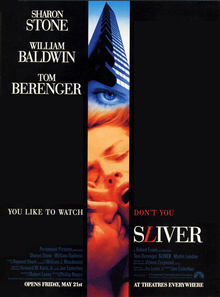
Sliver (1993, directed by Phillip Noyce)


Who here remembers Sliver?

It may be hard to believe it but Sliver was a big deal back in the day.  It was one of Robert Evans’s first producing gigs after getting out of rehab.  It was Sharon Stone’s first film after Basic Instinct.  The script was written by Basic Instinct‘s Joe Eszterhas, back when that was still something that people bragged about.  It featured Tom Berenger, back before he found himself relegated to character roles, and William Baldwin.  Remember William Baldwin?  He was Alec Baldwin’s younger brother.  He looked just like Alec but he never managed to project much of a personality whenever he was onscreen.  Even Stephen Baldwin was a more interesting actor than William.  Still, back in the day, William Baldwin was close to being a star.

William Baldwin’s lack of personality actually works for the role he plays in Sliver.  He’s Zeke, who owns an exclusive high-rise apartment building.  Zeke makes his money designing video games and he’s filled the building with secret video cameras so he can spend all day sitting in front of a wall of monitors and watching his tenants and experiencing their lives without having to get close to them.  Zeke’s a voyeur.  Back in the 90s, the surveillance thing was a big twist.  Today, we take it for granted.  We even applauded Batman for doing the same thing to all of the citizens of Gotham.

Sharon Stone plays Carly, the newest resident of the Sliver.  Carly is a recently divorced book editor snd is lonely and repressed despite being played by Sharon Stone.  She draws the attention of both Zeke and her neighbor, Jack (Tom Berenger).  Both are interested when they discover that Carly has a telescope on her balcony.  “She’s a voyeur!” Jack says.  When Carly gets involved with Zeke, Jack is obsessively jealous.  He insinuates that Zeke had something to do with the death of the previous tenant of Carly’s apartment.

After Basic Instinct, Sharon Stone made a series of films that were designed to show that she actually could act by casting her as characters who were meant to be sexually repressed.  The films never seemed to work because, at the height of Sharon Stone’s 90s stardom, there was nothing about her that suggested that she was repressed in any way.  What made her a star in the first place was that she was so uninhibited and not afraid to be as blunt about sex as any of her male co-stars.  In Sliver, she gives a performance that is somewhere between her vampish work in Basic Instinct and her terrible ice queen performance in Intersection.  At the start of the film, she feels miscast as a straight-laced book editor but her performance gets better once she starts hooking up with Zeke.  Sharon Stone tries, even if she doesn’t succeed.  That’s more than can be said for most of her co-stars.

“Get a life,” Sharon Stone says at the end of the movie and, as far as final lines go, it’s a bad one because it comes out of nowhere and her actions in the final scene don’t fit in with anything that she’s previously said or done in the film.  That’s because the ending was hastily reshot after test audiences disliked the original ending.  Test audiences often have the worst instincts.

Like many things, Sliver was big in the 90s but forgotten today.  It was a popular Blockbuster rental for a while.  VCRs were set for whenever it appeared on Cinemax.  When it first came out, it was all about Sharon Stone.  Today, it’s all about nostalgia.