The American Cinema Editors have announced the nominations for the 2021 Eddie Awards!
The Eddie Awards are usually a pretty good precursor as far as the best picture race is concerned. If a film is going to be the best of the year, it’s typically going to be well-edited, Bohemian Rhapsody‘s Oscar notwithstanding. When these nominations were announced, there was brief flurry of activity on twitter as people said, “Where’s West Side Story?” West Side Story is not here, which is surprising. However, West Side Story did receive a DGA nom so its still looking pretty good as far as getting nominated is concerned.
For me, the biggest surprise was the nomination for Tick, Tick…Boom!. The guilds really seem to like this movie. As for the nomination that made me groan, Don’t Look Up was the worst edited film since …. well, Bohemian Rhapsody.
BEST EDITED FEATURE FILM (DRAMATIC)
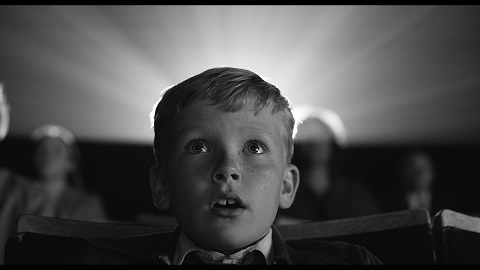
Úna Ní Dhonghaíle – Belfast
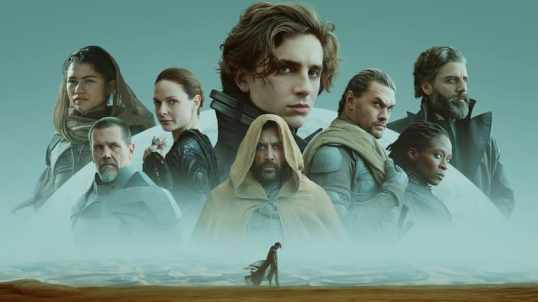
Joe Walker – Dune
Pamela Martin – King Richard
Elliot Graham & Tom Cross – No Time To Die
Peter Sciberras – The Power of the Dog
BEST EDITED FEATURE FILM (COMEDY)
Tatiana S. Riegel – Cruella
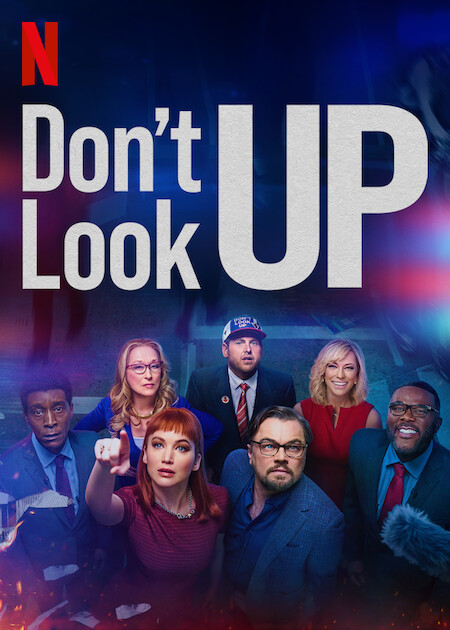
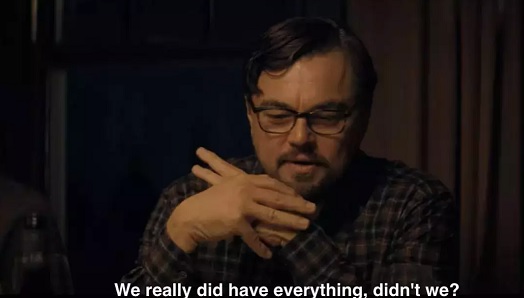
Hank Corwin – Don’t Look Up
Andrew Weisblum – The French Dispatch
Andy Jurgensen – Licorice Pizza
Myron Kerstein & Andrew Weisblum – Tick, Tick…Boom!
BEST EDITED ANIMATED FEATURE FILM
Jeremy Milton – Encanto
Catherine Apple & Jason Hudak – Luca
Greg Levitan – The Mitchells vs. The Machines
Fabienne Rawley & Shannon Stein – Raya And The Last Dragon
Gregory Perler – Sing 2
BEST EDITED DOCUMENTARY (FEATURE)
Janus Billeskov Jansen – Flee
Bob Eisenhardt – The Rescue
Joshua L. Pearson – Summer Of Soul (…Or, When The Revolution Could Not Be Televised)
Ting Poo & Leo Scott – Val
Affonso Gonçalves & Adam Kurnitz – The Velvet Underground
The DGA was not the only major guild to announce its nominations today. The Writers Guild also announced its nominations for the best of 2021.
I hate to say it but it’s starting to look very probable that two of my last favorite films of 2021 — Don’t Look Upand Being The Ricardos — are going to be best picture nominees. I mean, I can understand the nomination for Being the Ricardos because Aaron Sorkin is a brand name and the whole script was designed to appeal to people in the industry. But the screenplay for Don’t Look Up was terrible. If it picked up a WGA nod, that means that Adam McKay’s panic porn has a strong base of support in Hollywood.
ORIGINAL SCREENPLAY
Being the Ricardos – Written by Aaron Sorkin (Amazon Studios)
Don’t Look Up – Screenplay by Adam McKay, Story by Adam McKay & David Sirota (Netflix)
The French Dispatch of the Liberty, Kansas Evening Sun – Screenplay by Wes Anderson, Story by Wes Anderson & Roman Coppola & Hugo Guinness & Jason Schwartzman (Searchlight Pictures)
King Richard – Written by Zach Baylin (Warner Bros. Pictures)
Licorice Pizza – Written by Paul Thomas Anderson (United Artists)
ADAPTED SCREENPLAY
CODA – Screenplay by Siân Heder, Based on the Original Motion Picture La Famille Belier Directed by Eric Lartigau, Written by Victoria Bedos, Stanislas Carree de Malberg, Eric Lartigau and Thomas Bidegain; Apple
Dune – Screenplay by Jon Spaihts and Denis Villeneuve and Eric Roth, Based on the novel Dune Written by Frank Herbert; Warner Bros. Pictures
Nightmare Alley – Screenplay by Guillermo del Toro & Kim Morgan, Based on the Novel by William Lindsay Gresham (Searchlight Pictures)
Tick, Tick…Boom! – Screenplay by Steven Levenson, Based on the play by Jonathan Larson (Netflix)
West Side Story – Screenplay by Tony Kushner, Based on the Stage Play, Book by Arthur Laurents, Music by Leonard Bernstein, Lyrics by Stephen Sondheim, Play Conceived, Directed and Choreographed by Jerome Robbins (20th Century Studios)
DOCUMENTARY SCREENPLAY
Being Cousteau – Written by Mark Monroe & Pax Wasserman (National Geographic)
Exposing Muybridge – Written by Marc Shaffer (Inside Out Media)
Like a Rolling Stone: The Life & Times of Ben Fong-Torres – Written by Suzanne Joe Kai (StudioLA.TV)
This is the big one. If a film receives a Narrative Feature Film nomination from the Directors Guild, that will probably also lead to it receiving an Oscar nod for Best Picture. Occasionally, a film will get a DGA nom without also getting an Oscar nom but it’s an increasingly rare occurrence. And since there’s guaranteed to be ten Best Picture nominees this year, it makes sense that the first five films listed below will be among them.
Here are the DGA nominations:
NARRATIVE FEATURE FILM
Paul Thomas Anderson – Licorice Pizza
Kenneth Branagh – Belfast
Jane Campion – The Power of the Dog
Steven Spielberg – West Side Story
Denis Villeneuve – Dune
FIRST TIME NARRATIVE FEATURE FILM
Maggie Gyllenhaal – The Lost Daughter
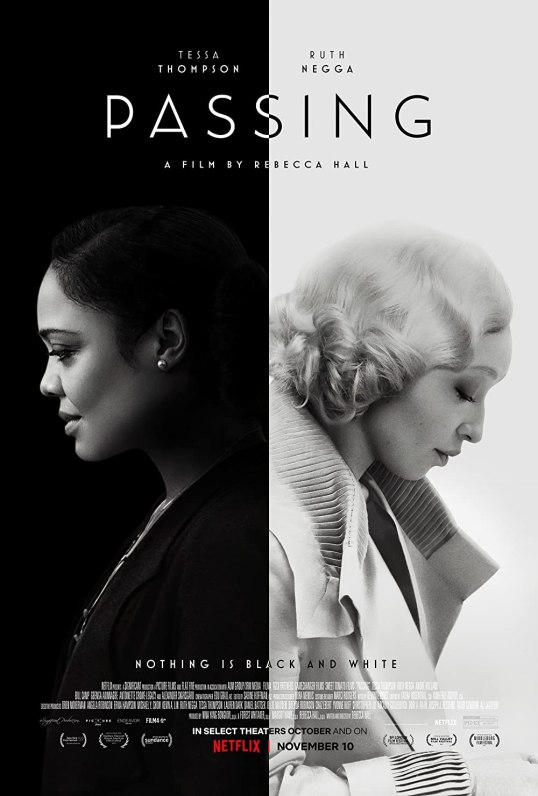
Rebecca Hall – Passing
Tatiana Huezo – Prayers For The Stolen
Lin Manuel-Miranda – Tick, Tick…BOOM!
Michael Sarnoski – Pig
Emma Seligman – Shiva Baby
DOCUMENTARY
Jessica Kingdon – Ascension
Stanley Nelson – Attica
Raoul Peck – Exterminate All The Brutes
Questlove – Summer of Soul
Elizabeth Chai Vasarhelyi & Jimmy Chin – The Rescue
It wouldn’t surprise me if some of the films nominated for First Time Narrative Film also showed up in the best picture race. Tick….Tick….Boom!, in particular, appears to be popular with the guilds. Passing and The Lost Daughter also have their supporters. And I’ll always hold out hope that either Pig or especially Shiva Baby will surprise people.
In this “modern-day” western, Ken Maynard stars as Ken Baxter. While out camping in the wilderness with his trusty horse Tarzan and his two comic relief sidekicks, Pancho (Julian Rivero) and Panhandle (Ralph Peters), Ken comes across the gravely injured Professor Wahl (Michael Vallon). Wahl is an archeologist who has been left to die. Wahl is too weak to reveal who attacked him and, when Ken gets Wahl back to civilization, he discovers that Wahl’s colleagues, Dr. Flotow (William Castello) and Baron Starkoff (Sven Hugo Bard), aren’t willing to help Wahl unless he shares the location of a helium mine.
Flotow and the Baron are working for “a foreign power” and want to smuggle the helium back to Europe so that their country can use it to fuel their dirigibles. Ken and his sidekicks have to stop the bad guys from getting control of the ranch that sits near the mine. Going undercover, Ken allows himself to be hired by Joe Larkin (Charles King), who is trying to steal the property away from Letty Morgan (Fay McKenzie). Romance and gunfight follows. Ken’s horse, Tarzan, saves the day more than once.
The plot of Death Rides the Range is intriguing and, for a 55-minute programmer, complex. Unfortunately, the execution doesn’t allow the story to fulfill its potential. By the time Maynard starred in this film, the once-major cowboy star had alienated most of the major studios and he had a reputation being difficult. He was reduced to working for poverty row studios, like Colony Pictures. Maynard is a convincing hero and his horse, Tarzan, was one of the most talented of the animal actors working at that time but Death Rides The Range still feels rushed.
Death Rides The Range is mostly interesting as an example of the type of anti-German films that were being made before the U.S. officially entered World War II. The film keeps it ambiguous who Flotow and Starkoff are working for but any viewer who had been following the news out of Europe would automatically know they were working for the Germans. Even when he was making movies for Poverty Row, Ken Maynard was still fighting the good fight.
In 2010, after making audiences laugh with films like Anchorman, Talladega Nights, and Step Brothers, director Adam McKay released The Other Guys. A spoof of buddy cop films, The Other Guys featured Mark Wahlberg and Will Ferrell as two lovably incompetent but well-intentioned cops who took down a corrupt investor played by Steve Coogan. It was a funny movie and, along with Anchorman and Talladega Nights, it revealed that McKay was one of the few directors who understood how to best capture Ferrell’s style of comedy. And yet, the film ended on a bit of an odd note as the end credits were accompanied with statistics on how much money Wall Street executives were getting paid while the average American struggled to keep up with their bills. It suggested that McKay meant for Coogan’s somewhat cartoonish villain to be taken seriously.
McKay followed up The Other Guys with Anchorman 2, which had some funny moments but which was also overlong, spent a good deal of time railing against corporate sponsorship of the news, and took a jarringly serious approach to a subplot in which Will Ferrell’s Ron Burgundy was rendered blind. In retrospect, it’s easy to see how The Other Guys and Anchorman 2 both lay the foundation for what would become McKay’s signature style. The end credits for The Other Guys revealed that McKay felt he could change the world through comedy and, at the time, there was actually something charmingly naïve about his belief that he could use the end credits to turn the audience into activists. Anchorman 2‘s excessive length and its strained attempts at being meaningful (particularly when compared to the pure fun of the first film) revealed a somewhat less charming side to McKay’s activist vision.
This all led to 2015’s The Big Short, a film in which McKay mixed broad comedy with strained drama and attempted to tell the story of the 2007 financial crisis. It was a mess of a film, featuring Ryan Gosling introducing famous people to explain complex financial concepts. It was also a film that occasionally attempted to be a serious tear-jerker, featuring poor old Steve Carell as an investor who still hadn’t gotten over the suicide of his brother. At the time, The Big Short was acclaimed by some and hated by others. Interestingly enough, some of the most liberal film critics out there dismissed the film as being smug and preachy. There were other critics who thought the film was brilliant. The Academy appreciated the film, nominating it for Best Picture and giving McKay an Oscar for his screenplay. McKay, for his part, encouraged everyone watching the Oscars to vote for Bernie Sanders.
In retrospect, of course, The Big Short wasn’t very good. A lot of the film’s so-called revolutionary style was lifted from a British film called 24-Hour People (which, make of it what you will, starred The Other Guys‘s Steve Coogan) and the film’s mocking use of celebrities was nothing that hadn’t already been done before. Worst of all were McKay’s attempts at drama. I’ll always remember the random scene in which Steve Carell is seen crying to Marisa Tomei about his dead brother. “He said he was feeling sad and I tried to give him money!” Carell says. The McKay of old would have understood that this was the point where the scene needed Tomei to deadpan, “That’s probably why he killed himself.” However, The Big Short was directed by the new, serious McKay.
Why was The Big Short such a success with the Oscars? In a pattern that would repeat itself, it was a film that preached to an appreciative audience of the already-converted. No one decided to vote for Bernie Sanders as a result of watching The Big Short. However, those who were already planning on voting for him left the film even more determined to do so. As well, by taking place in 2007 and 2008, The Big Short allowed viewers to blame the sluggish economy on the former president as opposed to the one who was currently sitting in the White House.
In 2018, McKay returned with Vice, in which he brought his new signature style to the life of Dick Cheney. Vice received even worse reviews than The Big Short as it attempted to get audiences to care about someone who hadn’t exactly been relevant for the last ten years. Again, though, Vice was appreciated by a vocal group of critics and it was the second McKay film to receive a best picture nomination. 2018, of course, was a notably weak film as far as Oscar contenders were concerned. Also, undoubtedly, there were many people who felt that nominating Vice would “own the cons.” Of course, if those people (or McKay, for that matter) understood how deeply unpopular Cheney was with most right-wingers, they might have thought twice. If anything, Vice’s portrayal of Cheney being a heartless insider who sacrificed American lives for his own personal and financial gain could have been written by Donald Trump. As well, quite a few audiences members walked out of the theater thinking that Cheney had a point when he said that whatever he did, he did it to keep Americans safe. One need only compare Oliver Stone’s Nixon biopic to Adam McKay’s Cheney biopic to see the difference between a filmmaker who makes movies about politics and an activist who allows his politics to make his movies.
Vice featured a mid-credits scene in which a focus group, having watched the film, got into a fight over whether or not Cheney was a hero. During the fight, two girls were seen looking at their phone and talking about how they can’t wait to see the new Fast and Furious film. That scene pretty summed up McKay’s view of the American public. He may want to save you but that doesn’t mean that he thinks much of you.
That attitude leads us directly to McKay’s latest film, Don’t Look Up. I fully understand that you may be wondering whether it was truly necessary to devote 1,000 words to Adam McKay’s pre-Don’t Look Up career to review his latest film. I would argue that it was because it’s impossible to really understand Don’t Look Up unless you understand how Adam McKay has gone from directing broad but enjoyably silly comedies to being one of the most self-important filmmakers working today. Don’t Look Up is not a film that could have been made without the undeserved accolades that were given to The Big Short and Vice. Don’t Look Up is the ultimate Adam McKay film, a towering testament to McKay’s misplaced belief that the best way to convert audiences is to hit them over the head with a sledgehammer. The flaws are obvious but they’re the same flaws that many chose to overlook in The Big Short and Vice. Don’t Look Up is not very good but, as with his previous two Oscar-nominated films, that probably won’t matter when the Academy Award nominations are announced on February 8th.
The time is the near future. Kate Dibiansky (Jennifer Lawrence) and Dr. Randall Mindy (Leonardo DiCaprio) are two low-level astronomers who discover that a comet is heading straight towards the Earth. “WE’RE ALL GOING TO DIE!” as Kate puts it. “I’M SO SCARED!” as Dr. Minty puts it. They go to the White House but the President (Meryl Streep) is more concerned with her approval ratings and her son, the chief of staff (Jonah Hill), is a weirdo who keeps talking about how hot his mother is. Kate and Randall go on a morning show but the hosts. Brie (Cate Blanchett) and Jack (Tyler Perry), are only interested in repeating positive news. (We all know how much news stations go out of their way to avoid panicking people.) When Kate has a breakdown, she becomes a meme. Randall, on the other hand, briefly becomes a celebrity and has an affair Brie. While a strange tech billionaire (Mark Rylance) plots to harvest the comet for its minerals, Kate gets a job at a grocery store and has a weird romance with a religious skater named Yule (Timothee Chalamet). As it slowly becomes impossible to ignore the sight of the comet approaching Earth, the President orders her supporters to “DON’T LOOK UP!” Some insist on looking up. Some look down. Fights break out as people argue online. Ariana Grande sings a song to encourage people to look up. Meanwhile, those who always knew what was happening prepare for the world to end because you can do anything in a montage.
Don’t Look Up was envisioned as a commentary on America’s response to the climate crisis. It was originally meant to be released during the 2020 presidential election, hence Meryl Streep playing a president who was obviously meant to be a combination of Donald and Ivanka Trump. When DiCaprio shouts that “this administration” doesn’t care about protecting the Earth from the comet, it’s obvious which administration he was actually supposed to be referring to. However, because of the pandemic, Don’t Look Up wasn’t released until 2021 and, as such, its portrayal of the White House being occupied by an amoral former television star doesn’t carry quite the same bite that it would have in 2020. Because of the delay in the film’s release, many have reinterpreted Don’t Look Up as being a commentary on the COVID pandemic.
Well, regardless, of how you interpret the film, it doesn’t work. It takes all of the flaws of The Big Short and Vice and it multiplies them several hundred times. It’s a big, messy, and rather smug film. The editing is self-consciously flashy, the 138-minute running time feels excessive, and McKay’s attempts to generate dramatic tension reveal that he hasn’t learned much since that scene with Carell and Tomei in The Big Short. It’s been a while since Leonardo DiCaprio has been this bad (and this shrill) in a film while Meryl Streep acts up a storm without really making much of an impression beyond, “Hey, there’s Meryl overacting.” On the plus side, I did like the scenes between Jennifer Lawrence and Timothee Chalamet but there aren’t many of them and one gets the idea that the only reason why Yule was included in the script was so Chalamet could join the cast.
Politically, this is a film that preaches to the converted. Now, if you’re one of the converted, that may not matter to you. You can watch the film and say, “That’s exactly the way it is!” You can even say, as many have, the it’s impossible to change the minds of climate deniers so why should anyone even waste their time trying to come up with a persuasive film. That’s a legitimate argument but it goes against the stated aims of the filmmakers. Both McKay and screenwriter David Sirota have said that the goal of the film is to try to convert climate agnostics. McKay recently gave an interview in which he said that his hope was that Joe Manchin would watch the film because he or a family member liked someone in the cast and that Manchin would later wake up, sweating in fear. However, the film is so heavy-handed and so contemptuous of just about everyone on the planet (even those who look up) that it’s hard to imagine it changing anyone’s mind. The possibility of Manchin or any other politician turning against coal power after watching Don’t Look Up is probably about as likely as an atheist converting to Christianity after watching God’s Not Dead. If anything Don’t Look Up is the secular version of the type of films that people watch in church basements.
“I’M SO SCARED!” multiple characters are heard to shout in scenes that are obviously meant to pay homage to Network‘s cry of “I’M AS MAD AS HELL AND I’M NOT GOING TO TAKE IT ANYMORE!” Indeed, the film owes an obvious debt to both Network and Dr. Strangelove but McKay doesn’t seem to have learned the most important lessons that those films have to offer. Dr. Strangelove may have featured a bunch of dumb people in Washington and it may have been full of characters with silly names but, as a director, Stanley Kubrick wisely took a straight-forward approach to his material. Kubrick directed in an almost semi-documentary manner, giving the film a realistic feel regardless of how crazy things got onscreen. The fact that the film played out in such a matter-of-fact, non-flashy style is why it was so effective. If the action had stopped so Peter Sellers could deliver a 9-minute speech about the evils of nuclear war, it’s doubtful the film would be remembered today. (Famously, Kubrick removed a custard pie fight from the finale because he realized it would take away from the film’s realism. One doubts that McKay would have been capable of such restraint.)
As for Network, Paddy Chayefsky and Sidney Lumet both understood why it was important that Howard Beale be the made prophet of the airwaves but they also understood that there could only be one Howard Beale. Only one man could rant and rave and be killed for low ratings. If every character had been Howard Beale, Network would have been unwatchable. With Don’t Look Up, McKay fills the movie with Howard Beales and it gets tedious. The constant screams of “I’M SO SCARED!” become a sort of panic porn as opposed to being the calls for action that McKay seems to mean for them to be.
And yet, despite not being a very good movie, I have a feeling that Don’t Look Up will be nominated for Best Picture and it will be nominated for the same reason as The Big Short and Vice. Politically, it has the right message for a very select audience. It’s a film that will resonate with people who have a very specific way of viewing existence. It may be a film that preaches to the converted but the converted love it. It’s a film that appeals to those who are convinced that the world is going to end at any moment. It’s a film for everyone who is pissed off that some people were more concerned about the next Fast and Furious film than they were with watching the latest political melodrama.
All of that said, perhaps the most interesting thing about Adam McKay’s politically-charged films is how ineffective they are. The Big Short won an Oscar for McKay’s screenplay but Bernie Sanders twice lost the Democartic presidential nomination to candidates who were backed by Wall Street. Indeed, much like Oliver Stone’s Wall Street, The Big Short today seems to be more likely to inspire someone to play the stock market than to rally against it. As for Vice, Dick Cheney’s daughter is currently the media’s favorite Republican and Cheney himself was recently given a hero’s welcome when he returned to D.C. Watching Don’t Look Up, you have to wonder how many people sympathized with the “I’M SO SCARED” crowd and how many people instead watched the rich and powerful boarding a spaceship and thought to themselves, “That’s who I want to be.”
Personally, I refuse to give up hope for Anchorman 3….
Published by Popular Publications, Dime Western Magazine ran for over 20 years, from 1932 to 1954. The best western stories were combined with exciting, action-filled covers, in order to keep fans of cowboys and six-guns reading. Here is just a small sampling of the many covers of Dime Western Magazine!
Today’s music video of the day is this futuristic clip from Grimes. I won’t say much about it because I’m not feeling exactly great right now but I will point out that, by the time you watch this, Elon Musk will have viewed it over a hundred times. (I know that they’re “semi-separated” but I think that’s just something that people say. It’s like when I say that I’m semi-annoyed or semi-happy. It’s all just words that you toss out to keep the conversation going.)
For the record, I always like these futuristic clips. The future is something I think about a lot because that’s where I’m going to spend the rest of my life. But the thing with visions of the future is that they only seem futuristic if you can go back and look at them from the perspective from someone in the past. I guess if I was a visitor from 1950, 2022 would seem pretty futuristic but since I live every day in 2022, today just seems like the present.
And really, until an android is elected President, it’s probably always going to seem like that. Oh well! Personally, I hope that doesn’t happen in my lifetime because androids are always like, “What is this thing you humans call laughter?” Like figure it out for yourself, android dude.
I’ve been singing the praises of Philadelphia’s Reptile House anthology to anyone who would listen for the last couple of years, and to date no one who’s bought it on my advice has done anything other than thank me for turning them onto it — and a big part of what made the first issues (the first five issues, specifically) so special was the first serialized “adventure” of cartoonist Nick Bunch’s barely-fictitious band Blood Horn. These strips had everything you could want in a music-themed comic, in fact they had everything you could want in any sort of comic : relatable characters, quick-witted dialogue, anti-authoritarian attitude, and an unhealthy fixation on gross-out style laughs. It was a “fuck you” comic made by somebody who wasn’t making anything like “fuck you” money for writing and drawing it, and as far as I’m concerned shit doesn’t get any more real than that.
It makes perfect sense that Reptile House (the publisher, that is, not the series — although, I dunno, they’re pretty much one and the same thing) would collect this “arc” into a single volume, but what was surprising to me upon receiving it (some four or five months back — yes, I really am that far behind on reviews) was the extent to which they pulled out all the stops, production values-wise, on Blood Horn in this “stand-alone” iteration. Not only is the paper nice and thick, the cardstock cover is even nicer and thicker, and it’s printed in a really snazzy and apropos gold ink that jumps right out at you. This royal treatment couldn’t have been cheap, but the price of the comic itself still is, so hats off to RH for giving readers absolutely terrific value for money.
Of course, any book, regardless of how impressive it is purely as a physical object, is only as good as the contents it presents, and while we’ve touched on that subject already, it never hurts to elaborate further. Simply stated, Bunch is one hell of a cartoonist, and even better, while he’s clearly taking a lot of stylistic cues from the underground tradition (Spain Rodriguez, in particular, seems to be a notable influence), he’s not in any way tethered to the ethos of a bygone era. He may amp up the outrageousness to a degree that would make the Zap gang proud, but this is still a decidedly contemporary comic that reflects the concerns — as well as the sensibilities — of today’s 20-something artists, as well as their admirable lack of respect for people and institutions that aren’t worthy of any. Cops are certainly the most natural enough target in this regard, of course, but in a broader sense, Bunch is castigating the entire rotting edifice of late-stage capitalist hypocrisy, and he’s doing it with a smile on his face. This comic isn’t going to start a revolution or anything, but your average revolutionary — even of the armchair variety — is bound to get a kick out of it just the same.
In a pinch, I think irreverence sums up the tone here best, but it’s a smart, pointed, thought-through sort of irreverence that comes from lived experience. Anyone who’s ever been part of a band — or even just had friends who were in a band — is going to immediately recognize many of these characters, nod in knowing agreement at the ways in which they think, act, and speak, and generally enjoy being in their company. The plot, centering around preparations for an upcoming “battle of the bands,” is simple enough, but the road blocks (some self-generated from within, others imposed from without) our erstwhile “heroes” have to deal with are almost preposterously convoluted, so it behooves readers to pay close attention to everything on the page here, because you don’t want to be caught napping on what is a fluid and ever-changing series of strung-together absurdities.
In addition, there are any number of fiendishly clever sight gags that you likewise don’t want to miss out on. Bunch jam-packs every panel with visual information, never takes short cuts with his illustration, and is a virtuoso of cartoonish exaggeration. The social and economic margins are always a good vantage point from which to poke fun at the uptight self-importance of the “straight” world, sure, but it takes a special talent to communicate a sense of disdain for “The Man” through art every bit as much as through dialogue, and Bunch is — no BS — a bona fide master at doing exactly that. Partly he’s done his homework, partly he’s got street-smart Philly attitude to spare, and partly he’s just, to the extent that one subscribes to the idea of such a thing, a born cartoonist.
I’m of a mind that we all need more fun in our lives — even the lucky few who have plenty of fun already. And comics don’t get any more fun than this, so seriously — what the hell are you waiting for?
Also, this review is “brought to you” by my Patreon site, where I serve up exclusive thrice-weekly rants and ramblings on the worlds of comics, films, television, literature, and politics for as little as a dollar a month. Subscribing is the best way to support my continuing work, so I’d be very appreciative if you’d take a moment to check it out by directing your kind attention to https://www.patreon.com/fourcolorapocalypse
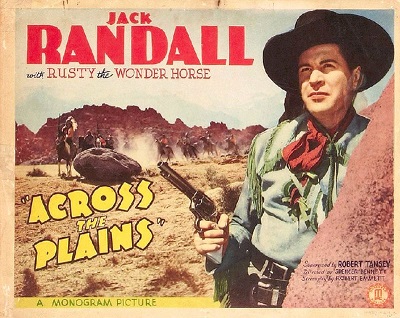
In the old west, a group of outlaws attack a wagon train, killing a husband and wife but sparing their two children. One child is taken by the outlaws, who tell him that they have saved him from an Indian attack. He grows up to be The Kansas Kid (Dennis Moore), a wagon master who still works for Gordon (Bob Card), the outlaw who raised him. The other child is adopted by a Native tribe and grows up to be known as Cherokee (Jack Randall). Cherokee has been hired to protect a gold shipment that Kansas and Gordon are determined to steal. How long until the brothers come into conflict?
Across The Plains is a pretty good programmer. Dennis Moore and Jack Randall are convincing as two men on opposite sides of the law who don’t realize that they’re brothers and director Spencer Gordon Bennett captures the scenery of the old west. This is a western where the frontier really feels and looks like an untouched frontier! The gunfights are effectively choreographed and directed and the family aspect is a good spin on a simple story. For fans of westerns, Across The Plains is an enjoyable example of the genre.
Dennis Moore and Jack Randall were both B-western mainstays. Moore occasionally played a hero but was usually cast as a villain. Across The Plans gives him a chance to play a more complex role than usual and he takes full advantage of the opportunity. The Kansas Kid may be an outlaw but he’s not so much bad as just misguided. Jack Randall was one of the many stage names used by actor Addison Randall. He started out as a singing cowboy before playing more traditional heroes, like in this film. In Across The Plans, Randall was as tough and convincing a western hero as he always was. Tragically, he died six years after making this film when he fell off a horse while filming a Universal serial called The Royal Mounted Ride Again. He was only 39 years old.




 Through the Shattered Lens