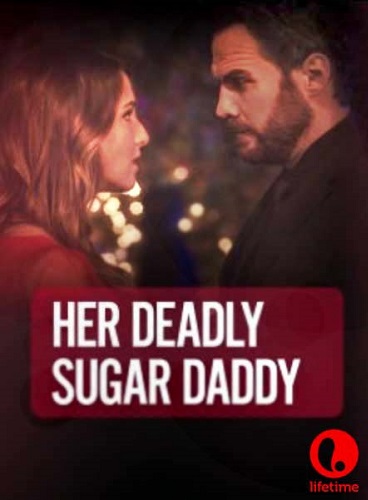
Lifetime Film Review: Her Deadly Sugar Daddy (dir by Brooke Nevin)


I have to admit that the term “sugar daddy” just amuses the Hell out of me.

Seriously, I can’t hear anyone use that phrase without starting to laugh.  I mean, it’s just such a ridiculous combination of words.  I remember that Dr. Phil went through this phase where, every week, he did a show about irresponsible millennials who, instead of getting a job, were going online and visiting what Phil called, “sugar daddy websites.”  Once you’ve heard Dr. Phil say, “sugar daddy” twenty times, it’s hard to take the term seriously.

Needless to say, when it comes to Lifetime films, sugar daddies are a popular topic.  I’ve lost track of the number of Lifetime films that I’ve seen in which a young woman decides that the only way to make ends meet is to start accepting money from older, wealthier men.  I mean, it seems like a good idea.  You get to dress up and you get a good dinner and you get to spend time in a really nice house and sometimes, you even get to fly on a private plane.  But, in the end, it’s never worth all the trouble.  First off, your parents and your friends will inevitably judge you and say that they’re ashamed of you.  Number two, there’s always a good chance that your sugar daddy will either 1) die of a heart attack at an inopportune time or 2) end up becoming obsessed with you.  To quote an anti-meth commercial that I recently watched on YouTube, “Don’t do it.  Not even once.”

In Her Deadly Sugar Daddy, Bridget (Lorynn York) gets involved in the world of being an escort not just because of the money ($10,000 a week!) but also because she needs something write about.  Bridget and her friend, Lindsey (Aubrey Reynolds), have recently moved over to Los Angeles from Arizona.  (This film makes it sound as if Arizona is literally on the other side of the world from California.)  The daughter of a famous novelist, Bridget wants to make a living as a writer.  However, she doesn’t want to write books, at least not yet.  Instead, she wants to blog.  Unfortunately, when she goes to the corporate headquarters of Swerve.com, she’s told that she doesn’t have enough experience to be one of their writers.  She’s told that she needs to start her own personal blog and build up a following before she can even think of writing for a fine site like Swerve.

(Hey, it worked for that Movie Bob guy.)

A bad date leads to Bridget meeting Anthony (Brent Bailey), a bearded businessman who ends up giving Bridget a job.  He needs someone to keep track of his schedule for him.  Bridget agrees.  He also needs someone to entertain older male clients.  After a little bit of hesitation, Bridget agrees to that too.  After all, she needs something to blog about, right?

Unfortunately, Anthony has an obsessive streak and some control issues.  Add to that, he doesn’t particularly want his employees blogging about his business or, for that matter, taking pictures around the office.  Soon, Bridget’s life is in danger.  If she survives, she’ll at least have something to write about….

Her Deadly Sugar Daddy delivers what you typically want out of a Lifetime film like this.  Anthony owns a big house and he works in a big office and Bridget’s clothes are to die for and an important life lesson is learned at the end of it all.  Brent Bailey is properly charming and intimidating as Anthony and Lorynn York (who has appeared in several of these films) is sympathetic as Bridget.  I have to admit that, on a personal level, I enjoyed the film because I’m a blogger who has worked as a personal assistant so I could relate to Bridget.  That said, I’m not interested in working at Swerve.  Through the Shattered Lens is perfect for me.
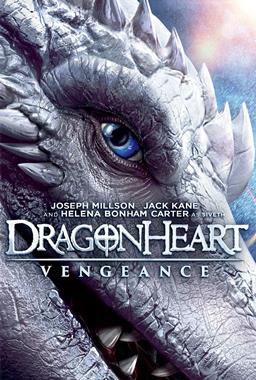
The Films of 2020: Dragonheart: Vengeance (dir by Ivan Silvestrini)


https://www.youtube.com/watch?v=UEPm5NFb50E

Dragonheart: Vengeance is the fifth Dragonheart film.  I should admit that, as far as I can remember, I’ve only seen one other Dragonheart film (the third one) and I did spend a good deal of Dragonheart: Vengeance trying to figure out just what the Hell was exactly going on.  But, ultimately, it didn’t matter that I sometimes had a hard time following the film’s plot.  To be honest, the only thing that mattered was that Dragonheart: Vengeance not only had a dragon but it was also a dragon that spoke in the voice of Helena Bonham Carter.

Let’s just start with the obvious.  Dragons are cool.  Yes, I know that they’re big and they breathe fire and sometimes they burn down cities and trample countries and they’re kind of protective of their gold and all that.  Plus, there’s always the chance that they don’t actually exist.  But no one can deny that dragons just have a certain style to them that makes them the most intriguing of all the possibly imaginary creatures out there.  Surely I’m not the only one who would not have been terribly upset if Smaug had eaten Bilbo during the second Hobbit film.  Add to that, dragons can fly and they can destroy all of your enemies and they’re kind of a cute, too.  They’re like cats, just with more fire-breathing abilities.

The same can be said of Helena Bonham Carter.  She’s just cool, no matter what she does or says.  Any film is automatically going to be improved by the participation of Helena Bonham Carter.  In this film, Bonham Carter delivers the dragon’s lines with just the right amount of posh sarcasm.  It’s not so much that she doesn’t like humans as much as it’s a case of her being smart enough to know that humans will inevitably disappoint her.

The dragon is named a Siveth.  During the Arthurian age, Siveth resides in the kingdom of Wallachia.  (That’s modern day Romania, which is also where Dragonheart: Vengeance was filmed.)  When Siveth first showed up, she was treated as a hero but, when she refused to follow the orders of shady King Razvan (Arturo Muselli), she was exiled out of the land.

Now, 30 years later, Lukas (Jack Kane) is a young farmer whose entire family has been killed by random raiders.  Seeking revenge, Lukas first asks Razvan for help and, when the king turns out to be useless, he then seeks out Siveth.  Following Lukas is Darius (Joseph Millson), a mercenary who has his own past with Siveth.

When Lukas does eventually discover Siveth, he also discovers that Siveth is actually a peace-loving dragon who refuses to help anyone who is only interested in vengeance.  However, through a chain of events that I didn’t quite follow, Siveth does eventually end up working with Lukas and Darius to not only defeat the raiders but to also reveal the identity of the powerful figure who is actually behind all the mayhem.

Dragonheart: Vengeance is likable movie.  It’s a little bit goofy at times but it still has a definite charm to it.  Yes, the plot isn’t always easy to follow, especially if you haven’t seen the other Dragonheart movies.  But you really don’t watch a movie like this for the plot.  You watch it for the dragon and Helena Bonham Carter makes Siveth into a pretty cool dragon.  Jack Kane and Joseph Millson both give likable performances as Lukas and Darius and the film has a nice message about embracing peace and distrusting anyone in authority.  That’s a message we can all get behind, especially when it’s delivered by a dragon!

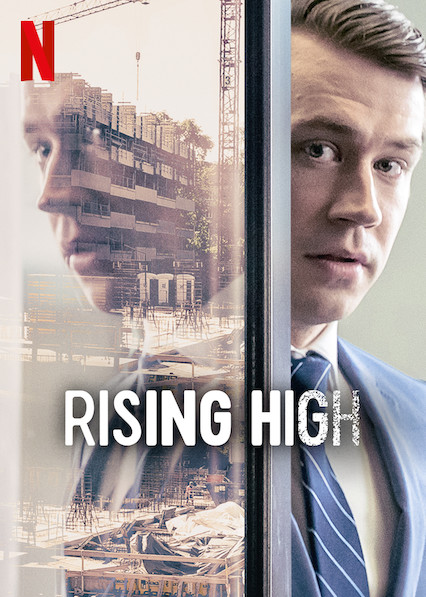
The Films of 2020: Rising High (dir by Cuneyt Kaya)


Ever since the Great Recession of 2009, films about white collar crime have been popular.  Some of them, like The Wolf of Wall Street, have been great and others, like The Big Short, have been terrible but one thing that they all have in common is that they’ve all left my very confused.

Seriously, as hard as I’ve tried, I’ve never been able to understand any of this stock market stuff.  Why do stocks go up?  Why do they go down?  Why do people sell them?  Why people buy them?  What do they get out of it?  If you buy a stock and then never sell it, did you just waste a huge chunk of cash?  What even is a stock?  How can a company have so much stock?  Can I sell stock in myself?  Seriously, how does it all work?

By that same token, how do you know how much a house is worth?  I know that it has to do with how much the house next to your house is worth but who decides how much that house is worth?  I’ve seen so many movies about people talking about real estate and insider trading and scampacs and I still don’t understand how any of it works.

Perhaps that’s why I don’t get as outraged as some people do while watching movies like The Wolf of Wall Street.  I know some people who walked out of that movie talking about how much they wanted the federal agent played by Kyle Chandler to throw Jordan Belfort (played, in the best performance of his career, by Leonardo Di Caprio) over the side of his boat.  Me, I was just happy that Jordan Belfort was able to buy himself a nice boat.  He got to hang out with his friends, he got live in a big house, and good for him.  I mean, he had fun.  We should all be so lucky.  The main reason why The Wolf of Wall Street was a thousand times better than The Big Short was because The Wolf of Wall Street was willing to admit that rich people are more fun than poor people.  The Wolf of Wall Street made its point with getting bogged down in all of the Marxist argle bargle that other white collar crime films tend to drown in.

Rising High is a German film that is superficially similar to The Wolf of Wall Street.  It follows Viktor (David Kross) and Gerry (Frederick Lau) as they make a small fortune through shady real estate deals.  Viktor is a smooth-talking salesman while Gerry is a bit rougher around the edges.  Basically, Viktor and Gerry get rich selling luxury apartments.  The only catch is that they don’t actually own the apartments that they’re selling.  Instead, they make bids with money that they don’t have and then they sell the property that they don’t own and then they use the money from the sell to purchase the property.  I guess that’s illegal.  I mean, Viktor does eventually end up getting arrested and telling the story of the shady ways that he got rich.

Anyway, Viktor’s story is typical of these type of films.  He grew up poor.  He found a way to make money and ethics be damned, he did what he had to do.  Soon, Viktor is married to Nicole (Janina Uhse) and having coke-fueled parties and listening to a lot of music.  He also spends a lot of time wondering if he’s allowed his life to get out of control.  He may be a white collar criminal but he’s a white collar criminal with a conscience.

Anyway, the main problem with Rising High is that it’s only 94 minutes, which means that the whole story feels somewhat rushed.  Viktor goes from being poor to being rich to being incarcerated in record time.  Because the film is so rushed, you never really get to explore Viktor’s life.  For all the complaints that you may have heard about The Wolf of Wall Street‘s 3-hour running time, it used those three hours to show us why Jordan Belfot and friends were willing to risk going to prison.  It showed us their lifestyle and, regardless of whether you liked any of them or not, you understood where their minds were at.  In Rising High, Viktor and Gerry are just jerks who get in over their heads.  You never really get to know them and even the decadent scenes of their wealthy lives feel as if they were all lifted from other movies.  Neither Viktor nor Gerry comes across as being a particularly interesting character so you really don’t care if they end up having to go to jail.  If anything, the main message I got from this film is that you should have as much fun as possible before the police show up.  If you spend too much time pondering the meaning of it all, you’re going to miss out on some good memories.

Anyway, as far as white collar crime films are concerned, I’m going to stick with The Wolf of Wall Street.  Seriously, that was a really nice boat….

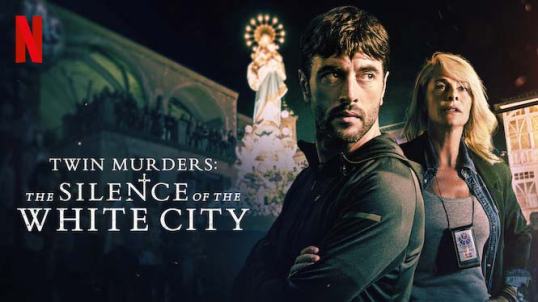
The Films of 2020: Twin Murders: The Silence of the White City (dir by Daniel Calparsoro)


https://www.youtube.com/watch?v=g9p7-YPoXEA

Twin Murders: The Silence Of The White City is a Spanish film about two people who spend a lot of time jogging.

Alba (Belen Rueda) and Unai (Javier Rey) both like to run through the city of Vitoria-Gasteiz.  Eventually, they run into each other and soon, they’re running through the city together on an almost nightly basis.  Along the way, they fall in love.  Of course, there are complications.  Alba is married.  Unai is traumatized by something that happened in the past and he’s only now starting to come out of his shell.  Can these two find happiness?

Making things even more complicated, Alba also happens to be Unai’s new boss!  Alba is the deputy chief of the Basque Country’s police force.  Unai is a legendary detective and criminal profiler who has been on a leave of absence ever since the death of his wife.  Can Unai conquer his fears and his pain?  Can Alba prove that she’s capable of handling a job that typically goes only to men?  And, again — can they do all this while falling in love?

And there’s a serial killer to deal with, as well!

Actually, to be honest, the film is more about the serial killer than the love story between Alba and Unai.  It’s just that, when I watched the movie, I always found myself far more interested in the scenes of Alba and Unai running than in the scenes of Unai trying to discover the identity of the killer.  (In fact, the identity of the killer is revealed about 40 minutes into this 110-minute film, which means that the audience spends the majority of the film with a lot more information than either Unai or Alba.)  The running scenes are beautifully filmed and they’re well-played by Rueda and Rey.

Unfortunately, the serial killer stuff just isn’t that interesting.  This is another killer who has a precise way of picking his victims and who goes out of his way to pose the dead bodies in the most ornate and haunting way possible.  It leads to some effective visuals but it’s still not anything that we haven’t experienced in other movies.  I always find it interesting that cinematic serial killers always have such complicated motives whereas real-life serial killers almost inevitably turn out to be some nerdy guy who never got over still being a virgin on his 20th birthday.  Real-life serial killers are almost always sub-literate losers whereas cinematic serial killers are always very articulate and clever.  Call it the Hannibal Lecter effect, I guess.

Speaking of Hannibal Lecter, Twin Murders has its very own Hannibal.  His name is Tasio (Alex Brendemühl) and he’s a former TV crime show host who decided to become a real criminal.  The current murders look a lot like his former murders but Tasio’s still in prison so what gives?  Is Tasio involved in the new murders or is the new murderer just a copycat?  Watch and find out, I guess.

Twin Murders: The Silence of The White City is all about style.  The plot itself is full of red herrings and bizarre motivations and, at times, it’s nearly impossible to follow.  However, the film looks great and is full of ominous atmosphere.  The cast does a good enough job to make their clichéd characters somewhat engaging.  It’s definitely an imperfect film and certainly not one to watch if you’re looking for a realistic portrait of cops or serial killers.  But if you’re just looking for a film with style to burn, Twin Murders: The Silence of the White City can take care of you.

The Films of 2020: Murder To Mercy: The Cyntonia Brown (dir by Daniel H. Birman)


In 2004, a Nashville real estate agent and youth minister named Johnny Allen was found dead in his home.  He had been shot in the back of his head, while lying naked in bed.  The police claimed that he had been asleep when he was shot.  Cyntonia Brown, the 16 year-old runaway who was arrested for the crime, claimed that Allen had been awake and that he had been reaching for a gun when she shot him.  Cyntonia Brown was subsequently convicted of first degree murder and sentenced to life in prison.  She wouldn’t be eligible for parole until she served 51 years of her sentence.

From the start, there were questions about whether or not justice was done in the case of Cyntonia Brown.  Naively, she waved her Miranda rights after she was arrested, believing the detective’s claim that it would help her case if she just talked to them.  (Is a sixteen year-old mature enough to make the decision whether or not to talk to the police without an attorney present?)  Brown had spent years being abused by sexual predators, like her “boyfriend” Garion “Kut-Throat” McGlothen.  As well, there was evidence that she may have suffered from Fetal alcohol spectrum disorder, as a result of her mother having been an alcoholic.  FASD can lead to uncontrollable behavioral and perception issues.  With all of that in mind, should Cyntonia Brown have been sentenced to 51 years in prison?

In 2011, a documentary called Me Facing Life: Cyntonia’s Story aired on PBS.  Directed by Daniel Birman, Me Facing Life generated renewed interest in Brown’s case.  When Brown, who was described as being a model prisoner, petitioned Tennessee Governor Bill Halsam for clemency, her cause became a cause célèbre  for many (which is another way of saying that it trended on twitter for a few days).  In 2019, Gov. Halsam commuted Brown’s sentence to 15 years plus 10 years of supervised probation.  Cyntonia Brown was released and is today an activist for criminal justice reform.

Murder To Mercy is Daniel Birman’s follow-up to Me Facing Life.  The first half of the film is largely made up for footage from Me Facing Life while the 2nd half deals with Brown’s clemency hearing.  Unfortunately, Murder to Mercy only provides a surface-level examination of Cyntonia Brown’s case.  One can fully believe that her initial sentence was too harsh (as do I) and one can also believe that she was failed by the system (and again, I do) while also acknowledging that Murder to Mercy is a bit too one-sided in its presentation of the case to really be effective.

For example, even if you do believe that Johnny Allen was reaching for a gun or that Cyntonia Brown did have a justifiable reason to consider herself to be in danger, it’s still hard not to notice that his family is only present in one scene.  Since Allen’s family has been quite vocal in their opposition to Cyntonia Brown’s release, pushing them to the side doesn’t feel right.  (This wouldn’t bother me as much if the documentary had said, “Johnny Allen’s family refused to be interviewed for this documentary.”  That, at least, would have explained their absence.  As it is, it just feels like they were left out because the film isn’t interested in anything that might complicate the narrative.)

The film makes the argument that Cyntonia Brown was treated unfairly by the criminal justice system.  It does make one very good point.  When she was arrested in 2004, Tennessee law classified her as being a prostitute.  In other words, even before she was convicted of murder, she was classified as being a criminal instead of a victim.  Later, in response to criticism over Brown’s sentencing, the law was changed so that minors could not be charged with prostitution.  Instead, they are now classified as victims of sex trafficking.  That’s one of the good things to come out of the Cyntonia Brown case.  Oddly enough, though, the film doesn’t explore the role that race may or may not have played in the harsh sentencing of Cyntonia Brown.  If Brown was a white girl from the suburbs who had been forced into prostitution at the age of 12 and who had subsequently felt that her life was in danger, would she have been sentenced to, at minimum, 51 years in prison?  That’s an issue that goes largely unexplored.

Cyntonia Brown’s story is a complicated one and it’s also one that deserves to be told.  Unfortunately, this heartfelt but surface level examination doesn’t really do justice to anyone or any of the issues involved.

The Films of 2020: Dangerous Lies (dir by Michael Scott)


As soon as Elliott Gould showed up, I knew he was going to die.

Now, of course, I should clarify that I didn’t think that Elliott Gould the actor was going to die.  Instead, I thought that the character he was playing — Leonard Wellesley — was going to die.  Leonard, after all, is a wealthy man who has no family left and who is in bad health.  He keeps trying to give money to his caregiver, Katie (Camila Mendes).  Katie consistently refuses the money, even though she could really use it.  She and her husband, Adam (Jessie T. Usher), are drowning in debt.  Even after Leonard hires Adam to work as his gardener, they’re still struggling to make ends meet. Still, Katie doesn’t want to take Leonard’s money because Katie doesn’t want to take advantage of him.

For the plot to move forwards, it’s necessary for Leonard to die, though not before changing his will to leave everything to Katie.  Normally, when this happens in a movie, it turns out that the caregiver actually manipulated her employer into changing the will before murdering him but, in this case, Katie is totally innocent.  It’s actually kind of a nice twist.  As played by Camila Medes, Katie is someone who sincerely is trying to do the right thing, even if it means her life is occasionally difficult.  As played by Elliott Gould, Leonard may be a bit eccentric but he’s still just sincerely trying to thank the person who made his final days bearable.

(Admittedly, another reason why I knew Leonard was going to die was because, whenever a veteran actor like Elliott Gould shows up in a movie like this, he’s usually going to end up playing someone who dies under mysterious circumstances.  Call it the Rule of Eric Roberts.)

Moving into Leonard’s house, Katie and Adam are surprised to discover a large trunk of cash.  While Katie wonders why exactly Leonard would have a huge trunk of money hidden away in his house, Adam is more concerned with what they can do with that money.  While Katie tries to resist the urge to get greedy, Adam starts obsessing on the money.  What else does Leonard have hidden around the house?

Meanwhile, a mysterious man named Hayden (Cam Gigandet) watches the house and plots his next move….

Dangerous Lies is a thriller that was released on Netflix back in April.  This is probably one of those low-budget movies that would have been overlooked if not for the fact that everyone was pretty much locked inside their house when it was released.  Watching Dangerous Lies provided a nice escape from the bad news of the pandemic.  Speaking for myself, it was kind of fun to watch Katie and Adam explore their new home.  After being stuck inside of mine for a month, the idea that I could suddenly inherit a mansion provided a nice bit of wish-fulfillment.

As for the film itself, it was a diverting thriller.  Elliott Gould brought some unexpected depth to the role of Leonard and Camila Mendes and Jessie T. Usher were believable as the couple at the center of the story.  They had a believable chemistry and Usher did a good job of portraying Adam’s losing struggle with his own greed.  This is the type of simple but entertaining film that you watch if you have a few hours to kill in the afternoon and there’s nothing wrong with that.

The Films of 2020: John Henry (dir by Will Forbes)


John Henry tells the story of a man named …. well, John Henry.  He’s played by Terry Crews and he lives in South Los Angeles with his father, BJ Henry (Ken Foree).  BJ may have to carry an oxygen tank around with him but he still has enough strength to shout, “My dick is legendary,” so good for him.

(Actually, it may sound like I’m being snarky and, to a certain extent, I am.  But having Ken Foree play Terry Crews’s father is actually a brilliant piece of casting.)

John Henry used to be into the gang lifestyle but now he’s gone straight.  We see flashbacks to his former life and how he used to hang out with his cousin, Hell (Ludacris).  When John accidentally shot Hell in the face, he decided to retire from crime and he also swore off carrying a gun.  Hell, on the other hand, just got a fancy gold-plated jaw.  Years later, Hell is a crime lord and John Henry is wandering around with sledgehammer.

When a Honduran refugee named Berta (Jamila Velazquez) show up at John Henry’s house, on the run from Hell’s crew, BJ’s reaction is to kick her out.  But John Henry, being the gentle giant with a sledgehammer, allows her to stay.  When Hell and his crew show up, it leads to violence, death, and …. well, that’s pretty much it.

John Henry is an odd film.  The tone is literally all over the place as the film swerves from being a comic book film to a serious drama to a comedy to a Spaghetti western.  It takes a lot of skill to take that many different tonal shifts and turn them into a coherent movie and unfortunately, that really doesn’t happen with John Henry.  The minute you start to get used to the idea of the film being an over-the-top comic book film, it suddenly tries to be a meditation on violence and guilt.  As soon as you’re getting used to the idea of it being a drama, Ludacris shows up with a huge hunk of medal on his face.  It’s hard to keep track of what exactly the film is saying because the film itself doesn’t seem to know.  I guess that could be forgiven if the film’s action managed to maintain a steady pace but instead, this felt like one of the longest 91-minute films that I’ve ever watched.

However, as our longtime readers should know by now, I’m not a fan of excessive negativity so let’s take a few moments to discuss what did work.  I already mentioned the casting of Terry Crews and Ken Foree.  They’re fun to watch together.  Ludacris’s gold-plated jaw is an amusing detail and it’s unfortunate that the film didn’t have more similarly odd details like that.  I also liked the opening credits, which basically told the film’s story in a comic book form.  The credits were fun and they hinted at what this film could have been if it had been better-paced and had fully embraced its camp potential.

John Henry played in some theaters before the pandemic outbreak.  It later found a home on Netflix and it’s in the process of developing a bit of a cult reputation.  Reportedly, there will be a sequel so I guess it’s not time to take John Henry to the graveyard just yet.

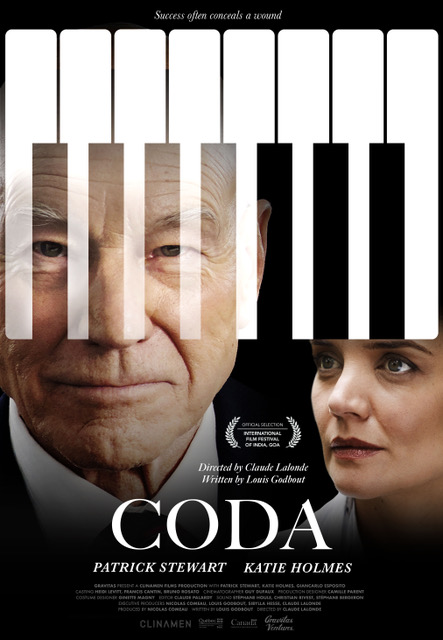
The Films of 2020: Coda (dir by Claude LaLonde)


Coda tells the story of Sir Henry Cole and Helen Morrison.

Sir Henry (Patrick Stewart) is a world-famous pianist who hasn’t played in public since his wife died several years ago.  He’s about to embark on a comeback tour but he finds himself struggling with stage fright.  Some of it is because he still hasn’t recovered from the loss of his wife.  Some of it is because he’s getting older and his memory is no longer as good as it used to be.  And, a lot of it is because he doesn’t know who he can trust.  He fears that the only reason people will come to his recitals is because they want to hear him screw up.

Helen Morrison (Katie Holmes) is a former music student who is now a writer for The New Yorker.  She is a free spirit who desperately wants to interview Sir Henry and write a profile of him.  She is also the film’s narrator, which means that the film opens with her talking about Nietzsche.  That’s never a good sign as Nietzsche is the philosopher who is most likely to be quoted by people who are trying to sounds smart by pretending that they spend their spare time studying philosophy.

I’m tempted to say that Henry and Helen solve crimes but sadly, they don’t.  The film probably would have been a lot more fun if they had.  Instead, Henry struggles to find his confidence and Helen struggles to help Henry find his confidence and there’s a lot of scenes of Henry trying to play the notes while Helen stares off into the distance.  Eventually, it leads to a very mild love story and a few scenes of a bearded Henry walking through the Swiss Alps.  The Alps, as always, are quite impressive.

(I visited Switzerland the summer after I graduated high school.  Beautiful country but don’t even think about trying to leave dinner early.)

This is one of those films that I wanted to like more than I actually did.  I mean, it’s a serious-minded film for adults and there’s no explosions or gunfights and we’re all supposed to be in favor of that, right?  Add to that, it features Patrick Stewart doing what Patrick Stewart does best, revealing the inner humanity of a somewhat imposing character.  And make no mistake about it, Stewart gives a warm and likable performance in the lead role.  It’s impossible not to empathize with Henry when he finds himself staring down at his piano and wondering if he’ll ever again be able to use it to create beautiful music.

But, ultimately, the film doesn’t really work.  It’s a bit too slowly paced and the dialogue is full of lines that are meant to be profound but actually feel rather empty.  Katie Holmes does her best but Helen never feels like a fully-realized character.  For the most part, she’s just there to inspire Henry before vanishing from the movie.  Fortunately, once Helen’s gone, other characters show up to continue to inspire Henry.  It really does seem like a full-time job, keeping Henry inspired.

The film did improve a bit when Henry arrived in the Alps, largely because the Alps are lovely and there’s a scene where Henry has a dream about standing next to Beethoven while staring over the edge of a cliff.  The imagery was breath-taking but it’s not enough to save the movie.  That said, if anyone ever makes a documentary about Patrick Stewart hiking through Switzerland, I’ll be the first to watch it.


The Films of 2020: I Still Believe (dir by the Erwin Brothers)


I Still Believe is based on the true story of musician Jeremy Camp (played by KJ Apa) and his first wife, Melissa Henning (Britt Robertson).  Jeremy meets Melissa in college.  They become friends.  They try to date but the relationship is complicated by the fact that Jeremy’s mentor, Jean-Luc LaJoie (Nathan Parsons), is also in love with Melissa.  Over the Christmas break, Melissa is taken ill and discovers that she has Stage 3C liver cancer.  Jeremy and Melissa marry and try to find happiness and maintain their faith in the time that Melissa has left.  Though Jeremy grows angry and has his moments of doubts, Melissa remains convinced that, though it may be hard to understand, there is a deeper reason for her suffering and it’s all apart of a bigger plan.

I Still Believe is the type of film that will bring out the cynic in most professional critics.  That said, it’s also the type of film that’s pretty much critic-proof.  It really doesn’t matter how much time or energy one might spend criticizing the film or its script or its belief system, the target audience of I Still Believe will love the film.  I Still Believe is a film that’s either going to inspire snark or it’s going to inspire tears.  It all depends on how you feel about the idea of a terminal illness all being a part of God’s plan.

(As far as that’s concerned, I’ll be keeping my own opinion to myself.)

Unlike a lot of the faith-based films that I’ve reviewed for this site, I Still Believe actually feels like a real movie.  As opposed to the God’s Not Dead films, there are no cardboard atheists standing around and waiting to be shown up by the clever heroes asking how they can be angry at God if God doesn’t exist.  The film, for the most part, avoids the trap of getting preachy and, to its credit, it treats Jeremy’s moments of doubt with respect.  It doesn’t shame him for getting upset over something that, regardless of what you may or may not believe, seems terrible unfair.  KJ Apa and Britt Robertson are both appealing performers and they have a believable chemistry as Jeremy and Melissa.  Finally, the film look gorgeous.  The farmlands of Indiana and the California campus where Jeremy and Melissa meet both feel vibrantly alive in this film.

At the same time, there’s nothing particularly surprising about I Still Believe.  It’s a predictable film and the minute that Jeremy gets that phone call telling him that Melissa has been taken to the hospital, you’ll be able to guess everything that’s going to follow.  If you’re not inclined to view Christian faith sympathetically, the film will not change your mind.  When I was looking over some of the other reviews of this film, the most common complaint I saw was that the film “preaches to the choir.”  It’s a valid complaint but, at the same time, I think it can also be argued that almost every film ever made has preached to one choir or another.  You could say the same thing about the political films of Adam McKay and Jay Roach or, for the matter, the majority of outspokenly anti-religious films.  Most message films tend to appeal to an audience who already agrees with what the film has to say.  Typically. when someone complains that a film preached to the choir, what they’re really saying is, “It didn’t preach to my choir.”

I Still Believe is a well-made film that will probably be best appreciated by people who already share its view of life and religion.  Though production on the film obviously started before the pandemic, it does feel like a film specifically made for these quarantined times.  It’s a film that argues the faith and strength can be found in even the worst of circumstances.  Whether that’s true or not is up to the viewer to decide.