Ah, bliss. Ever since a collected volume of cartoonist extraordinaire John Pham’s beloved strips featuring hard-luck “lovable losers” Jay and Kay was released in France a couple of years ago, English-speaking audiences have been waiting for a version we can actually, ya know, read — but the demand for it was so strong that I truthfully know a few people who ordered the French version just to look at the thing.
It’s easy enough to see why — Pham’s cartooning skill is matched only by his artistry with the risograph, a printing method that he stands as one of the absolute masters of, and who are we kidding? Each issue of his self-published Epoxy sells out so quickly, despite its high price, that for many people these are comics they’ve only heard about in reverent near-whispers to date, but have never actually seen outside of, say, Kramers Ergot. Well…
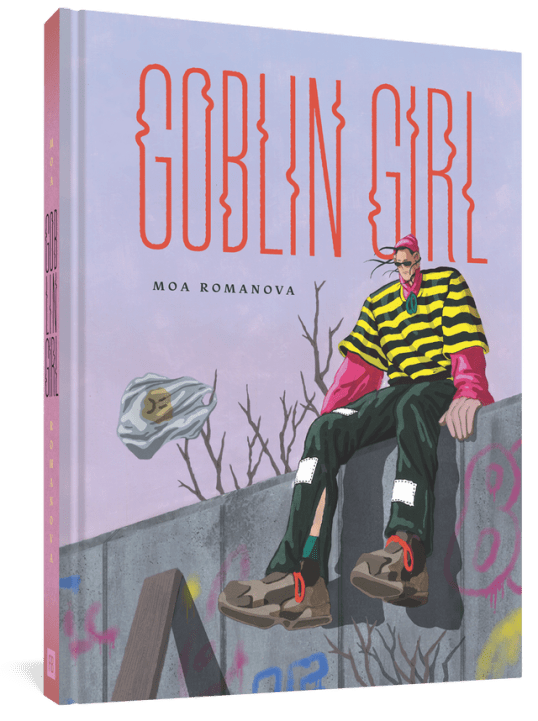
Hailing as she does from Stockholm, Sweden, Moa Romanova’s name isn’t one that is particularly well-known here in the US — but I have a distinct feeling that her Fantagraphics-published debut graphic novel, Goblin Girl, is going to change all that in a hurry. Toeing a tightrope-line between pure autobio and fictionalized faux-memoir, with the distinction between which “parts” of the book are which never being explicitly delineated, this is a seamless and powerful work that navigates the always-choppy waters of mental illness with raw honesty, emotion, and a sense of authenticity so profound that it almost doesn’t even matter how much of it is derived from Romanova’s daily life or not.
That being said, she’s still clearly finding her voice as a cartoonist, at least on the artistic side of the ledger : her panel layouts, lettering, backgrounds, color choices, and caricature-ish flourishes owe a lot to…
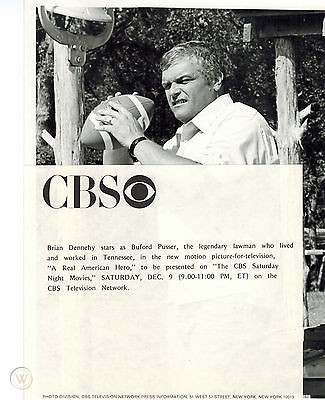
Based on the title, you might think this made-for-TV movie is about G.I. Joe but instead it’s about Buford Pusser, the club-wielding sheriff who battled bootleggers in Tennessee and who might have been murdered by them. While he was still alive, Pusser was played by Joe Don Baker in the original Walking Tall. After Pusser’s mysterious death, Bo Svenson took over the role for twosequels and a Walking Tall television series in 1981. Meanwhile, in A Real American Hero, the role is played by Brian Dennehy.
Though Pusser may be played by a different actor than in the original movies, A Real American Hero finds him still dealing with same threats. As a result of getting some bad moonshine at the Dixie Disco, two teenagers are dead and two are blind. Buford is determined to take down the owner of the Disco, Danny Boy Mitchell (Ken Howard). Unfortunately for Buford, Danny Boy has a mole in the sheriff’s department and always manages to clean up his club before Buford arrives. When Buford does arrest Danny, the case is thrown out of court because Buford didn’t have probable cause or any real evidence beyond hearsay.
Buford’s solution is to start enforcing every single law on the books, even the ones that haven’t been relevant for over a century. Buford knows that stopping Danny Boy for a misdemeanor would give him probable cause to search him for any evidence of smuggling moonshine. For instance, Buford pulls Danny Boy over because he’s driving a vehicle but, in violation of a law written in 1908, he doesn’t have a man walking in front of the car and waving a red flag. Another time, he gives Danny Boy a ticket because, in violation of a law from 1888, he never ties his carriage to a hitching post and a law written in 1910 legally defines all cars as being carriages.
The problem is that, if Buford only enforces the law against Danny Boy, he could be accused of police harassment. So, everyone in the country has to be held to the same standard, which means that everyone in town is soon getting ticketed and jailed for the minor offenses as Danny Boy and his associates. Everyone gets angry with Buford but, after Danny Boy tries to assassinate the sheriff while he’s got his kids in the car, they change their minds and support being overpoliced.
A Real American Hero was obviously an early attempt at a pilot for a Buford Pusser TV series. Bulky Brian Dennehy is physically right for Buford but he’s never as convincing a redneck as Joe Don Baker was in the role. Plus, it’s impossible to watch Dennehy hauling people into court for not hitching their “horseless carriages” without being reminded of Dennehy harassing Sylvester Stallone at the start of First Blood. Despite a subplot where Pusser tries to help a former prostitute re-enter society, Buford comes across more like a jerk than a real American hero. Meanwhile, Ken Howard does his best but Danny Boy is still just a generic television bad guy. If he wasn’t selling moonshine in Buford’s county, he’d probably be further down south, trying to frame the Duke boys for a bank robbery.
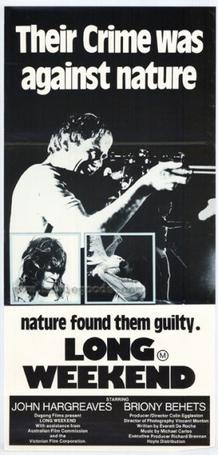
The 1978 Australian film, Long Weekend, is about what happens when two unlikable humans decide to spend the weekend with nature. Nature, it turns out, doesn’t really like the company and decides to kill them.
Or does it? From what I’ve read, the screenwriter for Long Weekend, Everett De Roche, did intend this to be a nature’s revenge type of film. The idea behind the film is that these two city dwellers aren’t respectful of nature when they go camping and, as a result, all of the plants and the animals decide to get revenge. But the film is shot in such a way that your interpretation may vary. Are the humans really being targeted by nature? Or are the humans themselves just so paranoid and craven that they don’t even realize that they’re destroying themselves? For instance, when one of them gets attacked by a possum, is it because the possum has been sent on a search-and-destroy mission or was it just because someone was stupid enough to stick their hand in a possum’s face? I mean, you can really only expect any animal to put up with so much, regardless of whether they’re a member of an organized army or not. Whether or not it was intentional on the part of the filmmakers or just the result of having to adjust to working with a low budget, Long Weekend is actually a rather ambiguous film and it’s all the more effective for it.
Long Weekend opens with Peter (John Hargreaves) and Marcia (Briony Behets) driving through the rain. They’re heading off to an isolated beach camping spot that Peter has discovered. Peter considers himself to be a great outdoorsman and is very proud of the hunting rifle that he’s bringing with him. Marcia is a self-described “city girl” and is considerably less enthused about the prospect about spending the weekend in the rough. (I immediately identified with Marcia because I have always hated the idea of camping.) Marcia and Peter spend half of their time talking about how much they love each other and the other half talking about how much they hate each other. Marcia’s also having an affair and Peter might know about it. (When Peter first brings his new rifle home, he points it directly at Marcia. Is he just testing the sight or is he fantasizing about murdering his wife? The film leaves it up to us to decide.) Along the way, Peter runs over a kangaroo while driving to the campsite but neither he nor Marcia seem to notice.
Once they’re camping, Peter and Marcia only get more obnoxious. Marcia complains about nature. Peter litters the ground with cigarette butts and he kills a manatee. He also shoots a tree with a spear gun. He claims it was an accident, though it’s hard not to notice how close the spear comes to hitting Marcia.
The surroundings start to grow more ominous. The wind howls. The skies grow dark. Eagles attack. Possums attack. A dog attacks. Marcia wants to leave and eventually, even stubborn old Peter agrees but it turns out that leaving is not going to be as easy as they think….
Long Weekend takes a while to really get going but, if you stick with it, your patience will be rewarded. The time taken to reveal who Peter and Marcia are and to show us how their relationship works definitely pays off in the end. Shot on location in the Australian bush, this is one of those horror films that creates a perfectly ominous atmosphere and then doesn’t let up until the end credits roll. Peter and Marcia are so unlikable that you don’t really mind seeing them being tormented but, by the end of the film, it’s impossible not to share their desperation as they try to figure out how to escape the wrath of a seriously pissed off planet. The film ends on a rather abrupt yet totally perfect note.
As I mentioned at the start of this review, one of the things that makes Long Weekend so effective is that it does maintain a certain ambiguity as to what’s happening. There are hints throughout that whats happening might not just be isolated to that campsite and that Peter and Marcia aren’t the only ones who have gotten on the bad side of nature this weekend. At the same time, it’s also possible to interpret the film as being less about nature’s revenge and more about an unhappy couple who lets their own paranoia get the better of them. Are they really victims of nature or are they just two people being driven mad by their own dysfunctional relationship? While the filmmakers are on record as saying that they meant for it to be the former, the film itself leaves it up to you decide.
Long Weekend is an intense and effective horror film. If you’re tempted to go camping this Spring Break, be sure to watch this film first.
Once upon a time, a record company exec made the mistake of asking Johnny Lydon if he could write and record a nice and commercial love song for Public Image Ltd.’s next album. This is how Lydon responded:
This Is Not A Love Song is repeated a total of 44 times in this song. The other lyrics are all meant to satirize the corporate mindset as Johnny announces that he is going to sell out:
I’m adaptable and I like my new role I’m getting better and better And I have a new goal I’m changing my ways where money applies
This video was shot in Century City, which was the center of the Los Angeles business community in the 80s.
As the title indicates, this is another Nam film, where a veteran reenters the jungle and finally rescues the POWs who were left behind when the United States fled Saigon. With Sylvester Stallone, Chuck Norris, and even Gene Hackman leading the way, these films were all the rage during the 80s. They provided American audiences with a chance to go back and win the only war that, up to that point, America had lost. Not only did they provide wish-fulfillment for audiences but they also confirmed what several suspected, that the only reason the U.S. lost in Vietnam was because our soldiers’s hands were tied by generals and Washington pencil pushers. If we had just let our men go in and fight the VC guerrilla-style, these films say, Saigon never would have fallen.
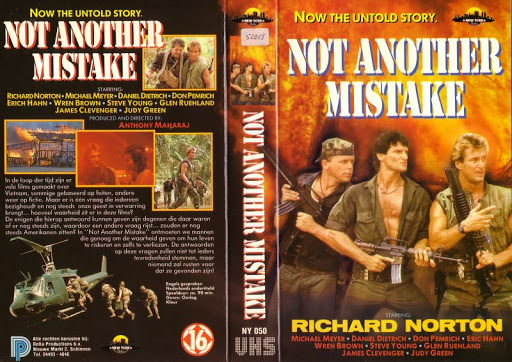
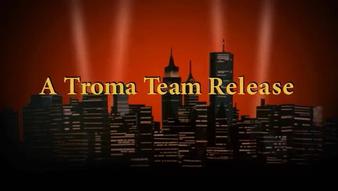
Not Another Mistake came out towards the end of the cycle and you know what type of film you’re about to get into as soon as the “A Troma Team Release” skyline appears at the start of it.
Don’t let that skyline scare you off. Not Another Mistake is slightly better than the average Troma film. Admittedly, that’s not exactly a high bar to clear.
Richard Norton plays Richard Straker, who served in a special ops unit during Vietnam and who was a key part of Operation Black Thunder. In other words, he’s a badass. After the war ended, Straker raised a family and found success as a businessman. One night, he returns home and interrupts a home invasion. He kills the thugs but not before his wife and daughter each suffer a slow motion death. (Straker has Vietnam flashbacks while shooting the thugs.) Straker spends a year drinking and then goes to Vietnam to lead a raid on a POW camp. What’s interesting is that Straker’s family being murdered doesn’t really figure into the rest of the plot. He never brings up his tragic past nor does it appear to have made him more willing to take crazy risks or anything else you’d expect it to do. Instead, his family is gunned down because I guess the movie had to start in some way.
Once Straker is sent to Vietnam, he’s given a ragtag group of soldiers to command. None of the soldiers have any personality but then again, neither do any of the POWs or the camp guards or anyone else in the movie, other than Straker. Richard Norton has appeared in a lot of movies like this and his appeal has always been that he seems like he could probably do everything that he does on film in real life. Norton is convincing in the action scenes and he does okay in the big dramatic scenes, like when he rescues an old friend, just to discover that, after years in a POW camp, the man is nearly dead.
It takes a while for Not Another Mistake to really get going. There’s a lot of extremely dark jungle scenes where you can’t really see what’s going on. Things pick up once they get to the POW camp and the rescue operation leads to some exciting action scenes. There’s a good chase scene on a train and this film features some of my favorite example of one man being able to blow up gigantic buildings with just one grenade launcher. One thing that I appreciated about the film is that it attempted to be honest about what type of state a person would be in after spending 20 years in a POW camp. This isn’t one of those films where the POWs can pick up a discarded machine gun and immediately follow Chuck Norris into battle. Also, as easy as it is compare Not Another Mistake to the other POW rescue films of the 80s, it has a surprisingly dark and abrupt ending, which suggests that maybe the film was meant to be more than just an exercise in jingoistic wish fulfillment. It’s the type of sober ending that you never would have seen happen to Norris or Sylvester Stallone but Richard Norton handles it like a champ.
Too long by at least 30 minutes and severely hampered by a low budget, Not Another Mistake still has enough surprises and enough Richard Norton to stand out from the rest of the POW rescue genre. If you’re a fan of the genre, watching this won’t be another mistake.
Private Detective Stories ran from 1937 to 1950 and, over the course of 134 issues, it shared stories of betrayal, murder, and detectives. The content was no different than what could be found in countless other pulp magazines of the era but, as you can tell by looking below, the covers were surprisingly violent even by the standards of the pulps.
Here’s just a covers from Private Detective Stories. As always, the artist has been credited when known.
So, here’s the thing: when I was making out my list of films to review for Spring Breakdown, I was under the impression that the 2011 film, Super Shark, was a Spring Break film. I was convinced that it was a film about a giant shark that ate a bunch of people over the course of Spring Break.
Fortunately, right before posting this review, I decided to rewatch Super Shark. Normally, I probably wouldn’t have because I’m currently on vacation but it’s also currently raining and it’s also about 7 degrees outside. (That’s 7 degrees Celsius but it’s still pretty cold.) It’s like God was reading through my drafts folder last night and said, “Uh-oh. Lisa needs to rewatch the movie before she posts the review.”
Anyway, upon rewatching Super Shark, I discovered that 1) the film is still awesome as Hell and 2) it’s not actually a Spring Break film. Instead, it’s a summer film. There’s even a scene where two lifeguards talk about what a great time they’re going to have working on the beach during the summer. So, technically, I probably shouldn’t be reviewing this film as part of a Spring Break series but …. well, I’m going to do it anyways. I mean, it may be a summer film but it plays out like a Spring Break film. Plus, it’s got a giant shark.
Not surprisingly, for a film called Super Shark, the giant shark is the main attraction. The CGI’s a bit dodgy and the shark does look a bit cartoonish but that actually adds to the film’s charm. Whereas Steven Spielberg dealt with the reality of a fake-looking shark by keeping the shark off-screen as much as possible, directed Fred Olen Ray takes the opposite approach and seriously, more power to him. Ray puts the shark in as many scenes as possible, as if he’s saying, “Yes, this is a low-budget B-movie and why should we pretend that it’s anything other than that?” There’s an honesty to this approach that’s impossible not to respect.
The shark is prehistoric in origin. It was safely separated from society until the big bad oil company did some bad corporate stuff and, as a result, the shark is now free to ruin everyone’s summer. You know that whole thing about how sharks have to stay in the water or they’ll die? That’s not a problem for Super Shark. Super Shark will jump on the beach and eat you, he doesn’t care. In fact, Super Shark is such a rebel that he’ll even take on a tank and win! WE LOVE YOU, SUPER SHARK!
As always, there’s a group of humans around who don’t love Super Shark as much as the viewers. There’s the evil corporate guy played by John Schneider. He’s into money and drilling. And then there’s the scientist played by Sarah Lieving. She hates corporations and she doesn’t like sharks. There’s a DJ played by Jimmie “JJ” Walker. And then there’s the lifeguards and the beachgoers and the people who just want to participate in a wholesome bikini contest. Sorry, everyone, Super Shark has other plans.
Anyway, I have a weakness for films about giant sharks attacking oil wells and eating people on the beach. It’s a silly film but it’s obviously been designed to be silly. This isn’t Jaws nor is this a serious film about the issues surrounding underwater drilling. This is a B-movie about a giant shark and if you can’t enjoy something like this, I worry about you. This is a film that you watch with your friends and you have a lot of fun talking back to the screen. Don’t take it seriously and just enjoy the giant shark action. Who could ask for a better summer? Or a better Spring Break for that matter?








 Through the Shattered Lens