Horror Scenes That I Love: Criswell Predicts From Plan 9 From Outer Space


“Can you prove that it didn’t happen!?”

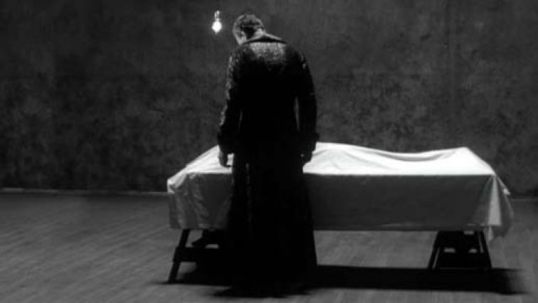
The 1959 film, Plan 9 From Outer Space, is famous for a lot of reasons.  There’s the low budget.  There’s the acting.  There’s the script. There’s Tor Johnson and Vampira and Bela Lugosi’s much taller stand-in.  There’s the string that’s visibly tied to all of the UFOs.  But let’s just be honest.  None of that would matter without the perfect introductionary scene!

And that’s where Criswell comes in!

Criswell was a self-proclaimed psychic and a friend of the film’s director, Edward D. Wood, Jr.  Criswell liked to sleep in a coffin and he also liked to make predictions.  The majority of the predictions were so outlandish that it didn’t matter that they were rarely accurate.  (Jeff wrote a whole post about this, a few years back.)  When Wood needed someone to vouch for the authenticity of Plan 9 From Outer Space, Criswell was the obvious choice.  Criswell even wrote his own lines.

Say what you will about the film but Criswell’s monologue — incoherent as it may technically be — is the perfect introduction and this seems like the perfect scene to use on the first day of our annual Horrorthon.

From 1959’s Plan 9 From Outer Space, here’s a horror scene that I love:

Horror Book Review: Paperbacks From Hell by Grady Hendrix


So, it’s October 1st and you know what that means!

It’s time to put together a Halloween reading list!

(Actually, to be honest, you’re running behind.  You should have started selecting the books for your October reading list way back in July.  Really, what have you been doing all this time?  Well, anyway….)

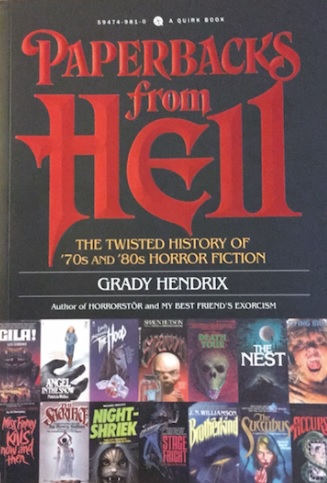
When it comes to putting together a Halloween reading list, there’s no better place to start than with Grady Hendrix’s Paperbacks From Hell!

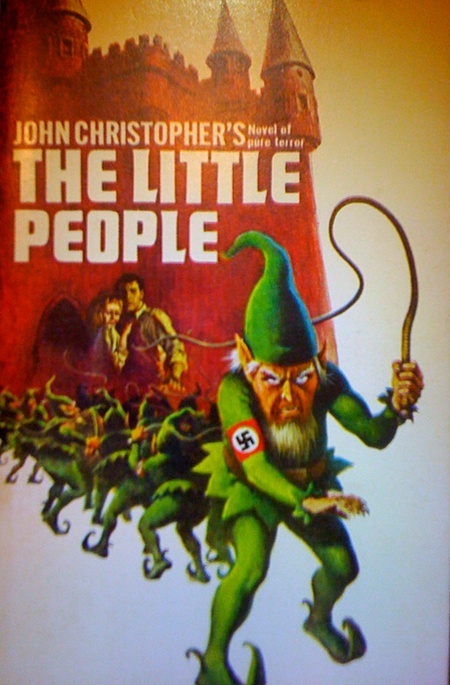
First published in 2017, Paperbacks From Hell is a compulsively readable and fun overview of the horror-themed paperbacks that scared readers in the 70s and the 80s.  Every genre of paperback horror is covered, from the demonic possession novels that came out after the success of The Exorcist and The Omen to the “based on a true haunting” ghost novels to the extremely gory and rather unpleasant serial killer stories of the late 80s.  Along with discussing the best sellers of that era, Paperbacks From Hell also includes hundreds of wonderfully sordid and often rather bizarre paperback covers.  Have you ever wandered what a bunch a Nazi dwarves would look like?  Well, just check out the cover of The Little People:

I mean, seriously — AGCK!

Paperbacks From Hell isn’t just a book about scary paperbacks, however.  It’s also a social history.  So many of these books were designed to appeal to whatever was scaring suburbanites at the moment and, as a result, the history of horror paperbacks is also a history of moral panics.  From Satanic cults to dirty music to environmental catastrophe and evil children, there’s a paperback for every one of them and, in all probability, the cover of that papeprback can be found in Paperbacks From Hell.

Paperbacks From Hell is a definite must-have for anyone who loves history and horror.  After I read it, I decided that I would read every single paperback that was mentioned in Paperbacks From Hell.  That turned out to be a bit more difficult than I thought it would be because, sadly, a lot of those classic old paperbacks are out-of-print and being sold for hundreds of dollars on Amazon.  I mean, I would love to read Satan Sublets by Jack Younger but I don’t know if I want to spend four hundred dollars to do so.  That said, even if some of the books that scared our parents and grandparents are no longer readily available, at least we have Paperbacks From Hell.

If you don’t already have a copy of Paperbacks From Hell, order it.  It’s addictive reading at its best.


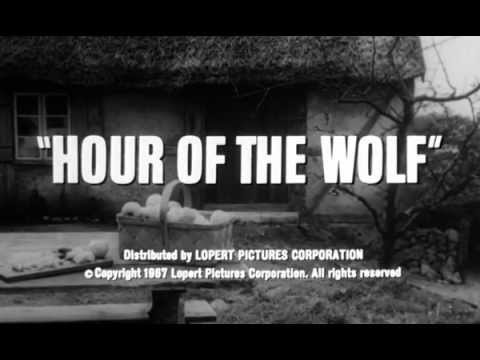
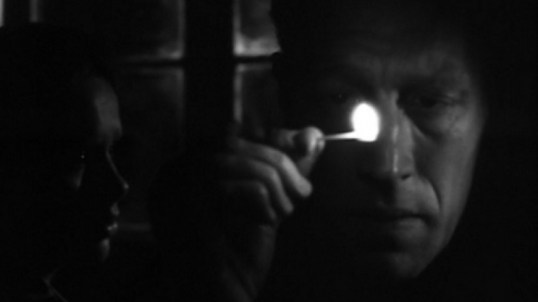
International Horror Film Review: Hour of the Wolf (dir by Ingmar Bergman)


An Ingmar Bergman horror film?

Indeed.  Despite the fact that Bergman’s bleak imagery and existential themes undoubtedly influenced any number of horror filmmakers (Wes Craven’s Last House On The Left was essentially a remake of Bergman’s The Virgin Spring), the 1968 film, Hour Of The Wolf was Ingmar Bergman’s only official horror film.

Of course, it’s also an Ingmar Bergman film, which means that it’s also a meditation on relationships, regret, the difficult of ever knowing what’s truly going on inside someone else’s head, and the artificiality of the artistic process.  It tells the story of a painter named Johan Borg (Max Von Sydow) and his pregnant wife, Alma (Liv Ullman) and their life on an isolated island.  Alma is worried about Johan’s feelings towards his former muse and ex-lover, Veronica Vogler.  Johan is haunted by nightmarish visions of menacing figures and the feelings that demons are pursuing him.

The film opens with a title card, informing us that the story that we’re about to see is true and that it’s an attempt to reconstruct the final days of Johan’s life before his mysterious disappearance.  Of course, as anyone who has seen enough found footage films can tell you, the title card is a lie and there never was a painter named Johan Borg, or at least not one who mysteriously vanished while living in an isolated house on an island.  Instead of being meant to convince us that we’re about to see a true story, the title card instead establishes that what we’re about to see can be considered to almost be a dark fairy tale.  The title card is the film’s way of saying, “Once Upon A Time…..”  It’s also a reminder that most fairy tales are considerably more grim than what those of us raised on Disney might expect.

(No coincidentally, the title Hour of the Wolf came from Swedish folk lore.  The Hour of the Wolf is the time between 3 and 5 in the morning, during which it is said that most births and deaths occur.)

While the opening credits flash by on a dark screen, we hear the sounds of men working and anyone who has any experience in theater will immediately realize that we’re listening to a set being built.  As the opening credits come to an end, we hear Bergman shouting out, “Action!”  Our next shot is Alma standing outside of the house that she shared with Johan.  Alma looks straight at the camera as she tells us that she still doesn’t know what happened to Johan.  She tells the unseen Bergman that she’s revealed to him everything that she knows.

It’s an interesting opening, one that reminds the audience that what they’re seeing is merely a recreation of what might have happened on Johan and Alma.  When Alma speaks to Bergman, there’s an interesting subtext to her words and her tone and one gets the feeling that Alma and the director are meant to have a history of their own.  It’s almost as if the film is saying that the story’s meaning can only be found in what we can’t see, in what’s going on behind the camera.  That seems especially true when you consider that, when Hour of the Wolf was filmed, Liv Ullman, who played the pregnant Alma, actually was pregnant with Bergman’s child and that Bergman himself later said that Johan Borg’s nightmares were recreations of Bergman’s own nightmares.  It’s perhaps a little too easy to imagine that the demons that inspire Johan’s art are the same demons that inspired Bergman’s films and that this film is both an apology to Ullman for his own neurotic tendencies and a tribute to her willingness to put up with him.

Hour of the Wolf is a bleakly effective film, one that works as both a dissection of an unstable relationship and a portrait of a man who may be losing his mind.  Von Sydow plays the haunted Johan as a charismatic but introverted artist, a troubled individual who can only truly express what’s happening in his mind through his art.  Indeed, Johan’s tragedy seems to be that the joy he gets from creating can only come from the pain that he suffers from imagining and dreaming.  Ullman is heart-breaking as she tries to keep her husband from succumbing to his own darkness while, at the same time, trying not to get sucked into the darkness herself.  About halfway through the film, Johan confesses to committing a shocking crime and, like Alma, you don’t know whether to believe him or to believe that he’s reached the point where he can’t tell the difference between reality and his nightmares.  Ullman plays the scene with the perfect combination of fear and sadness, sympathy and revulsion.  As for Von Sydow, he brings to life both the natural arrogance of an artist and the terror of someone who suspects that he has no control over his own existence.

Visually, this film is bleak by even the standards of Bergman.  The black-and-white cinematography plays up not just the shadows of the night but also the brutal desolation of Johan and Alma’s life on the island.  It reminds us that Johan is an artist living in a world without color.  Bergman views Johan and Alma through a detached lens, recording the collapse of their lives but, at the same time, keeping his distance as if to protect the audience from getting trapped inside of Johan’s madness.

Hour of the Wolf may have been Ingmar Bergman’s only official horror film but it’s definitely an effective thriller, one that manages to explore both Bergman’s signature themes while also keeping the audience off-balance and wondering what might be lurking in the darkness.  It may not be one of Bergman’s “best-known” films but it’s definitely one for which to keep an eye out.

Sorority Row, Review By Case Wright


Sorority-Row.jpg

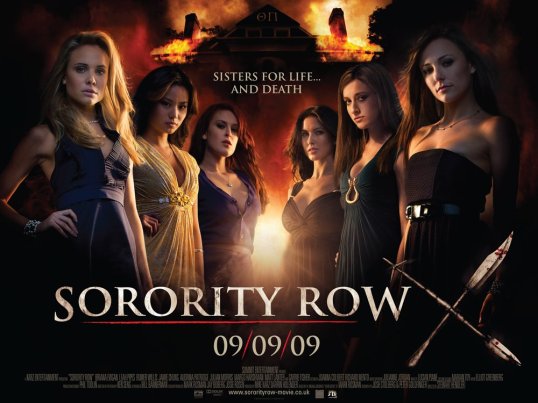
Horror can make a political statement, it can make you reflect on your status in society, or it can just entertain.  The first two types are good, but it’s also nice to just have fun! “Sorority Row” written by Josh Stolberg & Peter Goldfinger and directed by Stewart Hendler is a 1990s throwback.  It had a real “I Know What You Did Last Summer” feel to it.  Honestly, the reviews are not fair to this film.  A lot of people want horror to be all things, but it’s supposed to be fun too.  So, just relax and have a good time.  Also, it doubled its money, which is what a movie is supposed to do- especially horror. It’s one of the few genres left that can produced by mere mortals.

What I liked mostly about the film was the writing.  It had a lot of great humor without it being campy. I’ve gotten to know Josh Stolberg on twitter the script has quite a bit of his personality: clever and quick-witted.  I especially enjoyed Jessica (Leah Pipes).  As a man who went a Greek dominated college, she was very realistic.  Her character and one-liners gave the story a mix of comic relief and reality.  I practiced Criminal Law for waaaaay too long and I can tell you that even honest people can turn to something wicked if they feel threatened.  People will invariably choose themselves over a possible life ending punishment.

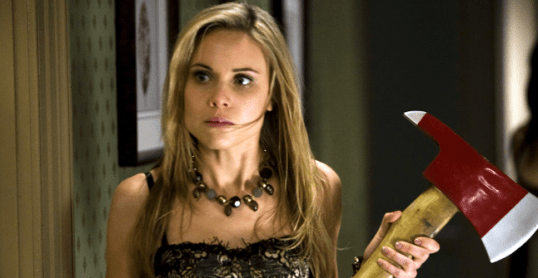
The plot is similar to the original House on Sorority Row: a prank run a muck.  The girls belong to Theta Pi and they to love to party, prank, and get murdered.  Garrett a brother of the Sister “Chuggs” cheated on Megan another Theta Pi, which is not okay! So, the sisters have her fake an overdose so that Garrett believes he killed Megan.  The sisters: Jessica, Ellie, Cassidy, Claire, Megan, and Chugs are all in on the prank are a little too convincing because they make Garrett believe that they need to hide Megan’s body in a mine shaft or their lives will be ruined.  The sisters say they have to get rid of the air in Megan’s lungs or she’ll float back up. So, Garrett takes the initiative as a true go-getter and uses a tire iron to stab Megan to death.  Jessica decides very quickly that they need to hide Megan’s body for real.  When Cassidy refuses to participate, they wrap the corpse in Cassidy’s coat and throw it down the mine shaft.  Jessica really thinks fast on her feet.

I don’t know about you, but I think Jessica would be good marriage material. Hear me out: she’s determined, quick-thinking, has a college degree, and is ruthless to protect her goals.  Also, Cassidy tried to be all above it, but as Jessica said- “you could’ve called the police, but you didn’t!”  Agreed.  You don’t get to benefit from something wicked and then look down on everyone else.  Jessica made her choice and stuck to it.  She made a good point as to protecting everyone’s future and ran with it.  Cassidy kept Hamletting over her bad choices.  Do it or Don’t.  Jessica, don’t listen to the haters.

All seems fine a year later.  They’ve all moved on except for Garrett who has become a wreck over his humiliation and accidental murdering.   Then, they all receive a threatening group text on their very old timey looking phones- 2009 was just ten years ago and these phones look like museum pieces.  Sorority-Row-Megan-s-HERO-Cell-Phone-1.jpg

This technology allowed for some extra suspense because reception and tech wasn’t that great then; therefore, the characters can be cutoff from help.  I really think horror shouldn’t be set any time after 2009 because it’s just too easy to get help now.  This lack of tech added a nice layer of suspense.  The text sender stalks and murders them one by one.

The kills were pretty clever: an electrocution, death by chardonnay, tire iron throwing, and a good ol’ fashioned stabbing or three.  It also had a fun twist at the end like the 1990s horror films of my youth.   I recommend this film.  Read my past reviews- I don’t just recommend anything.  I’m an iconoclast and can tell you that this was a lot of fun. Happy Horrorthon!

sorority-row2.png

Trailer – Birds of Prey


Whenever I hear the name “Birds of Prey”, I think of the old CW show with Dina Meyer, Ashley Scott and Rachel Skarsten. Thankfully, WB has seen fit to upgrade all of that. It also changes the story somewhat, as the original Birds of Prey focused on Oracle (a.k.a. Batgirl / Barbara Gordon), The Huntress, and Dinah Lance. I’ll admit that I’m a bit excited for this, as Margot Robbie really was one of the best parts of 2016’s Suicide Squad and this film features Cassandra Cain, one of the more deadly versions of Batgirl in recent DC History. It even has the hyenas from Batman: The Animated Series.

Having broken up with the Joker, Harley is ready to strike out on her own, teaming up with The Huntress and Black Canary to save a child (mostly likely Cassandra).. On board are Mary Elizabeth Winstead (Fargo) as The Huntress, Ewan McGregor (also Fargo) as Black Mask, Jurnee Smolett-Bell (True Blood) as Black CanaryAdditionally, Ella Jay Bosco, Rosie Perez, & Chris Messina are featured.

Christina Hodson wrote the script. Having previously worked on Bumblebee, that definitely should work out well.  Cathy Yan (Dead Pigs) is handling the directing duties.

Birds of Prey: And the Emancipation of One Harley Quinn is set take on Gotham in February 2020.

When It Comes To Halloween, Should You Trust The IMDb?


Dr. Sam Loomis

Like a lot of people, I enjoy browsing the trivia sections of the IMDb.  While it’s true that a lot of the items are stuff like, “This movie features two people who appeared on a television series set in the Star Trek Universe!,” you still occasionally came across an interesting fact or two.

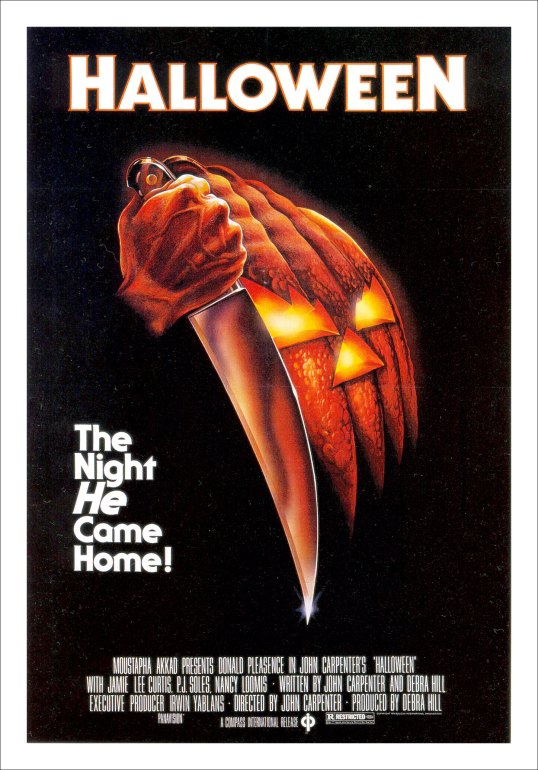
Of course, sometimes, you just come across something that makes so little sense that you can only assume that it was posted as a joke.  For instance, I was reading the IMDb’s trivia for the original 1978 Halloween and I came across this:

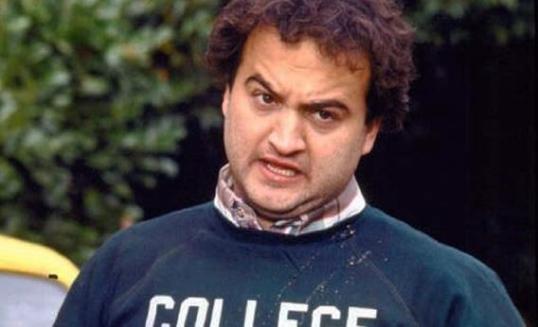
Peter O’Toole, Mel Brooks, Steven Hill, Walter Matthau, Jerry Van Dyke, Lawrence Tierney, Kirk Douglas, John Belushi, Lloyd Bridges, Abe Vigoda, Kris Kristofferson, Sterling Hayden, David Carradine, Dennis Hopper, Charles Napier, Yul Brynner and Edward Bunker were considered for the role of Dr. Sam Loomis.

Now, some of these names make sense.  Despite the fact that Sam Loomis became Donald Pleasence’s signature role, it is still possible to imagine other actors taking the role and perhaps bringing a less neurotic interpretation to the character.

Peter O’Toole as Dr. Loomis?  Okay, I can see that.

Kirk Douglas, Sterling Hayden, Charles Napier, Steve Hill, or Lloyd Bridges as Dr. Loomis?  Actually, I can imagine all of them grimacing through the role.

Walter Matthau?  Well, I guess if you wanted Dr. Loomis to be kind of schlubby….

Abe Vigoda?  Uhmmm, okay.

Dennis Hopper?  That would be interesting.

Mel Brooks?  What?  Wait….

John Belushi?  Okay, stop it!
Dr. Sam Loomis

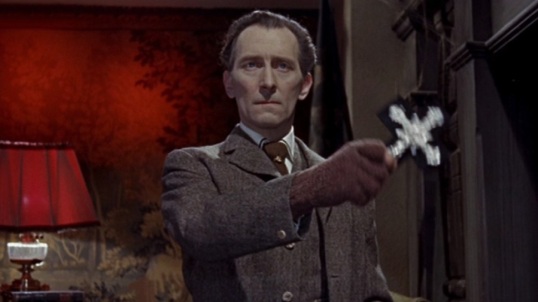
My point is that I doubt any of these people were considered for the role of Dr. Loomis.  Both director John Carpenter and producer Debra Hill have said that they wanted to cast an English horror actor in the role, as a bit of an homage to the Hammer films of the 60s.  Christopher Lee was offered the role but turned it down, saying that he didn’t care for the script or the low salary.  (Lee later said this was one of the biggest mistakes of his career.)  Peter Cushing’s agent turned down the role, again because of the money.  It’s not clear whether Cushing himself ever saw the script.

To be honest, I could easily Peter Cushing in the role and I could see him making a brilliant Dr. Loomis.  But, ultimately, Donald Pleasence was the perfect (if not the first) choice for the role.  Of course, Pleasence nearly turned down the role as well.  Apparently, it was his daughter, Angela, who changed his mind.  She was an admirer of John Carpenter’s previous film, Assault on Precint 13.  Carpenter has said that he was originally intimidated by Donald Pleasence (the man had played Blofeld, after all) but that Pleasence turned out to be a professional and a gentleman.
Laurie Strode

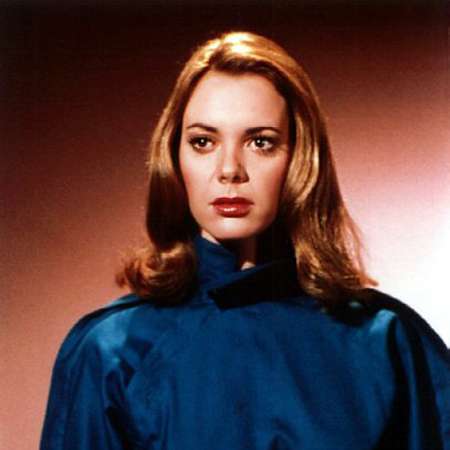
Of course, Halloween is best known for being the first starring role of Jamie Lee Curtis.  Curtis was actually not Carpenter’s first choice for the role of Laurie Strode.  His first choice was an actress named Annie Lockhart, who was the daughter of June Lockhart.  Carpenter changed his mind when he learned that Jamie was the daughter of Janet Leigh.  Like any great showman, Carpenter understood the importance of publicity and he knew nothing would bring his horror movie more publicity then casting the daughter of the woman whose onscreen death in Psycho left moviegoers nervous about taking a shower.

There was also another future big name who came close to appearing in Halloween.  At the time that she was cast as Lynda, P.J. Soles was dating an up-and-coming actor from Texas named Dennis Quaid.  Quaid was offered the role of Lynda’s doomed boyfriend, Bob but he was already committed to another film.

Not considered for a role was Robert Englund, though the future Freddy Krueger still spent some time on set.  He was hired by Carpenter to help spread around the leaves that would make it appear as if his film was taking place in the October, even though it was filmed in May.
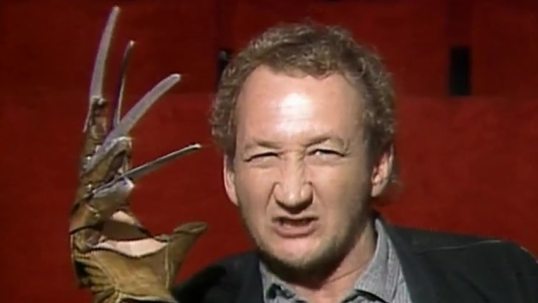
Robert Englund, making May look like October

Interestingly enough, Englund nearly wasn’t need for that job because Halloween was not originally envisioned as taking place on Halloween or any other specific holiday.  When producer Irwin Yablans and financier Moustapha Akkad originally approached Carpenter and Hill to make a movie for them about a psycho stalking three babysitters, they didn’t care when the film was set.  It was only after Carpenter and Hill wrote a script called The Babysitter Muders that it occurred to Yablans that setting the film during Halloween would be good from a marketing standpoint.  Plus Halloween made for a better title than The Babysitter Murders.

And, of course, the rest is history.  Carpenter’s film came to define Halloween and it still remains the standard by which every subsequent slasher movie has been judged.  Would that have happened if the film had been known as The Babysitter Murders and had starred John Belushi?

Sadly, we may never know.
4 Shots From 4 Films: Count Yorga Vampire, The Dunwich Horror, House of Dark Shadows, I Drink Your Blood


4 Shots From 4 Films is just what it says it is, 4 shots from 4 of our favorite films. As opposed to the reviews and recaps that we usually post, 4 Shots From 4 Films lets the visuals do the talking!

This October, we’re using 4 Shots From 4 Films to look at some of the best years that horror has to offer!

4 Shots From 4 1970 Horror Films

Count Yorga, Vampire (1970, dir by Bob Kelijan)

The Dunwich Horror (1970, dir by Daniel Haller)

House of Dark Shadows (1970, dir by Dan Curtis)

I Drink Your Blood (1970, dir by David Durston)

Get Ready For Halloween With These Vintage Universal Horror Posters!


It’s October and, just in case you need some help getting into the Halloween spirit, here’s some classic vintage horror movie posters!  All of the posters below are from the 1930s and were commissioned by the Universal Pictures art department.  Universal was Hollywood’s top studio for horror in the 30s and their posters helped to make stars of everyone form Bela Lugosi to Boris Karloff to Lon Chaney, Jr.

Let’s get in the mood for horror with the help of Universal Pictures:

Dracula (1931)

Frankenstein (1931)

The Murders in The Rue Morgue (1932)

The Old Dark House (1932)

The Mummy (1932)

The Invisible Man (1933)

The Black Cat (1934)

The Bride of Frankenstein (1935)

Night Key (1937)

Horror Film Review: It Stains The Sands Red (dir by Colin Minihan)


So, imagine this scenario.

The world’s ending, again.  The city that you once called home — in this case, Las Vegas — is on fire.  Hordes of zombies are attacking the living and it seems like even the people who have, up until now, survived the undead have still allowed their worst instincts to take over.  The military is opening fire on anyone that they come across and scavengers, both living and not, are all over the place.

Your boyfriend, Nick, has a way to escape.  His lowlife buddies have a plane ready to go.  They’re just waiting for him to show up, mostly because he’s bringing the drugs.  His friends, of course, could hardly care less about you but, as long as you show up with Nick, you know that you’ll be able to escape with them.  Unfortunately, Nick is now dead.  His throat was ripped open by a zombie.

So, now, you’re walking across the Nevada desert and you’re just trying to make it to the airfield without getting killed.  It’s over a 100 degrees out.  You’re not sure where you’re going.  You’re not dressed for a desert journey.  You’re haunted by memories of your son.  Though you’re smarter than people give you credit for being, you have no desert survival skills.  Meanwhile, the same zombie that killed Nick is staggering along behind you, hoping to get a chance to do the same to you.

And, just in case this week wasn’t bad enough, you’re also on your period and you have exactly one tampon.

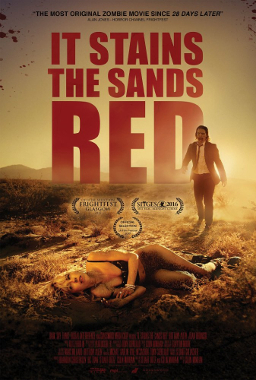
That’s the situation in which Molly (played by Brittany Allen) finds herself in the 2017 zombie film, It Stains The Sands Red.  As Molly makes her way through the desert, she finds herself becoming cautiously attached to the zombie pursuing her, a zombie that she nicknames Smalls (and who is played by Juan Reidinger).  It makes sense, really.  For most (though not all) of the movie, Smalls is the only other creature around.  Who else is Molly going to talk to?  It also helps that, being a walking corpse, Smalls can’t interrupt her while she’s speaking or dismiss her concerns out-of-hand.  When you compare him to the living people that Molly meets, a group that includes two redneck rapists and a few trigger-happy soldiers, it’s easy to view Smalls as being harmless.

Or, at least, it’s easy to view him that way until he gets too close and tries to bite off your finger.

I had mixed feelings about It Stains The Sands Red.  It’s an extremely uneven film, one that is sometimes quite clever and even empowering and sometimes rather forgettable.  Molly’s monologues bring a welcome feminist sensibility to the zombie genre and there’s a clever scene in which she uses a bloody tampon to distract her zombie stalker.  And yet, it’s indicative of both the film’s strengths and its weaknesses that the scene with the tampon is played as much for shock value than as an example of Molly’s resourcefulness.  The film is full of scenes in which we see that Molly has somehow managed to slow down or subdue Smalls but we’re always left wondering how she managed to get close enough to him without getting attacked.  Smalls’s effectiveness as a zombie seems to change from scene-to-scene, depending on the needs of the narrative.

And yet, there’s one thing that I greatly appreciated about It Stains The Sands Red and that was the character of Molly.  As soon as you see her snorting cocaine while wearing her leopard-print leggings, her pleather halter top, and her fake fur, you know that Molly is the type of character who usually dies within the first 15 minutes of a film like this.  Instead, Molly not only survives the first 15 minutes but she goes on to repeatedly show that she’s far more determined and intelligent than anyone in the viewing audience originally gave her credit for being.  She emerges as a compelling and determined survivor, one who refuses to surrender to either the desert or its predators.  Molly is the type of strong female character that horror fans like me have always wanted to see in a film like this.  She elevates It Stains The Sands Red above its flaws and makes the film worth watching.  In the role of Molly, Brittany Allen brings life to this film about the dead.


Into the Dark, “Down”, Dir. Daniel Stamm, Review By Case Wright


Down

Happy Horrorthon!!!!

Should some people embrace their creative mediocrity? YES! Yes, they should.  I don’t mean that what they write or direct is bad. It’s simply unoriginal, predictable, with characters who make obviously bad decisions REPEATEDLY, and still are amazingly fun! I never thought I’d get into Lifetime movies until Lisa got me into them. I discovered how fun Hallmark movies are these past few years.  Law & Order embraced its predictability so much that their main sponsor Listerine would break the show down in the Commercials: Body discovery, Wisecrack, Investigation and Arrest, Prosecution, and Verdict. Law & Order lasted 19 years.  Case, what’s your point?  My point is that mediocrity can be fun…a LOT of fun.

Hulu’s “Into the Dark” series is the fun trash that is great to watch and nothing more (accept for the episodes that are hamfisted, political, and preachy) ; it’s like the Jack in the Box Munchie Meals…yeah, they’ll give you a bit of diarrhea, but come on, sometimes you just gotta have a Sriracha Curly Fry Burger.  That’s just science!

“Down” is awesomely bad.  The actors mug, the character decisions are stupid, and it’s great for the elliptical or exercise bike and probably safer to watch as you’re burning those last Lbs.  The plot is simple and doesn’t try to go into a supernatural direction. It’s fun because it never tries.  Jennifer Robbins ( Natalie Martinez) is trapped in an elevator on a holiday weekend with Guy (Matt Luria), BUT is Guy hiding something sinister? Yes…yes, he is and you can tell because he mugs A LOT!

If Lifetime went down the horror route, this would be the premiere.  Guy is in fact Jennifer’s stalker and manipulates her into having sex like the Lifetime movies with the Single Moms and the Predator Next Door.  Lifetime movies are better than “Down” because with Lifetime movies once the heroine realizes she has to fight; it’s to the death.  Here, when Jennifer realizes Guy is a Psycho Killer she doesn’t Run….Run…Away.  In fact, he tries to kill her a lot and then she gets the upper hand, but does she finish him off? Nooooope.  She fails to deliver the Coup de Gras not once, not twice…no, we’re talking six times here when she could’ve finished the movie and literally had a smoke after the 45 minute mark, but 45 minutes of filler was fine for my physical therapy time.

I know that this reads harsh, but these movies have their place; they’re fun.  If the pacing and plot points matched with a Lifetime MOW, it would’ve been that much better, but you can’t have everything, nor should you! Will I review a bunch more of these Into the Dark quasi-episodes? YES, Yes I will!

Happy Horrorthon!