Let’s Talk About Deep Blue Sea 2 (dir by Darin Scott)


So, today was the first day of SyFy’s final Sharknado week.  Leading up to next Sunday’s premiere of The Last Sharknado, SyFy is not only going to be rebroadcasting some of their classic shark films but they’re also going to be premiering a new film every night of the week.

(I’m in Killer Shark Heaven!  Yes, the real one…)

They got things started tonight with Deep Blue Sea 2.

Now, before anything else, I should clarify that Deep Blue Sea 2 made its television premiere tonight but the movie itself has actually been out for a while.  As opposed to the Sharknado films, Deep Blue Sea 2 was not specifically produced for or by the SyFy Network.  Instead, the production honors go to Warner Bros, the same company that distributed the first Deep Blue Sea.  Way back in April, Deep Blue Sea 2 was released on Blu-ray, DVD, Digital HD, and VOD and it actually did quite well for a straight-to-video release.  There were enough fans of the original film that the sequel was able to rank in the top 10 of VOD releases for two straight weeks.

So, Deep Blue Sea 2 was not produced by the Asylum.  Perhaps it would have been better if it had been.

Deep Blue Sea 2 retells the basic story of Deep Blue Sea, just on a much smaller level.  Whereas Deep Blue Sea featured an army of big, scary sharks, the sequel features one really big shark and a bunch of baby sharks, all of which are cute but deadly.  Whereas the first film was distinguished by detailed set design that gave the underwater laboratory a lived-in feel, the sequel features a lab that is frequently so dark and underlit that I often had a hard time distinguishing one actor from another.  Whereas the first film features recognizable actors like Samuel L. Jackson and Stellan Skarsgard getting eaten by sharks, the sequel features a cast that, with the exception of Michael Beach, is largely unknown.

And while the entire cast is undeniably talented and does the best that they can with what they’ve been given to work with, everyone in the film is playing a type.  Michael Beach is Durant, the pharmaceutical billionaire who, despite what happened in the first film, is breeding super intelligent sharks and drinking their blood.  (You read that right.)  Danielle Savre is Misty Calhoun, the shark conservationist who thinks that mankind is to blame for all the troubles in the world.  Rob Mayes is Trent Slater, the Navy SEAL who knows how to fight sharks.  Nathan Lynn is Aaron, the nerdy virgin computer guy.  Kim Syster and Jeremy Jess Boado are the obviously doomed married couple.  Darron Myer is the guy who you know is going to die as soon as you notice that he doesn’t take off his tie, even when he’s in an underwater lab.  And then you have Cameron Robertson as the guy who sticks his arm down a shark’s throat and Adrian Collins as the diver who thinks it’s a good idea to taunt sharks that can literally jump out of the water and bite your head off.

Of course, as soon as everyone’s in the lab, the super smart sharks rebel and the majority of the cast ends up getting eaten.  There’s no big shock there.  Some of the gore effects are well-done.  Faces are ripped off with panache and one unfortunate victim falls apart as soon as he’s pulled out of the water.  Michael Beach has a lot of fun with the role of the ranting Durant and it was impossible not to smile whenever he would smirk off Misty’s outrage.  For the most part, though, Deep Blue Sea 2 moved too slowly and didn’t feature enough shark action.  That said, I think this is the first shark film that I’ve ever seen in which the sharks actually growl at people and that’s got to be worth something.

Film Review: Deep Blue Sea (1999, dir by Renny Harlin)


Since I’m going to be watching Deep Blue Sea 2 on the SyFy network later tonight, I figured that I should rewatch the first Deep Blue Sea beforehand.

This 1999 shark attack film takes place on a laboratory that’s floating out in the middle of the ocean.  It’s the weekend so the majority of the people who work at the lab are gone.  Only a skeleton crew, made up of recognizable actors, remains.  There’s Susan McAlester (Saffron Burrows) and Jim Whitlock (Stellan Skarsgard), two brilliant scientists.  (Susan is passionate and committed.  Jim is drunk and cynical.)  There’s a marine biologist named Jan (Jacqueline McKenzie), who is such a positive presence that, from the minute she first shows up, you know that there’s no way she’s going to be alive at the end of the movie.  Tom (Michael Rapaport) is an engineer.  Brenda (Aida Turturro) is in charge of communicating with the outside world.  Preacher (LL Cool J) is a chef who acts a lot like LL Cool J.  And then there’s Carter Blake (Thomas Jane), the shark wrangler with a past.  Carter is obviously going to be our hero because, with a name like Carter Blake, there’s no way that he couldn’t be.

Finally, there’s Russell Franklin (Samuel L. Jackson).  Russell is the businessman who has been funding all of the research at the lab.  Even though he doesn’t quite understand what Susan and Jim are doing, he’s been very generous.  However, after a shark escapes and nearly eats four generic teens, Russell decides that he better find out what exactly is being done with his money.

Jim and Susan are trying to develop a cure for Alzheimer’s.  Susan says that, if their experiments are successful, one pill will be able to reverse the disease.  They’ve been running tests on sharks and … well, let’s just say that Susan and Jim haven’t exactly been honest or ethical about their experiments.  (Movie scientists always cut corners, don’t they?)  Basically, they’ve been genetically engineering the sharks to increase the size of their brain.

The end result?

SUPER SHARKS!

To paraphrase the film’s poster, these sharks are big, fast, smart, and mean!  And needless to say, they’re sick of being held captive.  Soon, the lab is besieged by angry sharks and no one is safe!

That includes Samuel L. Jackson.  Deep Blue Sea is best known for the scene where Samuel L. Jackson gives a rousing speech, in which he exhorts everyone to keep fighting and not give up, right before a shark jumps out of the water and eats him.  It’s a great scene, one that makes brilliant use of Samuel L. Jackson.  I mean, let’s be honest.  You don’t expect Samuel L. Jackson to get eaten by a shark and, as soon as he’s gone, you look at the survivors and you think to yourself, “So, now you’re depending on LL Cool J and Thomas Jane to save you?  Y’all are so screwed…”

And yet, it’s also significant that the only scene from Deep Blue Sea that people really remember is that shark eating Samuel L. Jackson.  With the exception of the one moment, Deep Blue Sea is an incredibly predictable movie.  From the minute you see that Jim is played by Stellan Skarsgard, you know that he’s doing something wrong with the sharks.  The dialogue is often cringe-worthy and the characters are all thinly drawn.  The sharks are occasionally impressive but the movie doesn’t really do enough with the idea of them of being super smart.  Was I hoping for scenes of the sharks talking to each other?  I guess I was.

That said, as I watched Deep Blue Sea, I was surprised to discover that I had forgotten just how likable and efficient the movie was.  Director Renny Harlin doesn’t waste any time trying to convince us that we’re watching anything more than just a slightly silly shark movie.  Wisely, Harlin unapologetically embraces Deep Blue Sea’s B-movie roots and, with the help of a game cast, the end result is a film that is enjoyably unpretentious and straight forward.  Samuel L. Jackson was not devoured in vain.

Weekly Reading Round-Up : 08/05/2018 – 08/11/2018


Ryan C. (fourcolorapocalypse)'s avatarRyan C.'s Four Color Apocalypse

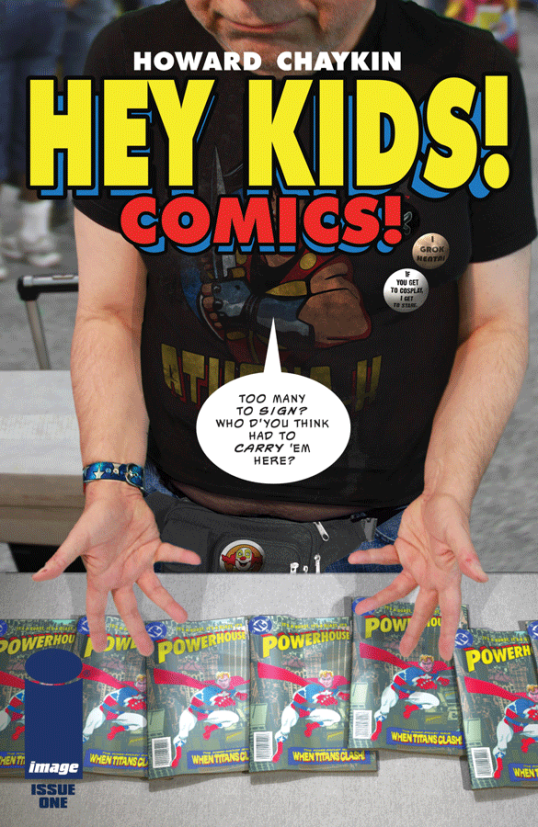
Our foray into the wonders of Elijah Brubaker’s Reich these past few weeks has put paid to the idea that these Weekly Reading Round-Ups are all about looking at new stuff that was actually released during the seven-day span in question, but I don’t think we missed much. We would, however, be missing out on a smattering of noteworthy first issues this time out if we set our view-finders backwards, so let’s not do that this time, shall we? Stuff worth talking about new on comic book shelves this past Wednesday, then, listed in order of how well I liked ’em —

Who better than a delightfully cantankerous old man to weave a tale of the decidedly un-delightful, but definitely cantankerous, old men, as well as the constantly put-upon young men whose labors they exploited, that built this benighted comic book industry we all know, love, and loathe…

View original post 1,162 more words

Music Video of the Day: Drive My Car by Breakfast Club (1988, directed by Bill Fishman)


When I was doing my research for today’s music video of the day, I was sorry to discover that the 80s pop group Breakfast Club was not named after the famous John Hughes film.

Instead, they were formed in New York City in 1979 and they went through several different lineups before they signed with ZE Records.  At one time, a young Madonna was their dummer but she left the band long before they released their first (and only) album in 1987.

Breakfast Club’s biggest hit was Drive My Car, a cover of a song that had previously been made famous by The Beatles.  The cover appeared on the soundtrack of License to Drive, which is actually one of the better films to co-star Corey Haim and Corey Feldman.  It’s no Lost Boys but it is better than Dream A Little Dream and Heather Graham’s in it.

The video is the usual combination of clips from the film and scenes of the band acting crazy.  Since they were already covering a Beatles song, it made sense to go ahead and put Breakfast Club in a 1980s version of Hard Day’s Night and have them spend most of the video trying to escape their obsessed fans.  While the Beatles had to outrun their fans, Breakfast Club was lucky enough to own an invisible car.  I don’t know who edited it but this video does do a good job of integrating the scenes of the band with the clips from the film.

Things worked out better in the video than they did in real life.  Breakfast Club split up shortly after the release of License to Drive.

Pre Code Confidential #22: GABRIEL OVER THE WHITE HOUSE (MGM 1933)


gary loggins's avatarcracked rear viewer

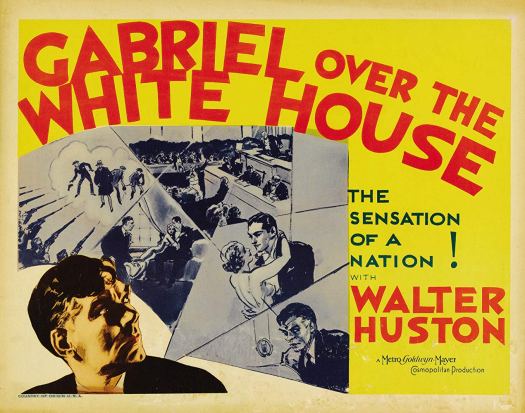
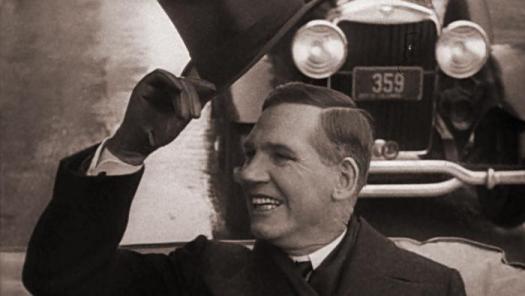
One of the most bizarre films of any era is GABRIEL OVER THE WHITE HOUSE, a political fantasy extolling the joys of a totalitarian dictatorship in America! Produced by the independent Walter Wanger , a staunch anti-Fascist(1) , and financed by William Randolph Hearst, the left-leaning newspaper magnate(2) who served as the inspiration for CITIZEN KANE, the film shows what would happen if all the political power in Washington were consolidated in one man – and shows it to be a good thing!

Newsreel footage is interspersed with the inauguration of President Judson Hammond (Walter Huston ), newly elected at the height of the Depression. Hammond is a typically phony, glad-handing politician, more concerned in towing the party line and maintaining the status quo than helping the people that elected him. Though he promises peace and prosperity, Hammond tells the press he regards the problems of unemployment, homelessness, and rampant crime…

View original post 835 more words

Music Video of the Day: Sweet Emotion by Aerosmith (1991, directed by Marty Callner)


Remember the old chat lines?

I don’t know if they’re even still around but back in the late 80s and the 90s, they were the only thing advertised on TV after midnight.  All you had to do was dial the number and then, for only three dollars a minute, you could get a custom psychic reading or hear Ice Cube’s thought of the day.

The most popular chat lines were the ones that were advertised as being used by “hot singles waiting to talk to you!”  The commercials all featured insanely hot girls in their underwear, usually lying in bed with a landline phone.  Common sense should have told everyone that anyone that hot wasn’t sitting at home on Friday night, waiting to hear from some teenager in Canton.  Still, 1-800 numbers were a big business back in the day.  They were the original chat rooms.

They weren’t cheap, either.  “3.99 for the first minute, 0.99 for each additional minute.”  Those minutes added up fast, especially when the operators had been trained to draw things out.  For some people, it was worth it for the chance to fantasize about the voice at the other end of the line.

The video for Aerosmith’s Sweet Emotion centers around that fantasy.  On one end, the teenager from Canton who says he’s an entertainment lawyer.  On the other end, his fantasy.  In the middle of it all is Aerosmith, performing at an old warehouse in the Charleston Navy Yards.

Sweet Emotion is one of Aerosmith’s most enduring songs.  Some fans think that the song was inspired by the band’s mutual dislike of Joe Perry’s then-wife but Steve Tyler has said that it was actually inspired by a feud between the wives of both Perry and bassist Tom Hamilton.  The song was a big hit when it was originally released in 1975 and then it was an even bigger hit when it was re-released in 1991.

Confessions of a TV Addict #9: The Amazing Sci-Fi Worlds of Irwin Allen Pt. 2


gary loggins's avatarcracked rear viewer

Last week, I did an overview of producer Irwin Allen’s first two sci-fi shows, VOYAGE TO THE BOTTOM OF THE SEA and LOST IN SPACE. Today, Allen’s final shows in the quartet, THE TIME TUNNEL and LAND OF THE GIANTS! 

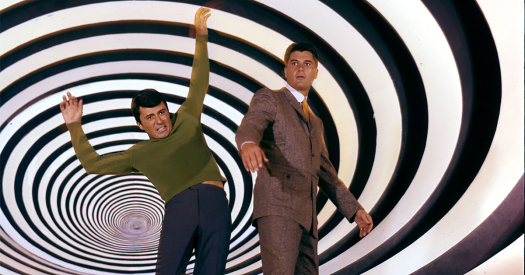
Where Allen’s LOST IN SPACE was juvenile fantasy, his next series THE TIME TUNNEL (ABC, 1966-67) took a more serious tone. Scientists Dr. Doug Phillips (Robert Colbert ) and Dr. Tony Newman (James Darren), working on the top-secret government Project Tic-Toc, become “lost in the swirling maze of past and future ages… (and) tumble helplessly toward a new fantastic adventure, somewhere along the infinite corridors of time” (at least according to the opening narration!). Project director Lt. Gen. Kirk (Whit Bissell ), ‘electrobiologist’ Dr. Ann McGregor (Lee Meriwether), and electronic genius Dr. Raymond Swain (John Zaremba) track the pair through those “infinite corridors” and try to assist in navigating them…

View original post 696 more words