“I am the future!” Peter Stegman (Timothy Van Patten) announced in the 1982 film, Class of 1984, and, in many ways, he was correct. Though it’s easy to be snarky about the fashion choices made by Stegman’s gang, Class of 1984‘s portrait of a school where teachers have taken to carrying guns to protect themselves is still relevant today.
One thing that set Class of 1984 apart from other exploitation films was that it acknowledged something that most people aren’t willing to admit. Sometimes, the worst people can create the most beautiful music. This is a point that was made quite literally in the scene below.
As the scene begins, the new music teacher — Andy Norman (Perry King) — is just trying to start his class when suddenly Stegman and his gang decide to drop in. At first, Andy tells them to go away but then, suddenly, Stegman sits down at a piano and starts to play.
Timothy Van Patten, who would later go on to become an award-winning television director, reportedly actually played every note heard in this scene. For a few brief seconds, Peter Stegman is revealed to be something more than just another high school psycho. When Stegman sits in front of that piano, he becomes an artist and, throughout the film, both Andy Norman and the audience occasionally wonder who Peter Stegman could have been under different circumstances.
Of course, ultimately, it doesn’t matter. Peter Stegman could have been a concert pianist but instead, he went down a different path. Over the course of the film, Stegman is responsible for not only Michael J. Fox getting stabbed but Roddy McDowall getting blown up. When Andy makes one final attempt to reach out to him, Stegman tries to cut his hand off. Now wonder Andy eventually allowed Stegman to plunge through that skylight.
But even as Stegman falls to his death and discovers that he’s not the future, it’s hard not to think about that beautiful piece of music that he played just a few days earlier and wonder about what could have been.
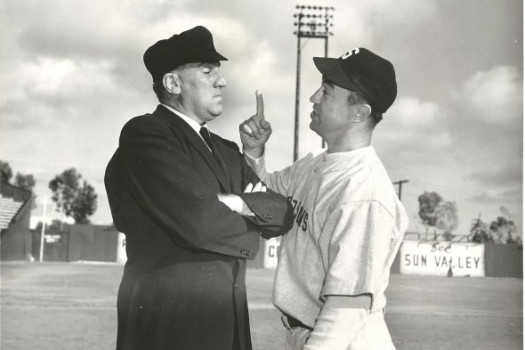
Ahh, spring is in the air, that magical time of year, when a young man’s fancy turns to thoughts of… baseball!! That’s right, Dear Readers, Opening Day is upon us once again, and what better way to celebrate the return of America’s National Pastime than taking a look back at KILL THE UMPIRE, a 1950 comedy conceived in the warped mind of former animator Frank Tashlin and directed by ex-Warners vet Lloyd Bacon.
Big lug William Bendix stars as Bill Johnson, an ex-major leaguer whose passion for the game keeps him from holding a regular job because he keeps playing hooky to go to the ballpark. Bill hates only one thing more than missing a game – umpires! But when his exasperated wife threatens to leave him, his ex-ump father-in-law suggests he go to umpire school to save his marriage. Bill balks at first, but then reluctantly agrees, not wishing…
Today is the day that I look forward to every year. It’s the opening day of the 2018 MLB season! For nearly 150 years, baseball has been America’s pastime. Long before Andre Beltre and Mike Trout thrilled baseball fans with every swing of the bat, there were players like Hardy Richardson.
From 1875 until he retired in 1892, Hardy Richardson was one of the best players in major league baseball. He played for 14 seasons and for 6 different teams. When he was playing for Detroit, he led the team to victory in the 1887 World Series. He played every single position and his stats would make any player proud. Richardson appeared in 1,331 major league games, compiled a .299 batting average and .435 slugging percentage, and totaled 1,120 runs scored, 1,688 hits, 303 doubles, 126 triples, 70 home runs, 822 RBIs, and 377 bases on balls.
Richardson was also one of the first players known to have appeared on a baseball card. In 1887, if you bought a pack of Old Judge cigarettes, you could also get a baseball card celebrating the career of Hardy Richardson.
Courtesy of the Library of Congress
It’s been over a hundred years since Hardy Richardson last swung a bat or stole a base but both his legacy and the legacy of everyone else who has ever played the game will continue today as the teams hit the field for the first time. Good luck to all the players on Opening Day!
I don’t really have much to say about this video, other than it’s Swedish House Mafia so I love it. If it makes you want to dance, then it’s done its job.
The 1987 film Gor opens with a nerdy college professor (played by Urbano Barberini, of Demons and Opera fame) giving perhaps the worst lecture in the history of underwhelming lectures. The professor explains that there is a counter-earth, a place that he claims is known as Gor. Gor shares the same orbit as Earth but it’s linearly opposed to Earth, which apparently makes it impossible to see. However, the professor says that his father gave him a ring which can transport the user to Gor. The only problem is that the professor has not figured out how to use the ring.
The students all look incredibly bored with the lecture and I don’t blame them. Not only does the professor seem to be rambling but he doesn’t even offer up any visual aides. He could have at least utilized a powerpoint presentation or something. Instead, his only teaching aide is a whiteboard on which he’s written “counter-earth.” I have to wonder what their final exam is going to look like. “True or false. Your professor is a freaking loon.”
(I found myself wondering what university would possibly grant tenure to some guy who thinks he owns a magic ring but then I remembered Evergreen College.)
The professor’s name is Tarl Cabot and I think that’s a good deal of his problem right there. When you give a child a name like Tarl Cabot, you’re pretty much guaranteeing that he’s going to grow up believing that he has a magic ring that’ll transport him to another planet.
Of course, in Tarl’s case, it turns out that the ring does just that. After his teaching assistant dumps him so that she can go on a date with another professor, Tarl crashes his car and when he wakes up, he finds himself on Gor. Apparently, the ring only works if you crash your car or something.
As for Gor itself, it turns out to be kind of a dump. It’s a huge desert. Seriously, check out this counter-earth:
If Tarl wanted to see a desert, he could have just driven around Southern California and saved himself a lot of trouble.
Yes, there is trouble in Gor. No sooner has Tarl arrived then he’s being attacked by a bunch of barbarians on horseback. The barbarians are led by the evil Sarm (played by Oliver Reed). Much as with the case of Tarl Cabot, I think that once you name a child Sarm, you’ve pretty much guaranteed the way that his life is going to turn out. Anyway, Tarl somehow survives being attacked by the barbarians. He even manages to kill Sarm’s son, which leads to Sarm declaring that he wants Tarl dead.
Fortunately, Tarl is eventually rescued by another group of barbarians. This group is led by Talena (Rebecca Ferratti) and she wants Tarl to help her rescue her father from Sarm’s fortress. But how can Tarl help when he’s literally useless? Don’t worry! The good barbarians are willing to train Tarl. One montage later, Tarl is now a master swordsman. Now, all Tarl has to do is dress like a barbarian and then track down a little person who can serve as a guide to Sarm’s fortress!
And what a fortress it is! Sarm may be evil but he likes to make sure that both his guests and his slaves have a good time. Sarm welcomes Tarl to the fortress and even tries to recruit him over to his side. (So apparently, Sarm’s over that whole “you killed my son” thing.) Sarm understands that the best way to recruit Tarl is with a dance number! As Sarm laughs lustfully, the slaves put on a show. It’s somewhat out-of-place but at least it distracts from the rest of the film.
Anyway, there’s a lot of problems with Gor but the main one is that the place itself just doesn’t seem like it’s worth all the trouble. After spending years trying to figure out how to get to the planet, Tarl arrives and discovers that it’s basically the same desert that was used in almost every post-apocalyptic film made in the 80s and 90s. (In fact, judging from John Carter, it’s still being used today.) What I always wonder about this type of movie is 1) why is the other planet always full of humans who speak perfect English and 2) why do all of these planets feature a society that resembles that ancient Roman Empire? Apparently, swords and arrows are literally universal weapons because they’re used on every planet in the universe.
When I first saw that this film starred Urbano Barberini, I assumed that it was going to turn out to be an Italian production. (In the late 80s, there were several Italian films that featured barbarians fighting in post-apocalyptic landscapes.) However, it turns out that Gor was a South African production, co-produced by the legendary Harry Alan Towers and directed by an American named Firtz Kiersch. (Kiersch also directed the first film version of Children of the Corn.) That said, the film itself is so ineptly dubbed and the production values are so low-budget that it would still be easy to mistake Gor for a film directed by Bruno Mattei or Claudio Fragasso.
Because he’s so badly dubbed, it’s difficult to really judge Barberini’s performance as Tarl Cabot. At the very least, he looks good with a sword in his hand and he’s cute — if never quite believable — when he plays Tarl as a neurotic physicist. However, Barberini can’t really compete with Oliver Reed, who devours every inch of scenery that he can find. Reed bellows and laughs and appears to be drunk in almost every scene in which he appears but at least he seems to be having a good time. Reed is also required to wear a silly helmet in most of his scenes and I sincerely hope that he got to take it home with him.
Oliver Reed isn’t the only familiar face to pop up in Gor. There’s also Jack Palance. Palance only shows up for about two minutes and he looks rather confused as he discusses his plan to conquer the world. (Apparently, Palance returned in Gor‘s sequel.) For two minutes of screen time, Palance managed to score himself third billing in the opening credits of Gor, above even Oliver Reed! Way to go, Jack!
Anyway, Gor is a pretty stupid movie. I appreciated the random dance number but otherwise, it’s fairly dull and only occasionally enlivened by Oliver Reed’s refusal to go gently into that dark night. I’m going to guess that films like this were popular with filmgoers who saw themselves as real-life Tarl Cabots and who spent their spare time thinking, “Nobody will laugh at me once they see me with a sword!” I caught the film yesterday on Comet TV, which is quickly becoming one of my favorite channels for watching bad movies.
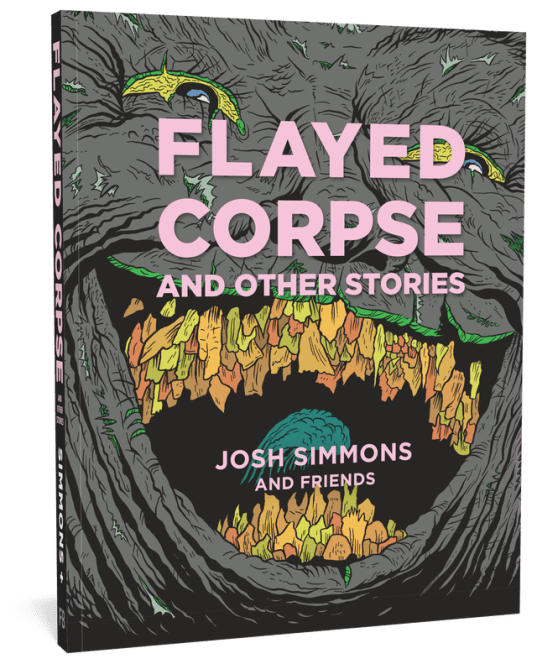
In most fields of entertainment and/or artistic expression (the two only seem mutually exclusive, they needn’t necessarily be), there is usually at least one generally-acknowledged “Master of Horror,” if not several : literature has Stephen King; cinema has John Carpenter remaining out of the one-time Carpenter/Craven/Romero “trinity,” with plenty of others ready and waiting to assume up the mantle; television has Robert Kirkman (hey, I didn’t say I liked all these folks); mainstream comics still clings to the acclaimed works of “British Invaders” Alan Moore, Neil Gaiman, and Jamie Delano, as well as to the legendary EC and Warren creators. Purportedly “alternative” or “independent” comics, though? Not so much.
Certainly the first wave of underground comix saw plenty of cartoonists who were very much at home delineating the horrific : Greg Irons, Jack Jackson, Spain Rodriguez, S. Clay Wilson and all produced memorable horror-themed works — heck, even a young…
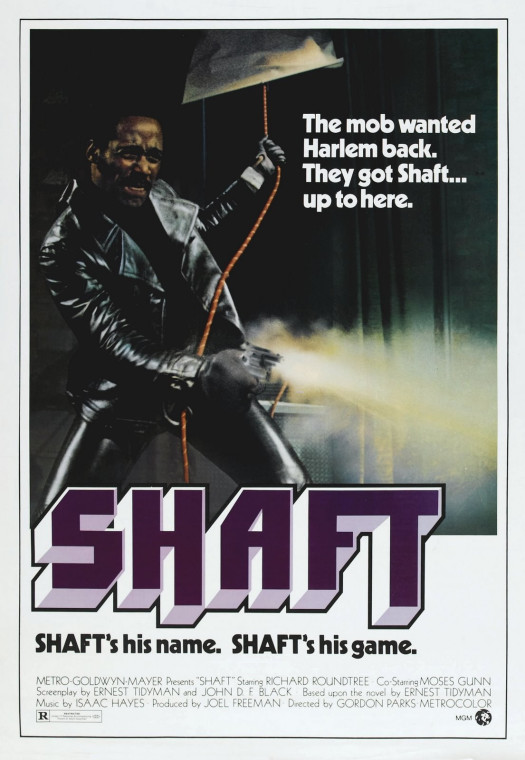
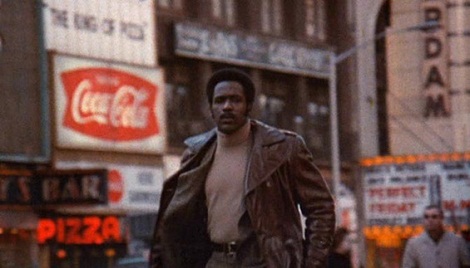
1971’s SHAFT, starring Richard Roundtree as “the black private dick that’s a sex machine to all the chicks”, is the movie that kicked off the whole 70’s Blaxploitation phenomenon. Sure, Mario Van Pebbles’ indie SWEET SWEETBACK’S BADASSSSS SONG was released three months earlier, but it’s X-rating kept younger audiences out of the theaters. SHAFT reached more people with it’s R rating, and the publicity machine of MGM behind it. In fact, John Shaft not only saved the day in the film, but helped save the financially strapped MGM from bankruptcy!
The opening sequence alone makes it worth watching, as the camera pans down the gritty mean streets of New York City (42nd Street, to be exact!) and that iconic funky theme song by Isaac…




 Through the Shattered Lens