Book Review: From Russia With Love by Ian Fleming


(MAJOR SPOILERS)

First published in 1957, the fifth James Bond novel was nearly the last.  Despite the success of the previous books, Ian Fleming was growing tired of the yearly obligation of coming up with a new adventure for James Bond.  His health failing and his marriage strained, Fleming wrote to his friend Raymond Chandler, “My muse is in a very bad way … I am getting fed up with Bond and it has been very difficult to make him go through his tawdry tricks.”

Perhaps that’s why From Russia With Love could have easily been retitled “The Death of James Bond.”

In fact, the promise of death hangs over every paragraph of From Russia With Love.  Bond doesn’t even make a personal appearance until halfway through the book.  Up until that point, we spend our time with the men and the women who are plotting his death.  The Russians not only want to kill Bond but they want to do so in a way that will embarrass the British secret service.  What better scheme than to use the naive Tatiana Romanova to entice Bond and get Bond to lower his guard long enough to be killed by their top assassin, the sociopathic Red Grant?

Indeed, From Russia With Love is unique among the Bond books in that the reader spends almost the entire book a few steps ahead of Bond.  While Bond thinks that he is helping Tatiana defect to the West, we’re aware that Red Grant is waiting just around the corner.  And while Bond is often unsure about whether Tatiana is really in love with him, we know that she is but we also know that the Russians consider her to be expendable.

Up until the final few chapters, Bond is almost as passive a character in From Russia With Love as he was in Casino Royale.  When he arrives in Turkey to investigate Tatiana, he spends most of his time being led around by the older Darko Kerim.  Much as in Casino Royale, Bond is a bit of a student, one who is briefly disturbed when Kerim ruthlessly assassinates an enemy agent.  Kerim is one of Fleming’s best creations, an outspoken spymaster who is so full of life that he often overshadows Bond.  It’s only when Kerim is dead that Bond can step up into his usual heroic role.

Throughout the book, Fleming appears to be fascinated by everyone but James Bond.  However, the change-of-pace actually works out surprisingly well.  Grant, Tatiana, Kerim, and the dangerous Major Rosa Klebb are such memorably drawn characters that it doesn’t matter that Bond spends most of the book in the background.  More than being a good Bond novel, it’s a genuinely exciting thriller.

And then there’s that ending.  After originally ending with Bond and Tatiana going off on a typical Bondian jaunt, Fleming revised the book’s conclusion.  Now, the book ended rather abruptly with Bond, having been poisoned by Major Klebb, crashing to the floor.  If you ignore the fact that you’re reading a James Bond novel then it’s obvious that the Russians have succeeded in assassinating MI6’s best agent.  That may have been Fleming’s intention but, of course, that’s not the way things turned out.  Instead, Bond would return a year later in Dr. No.

And why not?  From Russia With Love was the best Bond novel up to that point.  (I consider it to be the second best of Fleming’s Bond novels, behind On Her Majesty’s Secret Service.)    Fleming may have been growing bored with Bond but readers?  They loved him.

Up next: Bond gets strange with Dr. No!

Music Video of the Day: Think of England by Bear’s Den (2015, dir by Gareth Phillips)


Apparently, “think of England” is the advice that was once given to British wives who no longer enjoyed having sex with their husband, that one should simply lie back and “think of England.”  Apparently, thinking of France would lead to divorce.

Yeah, this isn’t a particularly happy song.  But it sounds nice and I enjoy the bleakness of the video’s black-and-white cinematography.

Enjoy!

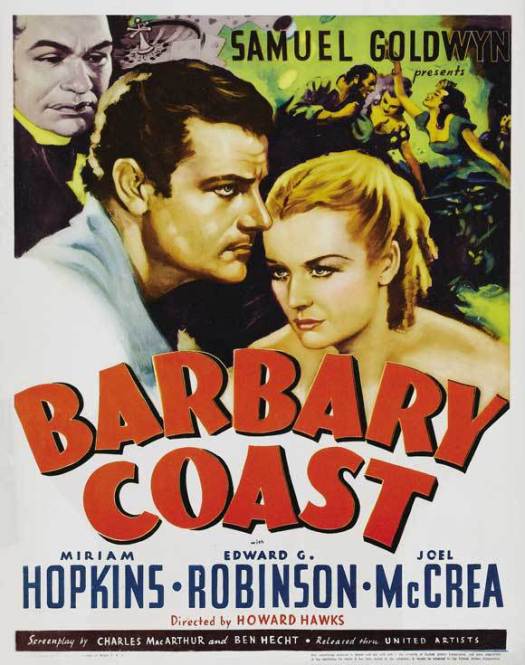
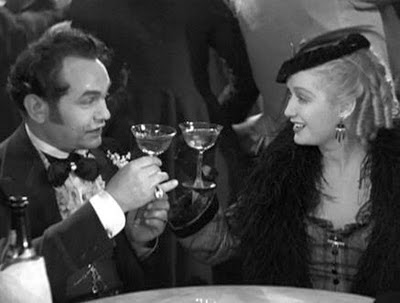
Fool’s Gold: BARBARY COAST (United Artists 1935)


gary loggins's avatarcracked rear viewer

BARBARY COAST probably would’ve been better had it been made during the Pre-Code era. Don’t misunderstand; I liked the film. It’s an entertaining period piece directed by Howard Hawks , with his trademark overlapping dialog and perfect eye for composition, rivaled by only a handful (Ford and Hitchcock spring immediately to mind). But for me, this tale of rowdy San Francisco during California’s Gold Rush was too sanitized by Hays Code enforcer Joseph Breen, who demanded major script changes by screenwriters Ben Hecht and Charles MacArthur.

The result is a film that’s just misses the classic status mark. It’s 1849, and Susan Rutledge arrives in Frisco to marry her rich boyfriend, who has struck it rich in the gold strike. When she finds out he’s been killed by gambling czar Luis Chandalis, owner of the Bella Donna saloon, avaricious Susan sets her sights on him. Chandalis becomes enamored of her…

View original post 495 more words

Film Review: Savage Beach (dir by Andy Sidaris)


1989’s Savage Beach is yet another Andy Sidaris film that doesn’t make a damn bit of sense.

This time, Donna (Dona Speir) and Taryn (Hope Marie Carlton) have been hired to perform a very important mission.  You may remember that Donna works for a super secret government agency while, at one point, Taryn was in the witness protection program.  As a part of their cover, they fly a plane in Hawaii, making deliveries and giving tours.

(To be honest, you would think that, after everything that happened in Hard Ticket To Hawaii and Picasso Trigger, their cover would have blown but apparently not.)

Anyway, this time, they’ve been hired to fly a very important vaccine to a nearby island.  They manage to deliver the vaccine but a huge storm has come up.  As soon as they get back in their plane and start back towards Hawaii, Donna says, “Shouldn’t we get out of these wet clothes?”  While usually I roll my eyes at all of the nudity in Sidaris’s films, I have to admit that line made me laugh out loud.  Maybe it was just the sincerity with which Dona Speir delivered it.  Or maybe it’s just the fact that Andy Sidaris actually sat down, thought up that line, wrote it down, and then directed someone saying it.  One thing that can definitely be said for Andy Sidaris: as a filmmaker, he was totally without shame.

Anyway, the storm gets really bad and Donna and Taryn end up crashing on what they think is a deserted island.  Neither of them appear to be too upset about being stranded on that island, perhaps because Savage Beach was filmed nearly two decade before Lost.  Make no doubt about it, Donna and Taryn are optimists!

It turns out that they’re not alone.  Apparently, there’s treasure buried on the island and, as a result, all sorts of people are showing up.  Most of them are villainous.  Some of them are heroic.  There’s even another Abilene cousin, Shane Abilene (Michael J. Shane).  Everyone wants that treasure.  Everyone except for … THE WARRIOR!

Who is the Warrior (Michael Mikasa)?  He was a soldier in the Japanese army during World War II.  Left behind on the island, he’s still fighting the war.  Or something.  Actually, it’s not always easy to understand what the Warrior or anyone else is doing on the island.  The Warrior does decide to protect Donna and Taryn and both of them try to keep his existence a secret from the rest of the people on the island but that doesn’t really work out.

Honestly, Savage Beach should not have been as complicated as it was.  It should have been a simple story where Donna and Taryn outwitted a bunch of pirates on a desert island.  Instead, more and more people just keep showing up on that beach.  Good luck trying to keep them all straight.

It’s probably unnecessary to say that Savage Beach was a mess.  I think “mess” is probably one of the words most commonly used in any review of an Andy Sidaris film.  However, like most Sidaris films, the whole thing is too good-natured to really dislike.  In fact, the plot is so incoherent that it actually becomes strangely fascinating.

Add to that, as a result of watching Savage Beach, I now know that you can safely undress and fly a plane at the same time.  If I ever get my pilot’s license, I’ll be sure to remember that!

Book Review: Diamonds Are Forever by Ian Fleming


(SPOILERS FOR BOTH DIAMONDS ARE FOREVER AND FROM RUSSIA WITH LOVE)

First published in 1956, Diamonds are Forever was the fourth of Ian Fleming’s original James Bond novels.

This time, Bond has been assigned to investigate international diamond smuggling.  After assuming the identity of a burglar named Peter Franks, Bond infiltrates a smuggler’s ring.  His investigation leads him back to the United States and into the untamed city of Las Vegas.

Diamonds are Forever is one of the weaker of Fleming’s Bond novels.  Reportedly, it didn’t take long for Fleming to grow weary of the demands of coming up with a new Bond novel every year and he even considered killing off the British secret agent all together.  As opposed to the first three books, the plot of Diamonds are Forever often feels rather hastily mashed together.  Worst of all, Diamonds are Forever features the least memorable villains of the series, the Spang Brothers.  The Spang Brothers are mobsters who talk like they’re in a bad crime movie and that’s about it.  Certainly, they never come across like a legitimate threat to James Bond.

Probably the best thing about Diamonds are Forever is Bond’s growing relationship with the tough and cynical smuggler, Tiffany Case.  More so than Vesper, Solitaire, and even Gala Brand, Tiffany seems like Bond’s equal and it’s no surprise when, at the end of the book, she and Bond end up moving in with each other.

(It’s also not a shock when, in the next novel, we learn that Tiffany soon left Bond for another man.  Tiffany’s not the type to get tied down.)

It’s also interesting to read Fleming’s thoughts on Las Vegas.  Remember how much Fleming hated on Florida in Live and Let Die?  That’s nothing compared to what he does to Las Vegas.  Reading his description of the famed gambling mecca, one gets the feeling that Fleming was both fascinated and disgusted by this quintessentially American city.

Finally, an entire chapter is devoted to Bond’s experience flying from the UK to the US.  That may seem like filler to modern audiences.  But you have to remember that Diamonds Are Forever was written at a time when commercial air travel was considered to be something of a luxury.  For many readers in 1956, reading that chapter was probably as close to flying as they’d ever get.

Diamonds are Forever may be one of the weaker Bond novels but it was followed by one of the best, From Russia With Love!

Music Video of the Day: MakeDamnSure by Taking Back Sunday (2006, dir by Marc Klasfeld)


I can never hear MakeDamnSure without thinking about the What’s It Feel Like To Be A Ghost episode of Degrassi.

That’s the episode where aspiring rock star Craig Manning (played by Jake Epstein) returns to Toronto after being on tour and we discover that he’s picked up a nasty cocaine habit.  Despite being coked out of his mind, Craig still gets a chance to perform during a Taking Back Sunday show.  However, no sooner does Craig get on stage and start to sing then he suddenly gets the worst nosebleed in the history of nosebleeds.

AGCK!

Needless to say, the members of Taking Back Sunday are not impressed.

Of course, before everything went so terribly wrong, Craig had bragged to Taking Back Sunday’s Adam Lazzara about how he performed a “stripped down, acoustic” version of MakeDamnSure in his set.  “I’d like to hear that,” Adam replied.

YOU BLEW IT, CRAIG!

Oh well.  Fear not.  By the time Craig returned for Degrassi Goes Hollywood, he was clean of the drugs and hopefully, he got back together with Ellie.

(Actually, as much as I love Ellie, Craig’s soulmate really was Ashley.  Ellie should never have let Sean break up with her…)

(Okay, sorry, I’m getting lost in a Degrassi tangent here…FOCUS, LISA, FOCUS!)

As for the video for MakeDamnSure, it features the band performing in a wind tunnel.  There’s a lot of scary and sad imagery but fear not, things work out for the best.  It turns out that some people do give a damn.

Enjoy!

Film Review: Picasso Trigger (dir by Andy Sidaris)


Just from hearing the plot description, you would probably think that Picasso Trigger is a fairly straight forward film.

Basically, Picasso Trigger (John Aprea) is an international criminal mastermind and a lover of the arts.  After he drops a painting of a Picasso Trigger (the fish, not the character) off at the Louvre,  he is promptly blown up by an assassin.  The assassin was sent by one of his rivals, the evil Miguel Ortiz (Robert Obergon).  So now, Picasso is dead and Ortiz is now even more powerful than he was before.

Make sense so far?

It turns out that Picasso Trigger was not the only person that Ortiz hates.  Ortiz also has a vendetta against the secret American law enforcement agency that Ortiz blames for the death of his brother.  So, Ortiz decides that the time is right to start assassinating all of the members of that agency.  The surviving members of the agency have to stop Ortiz before he kills them all.

That wasn’t hard to follow, right?

Now, just try watching the movie.

Seriously, even by the standards of Andy Sidaris, Picasso Trigger is a total mess.  It’s a follow-up to Malibu Express and Hard Ticket To Hawaii, which means that Dona Speir and Hope Marie Carlton are back and flying around Hawaii in their airplane.  There’s also two more Abilenes to deal with, L.G. Abilene (Guich Kook) and his nephew, Travis (Steve Bond).

For some reason, L.G. sends Travis on a mission to Dallas.  It has something to do with what’s going on with Picasso Trigger and Miguel Ortiz but I was never sure what.  But the important thing is that Picasso Trigger‘s Dallas scenes were actually shot in Dallas.  (I always like seeing my hometown in the movies.)  Once Travis arrives in Dallas, he meets another agent named Pantera (Roberta Vasquez).  Apparently, Travis and Pantera went to high school together.  The mission in Dallas leads to Travis stealing a boat.  I’m not sure why.

Anyway, eventually, we get back to Ortiz trying to kill agents and the question of whether Picasso Trigger was actually blown up or not.  To be honest, so many people get blown up over the course of the movie that I’m not surprised that even a super secret government agency had a hard time keeping up with who was still around.  It turns out that there’s a double agent within the agency.  Who could it be!?

One thing that about Picasso Trigger that made a huge impression on me was just how nonchalant everyone was about being targeted for assassination. No one seemed to be too upset about any of it.  Travis, for his part, just seemed to be hanging out.

The other interesting thing about Picasso Trigger is that it featured an explosive boomerang.  Here’s the thing, though,  What if you threw the boomerang and it missed its target?  Wouldn’t it come flying back and blow you up?  Seriously, I don’t think the government really thought that weapon through.

Anyway, Picasso Trigger is a total mess but it’s likable in its silly way.  The film doesn’t take itself seriously, which helps.  And hey, it’s a chance to see what Dallas looked like in 1988!

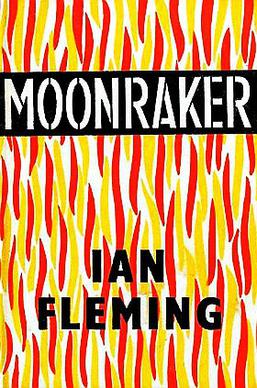
Book Review: Moonraker by Ian Fleming


First published in 1955, Moonraker was the third of the original James Bond novels and it was also the first of the series to be totally set in Great Britain.  At no point does Bond leave his home country.  In fact, he spends a great deal of the book in his office.  (If you’ve ever wondered what Bond’s job entails when he’s not on a mission, this is the book to check.)  That said, it’s appropriate that Moonraker remains in Bond’s home country because it starts with a very British problem.

Hugo Drax is the most popular man in Britain.  Drax was horribly disfigured during the Second World War but, despite all of the scars and a somewhat boorish manner, he has managed to make himself into one of the most important industrialists in the world.  Drax is building an immensely powerful nuclear missile, the Moonraker.  His missile will keep Britain safe from both the USSR and the USA.  At the start of the novel, even Bond admires Drax.  Except…

…DRAX CHEATS AT CARDS!

It turns out that M and Drax both play cards at the same club and M is sure that Drax must be cheating.  Why would such a powerful man feel the need to cheat?  Even more importantly, how can a man be trusted with Britain’s security when he can’t even be trusted to play bridge?  Both to prevent a public scandal and to make sure that Drax really can be trusted, M bring Bond to the club so that Bond can beat Drax at his own game.

One bridge game later and suddenly, Bond has been assigned to work at Drax’s laboratory.  Already on the case and working as Drax’s secretary is Special Branch officer Gala Brand.  Bond being Bond, he discovers that Drax is at the head of a nefarious scheme.  He also tries to figure out why Gala Brand is apparently the only woman in the world who is not won over by his manly charm…

Moonraker is one of my favorite Bond novels.  Drax is an interesting villain and Fleming makes a good decision by having Bond initially admire the man.  Fleming takes a lot of joy in describing both Drax’s bad manners and grotesque appearance.  Drax started a tradition of Bond having to face physically unappealing bad guys.  After playing a minor role in the first two books, M takes a more central role in Moonraker and we also get a chance to explore his paternal but strict relationship with 007.  Gala is one of the few of the so-called Bond girls to be portrayed as being an equal to Bond and the book’s final scene between her and Bond is considerably more poignant than it has any right to be.  Finally, Fleming’s love of Britain is evident on every page.  If Fleming spent Casino Royale and Live and Let Die being snarky about the places that Bond visited, Moonraker finds both the author and his most famous creation in a surprisingly sentimental mood.

Moonraker came close to being the first James Bond novel to make it to the big screen.  In 1955, American actor John Payne pursued the rights to the book, hoping to star as Bond in the film version.  However, it would be another 24 years before Moonraker was adapted to film.  Other than featuring Drax as a villain, the film version would have little do with the original novel.