Cleaning Out The DVR #28: Top Hat (dir by Mark Sandrich)


(For those following at home, Lisa is attempting to clean out her DVR by watching and reviewing 38 films by the end of this Friday.  Will she make it?  Keep following the site to find out!)
220px-TopHatORGI

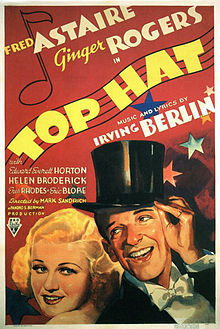
The 1935 film Top Hat is a film that, much like An American In Paris, is pure joy.

Top Hat features Fred Astaire as Jerry Travers, a famous dancer who has come to London to star in a show that’s being produced by his friend, Horace Harwick (Edward Everett Horton).  (Oddly enough, Gene Kelly also played a character named Jerry in An American In Paris.)  Jerry may be sophisticated and refined but he’s still enough of an American that, upon leaving a snooty British club that insists on total silence, he still breaks up the tedium with some impromptu tap moves.

Back at his hotel, Jerry is practicing a tap routine and makes such a racket that he ends up waking up the guest staying in the room below him, Dale Tremont (Ginger Rogers).  When Dale goes upstairs to complain, Jerry immediately falls in love with her.  Soon, he is pursuing her all over London, trying to win her heart.  Eventually, he even follows her to Venice.

And Dale is definitely attracted to Jerry.  Whenever they get near each other, they start dancing.  (Needless to say, whether they’re dancing or talking or merely looking at each other from across the room, Astaire and Rogers have wonderful chemistry.)  However, Dale thinks that Jerry is actually Horace.  And Horace happens to be married to her friend, Madge (Helen Broderick.)  Convinced that Jerry is pursuing an adulterous affair with her, the indignant Dale makes plans to marry the Italian fashion designer, Alberto Beddini (Erik Rhodes).

The plot is typical screwball comedy stuff and the fact that you don’t even end up getting annoyed with all the misunderstandings is a testament to the abilities of Astaire, Rogers, and their wonderful supporting cast.  Even if not for the dancing, Top Hat would be a success because of the chemistry between the actors and film’s mix of sophistication with just pure silly fun.  I imagine that for audiences dealing with the daily realities of the Great Depression, Top Hat offered a wonderful escape.  And you know what?  It still provides a wonderful escape for today, as well.

(Wouldn’t it be nice if we could just dance this presidential election away?)

And then, of course, there’s the dancing.  That really is the main reason that we’re here, right?  Check out a few scenes.  They’ll make you happy.

(Incidentally, I’m a bit disappointed that YouTube does not feature more from Top Hat.)

Top Hat was nominated for best picture, though the award itself went to Mutiny On The Bounty, a film that did not feature quite as much dancing.

Karma’s a Bitch: THEY WON’T BELIEVE ME (RKO 1947)


gary loggins's avatarcracked rear viewer

theywont1

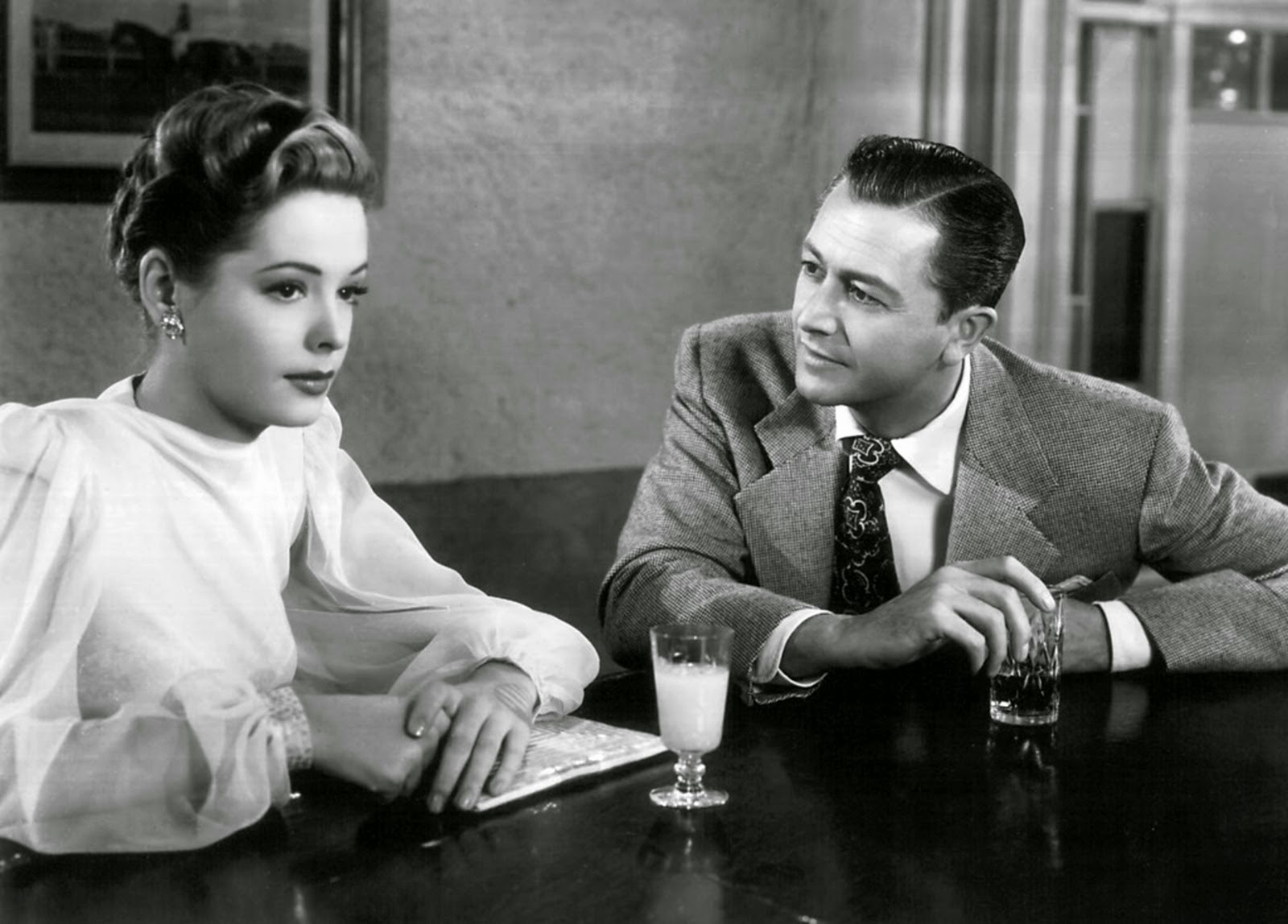
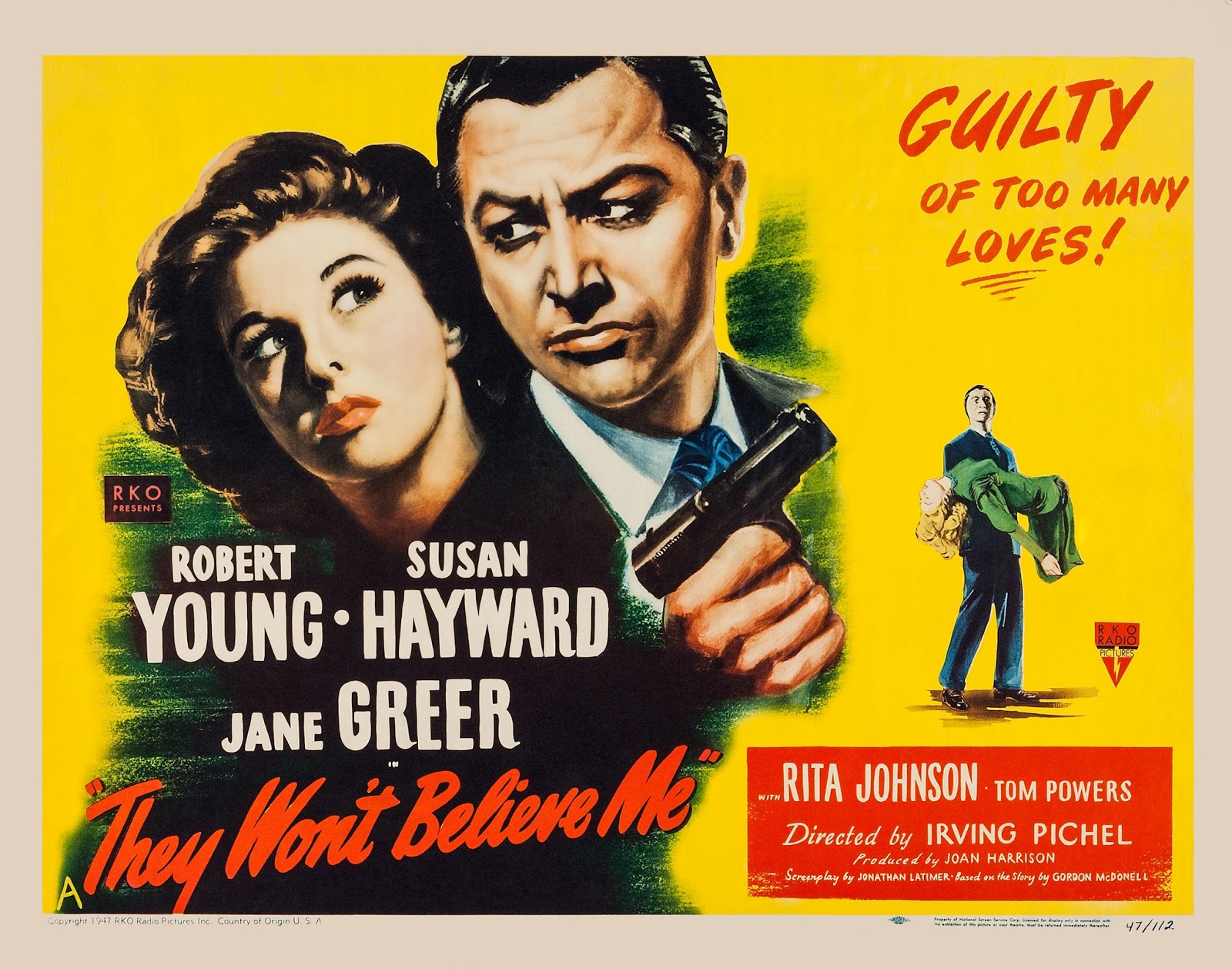
1947 was a peak year for film noir. There was BRUTE FORCE BORN TO KILL , DARK PASSAGE, KISS OF DEATH, THE LADY FROM SHANGHAI, OUT OF THE PAST, and NIGHTMARE ALLEY , to name but a few. THEY WON’T BELIEVE ME doesn’t get the notoriety of those I just mentioned, but it can hold its own with them all. This unheralded dark gem from the RKO noir factory boasts an outstanding cast, and a taut, twisted screenplay from hardboiled pulp writer Jonathan Latimer.

theywont2

Larry Ballantine’s on trial for the murder of his wife and his girlfriend. Larry’s a real cad, a lying and cheating weasel. He takes the stand and tells his side of the story, as the film goes into flashback to recount the sordid details. Larry’s stepping out on rich wife Greta with co-worker Janice, who gives him an ultimatum. She’s transferring to Montreal, and Larry…

View original post 778 more words

Cleaning Out The DVR #27: An American In Paris (dir by Vincente Minnelli)


(For those following at home, Lisa is attempting to clean out her DVR by watching and reviewing 38 films by this Friday.  Will she make it?  Keep following the site to find out!)

An_American_in_Paris_poster

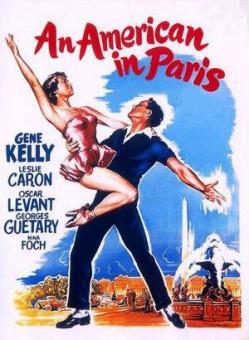
I can’t believe it took me this long to see the Oscar-winning 1951 film, An American In Paris.  Seriously, I love dancing.  I love Paris.  I love Gene Kelly.  Though this film was made decades before I was born, it still feels like it was literally made for me.  And yet, until last night, I had never seen it.  Thank God for TCM (and thank God for the DVR that I used to record the movie when it aired on TCM).

Gene Kelly plays Jerry Mulligan, an American veteran of World War II who, now that he is out of the army, is making his living as a painter and living in Paris.  (The real Paris is only seen in a few establishing shots.  Most of the film takes place on sets that were clearly designed to look more theatrical than realistic.  This is the Paris of our most romantic fantasies.)  Jerry’s roommate is Adam (Oscar Levant), a pianist who fantasizes about playing before a huge audience.

When the movie begins, Jerry gets his first patron, the wealthy and lonely Milo Roberts (Nina Foch).  Though Milo is in love with Jerry, Jerry falls in love with an innocent French girl, Lise Bouvier (Leslie Caron).  Although Lise falls in love with Jerry, she feels obligated to marry French singer Henri (Georges Guetary) because Henri helped to keep her safe during the Nazi occupation.  And, of course, Henri is friends with Adam who is the roommate of Jerry who is in love with Lise who is engaged…

It sounds a lot more complicated than it actually is.  If anything the plot of An American In Paris is too simple.  (Just compare An American In Paris to Singin’ In The Rain.)  But ultimately, An American In Paris is not about the story.  It’s about George Gershwin’s music and Gene Kelly’s dancing.  It’s a triumph of pure style.  It was said that Fred Astaire made love through dancing and that’s even more true of Gene Kelly, who is literally a force of masculine nature in this film.  So impressive was his choreography that it received a special, noncompetitive Oscar.

Check some of this out:

It all eventually ends with the incredible 17-minute The American In Paris Ballet, which sees Gene Kelly and Leslie Carson dancing through a series of sets that were modeled on Impressionist paintings.  It’s one of those great movie moments that simply has to be seen.

How impressed were the members of the Academy with An American In Paris?  They were impressed enough to name it the best film of 1951.  I don’t know if I would go that far because I’ve seen both A Streetcar Named Desire and A Place In The Sun.  (And An American In Paris‘s victory is considered to be one of the biggest upsets in Oscar history.)  But, with all that said, An American In Paris is still an incredibly enjoyable film to watch.

It is pure joy.

Cleaning Out The DVR #26: Little Women (dir by George Cukor)


(For those following at home, Lisa is attempting to clean out her DVR by watching and reviewing 38 films by this Friday.  Will she make it?  Keep following the site to find out!)

Little_Women_1933_poster

Based on the beloved classic by Louisa May Alcott, the 1933 film Little Women tells the story of the March sisters.  Growing up in Concord, Massachusetts during the Civil War, they wait — with their mother, Marmee (Spring Byington) — for their father to return from serving as a chaplain in the Union Army.  There are four sisters.  The oldest, Meg (Frances Dee) is a responsible and practical (which is a nice way of saying that someone is boring) seamstress.  The youngest, Beth (Joan Bennett) is beautiful but selfish.  Meanwhile, saintly Beth (Jean Parker) spends her time playing a severely out-of-tune piano.

And then there’s Jo (Katharine Hepburn).  Jo is just a year younger than Meg and … well, basically, she’s Katharine Hepburn.  She’s an independent-minded intellectual who dreams of being a writer and who isn’t interested in conforming to society’s expectations.  She’s head-strong and occasionally, she’s too stubborn for her own good.  But she’s also kind-hearted and loves her sisters, even if she does sometimes disagree with them.  We follow Jo as she rejects one potential suitor, poor earnest Laurie (Douglass Montgomery) and discovers another when she meets the older Prof. Behar (Paul Lukas).  We also watch as a family tragedy brings her and her sisters back together.

In fact, Katharine Hepburn is so perfect as Jo that it throws the rest of this adaptation out of balance.  So totally does Hepburn dominate this film that it’s hard not to feel that the other March sisters end up getting a short shrift.  To a certain extent, it does make sense.  Jo is the lead character and the story is largely told through her point of view.  But, for someone who enjoyed reading Alcott’s novel, it’s hard not to be disappointed.  I mean, Jo is great but some of us may have related more to one of the other March sisters.  Like Beth, for instance.

Another problem with this version of Little Women is that the March sisters are all supposed to be teenagers and yet, they’re played by actresses who were in their 20s.  For instance, 23 year-old Joan Bennett played Amy, who is supposed to be only 12 years old when we first see her.  By casting actresses who were already clearly adults, it makes t difficult for the film to work as a coming-of-age story.

(Personally, my favorite version of Little Women — and the first one that I ever saw — was the 1994 version that starred Winona Ryder as Jo.  Even though Ryder was clearly the film’s star, the other three March sisters were all given time to make an impression as well and, as a result, they felt like a real family.  Speaking as the youngest of four sisters, there was a lot about that movie to which I could relate.  Add to that, Christian Bale made for a far more interesting Laurie than Douglass Montgomery.)

With all that said, it bears repeating that Katharine Hepburn is absolutely perfect as Jo and, if you’re a Hepburn fan (and who isn’t), this is one of her essential films.  It helps that she was directed by George Cukor, the director who was responsible for some of Hepburn’s best performances.  The rest of the movie doesn’t quite live up to Hepburn’s performance but she was such a great talent that it almost doesn’t matter.

Little Women was nominated for best picture.  However, it lost to Cavalcade.

Cleaning Out The DVR #25: The Maltese Falcon (dir by John Huston)


(For those following at home, Lisa is attempting to clean out her DVR by watching and reviewing 38 films by this Friday.  Will she make it?  Keep following the site to find out!)

220px-Falconm

I would love to see a remake of The Maltese Falcon with Bill Murray in the role of Sam Spade.  Well, maybe not the Bill Murray of today because he’s getting a little bit too old to play a hard-boiled private detective who is as good with his fists as his brain.  Instead, I’m thinking more of Lost In Translation era Bill Murray, when he was no longer young but could still probably beat up any sniveling punk who came at him with a gun.

Now, that may sound crazy to some but think about it.  Bill Murray is one of the great deadpan snarkers and so is Sam Spade.  Last night, when I watched the famous 1941 version of The Maltese Falcon (the story was filmed twice before, once with Bette Davis as the femme fatale), I was struck by how much of the film really was a comedy.  It may have been a murder mystery that featured death and betrayal and a lot of people getting beaten up but, ultimately, The Maltese Falcon is really about Sam Spade reacting to all of the crazy and strange people around him.  No matter how weird things get, Spade always responds with a smirk and a quip.  It’s a role that, at times, seems to be tailor-made for an actor like Bill Murray.

Bill Murray wasn’t around in 1941 but fortunately, Humphrey Bogart was.  Humphrey Bogart may have grown up wealthy and attended private schools but, on screen, nobody was tougher than Humphrey Bogart and nobody was better at delivering sarcastic, snark-filled dialogue.  After spending years as a villainous supporting actor, Humphrey Bogart got his first starring role when he played Sam Spade in The Maltese Falcon.  His performance, of course, would set the standard by which all future cinematic private eyes would be judged.

And, of course, Spade was tough and he was cynical and he has that wonderful moment at the end of the film where he explains that nobody’s going to make a “sap” out of him.  But for me, Bogart’s best moments come when Spade is alone and thinking.  It’s at those times that Spade suddenly becomes a human being.  A slight smirk comes to his lips, almost as if he’s sharing a private joke with the audience.  You can tell that he’s thinking to himself, “Can you believe how weird my life is?”

And it is indeed a weird life.  The film opens with Spade’s partner, Miles Archer (Jerome Cowan), being murdered.  The police believe that Archer was murdered by a man named Thursby and that Thursby was subsequently murdered by Spade.  Spade, however, suspects that both Archer and Thursby were killed by his latest client, a woman who introduced herself as Ruth Wonderly (Mary Astor).  Except, of course, that’s not her real name.  Her real name is Brigid O’Shaughnessy and, as she admits to Spade, Thursby was her partner.  She claims that Thursby must have murdered Archer but that she doesn’t know who could have possibly killed Thursby.

What’s particularly interesting about all this is that no one really seems to be that upset about Archer’s death.  Spade’s main motivation for investigating the murder is to clear his name and there are several lines of dialogue that reveal how little regard he had for Miles.  In fact, when Archer’s widow (Gladys George) suggests that Spade might be Archer’s killer, you can understand why she might think that.  But then again, that’s the world of The Maltese Falcon.  Only the tough survive.  Getting sentimental or allowing yourself to care is the biggest mistake you can make.

The murders are connected to the hunt for a valuable statue of a bird.  (This is the famous Maltese Falcon of the title.)  As Spade tries to clear his name in the two murders, he also finds himself getting caught up with a strange group of treasure hunters.  There’s the obsequious Joel Cairo (Peter Lorre).  There’s the ruthless “fat man,” Kasper Gutman (Sidney Greenstreet).  And then there’s Wilmer (Elisha Cook, Jr.), Gutman’s young henchman who spends the entire film trying to convince everyone that he’s tougher than he appears.  Wilmer is a born patsy.  Whenever Spade gets annoyed, he beats up Wilmer.  And he usually smiles afterward.

Along with being the directorial debut of John Huston, The Maltese Falcon was also one of the first great film noirs.  It’s one of the most influential films ever made and, even seen today, it’s a lot of fun.  You really can’t go wrong with Bogart, Astor, Greenstreet, Lorre, and Cook all in the same movie.  Bill Murray may never get a chance to play Sam Spade but that’s okay.  Humphrey Bogart’s the only Sam Spade we really need.

The Maltese Falcon was nominated for best picture.  However, it lost to How Green Was My Valley, a film that literally seems to take place in an entirely different universe from The Maltese Falcon.

Cleaning Out The DVR #24: Cries and Whispers (dir by Ingmar Bergman)


Cries-and-Whispers-31

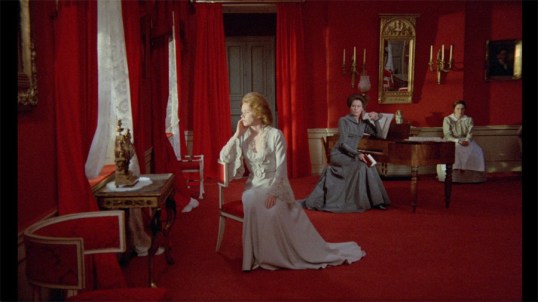
The time is the 19th century.  The country is Sweden.  The setting is a mansion that is decorated with red carpet, red walls, and almost blindly white statues.  But beyond that setting, the 1973 film Cries and Whispers is really set in the hearts and minds of four women.  One of them is selfless.  Two of them are bitter and uncaring.  And one of them is slowly dying.

Agnes (Harriet Andersson) is the one who is dying.  She spends her time laying in bed and screaming in pain.  A doctor (Erland Josephson) provides her with no hope and can only promise that the end will come soon and a priest (Anders Ek) coldly goes about planning for her funeral and offering up empty promises of a final reward.  Occasionally, through her diary and flashbacks to her youth, we get glimpses of who Agnes was before her life become dominating by her impending death.

Agnes’s sisters have come to the house to wait out her death.  Though they’ve arrived to provide comfort, neither is capable of it.  The youngest sister, Maria (Liv Ullman), was her mother’s favorite and has grown up to be coldly self-centered.  Through flashbacks, we see the details of her affair with Agnes’s doctor.  When Maria’s husband (Henning Moritzen) reacts to her infidelity by stabbing himself, Maria can only dispassionately watch.  Meanwhile, the oldest sister, Karin (Ingrid Thulin) has grown up to be bitter and sexually repressed.  In a truly shocking scene, Karin mutilates her vagina with a shard of glass and, after smearing the blood on her face, lies in bed and smirks at her husband.

In the end, only Anna (Kari Sylwan) can provide Agnes with any comfort.  Anna is Agnes’s maid.  Deeply religious and mourning the loss of her own daughter, only Anna is willing to reach out and hold Agnes while Agnes is in pain.  And, after Agnes dies, Anna seems to be the only one who shows any real grief.

There are depressing movies and then there’s Cries and Whispers.  Cries and Whispers is such an emotionally raw and dark movie that it was difficult for me to watch.  It’s also difficult to review because just thinking about the movie brings up so many emotions.  It’s just such a well-made and extremely painful movie.

It’s also an Ingmar Bergman film and that’s fortunate because Bergman somehow had an instinct for how to keep audiences watching even when the images on screen were amazingly painful.  Visually, Cries and Whispers is as beautiful as it is thematically cold.  By emphasizing the color red (not only is the entire house decorated in red but scenes often end by fading to red as opposed to black), Bergman makes the audience feel as if they truly have been transported into the human soul.  Red, after all, is the color of blood and life.

And really, Cries and Whispers is one of those films that makes you wonder what exactly the point of life is.  While the dream-like flashbacks give us clues as to how the three sisters became who they are, they also suggest that it really doesn’t matter.  In the end, regardless of whether they’re in love or alone or happy or sad, they’re all going to die and that’s going to be it.  All stories and issues will be left unresolved.

And, in the end, the best we can hope for is that someone like Anna will mourn us.

Cries and Whispers is one of the few foreign language films to be nominated for best picture.  It’s also the only Ingmar Bergman film to be so nominated (though Bergman had more success in the Best Foreign Language Film category).  It lost to The Sting, a far happier film.