AMV of the Day: Clarity (Various)


Clarity AMV

It’s been quite a bit since I last picked an AMV to use as an example of why anime is such a collaborative piece of creative art.

The latest “AMV of the Day” splices together just the right scenes from three anime. There’s the classic Mamoru Hosada scifi/slice-of-life anime film The Girl Who Leapt Through Time. Then there’s the more recent and well-received 5 Centimeters Per Second by Makoto Shinkai. Lastly, there’s the Tatsuyuki Nagai directed series Ano Hana.

Binding all three together is the song “Clarity” (also happens to be the title of the video) by the group Zed.

It’s a video that focuses on the three anime’s and it’s use of heightened reality as a storytelling tool. In the end, I also happen to just love the work done by caramelloxify on this video.

Anime: The Girl Who Leapt Through Time, 5 Centimeters Per Second, Ano Hana

Song: “Clarity” (feat. Foxes) by Zed

Creator: caramelloxify

Past AMVs of the Day

A Dying Man, Scared of the Dark: John Wayne in THE SHOOTIST (Paramount 1976)


gary loggins's avatarcracked rear viewer

shootist1

THE SHOOTIST is John Wayne’s valedictory statement, a final love letter to his many fans. The Duke was now 69 years old and not in the best of health. He’d had a cancerous lung removed back in 1964, and though the cancer was in remission, Wayne must’ve knew his days were numbered when he made this film. Three years later, he died from cancer of the stomach, intestines, and spine. There were worries about his ability to make this movie, but Wayne loved the script and was determined to do it. The result is an elegy to not only the aging actor, but to the Western genre as a whole.

shootist2

The movie begins with footage of older Wayne westerns (EL DORADO, HONDO, RED RIVER, RIO BRAVO) narrated by Ron Howard (Gillom). “His name was J.B. Books…he wasn’t an outlaw. Fact is, for a while he was a lawman…He had a credo that…

View original post 671 more words

TAMI Part 2: The Big T.N.T. Show (1966, directed by Larry Peerce)


In 1964, American International Pictures released the first concert film, The T.A.M.I. Show.  After the success of T.A.M.I, AIP followed up with a second concert film.  This one would be shot in front of a live audience at Los Angeles’s Moulin Rouge club on the night of November 29th, 1965.  The line-up included Ray Charles, Petula Clark, The Lovin’ Spoonful, Bo Diddley, Joan Baez, The Ronettes, Roger Miller, The Byrds, Donavon, and Ike and Tina Turner.  Phil Spector was recruited to produce the show and he brought with him a live orchestra.  Conducting the orchestra and serving as the night’s emcee was The Man From UNCLE‘s David McCallum.

Originally announced as The T.A.M.I. Show Part II, the title was briefly changed to This Could Be The Night (after a song written by Spector and Harry Nilsson and performed by The Modern Folk Quartet) until AIP finally went with The Big TNT Show, an appropriate title considering the explosive performances that were recorded that night.  The Big TNT Show also recorded the growing division between the rock and roll of the 50s and early 60s and the music of the emerging counter culture, with Ray Charles, Bo Diddley, and Ike Turner sharing the same stage as The Byrds and Donavon.

In one of the show’s best moments, Joan Baez sings You’ve Lost That Loving Feeling while Phil Spector accompanies her on piano.

Other highlights include the Byrds performing Turn, Turn, Turn,

Roger Miller performing his novelty hit King of the Road,

Petula Clark singing Downtown,

The Ronettes performing Be My Baby,

Donavon’s Universal Soldier,

and Ike and Tina Turner’s entire set.

At the end of the film, the viewers are told to “be sure to tune in for next year’s show!” but, one year later, both the world and music would be very different.  The Big TNT Show captures that one final moment before things changed forever.

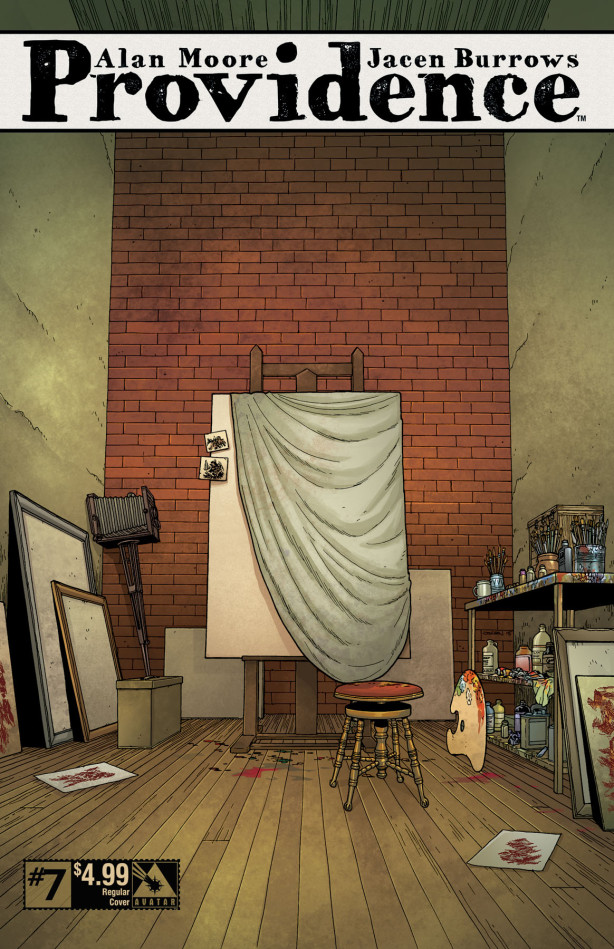
“Hard Workers” Alan Moore And Jacen Burrows Put In Overtime On “Providence” #7


Ryan C. (fourcolorapocalypse)'s avatarTrash Film Guru

providence07-reg

It occurs to me that as we begin the second “leg” of Alan Moore and Jacen Burrows’ Providence with the just-released seventh issue that we as readers are on no firmer ground, metaphorically speaking, than hapless protagonist Robert Black is in a more literal sense — having fled Manchester without even knowing how much time he spent there much less what happened both to and around him, our hero/victim next turns up in Boston smack-dab in the middle of the notorious round of riots and looting instigated by the city’s police strike of 1919, an engineered debacle both triggered by the actions of, and then capitalized for political gain by, then-governor Calvin Coolidge, one of early-20th-century America’s more loathsome figures. For our hopelessly cracking (or maybe that should be already cracked)  former newspaperman, though, the violence and depravity he sees unfolding on the streets of Beantown is a pretty accurate…

View original post 1,528 more words

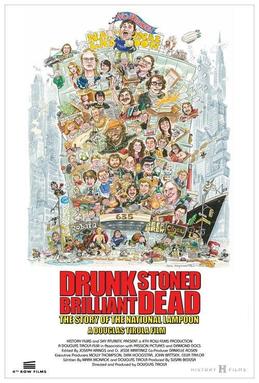
No Safe Space: Drunk Stoned Brilliant Dead: The Story Of The National Lampoon (2015, directed by Douglas Tirola)


Drunk_Stoned_Brilliant_Dead_PosterThe documentary Drunk Stoned Brilliant Dead pays tribute to National Lampoon.  Founded in 1970, National Lampoon was published for 28 years and, at the height of its popularity, its sensibility redefined American comedy.  When it came to National Lampoon, nothing was sacred and nothing was off-limits.  The success of National Lampoon led to a stage show called Lemmings and The National Lampoon Radio Hour, which featured everyone from John Belushi and Bill Murray to Chevy Chase and Harold Ramis.  Michael O’Donoghue, famed for his impersonations of celebrities having needless inserted into their eyes, went from writing for the Lampoon to serving as Saturday Night Live‘s first head writer.  National Lampoon’s Animal House, Vacation, and Caddyshack are three of the most influential film comedies ever made.  Everyone from P.J. O’Rourke to John Hughes to The Simpsons‘ Al Jean got their start at National Lampoon.

As influential as it was, National Lampoon is a magazine that would not be able to exist today’s world.  Just looking at the cover of most issues of National Lampoon would reduce today’s special little snowflakes to the point of hysteria.  In Drunk Stoned Brilliant Dead, National Lampoon‘s publisher claims that the Lampoon ultimately ceased publication because the religious right threatened to boycott any company that advertised in the magazine.  Today, it would be the “safe space” crowd complaining that the magazine did not come with proper trigger warnings.  Lena Dunham would look at one issue and go into a rage spiral.  Salon would publish a hundred hand-wringing think pieces about how National Lampoon was the worst thing since Ted Cruz.  Colleges would ban it and religious groups would still burn it.  National Lampoon was a magazine that went out of its way to be offensive to both the left and the right but, as editor-in-chief Tony Hendra puts it, the job of satire is to make those in power feel uncomfortable.  By poking fun at everything and challenging its readers, National Lampoon exposed the absurdity behind both the country’s prejudices and some of its most sacred beliefs.

Kennedy VW Ad

Drunk Stoned Brilliant Dead follows the National Lampoon from its founding to its ignominious end.  Along with interviews with Lampoon alumni, it also features archival footage of both Lemmings and The Radio Show, providing glimpses of  Christopher Guest, Bill Murray, John Belushi, Gilda Radner, and Harold Ramis before they became famous.  There are also interviews with celebrity admirers of the Lampoon who talk about how the magazine inspired their own work.  It makes sense that Judd Apatow was interviewed and Kevin Bacon made his screen debut in Animal House but what was Billy Bob Thornton doing there?

Unfortunately, drunk, stoned, brilliant, and dead describes some of the most important and talented figures in the Lampoon‘s history.  The documentary especially focuses on Doug Kenney, the Lampoon’s co-founder.  Everyone interviewed agrees that Kenney was a comedic genius who was also often emotionally troubled and who would vanish for months on end.  After the initial critical failure of Caddyshack, Kenney disappeared in Hawaii.  His body was later discovered at the bottom of the cliff.  Did Kenney jump or did he slip or, as director John Landis suggests, was he murdered by a drug dealer?  Nobody seems to know but Kenney’s ghost haunts the documentary.  This collection of very funny people get very serious when it comes time to talk about Kenney’s death.  Even Chevy Chase briefly redeems himself after years of bad publicity when he gets choked up.

Drunk Stoned Brilliant Dead is tribute to both a magazine and a bygone era.  See it before it gets banned.

How_I_Killed_Lampoon_6_embed

Book Review: ANDY & DON: The Making of a Friendship and a Classic American TV Show (Simon and Schuster)


gary loggins's avatarcracked rear viewer

andy1

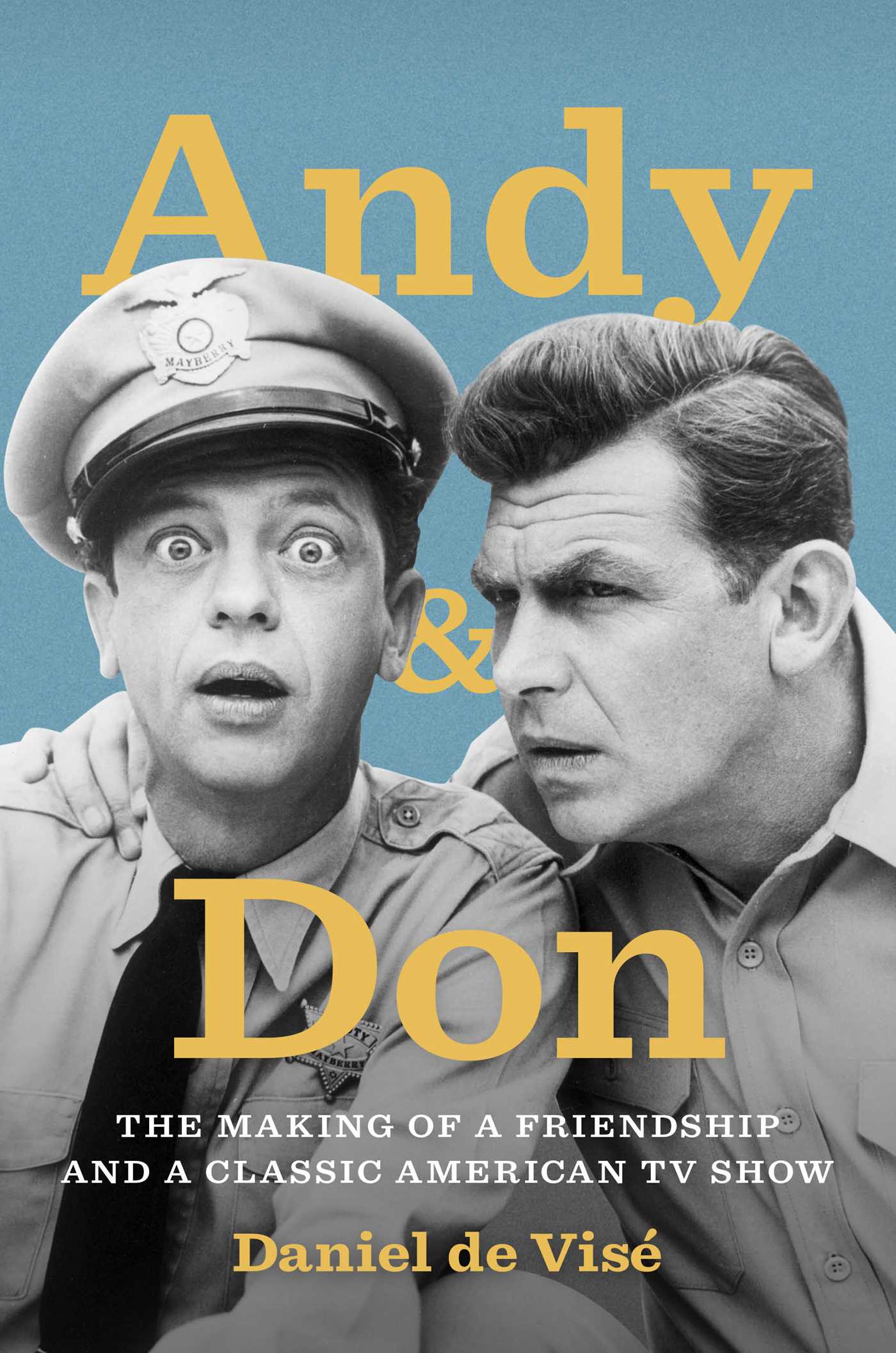
THE ANDY GRIFFITH SHOW is one of the most beloved sitcoms in television history, still being run on cable networks fifty-five years after its debut. The show about life in small town Mayberry revolves around the friendship between mellow Sheriff Andy Taylor and his hyperactive deputy, Barney Fife. ANDY & DON not only tells us about them, but about the real life friendship between the two stars, Andy Griffith and Don Knotts.

andy2

The book shows us the very similar backgrounds of the two comic legends. Both came from poor rural towns (Knotts in West Virginia, Griffith in North Carolina), and had their share of grief and difficulty growing up. The pair met when both were cast in the Broadway hit No Time for Sergeants, and hit it off right away. When Griffith was slated to star in a new sitcom as a country sheriff, Knotts called and asked if…

View original post 186 more words

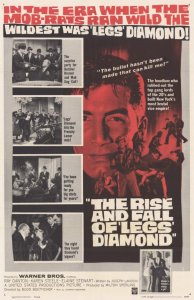
Film Review: The Rise and Fall of Legs Diamond (1960, directed by Budd Boetticher)


TheRiseFallofLegsDiamondIt’s the 1920s.  Prohibition is the law of the land and gangsters control the streets of New York City.  Jack Diamond (Ray Danton) and his tubercular brother, Eddie (Warren Oates), arrives in town.  Jack and Eddie are small-time jewel thieves but Jack has ambitions to be something more.  He works with his girlfriend, Alice (Karen Steele), as a dance instructor but he dreams of being the most powerful mobster in the world.  His first step is to get a job working as a bodyguard for New York crime lord (and fixer of the 1919 World Series), Arnold Rothstein (Robert Lowery).  Though Rothstein never trusts him, Jack works his way into his inner circle and even gets a nickname.  Because he is a dancer, he is renamed “Legs” Diamond.

From the minute that he starts working with Rothstein, Legs Diamond’s cocky personality and ruthless ambition make him enemies.  When he is shot three times, Legs shocks everyone by surviving and announces that he is invulnerable and cannot be killed.  After Rothstein is mysteriously gunned down, Diamond goes to war against Leo “Butcher” Bremer (Jesse White, better known as the original Maytag repairman) for control of the New York underworld.

The Rise and Fall of Legs Diamond was directed by the legendary Budd Boetticher, a bullfighter-turned-director who is best known for directing a series of low-budget westerns in the 1950s.  The violent and hard-boiled The Rise and Fall of Legs Diamond was Boetticher’s only gangster film and it’s a good one.  The Rise and Fall of Legs Diamond is tightly-written, fast-paced, and Lucien Ballard’s black-and-white cinematography ranks with the best of film noir.

The role of Legs Diamond was originally offered to future producer Robert Evans (of The Kid Stays In The Picture fame) but when Evans turned it down, the role was given to Ray Danton.  Though he is occasionally a little stiff, Danton still gives a good and tough performance as Diamond but it is still hard not to wonder what Evans would have been like in the role.  The rest of the cast is full of recognizable B-movie actors, all of whom do a good job.  Actress Dyan Cannon made her film debut in Legs Diamond, playing one of Diamond’s girlfriends.  Meanwhile, in only his third film role, Warren Oates is memorable and sympathetic as the sickly Eddie.  Though Oates does not get to do much in the film, his performance still shows why he went on to become one of the most popular and well-respected character actors of all time.

Though hardly historically accurate (in real life, Arnold Rothstein never knew Jack Diamond and Diamond received his nickname not because he was a dancer but because of the speed with which he ran away from the police), The Rise and Fall of Legs Diamond is an exciting and entertaining Depression-era gangster film.

LegsDiamond

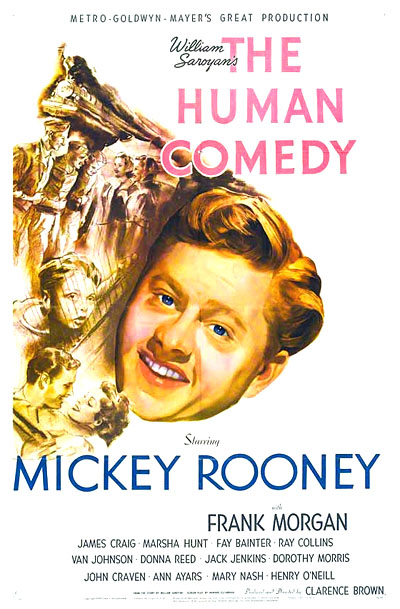
Lisa Reviews An Oscar Nominee: The Human Comedy (dir by Clarence Brown)


The-human-comedy-1943Thanks to TCM’s 31 Days of Oscar, I now have several movies on my DVR that I need to watch over the upcoming month.  Don’t get me wrong — I’m not complaining.  I’m always happy to have any reason to discover (or perhaps even rediscover) a movie.  And, being an Oscar junkie, I especially enjoy the opportunity to watch the movies that were nominated in the past and compare them to the movies that have been nominated more recently.

For instance, tonight, I watched The Human Comedy, a film from 1943.  Along with being a considerable box office success, The Human Comedy won on Oscar (for Best Story) and was nominated for four others: picture, director (Clarence Brown), actor (Mickey Rooney), and black-and-white cinematography.  The Human Comedy was quite a success in 1943 but I imagine that, if it were released today, it would probably be dismissed as being too sentimental.  Watching The Human Comedy today is something of a strange experience because it is a film without a hint of cynicism.  It deals with serious issues but it does so in such a positive and optimistic manner that, for those of us who are used to films like The Big Short and Spotlight, a bit of an attitude adjustment is necessary before watching.

And yet that doesn’t mean that The Human Comedy is a bad film.  In fact, I quite enjoyed it.  The Human Comedy is a time capsule, a chance to look into the past.  It also features a great central performance, one that was quite rightfully nominated for an Oscar.  As I watched Mickey Rooney in this film, I started to feel guilty for some of the comments I made when I reviewed Mickey in The Manipulator last October.

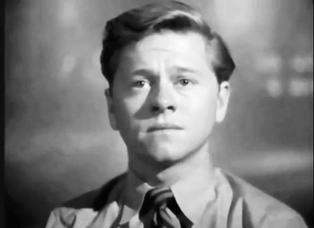
2Mickey Rooney in The Human Comedy

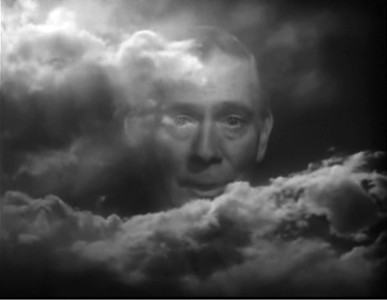
The Human Comedy opens with an overhead shot of the small town of Ithaca, California.  The face of Mr. McCauley (Ray Collins, who you’ll recognize immediately as Boss Jim Gettys from Citizen Kane) suddenly appears in the clouds.  Mr. McCauley explains that he’s dead and he’s been dead for quite some time.  But he loves Ithaca so much that his spirit still hangs around the town and keeps an eye on his family.  Somehow, the use of dead Mr. McCauley as the film’s narrator comes across as being both creepy and silly.

Matthew-clouds-400-387x300

But no sooner has Mr. McCauley stopped extolling the virtues of small town life than we see his youngest song, 7 year-old Ulysseus (Jack Jenkins), standing beside a railroad track and watching a train as it rumbles by.  Sitting on the cars are a combination of soldiers and hobos.  Ulysseus waves at some of the soldiers but none of them wave back.  Finally, one man waves back at Ulysseus and calls out, “Going home, I’m going home!”  It’s a beautifully shot scene, one that verges on the surreal.

That opening pretty much epitomizes the experience of watching The Human Comedy.  For every overly sentimental moment, there will be an effective one that will take you by surprise.  The end result may be uneven but it’s still undeniably effective.

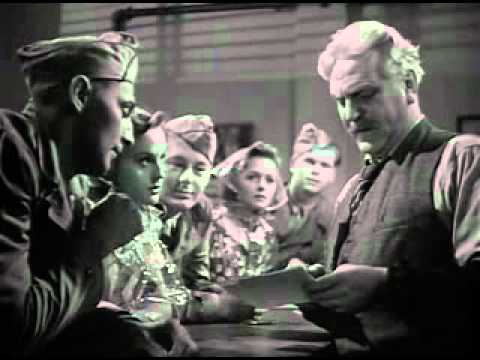
The majority of the film deals with Homer McCauley (Mickey Rooney).  Homer may still be in high school but, with his older brother, Marcus (Van Johnson), serving overseas and his father dead, Homer is also the man of the house.  Homer not only serves as a role model for Ulysseus but he’s also protector for his sister, Bess (Donna Reed).   (At one point in the film, she gets hit on by three soldiers on leave.  One of them is played by none other than Robert Mitchum.)  In order to bring in extra money for the household, Homer gets a job delivering telegrams.

hqdefault

In between scenes of Homer in Ithaca, we get oddly dream-like scenes of Marcus and his army buddies hanging out.  Marcus spends all of his time talking about how much he loves Ithaca and how he can’t wait for the war to be over so he can return home.  One of his fellow soldiers says, “I almost feel like Ithaca is my hometown, too.”  Marcus promises him that they’ll all visit Ithaca.  As soon as the war is over…

With World War II raging, Homer’s job largely consists of delivering death notices (and the occasional singing telegram, as well).  Telegraph operator Willie Grogan (Frank Morgan) deals with the burden of having to transcribe bad news by drinking.  Homer, meanwhile, tries to do his job with compassion and dignity but one day, he has to deliver a telegram to his own house…

The Human Comedy is an episodic film, full of vignettes of life in Ithaca and Homer growing up.  There’s quite a few subplots (along with a lot of speeches about how America is the best country in the world) but, for the most part, the film works best when it concentrates on Homer and Mickey Rooney’s surprisingly subdued lead performance.  By today’s standards, it may seem a bit predictable and overly sentimental but it’s also so achingly sincere that you can’t help but appreciate it.

The Human Comedy was nominated for best picture but it lost to a somewhat more cynical film about life during World War II, Casablanca.