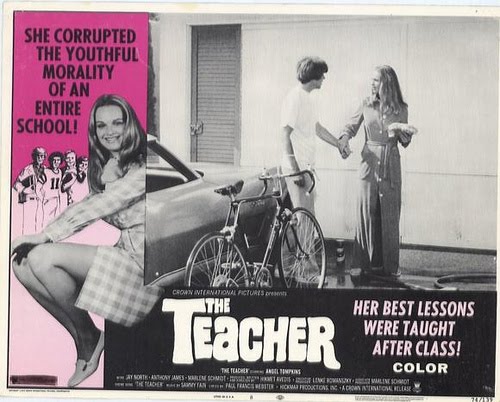
Back to School #14: The Teacher (dir by Howard Avedis)


3df3d

“She Corrupted The Youthful Morality of an Entire School!” the tagline for the 1974 film The Teacher screams out.

Uhmmm, no.

In fact, that’s probably one of the most deceptive taglines in the history of film advertising.  However, we shouldn’t be surprised that it was used.  Like The Young Graduates, The Teacher was produced by Crown International Pictures.  Crown International was all about getting people to buy tickets and they probably figured that more people would pay to see a movie about a teacher corrupting “an entire school” than they would for a film about a 28 year-old teacher having an affair with one (and only one) 18 year-old who has recently graduated high school.

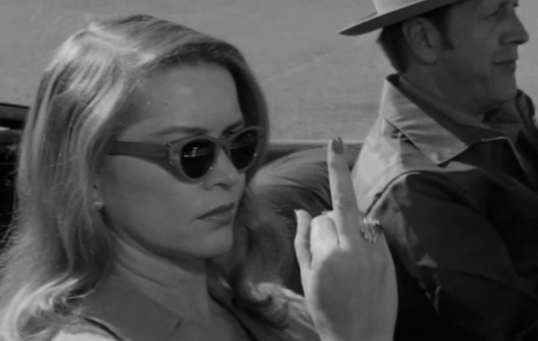
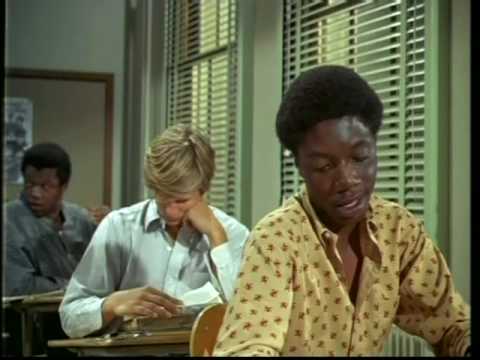
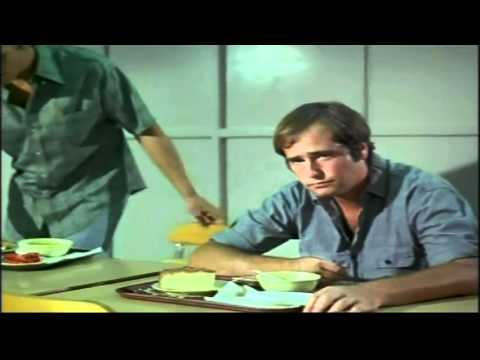
The relationship is between Diane (Angel Tompkins) and Sean (Jay North).  Diane lives next door to Sean’s family.  She’s married to a man who spends most of his time on the road, racing motorcycles and only occasionally calling his wife.  Diane is a teacher but we only briefly see her standing outside of the local high school.  While Sean admits that he has always had a crush on her and, at the start of the movie, even spies on her while she’s sunbathing, it’s never made clear whether or not Sean was ever actually in any of her classes.  In fact, the only thing controversial about their eventual relationship is that there’s a 10 year age difference between them.  But that really doesn’t seem to bother anyone, with the exception of two old women who happen to see Diane and Sean out on a date.
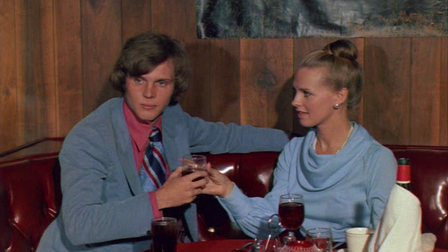
Teacher and Not A Student

Teacher and Not A Student

That, of course, doesn’t mean that Diane doesn’t have anything to teach Sean.  As the film’s theme song tells us, “Every boy needs a teacher, to help show him the way…”

But here’s the thing.  Considering how tawdry one would naturally expect a film like The Teacher to be, it’s actually treats Diane and Sean’s relationship with a lot of sensitivity.  Tompkins and North have a lot of chemistry together and both of them give natural and believable performances.  In many ways, this film is a sincere attempt to explore an unlikely relationship.  I’ve always felt that in almost every 70s exploitation film, there’s an art film waiting to break out.  That’s certainly the case with The Teacher.

However, The Teacher isn’t just about Diane “teaching” Sean.  It’s also about a guy named Ralph, who also happens to be obsessed with Diane.  (When, at the start of the film, Sean is spying on Diane, little does he suspect that Ralph is spying on him.)  We know Ralph is a bit off because he’s always talking to himself, he drives a hearse, and he’s played by Anthony James.  You may not recognize his name but if you’re a fan of 70s and 80s exploitation cinema, you know who Anthony James is.  He’s one of those very intense, very creepy-looking character actors who would always show up playing psychos and evil henchmen.
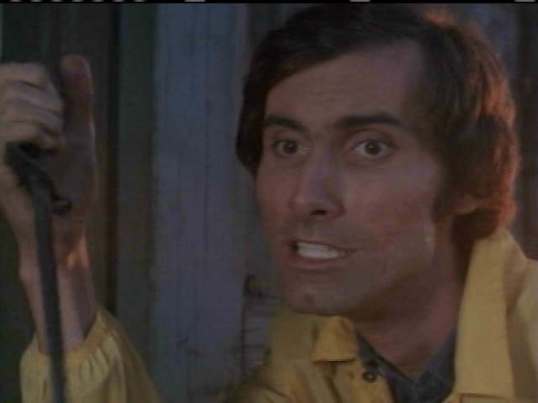
Anthony James

Anthony James

Ralph is not only obsessed with Diane but he also blames Sean for the death of his younger brother.  It seems that Sean and Ralph’s brother were spying on Diane when, somehow, Ralph’s brother ended up falling to his death.  (If you get the feeling that literally every male in this film appears to spend the majority of his time watching Diane — well, you’re right.)  Ralph wants vengeance and, in his defense, Sean never really does seem to be that upset about the death of his best friend.

Because this film was made in the 70s, it all leads to surprisingly somber ending that will probably inspire you to reconsider any belief you may have in a benevolent God.

I have to admit that, out of all the Crown International films that I’ve recently watched, The Teacher was a favorite of mine.  Watching the film — with its constantly shifting tone and it’s mix of arthouse pretension and grindhouse melodrama — is an odd experience that epitomizes everything that I love about old exploitation films.

Thank you, Crown International, for always being you.

CIP_Logo

Back to School #13: American Graffiti (dir by George Lucas)


Well, this is certainly intimidating.  I know I’ve said this many time before but it deserves to be repeated: it’s often a hundred times more difficult to review a great film than it is to review a merely mediocre one.  When a film fails, it’s usually easy to say why.  The acting was bad.  The directing was uninspired.  The plot didn’t make any sense.  Or maybe the film has been so overpraised that you, as a reviewer, are almost obligated to be tougher on it than you would be with any other film.  However, it’s never as easy to put into words just what exactlyit is that makes a movie great.

Take the 1973 Best Picture nominee American Graffiti for instance.  I could tell you that this is a very well-acted film and that it features an ensemble of very likable performers, many of whom subsequently went on to become stars and celebrated character actors.  Then again, you can say the same thing about countless other films.

american-graffiti-1973-03-g

I could say that director George Lucas does such a good job putting this film together that it’s hard to believe that he’s the same man who would later be responsible for all three of the Star Wars prequels.  Then again, I could also say the same thing about how odd it is that the same man who directed the entertaining Final Destination 5 was also responsible for the far less enthralling Into The Storm.

i007737

I could tell you that the film serves as a valuable time capsule in that not only does it feature a loving recreation of small town America in the early 60s but that it’s also a chance to see what Richard Dreyfuss, Ron Howard, and Charles Martin Smith all looked like when they still had hair.  But then again, I also praised The Young Graduates for being a time capsule as well.

MelsGraffiti

Let’s face it — it’s difficult to define the intangible qualities that make a film great.  Often times, it’s a case of simply knowing it when you see it.  I’ve seen American Graffiti a few times.  The last time I saw it was at a special Sunday showing at the Alamo Drafthouse.  And, on that early Sunday afternoon, the theater was packed with people who had paid for the chance to see the 40 year-old film on the big screen.  I’m 28 years old and it’s significant that, while the majority of the audience was older than me, there were quite a few people who were younger.  American Graffiti is one of those films that obviously spoke to audiences when it was first released and continues to speak to audiences today.

As I mentioned in my review of Rebel Without A Cause, films about teens tend to age quickly and, often times, one generation’s masterpiece will turn out to be a later generation’s joke.  When a film like Rebel or American Graffiti survives the test of time, it’s because the film has managed to capture a universal truth about what it means to be young and to have your entire life ahead of you.

American Graffiti takes place over the course of one long night in Modesto, California in 1962.  The film follows several different characters, the majority of whom have just graduated from high school.  What these characters all have in common is that one phase of their life has ended and a new one is about to begin.  Over the course of that one night, all of them are forced to say goodbye to their past identities and, in some instances, are forced to face their future.

Curt and the Pharoahs

For instance, there’s Curt (an amazingly young Richard Dreyfuss), a neurotic intellectual who spends the night trying to decide whether or not he actually wants to leave for college in the morning.  Complicating Curt’s decision is a mysterious blonde who mouths “I love you” at him before driving away.  While searching for her, Curt finds himself unwillingly recruited into the Pharoahs, a somewhat ludicrous small town gang that’s led by Joe (played, in hilariously clueless fashion, by Bo Hopkins.)  Curt, incidentally, is my favorite character in the film.  He’s just adorable, which admittedly is not a reaction that one often has to Richard Dreyfuss.

(Curt is also featured in one of my favorite scenes, in which he smokes a cigarette with a lecherous teacher named Mr. Wolf.)

Cindy Williams, Ron Howard, and Charles Martin Smith

Curt’s sister (Cindy Williams) is dating Steve Bolander (Ron Howard).  Steve is the former class president and, unlike Curt, he’s very excited about leaving home.  Ron Howard gives such a likable performance that it actually takes a few viewing to realize just how big of a jerk Steve really is.

Terry and Debbie


And then there Terry (Charles Martin Smith) who wears big glasses and has bad skin.  Terry gets to spend the night driving around in Steve’s car and manages to pick up a girl named Debbie (Candy Clark).  For Terry, this is his night to actually be somebody and what makes it all the more poignant is just how obvious it is that Terry will probably never get another chance.  Though he may not realize it, those of us watching understand that this is literally going to the be the best night of Terry’s life.

(Incidentally, much like Ron Howard, Charles Martin Smith would go on to become a film director and gave the world the amazingly sweet Dolphin Tale.)

John Milner

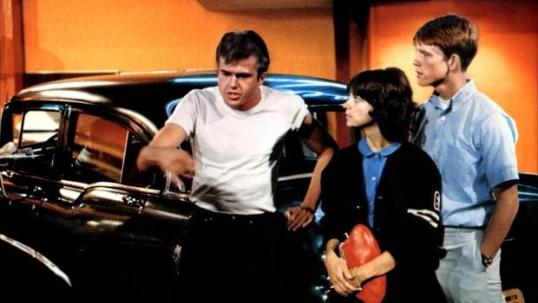
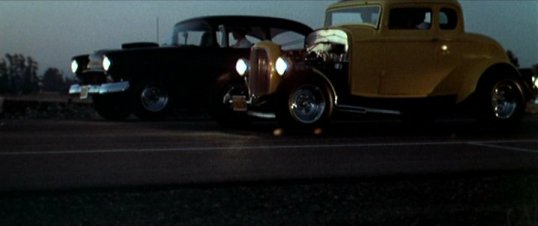
And finally, there’s John Milner (Paul Le Mat).  John is a little older than the other main characters.  He spends most of his time in his car, driving around and getting challenged to race.  He’s the epitome of late 50s/early 60s cool, with an attitude and a look that he obviously borrowed from James Dean and Marlon Brando.  Over the course of the night, he is forced to deal with a bratty 13 year-old stowaway (MacKenzie Phillips) and a mysterious challenger named Bob Falfa (played by a youngish Harrison Ford, who wears a cowboy hat and speaks with a country twang).

Harrison Ford in American Graffiti

The film follows these characters through the night and then, at the end of it, we get the famous epilogue where we discover that all of the male characters have pretty much ended up exactly how we thought they would.  In some cases, that’s a good thing.  And in other cases, it’s not.  It’s a good ending that’s kept from being great by the fact that none of the film’s female characters rate so much as even a mention.

So, what else can be said about American Graffiti?

It’s a great film.

Isn’t that enough?

American Graffiti

Back to School #12: The Ringer (dir by Jeff Lieberman)


If you’re a teen who lives in North Texas, then today was your first day back to school.  In honor of this event, I’ve been doing a special series of Back to School reviews: 76 reviews in 8 days, all dealing with either high school or being a teenager.  Today, we continue this series by taking a look at The Ringer, a clever 1972 film about drugs, music, and nose rings!

Over the course of 20 minutes, The Ringer tells several different stories.  A girl shoots up heroin and then reacts with disturbing passivity as blood starts to run down her arm in close-up.  A group of ad execs discuss the best way to convince teenagers to buy “ringers,” huge nose rings that will let people know what they believe in.  (While the whole idea behind the ringers is a play on the idea of people being “led by the nose,” it also accurately predicted future fashion and how many educational films can you say that about?)  A group of music executives discuss the best way to market a new band, agreeing that the best strategy would be to make it appear as if the band isn’t being sold while it actually is.  (One of them suggests that they shouldn’t have chairs at any of the band’s shows, in order to make the band seem unpretentious and seriously, we all know that would totally work…)  And finally, there’s the group of drug dealers who strategize about the best way to sell pills to teenagers…

Now, I have to admit that I have a weakness for old educational films but that’s largely because they tend to be so silly.  The Ringer is unique in that it’s actually a very clever and well-done film that deftly uses satire (as opposed to the heavy-handed messaging that we usually tend to associate with educational films) to make its point.  As opposed to many other anti-drug films of the period, The Ringer doesn’t spend any time telling horror stories about what people may or may not do while under the influence but instead, it ridicules and attacks those that get rich off of other people’s addictions.

The Ringer is also interesting because it was the directorial debut of filmmaker Jeff Lieberman, who brought a similar mix of satire and drama to such classic films as Blue Sunshine, Squirm, and Just Before Dawn!  If you keep an eye out, you can spot him playing one of the drug dealers!

Back To School #11: The Last Picture Show (dir by Peter Bogdanovich)


Monday is the first day of school down here in Dallas so it seems only appropriate that this latest entry in our Back to School series should be a look at one of those most quintessential Texas films ever made, the 1971 best picture nominee, The Last Picture Show.

http://www.youtube.com/watch?v=3YQomR5xJ_Y

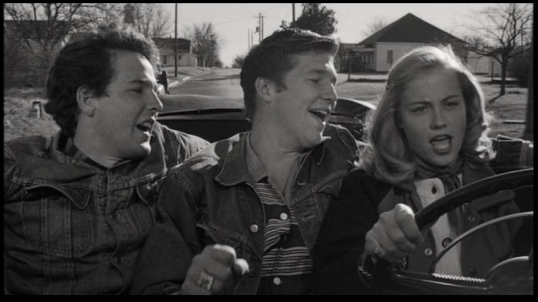
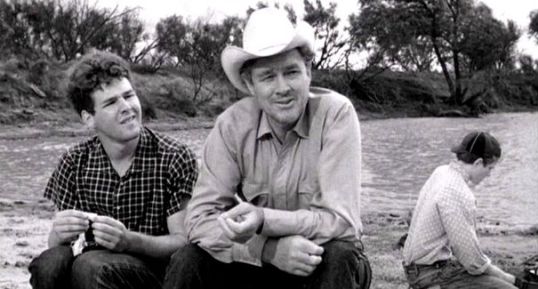
Directed by Peter Bogdanovich and based on a novel by Larry McMurtry, The Last Picture Show takes place in 1951 and tells the story of two high school seniors, best friends Sonny Crawford (Timothy Bottoms) and Duane Jackson (Jeff Bridges, reminding us once again why everbody loves him).  Sonny and Duane live in the rural town of Anarene, Texas.  With little to look forward to in the future, beyond perhaps getting a job working in the oil fields, Sonny and Duane are both intent on enjoying their final year of high school.  Sometimes, that means driving down to Mexico for the weekend.  Sometimes, it means going to the only theater in town and seeing a movie.  Most of the time, however, it means hanging out in a pool hall owned by the strict but fatherly Sam (Oscar winner Ben Johnson).  Often times they are accompanied by the intellectually disabled Billy (Sam Bottoms), who responds to everything with a blank smile and spends most of his spare time wandering around with a broom, futilely trying to sweep the dusty streets.

last-picture-show

The charismatic and impetuous Sonny is dating the beautiful and self-centered Jacy Farrow (Cybil Shepherd), who is the daughter of the wealthiest woman in town.  Jacy knows that her cynical mother (Ellen Burstyn) is having an affair with an oil worker named Abilene (Clu Gulager) but she’s more concerned with her own future.  Even though she’s dating Sonny, Jacy still accepts an invitation from the awkward Lester Marlow (played by a memorably goofy Randy Quaid) to attend a naked indoor pool party.  At the party, she meets Bobby Sheen (Gary Brockette), who is rich and will be able to provide her with the future that Duane never will.  However, Bobby tells Jacy that he isn’t interested in her because she’s a virgin.  If nothing else, this gives Jacy a reason to stay with Duane, at least until after they have sex.

Meanwhile, the far more sensitive Sonny ends up having an affair with Ruth Popper (Cloris Leachman, who won an Oscar for her performance in this film), the wife of the high school football coach.  It appears that Sonny truly cares about Ruth but then he finds himself being tempted by none other than his best friend’s girlfriend…

Sonny and Ruth

At heart, The Last Picture Show really is basically a small town soap opera, a Texas version of Peyton Place.  The difference between the two films — beyond the fact that The Last Picture Show just happens to be a 1oo times better than Peyton Place — is that The Last Picture Show doesn’t take place in a beautiful, idealized small town.  Instead, the town of Anarene is a believably bleak location, one that will be familiar to anyone who, like me, grew up in the American southwest.  A good deal of the success of The Last Picture Show is due to the fact that it was actually filmed on location in Archer City, Texas.

(Nothing annoys me more than when I see the mountains of California in the background of a movie that’s supposed to be taking place in North Texas.  We don’t have mountains up here.  For the most part, we don’t even have hills.  The land is flat.  You can see forever, if you know where to look.)

Of course, you can’t talk about The Last Picture Show without talking about Robert Surtees’s stunning black-and-white cinematography.  Not only does the black-and-white remind us that this is a film about a fading way of life but it drives home the fact that Sonny and Duane don’t have much to look forward to.  Growing up in Anarene means they are destined for lives without color or excitement.  In the end, can you really blame them for occasionally acting before they think?

Ben Johnson

Ultimately, the success of The Last Picture Show is due to a lot of things.  This was Peter Bogdanovich’s second film as a director and he did such an excellent job here that he’s basically spent the rest of his career trying to live up to this one film.  (That said, Bodganovich also left his wife for Cybill Shepherd — despite the fact that his wife was the one who suggested that he make this film and cast Cybill in the first place!  Don’t worry though — Polly Platt got her revenge by having a far more successful career than her ex-husband and she even produced Say Anything, a film that we will soon be looking at.)  The screenplay, by McMurtry and Bogdanovich, is full of sharp dialogue and memorable characters.  As for the performers, this is probably one of the best acted films ever made.  Jeff Bridges and Timothy Bottoms play off each other well, Cybill Shepherd is the epitome of casual destructiveness, and Ben Johnson is brilliantly cast as the film’s moral center.  My favorite performance comes from Ellen Burstyn, who delivers every line with just the right combination of contempt and ennui.

Ellen Burstyn in The Last Picture Show

Ellen Burstyn in The Last Picture Show

If you’re a Texan, The Last Picture Show is one of those films that you simply have to see.  And if you don’t enjoy it and if you don’t relate to at least a few of the characters (I related to Jacy, though I like to think that I’m a lot nicer in the way I treat people), then you’re not a real Texan.

It’s as simple as that.

the-last-picture-show-poster


Back to School #10: Pretty Maids All In A Row (dir by Roger Vadim)


Pretty Maids All In A Row, which — as should be pretty obvious from the trailer above — was originally released in 1971, is a bit of a historic film for me.  You see, I love movies.  And, as a part of that love, I usually don’t give up.  Regardless of how bad a movie may turn out to be, once I start watching, I stick with it.  I do not give up.  I keep watching because you never know.  The film could suddenly get better.  It could turn out that what originally seemed like a misfire was actually brilliant satire.  If you’re going to talk or write about movies, you have an obligation to watch the entire movie.  That was a rule that I had always lived by.

And then, one night, Pretty Maids All In A Row popped up on TCM.

Now, I have to admit that I already knew that Pretty Maids was going to be an extremely 70s film.  I knew that it was probably going to be more than a little sexist.  I knew all of this because the above trailer was included on one of my 42nd Street Forever DVDs.  But I still wanted to see Pretty Maids because the trailer hinted that there might be an interesting hiding underneath all of the cultural baggage.  If nothing else, it appeared that it would have some sort of worth as an artifact of its time.

(If you’re a regular reader of this site, you know how much I love my cinematic time capsules.)

So, the film started.  I logged onto twitter so that I could live tweet the film, using the hashtag #TCMParty.  And from the moment the film started, I knew it wasn’t very good.  It wasn’t just that the film’s camerawork and music were all extremely 70s.  After all, I like 70s music.  I don’t mind the occasional zoom lens.  And random psychedelic sequences?  WHO DOESN’T LOVE THOSE!?  No, my dislike of the film had nothing to do with the film’s style.  Instead, it had to do with the fact that there was absolutely nothing going on behind all of that style.  It wasn’t even style for the sake of style (which is something that I usually love).  Instead, it was style for the sake of being like every other “youth film” that came out in the 70s.

7770

And then there was the film’s plot, which should have been interesting but wasn’t because director Roger Vadim (who specialized in stylish decadence) had no interest in it.  The film takes place at Oceanfront High School, where the only rule is that apparently nobody is allowed to wear a bra.  We meet one student, Ponce De Leon Harper (played by an amazingly unappealing actor named John David Carson), who is apparently on the verge of having a nervous breakdown because, at the height of the sexual revolution, he’s still a virgin.

(Because, of course, the whole point of the sexual revolution was for losers like Ponce to finally be able to get laid…)

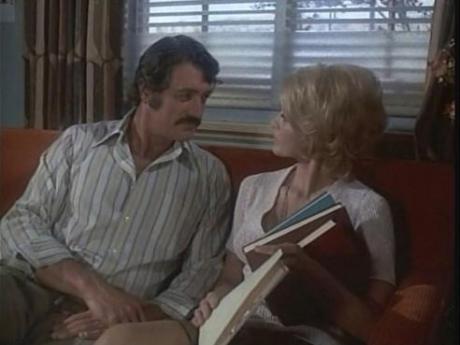
Ponce is taken under the wing of high school guidance counselor Tiger McDrew (Rock Hudson, complete with porn star mustache).  Quickly figuring out exactly what Ponce needs, Tiger sets him up with a teacher played by Angie Dickinson.  However, Tiger has other concerns than just Ponce.  Tiger, it turns out, is a sex addict who is sleeping with nearly every female student at the school. But, American society is so oppressive and puts so much pressure on the American male that Tiger has no choice but to kill every girl that he sleeps with…

This is one of the only film I can think of that not only makes excuses for a serial killer but also presents him as being a heroic  character.  And, while it’s tempting to think that the film is being satirical in its portrayal of Tiger and his murders, it’s actually not.  Don’t get me wrong.  The film is a very broad comedy.  The high school’s principal (Roddy McDowall) is more concerned with the football team than with all of the girls turning up dead at the school.  The local sheriff (Keenan Wynn) is a buffoon.  The tough detective (Telly Savalas) who investigates the murders gets a few one liners.

But Tiger, most assuredly, is the film’s hero.  He’s the only character that the audience is expected to laugh with, as opposed to at.  He is the character who is meant to serve as a mouthpiece for screenwriter Gene Roddenberry’s view on America’s puritanical culture.  If only society was less hung up on sex, Tiger wouldn’t have to kill.  Of course, the film’s celebration of Tiger’s attitude towards sex is not extended towards the girls who sleep with him.  Without an exception, they are all presented as being empty-headed, demanding, shallow, and annoying, worthy only of being leered at by Vadim’s camera until Tiger finally has to do away with them.

(The film’s attitude towards women makes Getting Straight look positively enlightened.)

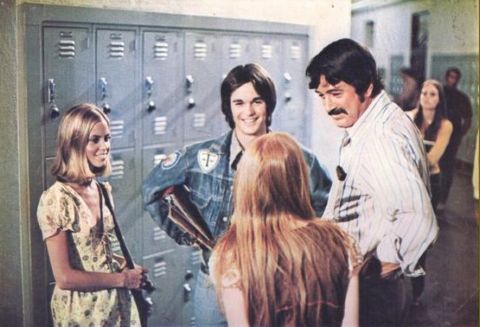
Rock and Angie

Rock and Angie

ANYWAY!  I spent about 40 minutes watching this movie before I gave up on it.  Actually, if you want to be technical about it, I gave up after 5 minutes.  But I stuck with it for another 35 minutes, waiting to see if the film was going to get any better.  It didn’t and finally, I had to ask myself, “Why am I actually sitting here and wasting my time with this misogynistic bullshit?”  So, I stopped watching and I did so with no regrets.

What I had forgotten is that I had set the DVR to record the film while I was watching it, just in case I later decided to review it.  So, last week, as I was preparing for this series of Back to School posts, I saw Pretty Maids All In A Row on my DVR.  I watched the final 51 minutes of the film, just to see if it ever got better.  It didn’t.

However, on the plus side, Rock Hudson does give a good performance in the role of Tiger, bringing a certain seedy desperation to the character.  (I’m guessing that this desperation was Hudson’s own contribution and not an element of Roddenberry’s screenplay, which more or less presents Tiger as being a Nietzschean superman.).  And beyond that, Pretty Maids serves as evidence as to just how desperate the Hollywood studios were to makes movies that would be weird enough to appeal to young people in the early 70s.

Watching the film, you can practically hear the voices of middle-aged studio executives.

“What the Hell are we trying to do with this movie!?” one of the voices says.

“Who cares!?” the other voice replies, “the kids will love it!”

A70-5583

Back to School #9: The Young Graduates (dir by Robert Anderson)


I have to admit that, as someone who watches a lot of movies that were made before she was even born and who is just fascinated by history in general, I have often wondered what the 60s and the 70s were really like.  Oh, don’t get me wrong.  I know what everyone says they were like — hippies, disco, cocaine, Watergate, Jimmy Carter, Viet Nam, and all the rest.  But people’s memories usually fade with the passage of time and it’s always hard not to feel that whatever I’m hearing is either an idealization or an exaggeration.  That’s one reason why I like watching the often critically reviled, low-budget films of that period.  Since these films were usually made by people who didn’t really care what judgmental viewers like me would think 20 years in the future, they are usually far more accurate when it comes to portraying the world from which they came than a film that was by a big studio whose main concern was to present an idealized portrait of existence that would not alienate any potential ticket buyers.  Crown International Pictures may never have been an acclaimed film studio but, as one of the more prolific producers of 70s exploitation fare, their films now serve as a valuable historical record of the time in which they were made.

If I want to know what it was like to be young and perhaps stupid in the 70s, I go to Crown International Pictures.

CIP_Logo

Take The Young Graduates for example.  First released all the way back in 1971, The Young Graduates was advertised as being “a report card on the love generation.”  The Young Graduates gives us a clue as to what it was like to be a teenager in 1971.  Judging from the film, it really sucked.

The Young Graduates tells the story of Mindy (Patricia Wymar), who is on the verge of graduating from high school.  She has a boyfriend named Bill (Gary Rist) but wow, is he boring!  All he wants to do is compete in drag races and it quickly becomes apparent that he’s incapable of expressing his emotions.  (Assuming that he has any.  The film is a bit ambiguous on this point.)  So, Mindy gets bored and has an affair with one of her teachers, the very married Jack Thompson (Steven Stewart).  Soon after realizing that Mr. Thompson will never leave his wife for her, Mindy suspects that she might be pregnant.  So, she and her friend Sandy (Marly Holliday) decided to take a road trip to Big Sur.  Along the way, they meet a sweet hippie (Dennis Christopher), a bunch of bad hippies, and some really bad bikers.  During their entire journey, they are pursued by Bill, Mr. Thompson, and Sandy’s boyfriend, Les (Bruno Kirby).

Though you wouldn’t know it from the film’s peppy soundtrack or Wymar’s cheerful performance as the continually put upon Mindy, The Young Graduates is actually a pretty dark movie.  With the exception of Pan, everyone that Mindy meets outside of high school is not to be trusted.  Essentially, she’s exploited by everyone that she meets and what makes it all the more disturbing is that Mindy smiles throughout the whole ordeal, almost as if Candide had been reincarnated in the form of a teenage girl.

So, The Young Graduates is really not much of a film.  Subsequent Crown International films would revisit high school and almost all of them would feature better acting and a far more interesting plot than the The Young Graduates.  No, the film does not work as a drama.  But as a documentary and as a time capsule, there’s a lot to enjoy about The Young Graduates.  The fashion, the haircuts, the music, and just the film’s general attitude are such relics of the late 60s and early 70s that the film is the next best thing to owning a working time machine.

That said, if The Young Graduates was an accurate picture of that time — well, I might not be asking for a time machine this Christmas after all!

younggraduates-1

Back to School #8: Halls of Anger (dir by Paul Bogart)


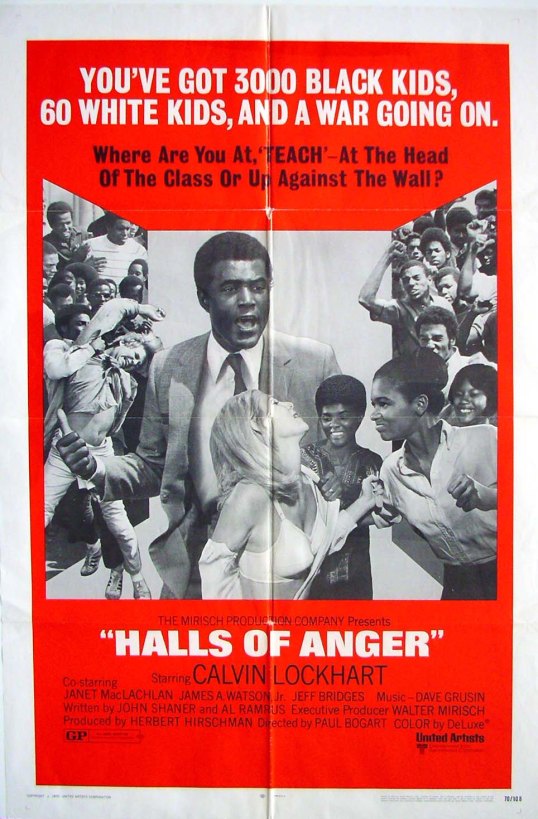
Halls Of Anger

Everybody loves Jeff Bridges.

Last month, the Democratic senator from Montana, John Walsh, announced that he wouldn’t be running for reelection because, much like Lianne Spiderbaby, he had been caught plagiarizing.  (Incidentally, I was one of the many bloggers caught up in Lianne’s web of thievery.  If you have ever read Lianne’s review of Mario Bava’s Black Sabbath, you were essentially reading my review of Black Sabbath.)  Unfortunately, for the Montana Democratic Party, Walsh had already won the Democratic primary.  So, the Montana Democrats held an emergency meeting to select a new nominee.

Governors, ranchers, former congressmen — nearly every prominent Democrat in Montana announced that he didn’t want the nomination.  It looked like all hope was lost but then a petition appeared online, asking the Democrats to nominate Jeff Bridges for the U.S. Senate!  This petition made national headlines and, in just a few hours, it had received thousands of signatures.  For a few brief days, everyone was truly excited about the prospect of U.S. Sen. Jeff Bridges.  I even signed the petition myself, despite the fact that 1) I don’t live in Montana and 2) I’m not even a Democrat!

(I’m a member of the Personal Choice Party.  PCP in 2016!)

Ultimately, he announced that he had no interesting running and wasn’t even sure if he was registered to vote but, until that happened, why were so many of us excited about Jeff Bridges running for the Senate?

Because, in this time of division and conflict, everybody loves Jeff Bridges!

He’s just an incredibly likable actor.  Even when he’s playing a villain, like in Iron Man, he still comes across like someone you would want to live next door to.  He’s everyone’s perfect hippie uncle, the guy that even people who don’t smoke weed want to get stoned with.  If you ever watch any of his early films — and Bridges has been making movies for nearly 50 years now — you’ll discover that this unique and likable charm is something that Jeff Bridges has always possessed.

It’s certainly present in 1970’s Halls of Anger.  This was Jeff Bridges’s film debut, made at a time when he could still pass for a high school student.  He was 20 when he made this film and I have to say that for those of us who best know him as the Dude, Rooster Cogburn, and whoever he was playing in Crazy Heart, it’s always interesting to see just how handsome Jeff Bridges was when he was young.

Jeff Bridges, hiding his face in Halls of Anger

Jeff Bridges, hiding his face in Halls of Anger

In Halls of Anger, he plays Doug, one of 60 white kids who have been transferred to a majority black inner city high school in an attempt to integrate it.  Of all the new white students, Doug is probably the most confident and the most open-minded.  He’s also the most friendly.  His attempt to join the high school basketball team upsets the other students but — even after getting beaten up — Doug sticks with it.  You knew that he would because, after all, he’s played by Jeff Bridges.

Of course, Doug’s story is just one of the many stories told in Halls of Anger.  Another one of the transfers — a weak-willed and balding racist named Leaky (played by future director Rob Reiner!) — tries to provoke a fight with a black student, hoping that he’ll be sent back to his old school for his own protection.  White Sherry (Patricia Stich) dates a black classmate and is savagely assaulted as a result.  Newly assigned vice principal Quincy Davis (Calvin Lockhart) tries to both keep the peace and teach a group of functionally illiterate students how to read.  Militant J.T. Walsh (James Edwards) wanders the hallways and speaks of revolution…

Rob Reiner in Halls of Anger

Rob Reiner in Halls of Anger

Actually, I’m probably making Halls of Anger sound a lot more interesting than it actually is.  For the most part, it’s pretty much your standard 1970 social problem film, in that it’s full of good intentions but those good intentions don’t always add up to compelling drama.  Paul Bogart’s direction is often flat (the scene where Davis teaches his students how to read seems to drag on for hours) and the characters don’t so much talk to each other as they make narratively convenient speeches.

That said, Halls of Anger is worth watching just to see Calvin Lockhart’s authoritative performance, Rob Reiner’s hilariously bad performance, and Jeff Bridges’s charismatic debut performance.  He may never be a member of the U.S. Senate but everybody will always love Jeff Bridges.

You can watch Halls of Anger below!

http://www.youtube.com/watch?v=7btGxM2rSCY

Back to School #7: if… (dir by Lindsay Anderson)


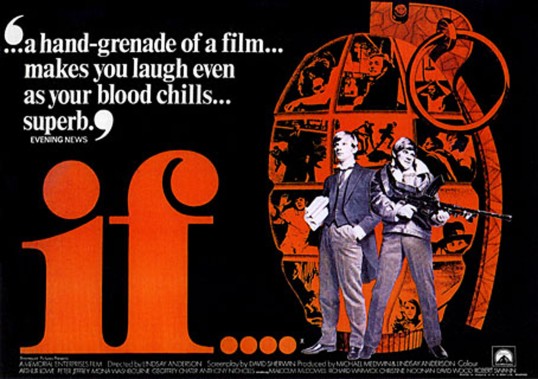
For today’s final entry in our series of Back to School reviews, let’s close out the 60s by taking a look at a 1968 British film.  Directed by Lindsay Anderson, if… not only won the Grand Prix du Festival International du Film (now known as the Palme d’Or) at the 1969 Cannes Film Festival but it also featured the film debut of future icon Malcolm McDowell.

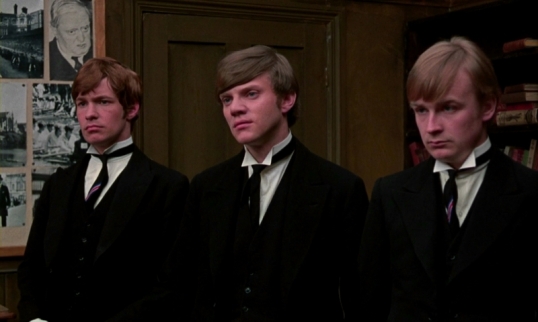
if… takes place at a British public school (or, as we would call it here in the States, a private school) that is mired in a long tradition of conformity and oppression.  For roughly the first half of the film, we see how the school works.  The teachers are stern and out-of-touch.  The headmaster (Peter Jeffrey) considers himself to be something of a reformer and is clueless as to just how little respect the students have for him.  Discipline is maintained by the Whips,sadistic upperclassmen who revel in their power and who spend most of their time speculating about which one of them will claim 13 year-old Bobby Phillips (Rupert Webster) as his own.  Three students — Mick Travis (Malcolm McDowell), Johnny (David Wood), and Wallace (Richard Warwick) — are considered to be nonconformists and soon find themselves being targeted by both the school’s faculty and the Whips.  During this first half, the film plays out as harsh but relatively realistic.

And then something happens.

If2

About 45 minutes into the film, if… starts to grow increasingly more and more surreal.  In a scene that plays out in languid, sensual slow motion, the otherwise dim-witted Wallace gracefully exercises on a high bar while an entranced Bobby Phillips watches.  When Rowntree and his fellow whips decide to punish Mick, Johnny, and Wallace with a particularly brutal caning, the disturbing sound of it echoes throughout the entire school.  During a war game, Mick fires an automatic rifle full of blanks at the chaplain and is subsequently forced to apologize while the chaplain sits up in a drawer kept in the headmaster’s office.  Mrs. Kemp, the wife of the housemaster, wanders naked through the dormitory.  Perhaps most famously, the film goes from randomly being in color to black-and-white and then back again, all adding to the movie’s dreamlike feel.

Perhaps most importantly, Johnny and Mick manage to sneak off campus and spend a day roaming around the city.  After they steal a motorcycle from a showroom, they stop at a cafe where they are served coffee by a character known only as the Girl (Christine Noonan).  The Girl tells Mick that sometimes she’s a tiger and soon, they are wrestling naked on the floor while Johnny sits in a corner booth and drinks his coffee.  Later, when Mick returns to the school, he looks through a telescope and sees the Girl staring back at him and waving.

Johnny, the Girl, and Mick

And finally, the Girl shows up while Mick, Johnny, Wallace, and Bobby are cleaning out a storeroom as a part of their punishment for scaring the chaplain.  Among the dusty shelves, they find not only a jar containing a fetus but a cache of weapons as well.  This leads to the film’s famous conclusion, a shocking act of violence that, in the 60s, was probably viewed as a show of solidarity with rebellious youth everywhere but, when seen in this time and age, draws disturbing parallels with the American tradition of school shootings.

Seen today, if… remains a surprisingly potent celebration of rebellion and a harsh condemnation of conformist society.  Occasionally pretentious in that wonderful way that only a British film made in 1968 could be, if… is also a surprisingly stinging satire that doesn’t leave anyone — even the film’s heroes — untouched.  Perhaps best of all, if… is also the film debut of Malcolm McDowell and he gives a strong performance here.  It’s easy to understand why, after seeing if…, Stanley Kubrick cast McDowell in A Clockwork Orange.  Interestingly enough, despite if’s apocalyptic ending, McDowell would play Mick Travis twice more, in Anderson’s O Lucky Man, a film that is even more surreal than if…, and in Britannia Hospital.

Tomorrow, we’ll continue our journey back to school by taking a trip to the 70s!

If

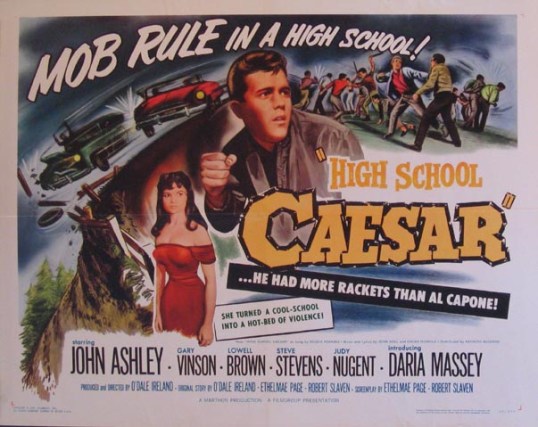
Back to School #6: High School Caesar (dir by O’Dale Ireland)


High School Caesar

We continue our trip back to school with a film that I so truly love, 1960’s High School Caesar!

High School Caesar tells the story of Matt Stevens (John Ashley), a high school student who also happens to be an aspiring crime boss.  With the help of his ever present entourage of leather jacket-wearing acolytes, Matt shakes down his fellow students for protection money, sells copies of tests, and even goes so far as to rig the student elections to make sure that he’s elected Student Body President over the idealistic (but rather boring) Kelly Roberts (Lowell Brown).  His classmates may hate him but, along with his jumpy second-in-command Cricket (Steve Stevens) and his sultry girlfriend Lita (Daria Massey), Matt rules the school.

When we first meet Matt, he’s busy beating another student into unconsciousness.  (“He won’t ever pay late again,” Matt explains to his gang.)  In fact, Matt is such a tough guy at school that I’m sure that 1960 viewers were quite shocked to discover that, away from school, Matt actually lives in a mansion.  (Today, the idea that a spoiled rich kid might turn out to be a jerk is no longer all that shocking.)  Matt’s parents are touring Europe and have basically abandon Matt.  The only two people taking care of him are a butler that he talks down to and a maid that he adores you.

As quickly becomes obvious, Matt is intent on controlling the entire school.  However, what he doesn’t know is that a group of the “good” kids (all of whom voted for boring, old Kelly Roberts) have been getting together and having drag races.  When Matt finds out and decides to take that over as well, his classmates finally start to fight back…

So, why do I love High School Caesar?  Well, first off, it’s an out-of-control youth film and I love out-of-control youth films.  After all, this entire back-to-school series pretty much exists because of my love for films about teenagers who are growing up too fast and taking things too far.  But even beyond that, High School Caesar is distinguished by John Ashley’s excellent performance as Matt.  If Buzz hadn’t gone over that cliff in Rebel Without A Cause, he probably would have turned out to be a lot like Matt.  Matt might be a bad guy but, as is evident from his relationship with the family maid, he just needs someone to care about him.

And finally, how can you not love the High School Caesar soundtrack?

Personally, I hope that, at some point in the future, Peyton Reed remakes High School Caesar.  But until then, you can watch the original below!

http://www.youtube.com/watch?v=HyID00xVo6w

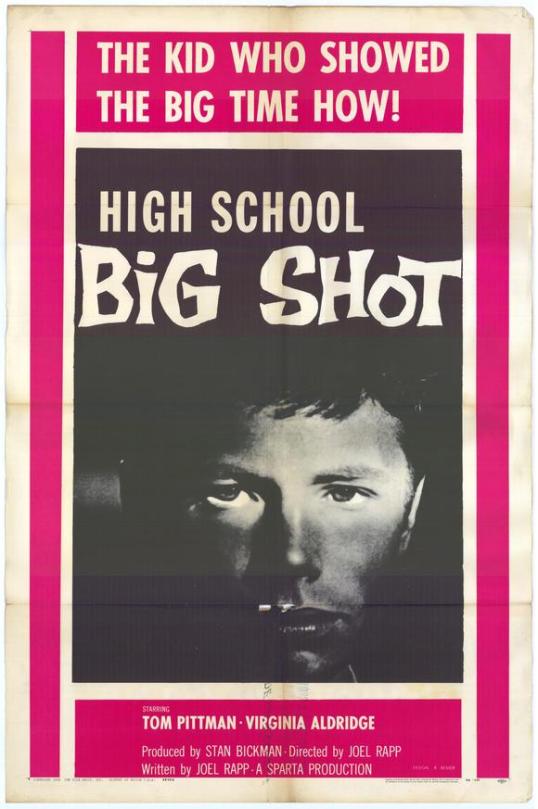
Back to School #5: High School Big Shot (dir by Joel Rapp)


high-school-big-shot-movie-poster-1959-1020228183

We continue our trip back to school with the 1959 teenage heist film, High School Big Shot!

Oh my God, this movie is so dark.  Rebel Without A Cause and Blackboard Jungle weren’t exactly optimistic portraits of the youth of America but none of them could ever hope to be as cynical and bleak as High School Big Shot.  This film, which I guess could best be described as being a high school noir, tells the story of poor, socially awkward high school student Marv (Tom Pittman).  Marv is a genius and, while he’s not popular at school, he does seem to have a wonderful future ahead of him.  He’s recently applied for a scholarship and his English teacher has agreed to write him a letter of recommendation because, as he puts it, Marv is “different from all the others.”

And Marv needs that scholarship because his father is an alcoholic who can’t hold down a job.  Marv’s relationship with his father is perhaps best epitomized by an early scene where he asks Marv to loan him some money because he has a date.  Marv has a date too but he still loans his dad the money.  Cut to the next scene and Marv is telling his date that he can’t really afford to take her anywhere but he can get her a Coke if she wants one.

Seriously — dark.

Marv’s life starts to look up when Betty (Virginia Aldridge) suddenly takes an interest in him and even agrees to go out with him.  However, as Betty explains to her loutish boyfriend Vince, the only reason that she’s going out with Marv is so she can trick him into writing her English term paper for her.  Marv, of course, agrees to do just that and then asks Betty if she wants to get married after they graduate from high school.

Again, dark.  Dark and awkward.

When the English teacher figures out that Marv wrote Betty’s term paper, Marv loses his scholarship and it looks like he’s now destined to spend the rest of his life working down at the docks.  However, Marv discovers that his seedy boss has recently received a million dollars in drug money.  Looking to both buy Betty’s love and help out his suicidal father, Marv comes up with an elaborate scheme to steal the money.  However, Betty and Vince have plans of their own…

Needless to say, it all leads to a violent climax that leaves nearly every character in the film dead.

And all because poor Marv wanted to impress Betty.

Like I said, dark.

And yet, the film itself is so dark that it becomes oddly fascinating.  You watch because you’re genuinely curious about how much darker Marv’s life can get.  It also helps that Tom Pittman gives a sympathetic performance as Marv (even if he does appear to be a bit too old to be playing a high school student) and Virginia Aldridge makes for a great femme fatale.  If this film were made today, it would probably be directed by David Fincher and it would star Anton Yelchin and Jennifer Lawrence.

And it would be great!

But until that happens, you can watch the original below!

http://www.youtube.com/watch?v=5K_Y3tEPlSY