Down here in Dallas, channel 47 is the local Me-TV affiliate. Me-TV specializes in showing old TV shows from the 50s, 60s, and 70s. The network sells itself as a nostalgic refuge for people who are several decades older than me, a place where they can go to escape from Seth McFarlane producing sitcoms and Maury Povich conducting DNA tests.
But you know what?
I like Me-TV and I’m glad that it exists. It probably has something to do with me being a history nerd at heart. I love the chance to see what the world was once like. Add to that, some very good shows were produced in the 50s and 60s. Just because a lot of us weren’t there to experience them firsthand doesn’t mean that we can’t appreciate them in rerun syndication.
Case in point: Thriller.
Thriller aired for two seasons in the early 60s. It was an anthology series, in the tradition of The Twilight Zone. Whereas The Twilight Zone was hosted by Rod Serling, Thriller was hosted by horror icon Boris Karloff, who always introduced the macabre material with a bemused gleam in his eyes.
Parasite Mansion was the 30th episode of Thriller and it originally aired on April 25th, 1961. In this episode, Marcia (Pippa Scott) crashes her car outside of a dilapidated Southern mansion. When she awakens, she finds herself in the position of being the unwilling guest of the eccentric family that lives inside the mansion. I like this episode, largely because I can never resist Southern gothic atmosphere.
Incidentally, the family’s matriarch is played Jeannette Nolan and, if she sounds familiar, that’s probably because she was one of the many actresses to voice Mrs. Bates in Psycho.
Today’s horror movie on the Shattered Lens is 2004’s Suburban Sasquatch.
Suburban Sasquatch (and, it must be admitted, that is a great freaking title) tells the story of a sasquatch who invades the suburbs. Well, we assume he’s a sasquatch. To be honest, the creature actually looks like some guy wandering around in a bear suit but no matter. Once the so-called sasquatch reaches the suburbs, he goes on a killing spree and … well, that’s pretty much it.
Okay, so obviously, Suburban Sasquatch isn’t a very good movie. In fact, it’s probably one of the worst movies ever made. The monster looks ridiculous, the acting is terrible, and the special effects … well, it’s debatable whether or not there are any special effects. However, Suburban Sasquatch is one of those movies — much like Manos, the Hands of Fate — that is watchable precisely because it is so unbelievably bad.
Also, Joel McHale once said that Suburban Sasquatch was his favorite movie of all time.
Of all the monsters who have appeared in horror cinema, Count Dracula is perhaps the most iconic. Reportedly, Dracula first appeared on film in 1920, in a silent Russian film that is now considered to be lost. In 1921, he would appear in a Hungarian film called Dracula’s Death and in 1922, he would be renamed Count Orlok for the German masterpiece Nosferatu. Indeed, by the time Bela Lugosi gave his famous performance in Tod Browning’s Dracula, the count had been appearing in films for at least 11 years. In nearly 100 years of filmmaking, a countless number of actors have brought Dracula to life.
We could spend hours debating who was the best Dracula and certainly, there are some worthy contenders. Bela Lugosi brought a continental sophistication to the role, while John Carradine was properly intimidating and theatrical. Udo Kier, Gary Oldman, Thomas Kretschmann, Leslie Neilsen, Zandor Vorkov, and Frank Langella have all played the prince of darkness, to varying degrees of success.
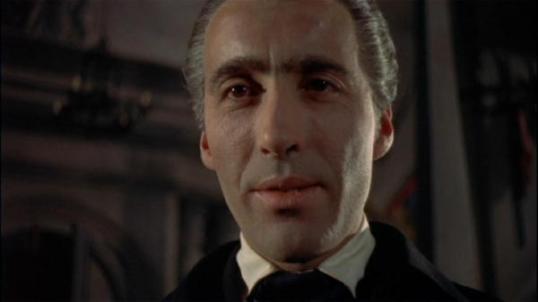
Yet for me, as worthy as any of those actors may be, there is only one true Dracula and he was played by Christopher Lee.
Lee famously played Dracula in seven movies for Hammer Films and, though he has often complained about the quality of these films (especially the later ones, which tended to mix Dracula with hippies), they were largely responsible for making Christopher Lee into the iconic figure that he remains today. It’s also largely due to Lee’s performance that horror fans like me continue to discover and appreciate the films of Hammer today.
As played by Christopher Lee, Dracula was pure evil. Lee’s Dracula had no use for self-pity and one can only imagine what his reaction would have been if he had ever run into the self-torturing vampires of Twilight. Lee’s Dracula had no use for doubt or regret. Instead, he was a determined animal who was driven by a singular lust for blood.
And yet, at the same time, Lee brought an intelligence to the role that was often lacking in previous performances. Lee’s Dracula may have been an animal but he was a cunning animal. Whereas it’s easy for me to imagine escaping from the clutches of Bela Lugosi, I know that if Lee’s Dracula wanted me then he would have me. There’s no escape from Lee’s Dracula. He’s too quick, determined, and intelligent.
His animal nature made Lee’s Dracula frightening but it was his cunning and determination that made him dangerous and, ultimately, even sexy. (While I’ve read that audiences in 1931 swooned over Bela Lugosi, whatever sex appeal he may have had is lost on modern viewers like me.) It has often been argued that Bram Stoker meant for Dracula to be a symbol of all the desires that were repressed by Victorian society. That’s certainly true when it comes to Christopher Lee’s carnal and viscous portrayal of the character.
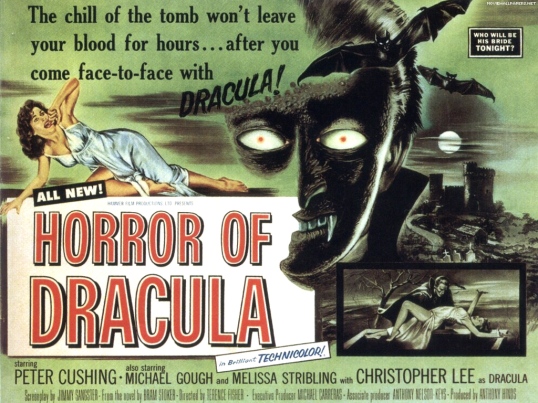
Of the seven Dracula films that Christopher Lee made for Hammer Films, the first remains the best. Released in 1958 and known as Dracula in the UK and the Horror of Dracula in the US, it revitalized the horror genre and helped to make stars of both Christopher Lee and Peter Cushing. Especially when compared to some of the sequels that Hammer subsequently produced, it remains one of the best Dracula films ever made.
The film is a very loose adaptation of Stoker’s original novel. Jonathan Harker comes to Dracula’s castle in Romania. Though posing as a librarian, Harker has actually come to the castle to drive a stake through the heart of both Dracula and his vampire bride. However, no sooner has Harker staked the bride than he’s overpowered and bitten by Dracula. Significantly, all of this occurs within the first 10 minutes of the film. As opposed to certain other Dracula films, Horror of Dracula gets straight to the point. And why shouldn’t it? After all, anyone watching the film already knows that Dracula’s a vampire so why waste time trying to convince us otherwise? We don’t watch Dracula for the familiar story as much as we watch to discover how different filmmakers will choose to tell that story.
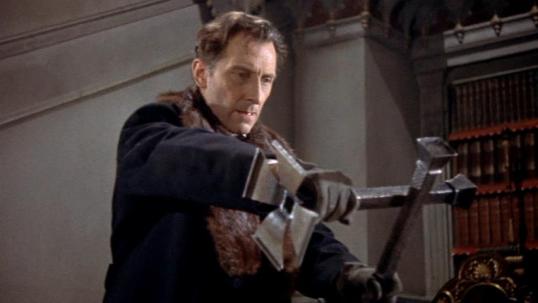
When Harker’s colleague, Prof. Van Helsing (played with the perfect amount of intensity by Peter Cushing) shows up at the castle, he discovers that Harker is now a vampire and that Dracula is nowhere to be found.
Dracula, needless to say, is out for revenge. He stalks Harker’s fiancee Lucy, as well as Lucy’s brother Arthur Holmwood (Michael Gough) and his wife Mina (Melissa Stribling). Much as in Stoker’s original novel, Lucy is eventually turned into a vampire and it’s up to Van Helsing and Arthur to stop both her and her new master.
(Of course, in Stoker’s original novel, Harker is not turned into a vampire and instead marries Mina while the aristocratic Arthur is one of Lucy’s three suitors. However, I have to say that I always thought the literary Harker was a bit on the dull side and that Arthur was always my favorite character so I’m happy that he gets to be the hero here.)
If I had to pick one film to epitomize everything that I love about the Hammer brand of horror, it would be Horror of Dracula. As directed by Terrence Fisher, the film moves at an exciting, non-stop pace while the traditionally lush cinematography is almost bombastically colorful. Cushing and Lee, who were the best of friends off screen, make for formidable opponents, with Cushing embodying good just as effective as Lee embodied evil. Though it’s been over 50 years since Horror of Dracula was originally released, the film remains effective and, not coincidentally, a lot of fun.
Quite simply put, this is a film that, for so many reasons, remains a true pleasure to watch.
One final note — I often find myself lamenting that I was born several decades too late and I realize just how true that is whenever I watch a film like Horror of Dracula. Seriously, I would have loved to have been a Hammer girl, showing off my cleavage and getting hypnotized by Christopher Lee.
I always thought that Joe Dante’s 1981 horror film, The Howling, has been overlooked just a little bit due to it’s release being the same year as John Landis’ own horror film, An American Werewolf In London. Both were werewolf films and both were good in their own right.
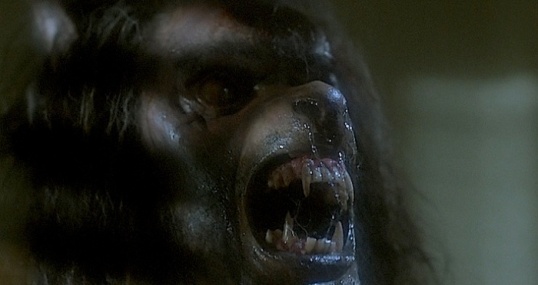
Dante’s film has been called silly by some critics, but it was the more serious of the two with Landis’ own film mixing in more black humor in the narrative than Dante’s which took on a more traditional approach to the werewolf horror. Even the transformation scene from both films took on opposite sides in terms of mood and tone. Where Landis’ film treated the scene with both a mixture of horror and camp (due to the music playing in the background) in The Howling the scene went for full-on horror.
This has been one of my favorite horror scenes and it’s all due to the work of the very person who made John Carpenter’s The Thingsuch a memorable piece of horror filmmaking: Rob Bottin.
This man should be handed every award for every effects work he has ever done and will continue to do. It’s a shame that he hasn’t done anything of note since 2002’s Serving Sara, but until Hollywood decides that if they want great practical effects paired with advancing CG ones and hire Bottin once again we can always fall back on his past work such as the one’s he did for The Howling.
Beyond Belief: Fact or Fiction aired off-and-on for about five years on the Fox network. A sign of just how randomly this show was scheduled can be found in the fact that season 3 started in 2000 while season 4 didn’t start until 2002. Reruns of the show currently air on the Chiller Network which is where I recently discovered it.
Hosted by Jonathan Frakes, each episode would present the viewers with five different stories. Each story would appear to defy logic and then, at the end of the episode, Frakes would reveal which of the stories were fact and which were fiction. The show was often incredibly silly and yet, it occasionally had an odd charm to it. A lot of this was due to Jonathan Frakes, who always seemed to be rather amused with it all.
Even more importantly, as bad as this show often was, it’s the perfect type of show to watch in October. It’s the television equivalent of a scary story being told around a campfire.
Episode 13 aired during the show’s 2nd season. Can you guess what’s fact and what’s fiction?
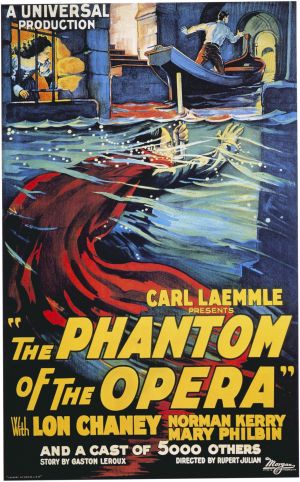
Today’s horror movie on the Shattered Lens is both a classic of silent era and one of the most influential horror films ever made.
First released in 1925, The Phantom of the Opera is today best known for both Lon Chaney’s theatrical but empathetic performance as the Phantom and the iconic scene where Mary Philbin unmasks him. However, the film is also a perfect example of early screen spectacle. The Phantom of the Opera was released during that period of time, between Birth of the Nation and the introduction of sound, when audiences expected films to provide a visual feast and Phantom of the Opera certainly accomplishes that. Indeed, after watching this film and reading Gaston Leroux’s original novel, it’s obvious that the musical was inspired more by the opulence of this film than by the book.
This film is also historically significant in that it was one of the first films to be massively reworked as the result of a poor test screening. The film’s ending was originally faithful to the end of the novel. However, audiences demanded something a little more dramatic and that’s what they got.
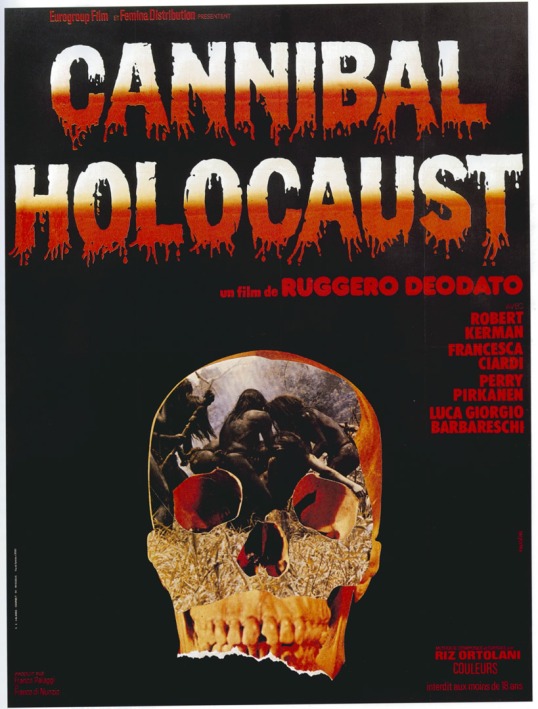
The month of October here at Through the Shattered Lens wouldn’t be complete if I didn’t introduce one of the very films which this site was made for: Cannibal Holocaust.
This 1980 film by Italian exploitation filmmaker Ruggero Deodato remains of the best examples of grindhouse filmmaking. It continues to be many people’s teop ten grindhouse and exploitation films list. Cannibal Holocaust could be considered as the best of the cannibal subgenre films which first began with Umberto Lenzi’s 1972 The Man from the Deep River.
Cannibal Holocaust also remains one of the best found footage films which has regained a sort of come back the last couple years with such popular found footage horror films like the Paranormal Activity series right up to 2012’s The Bay from Barry Levinson. It’s no surprise that Deodato’s film has survived the test of time as new legions of horror fans discover his films and older fans return to watch it again.
The film itself has continued to gain notoriety as newer fans discover the film. Upon it’s release the film was censored or outright banned from many countries who thought it was an actual snuff film (an allegation that even got Deodato and the film’s producers arrested in Italy on charges of murder) or because of atual animal cruelty performed by the film crew on live animals during the shoot. While the notion of Cannibal Holocaust was an actual snuff film remains a sort of urban legend amongst the new and young horror fans discovering it for the first time it really was the allegations of animal cruelty that continues to haunt the film to this day as it remains banned it several countries.
While the film was finally removed from the UK’s “video nasties” list it still hasn’t been released fully uncut and unedited in that country unlike the rest of the world. Though with the global reach of the internet such censorship and banned lists have become irrelevant and thus has given Cannibal Holocaust a much wider reach than it has ever had.
Cannibal Holocaust may be over thirty years old now, but it remains one of the finest example of grindhouse and exploitation filmmaking. It will continue to live on for future generations of horror fans and gorehounds to discover.
I did not see Warm Bodies when it was first released back in February. I was certainly aware of the film, having been bombarded with the trailer since December of 2012. and I assumed that I would see the film but, for whatever reason, I simply could not work up the enthusiasm necessary to actually see it.
Perhaps it was because the concept — a zombie love story — simply seemed too cutesy and, as much as I love zombie movies, they’re not exactly what I want to watch on Valentine’s Day. The fact that the movie was being called a “zombie twilight” didn’t help. (Don’t get me wrong. The Twilight films are a very guilty pleasure of mine but that still doesn’t make the comparison a selling point.)
As a result, as much as I thought I would end up seeing Warm Bodies in the theaters, I never got around to it. Instead, I waited until Warm Bodies premiered on Cinemax earlier this month to watch it and you know what?
I was surprised to discover how much I loved it.
Warm Bodies takes place after the zombie apocalypse has decimated America. The undead wander through the ruins of society while the few remaining humans have barricaded themselves in a heavily guarded enclave. Leading them is Col. Grigio (John Malkovich) who continually tells his citizens that the only way to survive is to kill every zombie that they see. As Grigio explains it, the zombies may look human but they have no humanity left.
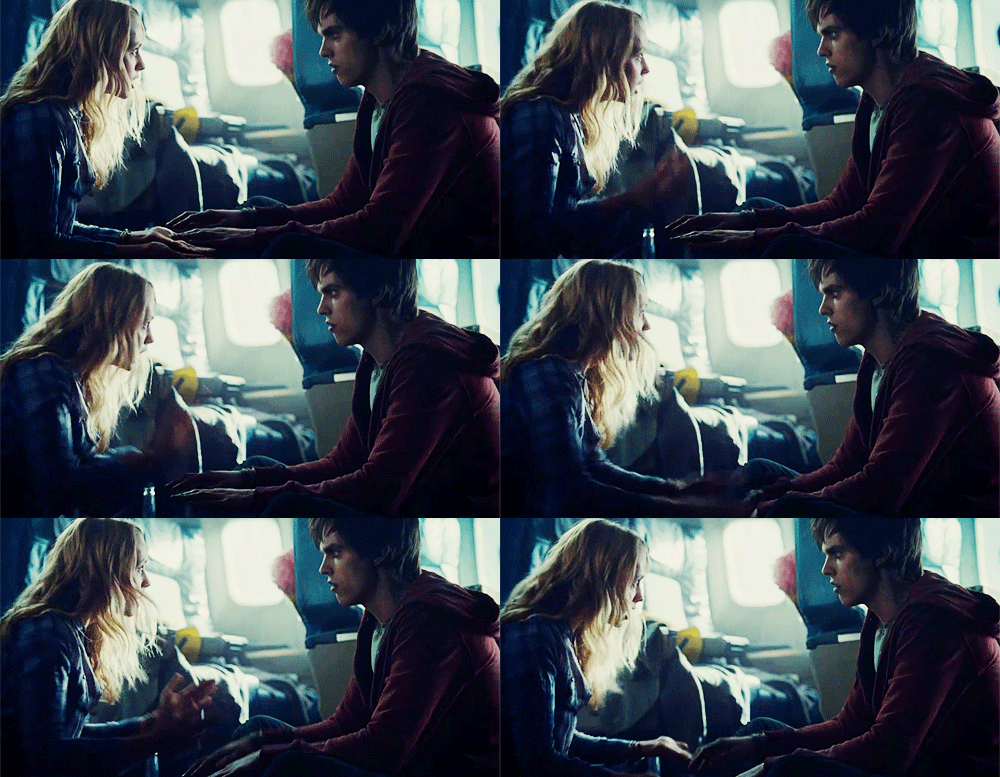
This would probably come as news to R (Nicholas Hoult), a zombie whose day consists of wandering around an airport, looking for people to eat, and occasionally acknowledging his friend M (Rob Corddry) with a grunt. R spends most of his time thinking about how bored he is with being a zombie and wondering who he once was. That’s one reason why R enjoys eating brains because, by doing so, R gets to enjoy the memories of his victims and, for just a brief few moments, he can know what it’s like to be human.
Things change for R when he and a group of zombies come across humans that are searching the city for medical supplies. R spots one of the humans, Julie (Teresa Palmer), and finds himself immediately drawn towards her. However, R is also shot in the chest by Julie’s boyfriend, Perry (played by Dave Franco, the younger brother of my beloved James Franco). R responds by attack Perry and eating his brain, which causes R to experience all of Perry’s memories of Julie. Now in love with Julie, R saves her from the other zombies and takes her back to the airplane where he makes his home.
As Julie and R bond, R finds himself slowly becoming more and more human. Yes, that’s right — the cure to the zombie apocalypse is love. Now, that may sound predictable or simplistic and I guess it is. But you know what? I’m a romantic and I loved it! It helped that both Palmer and Hoult have a really likable chemistry. Even before R’s heart starts to beat again, they make a really adorable couple.
Unfortunately, the more R tries to act human, the more the other zombies want to eat him. This is especially true of the Boneys, zombies who have decayed to the point of just being skeletons and who prey on anything that happens to have the slightest trace of a heartbeat. Meanwhile, Julie’s father — Col. Grigio — remains firmly convinced that the only cure for zombification is a bullet in the head.
Though there are moments of horror in Warm Bodies (mostly involving the Boneys, who are genuinely scary), the film is mostly concerned with telling an audience-friendly love story. As I watched the film, I occasionally found myself wishing that the movie has been directed by someone like James Gunn, who would have brought a bit more of a satiric bite to the film.
And yet, despite being occasionally frustrated by how (literally) bloodless the film was, I loved Warm Bodies.
What can I say? It’s an incredibly sweet and romantic movie and, as much as its fashionable to be cynical, who can resist a good love story? If anything truly elevates Warm Bodies above being just another supernatural romance, it’s the performance of Nicholas Hoult. Even when he’s just stumbling around with a blank face and uttering meaningless groans, Hoult makes R into a likable flesh eater. As sweet as the idea of love bringing life to the dead may be, it’s Hoult’s intelligent performance that makes both the idea and the romance feel real.
In The Grave, old west outlaw Pinto Sykes is gunned down by a group of townspeople and buried in a lonely grave. However, before Sykes dies, he swears that if the bounty hunter Miller (Lee Marvin) ever comes near his grave, he’ll reach out of the ground and grab him. Needless to say, it’s not long before Miller is challenged to put Sykes’s dying words to the test.
This episode of The Twilight Zone was written and directed by Montgomery Pittman. It originally aired on October 27th, 1961. Classic western fans will immediately recognize the majority of the cast.
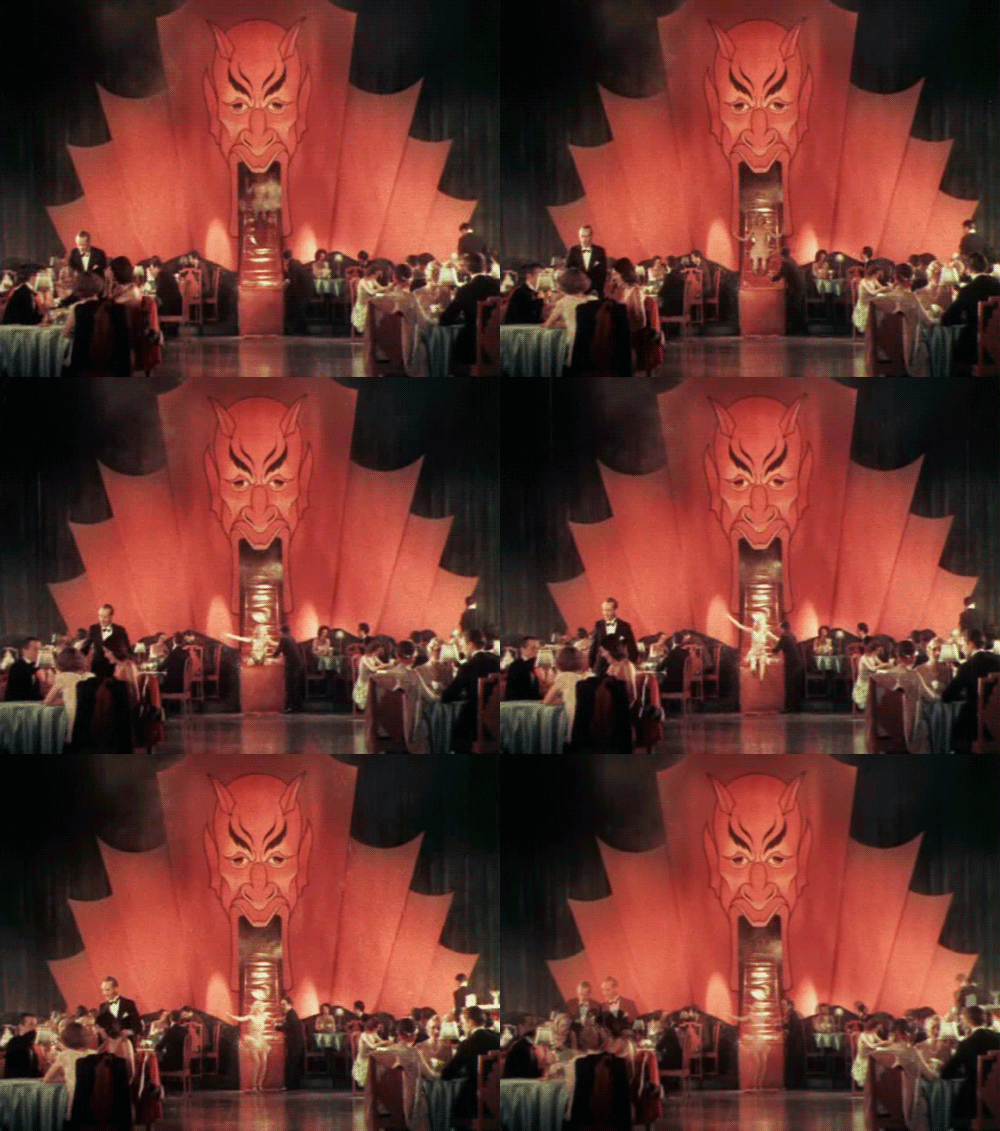
Today, I want to take about 18 minutes to share something with our readers. The Devil’s Cabaret is an early color short film from 1930. I recent caught it on TCM and my immediate reaction was that I simply had to share it. Along with fitting in with the October theme of this site, The Devil’s Cabaret provides ample evidence of just how weird Hollywood could be before the production code was instituted.
Incidentally, the devil is played Charles Middleton who, nearly two decades later, would play The Strangler of the Swamp.




 Through the Shattered Lens