Review: The Walking Dead S4E06 “Live Bait”


TheWalkingDeadS4

“And I ask for no redemption in this cold and barren place.” — Ben Nichols

[some spoilers]

Season 4 of The Walking Dead, from the very beginning, has been exploring the theme of whether those who have managed to survive this far into the zombie apocalypse could ever return to who they were in the past. Could they return from the brink of having to do some unthinkable acts in order to survive? It’s this running theme which has dominated this first half of the season, so far.

We’ve seen Rick trying to leave behind the “Ricktatorship” of Season 3, but only to find out that this new world won’t allow him to go back to the way he used to be. He has changed, and so has everyone, some of the better and some for the worst. We’ve seen several main characters of the show go through this very crucible and some have turned out much colder while others have seen their moral center strengthened.

The series has been hinting that the Governor was still out there and last week’s episode ended with a sudden reveal that he’s back and has now set his sight back on the prison. While quite an ominous moment considering the Governor’s past actions towards Rick and the prison group, tonight’s episode has put some ambiguity on what the Governor’s agenda in regards to the prison really is.

“Live Bait” is the title of the latest episode of The Walking Dead and it takes a risky move by concentrating on the Governor only. We don’t see Rick or anyone from the prison community. This episode was all about the Governor and what happened to him after his failed attack on the prison in the season 3 finale. We already know that he massacres pretty much every member of his attacking force with the exception of his two most loyal lieutenants in Martinez and Shumpert. We see during the episode’s cold opening the total breakdown of not just the Governor but also the full destruction of everything he had built with Woodbury both literally and symbolically.

Yet, we don’t see him continue his rampage against those who he sees as having been the architect of his downfall. We see that he has blamed no one else but himself for turning into something that Rick and his people always feared he was: a charismatic, but psychotic leader who would destroy anyone and everything if he can’t have it. Tonight’s Governor has come a long way from Season 3’s version. Tonight he’s become a wandering, disheveled loner who looks to have more in common with the very zombies he hates. He’s on automatic with the barest sense of survival in his mind. Yet, just when we think he has finally given up the image of someone in a second floor window of an apartment complex peaks his curiosity enough to want to live another day.

This begins the meat of this episode as we see the Governor encounter a family who has survived the past year of the zombie apocalypse on their own. A family of a cancer-stricken father, his two daughters and a granddaughter. A group that has managed to survive without having learned just exactly how to destroy zombies they encounter and the true nautre of the infection.

For some this latest episode was too much talking and exploring the state-of-mind of the Governor, but it was actually a very strong episode that shows not every week has to be action-packed. While the episode (written by series regular Nichole Beattie) wasn’t very subtle about having the granddaughter becoming a stand-in for the Governor’s daughter, Penny, it still doesn’t diminish the fact that we see a sort of reset on the Governor as a character. The almost cartoonishly villain that the character had become by the end of Season 3 looked to be getting a sort of rehab to something that retains some complexity. This is not crazy Governor tonight, but a damaged individual who doesn’t see redemption in the future for the sins he had done in the past.

By episode’s end we see him having built a sort of surrogate family from the two daughters and the granddaughter who took him in, but his attempt to try and escape his Woodbury past (going so far as to use a name he had seen during his aimless wanderings) goes for naught as we see his past literally come back to confront him from the bottom of a pit. Like I said, not the most subtle episode, but for the most part the ideas and themes explored stick the landing.

Now, time to see if the sudden change in the Governor in his road to redemption will continue with the next episode which, hopefully, will catch up to the reveal of him watching the prison in episode 5. Some may decry the loss of lunatic Governor, but I prefer my villains to be much more layered in their personalities and motivations. The Governor has come out of this latest episode a sympathetic villain, but who might still have that dark side just waiting in the shadows of his psyche for a chance to assert itself.

Notes

  • Tonight’s episode was written and directed by series regular Nichole Beattie and series newcomer Michael Uppendahl.
  • The barn spraypainted with the name Brian Heriot and instructions for this unseen individual on where to go was another reminder of how much the world of The Walking Dead has lost in terms of society and civilization.
  • The first episode of The Walking Dead where the original cast (those that still remain) don’t make any sort of appearance.
  • This episode also marks the very first flashback-only episode of the series.
  • The characters of Lilly and Tara look to be this show’s version of two characters from the comics and the novels. Lilly was one of the Governor’s loyal supporters in the comics while tv version of Tara was much closer to the novel version of the same name.
  • When the Governor gives the sisters his name as Brian it’s a little detail that fans who have read the novels know as the Governor’s real first name. Philip is actually the name of his brother whose identity and personality he takes.
  • The episode didn’t have much zombie and gore until the end and much props to KNB EFX for finding new ways to kill zombies. Best kill of the night being the use of a femur bone to rip off the head of zombie by pulling back it’s top jaw off violently like a pez dispenser.
  • Talking Dead Guests: Ike Barinholtz of The Mindy Project and David “The Governor” Morrissey.

Season 4
Glorious Fantasy, Part One: Final Fantasy One


In the recent past, I decided that I was going to do some ‘series’ and write about my experiences. The first of these I devised was to finally make the commitment to read the ‘Wheel of Time’ series, which is unfortunately on hiatus after I couldn’t take it anymore. Later, I decided that one thing that I would almost certainly definitely have fun part of the time with… was playing every single title under the Final Fantasy brand that I could get my hands on. Like most gamers who enjoy RPGs, I was a consumer of the NA translations of these fine games when I was growing up. Unlike many people in my generation, I still enjoy even the most recent offerings in the series. So, something to write about, and a source of enjoyment for me? Sounds very win-win.

Most people have already played many/most/all of the games that I’m going to write about in this series (weirdly, as I compiled the list of games, I personally have not played a fair number of them). I don’t care. I’m going to look at all (most? I’m bad with structure, we’ll see how long this lasts) of the following things from these games:

– Some objective data. What version of the game did I play, and why did I select that one.
– Is the game any good?
– Is the answer to the first question, “It doesn’t hold up”? Why?
– How would I place this game in a historical context? I want to watch the series evolve and devolve and side-volve as I go.
– Did I enjoy this game? What were the emotions and insane facial expressions I went through while playing it?
– How many times I frantically Googled maps for enormous maze-like dungeons because I no longer have the patience to solve them on my own?
– Was it… challenging? Were these games ever hard? Does the challenge ebb and flow?
– No MMORPGs. Sorry FF14 fans, I don’t ‘do’ MMORPGs anymore. Plus, the plan here hopefully doesn’t involve spending a bunch of money acquiring games.

I think all of this is extremely important knowledge, and that the human race will be improved by my research.

That preamble having been dealt with, let us begin our odyssey at the very beginning. And with one of the core series games that I had never played before.

FF1

Version: Gameboy Advance, “Final Fantasy I & II, Dawn of Souls”

So, I already know, guys. I got jobbed. I knew it as soon as I fired up the GBA version of FF1 and found out that I had MP instead of spells per day. I made a terrible mistake! Unfortunately, while I do know a guy with an NES console in excellent working order, he does not have a working FF1 cartridge. Oh, and he probably doesn’t want me spending a week in his basement emitting 8-bit bloops and bleeps at him. I could have resorted to emulation (indeed, I may have to, for some of the more obscure titles on my list) but being totally ignorant of the gameplay changes going in, I already made a fatal mis-step.

Here’s the deal, for those who don’t know: In the original Final Fantasy release on the NES, your party was always poor and under-equipped, if you killed a monster and someone else was also targeting that monster, their turn was wasted with an ineffective hit, and your wizards gained spells per day, the system inspired by noted fantasy author Jack Vance, and also the inspiration for the system of magic used up through the 3.5 edition of “Dungeons & Dragons”. In “Dawn of Souls”, ineffective hits are gone, your casters now have the traditional Final Fantasy MP pool (and unbelievably cheap Ethers to boot), and the monster encounters are both more frequent and more lucrative. In short, the game is much easier on the GBA than in its original form.

And it is pretty easy, on the GBA. Even the content in the bonus dungeons included with the game did not pose much of a challenge for me in the game’s later stages, and while the final boss, Chaos, had a formidable quantity of HP…it really just delayed the inevitable. My party never seemed to run out of resources, and once I had reached a certain point, I achieved critical mass. I had too much gold, too many powerful items, and my entire party could cast useful spells to set up for boss encounters. Most of the regular mook encounters were just auto-battles by the end, which, really, can be seen one of two ways. I normally prefer the regular enemies to at least present the illusion of a challenge. It’s nice to have some enemy types who demand the use of a powerful spell to avoid some dangerous attack, and so forth. However, given the extremely high encounter rate present in Dawn of Souls, I didn’t mind the auto-battling too much.

The one aspect of the original game’s gameplay that very much remains intact in the Dawn of Souls remake is the fact that nobody tells you where to go next or what you have to do, aside from the basic instruction of ‘save the four crystals’. When I first conceived of this series, I had planned to have a ‘no frantically Googling answers’ policy. It has already eroded, as I’m honestly stunned that anyone had the patience to figure out how to beat this game when it first came out. I suppose that isn’t true: I remember spending a ton of time on equally murky NES and SNES games when I was a kid. We eventually managed to puzzle out countless secrets in ‘The Legend of Zelda’. Alas, it seems that my patience (or focus…?) just isn’t what it used to be. Several times, I sought basic instructions on what to do next, and I don’t even feel all that bad about it. It’s such an incredibly stark difference when compared to games even slightly later in the series, where the connective tissue of a story draws you from point to point, perhaps with a little wandering. Even a game like the classic “Chrono Trigger”, where several times the only way to proceed is to go to a time period and see if things have changed, you have a relatively small set of places to wander through before you’ll find your answer. Not so in FF1: once you’ve acquired even the simplest vehicle, a canoe, there’s a huge amount of space to explore, and if you pick the wrong direction, you’ll be in mortal danger.

I’m honestly not sure, on the other side, whether I really enjoyed the game or not. Certainly, it was diverting; it managed to hold my attention for twenty hours or so, despite possessing no story to speak of, and only a couple of characters worth mentioning (your entire party in FF1, for those coming very late to the party, consists of silent protagonists). It seems that I can’t really judge whether the game has held up properly because of the way in which it was remade for the GBA, which is a bummer. My first article, already smashing my expectations into dust! As a result, I’ve re-added FF1 to the master list, and next time, I’ll find some manner of replicating the experience of the original game. Humankind will be improved by my research.

44 Days of Paranoia #2: Executive Action (dir by David Miller)


The Kennedy Memorial in Downtown Dallas

The Kennedy Memorial in Downtown Dallas

Even though it happened 22 years before I was born, I sometimes feel as if it was only yesterday that President John F. Kennedy was assassinated.

A lot of that is because I’m from Dallas.  When I was born, my family lived in Oak Cliff, a few blocks away from where the accused assassin Lee Harvey Oswald once lived.  I drive by the Kennedy Memorial several times a week.  I’ve gone to the Sixth Floor Museum.  I’ve made out on the Grassy Knoll.  On a daily basis, I see tourists who have come down here from up north with their preconceived prejudices, their unwieldy copies of Stephen King’s 11/22/63, and their overactive sweat glands.  (“How do you handle the heat!?” they ask when the temperature is barely above 90.)  With the 50th anniversary of the assassination approaching, the Dallas Morning News has been running daily stories examining every detail of that terrible event.

The rest of the nation, of course, will never let us forget that JFK was assassinated in Dallas.  Just last week, there was an idiotic and bitter opinion piece in The New York Times, written by James McAuley, in which he claimed that Dallas was a “city of hate” that should feel more guilt over the JFK assassination.  As McAuley (who is studying history at Oxford and is not a resident of that city that he apparently feels qualified to judge) put it, “For 50 years, Dallas has done its best to avoid coming to terms with the one event that made it famous: the assassination of John F. Kennedy on Nov. 22, 1963.”

This, of course, is bullshit.

There are two competing schools of thought about the assassination of John F. Kennedy.  One says that Lee Harvey Oswald was solely responsible.  The other is that Kennedy was killed as the result of a complex conspiracy.

JFK Assassination Bullets

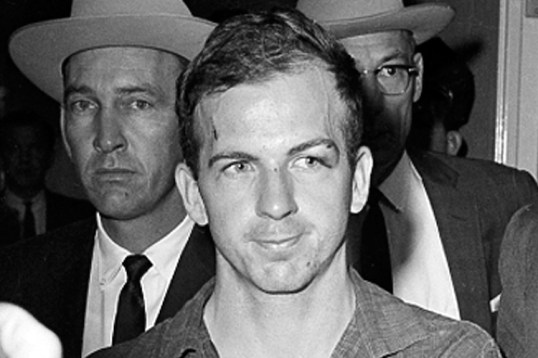
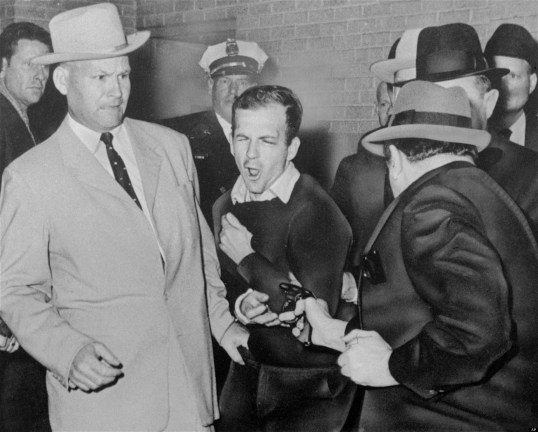
Let’s say, for the sake of argument, that Lee Harvey Oswald acted alone.  Well, Oswald was born in New Orleans but he was raised up north in New York City.  He was also a communist with a history of mental instability.  Hence, if you accept that Oswald was the lone assassin than you also have to be willing to accept that Oswald would have tried to kill Kennedy regardless of what city he was living in.

IMF Head-Perp Walk

Things get a bit more complicated if you believe that Kennedy was killed as the result of a conspiracy.  But let’s consider the usual suspects that come up whenever people start talking about the possibility of conspiracy.  The Mafia was based in the north.  The CIA was based in Washington, D.C.  The anti-Castroites were based in Miami.  Again, all of these conspirators would have killed Kennedy regardless of what city he went to in November.

It’s easy for the rest of the country, in a fit of jealousy, anger, and delusion, to blame Dallas and Texas for the assassination of John F. Kennedy but, regardless of whether you believe in the lone assassin or a larger conspiracy, the truth is far more complex.

Over the next few days, as part of the 44 Days of Paranoia, I’ll be taking a look at some of the many films that were inspired by this assassination.  Let’s start things off with one of the lesser known entries in the JFK genre, 1973’s Executive Action.

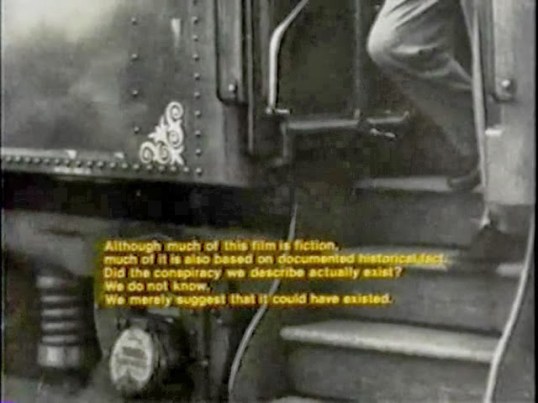
Executive Action opens with a series of grainy, black-and-white photographs of both America in the 1960s and the men who, over the course of the film, will be portrayed as having plotted and carried out the assassination of President Kennedy while a mournful piano plays in the background.  It’s a low-key but eerily effective opening and it also lets the viewers know exactly what type of film they are about to see.  As opposed to Oliver Stone’s far better known JFK, Executive Action is a low-key, almost deliberately undramatic film.   Despite the fact that there are some familiar faces in the cast (or, at the very least, familiar faces to those of us who watch TCM), Executive Action almost feels as if it could have been a documentary.

blogger-image--1805315534

As the film opens in 1963, we see a group of very rich men talking about the future of America.  Ferguson (Will Geer) and Foster (Robert Ryan) are concerned that President Kennedy’s policies are going to destroy America.  Foster is worried that Kennedy is planning on cutting back on military spending.  Ferguson is upset by Kennedy’s support of the Civil Rights movement.  (In one memorable scene, we see Martin Luther King delivering his Dream speech on TV before the camera pulls back to reveal Ferguson watching in disgust.)  Their associate, the shadowy Farrington (Burt Lancaster), argues that the only way to stop Kennedy is to assassinate him and put the blame on a lone gunman.

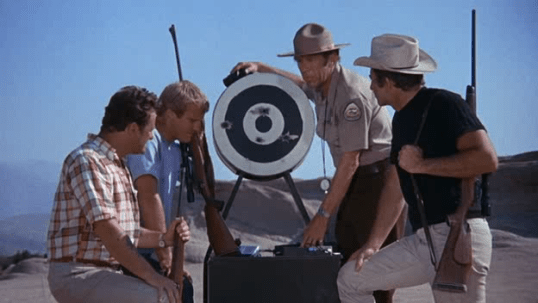
With the support of Ferguson and Foster, Farrington recruits a group of gunmen (led by Ed Lauter and including Roger Corman regular Dick Miller) and works to set up the perfect patsy.  A man (James MacColl) goes around Dallas, acting obnoxious and telling anyone who will listen that his name is Lee Oswald.  At Ferguson’s insistence, a picture is doctored to make it appear as if Lee Harvey Oswald is posing in his backyard with a rifle.  As all of this goes on, the date of November 22nd steadily approaches…

ex3

As I stated before, Executive Action is an almost obsessively low-key film.  That, however, works to the film’s advantage.  Ferguson, Foster, Farrington, and the other conspirators are chillingly believable because they are presented almost as being anonymous.  Instead of being portrayed as being super villains, they are instead men who approach assassination as just another part of doing business.  The impression one gets is that Kennedy isn’t the first leader they’ve had killed and he probably wasn’t the last.  Director David Miller seamlessly mixes historical footage with film reenactments and the end result is a disturbingly plausible film.

Unfortunately, Executive Action is less well-known than some of the other films that have argued that a conspiracy was responsible for the assassination for John F. Kennedy.  However, it may very well be the best.

executive-action-movie-poster-1020681901

Artist Profile: Jon Paul


Paul0

Jon Paul is one of the most renowned artist/photographers in the Romance Novel Cover Art industry.  The covers of Jon Paul appear regularly on books issued by the leading romance novel publishing houses.  I know that I’ve got more than few of them sitting in my bedroom.  More of Paul’s work can be seen at his site.

Paul1Paul2Paul3Paul4Paul5Paul6Paul7Paul8Paul9Paul10Paul11Paul12Paul13Paul14Paul15Paul16Paul17Paul18

Scenes I Love: Tombstone


Tombstone

Weekend was busy, but still found time to catch a few favorite flicks on TV. One of these happened to be the classic early 90’s western Tombstone starring Kurt Russell and Val Kilmer. I already profiled my favorite scene from this film awhile back, but as I watched the film again I realized there was another sequence that totally made the film for me.

So, the latest “Scenes I Love’ once again comes from Tombstone and it does a great job in showing the darker and vengeful side of Wyatt Earp as played by Kurt Russell. The first scene I loved about this film was more about the cool, calm and badass Wyatt Earp who can spot a bullshitter, blowhard, coward from a miles away. This scene shows Earp in his scary, God’s Wrath mode as he begins his vendetta ride against the Clantons and the Cowboys.

Just love the look of fire and brimstone from Russell’s eyes as he confronts a cowed Ike Clanton and lets him know what he has planned for his clan and group. Better yet, in addition to Kilmer’s Doc Holliday, we also see a younger Michael Rooker aka Merle Dixon. He plays one of the members in Earp’s posse.

44 Days of Paranioa #1: Clonus (dir by Robert S. Fiveson)


clone

We live in paranoid times.

When I first started at the University of North Texas, I lived in the Bruce Hall Dormitory and every day, I could count on the fact that there would be at least one fat and bearded resident in the lobby talking about how 9-11 was an inside job and how the only reason we were in Iraq was so Dick Cheney’s buddies could get rich.

By the time I graduated, everyone was convinced that the Republicans were going to steal the election from Barack Obama.  Some people, of course, were hoping that was exactly what would happen because they were convinced that Obama was actually a Muslim from Kenya.

With each passing year of the Obama administration, there’s been a new conspiracy theory.  Some people claimed that Obamacare was actually a Socialist plot.  Others said that the Koch Brothers were behind the Tea Party.  Meanwhile, Occupy Wall Street spoke ominously of how 1% of the population exploited the other 99%.  As I sit here typing this, there is undoubtedly a desperate Obama partisan somewhere who is writing up his 100th blog post claiming that the Republicans somehow sabotaged the Obamacare website.

And, of course, living and working in Dallas, I am constantly reminded of the biggest conspiracy theory of all time.  In just a few days, it will be the 50th anniversary of the assassination of John F. Kennedy and you better believe that my hometown is currently being invaded by wild-eyed men who are incapable of uttering a sentence without including terms like “grassy knoll,” “military-industrial complex,” and “coup d’etat.”

Yes, these are paranoid times.  Nobody trusts anyone.  All motives are suspect.  With each passing day, it seems that more and more people are convinced that their daily failures and fortunes can all be blamed on shadowy forces.  The world is a random place where a billion stories play out at once and not a single one of them is going to have a happy ending.  People cling to their paranoia for much the same reason that some people cling to their concept of God.  It gives them a false sense of security and reason in an otherwise chaotic universe.

As for me, I may not be a believer in conspiracies but, at the same time, I do find myself fascinated by both the theories and the films that they occasionally inspire.  If movies ultimately serve as a reflection of society’s secret fears, insecurities, and desires, can it be any surprise that so many movies seem to be just as a paranoid as the audiences that go to see them?

For that reason, I am proud to announce that today is Day One of the 44 Days of Paranoia!  For the next 44 days, we will be taking a look at some of the best and worst conspiracy-themed and paranoia-inducing films ever made.

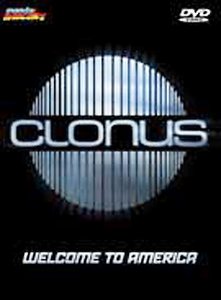
Let’s start things off by taking a look at the 1979 sci-fi conspiracy film, Clonus (a.k.a. Parts, the Clonus Horror).

Clonus opens on a compound the looks a lot like a community college.   Living on the compound is a group of people who all appear to be extremely friendly and trusting.  Every single one of them has a permanent smile plastered across his or her fresh faces.  They spend their spare time jogging, working out, and — well, that’s about it.  At the same time, none of them smoke, drink, or do anything else that could possibly cause any damage to their bodies.

So, at this point, you can probably guess that they’re either Mormons or they’re clones.  (If you’re not sure, take another look at the film’s title…)

When the clones aren’t busy jogging, they’re talking about how much they hope that, one day, they will be allowed to go to “America.”  There’s actually something rather touching about how excited they all get whenever they hear that one of them is getting sent to America.  They’re a bit like the rubber aliens in Toy Story, putting all of their faith in “The Claw” and its ability to lift them up to a better life.  Of course, what the clones don’t realize is that “going to America” is just a euphemism for being put under sedation and having their organs forcibly removed.

Eventually, one clone (played to awkward blank-faced perfection by Tim Donnelly) starts to question just why exactly he and his friends are being kept on the compound.  He eventually escapes and discovers that not only has he been in America all along but that he only exists so that the rich and powerful can harvest his organs.  Donnelly meets an idealistic journalist (Keenan Wynn) who happens to be acquainted with the family of a sinister presidential candidate (played by Peter Graves).  When Wynn and Donnelly threaten to expose the truth, they find themselves targeted by the U.S. government which, in typical conspiracy-film style, is more than willing to kill to protect its secrets.

If the plot of Clonus sounds familiar, that’s because Michael Bay pretty much remade the film in 2005.  In fact, Clonus director Robert Fiveson felt Bay’s The Island was so similar to his film, that he filed a lawsuit for copyright infringement.  But whereas The Island was the epitome of a film that was more expensive than memorable, Clonus is an effectively creepy little film that, though dated, is still occasionally even thought-provoking.  Though it may have been the result of the film’s budgetary limitations, Clonus eschews flashy effects for atmosphere and even the blandness of some of the locations adds to the film’s sense of low-key but palpable menace.  If ever one needed proof that a low budget can occasionally be the best thing to ever happen to a film, Clonus is that proof.  The film is generally well-acted and, best of all, it all builds up to one of those wonderfully downbeat endings that appear to have been so popular in the 70s.

Much like another recent and similar film — the excellent Never Let Me GoClonus works because it’s disturbingly plausible.  It’s a bit of a cliché to say that a film makes science fiction feel like science fact but Clonus is one of those films that accomplishes just that.

title

Trailer: Noah


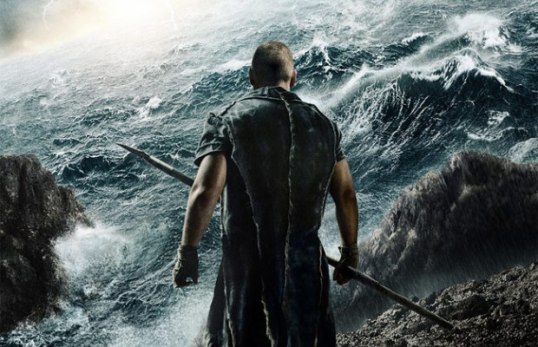
Poster-Noah-AronofskyI have mixed feelings about the upcoming film Noah.

On the one hand, it’s directed by one of my favorite directors, Darren Aronofsky.  I don’t think I need to remind anyone just how much I love Black Swan.

However, it also stars Russell Crowe.  Crowe is a good actor but he’s also  rather impressed with himself and Noah seems like the type of film that will bring out all of his worst tendencies.

But the film is directed by Darren Aronofsky.

Then again, Noah also appears to feature Anthony Hopkins playing yet another vaguely threatening mentor figure.  Hopkins is also a good actor.  I like Anthony Hopkins.  But, seriously, as soon as I heard that they were making a film about Noah, I knew Anthony Hopkins would be somehow involved.  It’s just so …. expected.

However, the film is being directed by Darren Aronofsky.

Unfortunately, the trailer that was released yesterday has a painfully generic feel to it.  Let’s put it like this — every time I saw the trailer for Black Swan, I knew that this was a movie that I had to see.  Every time I see the trailer for Noah, I find myself wondering if Michael Bay was somehow involved in producing the film.  That’s how generic it feels.

However, Noah was directed by Darren Aronofsky.

So, I’ll see it.

AMV of the Day: Demons of the Past (Black Lagoon: Roberta’s Blood Trail)


BlackLagoonRoberta

Some turmoil of the personal kind of late, but that won’t stop me from sharing a new AMV that has caught my eye. The latest “AMV of the Day” comes courtesy of one TheLastSamurai2011 who seems to realy enjoy making a particular type of video.

This particular AMV creator loves the anime series Black Lagoon and there’s nothing wrong with that. It’s an anime series that’s pretty much great not just because of all the crazy gunplay and hand-to-hand combat action, but for the fact that it’s most badass characters are pretty much all women. These ladies are not your typical cutesy “magical girl” types that’s popular with many anime fans. No, Black Lagoon has ladies that range from psychotic, sociopathic, unstoppable killing machines to just plain old badass.

This AMV focuses on the tragic backstory of one of the series’ most intriguing characters. Roberta could only be described as a lone wolf killer. Her violent past and the tragic loss of her original family was only tempered by being taken in by a soldier who molds her to become the protector of his son. Things happen as they’re wont to happen in violent tales. Roberta’s psychotic side soon becomes unleashed on those who has destroyed her adopted second family and she’ll carve of blood trail to find those responsible.

This video does a great job in telling part of her story.

Anime: Black Lagoon: Roberta’s Blood Trail

Song: “Releasing the Demons” by Godsmack

Creator: TheLastSumaria2011

Past AMVs of the Day