Scenes I Love: BioShock “Little Sisters: Rescue or Harvest”


BioShockLittleSisters

With today’s release of Irrational Games’ latest title, Bioshock Infinite, I look back with some fondness to the first game in the series: BioShock.

It was a game that blew most everyone away with it’s ease of gameplay, unique art direction and, most important of all, a story that made people think that gaming was close to reaching the level of art for the genre. It was a game that dared to use as one of it’s themes Ayn Rand’s own take on the philosophy of Objectivism. It was a game about choices. A game that put the player into making the moral choice of rescuing the creepy Little Sisters or harvesting them for a rare resource that meant killing them.

I’ve played the game so many times and have made choices both good and bad, but it was always difficult even knowing how things already turned out to make that first decision to either “rescue” or “harvest”. Below are the version of this very scene that fully sold the game and it’s story to me the first time I played it way back in 2007.

Harvest

Rescue

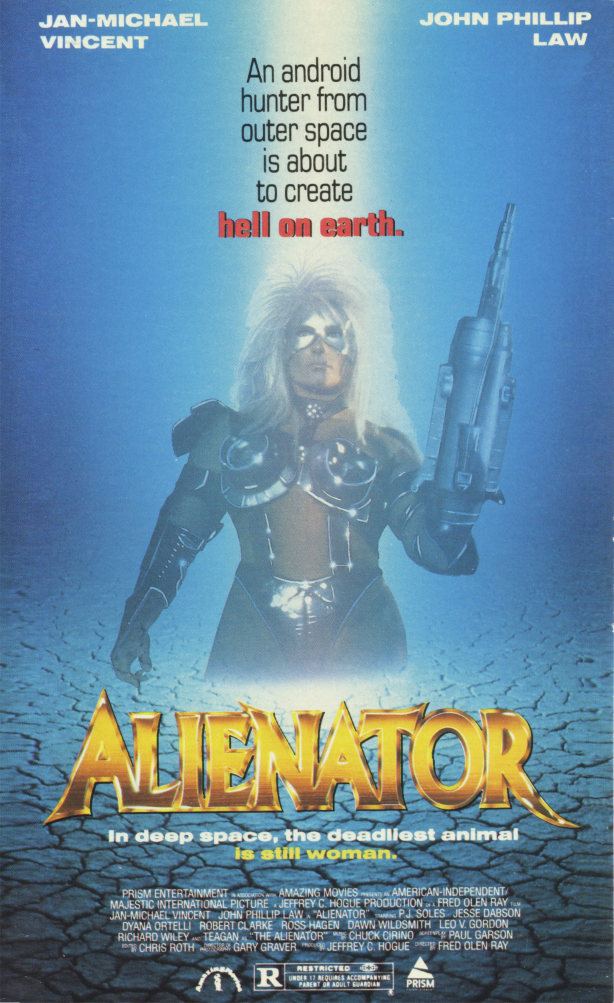
“Alienator” : Fred Olen Ray Gives “The Terminator” A Sex Change


Screen Shot 2012-10-19 at 4.59.15 PM

Give Fred Olen Ray credit — the guy’s a survivor. While his name has never been attached to a genuine B-movie classic — although Hollywood Chainsaw Hookers definitely has its fans — he’s found a way to remain, if not exactly relevant, at least employed for decades now and has , according to official IMDB totals, written 56 films, produced 80, starred in 143, and directed a staggering 128! Granted, directing 128 movies isn’t nearly as difficult as it sounds when most have two-or three-day production schedules, but still —

Anyway, Fred seems to be settling comfortably into the tail end of his career now helming SyFy network made-for-TV numbers and “Skinemax” fare such as Busty Housewives Of Beverly Hills, but back in the late ’80s/early ’90s the straight-to-video market was  wide open territory for low-budget mavens such as himself and he was more than willing to help blaze the  magnetic tape trail once the celluloid one he’d been treading previously dried and crinkled up with the demise of the drive-ins and downtown exploitation houses that had helped put food on his table (and we’ll get back to gastronomic analogies at the end of this review, just you wait and see!). A true visionary never gives up, he just gives it his best in another venue, right?

Unfortunately, even Fred’s best was never all that great, and the movie in our proverbial crosshairs today, 1990’s Alienator is far from his best indeed, although you’d never know it based on its drop-dead awesome premise, to wit : a supposedly evil intergalactic criminal genius/madman named Kol  (Ross Hagen) is about to be executed on a distant spaceship-prison thingie but , of course, manages to affect a semi-daring escape in a shuttle that  eventually crash-lands in a forest on Earth. There he makes friendly with a  park ranger (who’s got  the park ranger-iest name you’ll ever come across),  Ward Armstrong (John Phillip Law) and a bunch of annoying teenagers, but little do Kol and his new-found comrades suspect that the spaceship commander (named, simply, “Commander,” and played by Jan-Michael “anything for a buck” Vincent) from whose deadly clutches he managed to free himself has sent a Terminator-esque super-tracker after him, the ultra-deadly — and titular — Alienator herself!

alienator

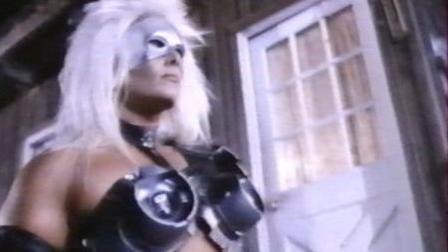
Yes, I said herself — the Alienator, you see, is played by a female ( I think, at any rate, although it wouldn’t surprise me if she had some chromosomal issues going on, and I wouldn’t bet on her ability to pass an Olympic-style genetic screening test) bodybuilder who went by the snappy one-word name of Teagan at this, the apex (such as it was) of her career. She’s basically a cyborg — or maybe android, I never could tell the the difference — chick in a metal bikini who is damn hard to kill and displays, as you’d expect, the emotional range and affect of, say, a walnut. A single-minded killing machine with what appears for all intents and purposes to be a giant pair of binoculars on her boobs, arms that are thicker than my legs, and legs that are thicker than the trunk of the tree in my backyard. Are you afraid yet? You should be — but not so much of the Alienator her(him? it?)self as the unfortunate movie that bears her name.

I know, I know — you read about it on paper (or, as the case may be, your computer screen) and think to yourself “my God, how can you go wrong here?,” but trust me, friends, you can — this flick is a drag. All the actors play it disarmingly straight when by all rights they should be hamming things up, the pacing is dull as toasted rye, and the special effects aren’t good enough to be — well, good — but aren’t bad enough to be hysterical. In short, it’s all an exercise in sleepwalking, “get-it-in-the-can”-style movie-making, and can barely hold your interest despite the fact that by all rights it sure should given its appealingly blatant absurdity.

alienator-1

Still, if you’re in the (entirely advisable under most circumstances) habit of ignoring me, you can check it out for yourself as Alienator came out last week on DVD from Shout! Factory as part of their new “4 Action-Packed Movie Marathon” two-disc set where it shares billing with another early-90s DTV number from Ray, the Heather Thomas (yeah, I forgot about her, too) “starring” vehicle Cyclone, as well as the pretty-decent-all-things-considered Gary Busey revenge flick Eye Of The Tiger and fan favorite Cannon actioner Exterminator 2. The technical specs for Alienator are as follows : digitally remastered (and darn good) widescreen transfer, remastered mono sound, and no extras. Which is fine, really, especially since this package retails on Amazon for eight bucks.

51cAg+l+wbL._AA300_

Look, we might as well be honest here —odds are that if you’re gonna get this thing it’s for Exterminator 2 (I know that’s why I picked it up) so anything else is literally (okay, metaphorically — told you we’d get back to that)  just gravy, but ya know, sometimes turkey (or beef, or chicken, or whatever) tastes better plain, and Alienator is a cinematic condiment you can definitely skip and still get more than your money’s worth out of the main entree on offer here.

Which is kind of a  shame, really, because it sure sounded good on the menu.

Review: Bates Motel 1.2 “Nice Town You Picked, Norma.”


-bates-motel--episod

Norman Bates has a brother?

Wow, who would have guessed?

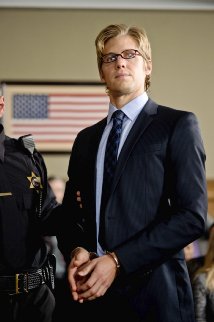
That was the main addition that last night’s episode of Bates Motel provided to the Psycho mythology.  Played by Max Thierot (who was so good in last year’s underrated The House At The End of the Street), Dylan is Norman’s half-brother.  He was born when Norma was 17 years old and, as this episode quickly establishes, he’s a little bitter that Norma abandoned him and his father so that she could marry Sam Bates.

Actually, he’s more than a little bitter.  Bitterness appears to be Dylan’s only emotion.  From the minute that Dylan shows up at the Bates Motel, he’s angry.  Though he greets Norma with “Hello, mother,” (presumably so the slower members of the audience won’t be confused as to who he is), he spends the rest of the episode loudly refusing to call her anything other than “Norma” or “the whore.”

Dylan’s relationship with his half-brother isn’t much better.  About halfway through the episode, Norman reacts to Dylan’s taunting by attacking him with a meat cleaver and gets beaten up for his trouble.  “I told you not to do that!” Dylan shouts after he tosses Norman down to the kitchen floor.

To be honest, Dylan would pretty much be insufferable if not for the fact that he’s played by Max Thierot.  Much as he did in The House At The End Of The Street, Thierot is able to generate sympathy for a fairly unsympathetic character.  It helps, of course, that when compared to Norman and Norma, Dylan almost seems to be sensible.

Norma, meanwhile, has bigger problems than just her oldest son deciding to move back in with her.  She’s still trying to cover up the fact that she killed the previous owner of the motel.  It doesn’t help that Sheriff Romero (Nestor Carbonell) has discovered the dead man’s pickup truck parked near the motel.

Norma handles the situation by flirting with Deputy Shelby (Mike Vogel).  While Norman and Dylan are busy fighting in the kitchen, Norma and Shelby are at the town’s logging festival.  Judging from some of the feedback on twitter, I may be in a minority on this but I actually enjoyed the scenes between Shelby and Norma.  Vogel and Vera Farmiga had a very likable chemistry and I thought the scenes did a good job of establishing the town itself as a character.  Much as Lost had to leave the island, Bates Motel has to be able to tell stories outside of the motel and I think that tonight’s episode showed that it can.

Speaking of things happening outside of the motel, that’s probably where Norman (Freddie Highmore) should try to spend as much time as possible.  When he’s inside the motel, he spends all of his time looking at his little BDSM sketchbook and watching his mother while she undresses in front of him.  However, outside of the motel, he’s got a rather sweet relationship with a girl named Emma (Olivia Cooke).  Together, he and Emma research the origins of the sketchbook (“Don’t worry,” Emma says, “I’ve read lots of manga.”) and they even stumble across a local marijuana farm.

Norman ends up spending a lot of time with Emma because his other female friend, the oddly named Bradley (Nicola Peltz), spends most of the episode at the hospital.  Apparently, somebody set her father on fire.  However, as Deputy Shelby explains to Norma, the town has a way of taking care of trouble makers. That’s made pretty obvious at the end of tonight’s episode when Norma drives by another man who, in an apparent act of retribution, has been set on fire in the middle of the town square.

I enjoyed the second episode of Bates Motel.  It was full of atmosphere and Vera Farmiga’s performance continues to maintain the perfect balance between reality and camp.  Narratively, the story is still unfolding at a very deliberate pace but this episode provided enough intriguing clues to make me excited about seeing what happens next Monday.

That said, I still can’t help but feel that this show’s main weakness is the fact that , as opposed to being a stand alone series, it has to exist as part of the mythology of Psycho.  In many ways, Bates Motel reminds me of The Carrie Diaries, a prequel to Sex In The City that airs on CW.  It’s a well-acted show that’s full of a nicely observed moments but it’s still impossible for me to watch without thinking, “It doesn’t matter what happens because we already know Carrie’s going to eventually end up meeting and marrying Mr. Big.”

By the same token, I still find it next to impossible to watch Bates Motel without thinking to myself, “Eventually, regardless of what happens wit Dylan, Emma, or the pot farmers, Norman’s going to end up wearing Norma’s clothes, peeping on women in the shower, and killing them.”

Divorced from the Psycho mythology, Bates Motel is an entertaining and intriguing little show.  However, without the Psycho mythology, would a show called Bates Motel have ever made it to the air in the first place?

Random Observations:

  • The best scene, by far, was Norma’s alternatively friendly and creepy conversation with Emma.  “And what’s your life expectancy?”
  • How much do you want to bet that Dylan’s going to end up working with the pot farmers?
  • Speaking of the pot farm, am I the only one who was reminded of that episode of Lost where John Locke’s flashback dealt with the period of time he spent living on a commune?
  • I know I said this last week but seriously, how can you not love Nestor Carbonell?

What Lisa and Evelyn Watched Last Night #76: Romeo Killer: The Chris Porco Story (dir by Norma Bailey)


Last night, my BFF Evelyn and I watched the Lifetime original movie, Romeo Killer: The Chris Porco Story.

Romeo Killer

Why Were We Watching It?

First off, it was on Lifetime.  Secondly, both me and Evelyn love the true crime genre.  And finally, the film starred the very hot and very Texan Matt Barr.  Seriously, how couldn’t we watch?

There was one other reason that I wanted to see Romeo Killer.  Chris Porco, the subject of the film and a convicted murderer, actually obtained a court order to prevent the film from being shown.  The New York Court of Appeals overturned the order just two days before Romeo Killer was scheduled to premiere.  After all the drama about whether or not I would even be allowed to see it, how could I not watch when I got the chance to do so?

What Was It About?

Chris Porco (Matt Barr) is handsome, charming, and possibly a sociopath.  After his parents (Lochlyn Munro and Lolita Davidovitch) are attacked by an axe-wielding assailant, Porco is the number one suspect.  While the lead detective (Eric McCormack) tries to send Porco to jail, Porco’s mother insists that her son is innocent.  Meanwhile, Porco is attempting to seduce McCormack’s insecure daughter (Sarah Desjardins…)

What Worked?

Romeo Killer is the epitome of a Lifetime true crime film, in that it featured a truly disturbing crime, a charming villain, a driven cop, and a lot of melodrama.  Though the film made an attempt at ambiguity (for instance, we never actually see Chris Porco attacking his parents and the film ends with a quote from his mother in which she says that she still thinks that her son is innocent), it was also pretty obvious that the filmmakers believed Chris Porco to be guilty.  In the end, Romeo Killer made a compelling argument for Porco’s guilt (which is probably why he tried to keep the film from airing).

As portrayed in the movie, Porco comes across as being a pretty obvious, 1-dimensional psychopath but Matt Barr still does a pretty good job playing him.  Barr captures both the empty interior and charming exterior of the character.  (Of course, it should also be noted that Barr is about a thousand times better looking than the real Chris Porco.)  Among the supporting characters, Eric McCormack, Sarah Desjardins, and Lolita Davidovich all give strong performances.

Porco’s father is played by Lochlyn Munro.  Munro is a Canadian actor who has played small roles in a countless number of Lifetime films.  I don’t know much about him beyond the fact that I’m always happy to see him because, seriously, it’s just not a Lifetime film without Lochlyn Munro.  That said, Munro gave a sympathetic performance here.  The scenes where he staggers around the house after being attacked were difficult to watch.

What Did Not Work?

If I was the type to needlessly nitpick, I would point out what the film itself acknowledges with a disclaimer that appears immediately after the end credits.  While the movie is based on a true story and it does follow the broad outline of the actual case, it is also a fictionalization in which certain characters and events were created for dramatic purposes.  As such, some viewers would be justified in wondering which parts of the film are based on reality and which parts were created to tell a better story.

That said, as far as I’m concerned, Romeo Killer was the epitome of a Lifetime true crime film and, as a result, it all worked.

“Oh my God!  Just like Us!” Moments

Evelyn and I both found ourselves relating to the women in this film, all of whom were charmed by Chris Porco.  Because seriously, Matt Barr made for one seriously hot sociopath…

Lessons Learned

Some bad boys really are bad.

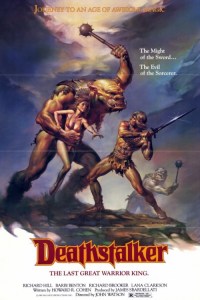
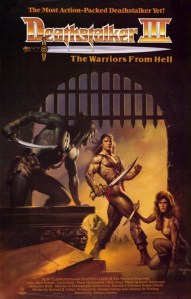
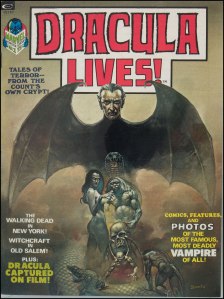
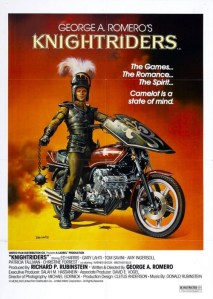
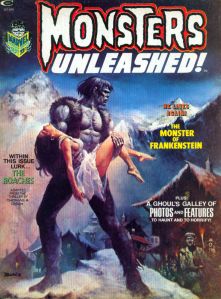
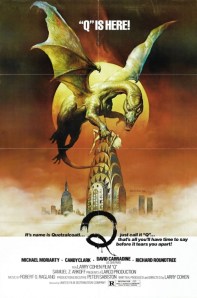
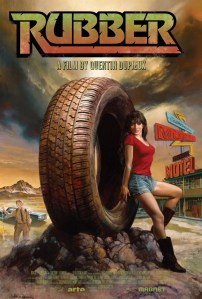
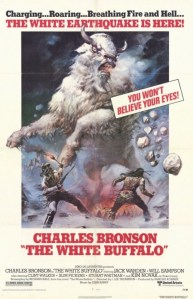
Artist Profile: Boris Vallejo (1941– )


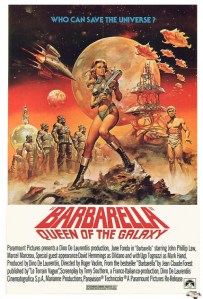
BarbarellaBorn in Peru, Boris Vallejo started painting when he was 13 and got his first professional illustration job at the age of 16.  He emigrated to the United States in 1964.  Vallejo is best known for his fantasy-themed artwork, which often features characters based on both himself and his wife, artist Julie Bell.

A few examples of his work can be found below.

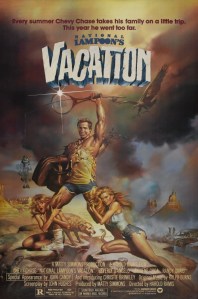
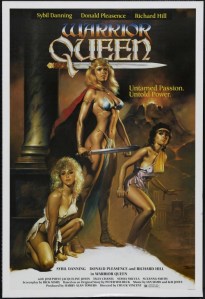
DeathstalkerDeathstalker 2Deathstalker 3dracula.lives-01Hammer and CoopKnightridersMonsters UnleashedQRubberThe White BuffaloVacationWarrior Queen

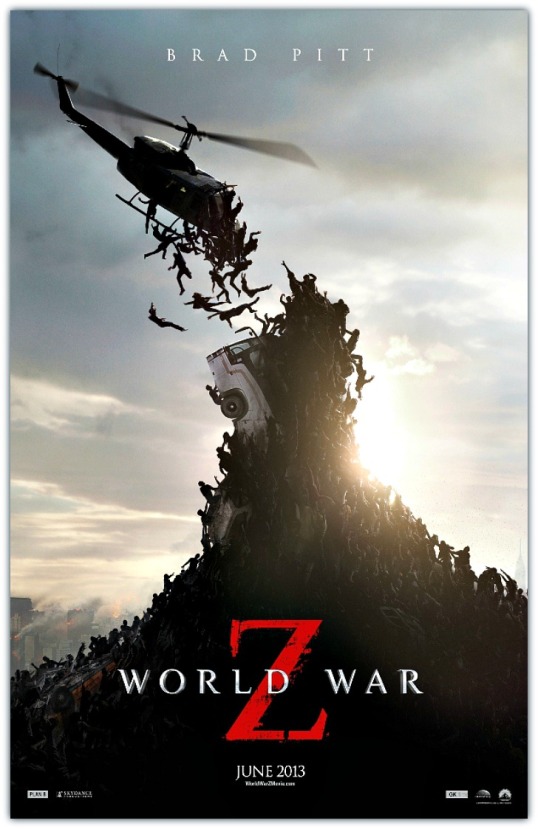
Trailer: World War Z (2nd Official)


WorldWarZ

We see the release of a new trailer for this summer’s epic zombie film based on the equally epic novel of the same name by Max Brooks.

World War Z is already the most expensive zombie film ever made with a budget rumored to be between 125-200 million dollars. Some of this has been due to the delays in filming and most of it seems to stem from a massive rewrite of the third act. Damon Lindelof was first hired to rewrite but due to prior commitments the job went to Drew Goddard. Such a rewrite also meant reshoots had to be done which took another seven weeks of shooting.

All in all, World War Z is one troubled film before it even gets to the general public.

Yet, it is also one of the more anticipated films for this summer. Some from fans of the genre who just can’t get enough of zombie films. Some from people wanting to see just what sort of zombie film ends up with a budget around 200 million dollars. From the trailer we’ve seen some of that money seem to have gone on some massive special effects sequences which includes swarming zombies of the Rage-infected kind. Then again we don’t really see the zombies close-up which tend to make them look like swarming ants from afar. Maybe the look of the zombies themselves have been saved for the release of the film.

This latest trailer actually gives a bit more of the plot of the film which puts Brad Pitt’s UN employee character to travel the world in search for the cause of the worldwide zombie pandemic. The speed by which things happen seems to have compressed all the events in the novel into a film of two hours. This, I’m sure will be a major contention with fans of the novel, but it looks like a decision by filmmaker to try and create a single narrative from a novel that was mostly single-hand accounts of the zombie war from survivors who have no connection with each other whatsoever.

We’ll find out in just under 3 months if this film will be a major flop or succeed despite all the stumbling blocks and problems throughout its production.

World War Z is set for a June 21, 2013 release date.

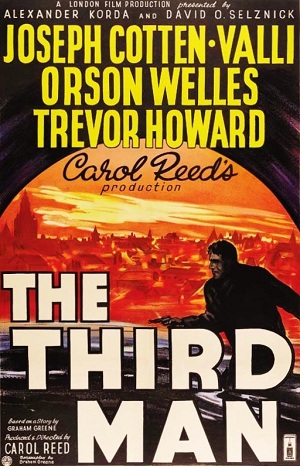
Scenes That I Love: The Cuckoo Clock Speech From The Third Man


ThirdManUSPoster

Some movies are merely good.  Some movies are undeniably great.  And then, a handful movies are so amazingly brilliant that, every time you watch, you’re reminded why you fell in love with cinema in the first place.

The Third Man is one of those brilliant films.

Directed by Carol Reed and scripted by novelist Graham Greene, The Third Man takes place in the years immediately following the end of World War II.  Pulp novelist Holly Martins (Joseph Cotten) comes to Vienna to search for his old friend Harry Lime (Orson Welles).  Upon arriving, Holly is shocked to learn that Harry makes his living selling diluted penicillin on the black market.

In the classic scene below, Harry and Holly have a clandestine meeting in a Ferris wheel and Harry justifies both his actions and the lives that have been lost as a result of them.

While Orson Welles’ performance is (rightfully) celebrated, I’ve always felt that Joseph Cotten’s work was even more important to the film’s success.  While Welles made Harry Lime into a charismatic and compelling villain, it was  Cotten who provided the film with a heart.

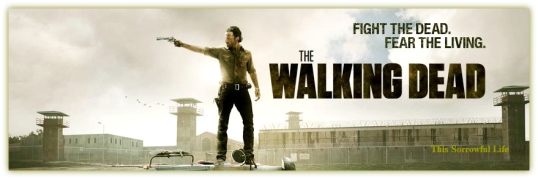
Review: The Walking Dead S3E15 “This Sorrowful Life”


TheWalkingDeadS3E15“I can’t…GO BACK. Don’t you understand that. I can’t” — Merle Dixon

[some spoilers within]

We are now in the penultimate episode before The Walking Dead reaches it’s season finale on March 31. Last week we saw preparations and turmoil inside Woodbury as the Governor has to deal with Andrea finally making the decision to pick Rick and her friends at the prison as her side in the coming conflict. He also has to deal with a potential traitor within his own inner circle. The episode was good in certain aspects, but also did nothing to move the story along. It was an episode that definitely put some viewers into wondering if the season had enough gas to make it to the promised explosive end.

“This Sorrowful Life” switches things over to the prison with Rick having made the decision to sacrifice Michonne to the Governor if it means a chance at avoiding the conflict he knows he and his people has a good chance of losing. He knows the numbers and firepower are against him. While he and his people may be more seasoned and veterans of being on the road killing zombies as a team it won’t be enough against a force that could afford a battle of attrition. It’s a decision that Rick’s inner circle doesn’t agree with (Hershel and Daryl), but they’re willing to support his decision as they have in the past. Rick has kept them alive this long and has earned their trust even if it’s a choice that goes against everything they believe in.

Tonight’s episode is another one that focuses on the choices the survivors in this zombie apocalyptic world have had to make and continue to make to survive another day, week and, the fates willing, another month. It’s also an episode that uses the dark horse in Rick’s group to highlight just how the choices people have made in this new world has changed people and most of it not for the good. I would like to think that tonight’s episode was an exploration of what made Merle Dixon such a character full of contradictions.

Merle Dixon was introduced way over in episode 2 of the first season and he came across as a cartoonish, one-note racist redneck who the audience were suppose to love to hate. But something changed in the time from his last appearance in season 1 and to his reappearance this season. That change wasn’t anything done by the character but how his younger brother, Daryl Dixon, viewed him and how this helped audiences want to learn and know more about a character who seemed to have earned Daryl’s undying trust and love.

We get some side stories in tonight’s episode with Glenn asking Hershel for Maggie’s hand in marriage and then Maggie in turn accepting his offer. We also see Rick finally realizing his error in judgement in trying to use Michonne as a sacrificial offering to the Governor. While this latter was brought on by another hallucinatory episode of him seeing Lori it happens for the briefest of moment. Unfortunately, this change of heart from Rick comes a little too late to stop Merle from going through on the plan to hand over Michonne.

Again we get back to Merle. A character hated by most everyone in the prison outside of his brother (who I believe also harbors somoe fraternal hate for the man even if just a little), but one they want to have on their side even if it means to do the dirty work. Rick knows this which is why he picked him instead of the younger Dixon to fool, capture and bring Michonne to the Governor. Everyone understands that choosing Merle to stay with them was one of necessity and not one born out of the goodness of their own hearts. Even Daryl knows this and even when he tries to convince his older brother to be more amenable towards Rick and the others it comes off as hollow. Daryl knows his brother and trying to change the man now after what he had to go through after season 1 would be a monumental, if not, an impossible task. This is why Merle decision to go on a mission of redemption was such a suprising twist to the episode, if not, the character himself.

It was some great writing by the upcoming season 4’s newest showrunner in Scott M. Gimple in tonight’s episode. We didn’t get a huge dose of exposition from the main leads and the one that we get finally resets the decision Rick made at the end of season 2. The Ricktatorship is now over. It was good and necessary when they were out, alone and desperate after leaving the farm, but now that everyone has learned the skills to survive it was time to rescind the writ of dictator and bring the group back to being a democracy, albeit one that’s now smaller than before.

Gimple also does a great job in making Merle one of the most tragic characters on the show. While Merle may have begun as a cartoonish, racist buffoon he went out a character that we were finally able to understand. He knew his faults and didn’t apologize for them. It was his love for his brother that kept him from going over the edge the way that the Governor has and we see it in his decision to take on Woodbury by himself.

Yet, for all the great writing Gimple did for tonight’s episode (which could be why he was chosen to be the show’s new leader after Mazzara’s exit everything hinged on whether Michael Rooker would be able to put on a performance worthy of tonight’s script. To say that Rooker hit it out of the park would be an understatement. There so much subtle hints in his performance that gave us a peek inside his gruff, outsider attitude towards everyone not named Daryl Dixon. His resigned acceptance at his new role in this new world as the man willing to do the dirty work for others. Be the bad guy so others can remain untainted with having to do the right, but immoral decisions. Rooker kept tonight’s episode from just being another good, but still throwaway until the season finale to one of the best in the show’s life, so far.

It goes to show how much potential this show has to be great. To go beyond it’s horror and grindhouse foundations. We saw it just a few episodes back with the Morgan-centric episode and we saw it even earlier with the episode where Lori redeems herself and exits the show on a high note. When it comes down to it the show shines when it balances all the horror and action with some deep character exploration. It’s a shame that Rooker has to leave the show to make this point, but he did leave it the only way he could and that’s to redeem the character of Merle. To give Merle the chance to choose for himself what he wanted to do and not have others (whether it was the Governor or Rick or even Daryl) dictate what he should or should not be doing. In the end, Merle chose for the love of his baby brother and while the end result would bring heartache and loss to the only person he loved it was his choice and he made it himself.

“This Sorrowful Life” goes down as another major highlight in The Walking Dead and finally lays down the final piece to what looks like an ending that will be another shift in the show’s cast of characters. Whether everyone makes it out alive after the season finale we as the audience will have to wait another week to find out.

Notes

  • Tonight’s episode, “This Sorrowful Life”, was directed by Greg Nicotero and written by next season’s showrunner Scott M. Gimple.
  • The episode’s title comes from the 6th volume of the comic book the show is based on. It was also the volume that dealt with the Governor’s final assault on the prison.
  • I think having Merle become so prominent a character in tonight’s episode should’ve been a clue that his time was numbered.
  • Tonight’s episode was quite a redemptory one for Merle and once again showed how far gone the Governor has towards the darkside.
  • Michonne really got Merle to a “T” and he knows it which seem to trigger the decision he made to let her go and attempt a mission to help out Daryl (it always comes down to his baby brother) and the people in the prison.
  • nice little interlude between Hershel and Glenn and then Glenn and Maggie. It’s one of the few things on this show that doesn’t involve death, violence and zombies and it’s a welcoming respite.
  • Like the character or not, Merle definitely has found himself the most useful person in this new world. It’s no wonder the Governor kept him on as one he trusted (to a point) and why Hershel and Rick was willing to take him back despite what he did to both Glenn and Maggie.
  • Just call Merle Dixon the Pied Piper of Zombies.
  • I think he should’ve taken a bit more time and attracted a bigger herd back to Woodbury.
  • Merle, even one-handed, sure caused a lot of damage against the Governor’s men. Makes one wonder how much more effective he would’ve been on his one-man mission if he had both hands to work with.
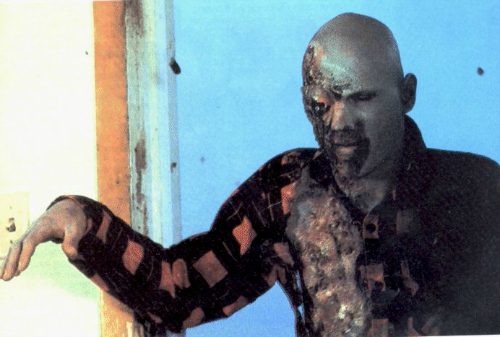
  • Greg Nicotero puts in another easter egg in tonight’s episode straight from the original Dawn of the Dead with the bald zombie in the red flannel shirt. The zombie approaches Merle while he’s in the car with the music blaring. dawnofthedeadzombie
  • Ben, we hardly knew you, but what we did know tells us you were a douchebag like you father Allen. I don’t think many people was going to shed a tear for this character’s demise tonight.
  • Not just killed by Merle but also became a meal in a scene that was horrific and sad.
  • The Governor has done gone past the darkside and into something worse.
  • Fight between Merle and the Governor as brutal as the one between Michonne and the Governor. Just goes to show just how primal fighters get when it comes to taking on someone they hate very much.
  • I felt a great disturbance in The Walking Dead fandom, as if millions of voices suddenly cried out in anguish.
  • Another great episode of work from Greg Nicotero (both as director and special effects man) and his FX magicians over at KNB EFX.
  • Zombie Kill Count of tonight’s episode: 26 onscreen.

Past Season 3 Episode Review

  1. Episode 1: “Seed”
  2. Episode 2: “Sick”
  3. Episode 3: “Walk With Me”
  4. Episode 4: “Killer Within”
  5. Episode 5: “Say the Word”
  6. Episode 6: “Hounded”
  7. Episode 7: “When the Dead Come Knocking”
  8. Episode 8: “Made to Suffer”
  9. Episode 9: “The Suicide King”
  10. Episode 10: “Home”
  11. Episode 11: “I Ain’t a Judas”
  12. Episode 12: “Clear”
  13. Episode 13: “Arrow on the Doorpost”
  14. Episode 14: “Prey”

Six Prehistoric Trailers


PCAS

Today’s edition of Lisa Marie’s Favorite Grindhouse and Exploitation Film Trailers has a theme!  Enjoy!

1) Teenage Caveman (1957)

2) Caveman (1981)

3) One Million Years B.C. (1966)

4) The Land That Time Forgot (1975)

5) The People That Time Forgot (1977)

6) The Lost World (1960)

trailer  kitty and dinosaur

Quickie Review: Olympus Has Fallen (dir. by Antoine Fuqua)


OlympusHasFallen

“The most protected building on Earth has fallen.”

Die Hard has become it’s very own subgenre of action films since it was first released in 1988. It was a simple enough story that combined the “one against many” type of story with the “siege tale”. It was a perfect combination that has since been copied, imitated, but truly never duplicated to the highest level of success the original film had upon release. There’s been a few films that added their own unique take on this action film template. There was “Die Hard on a boat” with the underappreciated Under Siege. Then we have Air Force One which was “Die Hard on a plane”. The latest action film to try and put a new spin on the Willias-McTiernan classic is Antoine Fuqua’s latest film, Olympus Has Fallen.

The film pretty much takes what worked with the three films before it that’s been mentioned above and combines them to make a film. We have a lone, highly skilled operative in the form of Secret Service Agent Mike Banning in the role that made Bruce Willis famous and, for a time, resuscitated Steven Seagal’s career. Then we have the Presidential angle but instead of Air Force One it’s the White House this time around. The plot of the film is simple enough that even a person not well-versed in film could follow it. A group of dedicated and highly-trained North Korean terrorists do a surprise attack on the White House as the President of the United States and his South Korean counterpart try to find a way to defuse a situation that’s been growing in the DMZ between the two Koreas. It’s now up to Agent Banning, on his own, to try and stop whatever plans the terrorists have brewing with the President as hostage while also dealing with an inept group of higher-ups trying to deal with it far from the action.

Olympus Has Fallen doesn’t break new ground with the way it’s story unfolds and it’s characters develop. The film was pretty much beat-for-beat and scene for scene lifted from the three other films mentioned above. The characters may be different and the circumstances they find themselves in somewhat different, but the screenwriters played everything safe except the action sequences part of the film. It’s these action scenes which brings Olympus Has Fallen to a new level of violent artistry that the previously mentioned films never reached.

To say that this film was violent would be an understatement. Where other films of this type a certain cartoonish tone to it’s violence this time around Fuqua goes for a much more serious and, at times, disturbingly difficult to watch level of violence to make the film stand out from the rest of it’s kind. The assault on the White House itself and the surrounding area has less a look of a fun action film and more of a war film. People die in droves and it doesn’t matter whether they’re Secret Service, police, terrorists or innocent civilians. All were fair game in this film.

Even the action once we get to Banning playing the Willis role looked more brutal than what Willis and even Seagal ever got to do. Gerard Butler may not have had the charisma and wit of Willis in the same role, but he convincingly played his role as more Jack Bauer than Officer McClane. Butler as Banning was all business and efficiency while Willis as McClane was more the witty, smartass who just keeps finding himself in the wrong place at the wrong time.

Olympus Has Fallen won’t be hailed as one of the best films of 2013. It won’t even be talked about as one of the top action films this year, but despite the story being a derivative of every Die Hard and it’s clones before it the film does succeed in being a very enjoyable piece of popcorn flick. It was full of tension and big action setpieces (though the CG effects looked very cheap at times) that Fuqua has gradually become known for. The characters in the film were just a step above being one-dimensional and the story itself becomes less eye-rolling and more worrisome considering the real tensions coming out of the Korean Peninsula at this very moment.

One thing I’m sure of is that of the two “Die Hard-in-the-White-House” films this year (there’s the bigger-budgeted White House Down later this summer from Roland Emmerich) I have a feeling that Olympus Has Fallen might be the more fun. It’s probably going to be the more violent of the two and that’s an assumption I’m willing to make without even seeing how Emmerich’s film turns out.