This year’s E3 wouldn’t be the same if the folks from Team Ninja (though one that’s somewhat not as awesome with it’s rockstar leader Itagaki Tomonobu having left the studio) didn’t release more cool stuff about the latest and third entry in their Ninja Gaiden action-adventure franchise.
Ninja Gaiden 3 returns with it’s iconic ninja-hero, Ryu Hayabusa, and more blood and severed limbs that a gamer can shake a Wiimote at. The series has always been about extreme violence and always been known to cater to the hardcore of the hardcore gamers out there. The Ninja Gaiden series never catered to the newbie gamer. They even had a hilarious way to help out gamers who could never master the game by creating an “easy” difficulty level simply called “Ninja Dog”. Team Ninja’s newest lead designer, Yosuke Hayashi, mentioned that this latest game will not have it’s difficulty level toned down for the casual gamers out there who will have some major difficulties getting past the game.
That’s the good news in addition to how the game just looks gorgeous (like all past games in the series), but one thing shown at this week’s E3 really dampened my excitement for this third entry: inclusion of QTE (Quick Time Events) where a player presses a series of buttons to accomplish an event. QTE’s I consider as part of the “pussification of hardcore action games” and games like those in the God of War series (which I love but could’ve loved even more if they got rid of the QTEs) rely heavily on such gameplay mechanics.
Ninja Gaiden 3 should be about testing a gamer’s skill and not how fast they can press a combo of buttons shown on the screen to finish an event. Other than that disappointing news most of the announcements by Team Ninja about this title still will have me dropping some cash to buy and play it. Here’s to hoping that Team Ninja doesn’t drop a ton of QTEs in this game. No amount of severed limbs and bodies or lakes of hot, steaming blood would be enough to balance out a ton of QTE’s in a game that never needed them.
This was one title that caught me by surprise this week as this year’s E3 continues to roll on through. The Brothers in Arms WWII tactical-action series was never one which I really got into, but when I did play them they were enjoyable enough that I wasn’t disappointed. I think part of it comes from the fact I’m not very good in tactical shooters where I have to give orders to team members.
This latest offering in the series by Gearbox Software and Ubisoft looks to keep the series in its ubiquitous World War 2 setting. The major change seems to be in the tone of the game. Brothers in Arms: Furious 4 — from the look of the debut trailer — looks to lighten up the story and I got a major Inglourious Basterds-vibe from that trailer. This may not sit well with the hardcore fans of the series, but with so many action shooters already in the market both Ubisoft and Gearbox Software needed to change things up in a radical way and this “grindhouse” tone may just be what the franchise needed. I will admit that the trailer gave the title a much fun and over-the-top feel and that’s always a good thing.
Brothers in Arms: Furious 4 still hasn’t been given a release date.
Okay, quick warning: If you’re from Vermont, this post might upset your sensitive, crunchy gronola soul. So, I’m warning you now so you don’t have to waste your time getting all offended, spitting up your maple syrup all over your framed, autographed picture of Howard Dean, and leaving angry comments about the death penalty and Jerry Jones.
Anyway, I may have mentioned here that the American public is in desperate need of education when it comes to proper movie-going etiquette. Whether its people texting and talking during the movie (which, by the way, starts the minute the first trailer starts to play out on-screen), bringing their annoying, shrill-voiced little children to movies that clearly are not appropriate for them, hanging their smelly, ugly feet over the seat (and audience member) in front of them, or showing up late for a movie and loudly going, “Where do you want to sit?”, the American public seriously needs to learn how to go to the movies.
And, on the basis of this PSA, the Alamo Drafthouse in Austin, Texas is exactly where those lessons need to be taught.
When I was little, my family used to have this cable service called WHT. I can’t remember what it stood for, but recall that it was a one channel station that would constantly show movies. It was like Starz for anyone who didn’t want to pony up the extra money for actual HBO at the time. Since it was set up at my Grandparents house (where I lived), sometimes we’d all gather around for a Movie Night on Saturdays. This is something my family’s done often during the years, and the current part of my family does this on Sundays now, premiering films we haven’t seen yet.
It was one of these Saturday nights that I first witnessed John Carpenter’s The Thing. I had to go to bed for it, being as young as I was for the film, but with the door open I could hear the music and sounds from my bed. At one point, I climbed out of the top bunk and snuck to the stairs, watching the film in my PJ’s. My family would get pretty engrossed with movies, so they never bothered to glance in my direction. After all, this was the first time any of them were seeing this film, and they all loved the original.
I was doing fine until that Husky’s head split open. If I just kept my mouth shut, I could have seen the whole film. After that, I couldn’t stop screaming, “Omigod! The doggie!!” I was met with cries of “Go to Bed!!” from just about everyone. Even though I climbed back into bed, there was no way I was able to fall asleep. Every gunshot, every yell caused me to bundle myself under my blankets with my eyes wide open.
Since then, The Thing has become a family favorite, a reliable go to film for any time it’s cold or rainy or dark. I even showcased it for my friends in Oregon who hadn’t seen it before and they also had almost the same reaction to that poor dog.
So, what is The Thing?
Other than maybe being John Carpenter’s strongest film (which many will argue, because there’s always a place for Big Trouble in Little China for me), it’s a great example of a work in progress that was just done and put to print. Like Jaws, the film ran into some problems. Special FX member Rob Bottin suffered from exhaustion from working so hard on the film. They had some issues with coming up with the final representation of The Thing that wouldn’t appear too cartoon-like or animatronic. There was even a fire during the taping of a huge effect shot involving a body ripping open because of the chemicals that were put into the latex workup. Even though the movie takes place in Antarctica (which I believe roughly 6 months of night), the film actually has a day and night cycle, having filmed in Juneau, Alaska. On top of that, with all of the money thrown at the film, it pretty much tanked at the box office. As quirky as all those elements are, the movie just works because of both the isolation of the characters, the trust issues that occur as a result of the events, and the claustrophobic space they live in. In some ways, it’s very similar to Ridley Scott’s Alien to me (sans the trust issues), but with much better lighting. The Thing is pretty much a cult classic at this point.
The story of The Thing is boosted if you’ve seen the original The Thing From Another World with the late James Arness, but it’s not a requirement. It starts off with a dog being chased by a helicopter, who manages to reach a Research Outpost in Antarctica, occupied by Twelve members. The crew soon discovers that that things aren’t exactly what they seem, but neither are they. Unlike the original movie, the creature in this film has the ability to absorb and mimic whatever organism comes into contact with (which actually is pretty creepy in its own right, that sense of violation). Trust plays a huge part in the story as the crew fight to save themselves while still trying to keep a close eye on who’s walking among them.
The atmosphere of the film is really augmented by the sound. As old as the film is, the sound quality holds up incredibly well on a surround system. The wind from the snow, bullets ricocheting, the panting of dogs and of course the dripping of blood all sound like someone put a microphone right up to all of them to capture it as best they could. The outpost, as big as it is, actually has a lot of narrow hallways with canisters stacked to the sides in many places, giving the place a cramped feel. Add to that Ennio Morricone’s haunting theme and you’ve got a recipe for horror. I mean, for someone who’s scored fantastic Westerns, one would think that Morricone and a Carpenter film might not gel well, but it really does.
Visually, compared to films today, The Thing is pretty tame for it’s effects, and some (the final rendering of the Thing itself, in particular) can be a little dated, but not so much that you should groan about it. At the time, however, it was considered gory (and I guess when you’re in shock on seeing a dog’s face split open, there’s someone smiling somewhere saying to themselves..”Yeah, that worked right there”).
The Thing marks another John Carpenter / Kurt Russell pairing. Russell’s R.J. MacReady is the figure we follow through the film. It’s through him that we try to make sense of everything going on. In one scene that involves him huddled in a corner with a flamethower and some dynamite, defending himself from his friends, you get the notion that you want to be on that guy’s side. Even if following him means getting blown up to a million pieces, because it really becomes difficult to trust anyone in this film. Paranoia plays a huge role.
The cast is rounded out by a few other notable members. Richard Dysart (L.A. Law, Prophecy) plays Doc Copper, and is actually pretty good here. Keith David (Requiem for a Dream, They Live) plays Childs, who really doesn’t believe in any of that “voodoo bullshit”. Thomas Waites (The Warriors) is Windows, who for me, represents the scared kid of the group. He’s not sure what’s up, he just wants to be away from it. Then, of course, you have Wilford Brimley, who seems to realize the problem but takes measures in his own hands rather telling the others just how bad things could get.
Overall, The Thing is highly recommended. I know there’s a remake in the works, and part of me is a little excited for it, hoping that it’s done well. I can’t imagine the filmmakers today running into half of the issues they had in the original.
The Thing also marks one of the best Director commentaries I’ve heard. If you have a chance to watch the film with the Director track on (which I believe Russell also has a hand in with Carpenter in talking about the film), it’s pretty interesting what they elaborate on. Also noteworthy (and funny) is Rob Bottin’s story on the effect sequence that started a fire. That’s definitely worth a listen.
Even though Monday had several E3 Press Conferences by the industry giants like Microsoft, Sony, EA and Activision, in reality E3 didn’t really begin until today. So, starting today I’ll post one song a day of some of my favorite intro music from some of my favorite video games through the years. The first song will close off today’s E3 coverage and comes from the game which got me hooked on The Elder Scrolls rpg franchise.
The latest “Song of the Day” is from the third game in the TES series called Morrowind. The song is the main theme for the song and it’s title is “Nerevar Rising”. This track, like all of the music in the Morrowind soundtrack, was composed and arranged by Jeremy Soule who has become one of the top composers of music for the video game industry. I just love how this song begins with the deep drum beats which then fades into the background as woodwinds and strings come in gently. By the one-third mark of the song even more strings arrive in the form of violins. It’s when the song hits the halfway mark when percussion comes back to the forefront to join woodwinds and strings to combine and create an epic sound worthy of a fantasy epic adventure about to begin.
I still listen to this intro whenever the urge hits me and it still raises the hairs on my arms and shivers up my spine at just how epic it sounds. As an added bonus the song makes a reappearance in the end of the game once the player has achieved his goal and finished the game. It’s pretty much the same music but with some added sections.
One of the titles which I look forward to losing several hundreds of hours playing is the fifth entry in Bethesda Game Studios The Elder Scrolls role-playing game franchise: Skyrim.
I’m proud to say that the previous game in the series I had spent nearly a total of 1500+ hours playing using several created characters over a span of 6 years. I would say that 3/5 of that total time was played within 6 months of buying Oblivion. The developers of Skyrim are promising fans of the series no less than 300+ hours of gameplay (though they didn’t specify if that means just the main storyline or also includes side quests and such) so that’s a comfort to hear.
This role-playing game series has always been known for it’s very expansive and complex world which allows it’s player to roam it’s confines however they want. It’s this open-world gameplay dynamic which makes this game and the series, in general, such a favorite with gamers worldwide.
Lead designer for Bethesda, Todd Howard, gave G4TV an in-depth look at Skyrim. The videos you’re about to watch has Howard showing the extreme and beautiful detail rendered by the game’s new graphics engine in the Creation Engine. He also shows just how some of the changes in combat, skill leveling and the type of creatures the player will end up fighting makes this latest entry in The Elder Scrolls series the best to date.
The Elder Scrolls V: Skyrim has a set release date of November 11, 2011.
What can I say about this game other than….GODDAMN!!
Yes, I am beyond super-excited about THQ and Relic Entertainment’s latest Warhammer 40K title. The two have been doing a great job with the RTS Warhammer 40K: Dawn of War franchise so this third-person action game is a nice change of pace and quite a gamble.
Warhammer 40,000: Space Marine looks to be similar in tone to Epic Games’ Gears of War series except for two major differences: 1. this game won’t be using any cover game mechanics and 2. the game’s color palette looks to go beyond browns, grays, red and black. The trailers shown at this year’s E3 by THQ look to be using in-game graphics and little pre-rendered animations. Always a good sign when the trailers shows graphics of how the game will actually look when being played.
I’ve known about this game since it was first announced at last year’s E3 and have kept up with all new info that Relic and THQ have released since then. One piece of news that was quite a surprise but also awesome to learn is that British actor Mark Strong (Sherlock Holmes, Kick-Ass, Green Lantern) will voice the main playable character.
Warhammer 40,000: Space Marine has a release date of somtime around September 2011.
PS: For those who have no idea what the Warhammer 40,000 fictional universe is all about the video below gives a quick idea of what some of it is.
In 2010, THQ and Vigil Games released what ended up being one of my favorite games of that year in their roided-out homage to Legend of Zelda with the post-apocalyptic action-adventure title Darksiders.
It wasn’t just the Zelda-like platforming and puzzle-solving gameplay that made it fun, but the wonderful art direction the game took by designing the characters and creatures from the original artwork of Vigil Games founder and all-around badass comic book artist, Joe Madureira. The first game was all about taking on the role of War (one of the Horseman of the Apocalypse) as he tries to clear his name after he’s set-up by evil forces unknown into initiating the Biblical Apocalypse too soon thus destroying humanity. The game ended with him finding out who was at fault and getting his vengeance medieval-style, but his name is still not cleared which leads up to the story of this sequel.
This time around players will control one of War’s brother Horsemen in the form of Death. There’s still not much details if there’s going to be changes to the Zelda-like platforming and puzzle-solving gameplay or will Vigil Games just tweak some of the complaints about it from gamers both supporters and detractors. All I can say is that if it was a blast to play as War I’m wondering just how badass it will be to play as Death.
Darksiders 2 is set for a release around 2012 (maybe around 12.21.12?)
Well, it’s June, and as usual I’m getting behind in music. There is a lot more to keep up with this year than the last, and I’ve only downloaded 30 new releases so far. Hopefully that will change over the summer. Allow me to kick off three months of more active music reviews with my top five albums of 2011 thus far.
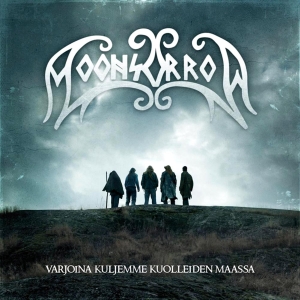
5. Moonsorrow – Varjoina Kuljemme Kuolleiden Maassa
Moonsorrow have a lot of material out there, and suffice to say I haven’t heard enough of it. I am used to really long songs in black metal, but not in folk, and I always find myself treating them like the former, playing their albums for ambient effect and paying close attention only where the music reaches out and demands it. I’ve listened to all 30 minutes of Tulimyrsky 19 times apparently, and I don’t remember it. Likewise, I forgot they’d released an album this year until I was browsing last.fm and discovered that I’d listened to it 13 times.
So take that for what it’s worth. This album has four full songs with a few 1-2 minute tracks in between. The two middle ones of the four are decidedly more catchy, whether you want to call them better or not. Moonsorrow may never move me as successfully as Finsterforst did copying their style on the underrated masterpiece Zum Tode Hin, but nevertheless here is an album I will probably never tire of, even as I never fully embrace it. I want to call it my fifth favorite of the year so far, but it’s so difficult to place.
Their songs are too long for youtube, but this video fits in the vast majority of track 5, Huuto.
.
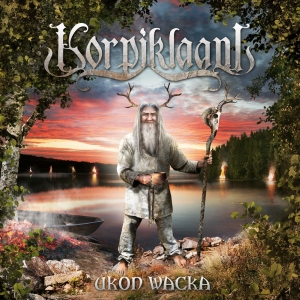
4. Korpiklaani – Ukon Wacka
Another year, another Korpiklaani album. Since 2003 they’ve released seven. That’s 83 songs that all sound pretty much the same and are all either about beer, drinking beer, being out of beer, having a hangover, or killing your hangover by drinking beer. But while they might not be folk metal’s most poetic troupe, they are hands down the most fun of the lot.
Ukon Wacka doesn’t really have any down time. From start to finish it’s a consistently enjoyable, catchy album. Sure, every song could have appeared on every other album without being out of place, but unlike on many of their others you’ll never find yourself skipping tracks. And like on Karkelo, they saved the best track for last, encouraging you to stick around:
.
3. Altar of Plagues – Mammal
I never really talk about White Tomb. I got it the first day it leaked and have listened to it dozens of times since, but it’s not something I feel inclined to sing the praises of. With the exception of the first few minutes of Watchers Restrained, there was never a point where I could tell people wow, you’ve got to hear this. It’s something a bit more personal–the sort of thing I like to play when I’m working late and really need to concentrate. It’s got a slow brooding energy that you can just feed off of. It empowers the listener without ever demanding much attention. Mammal can be described similarly, but should you choose to shut off the lights, sit back, and just soak it in, you’ll find it has a lot more to offer than their first album. I’ve only listened to it five times so far, but I feel confident placing it among the best. Here are the first 15 minutes of the opening track:
.
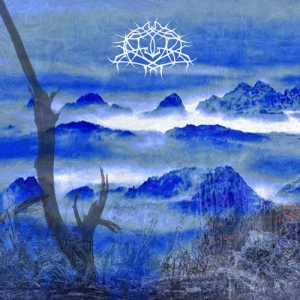
2. Krallice – Diotima
Here we get into the albums I consider true masterpieces. Krallice have pioneered a sound that few artists are physically capable let alone creatively inclined to emulate. But their last album, Dimensional Bleedthrough, was a bit of a disappointment. Last.fm claims I have listened to it twelve times, and I’m here to tell you I don’t remember the slightest thing about it. While it might have been more technical and refined than their first release, it lacked those standout moments that made songs like Wretched Wisdom and Forgiveness In Rot so unforgettable.
Diotima reclaims the beauty and emotion of their first album, and couples it with the mind-bending technical skill and complexity they have further developed since then. This is easily my second favorite album of 2011 at the moment, and may in time lay claim to the top slot. I highlighted Telluric Rings last week, so allow me to point out my other favorite, the title track. The lead guitar from 5:30 to 7:20 will leave you speechless.
.
1. Falkenbach – Tiurida
I was both shocked and disappointed to see this album go almost entirely unnoticed. I mean, Vratyas Vakyas is the second most important figure in the history of folk and viking metal after Quorthon. Yet even on wikipedia’s quite inclusive article on metal releases in 2011 it goes unmentioned. This would be excusable were it the washed-up product of an artist past his prime, but Tiurida is my favorite album of 2011.
The only complaint I have read is that it’s too repetitive, but that’s exactly what Falkenbach is meant to be. There’s a difference between repetitive and generic, and he has always been far from the latter. Indeed, it was my fear that Tiurida, his first release in six years, might lack that creative genius present in all his prior works and compensate by at last substituting some stylistic variance. But Vakyas never lost his edge, and has here created his best work since En Their Medh Riki Fara fifteen years ago. Let the glorious opening and closing tracks speak for themselves:
Last night, as I struggled to get some sleep, I ended up turning on the television to HBO and watching a truly infamous film — 1970’s Myra Breckenridge. Based on a novel by Gore Vidal (a writer that I generally have little use for), Myra Breckinridge is infamous for being one of two X-rated film released by 20th Century Fox in 1970. (The other one was Russ Meyer’s Beyond The Valley of the Dolls.)
Why Was I Watching It?
Because I’ve read a lot of books devoted to “the worst films ever made.” And all of them mention 1970’s Myra Breckinridge as being one of the worst ever made. And having seen the film, I can say that they’re right.
What’s It About?
Well, that’s a good question. Okay, there’s a bisexual film critic named Myron Breckinridge (played by an actual film critic named Red Reed). Myron gets a sex change operation from a pot-smoking doctor played by John Carradine. “It won’t grow back,” Carradine warns him.
Next thing you know, Myron is Myra and is now being played by Raquel Welch. Pretending to be Myron’s window, Myra goes to the acting school that is run by Myron’s uncle Buck (John Huston) and ends up falling in love with an acting student (played, pretty badly in her film debut, by Farrah Fawcett). Unfortunately, Fawcett’s in love with a cowboy from Oklahoma so Myra ends up anally raping the cowboy with a big dildo.
Oh, and a 70 year-old Mae West in the film for some reason. She plays a talent agent.
It all sounds a lot more interesting than it actually is.
What Worked?
Nothing. Just in case I’m not being clear, allow me to clarify: Nothing. Seriously, this may indeed be the worst movie I have ever actually sat through. What’s said is that it didn’t even work on a “so-bad-its-good” level. I love trashy film but Myra Breckinridge isn’t really interesting enough to be trashy. It’s just an amazingly boring film that thinks it’s about sex.
I’ve also read some who have claimed that this film, bad as it is, has a certain camp appeal. And, if you’ve never actually seen a campy film, you might think that Myra Breckinridge is camp. However, camp is not boring. Myra Breckinridge is.
Actually, there is one scene that has an odd, “you’ve-got-to-see-this-crap” appeal to it and here it is. Mae West sings “Hard to Handle.”
What Doesn’t Work:
The entire freaking film. Seriously. I mean, I don’t even know where to begin or what specifically to point out because, if you simply take this film’s failings on a problem-by-problem basis, it creates the false impression that the film is somewhat watchable.
Okay, here’s a few things that I simply will not be able to live with myself if I don’t take a few moments to be a bitch about:
1) There’s a lot of bad movies that are distinguished by interesting or, at the very least, watchable performances. It’s as if the actors realize that they’re going to go down with the ship unless they bring something new to the film. (Meanwhile, so-called great films feature some of the worst performances this side of Avatar…) Unfortunately, Myra Breckinridge is not one of those films. The cast alternates beyond going insanely overboard (like John Huston and Rex Reed) to delivering their lines with a dull contempt that seems to be directed as much at us as at themselves (like Raquel Welch.)
By the way, Raquel Welch is actually one of my favorite of the old school film stars. For me, she’s a bit of a role model, a strong Latina who never felt the need to apologize for being both a sex symbol and an intelligent, succesful woman. But Welch really does give a pretty bad performance here. Then again, I would argue that she gives the material exactly the amount of effort it deserves.
2) As bad as the cast is, no one is as terrible as Mae West. The 70 year-old West came out of retirement to play her role here. Anyway, it’s hard to understand why she’s in this film. At one point, when she meets a 6’7 actor, she says she’s only concerned with the seven inches. Now, imagine this being said by your great-great-great-grandma and you have some idea what it’s like to watch her performance here.
3) This film was made in 1970 and it attempts to be all counter-cultural by having “hippies” wandering around in the background. As well, we get a lot of hard-hitting political satire. By that, I mean that various fat men in cowboy hats pop up and complain about “smut” and “nudity” in the movies. I guess the audience is supposed to go, “Oh my God, they’re talking about movies like this!” It’s for this reason that I think that Myra Breckinridge is actually secretly meant to be a piece of right-wing propaganda.
4) Finally, for no real reason, clips from old 20th Century Fox films are littered throughout the film, popping up randomly to…well, I was going to say “comment on the action,” but few of them manage to do that. Basically, it works like this: you see Raquel Welch anally raping a man with a dildo. And then you see a clip of Stan Laurel for a few seconds. Then, you’re back to Raquel anally raping the man. Suddenly, there’s a clip of Claudette Colbert smiling. Suddenly, Raquel’s back and she’s still anally raping the man. And by the way, I’m not just making this up so I’ll have an example. This is what actually happens in the film.
5) And again, allow me to clarify that this film — which features Raquel Welch using a dildo to anally rape a man — is still one of the most boring things ever made.
6) “Okay,” you’re saying, “if you hated it so much then why did you sit through the entire freaking movie, Lisa?” I did it because, once I start watching a movie, I can’t stop watching until it ends. That’s my addiction. That’s my curse. That’s a duty that I’ve proudly accepted as a film lover. And not even Myra Breckenridge is going to keep me from doing my duty.
“Oh my God! Just like me!” Moments:
Yes, I know that this is where I traditionally offer up some sort of teasingly vague comment about my first year at college or where I admit that I’m scared of dogs, heights, swimming, and the area directly behind the television. And you would be justified in thinking that a film that claims to celebrate sexual freedom and bisexuality would give me the perfect excuse to be all sorts of TMI.
But you know what? There were absolutely no “Oh my God! Just like me!” TMI moments in Myra Breckenridge because there was not one single moment that, in any way, rang true or seemed to possess any sort of insight about…well, about anything. For an X-rated film that was specifically about sexuality, Myra Breckinridge left me as dry as the Sahara.
So, sorry — for the first time, I can say that I watched something that had absolutely no “OMG! Just like me!” moments.




 Through the Shattered Lens