For our latest “Hottie of the Day” we leave merry ol’ England and return back to U.S. shores. My latest pick is the very cute and lovely Misa Campo.
The one and only Misa Campo was born in Canada from a Filipino father and a Dutch mother. A combination of genes when combined turned out a lovely daughter who has been one of the most popular import car models for the past several years. A career which only happened after her boss at the place she bartended at recommended that she try modeling for the import car tuner shows which are popular in the West Coast.
She has been one of the major faces in the import car tuner model scene and a mainstay in the trade publications which promote the industry. Misa has also appeared on men’s magazines such as Maxim, AskMen, DragSport and others. She also does go-go dancing at hip-hop events which also tends to find itself paired with import tuner shows. Ms. Campo has also branched out her usual show modelling gigs by becoming the face of RocaWear Canada.
While she does yearn to settle down and raise her own family she has set that aside for the moment to focus on her modeling career. Maybe she’ll branch out to other forms of entertainment. One thing for sure that wherever she goes and whatever she decides to do Misa will have legion of fans always on the look out for more work from her.
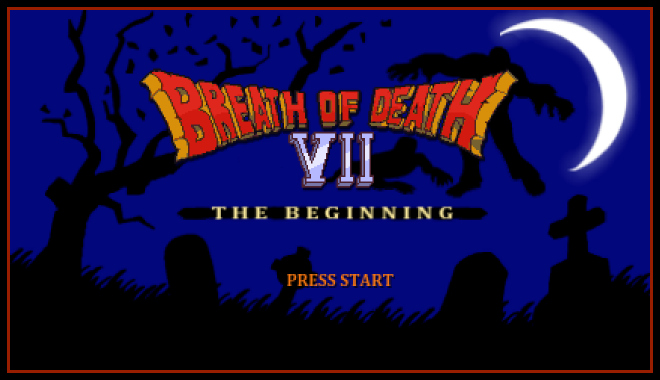
So here’s a random little Indie game that I caught wind of a couple months back. I guess I was behind the curve on this one, but I’ve always been in favour of promoting indie developers. We need more people making great games. And not all of those people are going to work for EA. So, in that respect, the Indie Game Marketplace on Xbox Live is one of the greatest inventions of our time. On the other hand, there’s so many bad games being released on there, that it can be difficult to even trust the cost of downloading one of these titles. Well, if you’re afraid of a title that lacks quality, then you have nothing to worry about with Breath of Death VII: The Beginning (which I will hereafter refer to as BoD7).
It’s a satirical (or parody, I suppose) throwback experience, hearkening back to the days of 8-bit RPGs on the NES. You have the true top-down environments with their (mostly) non-interactive terrain. You have your sprite-based characters, your very traditional 8-bit combat screens. Really, you have it all, except for a beautiful score which pays homage to, but isn’t, an 8-bit tracklist. The game is well put together. It has the polished feel that you’d expect from any professional game in its presentation, the way the game plays, and so on. There are no gameplay glitches or issues to be found in BoD7. I guess that reflects the dedication of the developer once again.
So obviously, you’re not playing this game for the graphics. You’re not playing it for the storyline (but you may very well be playing it for the satire of a typical 8-bit storyline) and you’re not, strictly speaking, playing it for the game system. Fortunately, BoD7 doesn’t reflect 8-bit releases in every way. The system is very intuitive. Characters level up quickly, and get access to a lot of cool powers without much difficulty. Don’t be fooled by the ease with which you’ll breeze through the early parts of the game though – in the tradition of 8-bit games, the game gets pretty hard as it goes on. Of course, it’s still far from unplayable, and you should still have fun progressing through the whole world that Zeboyd has presented for you.
The bottom line? It’s definitely worth the couple of bucks it’s going to cost you. Check it out!
Sometimes, believe it or not, I feel very insecure when I come on here to talk about movies because, unlike most of my fellow writers and the site’s readers, I’m actually pretty new to the world of pop culture and cult films. Up until 8 years ago, ballet was my only obsession. It was only after I lost that dream that I came to realize that I could feel that same passion for other subjects like history and writing and movies. In those 8 years, I think I’ve done a fairly good job educating myself but there’s still quite a bit that I don’t know and, at times, I’m almost overwhelmed by all the movies that I’ve read so much about but have yet to actually see. And don’t even get me started on anime because, honestly, my ignorance would simply astound you. What I know about anime — beyond Hello Kitty — is pretty much limited to what I’ve read and seen on this site. (I do know what a yandere is, however. Mostly because Arleigh explained it to me on twitter. I still don’t quite understand why my friend Mori kept using that as her own personal nickname for me back during my sophomore year of college but that’s a whole other story…)
The reason I started soul searching here is because I’m about to review a book — The Eurospy Guide by Matt Blake and David Deal — that came out in 2004 and I’m about to review it as if it came out yesterday. For all I know, everyone reading this already has a copy of The Eurospy Guide in their personal collection. You’ve probably already spent 6 years thumbing through this book and reading informative, lively reviews of obscure movies. You may already know what I’ve just discovered. Well, so be it. My education is a work in progress and The Eurospy Guide has become one of my favorite textbooks.
The Eurospy Guide is an overview of a unique genre of films that started in the mid-60s and ended with the decade. These were low-budget rip-offs — the majority of which were made in Italy, Germany, and France — of the Sean Connery-era James Bond films. These were films with titles like Code Name: Jaguar, Secret Agent Super Dragon, More Deadly Than The Male, and Death In a Red Jaguar. For the most part, they starred actors like George Nader, Richard Harrison, and Eddie Constantine who had found the stardom in exploitation cinema that the mainstream had never been willing to give to them. They featured beautiful and underappreciated actresses like Marilu Tolo and Erika Blac and exotic, over-the-top villainy from the likes of Klaus Kinski and Adolfo Celi. Many of these films — especially the Italian ones — were directed by the same men who would later make a name for themselves during the cannibal and zombie boom of the early 80s. Jess Franco did a few (but what genre hasn’t Jess Franco experimented with) and even Lucio Fulci dabbled in the genre. Their stories were frequently incoherent and, just as frequently, that brought them an undeniably surreal charm.
And then again, some of them were just films like Operation Kid Brother, starring Sean Connery’s younger brother, Neil. (Operation Kid Brother was an Italian film, naturally.)
Well, all of the films — from the good to the bad (and no, I’m not going to add the ugly) — are covered and thoroughly reviewed in The Eurospy Guide. Blake and Deal obviously not only love these films but they prove themselves to be grindhouse aficionados after my own heart. Regardless of whether they’re reviewing the sublime or the ludicrous, they approach each film with the same enthusiasm for the potential of pure cinema run amuck. It’s rare to find reviewers who are willing to pay the same respect to a film like The Devil’s Man that they would give to a sanctioned classic like The Deadly Affair.
Along with reviewing a countless number of films, Deal and Blake also include two great appendices in which they detail the review some of the film franchises that came out of the genre and provide biographies of some of the more prominent stars of the eurospy films.
The highest compliment I can pay to The Eurospy Guide is that, even with all the various films guides I own (and I own a lot), I found films reviewed and considered in this book that I haven’t found anywhere else. Everytime I open this book, I learn something that, at least to me, is new. The book was an obvious labor of love for Blake and Deal and I love the results of their labor.
Made in Dagenham, an immensely likable and even inspiring film from England, is based on a true story. It dramatizes the 1968 strike of sewing machinists at the Ford assembly plant in Dagenham, England. The all-female workforce walked off the job in protest to the fact that they were not being paid an equal rate with their male co-workers. Going from being treated as a sexist punchline to eventually shutting down production at the Dagenham plant, these women brought the issue of equal pay for equal work to the world’s attention and, ultimately, played a large part in the passage of legislation designed to guarantee equal pay regardless of sex. And, while it might sound like the material for standard, overly sentimental move-of-the-week, Made in Dagenham is both a warm-hearted tribute and an immensely entertaining film.
Usually, I’m wary of films that claims to “pay tribute to strong women,” largely because they always 1) seem to be rather condescending towards the women they’re claiming to pay tribute and 2) always seem to be intent on providing a very narrow definition of what it means to be “strong.” Far too often, either stridency or an idealized noble savagery is presented in the place of “strength.” What makes Made in Dagenham a true tribute to strong women is that it portrays women as individuals and as human beings (as opposed to idealized figures of either reverence or loathing). What a novel idea! All of the strikers — from Sally Hawkins as the strike’s leader to Geraldine James as the oldest striker to Jaime Winestone as the youngest — are treated with a definite (and refreshing) respect yet at the same time they’re never so idealized as to become plastic saints. They’re not presented as being models of perfection. Instead, they’re just working mothers and wives who are simply standing up for their rights and you would have to be heartless not to end up rooting for them.
On my list of my 25 favorite films of 2010, Made in Dagenham was number #22 and that’s largely because of Sally Hawkins’ performance as the strike leader. Hawkins is hardly a household name but if you’ve seen her in films like Happy-Go-Lucky, An Education, and Never Let Me Go, then you know that Hawkins is one of those rare performers who is capable of both being ordinary and a star at the same time. She brings an authentic feel to her working class characters even when she’s acting for a condescending and elitist director like Mike Leigh. To understand just how important Hawkins is to the success of this movie, just try to imagine the exact same film but starring either Sandra Bullock or Julia Roberts. One can imagine that either Bullock or Roberts would be given a lot more inspiring speeches (complete with triumphant music in the background) and a few scenes where they would get to say something sassy (and ultimately pointless) to all the one-dimensional male chauvinists standing in their way. They also probably would have contracts to keep from having to act underneath the hideous (but historically authentic) beehive hairdoes that Hawkins and the other women in the film have. Hawkins, however, gives her performance without any of the usual Hollywood safety nets and she is completely and totally winning playing a strong-willed but inherently nice woman who struggles to be a wife, a mother, a worker, and an activist all at the same time. As I watched her performance, I couldn’t help but be reminded of my mom who raised four daughters on her own and who was the strongest woman I know. I ultimately felt as if Hawkins performance was a tribute to not only my mom but every other woman throughout history whose strength is, far too often, ignored by those who do the recording.
Made in Dagenham is not a perfect film. For all the authentic moments in the film, there’s a few that are a bit too obvious and, when they show up, they fit in so awkwardly with everything else on-screen that they temporarily throw the whole film out of whack. This is the type of film where, as Sally Hawkins gives the most important speech of her life at a labor conference, she looks up just in time to see that her husband (Daniel Mays) has shown up in just the nick of time and is now standing in the back of the room, watching her with an apologetic smile on his face. It’s a sweet scene and, for all I know, it actually did happen that way but it still temporarily makes the movie feel like a self-consciously inspirational Lifetime movie.
And then there’s the issue of Miranda Richardson, who essentially has an extended cameo role as Barbara Castle. Though Castle is known not at all in the States (most of the people in the theater with me seemed to think Richardson was supposed to be playing Margaret Thatcher and I might have thought the same if I hadn’t looked the movie up on Wikipedia before seeing it), she was quite prominent in the UK. A left-wing member of Parliament and a pioneer for women in politics, Castle was Secretary of State for Employment at the time of the strike and, as shown in the film, she eventually intervened in the strike and helped to bring about legislation designed to guarantee women equal pay with their male co-workers. As such, Castle is as much of a part of this story as the actual strikers and you can’t fault the movie for including several briefs scenes featuring her watching the situation from afar. What you can fault director Nigel Cole for is allowing Richardson to overact to such an extent that her scenes come across as so heavy-handed that they epitomize every negative cliché of a feminist film. Richardson plays her role with an attitude that seems to shout, “The real star is here,” and I found myself resenting her because she seemed to be determined to ruin a truly inspiring film.
But the thing is, despite these flaws, Made in Dagenham is an inspiring film. It’s inspiring because of Hawkins and it’s inspiring because of an ensemble of actresses (including Hawkins’ Education co-star Rosamund Pike who does a great job in a role that could have felt artificial if performed by a lesser actress) who come together perfectly. I saw Made in Dagenham on January 1st and it was the perfect film to start 2011 off with.
Red (which I saw at the dollar theater this previous Monday) is a lot like the boy who took you to Homecoming: likable, occasionally enjoyable, but ultimately rather forgettable. It’s a movie that you enjoy for what it is but, at the same time, it’s hardly a film I could ever imagine watching twice. I never went out with Taylor again after Homecoming either.
Anyway, the movie itself is about a retired CIA agent (Bruce Willis) who spends all of his time flirting on the phone with Sarah (Mary Louise Parker) who works for the company that sends Willis his pension checks. (Willis always rips the checks up so he’ll have an excuse to call Parker.) As the Christmas season approaches, Willis is paid a visit by a bunch of men dressed in black who proceed to blow up his house. Willis escapes death, kidnaps Parker (under the pretense that her life is in danger because of how much they talk but mostly just so he can date her), and sets about getting all of his fellow retired spies (Morgan Freeman, John Malkovich, and Helen Mirren) together. Meanwhile, a determined, young, and hot CIA agent (Karl Urban) has been assigned to track Willis down and kill him.
The plot is really pretty standard but director Robert Schwentke keep things interesting by both playing up and acknowledging just how ludicrous the standard action movie is. If nothing else, this is a film that respect its audience. It undesrstand that we understand that we’re watching an action movie and it assumes that we’ve seen enough action movies that we know how the genre is supposed to work. And while Schwentke pulls off all of the standard action moves like a pro, what makes the movie memorable are the small moments where he plays with and subverts our expectations.
He’s helped by his cast, a solid group of professionals who could play these roles in their sleep but yet, to their credit, still appear to invest themselves in the film. All of the performers make strong individual impressions yet still manage to gel perfectly as an ensemble. As opposed to most films of this sort, you really believe that these characters are old friends and that they do have a shared history. One of the film’s main strengths comes from observing how all the different characters respond to each other — nobody has the exact same reaction. This is kind of what Sylvester Stallone tried to pull off with The Expendables. The difference here, I suppose, is that Red features John Malkovich, Morgan Freeman, Helen Mirren, and Bruce Willis while Stallone had to work with Jason Stathan and Terry Crewes.
Among the cast, Malkovich is probably the real crowd pleaser as a former MK-Ultra experiment. He is convincingly insane in his role and he gets almost all of the film’s best one liners. He also has a scene where he deflects an incoming rocket in a way that made the audience cheer. However, for me, the best part of the film was the unexpected chemistry between Parker and Willis. Through all of the action sequences and self-referential humor, you really do hope they end up together.
That said, there’s still something missing from the film. It never quite goes as far as you would like in embracing the inherent absurdity of the action genre and, after a strong start, the film does have some trouble maintaining its frantic pace. Add to that, Richard Dreyfuss shows up and and throws the whole ensemble out of whack by attempting to chew any piece of scenery he can get his teeth on. Still, for what it is, Red is an enjoyable little movie and sometimes, that’s enough.
Yes, I hear the sound of everyone starting to protest and rest assured, I’m not planning on using my space here to start blogging about The Bachelor (though I guess I could if I ever like got really pissed off at men in general…) It just happens that The Bachelor is what I watched last night and it featured a vampire.
Why Was I Watching It?
Because, God help me, I love it so. Everyone has at least one irrational love. I love crappy reality TV, especially if it gives me an excuse to get all catty and show my claws. Meow!
What’s It About?
Since this was the 1st episode of the new season, we met our new bachelor and discovered that he’s an old bachelor — it’s the return of Brad Womack! For those of you who don’t follow these things (and I assume that’s everyone involved with this site except for me), Brad was the Bachelor a few seasons ago. He’s the one who, after he picked his bride, then dumped her on national TV and decided he wanted to marry the girl who came in second. Then he dumped that girl too.
Anyway, Brad’s been in therapy for 3 years and in this episode, he explains that this all happened because he didn’t have a good relationship with his Dad, therefore establishing himself firmly as yet another little boy with daddy issues. (Pardon me while I gag.)
Once Brad’s got that all cleared up, he meets the poor girls who are competing to be his wife and he basically spends the majority of the episode saying, “I just want another chance because I have daddy issues.” You got another chance, you toadsucker. Shut up about your freaking childhood! Fortunately, there’s hope on the horizon because of a vampire named Madison.
What Worked?
First off, everyone spent a lot of time — and I mean A LOT OF TIME — trash-talkin’ Brad. I mean, everyone! The girls, the show’s host, and finally even Brad himself, all they could talk about was how much of a loser the guy is. And you know what? He is. Which is why it’s going to be fun to watch him basically put himself through Hell all over again.
Plus, the girl with fangs got a rose and I imagine that’s probably because the show’s producers thought she’d be good for ratings but who cares? She’s got fangs!
What Didn’t Work?
Well, the show is like sooooo totally shallow and reality TV is just the devil’s programming and it’s all evidence of how stupid people are and blah blah blah blah. Just insert your own boring, anti-reality television diatribe in here. And then pat yourself on the back because, yeah, you’re really like the first person who has ever said any of that crap. I mean, obviously, you’re a freaking genius. Good job, you elitist toadsucker.
“Oh My God! Just Like Me!” Moment
Not that long ago, I used to dress in all black and wear a studded choker. I also renamed myself Pandora DeSaad and wrote poetry about slitting my wrists and watching the blood circle down the drain of the sink. That got kinda tedious after a while and I moved on. Still, even if I hadn’t, I would still hope that I would be allowed to appear on the Bachelor.
Lessons Learned:
None. There were no lessons to be learned from this. The show was pure trash with no redeeming value. That was kind of the point.
Hi there! Welcome to the first edition of Lisa Marie’s Favorite Grindhouse and Exploitation Trailers for 2011. All 6 of our trailers in this edition are Italian. And, as always, most of them should be watched with caution and definitely not watched at work. (Also, I wouldn’t be surprised if Youtube yanked one or two of them offline within a week or so. So, watch while you can.)
This is actually one of Umberto Lenzi’s not that terrible movies. Which doesn’t mean it’s good. Just means that it’s not that terrible. This is the movie in which Lenzi manages to turn the Jonestown Massacre into a cannibal film. Ivan Rassimov, who looks like a Russian Charlton Heston, plays Jim Jones. Also, you might recognize the music because it ended up being used in about a 100 different Italian exploitation trailers.
One of the most misleading titles of all time as Warhol had very little to do with this film beyond lending Paul Morrissey and Joe Dallesandro. This is better known as Flesh For Frankenstien. The trailer really doesn’t do justice to the movie but I had to include it because, even if it’s not my favorite trailer, it’s a classic exploitation trailer in just the shameless way that Andy Warhol’s name is used to sell the film.
Believe it or not, this movie is actually a lot of fun. One of the stars is apparently a gay porn star but I’ve never been able to figure out who he’s playing in the film.
I had to finish out this all-Italian edition with a little Lucio Fulci. And I had to go with Murderock because it features a lot of dancing. The trailer is also memorable for revealing the identity of the killer.
The latest entry to the “Song of the Day” is from the American rock band Old Gods of Asgard. Their song I have chosen is their song “The Poet and The Muse”.
This particular song by the band was created years after the group’s very talented, but self-destructive guitarist Loki Darkens. The song was written by the band’s leader, Odin Anderson with his brother Tor Anderson and drummer “Fat” Bob Balder. It appears in the their 5th full-length album, The Black Rider Cometh, which was released in 1976. It would become one of their more popular songs and was even an inspiration decades later in a video game released for the Xbox 360 by Scandinavian game developer, Remedy Entertainment.
“The Poet and The Muse” plays like a Norse saga spoken to the accompaniment of the group’s music. It tells the tale of the poet named Tom and his beloved who he has dubbed his Muse. The song’s lyrics starts off simple enough about a couple deeply in love but as the song progresses it begins to take on a darker tone. This very dark presence in the lyrics gives the song an almost spooky story told by the campfire vibe which probably why the song became such a hit for the band despite their typical rock sound not appearing in the track until the very end of the song.
Whether the tale of Tom and his Muse is true or not really shouldn’t matter for the song is very good and to beginners to the music scene very easy to learn.
The Poet and The Muse
There’s an old tale wrought with the mystery of Tom The poet and his muse And the magic lake which gave a life To the words the poet used
Now the muse she was his happiness And he rhymed about her grace And told her stories of treasures deep Beneath the blackened waves
‘Till in the stillness of one dawn Still in its mystic crown The muse she went down to the lake And in the waves she drowned
And now to see your love set free You will need the witch’s cabin key Find the lady of the light gone mad with the night That’s how you reshape destiny
The poet came down to the lake To call out to his dear ‘When there was no answer ‘He was overcome with fear
He searched in vain for his treasure lost And too soon the night would fall And only his own echo Would wail back at his call
And when he swore to bring back his love By the stories he’d create Nightmares shifted in their sleep In the darkness of the lake
And now to see your love set free You will need the witch’s cabin key Find the lady of the light still ravin in the night That’s how you reshape destiny
In the dead of night she came to him With darkness in her eyes Wearing a mourning gown Sweet words as her disguise
He took her in without a word For he saw his grave mistake And vowed them both to silence Deep beneath the lake
Now if its real or just a dream One mystery remains For it is said on moonless nights They may still haunt this place
And now to see your love set free You will need the witch’s cabin key Find the lady of the light gone mad with the night That’s how you reshape destiny
And now to see your love set free You will need the witch’s cabin key Find the lady of the light still ravin in the night That’s how you reshape destiny
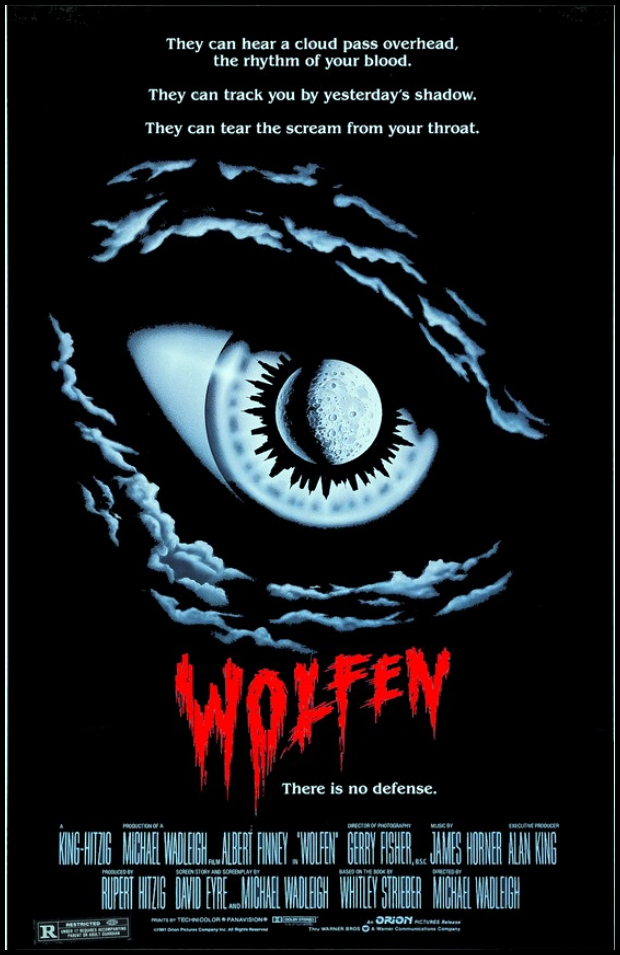
1981 was a great year for wolf movies. There was the excellent An American Werewolf in London by John Landis and Joe Dante’s equally creepy The Howling. To finish off the trifecta of werewolf films for the year there’s Michael Wadleigh’s Wolfen. Wadleigh’s film was a very good werewolf tale that added a bit of Native American folklore to the typical lycanthrope story, but it’s slightly overlong running time keeps it from being as great as Landis’ and Dante’ contributions.
Wolfen takes place in the city of New York and its growing urban jungle of decaying and condemned buildings in the city’s ghettos. One has to remember that the late 70’s and through on the mid-80’s the inner-cities of most of the major metropolitan cities in the US have turned into rundown ghettos rife with drug problems, high-crime rates and unemployment. It is in this setting that Wolfen takes place in. The film used the screenplay co-written by horror veteran novelist Whitley Strieber and his quirky style heavily influences this werewolf story. Strieber’s screenplay mixes together a police procedural, political intrigue, business corruption, race and class relations, Native American lycanthrope folklore and horror. Wolfen tries to combine all these different elements together as well as possible and it mostly succeeds, but there’s times when the film gets dragged down a bit trying to accomplish this.
The cast was made up of mostly new actors (well young and new at that time) with a few veteran actors holding things together. Albert Finney gets the choice role of NYPD Detective Dewey Wilson who begins investigating a series of brutal murders of three individuals whose race, class and personal status brings no discernible clues that ties them together. Joining him in his investigation — which Wilson gradually suspects has some sort of supernatural angle to it — were the very young Diane Venora and Gregory Hines. Edward James Olmos plays a Native American whose knowledge ties to who or what was involved in the killings might be closer than everyone thinks. The performances from all involved were pretty good though Hines comic relief performance was a bit too blackface in its tone and execution. 1981 Hollywood was still not ready to discount such racial stereotypes and it gives Wolfen a certain sense of creepiness and insensitivity. Maybe the screenplay was written just that way to highlight one of the film’s themes of racial and class inequality. If it was then Strieber sure did an excellent job of hammering home the point.
There’s a point in the film where we find out the nature of these wolfen and it does stretch the usual definition of the typical werewolf story. But looking back on it now this version told by Strieber and Wadleigh does lend credence to native folklore about wolves who were cunning as men and who preyed not just on the animals in their territory but hunted men as well. Whether they’re wolves or men in the shape of wolves really is left to the audience’s imagination even after the brief explanation of the wolfen and it’s role in the legends and myths of Native Americans.
The film had very creepy moments whenever the story switches over to be told through the viewpoint of the wolfen. The skewed perspective the camera takes on to signify that we were seeing things through the eyes of the wolfen was disorienting and creepily well-done. Wolfen never really has pure horror moments in the film though in the hands of a director like Carpenter these sequences definitely would’ve raised the level of dread and horror. Wadleigh does a good enough job, but it seemed like he was treating the horror aspect of the story with less attention than it was its due.
Wolfen marks the weakest of the werewolf trilogy of 1981, but thats not to say that it was a bad film. The finished product was a well-done film and its attempt to be very ambitious in its storytelling has to be commended. The fact that the filmmakers and all involved were able to keep all the different themes and genres together without having the film spiral into utter confusion makes it a worthwhile werewolf film. It may have been the weakest of the three films mentioned but it wasn’t by much.
Since it’s awards season and all, here’s my personal picks for the 26 top films of 2010.
(This post has been updated since it was originally posted in order to include two films — Somewhere and Easy A — that I saw after making out the list below.)




 Through the Shattered Lens