Our hottie for the day is the impossibly cute Sasaki Nozomi.
Ms. Sasaki is one of the most popular Japanese models who was born in the Akita Prefecture in Japan and now lives in Tokyo. While fans of her work in the West know her mostly from her work as a gravure model she is quite the multi-talented lass who is also one of Japan’s top Idols and also an up-and-coming actress both live-action and voice-acting. Her looks has been compared to those of porcelain dolls and her modeling photobooks attest to that fact.
Ms. Sasaski is another reason why it must be good to live in Japan.
Australia’s Channel 7 and our own glorious Fox News both featured a man flounder pounding on live television over the past day or two. Can you tell which is literal and which is figurative? I’m still not sure.
(Compliments to BBC World News for bringing the first to my attention. I’ve been reading them daily for a good many years now.)
You know, it would only be fitting to make Miranda Kerr the next hottie of the day…
In what may well be John Carpenter’s finest film—greater even than Halloween and Escape from New York—the director boldly remakes Howard Hawks’ 1950s sci‑fi classic The Thing from Another World and, incredibly, surpasses the original. Unlike Hawks’ version, steeped in Cold War anxiety, Carpenter draws more directly from John W. Campbell Jr.’s short story Who Goes There?, shifting the focus to paranoia festering within an isolated group of men. His setting, an American scientific station buried deep in the frozen desolation of Antarctica, becomes the perfect pressure cooker for suspicion, distrust, and barely contained madness.
Carpenter’s vision announces itself immediately. The film begins with an overhead shot of jagged, snow‑capped mountains—an endless expanse of icy barrenness. This stark imagery is paired with Ennio Morricone’s minimalist score, a low, pulsating bass throb that mimics a heartbeat. In just these opening moments, Carpenter and Morricone establish the film’s defining tone: desolation, unease, and a creeping inevitability. Carpenter never lets this sense of dread relent; the unease initiated in the opening frames lingers throughout, until the final note of the end credits.
Where the 1951 film wasted no time showing an alien in the flesh, Carpenter follows Campbell’s original concept more faithfully: the creature hides, assimilates, and imitates. It kills and replicates members of the Antarctic crew, transforming everyday interactions into moments of terror. This conceit allows Carpenter to stage his film not just as a monster movie, but as a psychological exercise in tension. Each man is a potential threat. Each argument, however trivial, is laced with suspicion. The audience feels trapped alongside the crew, caught in their spiral of mistrust. At its core, the film is less about the monster’s abilities than about what happens when trust is stripped away from a community forced to live in isolation. The most chilling moments often occur not during the creature’s violent reveals, but in quiet exchanges where fear and doubt spread faster than the Antarctic cold.
The special effects remain legendary, an enduring benchmark even decades later. In the early 1980s, CGI was not a viable option, so Carpenter entrusted Rob Bottin, then in his early 20s, with designing the creature effects. Puppetry, animatronics, latex, and rivers of stage blood combined to create some of the most grotesque and imaginative transformations ever put on film. The kennel scene—when the alien first erupts from the body of a sled dog—remains a horrifying pinnacle of practical effects, unsettling in its creativity and biological plausibility. Bottin’s work is still studied in film schools as a triumph of practical ingenuity. The tactile, slimy, unpredictable reality of these effects would be nearly impossible to replicate with CGI. If any film demonstrates why computer graphics can feel cold and weightless compared to visceral practical effects, The Thing is it.
Anchoring the film is Kurt Russell as helicopter pilot R.J. MacReady, equal parts rugged pragmatist and reluctant leader. Russell’s performance gives the film its center of gravity, portraying a man forced into command when order collapses. Keith David brings an equally commanding presence as Childs, his wary, confrontational energy making him a perfect foil to Russell. The ensemble cast is one of Carpenter’s great strengths here. Each character is distinct, each performance meaningful; there are no throwaway roles. Even smaller parts resonate, as every man crumbles at his own pace under the weight of fear. One of the film’s most unsettling turns comes from Wilford Brimley, whose genial, trustworthy persona makes his gradual descent into paranoia and violence all the more disturbing.
The music deserves as much recognition as the visuals. Rather than scoring the film himself, as he had done in his earlier works, Carpenter handed the task to legendary composer Ennio Morricone. The gamble paid off. Morricone’s spare, throbbing motifs mesh seamlessly with Carpenter’s minimalist style, complementing the stark visuals rather than overwhelming them. The score is skeletal, almost primal—music that feels less composed than unearthed, vibrating with dread. It remains one of the finest examples of how sound can serve as a force multiplier for tension.
The Thing is not for the squeamish. The violence is graphic, the gore extreme, and the imagery deeply unsettling. Yet for those who admire masterful filmmaking, it stands as essential viewing: a perfect marriage of vision, execution, and atmosphere. For students of cinema, it offers a lesson in how genre filmmaking can transcend cliché and attain something close to pure, operatic terror. In the end, Carpenter’s The Thing is more than a remake—it is a redefinition. It strips away the veneer of mid‑century optimism and replaces it with a stark meditation on distrust, survival, and the alien within us all. Few horror films hold up this well or manage to stay this scary for fans old and new.
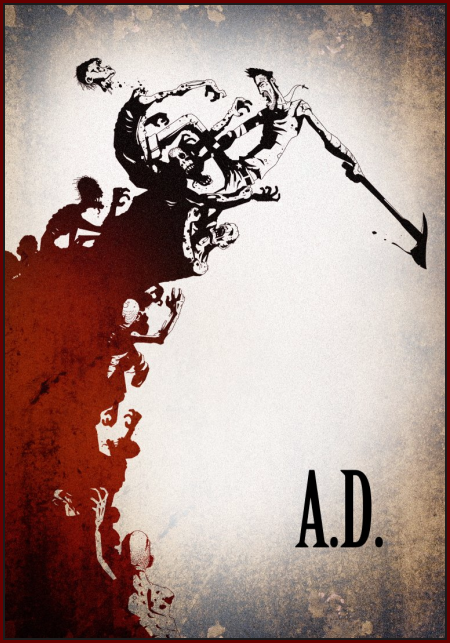
I must begin this entry by thanking Phil Edwards over at Live for Films for introducing me to this particular piece of awesome. Check out his very extensive blog on practically anything about films. It was there that I first saw this trailer for a zombie film that’s stuck between concept and development. The trailer is for A.D. and while it hasn’t been made into a feature-lenght film this trailer should convince studio heads everywhere to seriously make this into one. If 9 can go from a short cgi-animated film into a full blown feature-leght one then I definitely think A.D. should get the same chance. I mean it’s CGI zombie apocalypse and does it ever look great.
The only thing I hope doesn’t happen is for a place like Lionsgate to end up as the studio to get this film up and running. They may like horror and genre films, but they’ve been very sloppy in handling those same types of film (ex: Midnight Meat Train and Punisher: War Zone). I think A.D. is definitely the type of project Peter Jackson’s production company could get behind on.
So, all horror and genre fans need to spread the word concerning A.D. This is a film that needs to get made and he sooner the better.
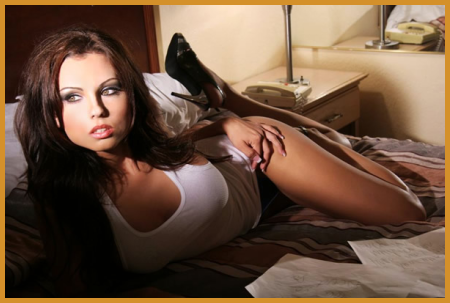
Latest hottie of the day is one Krystle Lina. California-born and raised Ms. Lina has been in the modeling industry since 2006. She has worked for Playboy and Destroyed Brand Denim plus many other men’s magazines and publications. Her Spanish and Irish ancestry has provided Ms. Lina (born Krystle Suarez) with her exotic good looks which has helped make her fast rising and popular internet and print model.
In addition, she has become quite popular with the internet crowd due to her internet radio show, “The Krystle Lina Experience”. Her show comes on every Wednesday night on Nowlive.com. She talks about everything from news stories to events and dealings within the entertainment industry. Krystle’s show has allowed her to expand her audience beyond area of the Los Angeles basin to worldwide. She also has taken advantage of the internet nature of her show to give back to her fans by taking phone calls from the show’s audience and interacting with them through the show’s chatroom. Ms. Krystle Lina definitely is a hottie going places.
I think everyone who has been visiting and reading this blog might have figured out that I am a huge fan of the zombie genre. If some haven’t come to that conclusion let me just get it out of the way and say that I do indeed love the zombie genre and everything associated with it. Sometimes the heart wants what the heart wants.
For the past couple months I have had the pleasure of reading one the best web comics still running on the web. I am talking about Jenny Romanchuk’s very own on-line zombie comic book series, The Zombie Hunters. The series began in around mid-November of 2006 and has gained quite the loyal fanbase as word-of-mouth about this particular zombie webcomic spread like the undead infection that is its subject.
I came across the webcomic while I was bored and going through the usual surfing of my favorite zombie-related websites. One site had a poll asking people which zombie webcomic was their favorite and listed all that met criteria. Ms. Romanchuk’s webcomic was one of them and being bored I clicked the link and to say I was impressed and instantly hooked would be quite the understatement. The storytelling is quite good with some scenes quite emotional and others knee-slapping funny. The artwork is very good with clean lines, not much clutter to distract the eyes and very good coloring done. Since The Zombie Hunters is about a zombie apocalypse the comic is also quite violent and gory as it should be.
With Apple’s iPad now being seen as the start of a new era in digital distribution of comics both in print and those just on-line I truly hope that Ms. Romanchuk finds a way to sell her series through that medium if just to expand her fanbase and really make some money off of an excellent comic book series. Sometimes the little guys need to be rewarded for a job well done and one that is still being done well.











 Through the Shattered Lens