Under the Moon’s Shadow: The Many Faces of the Modern Werewolf in Cinema


“Beneath the full moon’s gaze, the werewolf’s howl reminds us that the monster we fear most lives within.”

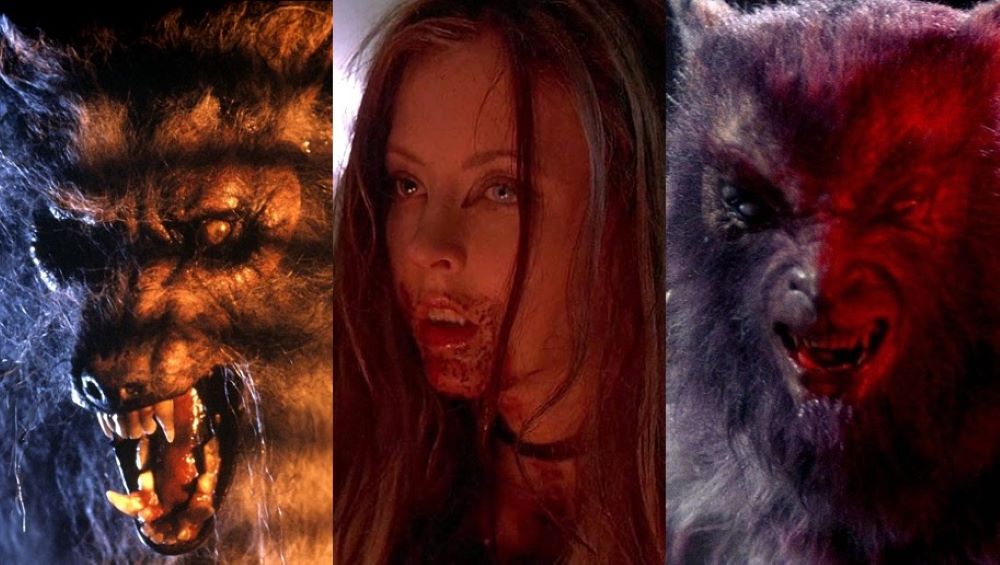
Werewolves have been haunting movies for almost a century, capturing our deepest fears and hidden desires. But today’s werewolf films go beyond the classic horror formula, offering fresh takes that reflect different genres, tones, and cultural vibes. From the intense, action-packed Dog Soldiers to the emotionally charged coming-of-age story in Ginger Snaps, modern werewolf stories keep evolving. This piece explores five standout films—Dog Soldiers (2002), Ginger Snaps (2000), Wolfen (1981), The Howling (1981), and An American Werewolf in London (1981)—to see how they each put their unique spin on the age-old monster myth.

The Werewolf as Warrior: Dog Soldiers’ Brutal Siege

Neil Marshall’s Dog Soldiers breaks away from the lonely, tragic werewolf trope and cranks up the action. Set deep in the Scottish Highlands, it throws a squad of British soldiers against a ferocious pack of werewolves. This film turns the myth into a survival war story packed with tension and raw energy, reminiscent of classics like Aliens and Zulu. The werewolves here aren’t lonely victims—they’re terrifying predators, more beast than man, rarely fully shown to keep the suspense sharp. The movie focuses on the squad’s fight to survive and the bonds they share, putting teamwork and instinct front and center.

The werewolves are intentionally faceless threats, less about human drama and more about pure danger. Instead of personal transformation, Dog Soldiers is about external combat, the struggle between man and beast in its rawest form.

Adolescence Unleashed: Ginger Snaps and the Lycanthropic Metaphor

Ginger Snaps takes a totally different route, using werewolf transformation as a metaphor for female puberty and all the confusing emotions that come with growing up. The bridge between monster and metaphor is Ginger’s first period, which triggers her curse and mirrors the changes and fears of adolescence. The movie digs deep into sisterhood, identity crises, and the loss of control, wrapping its horror in psychological drama and dark humor.

Instead of flashy creature effects, Ginger Snaps keeps things subtle, focusing on emotional truth. It’s a personal story about change and fear of becoming “other,” making the monster symbolic of real-life struggles rather than just an external threat.

Urban Shadows: Wolfen’s Mystical Guardians of Decay

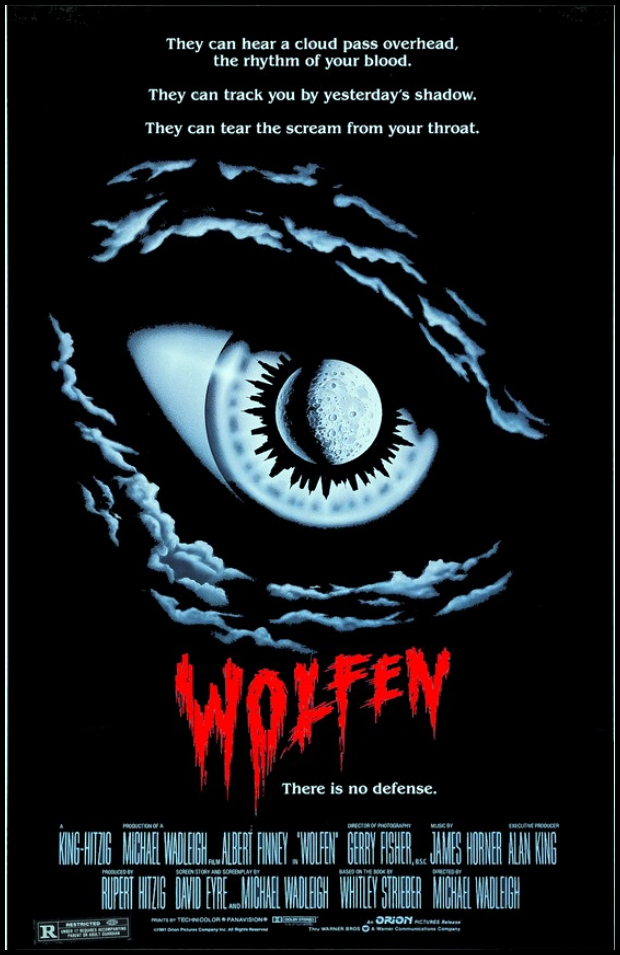
Wolfen stands apart for taking the werewolf myth into the world of urban decay and social unrest. Set in New York City’s rundown South Bronx, it follows detectives chasing a mysterious “Wolfen” creature tied to Native American spirituality. These aren’t just monsters—they’re ancient protectors fighting back against the destruction of nature by the city.

This movie trades fast-paced horror for slow-building atmosphere and social commentary. It uses the werewolf myth to reflect on displacement, environmental trauma, and the clash between nature and modern life.

Satire and Savagery: The Howling’s Shifting Tones

Joe Dante’s The Howling mixes body horror, camp, and satire in a way few horror movies do. The film tracks a journalist who stumbles upon a hidden werewolf colony and shifts effortlessly between chilling scares and self-aware humor. The transformation scenes set a new standard with unforgettable effects, and the movie sneaks in sharp critiques of media culture and cult mentality.

The werewolves in The Howling have a raw, animalistic design inspired by medieval art, which adds to the unsettling vibe. The film plays with expectations, flipping between serious horror and playful camp to keep viewers on their toes.

Tragedy and Humor: An American Werewolf in London’s Genre Fusion

An American Werewolf in London changed the game by blending horror, comedy, and tragedy all in one. It tells the bittersweet story of an American backpacker cursed after a werewolf attack in England. The special effects were groundbreaking, making the transformation scenes legendary. But more than the effects, its mix of sharp wit and real sadness gives it an emotional depth rare for horror films.

Unlike the external threats in Dog Soldiers or Wolfen, this film focuses on the inner turmoil of becoming a monster and the tragic human cost. The humor lightens the mood but never undercuts the emotional punch.

Thematic and Stylistic Divergence: A Closer Look

What stands out most when looking at these films is just how differently each approaches the werewolf myth, using it to tap into a wide variety of fears and ideas.

Tone and Mood

The films differ widely in tone. Dog Soldiers is intense and gritty, pulling viewers into a tense battle for survival marked by an unrelenting external threat. In contrast, Ginger Snaps is more reflective and symbolic, presenting the werewolf as a metaphor for adolescent change and identity struggles, especially in the context of female puberty. Its tone is intimate and emotionally charged.

Wolfen adopts a slower, more brooding atmosphere, emphasizing mystery and social critique through ecological and urban decay themes. The Howling fluctuates between genuine body horror and camp satire, challenging viewer expectations with its mix of fear and humor. Finally, An American Werewolf in London balances horror and comedy with a tragic undertone, creating an emotional complexity that few other werewolf films achieve.

Narrative Focus

The stories told by these films further highlight their differences. Dog Soldiers centers on a group dynamic, focusing on survival against a faceless external menace. Ginger Snaps is more inward-looking, exploring personal growth, family bonds, and the emotional upheaval of transformation.

Wolfen zooms out to look at social and environmental issues, making the werewolf a symbol of nature fighting back against urban chaos. Similarly, The Howling blends personal horror with cultural critique, exploring media obsession and cult psychology, all while keeping the story focused on its characters. An American Werewolf in London chooses to dive deep into one man’s tragic journey, showing the emotional impact of becoming a monster.

Cultural Themes

Together, these films show how the werewolf myth can reflect whatever fears or themes society is grappling with. Dog Soldiers taps into worries about survival and overwhelming outside forces; Ginger Snaps gets at the confusion and pain of growing up; Wolfen reflects alienation and environmental concerns; The Howling examines media hype and societal madness; and An American Werewolf in London highlights inner conflict and loss.

This broad range of themes and styles proves the werewolf legend is still incredibly adaptable—still a powerful way for films to engage with human experience in all its complexity.

Other Modern Werewolf Films in Context

Beyond these main works, many other films contribute to the werewolf legacy. The Company of Wolves (1984) explores gender and sexuality through fairy tale visuals. Silver Bullet (1985) adapts Stephen King for a small-town horror tale. Joe Johnston’s The Wolfman (2010) revives gothic horror with modern effects and includes standout makeup work by Rick Baker, delivering a visually rich yet emotionally complex take on the classic. Mike Nichols’ Wolf (1994) uses lycanthropy as a metaphor for aging and desire.

Most recently, Leigh Whannell’s remake of The Wolfman (2024) offers a fresh perspective on the myth, blending psychological horror with visceral transformation sequences. Whannell’s version emphasizes the protagonist’s internal struggle and familial curses within a contemporary setting, melding suspense with a nuanced character study and updated special effects to appeal to modern audiences while honoring the gothic roots.

Adding a lighter touch is The Monster Squad (1987), where a group of kids face off against classic monsters—including a reluctant Wolfman—in a mix of horror, adventure, and youthful courage. Its playful tone offers a nostalgic, fun take on the werewolf legend, proving that these creatures can captivate across genres and generations.

Together, these films highlight how the werewolf myth keeps evolving, adapting to reflect new cultural moments and storytelling styles.

Conclusion: Why the Werewolf Still Howls

The lasting power of werewolves in cinema lies in their extraordinary adaptability. These films show how the werewolf morphs to fit different narratives and cultural concerns: from brutal external threats in Dog Soldiers to metaphors for personal growth in Ginger Snaps; from mystical protectors in Wolfen to symbols of media mania in The Howling; and from tragic heroes in An American Werewolf in London to youthful adventurers in The Monster Squad.

The werewolf is not just a monster of flesh and fur but a cultural shape-shifter—malleable, symbolic, and endlessly fascinating. Its transformations mirror not only physical change but societal anxieties, personal struggles, and the complexities of human nature. This versatility guarantees the werewolf’s howl will echo across cinema for generations to come.
Guilty Pleasure No. 30: Wolfen (dir. by Michael Wadleigh)


Wolfen_1981A guilty pleasure is a film that we might enjoy, but isn’t as loved by others overall. It’s the kind of film that you can watch on any given day, but to speak of it may cause raised eyebrows among your peers. Everyone has at least one film or two that they treasure in this way.

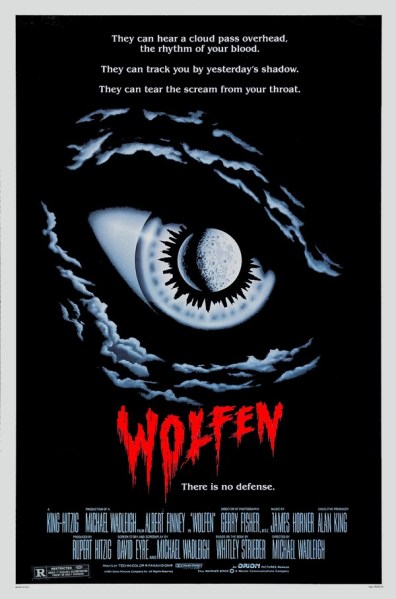
My Guilty Pleasure pick is 1981’s Wolfen, directed by Michael Wadleigh. Loosely based off the novel by Whitley Strieber, the film focuses on two homicide investigators who learn that the case they’re working may actually be caused by animal attacks. Often mistaken as a werewolf film, I really wouldn’t group Wolfen into that category. It’s supernatural in some ways, yes, but you won’t find any serious werewolf activity in it. Surprisingly enough, Wolfen was released in the theatre just a few months after Joe Dante’s The Howling. This makes me wonder how audiences took to Wolfen after seeing all of the make-up effects in Dante’s work. From an effects standpoint, Wolfen’s big claim to fame is the negative photography used to showcase the animals’ point of view. I can’t imagine it was incredibly amazing when comparing the two, but on it’s own, it’s not bad. It’s one of the few movies I’d like to see get a remake, if only to have the story match Strieber’s book better.

When a millionaire land developer and his wife are found brutally murdered in Battery Park, Detective Dewey Wilson is brought on to investigate. Albert Finney (Miller’s Crossing, The Bourne Ultimatum, Skyfall) easily carries the film as Wilson, feeling a lot like the owner of your favorite corner deli. Wilson’s detective work is subtle in the film, and Finney plays to that with a relaxed alertness. He comes across as calm, questioning, but you get the sense that if it came to blows, he’d be ready to react. I suppose most detectives are that way. When the murder is believed to be a possible terrorist attack, a Security Agency brings in a psychological expert named Rebecca Neff, played by Diane Venora (Heat, William Shakespeare’s Romeo + Juliet). Wolfen was Venora’s first film and she’s good in this, though the screenplay is written in a way where it’s more Dewey’s tale to tell. The book did Neff’s character more justice than the movie, overall. Rounding out the casting is Gregory Hines (Running Scared, The Cotton Club – also with Venora) as a forensics expert, Edward James Olmos (Miami Vice, Battlestar Galactica) as a Native American worker who may know more than he says and Tom Noonan (Manhunter, The Last Action Hero, F/X – once again, with Diane Venora) as a Zoo Worker who’s just a little to into wolves in general. That’s just my opinion, though Noonan’s been known to play creepy very well. The performances here are all pretty good. No one is really out of place here, as far as I could tell.

If Wolfen suffers from any major problem, it’s in the writing. In adapting the novel, they had the chance to really bring the terror from the novel on screen. In the book, we’re given an understanding of what the Wolfen are – creatures older, faster and more terrifying than your typical canine. They came complete with their own way of communicating with one another, and Strieber’s novel even referenced his other story about Vampires, The Hunger. The final standoff of the book was a fight similar to From Dusk Till Dawn, with the hope that our heroes could maybe hold off what was coming. The movie decided to go a different route. Not terrible in any way, but it could have been really good if they stayed on track.

I could be off here, but I believe the film elected to try to make the story more relevant for its time by circling the murder around terrorism and using the Security Agency. The Security Agency has so little to do with the film outside of bringing Neff on the case, it’s incredible. About every 20 minutes, the film cuts back to this crew of personnel at their computers, watching footage of attacks (that have little to do with the original victim) in an attempt to piece together why this death happened. Meanwhile, Wilson walks into bar and gets the whole solution handed to him in a short story over a beer. I wonder if Wadleigh (who co-wrote the script) was trying to say that with all the technology at their disposal, all it really took to solve a crime was just regular legwork. To quote Olmos’ character “It’s the 20th Century. We got it all figured out.” That’s just my speculation on that.

From a Cinematography viewpoint, Wolfen has some impressive scenes, particularly those of the Manhattan landscape. For a city that doesn’t sleep, the streets as they’re filmed here are barren, with lots of shadows. One scene in particular has Finney and Olmos’ characters talking on top of a bridge, and I have to wonder not only how they were able to get that shot, but how the actors maintained their composure. One wrong slip and either of them could have fell. I also love seeing New York City in the early 80’s, where most of the Bronx and Brooklyn looked like warzones. Both Wolfen and Nighthawks (also released in the same year) are great examples of how bad the city really was during that time.

Wolfen was also one of James Horner’s first scores. Listening to it, you can hear elements of what you’d find in Aliens, Star Trek II: The Wrath of Khan and his other pieces.

Overall, Wolfen is a good film if you find yourself running into it late at night and there’s nothing else to catch. I watch it on purpose, but that’s just me. We all have our tastes. If at all possible, consider reading the novel as well.

Previous Guilty Pleasures

  1. Half-Baked
  2. Save The Last Dance
  3. Every Rose Has Its Thorns
  4. The Jeremy Kyle Show
  5. Invasion USA
  6. The Golden Child
  7. Final Destination 2
  8. Paparazzi
  9. The Principal
  10. The Substitute
  11. Terror In The Family
  12. Pandorum
  13. Lambada
  14. Fear
  15. Cocktail
  16. Keep Off The Grass
  17. Girls, Girls, Girls
  18. Class
  19. Tart
  20. King Kong vs. Godzilla
  21. Hawk the Slayer
  22. Battle Beyond the Stars
  23. Meridian
  24. Walk of Shame
  25. From Justin To Kelly
  26. Project Greenlight
  27. Sex Decoy: Love Stings
  28. Swimfan
  29. On the Line

Quick Horror Review: Wolfen (dir. by Michael Wadleigh)


Michael Wadleigh’s Wolfen (1981) remains one of my favorite stories with wolves, though there are no actual werewolves in the movie. It’s a great and underrated film, though I’m not quite sure if it really can be considered Horror. There’s bloodshed, yes, but not a lot when compared to the more superior The Howling, which came out in the same year.

The film in a nutshell is that you have the Bronx. Back in the late 70’s and early 80’s, the Bronx was a warzone, and there were a number of films showcasing the decay of the area (Nighthawks and Fort Apache: The Bronx are two good ones). When a real estate mogul who’s developing buildings in the area and his wife are brutally murdered, Detective Dewey Wilson (Albert Finney) is partnered with a terrorism expert (Diane Venora) to solve the crime.

Through the film, Dewey discovers that the murders are being done not by people, but the spirits of ancient indians in the form of Wolves – or better to say that they were hunters from an older time. The Wolfen, as they’re called, are scavengers of the city’s decay, feeding off of those who won’t be missed – derelicts and the like.

While Finney and Venora carry the film, Gregory Hines has some fun lines as the local NYPD mortician and Tom Noonan’s Wolf Expert was interesting, though a little strange. The best person in the supporting cast (who doesn’t have as much time to work with) is Edward James Olmos, in a surprising turn as Eddie, who is believed to have something to do with the murders, but later helps put Dewey in the right direction.

Supposedly, the movie was a little heavy handed with all of the anti-terror angle they tried to use. From what I’ve read, it wasn’t a major part of Whitley Streiber’s novel of the same name and it tends to steer the audience away from the actual problem. I mean, the audience is seeing wolves do this (or at least are seeing something animalistic do it), so to bring in the notion that there’s a terrorist plot involved kind of went over my head. The movie would have been tighter without it, I believe anyway.

One of the cooler elements of the movie is that you are able to see things through the eyes of the Wolfen themselves in an infrared vision style. While this was done with movies after it like Predator, and films before it like Westworld, Wolfen was my first experience with the effect. That, coupled with James Horner’s score (a mixture of themes you’d later find in Star Trek II: The Wrath of Khan and Aliens), lend to some of the style. Unfortunately, Wolfen is a somewhat difficult film to find in terms of obtaining the DVD for it, but the film has been on Netflix. If you have a chance to catch it, it’s an interesting watch.

Quickie Review: Wolfen (dir. by Michael Wadleigh)


1981 was a great year for wolf movies. There was the excellent An American Werewolf in London by John Landis and Joe Dante’s equally creepy The Howling. To finish off the trifecta of werewolf films for the year there’s Michael Wadleigh’s Wolfen. Wadleigh’s film was a very good werewolf tale that added a bit of Native American folklore to the typical lycanthrope story, but it’s slightly overlong running time keeps it from being as great as Landis’ and Dante’ contributions.

Wolfen takes place in the city of New York and its growing urban jungle of decaying and condemned buildings in the city’s ghettos. One has to remember that the late 70’s and through on the mid-80’s the inner-cities of most of the major metropolitan cities in the US have turned into rundown ghettos rife with drug problems, high-crime rates and unemployment. It is in this setting that Wolfen takes place in. The film used the screenplay co-written by horror veteran novelist Whitley Strieber and his quirky style heavily influences this werewolf story. Strieber’s screenplay mixes together a police procedural, political intrigue, business corruption, race and class relations, Native American lycanthrope folklore and horror. Wolfen tries to combine all these different elements together as well as possible and it mostly succeeds, but there’s times when the film gets dragged down a bit trying to accomplish this.

The cast was made up of mostly new actors (well young and new at that time) with a few veteran actors holding things together. Albert Finney gets the choice role of NYPD Detective Dewey Wilson who begins investigating a series of brutal murders of three individuals whose race, class and personal status brings no discernible clues that ties them together. Joining him in his investigation — which Wilson gradually suspects has some sort of supernatural angle to it — were the very young Diane Venora and Gregory Hines. Edward James Olmos plays a Native American whose knowledge ties to who or what was involved in the killings might be closer than everyone thinks. The performances from all involved were pretty good though Hines comic relief performance was a bit too blackface in its tone and execution. 1981 Hollywood was still not ready to discount such racial stereotypes and it gives Wolfen a certain sense of creepiness and insensitivity. Maybe the screenplay was written just that way to highlight one of the film’s themes of racial and class inequality. If it was then Strieber sure did an excellent job of hammering home the point.

There’s a point in the film where we find out the nature of these wolfen and it does stretch the usual definition of the typical werewolf story. But looking back on it now this version told by Strieber and Wadleigh does lend credence to native folklore about wolves who were cunning as men and who preyed not just on the animals in their territory but hunted men as well. Whether they’re wolves or men in the shape of wolves really is left to the audience’s imagination even after the brief explanation of the wolfen and it’s role in the legends and myths of Native Americans.

The film had very creepy moments whenever the story switches over to be told through the viewpoint of the wolfen. The skewed perspective the camera takes on to signify that we were seeing things through the eyes of the wolfen was disorienting and creepily well-done. Wolfen never really has pure horror moments in the film though in the hands of a director like Carpenter these sequences definitely would’ve raised the level of dread and horror. Wadleigh does a good enough job, but it seemed like he was treating the horror aspect of the story with less attention than it was its due.

Wolfen marks the weakest of the werewolf trilogy of 1981, but thats not to say that it was a bad film. The finished product was a well-done film and its attempt to be very ambitious in its storytelling has to be commended. The fact that the filmmakers and all involved were able to keep all the different themes and genres together without having the film spiral into utter confusion makes it a worthwhile werewolf film. It may have been the weakest of the three films mentioned but it wasn’t by much.