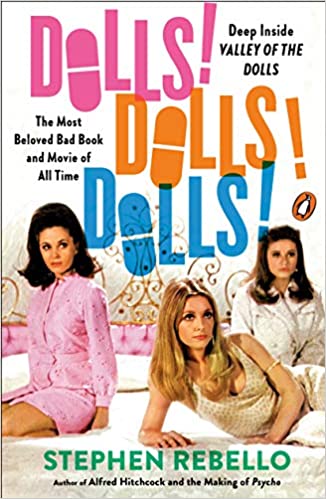
Do you want to read a very good book about a very bad film?
If the answer’s yes, Stephen Rebello’s Dolls! Dolls! Dolls!: Deep Inside Valley of the Dolls, the Most Beloved Bad Book and Movie of All Time tells you just about everything you could possibly want to know about the production of the 1967 cult classic, Valley of the Dolls. Starting with the Jacqueline Susann and her decision to write the book that scandalized America and caught Hollywood’s imagination, Rebello offers up information on every bit of the process that brought Valley of the Dolls to cinematic life. From the search for the right director to the effort to turn Susann’s novel into a filmable script, it’s all here. Everything from casting to recasting to the costumes to the music to the release to the film’s subsequent status as a camp classic, none of it is left out.
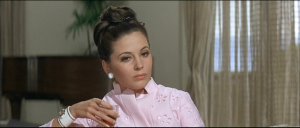
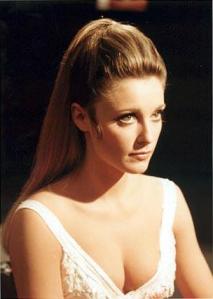
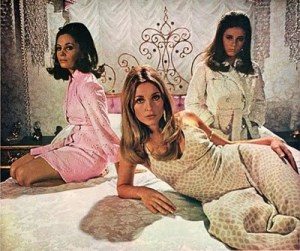
Perhaps not surprisingly, to anyone who knows me, my favorite part of the book were the two chapters that dealt with the casting of “the dolls” and “the dopes.” A truly impressive number of performers were considered for the roles that were eventually played by Barbara Parkins, Patty Duke, and Sharon Tate and, as I read about the casting process, I found myself thinking about all of the alternate casts that could have been assembled. Some of the possibilities feel inspired. Others boggle the mind.
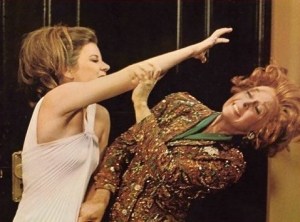
Imagine, if you will, the famous fight scene between Patty Duke and Susan Hayward if the roles had been played by Barbra Streisand and Bette Davis. It could have happened! Imagine Raquel Welch as the tragic Jennifer North and Elvis Presley as her talented but simple-minded lover. Again, it could have happened. Among those who make appearances — some extended and some just as cameos — in the casting chapters: Candice Bergen, Ann-Margaret, Debbie Reynolds, Natalie Wood, Lee Remick, Mary Tyler Moore, Marlo Thomas, Shelley Winters, Jane Fonda, Julie Christie, Faye Dunaway, Angela Lansbury, Millie Perkins, Tony Curtis, Christopher Plummer, James Garner, Adam West, James Caan, Martin Sheen, Tom Selleck, James Brolin, Robert Reed, Richard Beymer, Alain Delon, Richard Chamberlain, Anthony Perkins, Kevin McCarthy, and hundreds more. That’s quite an impressive list for a film that no one was apparently expecting to be very good!
The book devotes quite a bit of space to Judy Garland’s casting as Helen Lawson, a character who may have very well been based on her. Garland was infamously fired from Valley of the Dolls and replaced with Susan Hayward. The book explores all of the conflicting accounts about what led to Garland’s firing. On the one hand, if you’re into old Hollywood gossip, you’ll find a lot of it here. At the same time, Rebello shows a good deal of empathy and sensitivity in describing the situation that the phenomenally talented but emotionally insecure Garland found herself in when she was cast as Helen. For all the space that this book focuses on the sometimes unbelievable drama that went on during the shoot, Stephen Rebello is never less than sympathetic to the performers who worked on Valley of the Dolls. Barbara Parkins, Patty Duke, and Sharon Tate are all brought to vibrant life in Rebello’s account. (Rebello is especially to praised for reminding readers that Sharon Tate was more than just the tragic victim of a terrible crime. She was also an actress of great promise and, from everyone’s account, a wonderful human being as well.) In fact, perhaps the only person who really comes across badly in the book’s account of the production is director Mark Robson, who is portrayed as being the type of manipulative showbiz hack that you would expect to find in a sordid, Hollywood roman à clef. Perhaps one like Valley of the Dolls!
Along with telling you everything you could possibly want to know about Valley of the Dolls, the book is also a sometimes humorous and sometimes thought-provoking portrait of Hollywood at the end of the studio system. Trying to keep up with the popularity of television and the permissiveness of European cinema, Hollywood tried to prove that it wasn’t culturally out-of-touch with its version of Valley of the Dolls. Of course, the end result was a film that showed just how out-of-touch Hollywood actually was. That’s one reason why Valley of the Dolls continues to be such a beloved bad film. Stephen Rebello’s informative book tells you everything you could want to know about it. Dolls! Dolls! Dolls! is a must-read for anyone who loves movies or who is interested in the history and development of American trash culture.
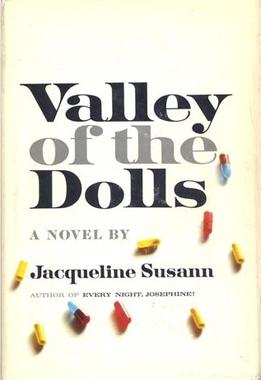
Way back in January, I took the time to read the 1966 novel, Valley of the Dolls. While I had already seen the film that this work inspired, this was my first time to read the actual book.
Before I even opened to the front page, I knew that Valley of the Dolls had been a best-seller, that it inspired a countless number of imitations, and that it had a reputation for being really, really bad. As soon as I started to read the first chapter, I discovered that the book’s reputation was well-earned. To call author Jacqueline Susann’s prose clunky was a bit of an insult to clunky prose everywhere.
Opening in 1945 and covering 24 years in cultural, sexual, and drug history, Valley of the Dolls starts with Anne Welles leaving her boring home in New England and relocating to New York, where she promptly gets a job at a theatrical agency. Everyone tells Anne that she’s beautiful and should be trying to become a star but Anne says that she’s not interested in that. (You’ll be thoroughly sick of Anne’s modesty before reaching the tenth page.) Everyone says that Anne is incredibly intelligent, even though she never really does anything intelligent. Everyone says that she’s witty, even though she never says anything that’s particularly funny. In short, Anne Welles is perhaps the most annoying literary character of all time. Anne spends about 20 years waiting for her chance to marry aspiring author Lyon Burke. When she does, Lyon turns out to be a heel and drives Anne to start taking drugs. I assume it’s meant to be somewhat tragic but who knows? Maybe all of the pills (or “the dolls” as the characters in the book call them) will give Anne a personality.
They certainly worl wonders for everyone else in the book. Neely O’Hara is constantly taking pills and she’s the best character in the book. Unlike Anne, she’s never modest. She’s never quiet. She’s actually funny. Even more importantly, she doesn’t spend the whole book obsessing over one man. Instead, she’s always either throwing a tantrum or having an affair or abandoning her children or getting sent to a mental institution. Neely’s a lot of fun. Unfortunately, we don’t really get to see much of Neely until after having to slog through a hundred or so pages of Anne being boring.
The other major character is Jennifer North, a starlet who was apparently based on Marilyn Monroe. The parts of the book dealing with Jennifer are actually about as close as Valley of the Dolls actually gets to being, for lack of a better term, good. In fact, if the book just dealt with Jennifer’s tragice story, it would probably be remembered as a minor classic. Instead, Jennifer is often overshadowed by Neely (which is understandable since Neely’s insane and therefore capable of saying anything) and Anne (who, as I mentioned before, is the most annoying literary characters of all time).
Why is Valley of the Dolls a guilty pleasure? A lot of it is because of all of the sexual melodrama and pill-popping, the descriptions of which are often so overwritten that they’re unintentionally hilarious. Most of it is because Neely O’Hara goes crazy with so much overwrought style. Whenever the book focuses on Neely, Susann’s inartful prose is replaced with a stream-of-consciousness tour of Neely’s paranoid and petty mind. Interestingly enough, some of the most infamous scenes from the movie are also present in the novel. Remember that scene where Neely rips off Helen Lawson’s wig and then flushes it down a toilet? That’s actually in the book!
Anyway, it’s an incredibly silly but compulsively readable book … or, at least, it is if you can make it through all the boring stuff with Anne at the beginning. Then again, as annoying as Anne is, she doesn’t exactly get a happy ending. Perhaps that’s why Valley of the Dolls is such a guilty pleasure.
(Warning: This review contains spoilers. A lot of them.)
Last week, I posted a poll and I asked you, the Shattered Lens readers, which film I should watch on March 20th and then subsequently review. You voted and the winner was the classic 1967 trashfest, Valley of the Dolls.
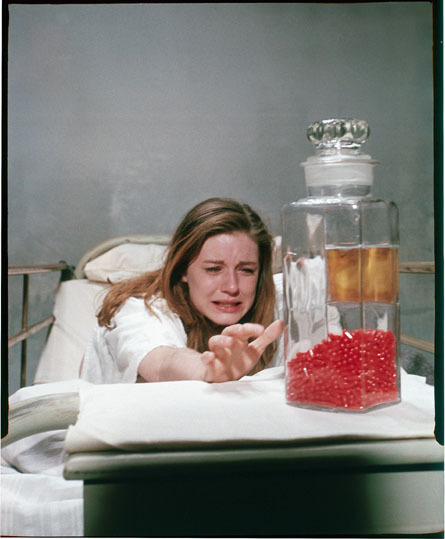
Based on a best-selling (and trend-setting) novel by Jacqueline Susann, Valley of the Dolls starts out with a disclaimer that informs us that the story we’re about to see is totally fictional and purely imaginative. That disclaimer is probably the funniest part of the entire film as Valley of the Dolls is notorious for being one of the first films dedicated to showing middle America just how miserable and screwed up those famous show business types truly are. As such, the main reason for watching a movie like this is so you can sit there and compare the cinematic troubles of a character like Neely O’Hara to the true-life troubles of an actress like Lindsay Lohan. Valley of the Dolls tells the story of three aspiring stars who, as they find fame, also find themselves dealing with heartbreak, insanity, and dolls. No, not the type of dolls that my mom used to collect. These “dolls” are a bunch of red pills that do everything from keeping you thin to keeping you awake and focused. (Though the pills are never actually called anything other than “dolls,” they appear to be the same pills that I take for my ADD.)
The least interesting of our three heroines is Anne Welles (Barbara Parkins). Unfortunately, Anne is also pretty much the center of the rather draggy first hour of the film. Anne is a walking cliché, a naive girl from a small town in New England who moves to New York, gets a room at the Martha Washington Hotel for Women, and a job at a local theatrical agency. “I want to have a marriage like mom and dad…but not yet!” Anne breathlessly tells us. Anne eventually ends up as the mistress of Lyon Burke (played by Paul Burke), a writer-turned-theatrical-agent who you know has to be a cad because his name is Lyon Burke and he takes Anne’s virginity but then refuses to marry her afterward. Anne eventually becomes a model and finds fame as the face of Gilligan Hairspray but she soon finds herself forced to watch as her two best friends travel down a path of self-destruction.
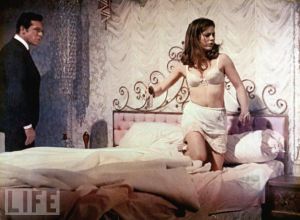
Anne is the film’s token “good girl” and, as such, she’s rather bland and boring. However, her character is interesting when considered as a symbol for the confused sexual politics of the time. Valley of the Dolls was made in 1967, at a time when Hollywood was still trying to figure out how to deal with the emerging counter-culture. The end result? A lot of rather old-fashioned films that were full of jarringly out-of-place counter-culture moments. By the time Valley of the Dolls came out, it was allowable to acknowledge that a single girl might actually have sex but she still had to, at the very least, feel an unbelievable amount of angst about it. That certainly is the case with Anne. Watching the film today, it’s hard to understand just what exactly Anne’s feeling guilty about. Lyon isn’t married. Anne finds success even as she pursues her relationship with him. Up until the final half of the film (at which point the morality of the time demands that both Anne and Lyon suddenly start acting totally out-of-character), Lyon treats her with about as much respect as you could probably expect to get from a man in the 1960s. And yet, Anne can’t feel complete simply because Lyon is hesitant about marrying her. When she and Lyon finally do make love, they do it with the lights off so the only thing the viewer sees are two shadowy figures holding each other. Following the film’s logic, if the lights had been left on, the character of Anne would have had to have been punished later in the film for allowing the audience to see too much of her.
When Anne first comes to New York, she befriends two actresses. The more tragic of the two is Jennifer North (played by Sharon Tate, who would be tragically murdered two years after this film came out), an insecure blonde who is valued more for her body than her talent. Jennifer spends her spare time doing bust exercises (“To hell with them!” she declares at one point as she glares down at her chest, “Let ’em droop!”) and dealing with phone calls from her mother, demanding that Jennifer send her money. Jennifer eventually ends up marrying a singer named Tony (played by Tony Scotti). Tony is a well-meaning if simple-minded guy who is married to a creepily overprotective sister (played by Lee Grant). Eventually, it turns out that Tony has a neurological disease and he’s eventually checked into a sanitorium. Penniless, Jennifer goes France and makes “art films.” (In one of Valley of the Dolls’ better moments, we’re shown a clip of this “art film” and it turns out to be a pitch perfect satire of every single pretentious soft-core film to ever come out of Europe.) Upon returning to America, Jennifer discovers that she has breast cancer and, declaring “All I’ve got is my body,” she commits suicide.
Though Sharon Tate gets considerably less screen time than her co-stars, she probably gives the strongest performance in this film. Certainly, her story is the most emotionally effective (even if it’s hard not to feel that, as is typical of the films of both the 60s and today, Jennifer is being punished for taking off her clothes on camera). Tate perfectly captures the insecurity that comes from being continually told that you have nothing more to offer beyond how you look. In her first appearance, she’s wearing an outrageously large headdress. “I feel a little top-heavy,” she says. “You are a little top-heavy,” some guy replies while leering at her breasts. If you doubt that Sharon Tate was a good actress, just watch her reaction. She perfectly captures a pain that I personally know far too well. Her subsequent suicide scene, which has the potential to be the most tasteless part of this film, is actually the most powerful and again, it’s because Tate plays the role perfectly.
(It’s been nearly four years since I lost my mom to breast cancer and I have to admit, I had a hard time watching the scenes where Jennifer discusses her diagnosis. Tate gave a great performance here and it’s a shame that she’s been permanently linked in the public imagination with Charles Manson and the later accusations against her husband, Roman Polanski. She had real talent.)
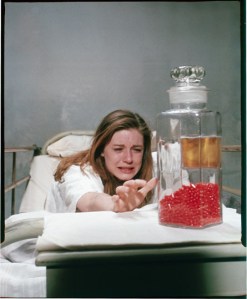
As poignant of Sharon Tate was in her role, the film’s fame (and infamy) ultimately rests with our third heroine, Neely O’Hara (played by Patty Duke in a performance that suggests that she was literally possessed during the filming). Neely is a scrappy, aspiring singer who is fired from a broadway show when her singing threatens to upstage aging star Helen Lawson (played by Susan Hayward, who was brought in to replace Judy Garland). Neely, however, refuses to let anything keep her down and soon, she’s singing at a Cystic Fibrosis telethon and becoming a big star. She marries her boyfriend Mel (played by Martin Milner, who grits his teeth and spits out every line) and moves to California where she soon becomes a big star and then finds herself hooked on “booze and dolls.” (“I need a doll!” she insists on several occasions.)
One reason the film’s 2nd hour is so much more fun than the first is because the film’s focus shifts from boring Anne to out-of-control Neely. Increasingly temperamental and unstable, Neely soon starts to spend all of her time with dress designer Ted Casablanca (a great name, if nothing else.) “You’re spending more time than necessary with that fag Ted Casablanca,” Mel tells her to which Neely replies, “Ted Casablanca’s no fag and I’m the dame who can prove it.” This, of course, leads to a divorce and soon Neely is living with Mr. Casablanca who informs her, after he gets caught cheating, “You made me feel as if I was queer…that little whore makes me feel 9 feet tall.”
When Lyon and Anne attempt to force Neely to enter a sanitorium, she responds to running off to San Francisco where she enters a bar and shouts, “I’M NEELY O’HARA!” before then wandering down a sleazy street and ranting, “Boobies, boobies! Nothing but boobies! Who needs them!?” Needless to say, this leads to her eventually overdosing and ending up in that sanitorium where she has a huge freak-out before singing a duet with Tony and resolving to get her life back in order. This, naturally, leads to her getting released, having an affair with Lyon, and then returning to Broadway where, in the film’s most deliriously odd moment, she steals Helen Lawson’s wig and flushes it down a toilet.
Valley of the Dolls is, admittedly, a terrible film but it’s also a lot of fun and that’s largely because of Patty Duke’s berserk performance as Neely O’Hara. Earlier, I said that Duke’s performance appears to suggest that she may have been possessed but, honestly, that barely begins to describe it. Whereas Tate managed to find some truth in the film’s melodrama and Parkins gives a performance that suggests that the script put her in a coma, Duke attacks every inch of melodramatic dialogue, barking out her dialogue with all the ferocity of a yapping little chiuaua. Duke gives a performance that is so completely and totally over-the-top that it’s hard not to respect her commitment to capturing every overheated, melodramatic moment.
I have to admit that one reason why I love this film is because I’m hoping that someday some enterprising director will remake it and cast me as Neely O’Hara. Everytime I watch this film, I find myself thinking about how much it would be to respond to every petty annoyance by screeching out, “I’m NEELY O’HARA!” Seriously, just think about it. As a character, Neely is a talented, ambitious, emotional, unstable, immature, demanding, bratty, spoiled, and determined. Sound like anyone whose film reviews you might have been reading recently? From my previous experience as a community theater ingenue, I can assure you that I can deliver melodramatic dialogue with the best of them and, unlike Patty Duke in this film, I can actually dance. Unfortunately, I can’t carry a tune to save my life but I’m thinking maybe they could bring in Kelly Clarkson to serve as my singing voice. (Or maybe Jessica Simpson. Did I ever mention that we both went to the same high school? Though not at the same time, of course.) After all, if Patty Duke could be obviously dubbed, why not me? I can just see myself now, wandering down some sleazy city street, singing to myself and declaring at the top of my lungs, “Ted Casablanca’s no fag and I’m the dame who can prove it!” I know that Lindsay Lohan will probably insist that this is the role she was born to play, but seriously, who needs Linsday when you’ve got a Lisa?
Beyond the so-bad-that-its-good appeal of the film, Valley of the Dolls is a fascinating cultural artifact for the reasons that I previously hinted at while talking about the character of Anne Welles. Valley of the Dolls was made in 1967 and, as such, it’s a perfect exhibit of an unstable time when Hollywood was unsure about whether it should embrace the “new morality” or if it should continue to recycle the same sort of old-fashioned filmmaking that had nearly bankrupted the big studios. The result was several films that felt oddly schizophrenic in their approach and that is certainly the case with Mark Robson’s direction of Valley of the Dolls. Whether it’s the way the film continually hints at nudity and sex while carefully not revealing too much or the way that random psychedelic sequences seem to suddenly appear on-screen, this is a movie that perfectly captures an uncertain film industry trying to figure out where it stands in a scary new world.
As always, I enjoyed watching this undeniably bad but just as undeniably compelling film. Our readers chose well! Thank you to everyone who voted and I hope you’ve enjoyed reading this review almost as much I enjoyed writing it.
So, last week at this time, I asked you which movie I should watch on March 20th. I gave you twelve possible movies and I asked you to vote. 678 votes were cast and, despite strong showings by An Education, Crazy/Beautiful, and Nightmare City, the winner is Valley of the Dolls!
And for that, I thank you. As some of you may know, my dream is to someday play Neely O’Hara in a remake directed by our own Arleigh Sandoc.
I will be watching Valley of the Dolls tonight. Look for my review of it either on Wednesday or Thursday.
Well, here’s your chance to, once again, tell me what to do. I’ve randomly selected 12 films from my film collection. Whichever film gets the most votes will be watched and reviewed by me next Tuesday, March 20th.
Here are the films up for consideration:
1) Black Jesus (1968) — This Italian film stars Woody Strode as an African rebel leader who is captured by his country’s right-wing, American-backed dictatorship.
2) Capote (2005) — Philip Seymour Hoffman was an Oscar for best actor for playing writer Truman Capote in this film that details how Capote came to write his true crime classic, In Cold Blood. This film was also nominated for best picture.
3) Chappaqua (1966) — In this underground cult classic, drug addict Conrad Rooks seeks treatment in Switzerland while being haunted by a scornful William S. Burroughs. This film features cameo from Allen Ginsberg, The Fugs, and just about every other cult figure from 1966.
4) Crazy/Beautiful (2001) — Jay Fernandez and Kirsten Dunst have lots and lots of sex. This was like one of my favorite movies to catch on cable back when I was in high school. 🙂
5) An Education (2008) — In my favorite movie from 2008, Carey Mulligan is a schoolgirl in 1960s England who has a secret affair with an older man (played by Peter Sarsgaard), who has plenty of secrets of his own. Co-starring Rosamund Pike, Emma Thompson, Alfred Molina, and Dominic Cooper (who is to die for, seriously).
6) Female Vampire (1973) — In this atmospheric and ennui-filled film from the infamous Jesus Franco, a female vampire spends the whole movie wandering around naked and dealing with the lost souls who want to join the ranks of the undead.
7) Nightmare City (1980) — In this gory and fast-paced film from Umberto Lenzi, an accident at a nuclear plant leads to a bunch of blood-thirsty zombies rampaging through both the city and the countryside. Hugo Stiglitz plays Dean Miller, zombie exterminator! Nightmare City is probably most remembered for introducing the concept of the fast zombie and for serving as an obvious inspiration for Danny Boyle’s 28 Days Later.
8) The Other Side of Midnight (1977) — Based on a best-selling novel, The Other Side of Midnight tells the story of a poor French girl who becomes a world-famous actress and who ends up sleeping with apparently every wealthy man in the world. Meanwhile, the man she loves ends up marrying Susan Sarandon. Eventually, it all ends with both a hurricane and a murder. Apparently, this film cost a lot of money to make and it was a notorious box office bomb. It looks kinda fun to me.
9) Peyton Place (1957) — Also based on a best-selling novel, Peyton Place is about love, sex, and scandal in a small town. Lana Turner is a repressed woman with a past who struggles to keep her daughter from making the same mistakes. At the time it was made, it was considered to be quite racy and it was even nominated for best picture. This film is a personal favorite of mine and it’s pretty much set the template for every single film ever shown on Lifetime.
10) Rosebud (1975) — From director Otto Preminger comes this film about what happens when a bunch of rich girls on a yacht are taken hostage by Islamic extremists. The film’s diverse cast includes Peter O’Toole, Richard Attenborough, Cliff Gorman, former New York Mayor John Lindsay, former Kennedy in-law Peter Lawford, Raf Vallone, Adrienne Corri, Lalla Ward, Isabelle Huppert, and Kim Cattrall.
11) Valley of the Dolls (1967) — Oh my God, I love this movie so much! Three aspiring actresses move to the big city and soon become hooked on pills and bad relationship decisions. Every time I watch this movie, I spend hours yelling, “I’m Neely O’Hara, bitch!” at the top of my lungs.
12) Zombie Lake (1981) — From my favorite French director, Jean Rollin, comes this extremely low budget film about a bunch of Nazi zombies who keep coming out of the lake and attacking the nearby village. Some people claim that this is the worst zombie films ever made. I disagree.
Please vote below for as many or as few of these films as you want to. The poll will remain open until March 20th and whichever film gets the most votes will be watched and reviewed by me.
So, here’s the Carrie Nations performing the song “Find It” at the high school prom. I think what makes this scene stand out is, not only the music, but the discovery that apparently, 30 year-olds still went to high school in the 1970s.
Yesterday, as part of my ongoing struggle with insomnia, I watched the 1967 Hollywood expose, Valley of the Dolls. This is one of the most legendary so-bad-it’s-good films of all time but I have to admit that the main reason I started watching it was because I had been told that the movie was also extremely dull. I was hoping it might put me to sleep.
No such luck.
I am not ashamed to admit that I loved Valley of the Dolls in all of its over-the-top, ludicrous glory. I’m also not ashamed to admit that I now have a new life’s ambition. And that ambition is to play the iconic role of talented, neurotic, and unstable pill popper, Neely O’Hara in a modern-day remake of Valley of the Dolls (which, hopefully, will be directed by Arleigh who I’m sure could help me get in touch with my inner Neely).
In the original Valley, Neely was played by Patty Duke who sang, screamed, and doped as if the world depended on it. Below is my favorite scene of Neely mayhem, the one in which Neely gets into a catfight with an aging rival (played by Susan Hayward).
(Much like the rest of the movie, this scene starts out slow and requires a little bit of patience on the part of the viewer but, in the end, that patience will be rewarded.)
No, the Valley of the Dolls is not one of the trailers included in the latest installment of Lisa Marie’s Grindhouse and Exploitation Trailers. It just happens to be the movie that I’m watching as I edit this post. Anyway, Valley of the Dolls was an exploitation film mostly because of human error. The trailers below are for films that came by their exploitation label honestly.
1) An American Hippie In Israel
There’s some debate as to whether or not this movie actually exists. I originally saw this trailer as an extra on the I Drink Your Blood DVD about three years ago. At that time, Grindhouse Releasing claimed that it would be releasing this film on DVD “soon.” Three years later, the DVD has yet to be released. Perhaps it’s for the best. I doubt that actual film could live up to lunacy and silliness of the trailer.
This is a good example of a movie that, if it was released today, would probably be marketed as an indie art film. However, since it came out in the 70s, it played in grindhouses and drive-in movie theaters. It’s actually a surprisingly well-made and well-acted film.
Much like Best Friends, Chappaqua is proof that art and exploitation often go hand-in-hand. The film was produced and directed by Conrad Rooks and features William S. Burroughs at his cynical best.
This movie, I suppose, could also have been called The Hellcat. Adam Roarke, the star of this one, appeared in every biker film released in 1970.
6) Savage Sisters
This is another one of those films that, frustratingly enough, is not yet available on DVD. That’s a shame. The world needs more movies about women kicking ass.
 Through the Shattered Lens