Once In A Lifetime has since become one of the signature tunes of the ’80s but, when the song was first released in 1981, it didn’t even manage to break the top 100 on the US charts, peaking at 103. (The song did find more success in the UK, where it reached #13.) At the time, the song was not considered to be “radio friendly.” Not even the fact that the video was put into heavy rotation during the early days of MTV could change the minds of stubborn programmers who were convinced that the sound of David Byrne considering his life would lead to listeners switching the channel.
The video, which features multiple David Byrnes performing against a white backdrop, was directed by Byrne and the famous dancer/choreographer Toni Basil. (Basil, of course, had her own hit around the same time with her video for Mickey.) In the book, MTV Ruled the World – The Early Years of Music Video, Basil discussed making the video with Byrne:
“He wanted to research movement, but he wanted to research movement more as an actor, as does David Bowie, as does Mick Jagger. They come to movement in another way, not as a trained dancer. Or not really interested in dance steps. He wanted to research people in trances – different trances in church and different trances with snakes. So we went over to UCLA and USC, and we viewed a lot of footage of documentaries on that subject. And then he took the ideas, and he ‘physicalized’ the ideas from these documentary-style films … David kind of choreographed himself. I set up the camera, put him in front of it and asked him to absorb those ideas. Then I left the room so he could be alone with himself. I came back, looked at the videotape, and we chose physical moves that worked with the music. I just helped to stylize his moves a little.”
As for the song, Byrne has said that he came up with most of the lyrics while listening to radio evangelists and the song’s plaintive cry of “How did I get here?” should sound familiar to anyone who has ever heard any of the old style preachers going at it. The song’s signature bassline was developed by Tina Weymouth, who has said that she based it on the sound of her husband (and Talking Heads drummer) Chris Frantz yelling.
As for the song, it may not have charted but it has gone on to become one of the defining songs of the 80s. The song would also be one of the highlights of the greatest concert film ever made, Stop Making Sense.
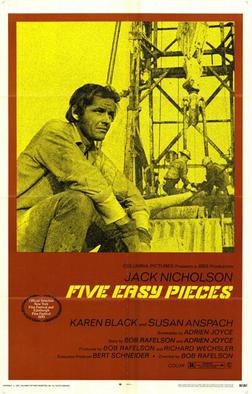
First released in 1970, Five Easy Pieces tells the story of a lost man named Bobby Dupea (Jack Nicholson).
When we first meet Bobby, he’s working at a California oil field. He likes to go bowling. He has a girlfriend named Rayette (Karen Black), who is a country music-obsessed waitress. His best friend is Elton (Billy “Green” Bush), a friendly redneck with a memorable laugh. Bobby may have a girlfriend and Elton may be married but that doesn’t stop either one of them from going out at night, getting drunk, and trying to pick up women.
Bobby seems to be just another blue-collar guy with a grudge against the bosses but it doesn’t take long to realize that there’s something different about him. Bobby may be friends with Elton but it’s obvious that the two of them come from very different background. No matter how much he tries to hide it, Bobby is smarter than everyone else around him. When he and Elton get stuck in a traffic jam, Bobby spots a piano sitting on the back of a pickup truck. Getting out of his car, Bobby yells at everyone who is honking and then climbs up to the piano. He sits down, he puts his fingers to the keys and he starts to play. Knowing Bobby, you’re expecting him to just bang the keys and make noise. Instead, he plays beautiful music.
Later, Bobby steps into a recording studio. Paritia (Lois Smith), a neurotic woman, is playing the piano. The recording engineers joke about her lack of talent. Bobby glares at them, annoyed. It quickly becomes apparent why Bobby is so protective. Paritia is Bobby’s sister.
Bobby, it turns out, comes from a wealthy family of musicians. Everyone in the family has dealt with the pressure to succeed differently. Paritia continues to play, despite not having much talent. Bobby’s older brother, the buffoonish Carl (Ralph Waite), plays violin and has staid home with their father (William Challee). Bobby, on the other hand, ran away from home. He’s spent his entire life trying to escape from both his talent and his family. However, when Paritia explains that their father has suffered from two strokes and might not live much longer, Bobby reluctantly decides to return home and try to make some sort of peace with his father.
It’s not as easy a journey as Bobby would have liked. For one thing, Rayette demands to go with him. On the drive up to Washington, they pick up two hitchhikers (Helena Kallionetes and Toni Basil), one of whom is obsessed with filth. In the film’s most famous scene, an attempt to get a simple lunch order modified leads to Bobby losing control.
See, that’s the thing with Bobby. In many ways, he’s a jerk. He treats Rayette terribly. While his family is hardly perfect, the film doesn’t hide from the fact that Bobby isn’t always the easiest person to deal with. And yet, you can’t help but sympathize with Bobby. If he seems permanently annoyed with the world … well, that’s because the world’s annoying. And, to Bobby’s credit, he’s a bit more self-aware than the typical rebel without a cause. When one of the hitchhikers praises his temper tantrum at the diner, Bobby points out that, after all of that, he still didn’t get the order that he wanted.
In Washington, Bobby tells Rayette to stay at a motel and then goes to see his family. Bobby seems as out-of-place among his wealthy family as he did hanging out in the oil fields with Elton. He ends up cheating on Rayette with Carl’s fiancee, a pianist named Catherine van Oost (Susan Anspach).
And then Rayette shows up for dinner…
Five Easy Pieces is a sometimes funny and often poignant character study of a man who seems to be destined to always feel lost in the world. Bobby spends the whole movie trying to find a place where he can find happiness and every time, reality interferes with his plans. Nicholson gives a brilliant performance, playing Bobby as a talented guy who doesn’t really like himself that much. Bobby’s search for happiness leads to a rather haunting ending, one that suggests that some people are just meant to spend their entire life wandering.
Five Easy Pieces was nominated for Best Picture but lost to Patton.
Today, a lot of people have traveled to New Orleans to celebrate Mardi Gras. Here’s hoping that they have a better time in the city than Billy (Dennis Hopper) and Wyatt (Peter Fonda) had in the 1969 film, Easy Rider.
The scenes below, featuring Hopper, Fonda, Karen Black, and the legendary Toni Basil were actually filmed at Mardi Gras in 1968. These were among the first scenes that Hopper (making his directorial debut) shot for the film and reportedly, filming was so chaotic that they were also nearly the last scenes to be filmed. As those who have seen Easy Rider know, Billy and Wyatt spend the entire movie trying to get to New Orleans so that they can visit a famous brothel. Once they get there, they discover that absolutely nothing lives up to the legend. The brothel is a sleazy mess. Mardi Gras is full of bad vibes. Wyatt has an amazingly bad LSD trip. (Hopper convinced Fonda to really drop acid before filming the scene, which led some harrowing footage.) After they leave New Orleans, Fonda and Hopper cross the border into Texas and promptly end up getting blown away by two rednecks in a pickup truck.
Welcome to the sixties!
In the scene below, we get actual footage of 1968’s Mardi Gras. Just watch all the celebrants who stop to stare at the camera.
And here is the infamous cemetery scene. Fonda resisted doing it and the end result is not easy to watch but it’s also one of the most powerful moments in the entire film:
In 1994, Tim Burton released Ed Wood, a film that I consider to be his best. (In fact, it’s one of the few Tim Burton films that I feel actually improves with repeat viewings. Don’t start yelling at me about Beetlejuice.) The score, which so evocative of Wood’s style of filmmaking, was composed by Howard Shore. This video features the actress Lisa Marie (who played Vampira in Ed Wood) dancing to Shore’s theme music.
Before anyone says it, I did not pick this video just because it features a dancer named Lisa Marie. I’m not the egocentric … well, actually, I am. In fact, I’m so egocentric that I’m shocked that I have yet to dedicate an entire post to just listing words that rhyme with Lisa. (Sadly, there’s not many. Visa is a good one.) But still, I did have other reasons for picking this video than just the fact that I am also named Lisa Marie and I also enjoy dancing in cemeteries. Those reasons will hopefully become obvious as the day develops here on the Shattered Lens.
Anyway, both Tim Burton and Toni Basil are credited with directing this video. I’m going to assume that Burton’s directorial credit is largely due to all of the scene of Ed Wood that are spliced into the footage of Lisa Marie dancing. Toni Basil, who also did the choreographed this video, is one of our favorite people here at the Shattered Lens. Just check out my review of Head and Val’s review of Slaughterhouse Rock.
When I picked out this music video to feature today, I thought it would just be a catchy song that happens to feature Penn & Teller. I had no idea that the song It’s Tricky is actually an amalgamation of My Sharona by The Knack and Mickey by Toni Basil. The site Who Sampled has a great comparison here for Toni Basil and here for The Knack. They took a small bit of the guitar riff from My Sharona which got them sued in 2006, and was settled out of court. The vocal structure for the song was taken from Mickey. I would have never put that together had I not stumbled upon it on Wikipedia.
As for the music video, I’m a little confused. She gets her chain taken by Penn & Teller, the cops show up, they chase after them, she calls RUN-DMC as you do, and suddenly they are instantly doing three card monte again all in the span of a few minutes in front of the same theater. That’s tricky. Actually I wouldn’t be surprised if director Jon Small meant people to think of it that way.
This music video apparently aired for the first time in May of 1987 while Beastie Boys’ music video for No Sleep Till Brooklyn first aired in April of 1987. I only bring it up because of the similarities between the last scenes where RUN-DMC shows up at their scheduled concert to find that Penn & Teller have taken their place. Beastie Boys do the same kind of thing in No Sleep For Brooklyn, which seems to have borrowed elements from RUN-DMC’s music video for Walk This Way that aired the previous year in 1986. IMVDb says that It’s Tricky first aired in 1986, but 1987 makes more sense, and is in mvdbase that always seems to be the more accurate source for older music videos. Regardless, I find it funny how these things all interconnect whether intentionally via sampling, or what seemed like two different groups who had similar music videos right around the same time.
Director Jon Small seems to have worked on about 50 music videos as well as some concert films.
That seems to be all there is about this simple and fun music video, so enjoy!
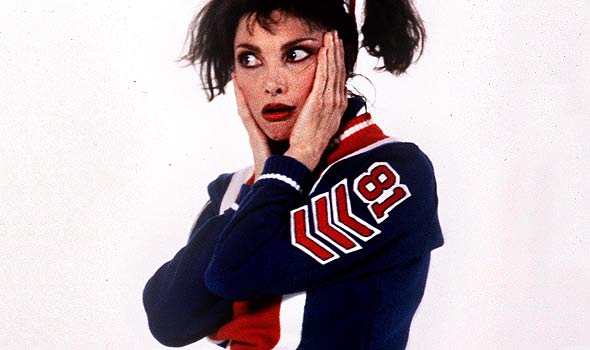
Remember Toni Basil? She had a mega-hit record back in the 80’s with the infectious pop song “Mickey”. The multi-talented Miss Basil’s been around forever, known for her choreography on TV’s SHINDIG, the films THE TAMI SHOW and The Monkees’ HEAD (where she shared the spotlight with Davy Jones). She choreographed two David Bowie tours (Diamond Dogs and Glass Spider), directed videos with Talking Heads’ David Byrne (“Once in a Lifetime”), and has appeared as an actress in VILLAGE OF THE GIANTS, PAJAMA PARTY, EASY RIDER, and FIVE EASY PIECES, among others.
Recently the 72 year old, who co-founded the street dance group The Lockers way back in 1971, strutted her stuff at a Los Angeles dance workshop, and the crowd of young kids went nuts! The video has gone viral and in case you missed it, I’d like to share it with you now:
Earlier this month Lisa posted a scene from Slaughterhouse Rock that she likes, but she said she hadn’t actually seen the movie. She might as well have slapped me across the face with a steel gauntlet. Well, I’ve seen Slaughterhouse Rock now. Twice in fact. Probably three if you count all the rewatching of segments I had to do while writing this review because I was still confused. I can assure you that scene is the most entertaining thing about this movie. Lisa is right, that scene does show parts from earlier in the film. I love that it even flashes back to pointless scenes like when one of the kids slips while climbing up onto Alcatraz Island. Or a quick shot of one of the girls talking in a restaurant. It’s like they reached that part of the film and ran out of money because they blew it on effects from earlier in the film. That, and it was probably in Toni Basil’s contract that they let her dance a little in this movie. Oh, by the way, this is one of two rock horror films that star Toni Basil. I already reviewed Rockula. Why are there two of these?
So let’s get this review over with so I can subject myself to more films of questionable quality. The film starts out with some dreamlike scary scenes that end with someone’s hand getting chopped off. Then a guy wakes up to find his hand missing. Of course he wakes up again because he was still in a dream. Cut to the opening title card. We find out that not only Toni Basil was involved in this, but Devo too. And then we find out that the cinematographer on this movie is Nicholas Von Sternberg. The son of famed director Josef Von Sternberg. I bring that up because the first film he is credited with shooting is Dolemite (1975). That film is famous for numerous reasons including the boom mic popping in from the top of the frame.
I mention it since I’m pretty sure there is a scene in this movie where the boom mic pops in on the left hand side of the shot. I wish I had watched a higher quality copy of this movie, but here’s the shot anyways.
But back to the story. That kid is Alex Gardner (Nicholas Celozzi) who has been having some weird dreams lately. Cut to the outside of a college building and we learn that Alcatraz has been closed down temporarily because of a tragic incident. A rock band called Body Bag broke off from the tour group and was later found dead. That’s Sammy Mitchell’s (Toni Basil) band. Since his dreams seem like they are taking place in a prison, his friends think there must be a connection. The next group of scenes are either stupid 1980’s teenagers in a horror movie stuff, creepy unreal stuff, or one of the very few shots in this movie that are actually of Alcatraz.
In here is one of the dumbest scenes in the movie. They obviously thought it was really cool and built atmosphere, but it’s actually just really frustrating and confusing like most of this movie. It takes place in a restaurant where the scene starts with this person picking up some food to take to a table. The camera moves in slow motion around this restaurant for what feels like an eternity. Then a voice kicks in. Who is saying it? Is it the people we are looking at? The camera is still moving so I guess it can’t be. It takes close to another 10 seconds before the camera slow motion moves some more and finally settles on a girl and Alex talking at a table. My god! Was it so hard to cut that shorter? This is especially frustrating because the rest of the scene is actually done rather well. It uses close ups of his eyes and other peoples faces combined with angles and playing with the sound to build up to a hand breaking through the wall behind him. None of which required that unnecessarily confusing roam through the restaurant. Likely, that stuff was padding. There’s a lot of stuff that feels like padding in this movie.
Now apparently these kids are taking some sort of class on the metaphysical in college because of course we can’t just have the kids go to Alcatraz of their own volition. No, Alex’s teacher finds out about his dreams after he freaks out in class. It’s her and this Nightmare On Elm Street (1984) scene that finally push them to take a small boat out to the island.
Once we arrive on the island then the film really starts to have issues. The problem is since this was obviously not shot on the island, what you are seeing are small separate sets. In a well directed movie, this wouldn’t necessarily be an issue, but here it is. You never really have a sense of space. How long is that hallway? Where is this exactly? Where is it in relation to the other sets? All of these problems are what make the film feel like a lot of just people walking and talking. To where? Who knows? And who cares.
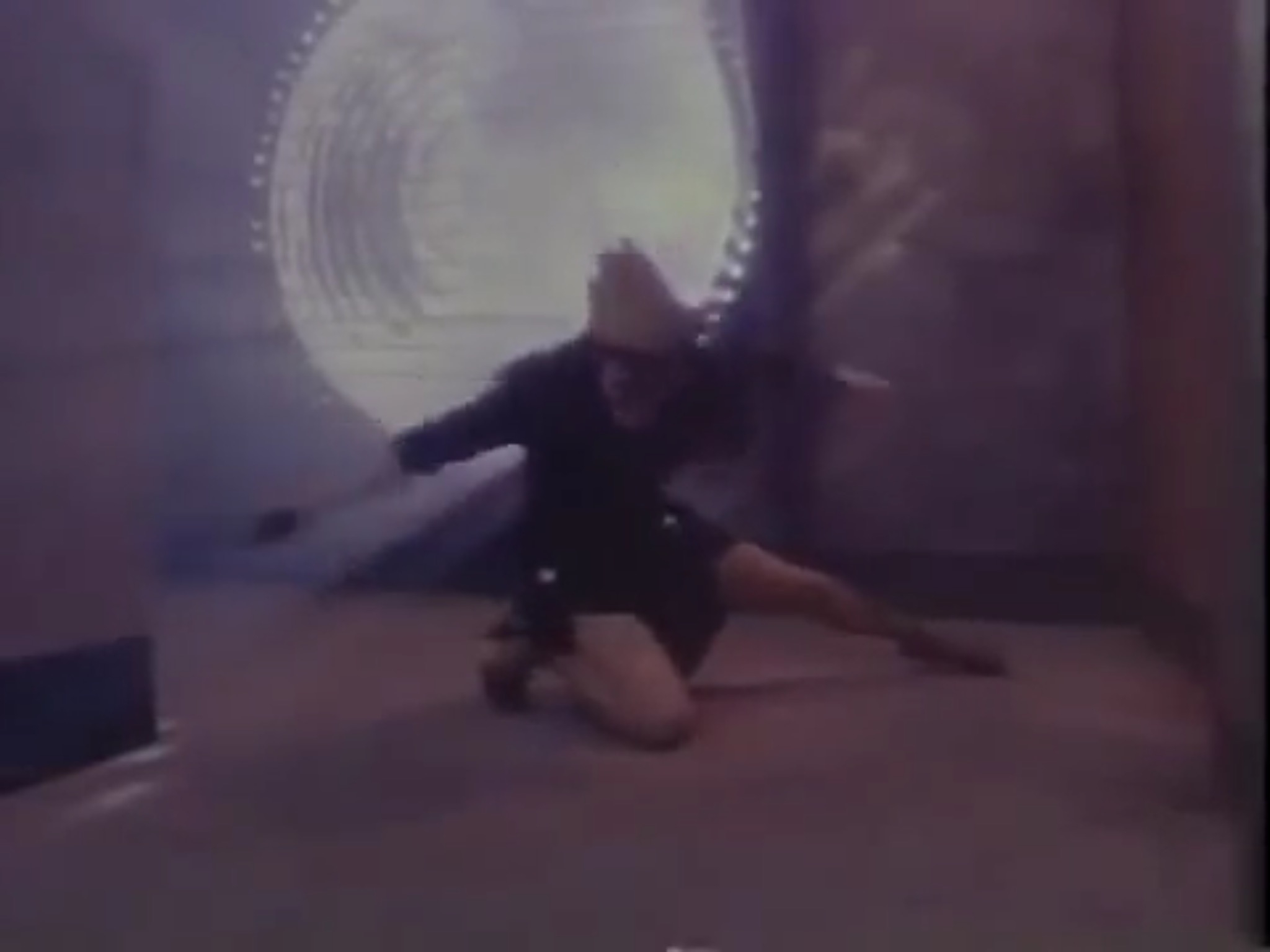
After getting grabbed by a hand and pulled somewhere else, we meet Sammy Mitchell. She starts to tells us the story behind all of this and that she has been reaching out to him in order to bring him to the island. Expect there to be a reason she reached out to him specifically? Only in your dreams. We now learn about her fascination with the occult and that she let some demon out. Apparently, all the people who have died on the island are the source of his power and are trapped on the island by his power. She then explains how this guy allowed in something more evil than the guy could have imagined. Then it cuts away to someone else for a bit. We then come back to her, and he asks why she chose him. Her answer is that she needs a living being to open a door at the end of a tunnel in order to release all the souls trapped on the island. Now comes the stock footage dance that Lisa posted.
While all this is going on, we have the other kids wandering around the island. One of them includes Alex’s brother Richard (Tom Reilly). Richard becomes possessed by this demon. I love the scene with this one girl that he has shortly after getting taken over. It’s like that ridiculous dry hump sexual assault scene from the game Phantasmagoria. Only this scene actually makes some sense since the bad guy did have a history of that sort of thing whereas in the game it’s really random.
With Alex out of his body, the movie now has an excuse for how it can show us, and him, scenes from the past really explaining things. Okay, what’s going on is that apparently Alcatraz was a military outpost before it became a prison. And of course there was a really nasty guy who liked to hire girls, then eat them. After he couldn’t hire hookers and eat them anymore, he fed off the locals. The Native Americans finally got fed up with him and burned him. Unfortunately, he apparently had learned enough about magic that this didn’t do him in really. He had made a pact with the devil according to Sammy. I love the dialogue from the ghosts that almost sound like Sean Connery’s famous opening credits lines from Highlander (1986) that were recorded in a bathroom. Also, I love the quick anti-drug line they threw in with Basil’s exposition dump.
After Basil finally shuts up, although she keeps popping in from now on, the movie basically comes down to a D.W. Griffith cross cutting sequence. On one end you have people fighting the demon and on the other you have Alex (out of body) walking down the tunnel to open the door. Just as the camera seemed to take forever to move through the restaurant, Alex takes his sweet time walking through this tunnel. Almost like they shot all the other scenes of the kids fighting the demon, figured out how long they ran, then shot enough of Alex walking down the tunnel so they could keep cutting back to it. During this is where this lack of a sense of space really comes into play. The demon keeps pounding against a wall in some place and that somehow has an effect on Alex in the tunnel. The demon is hitting his hand against the wall, and then it cuts to Alex’s body to show his hand twist, which then seems to have an affect on his soul moving through the tunnel. It’s all very confusing, and since it’s the climax, it really damages the movie.
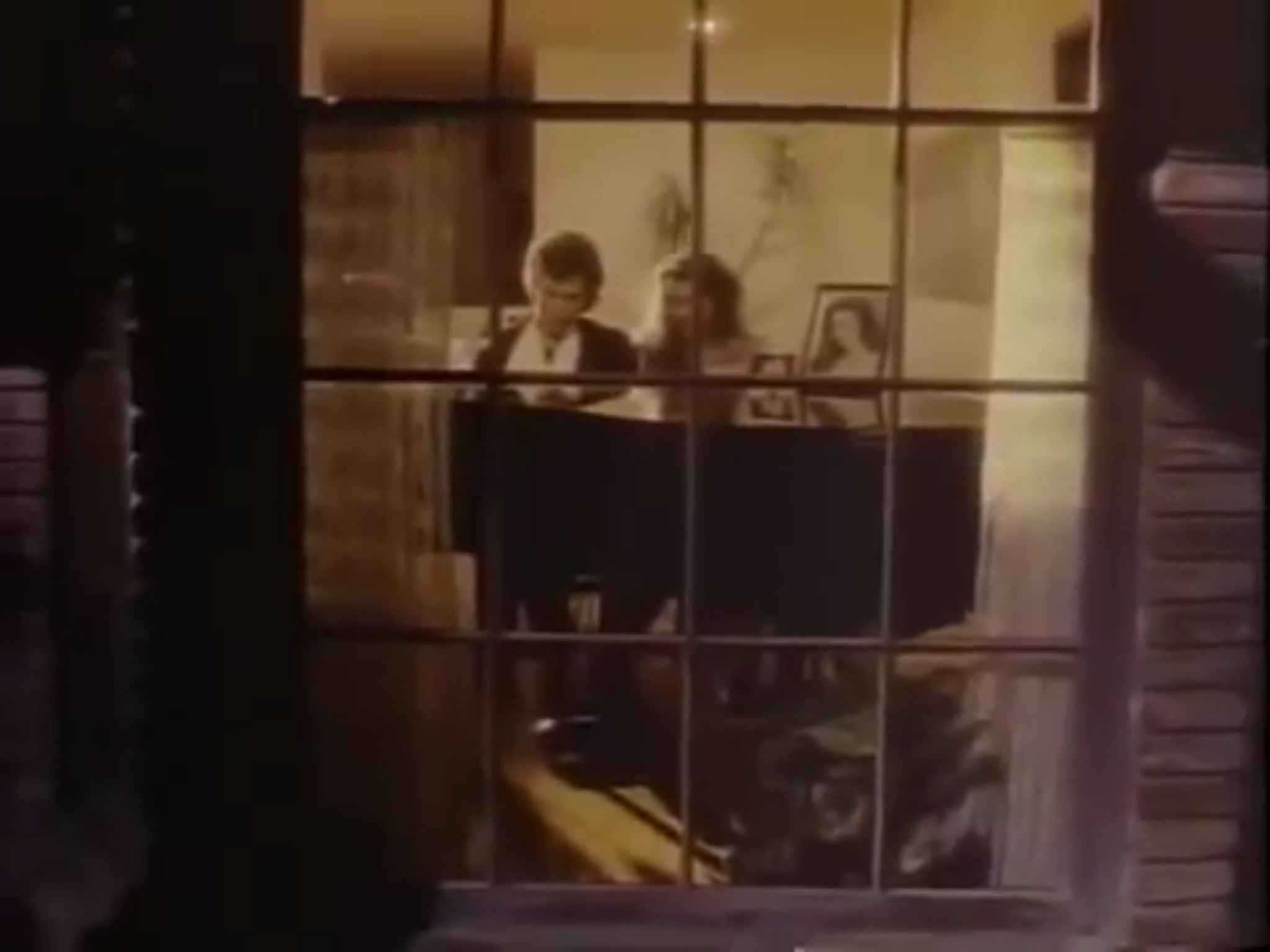
At the end, as far as I can tell, Basil joins souls with Alex in some fashion. There’s something there because he can suddenly play the piano at the end. I don’t care.
This film was disappointing. I wasn’t a fan of the opening stuff, but they should have stuck with it all the way through. Yes, they could have improved on the sense of space issue, but I could have forgiven that if I felt trapped and held in a suspenseful atmosphere. Instead, they had to explain things, bring in Toni Basil, the dance number, the ridiculous outfits on her, and comedy bits from other dead people.
In other words, you can skip this one. If you must have Toni Basil in a rock related horror film, then go with Rockula. It’s not great, but it’s better than this. Plus you also get Thomas Dolby and Bo Diddley in that one.
I’ve never actually seen the 1987 film Slaughterhouse Rock. I’ve just seen the trailer included in a few compilations and, thanks to YouTube, I’ve seen the scene below. The only context that I can give for this scene is what I read on Wikipedia.
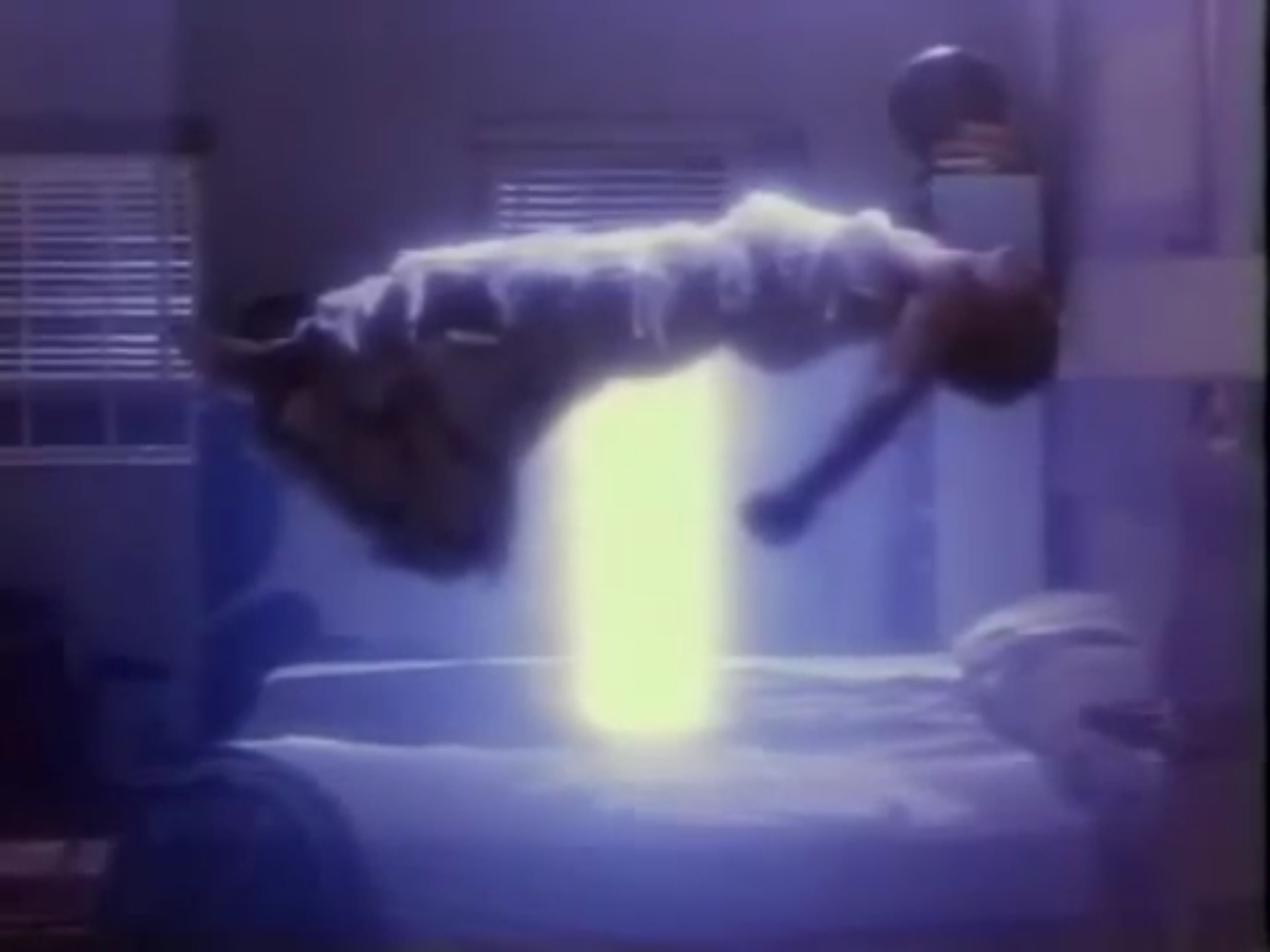
Apparently, in this scene, a ghost played by the great choreographer Toni Basil does a dance that gives the main character’s spirit the ability to roam free of his physical body. And, during the dance, we see a lot of earlier scenes from the movie. Or something like that. I don’t know. I just like the scene because of the music and Toni Basil.
I’ve always felt that dancing can take you into a spiritual realm of existence. This scene proves my point.
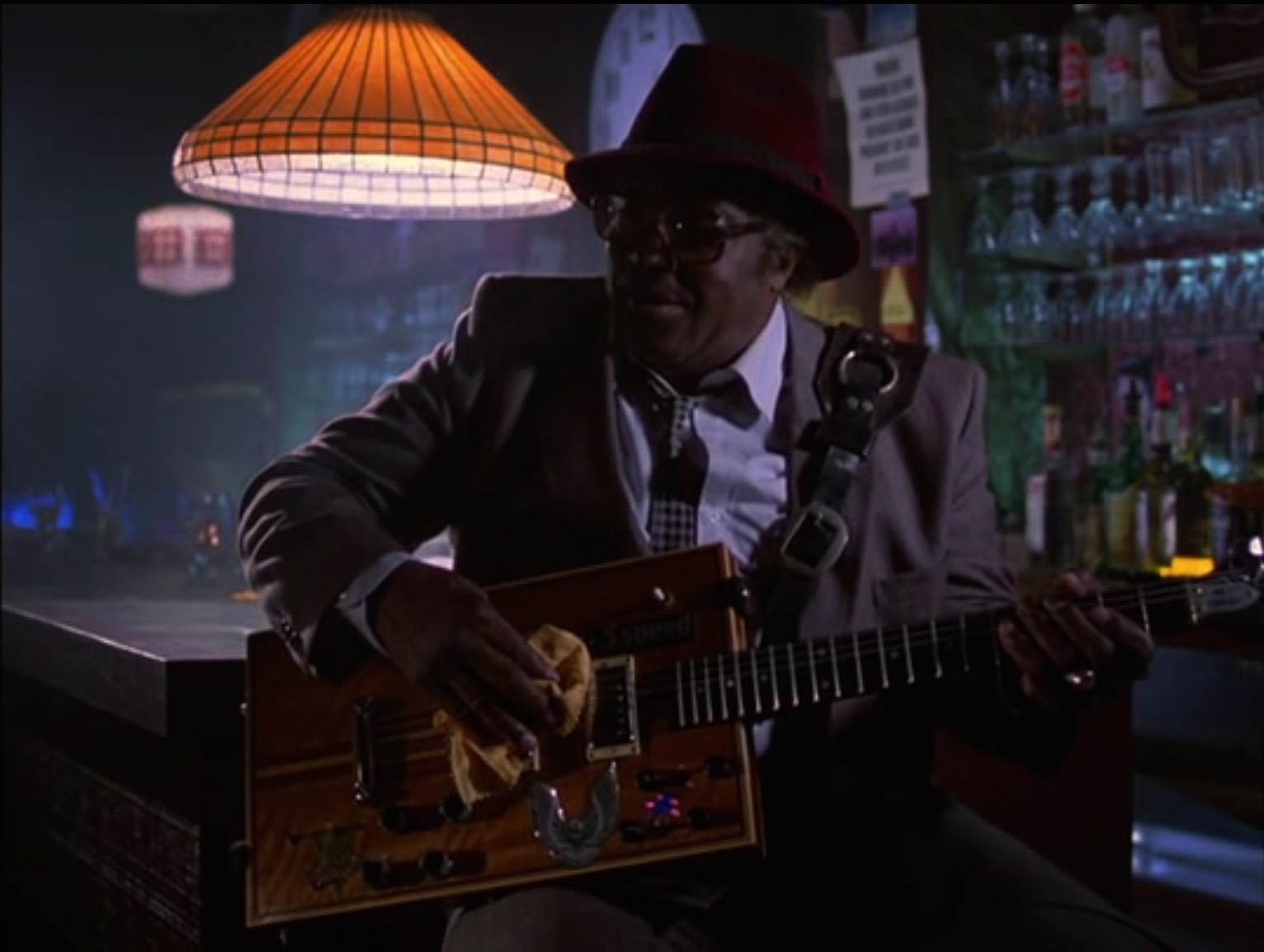
I hate to say it, but I think Monster High is better than Rockula. For all of Monster High’s problems, stuff happened in it. This movie has some memorable characters and a funny setup, but then it just devolves into a series of musical numbers. Most are performed onstage so they have an in film context, but there is at least one that is done like you would expect from a music video. On the other hand, this does have Bo Diddley, Thomas Dolby, and Toni Basil in it. However, while we do see Diddley with his square guitar, never is Toni Basil dressed like a cheerleader and nor does Thomas Dolby become blinded by science.
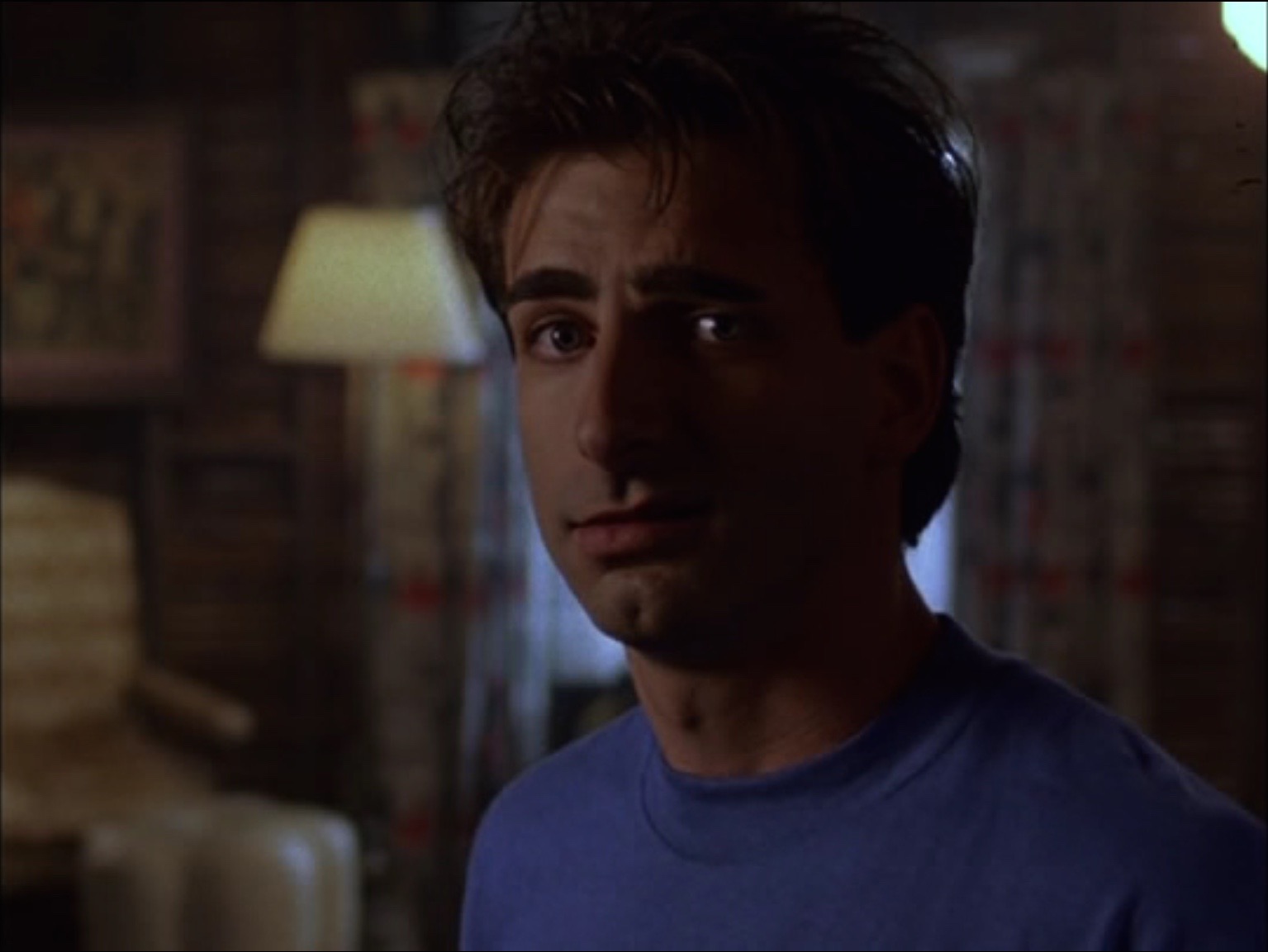
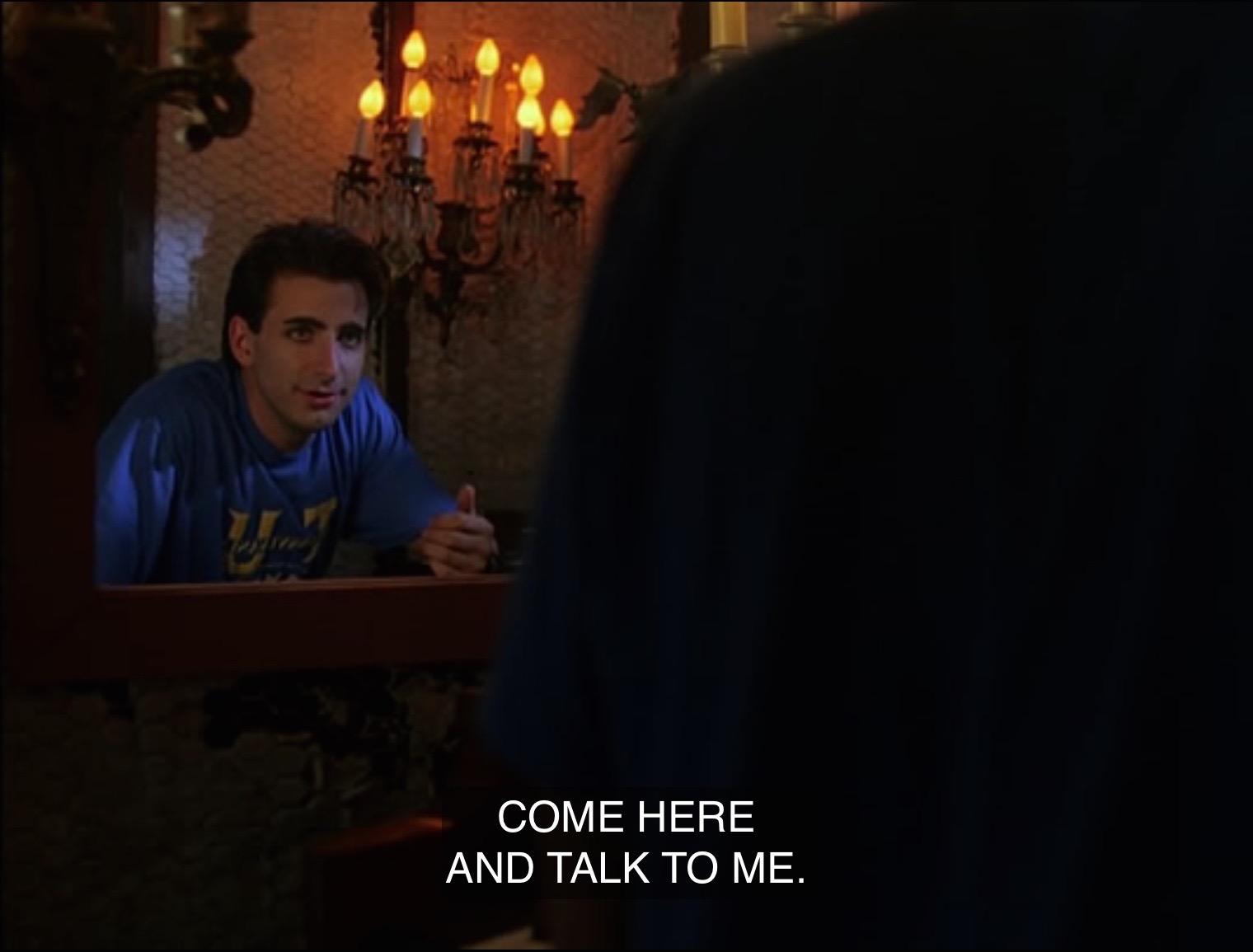
The film opens and we are introduced to our lead named Ralph (Dean Cameron). He lives with his mother Phoebe (Toni Basil). They are both vampires. We are also introduced to the Ralph in the mirror.
In this movie, Ralph has another version of himself that is trapped inside every mirror he looks into. This is one of the highlights of the movie because his mirror self is quite funny. Like when he finds that a fun house mirror that stretches him out has increased more than just the length of his body.
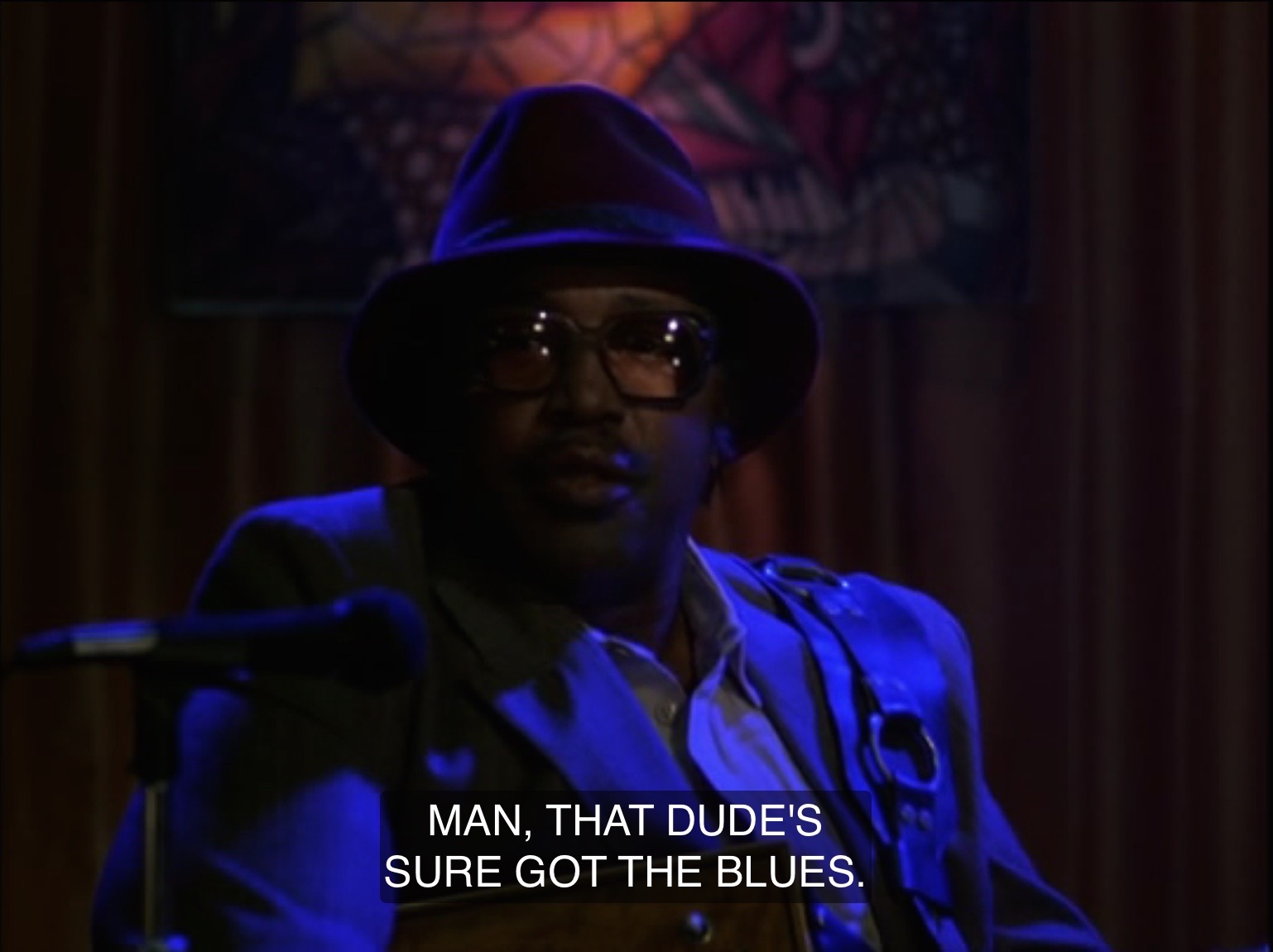
Next we go to the exposition dump bar and learn about the setup of this film. Let me see if I can get this right. Sometime around the 17th century he met a girl named Mona and fell in love with her. But she had a boyfriend who was a pirate. Ralph and Mona were going to slip off and get married, but the boyfriend found out. Ralph and the boyfriend get in a fight. The boyfriend loses his sword and Mona gets killed by a hambone to the head. Ralph tried to save her, but since there were 20 pissed off pirates, he fled. Since she was killed before he could lose his virginity to her, she is now reincarnated every 22 years until they get it right. The day after the bartender tells us this story Ralph is going to meet Mona once again. And he unless he falls in love with her and saves her, a crazed pirate with a rhinestone peg leg will kill her on Halloween. Got that? Well, as you can imagine, Ralph is a little depressed. Or as Bo Diddley says.
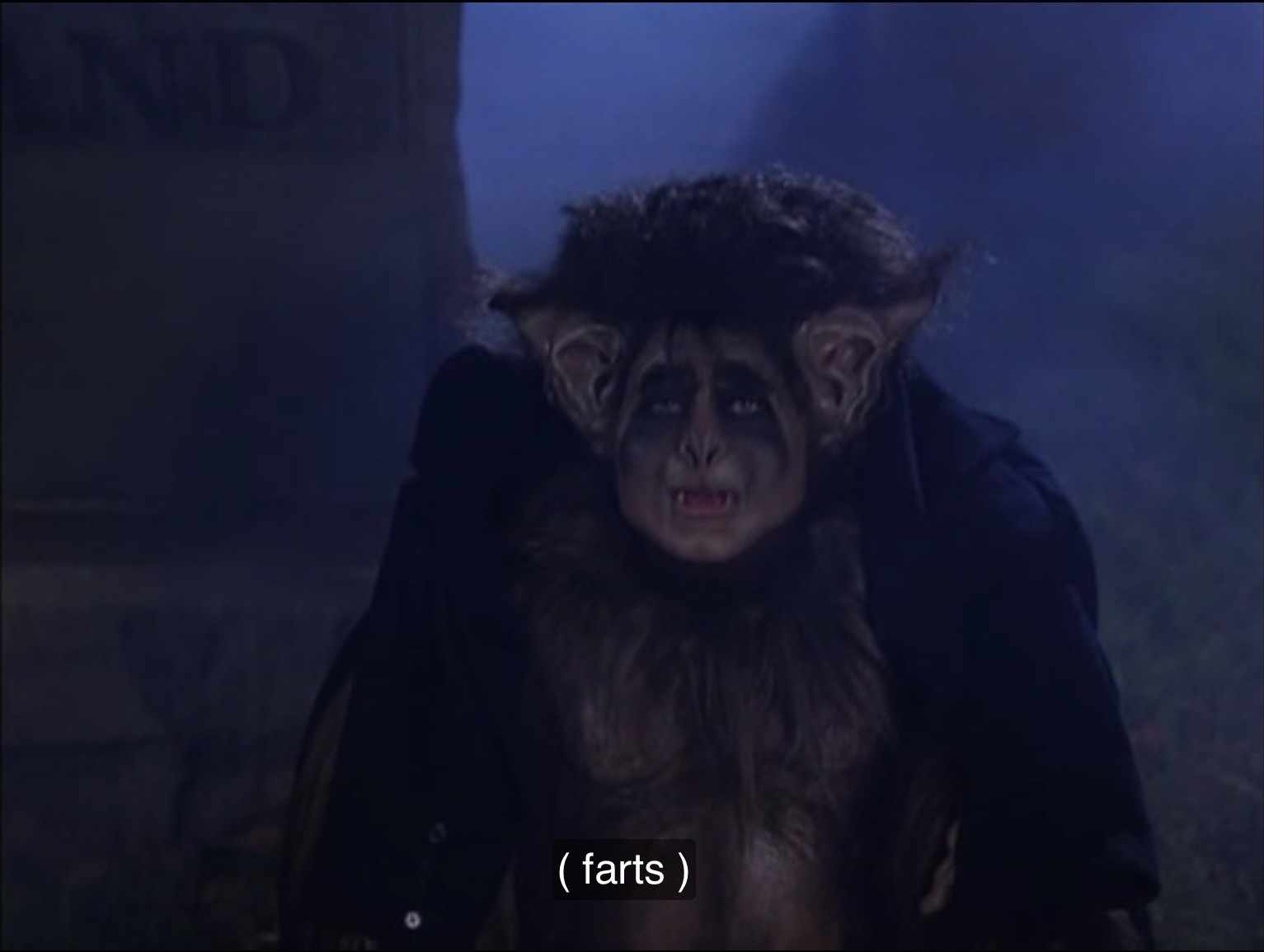
Oh, and the sun doesn’t do anything to Ralph. Also, he has a similar scheme to Robert Sean Leonard in My Best Friend Is A Vampire (1987). The Red Cross Blood Mobile makes deliveries to him. Crosses don’t do anything to him either. Basically take everything you know about vampires and throw it the window. Well, he can turn into a bat. Just not a very impressive one.
All you really need to know is that he must lose his virginity to Mona otherwise a peg leg pirate will kill her leaving him sexless for another 22 years. Remember, this came out in 1990. The 1980’s were still going on in the heads of many people.
In short order, he runs into Mona. Mona is a singer. To be honest, I’m not sure how Thomas Dolby’s character is related to her other than that they are close and he sells really bizarre things for dead people.
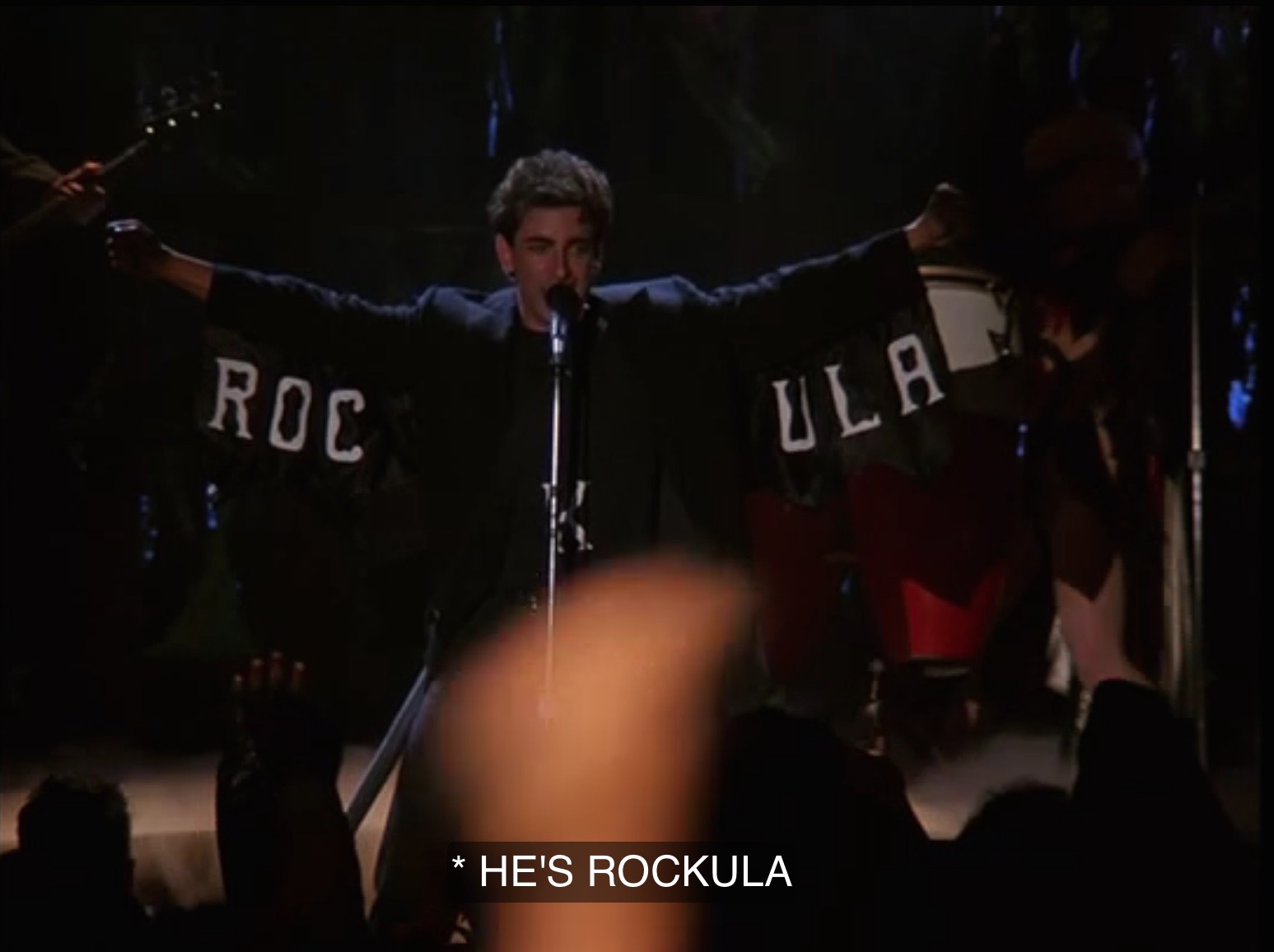
To win over Mona, Ralph becomes ROCKULA!
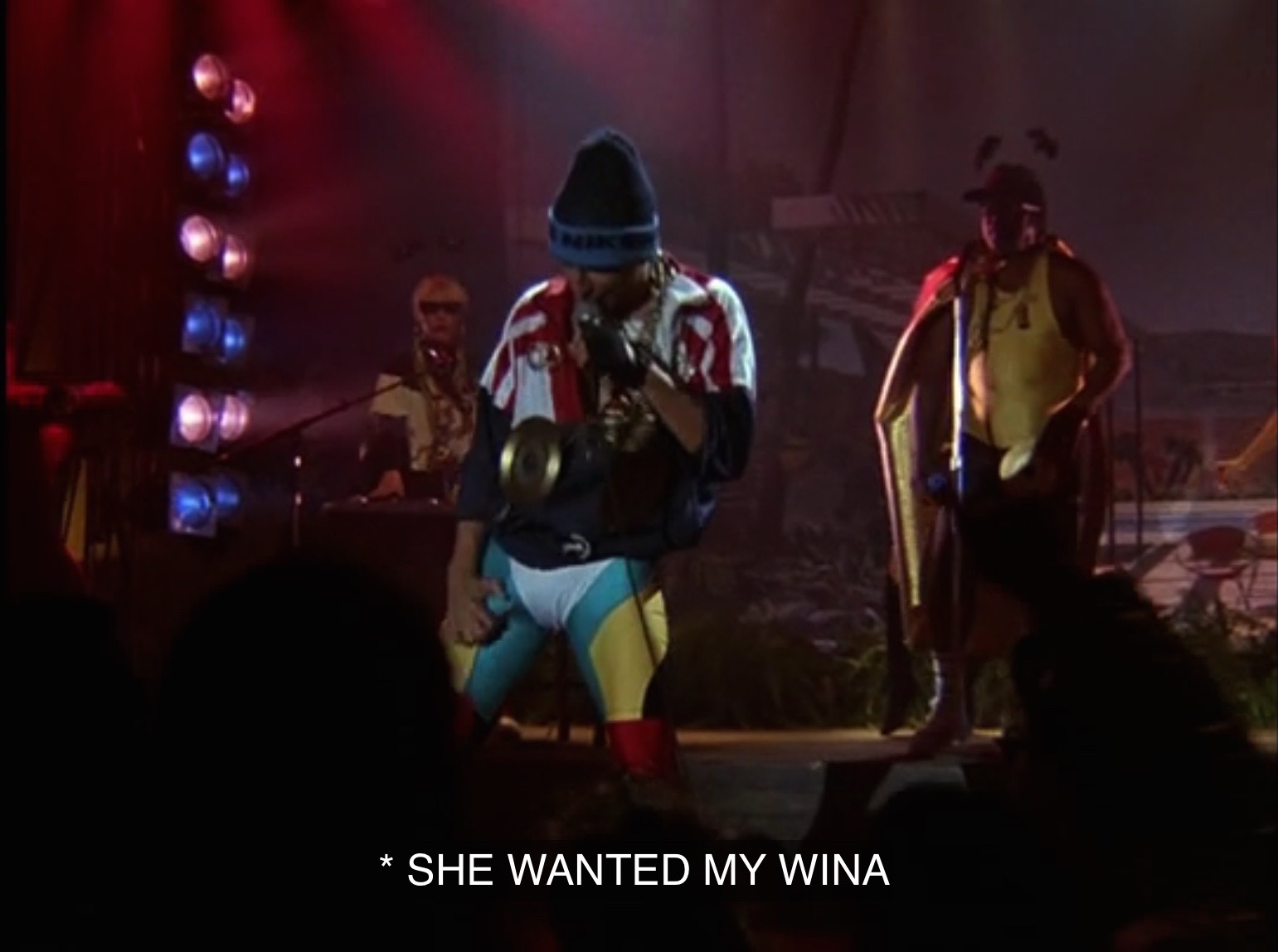
Unfortunately, this did come out in 1990. So this happens to:
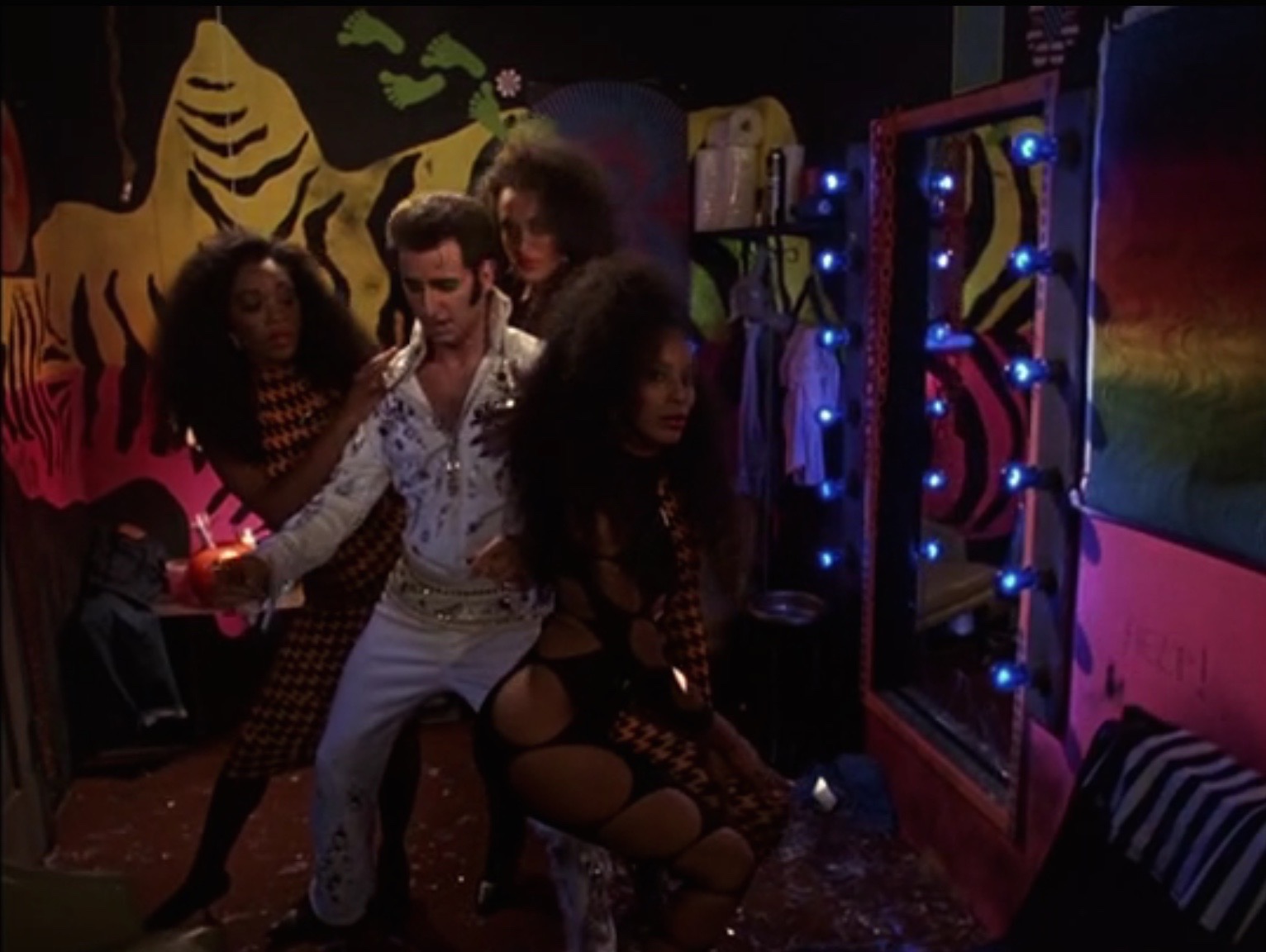
That is Bo Diddley on the right doing what I really hope was the least dignified thing of his career. If there was worse, then I don’t want to see it.
I could stop here and say I don’t want to spoil the ending of Rockula so I have an excuse to stop writing. But who cares about the ending and you already know what happens, so here it goes. Thomas Dolby gets really jealous and Toni Basil helps him to become the pirate with the rhinestone peg leg.
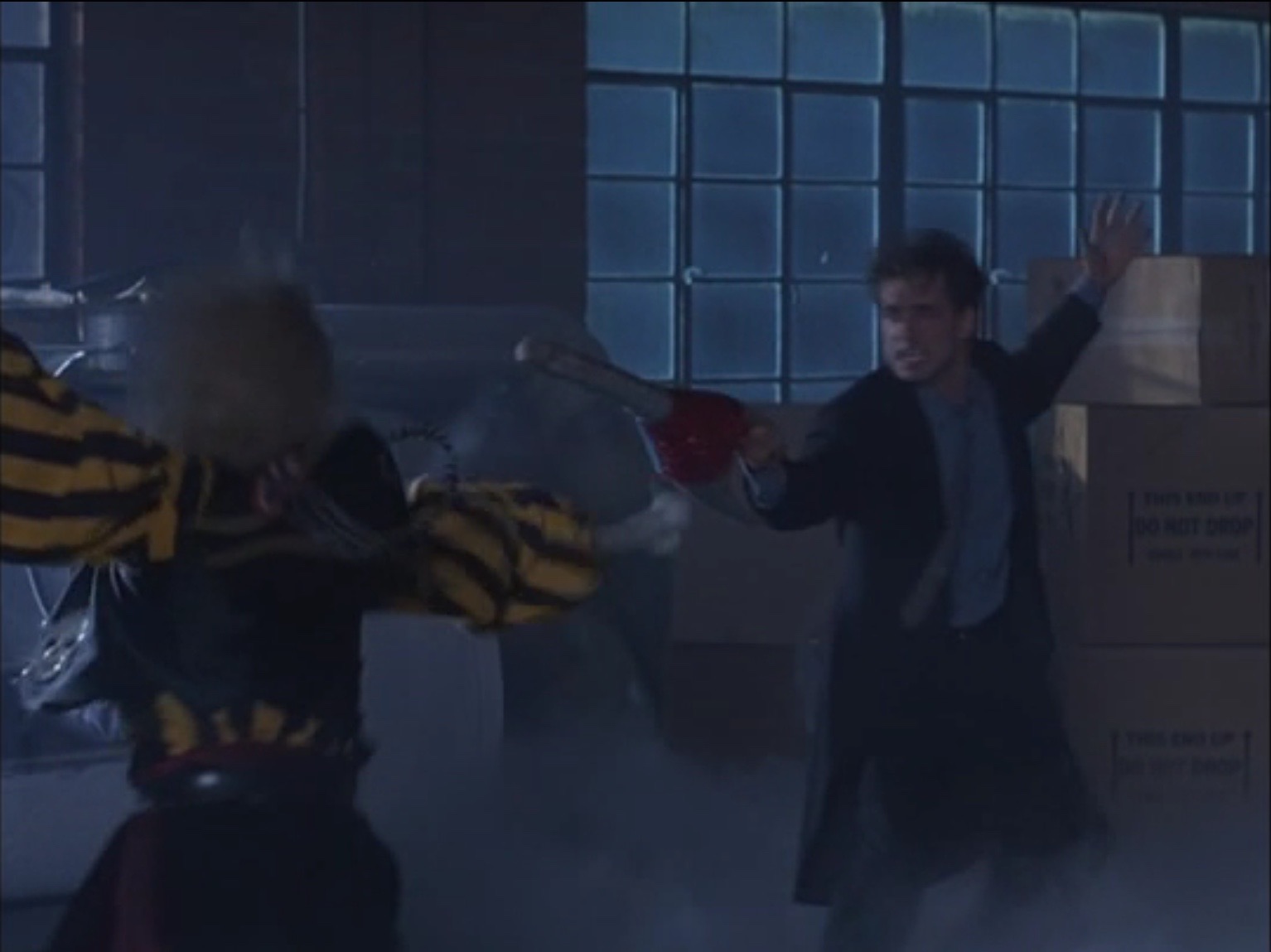
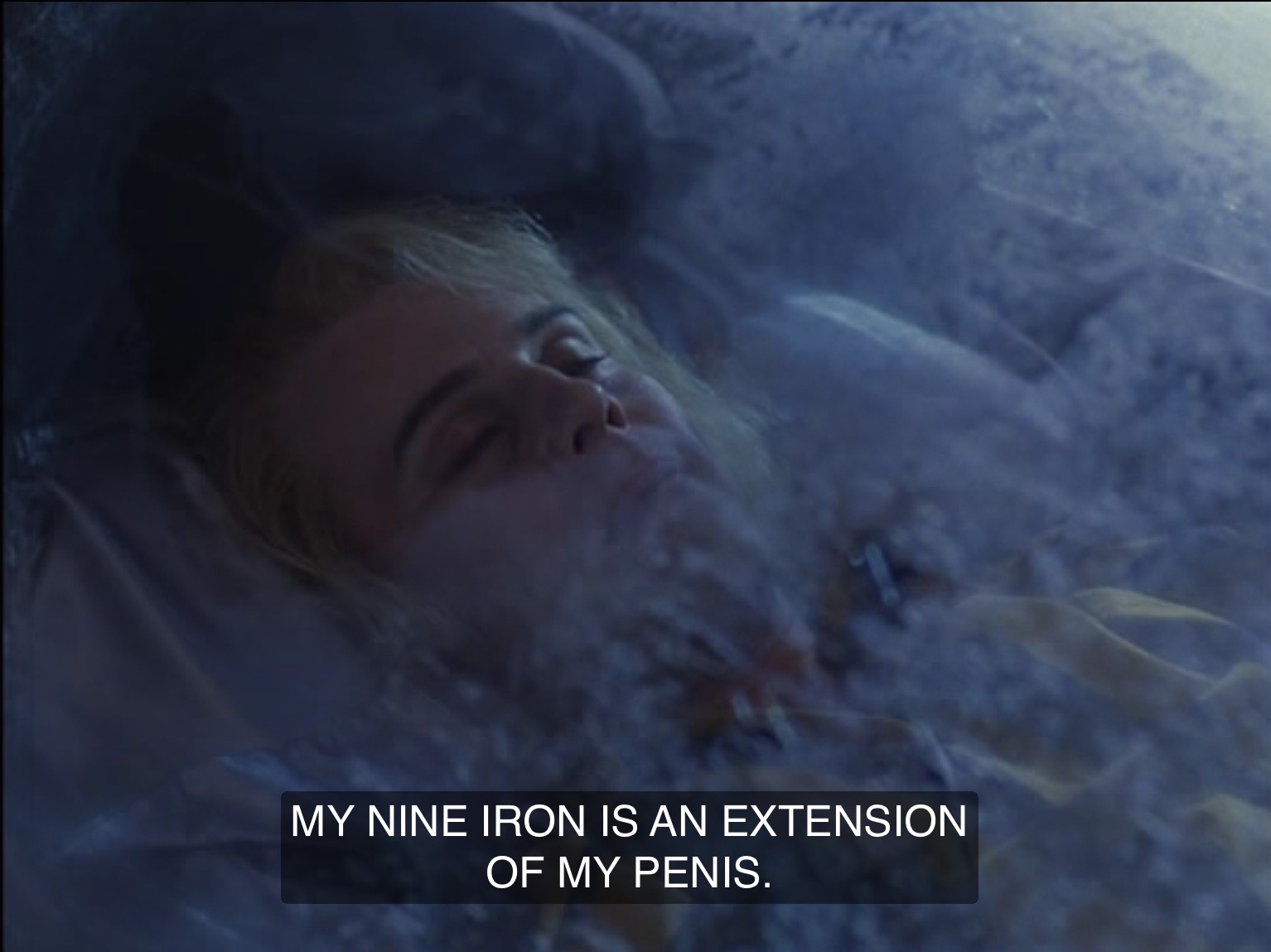
They duel, and Ralph wins. Dolby is knocked into a cryogenic pod that is conveniently there and drifts off to sleep thinking that a nine iron is an extension of his penis. No, seriously, the machine keeps telling him that as he drifts off to sleep.
Ralph and Mona live happily ever after. But wait, there’s one loose end. What about the Ralph in the mirror? That Ralph breaks the mirror on his end and emerges as this.
No explanation given for this at all. He just goes out on stage and sings while the credits roll. Who needs explanations? Ralph lost his virginity, Dolby will never be hyperactive again, Toni Basil is fine after getting hit by a hambone during the duel, and Bo Diddley is dead so he doesn’t have to worry about me reminding people this movie exists. Everyone’s happy.
Well, let’s leave Bo Diddley with a little dignity.






 Through the Shattered Lens