 It seems like I’m always taking a chance when I listen to a DVD commentary track. Occasionally, a commentary track will make a bad film good and a good film even better. Far too often, however, listening to a bad or boring commentary track will so totally ruin the experience of watching one of my favorite movies that I’ll never be able to enjoy that movie in the same way again. I’ve learned to almost always involve any commentary track that involves anyone credited as being an “executive producer.” They always want to tell you every single detail of what they had to do to raise the money to make the film. Seriously, executive producers suck.
However, there are more than a few commentary tracks that I could listen to over and over again. Listed below are a few of them.
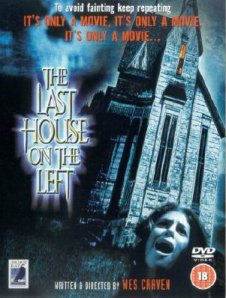
10) Last House On The Left (The Original) — Apparently, there’s a DVD of this film that features a commentary track in which stars David Hess and Fred Lincoln nearly come to blows while debating whether or not this movie should have been made. The DVD I own doesn’t feature that commentary but it does feature a track featuring writer/director Wes Craven and producer Sean S. Cunningham. The thing that I love about their commentary is that they both just come across as such nice, kinda nerdy guys. You look at the disturbing images onscreen and then you hear Cunningham saying, “We shot this scene in my mom’s backyard. There’s her swimming pool…” Both Craven and Cunningham are remarkably honest about the film’s shortcomings (at one point, Craven listens to some of his more awkward dialogue and then says, “Apparently, I was obsessed with breasts…”) while, at the same time, putting the film’s controversy into the proper historical context.
9) Burnt Offerings — When Burnt Offerings, which is an occasionally interesting haunted house movie from 1976, was released on DVD, it came with a commentary track featuring director Dan Curtis, star Karen Black, and the guy who wrote the movie. This commentary track holds a strange fascination for me because it, literally, is so mind-numbingly bad that I’m not convinced that it wasn’t meant to be some sort of parody of a bad commentary track. It’s the commentary track equivalent of a car crash. Curtis dominates the track which is a problem because he comes across like the type of grouchy old man that Ed Asner voiced in Up before his house floated away. The screenwriter, whose name I cannot bring myself to look up, bravely insists that there’s a lot of nuance to his painfully simple-minded script. Karen Black, meanwhile, tries to keep things positive. The high point of the commentary comes when Black points out that one actor playing a menacing chauffeur is giving a good performance (which he is, the performance is the best part of the movie). She asks who the actor is. Curtis snaps back that he doesn’t know and then gets testy when Black continues to praise the performance. Finally, Curtis snaps that the actor’s just some guy they found at an audition. Actually, the actor is a veteran character actor named Anthony James who has accumulated nearly 100 credits and had a prominent supporting role in two best picture winners (In the Heat of the Night and Unforgiven).
8 ) Cannibal Ferox — This is a good example of a really unwatchable movie that’s made watchable by an entertaining commentary track. The track is actually made up of two different tracks, one with co-star Giovanni Lombardo Radice and one with director Umberto Lenzi. Lenzi loves the film and, speaking in broken English, happily defends every frame of it and goes so far as to compare the movie to a John Ford western. The wonderfully erudite Radice, on the other hand, hates the movie and spends his entire track alternatively apologizing for the movie and wondering why anyone would possibly want to watch it. My favorite moment comes when Radice, watching the characters onscreen move closer and closer to their bloody doom, says, “They’re all quite stupid, aren’t they?”
7) Race With The Devil — Race with the Devil is an obscure but enjoyable drive-in movie from the 70s. The DVD commentary is provided by costar Lara Parker who, along with providing a lot of behind-the-scenes information, also gets memorably catty when talking about some of her costars. And, let’s be honest, that’s what most of us want to hear during a DVD commentary.
6) Anything featuring Tim Lucas — Tim Lucas is the world’s foremost authority on one of the greatest directors ever, Mario Bava. Anchor Bay wisely recruited Lucas to provide commentary for all the Bava films they’ve released on DVD and, even when it comes to some of Bava’s lesser films, Lucas is always informative and insightful. Perhaps even more importantly, Lucas obviously enjoys watching these movies as much as the rest of us. Treat yourself and order the Mario Bava Collection Volume 1 and Volume 2.
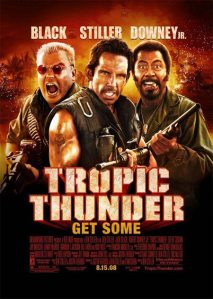
5) Tropic Thunder — The commentary track here is provided by the film’s co-stars, Jack Black, Ben Stiller, and Robert Downey, Jr. What makes it great is that Downey provides his commentary in character as Sgt. Osiris and spends almost the entire track beating up on Jack Black. This is a rare case of a great movie that has an even greater commentary track.
4) Strange Behavior — This wonderfully offbeat slasher film from 1981 is one of the best movies that nobody seems to have heard of. For that reason alone, you need to get the DVD and watch it. Now. As an added bonus, the DVD comes with a lively commentary track featuring co-stars Dan Shor and Dey Young and the film’s screenwriter, Bill Condon (who is now the director that Rob Marshall wishes he could be). Along with providing a lot of fascinating behind-the-scenes trivia, the three of them also discuss how Young ended up getting seduced by the film’s star (Michael Murphy, who was several decades older), how shocked Condon was that nobody on the set seemed to realize that he’s gay, and why American actors have so much trouble speaking in any accent other than their own. Most memorable is Young remembering the experience of sitting in a theater, seeing herself getting beaten up onscreen, and then listening as the people sitting around her cheered.
3) Imaginationland — As anyone who has ever listened to their South Park commentaries knows, Matt Stone and Trey Parker usually only offer up about five minutes of commentary per episode before falling silent. Fortunately, those five minutes are usually hilarious and insightful. Not only are Parker and Stone remarkably candid when talking about the strengths and weaknesses of their work but they also obviously enjoy hanging out with each other. With the DVD release of South Park’s Imaginationland trilogy, Matt and Trey attempted to record a “full” 90-minute commentary track. For the record, they manage to talk for 60 minutes before losing interest and ending the commentary. However, that track is the funniest, most insightful 60 minutes that one could hope for.
2) Donnie Darko — The original DVD release of Donnie Darko came with 2 wonderful commentary tracks. The first one features Richard Kelley and Jack Gyllenhaal, talking about the very metaphysical issues that the film addresses. Having listened to the track, I’m still convinced that Kelley pretty much just made up the film as he went along but its still fascinating to the hear everything that was going on his mind while he was making the film. However, as good as that first track is, I absolutely love and adore the second one because it features literally the entire cast of the movie. Seriously, everyone from Drew Barrymore to Jena Malone to Holmes Osborne to the guy who played Frank the Bunny is featured on this track. They watch the film, everyone comments on random things, and it’s difficult to keep track of who is saying what. And that’s part of the fun. It’s like watching the film at a party full of people who are a lot more interesting, funny, and likable than your own actual friends.
1) The Beyond — This movie, one of the greatest ever made, had one of the best casts in the history of Italian horror and the commentary here features two key members of that cast — Catriona MacColl and the late (and wonderful) David Warbeck. The commentary, which I believe was actually recorded for a laserdisc edition of the film (though, to be honest, I’ve never actually seen a “laserdisc” and I have my doubts as to whether or not they actually ever existed), was recorded in 1997, shortly after the death of director Lucio Fulci and at a time when Warbeck himself was dying from cancer. (Warbeck would pass away two weeks after recording this commentary). This makes this commentary especially poignant. Warbeck was, in many ways, the human face of Italian exploitation, a talented actor who probably deserved to be a bigger star but who was never ashamed of the films he ended up making. This commentary — in which MacColl and Warbeck quite cheerfully recall discuss making this underrated movie — is as much a tribute to Warbeck as it is to Fulci. Highpoint: MacColl pointing out all the scenes in which Warbeck nearly made her break out laughing. My personal favorite is the scene (which made it into the final film) where Warbeck attempts to load a gun by shoving bullets down the barrel. The wonderful thing about this track is that Warbeck and MacColl enjoy watching it too.



 Through the Shattered Lens