4 Shots From 4 Films: Special Francis Ford Coppola Edition


4 (or more) Shots From 4 (or more) Films is just what it says it is, 4 (or more) shots from 4 (or more) of our favorite films. As opposed to the reviews and recaps that we usually post, 4 (or more) Shots From 4 (or more) Films lets the visuals do the talking.

Today is Francis Ford Coppola’s birthday! Coppola is a bit of a controversial figure among some film scholars. While everyone agrees that, with the first two Godfathers, he directed two of the greatest films of all time (and some people would include Apocalypse Now on that list as well) and that he was one of the most important directors of the 70s, his post-Apocalypse Now career is often held up as a cautionary tale. Some say that Coppola’s career suffered because of his own excessive behavior and spending. Others argue that he was treated unfairly by a film industry that resented his refusal to compromise his vision and ambitions. Personally, my natural instinct is to always side with the artist over the executives and that’s certainly the case with Coppola. Coppola has only completed four films since the start of this current century and three of them were not widely released. Say what you will about the films themselves, that still doesn’t seem right. This year will bring us a new Coppola film, Megapolis. I know that we’re all hoping the best.

Regardless of how one views his latter career, Coppola is responsible for some of the best and most important films ever made. And today, on his birthday, it’s time for….

4 Shots From 4 Francis Ford Coppola Films

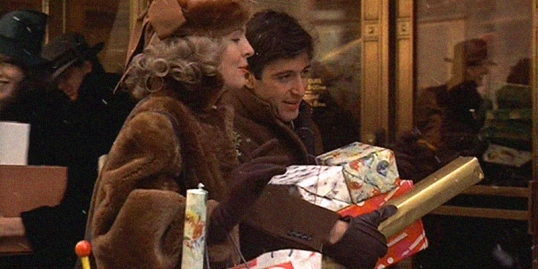
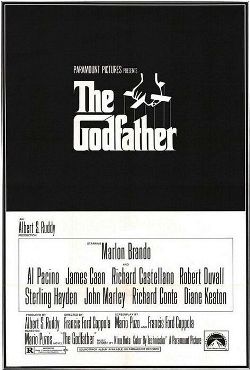
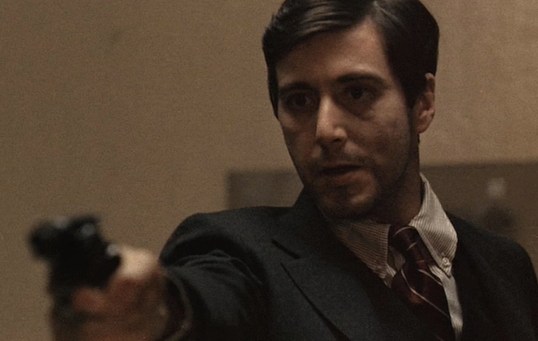
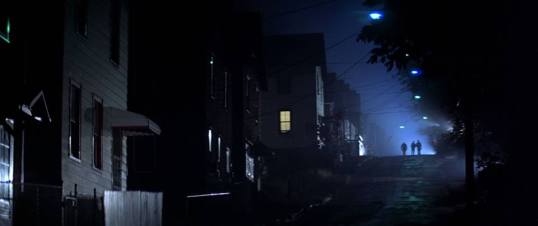
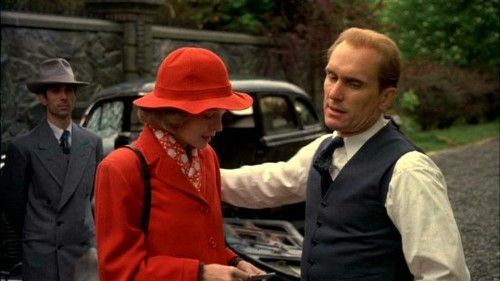
The Godfather (1972, dir by Francis Ford Coppola, DP: Gordon Willis)
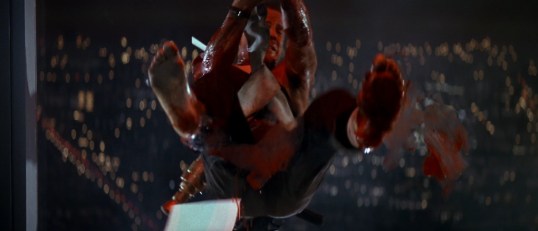
The Conversation (1974, dir by Francis Ford Coppola, DP: Bill Butler)
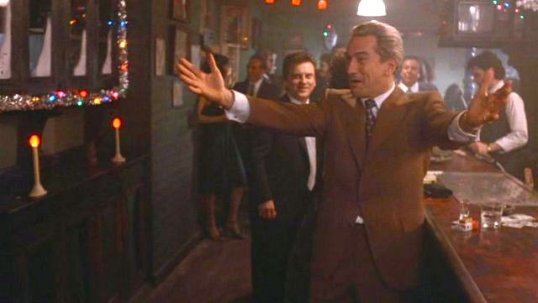
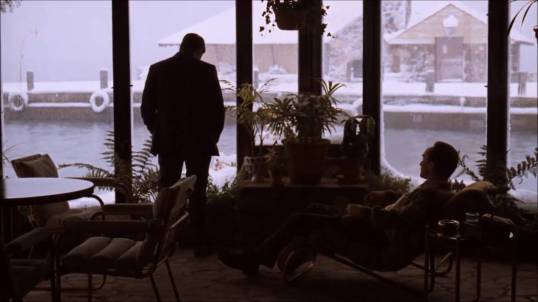
The Godfather, Part II (1974, dir by Francis Ford Coppola, DP: Gordon Willis)
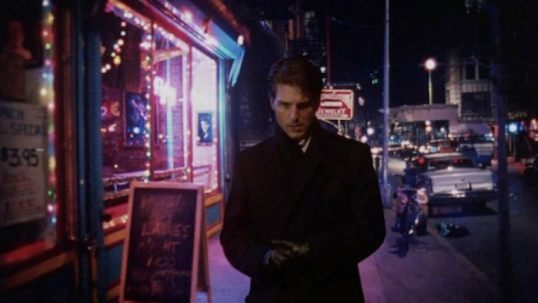
Apocalypse Now (1979, dir by Francis Ford Coppola, DP: Vittorio Storaro)

Scene That I Love: Vito Corleone and Johnny Fontane in The Godfather


Continuing our tribute to the great Marlon Brando, today’s scene that I love comes from The Godfather.

In this scene, a self-pitying Johnny Fontane (Al Martino) discusses his career problems with Marlon Brando’s Vito Corleone.  Johnny is losing his voice.  Johnny is up for a role in a big movie but he worries that the producer will never allow him to appear in the film.  Johnny says he doesn’t know what to do and he sheds a tear….

….and that’s not a smart thing to do when you’re talking to Don Corleone.

This scene contains some of the best moments of The Godfather.  Al Martino was a professional singer with little acting experience.  (While Johnny Fontane was a major character in Mario Puzo’s book, he only appeared in two scenes in the film version.  Coppola later said that he thought the Johnny Fontane chapters were so poorly written that he would have turned down the film if he had to include too much of the character.)  In order to get an effective performance out of Martino, Brando did not warn him that he would actually be slapping him.  During one take, Brando got so aggressive that he knocked off Martino’s toupee and caused Robert Duvall to start laughing.  It was all worth it, though.  Martino was thoroughly convincing as Johnny Fontane and Marlon Brando won (but did not accept) his second Oscar for Best Actor.

4 Shots From 4 Films: Special Marlon Brando Edition


4 Or More Shots From 4 Or More Films is just what it says it is, 4 shots from 4 of our favorite films. As opposed to the reviews and recaps that we usually post, 4 Shots From 4 Films lets the visuals do the talking!

One hundred years ago and on this date, Marlon Brando was born in Omaha, Nebraska.  One of the greatest of American actors and one of the main reasons why so many young actors became enamored with the Method, Marlon Brando played many roles in our culture.  When he was young, he was a Broadway bad boy.  When he went out to Hollywood, he became a legitimate movie star.  In the 60s, he was a cautionary tale as his career suffered a series of notorious flops.  In the 70s, he made a comeback and, in during the final years of his career, he was as known for his eccentricities as for his talent.  It’s a shame that those eccentricities overshadowed Brando as an actor.  When he wanted to be, he was one of the best to ever appear on stage or in the movies.

In honor of the wonderful, tragic, and talented Marlon Brando, it’s time for….

4 Shots From 4 Marlon Brando Films

A Streetcar Named Desire (1951, dir by Elia Kazan, DP: Harry Stradling)

On The Waterfront (1954, dir by Elia Kazan, DP: Boris Kaufman)

The Godfather (1972, dir by Francis Ford Coppola, DP: Gordon Willis)

Apocalypse Now (1979, dir by Francis Ford Coppola, DP: Vittorio Storaro)

6 Shots From 6 Best Picture Winners: The 1970s


4 Shots From 4 Films is just what it says it is, 4 shots from 4 of our favorite films. As opposed to the reviews and recaps that we usually post, 4 Shots From 4 Films lets the visuals do the talking!

Today, I’m using this feature to take a look at the history of the Academy Award for Best Picture.  Decade by decade, I’m going to highlight my picks for best of the winning films.  To start with, here are 6 shots from 6 Films that won Best Picture during the 1970s!  Here are….

6 Shots From 6 Best Picture Winners: The 1970s

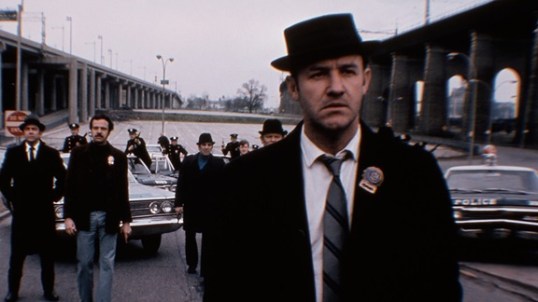
The French Connection (1971, dir by William Friedkin, DP: Owen Roizman)

The Godfather (1972, dir by Francis Ford Coppola, DP: Gordon Willis)

The Godfather Part II (dir by Francis Ford Coppola, DP: Gordon Willis)

One Flew Over The Cuckoo’s Nest (1975, dir by Milos Forman, DP: Haskell Wexler and Bill Butler)

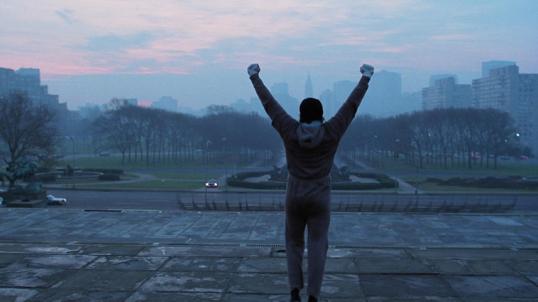
Rocky (1976, dir by John G. Avildsen, DP: James Crabe)

The Deer Hunter (1978, dir by Michael Cimino, DP: Vilmos Zsigmond)

Scene That I Love: Tom and Tessio in The Godfather


As we continue to observe Robert Duvall’s birthday, today’s scene that I love comes from my favorite movie, 1972’s The Godfather.

In this scene, Tom Hagen lets Tessio know that Michael knows that Tessio is the one who betrayed him.  It’s a short scene but one that is wonderfully acted by both Abe Vigoda and Robert Duvall.

Mario Puzo’s novel goes into a bit more detail about what is going through Tom’s mind while he watches Tessio being taken away.  Tessio was one of the last of the old breed of pre-prohibition era mobsters and he was someone who played a key role in Vito Corleone’s rise to power.  Tessio’s execution was not just revenge for betraying the family but also the end of an era, something that Tom full realized even if Michael didn’t.  When Tom tells Tessio that he can’t get him “off the hook for old time’s sake,” it’s a statement that those old times are gone forever.

Scenes That I Love: Michael Corleone Visits Las Vegas In The Godfather


Today, the Shattered Lens wishes a happy birthday to the great Al Pacino.

Today’s scene that I love comes from 1972’s The Godfather, in which Al Pacino plays Michael Corleone.  In this scene, Michael, having just taken over the Corleone family, pays a visit to Vegas.  He meets his brother Fredo (John Cazale), who has certainly changed from being the meek person that he was in New York.  He meets the singer Johnny Fontana (Al Martino), who owes a favor to the Corleones.  And he meets Moe Greene (Alex Rocco), who soon discovers that the Corleones cannot be intimidated.  Most importantly, Michael proves that he is now in charge of the family.  At the end of the scene, Michael gives Fredo an important warning and sets up the tragic ending of the The Godfather Part II.

Scenes That I Love: Luca Brasi Is Just Happy To Be At The Wedding


97 years ago, on this date, Lenny Montana was born in Brooklyn, New York.

Montana started out as a boxer and a wrestler.  He eventually ended up working as a bouncer and a bodyguard for the leadership of the Colombo Crime Family.  However, Montana achieved his immortality as a result of veteran tough guy actor Timothy Carey turning down the role of Luca Brasi in The Godfather.  Brasi was the Corleone Family’s most feared enforcer and Carey, who had made a career out of playing psychos, was one of the most feared men in Hollywood, one who was rumored to have pulled a gun on more than a few directors.  (For the record, Stanley Kubrick loved him.)  When Carey turned down the role in favor of doing a television series, Francis Ford Coppola offered the role to Lenny Montana.  Montana may not have had Carey’s screen acting experience but he brought real-life authenticity to the role.  When Michael says that Luca Brasi is a “very scary man,” one look at Lenny Montana confirms it.  Unfailingly loyal to the family and willing to do anything for the Don, Luca Brasi represents the Family’s strength.  When Luca Brasi is killed, you know that the old era of the Corleones is ending as well.  Without Luca, the Corleones are in deep trouble.

My favorite Luca Brasi scene comes at the beginning of the film.  Surprised to be invited to Connie’s wedding, Luca wants to thank the Don personally.  Nervous about acting opposite Marlon Brando, Montana flubbed his lines.  The scene, with the flub, was kept in the film and it served to humanize both Luca and Don Corleone.  (The Don’s smile was due to the fact that Marlon Brando was having trouble not laughing.)  It’s a nice little scene, one that reminds us that even gangsters are human.

Video Game Review: The Godfather (2006, EA)


Due to getting handed a major project at work, I missed the last few days of our annual Horrorthon and now I’ve got some catching up to do.  It’s frustrating and, whenever I get frustrated and need to blow off some steam, I get my old Xbox 360 out of storage and I concentrate my efforts on running the Straccis out of New Jersey.

New Jersey is one of the many neighborhoods that you can take over in EA’s video game version of The Godfather.  New Jersey is full of nice houses, dive bars, and police that are so incompetent that I got away with bombing their station on numerous occasions.  If you don’t feel like taking over New Jersey, you can go into Brooklyn and pick a fight with the Tattaglia family.  Or you can drive into Hell’s Kitchen, the worst part of New York and fight the Cuneos.  If you’re really brave, you can try to take over Midtown but Midtown is controlled by the Barzini family and the Barzinis don’t go down without a fight.  If you get into too many fights, you might accidentally start a gang war but you can always find an FBI agent in a church and bribe him to end the war.  Just don’t accidentally shoot the guy.  I did that a few times.

The Godfather is an open world game, a 1940s version of Grand Theft Auto that happens to feature characters from classic gangster film.  You play a Corleone family associate who, over the course of the game, goes from being a soldier to being the Don of New York.  Along the way, you take part in all of the major scenes from the film.  When Sonny is gunned down, you’re the one who chases his assassins.  When Michael shoots the Turk, you’re the one who drives him to the docks so he can head to Sicily.  When it’s time to get revenge on Paulie Gatto and Tessio, you’re the one handed the gun.  You get the idea.  James Caan, Robert Duvall, and even Marlon Brando voiced their film characters for the game.  (Brando’s recordings, unfortunately, weren’t usable and a soundalike was brought in to redo most of his lines.)  Al Pacino did not voice Michael and the game’s Michael looks nothing like Pacino because Pacino had already agreed to exclusively license his appearance to the Scarface game.

As a game, The Godfather can get repetitive.  As your gangster gains experience, he’ll level up and receive skill points.  It really doesn’t take that long to become so powerful that none of the other families have a chance against you.  (Only the Barzini Family remains challenging to the very end.)  The interactions with the storekeepers that you intimidate to get protection all tend to follow the same pattern.  Storywise, the game actually cheapens the movie because it suggests that the Corleones were so incompetent that they had to keep calling you in to clean up all of their messes.

But, flaws and all, the game is pretty damn addictive.  Once I get into my vintage, 1940s car and start driving around New York (which is lovingly recreated, even if it is on a much smaller scale than the real New York), I’m in the zone.  Under the right circumstances, the simplicity of The Godfather can be refreshing.  Drive around.  Hijack a truck.  Fight the gangsters.  If the police get upset, just go to a nearby safehouse and save the game.  If you get bored, grab a bomb and take out an abandoned building or maybe a parked car.  It’s a game so there aren’t any consequences to doing incredibly foolish things.  Or, if you just want to relax, you can just drive around the city and appreciate all of your territory.  It’s up to you.  When you’re the Don of New York, you can do anything you want.

Scenes I Love: James Caan in The Godfather


James Caan has passed away, at the age of 82.  There are a lot of great James Caan performances to choose from and to highlight.  For me, though, he’ll always be Sonny Corleone, the temperamental son of the Don who remains oddly likable, even as he cheats on his wife and threatens to kill every other gangster in New York.  Sonny is a force of chaos, which ultimately leads to his untimely death.  But, at the same time, it also makes him someone who you definitely fighting for you instead of against you.

The scene below is mostly cited for Al Pacino’s quiet intensity as he reveals that he’s truly become a member of the family.  While Pacino’s great, Caan’s reaction is just as important.

In the scene below, Sonny discovers that Carol has been beating up Connie so Sonny beats up Carlo.  Carlo really deserved it.  Now this scene is often cited for featuring one shot where it’s clear that Caan didn’t actually hit Gianni Russo.  That’s fair.  But still, Caan actually did make contact enough times that Russo ended up with a broken rib.  Look past that one shot and you’ll see that, in this scene, Caan clearly shows why Sonny was such a feared figure.  Even more importantly, this scene shows how important his family was to Sonny.  Who doesn’t want someone who would beat someone up for them?

And finally, in this scene, Sonny tells off the FBI.  How can’t you love that?  Apparently, the smashing of the camera was something that Caan improvised on the spot.

That said, there was a lot more to Caan’s career than just The Godfather.  Watch all of his films.  He was one of the greats and perhaps the only celebrity who was actually worth following on twitter. RIP.

8 Shots From 8 Films: Special Robert Evans Edition


4 Or More Shots From 4 Or More Films is just what it says it is, 4 shots from 4 of our favorite films. As opposed to the reviews and recaps that we usually post, 4 Shots From 4 Films lets the visuals do the talking!

92 years ago today, Robert Evans was born in New York City.  He started out working in his brother’s clothing business but a chance meeting with actress Norma Shearer led to him becoming an actor.  And while Evans, by his own account, was not a particularly good actor, he did prove himself to be very skilled at playing the games of Hollywood.  Evans eventually moved from acting to production, first as an executive at Paramount and then as an independent producer.

He lived a life as glamorous and tumultuous as the stars of his pictures and his memoir, The Kid Stays In The Picture, is considered to be one of the classic show biz autobiographies.  He hung out with cinematic rebels like Jack Nicholson and Robert Towne and counted Secretary of State Henry Kissinger as a friend.  He suggested that Francis Ford Coppola should direct The Godfather and, when Paramount put pressure on Coppola to cut the film down to two hours, it was Evans who famously announced that a two-hour Godfather was nothing more than a trailer.  He lost Ali MacGraw to Steve McQueen and, again by own account, he lost a lot of potentially productive years to cocaine.  (The Cotton Club scandal is one of the wildest in the history of Hollywood, though it should be noted that Evans himself was never charged with any wrongdoing.)  But, for all that he lost, Evans continues to gain admirers as being the epitome of the producer who was willing to take chances.  For all of his flamboyance, Evans had an eye for good material and the willingness to protect his directors.  In many ways, he was as important to the cinematic revolution of the 70s as the directors that he hired.  When Evans passed away in 2019, it was truly the end of an era.

Here, in honor of the birth and legacy of Robert Evans, are 8 Shots from 8 Films that Evans produced, either as studio chief at Paramount or as an independent producer.

8 Shots From 8 Robert Evans Films

Rosemary’s Baby (1968, dir by Romnn Polanski, DP: William A. Fraker)

Love Story (1970, dir by Arthur Hiller, DP: Richard Kratina)

The Godfather (1972, dir by Francis Ford Coppola, Cinematography by Gordon Willis)

Chinatown (1974, dir by Roman Polanski, DP: John A. Alonzo)

Marathon Man (1976, dir by John Schlesinger, DP: Conrad Hall)

The Cotton Club (1984, dir by Francis Ford Coppola, DP: Stephen Goldblatt)

The Two Jakes (1990, dir by Jack Nicholson, DP: Vilmos Zsigmond)

Sliver (1993, dir by Phillip Noyce, DP: Vilmos Zsigmond)