Song of the Day: Nothing Else Matters (by Metallica)


NothingElseMatters

For only the rare times when we get more than one “Song of the Day” posted in the same day. This time it’s for that special day we call Valentine’s Day. Resident editor of all things art and photography Dazzlin’ Erin posted earlier tonight a song that tells one and all to love the one we’re with. It’s a celebratory song.

To help close out 2013’s Valentine’s Day I’ve chosen a much more intimate ballad that speaks of the love that survives the trials and tribulations of distance and being far apart. The song is Metallica’s power ballad from their Black Album and has become one of their signature songs. “Nothing Else Matters” remains one of the more popular power ballads and, coming from the band’s pre-rock era which most younger listeners know them more nowadays, quite a lovely song from the kings of thrash.

I’ve chosen the live and symphony-backed version of the song conducted by the late Michael Kamen. Part of the set-list for their metal and symphony show, S&M, the song takes well to the addition of a 100-piece symphony orchestra that doesn’t just repeat the same notes, but adds so much more nuances to the song. This could be heard quite clearly when the song reaches the guitar-solo part. This time around we get the string section, especially the violins, giving voice to the emotional aspect of the song. It’s my favorite part of the song and can listen to it over and over.

Happy Valentine’s Day…til next year.

Nothing Else Matters

So close, no matter how far
Couldn’t be much more from the heart
Forever trusting who we are
and nothing else matters

Never opened myself this way
Life is ours, we live it our way
All these words I don’t just say
and nothing else matters

Trust I seek and I find in you
Every day for us something new
Open mind for a different view
and nothing else matters

never cared for what they do
never cared for what they know
but I know

So close, no matter how far
Couldn’t be much more from the heart
Forever trusting who we are
and nothing else matters

never cared for what they do
never cared for what they know
but I know

Never opened myself this way
Life is ours, we live it our way
All these words I don’t just say

Trust I seek and I find in you
Every day for us, something new
Open mind for a different view
and nothing else matters

never cared for what they say
never cared for games they play
never cared for what they do
never cared for what they know
and I know

So close, no matter how far
Couldn’t be much more from the heart
Forever trusting who we are
No, nothing else matters
Song of the Day: The Outlaw Torn (by Metallica and S.F. Symphony)


The latest entry in my “Song of the Day” feature is from one of my favorite bands ever, Metallica, and from one of their live albums: “The Outlaw Torn” feat. the S.F. Symphony Orchestra.

This song was part of their 6th album, Load, and was picked by classical composer Michael Kamen to become part of the set list for the band’s live collaboration with the S.F. Symphony Orchestra. One of these days I’ll review that live album with all its great entries and some so-so ones, but for now it’s all about “The Outlaw Torn” and how the band’s attempt at trying a hard rock sound instead of their original thrash metal beginnings ended up becoming pretty great once paired with a full symphony orchestra adding their own voices to the song.

Unlike some of the other songs picked for the S&M album (as this one was called Symphony & Metallica), this particular track benefited from the added melodies and arrangements that only ranks upon ranks of strings, brass and percussion sections an orchestra could bring to the table. The orchestra didn’t just mimic the very sound and notes the band was playing but added different layers of sounds and with this song one could hear those additions.

This version of “The Outlaw Torn” gets continuous play on my computer and iPhone that I know by memory just when certain sections of the orchestra comes in and just what sort instruments would be coming in. It’s that good.

The Outlaw Torn

And now I wait my whole lifetime
For you
And now I wait my whole lifetime
For you

I ride the dirt I ride the tide
For you
I search the outside search inside
For you

To take back what you left me
I know I’ll always burn to be
The one who seeks so I may find
And now I wait my whole lifetime

My whole lifetime
My whole lifetime
My whole lifetime
And I’m torn

So long I wait my whole lifetime
For you
So long I wait my whole lifetime
For you

The more I search the more my need
For you
The more I bless the more I bleed
For you

You make me smash the clock and feel
I’d rather die behind the wheel
Time was never on my side
So long I wait my whole lifetime

My whole lifetime
My whole lifetime
My whole lifetime
And I’m torn

HEAR ME
And if I close my mind in fear
Please pry it open

SEE ME
And if my face becomes sincere
Beware

HOLD ME
And when I start to come undone
Stitch me together

SEE ME
And when you see me strut
Remind me of what left this outlaw torn

HEAR ME
And if I close my mind in fear
Please pry it open

SEE ME
And if my face becomes sincere
Beware

HOLD ME
And when I start to come undone
Stitch me together

SEE ME
And when you see me strut
Remind me of what left this outlaw torn

Song of the Day: Protectors of the Earth (by Two Steps From Hell)


With Mass Effect 3 having been released to the masses earlier today it also means another official launch trailer which also happened to use a piece of music from the band Two Steps From Hell. BioWare used a song from this band to score their launch trailer for Mass Effect 2 two years ago. That song was “Heart of Courage” and it was a perfect choice made by the folks from BioWare.

This time around their latest pick from Two Steps From Hell to score their launch trailer for Mass Effect 3 would also come from the band and is also the latest choice for “Song of the Day”.

The song is “Protectors of the Earth” and if that is not an apt and perfect choice for a game whose tagline is “Take Earth Back” then I don’t know what is. For one thing it adds a level of epic grandiosity to the trailer and the visuals chosen to help highlight the strengths of the game. What better way to usher in the installment to the Mass Effect trilogy than with music will help inspire gamers to, as the game’s tagline has been pushing, “Take back Earth”.

Songs of the Day: Anvil of Crom & Riddle of Steel/Riders of Doom (by Basil Poledouris)


For the latest song of the day I couldn’t make up my mind on which of the two I had picked I should post so I decided to just treat the two as a pair thus the latest “song of the day” is, for today, “songs of the day”. Once you hear what I had chosen you will realize why they had to be together.

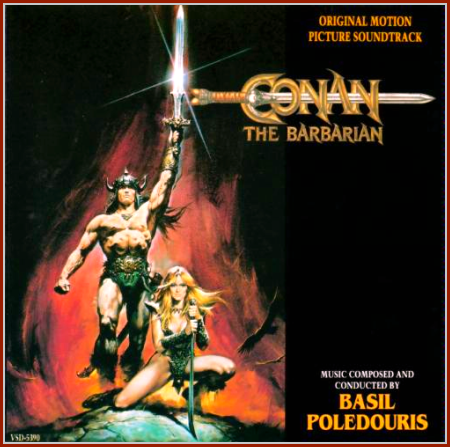
The latest song of the day is from film score composer Basil Poledouris and comes from his best work and what many consider as one of the best film scores ever put up on the big-screen. They are “Anvil of Crom” and “Riddle of Steel/Riders of Doom” from Poledouris’ score for Conan the Barbarian. These two pieces, especially from the Varese Sarabande release of the soundtrack, form the very powerful introduction to the Hyperborean world that Conan inhabits.

“Anvil of Crom” starts off the film and does it with such a bombastic combination of timpani drums setting the rhythm with French horns (a massive 24 in total) keeping up to speed with some very strong brass work. This intro to the film has become synonymous with the film and has become famous for being used by other filmmakers to score trailer for their own films. While the piece is just under 3 minutes in length the power of the sound Poledouris creates helps set the tone for the rest of the film and what audiences should expect.

Following up “Anvil of Crom” is what will turn out to be the motifs for the two main characters in the film. “Riddle of Steel/Riders of Doom” comes in in a peaceful manner which builds up to become Conan’s theme. This is the riddle of steel of the tracks title. But this doesn’t last long as “Riddle of Steel” is suddenly joined by the more orchestral and doom-laden sound of “Riders of Doom” which will forever become the theme for Conan’s nemesis, Thulsa Doom. This second track bears a significant resemblance to Carl Orff’s own orchestral masterpieces, “Carmina Burana”. While there’s still a few people out there who thinks that Poledouris cheated somewhat in using Orff’s work as too much of a guide I would have to disagree. Poledouris might have used “Carmani Burana” as a template but the overall execution and final product stands on its own and have become one of the most iconic piece of film music ever heard.

When listened to back-to-back it would come to no suprise why the two had to be picked together. “Anvil of Crom” and “Riddle of Steel/Riders of Doom” belong together and should be listened together. Everytime I listen to it I instantly imagine times of high adventure and lands long-forgotten by the march of time.

Review: Conan the Barbarian Soundtrack (composed by Basil Poledouris)


In 1982 maverick director John Milius wrote and directed a sword and fantasy epic based on the Robert E. Howard pulp character Conan the Cimmerian. Though some changes were made to the character and his adventures to make a much more accessibe fantasy epic, Milius’ Conan the Barbarian became a smashing success and ushered in the Age of Schwarzenneger. Milius had his leading man and an action-packed script with exotic locales to shoot the film at. Now all Milius needed was someone to compose a film score worthy and complementary to the character and the film. The person he ended up choosing to score his epic would be Basil Poledouris and it would turn out to be a very wise choice.

Basil Poledouris’ took on a different tack in scoring Conan the Barbarian. Instead of just coming up with music as a background to scenes in the film he opted to score the film as if it was an opera. Taking his cue from Wagner and Carl Orff (whose Carmina Burana was a heavily influence in the tracks Riddle of Steel/Riders of Doom and Battle of the Mounds), Poledouris created a score that could stand on its own as a piece of operatic work. His use of leitmotifs to sound the arrival of the main characters was reminiscent of Wagner’s work especially that of Der Ring des Nibelungen. Conan and his archnemesis Thulsa Doom would have their leitmotifs intertwined in the tracks Riddle of Steel/Riders of Doom with their pounding drums, crashing brass and triumphant horn section. This motif would return once more in the Battle of the Mounds track.

Another recurring motif would be the light and airy theme Poledouris came up with for what I call the introspective section of the film. This section of the score made great use of this motif which used less of the drums, brass and french horns in the more militaristic and martial beginning of the film. A trio of tracks made up this section with Theology/Civilization, The Wifeing, and The Leaving/The Search with the first of the trio being a light and playful tune smoothly segueing into the intimate and ultimately mournful middle track of the trio. The third and final section would combine the two towards a determined conclusion to Conan’s introspection of what his decision should be in his quest for vengeance.

Other tracks in the score adds its own personality to the story being told. There’s Gift of Fury which starts off as a slow dirge to the aftermath of Conan’s village being razed by Thulsa Doom’s men to a gradual dramatic crescendo marking the end of young Conan’s innocence and path to bondage and slavery. The other track of note which helped give the scene it was composed for a greater impact would be The Kitchen/The Orgy. This track with its dual personality of Thulsa Doom’s martial motif smoothly transition into a sensuous and decadent, albeit discordant theme showed the dual nature of Conan’s rival. A nature both militaristic and disciplined, but also hedonistic and debased. This was one piece of the score which stood out to show Poledouris’ great understanding of the characters and the subject matter he was scoring for.

Poledouris’ final score for the film works well within the boundaries of the story being told. It both complements the action and thoughts shown on the screen and enhances its dramatic weight. In fact, the symphony and choral work done in the score could be listened to without seeing the images on the screen with just the CD liner as a guide and the story would be easily understood. On its own the score would count as a great symphony which told a story through music. But when combined with the words and images crafted by Milius on-screen it takes on a greater dimension.

Conan the Barbarian was a film that helped usher in Arnold Schwarzenneger as a force in Hollywood. It was also a film which showed that sword and sorcery fantasy could be done seriously and done so with quality in mind. The film and Milius’ choice who to score it would resonate in the film scoring community for years to come as it showed that a film score didn’t have to be just a secondary afterthought in the filmmaking process. Poledouris’ score for Conan the Barbarian still counts as his best to date and remains the standard-bearer for fantasy film scoring. It’s influences could be felt as recent as Peter Jackson’s Lord of the Rings trilogy where film composer Howard Shore uses Poledouris technique of Wagnerian leitmotifs to help tell the story as if it was an opera instead of just a film. A masterful work by a master of his craft that would live long after all the participants in the project are long dead and buried.

Below are videos of the only live concert conducted by Basil Poledouris of the Conan the Barbarian symphonic score.

Part 1: Anvil of Crom/Riddle of Steel/Riders of Doom

Part 2: Gift of Fury/Atlantean Sword/Love Theme

Part 3: Funeral Pyre/Battle of the Mounds

Part 4: Orphans of Doom/The Awakening

Part 5: Anvil of Crom/Encore