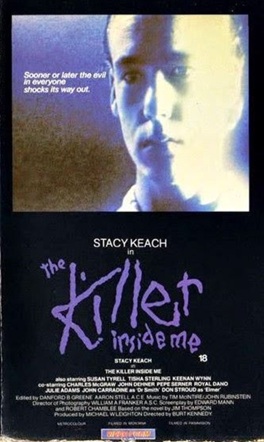
Stacy Keach has always been an underappreciated actor. Despite his obvious talent and his ability to play both heroes and villains, he’s never really gotten the film roles that he’s deserved and he’s mostly made his mark on stage and on television. There have been a few good films that made use of Keach’s talents. I’ve always appreciated his performance as Frank James in Walter Hill’s The Long Riders. He was a morally ambiguous Doc Holliday in Doc. He played a boxer in John Huston’s FatCity. Horror fans will always remember him for RoadGames. The Ninth Configuration featured a rare starring role for Keach but it was treated poorly by its studio. He was chilling as a white supremacist in AmericanHistoryX. For the most part, though, Keach’s film career has been made up of stuff like Class of 1999. For all of his talent, he seems destined to be remembered mostly for playing Mike Hammer in a television series and a few made-for-TV movies. It’s too bad because Keach had the talent to bring certain character to life in a way that few other actors can.
TheKillerInside Me features one of Keach’s best performances. Based on a pulp novel by Jim Thompson, TheKillerInsideMe stars Stacy Keach as Lou Ford. Lou is a small town deputy. Everyone thinks that he’s a good, decent man. He’s dating the local school teacher (Tisha Sterling). The sheriff (John Dehner) trusts him. Lou seems to be an expert at settling conflicts between neighbors. What everyone doesn’t know is that Lou is actually a psycho killer who is having a sado-masochistic affair with a local prostitute (Susan Tyrrell) and who has zero qualms about punching the life out of someone. When Lou finds out that Tyrrell is also involved with the son of a local businessman, it sets Lou on a crime and killing spree. Lou thinks he’s a genius but his main strength is that no one can imagine Lou Ford doing the terrible things that he does.
Burt Kennedy was an outstanding director of westerns and straight-forward action movies but he appears to have struggled with TheKillerInsideMe’s morally ambiguous tone. The end result is not a great film but it does feature a great performance from Stacy Keach. In both his performance and his narration, Keach captures both the arrogance and the detachment from normal society that defines Lou Ford’s character. He also shows how Ford coolly manipulates the people around him. Keach is believable and compelling whether he’s playing the fool or if he’s committing cold-blooded murder and he also subtly shows that Lou is not as smart as he thinks he is. Though Keach dominates the film, TheKillerInsideMe also features good performances from a gallery of 70s character actors, including John Carradine, Keenan Wynn, Don Stroud, Charles McGraw, and Royal Dano.
This version of TheKillerInsideMe didn’t do much at the box office. The movie was remade in 2010, with Casey Affleck miscast as Lou Ford. That version didn’t do much at the box office either. The secret to recreating the book’s mix of social satire and pulp action has proven elusive to filmmakers but at least we’ve got Stacy Keach’s performance as Lou Ford to appreciate.
Happy 71st Birthday to Dennis Quaid. He’s been in a lot of good movies over the years, but I’m quite partial to a movie he made in 1977 called SEPTEMBER 30, 1955. He stars alongside Richard Thomas, Tom Hulce, Susan Tyrrell, Deborah Benson and Lisa Blount. The movie is about a group of friends at the Arkansas State Teachers College, which is my Alma mater the University of Central Arkansas, who deal with the death of James Dean. It’s a good movie that was filmed all around central Arkansas, including my home community of Toad Suck, Arkansas. In the picture above he’s sitting on a “beach” along the Arkansas River in Toad Suck. I’ve been there many times. The movie was written and directed by the talented Arkansan James Bridges, of THE PAPER CHASE and URBAN COWBOY fame. It’s a film well worth searching out. I’ve included the trailer below.
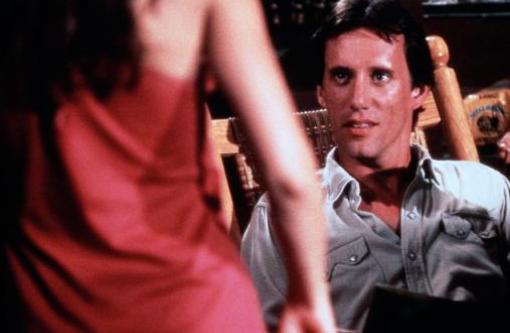
One of the first movies I ever watched starring James Woods is COP. It’s a 1988 action thriller about a police detective on the trail of a serial killer. I really enjoyed the movie, which was directed by James B. Harris. Harris is a producer and director whose various credits include THE KILLING (1956), PATHS OF GLORY (1957), LOLITA (1962) and TELEFON (1977, with Charles Bronson). Harris also directed James Woods in a movie from 1981 called FAST-WALKING.
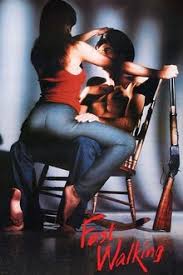
FAST-WALKING is about a prison guard named Frank “Fast-Walking” Minniver. He loves to smoke pot and dream about a future life in a beautiful part of Oregon. In order to make that move, though, he needs to make some money. When a black revolutionary named William Galliot is transferred to his prison, he finds himself with some options, as he receives offers of money from two different sides. On one side is his cousin Wasco, a prison trustee who offers Fast-Walking $25,000 to kill the revolutionary as part of a staged prison race riot. On the other side is Galliot’s own people who offer him a bag of money containing $50,000 if he’ll help Galliot escape. The biggest obstacle to taking the bigger payday is that Wasco threatens to kill Fast-Walking’s lady love Moke, if he doesn’t make the right choice.
The cast is phenomenal in FAST-WALKING beginning with James Woods as the title character. In his best roles, Woods is somewhat morally ambiguous, and we hope he makes the right decisions at the end. This definitely fits that mold. Kay Lenz was sexy as hell as Moke. We’re not supposed to be sure if she’s just using Fast-Walking or if she truly loves him. She plays that balance well. In a surprising turn of events, M. Emmet Walsh gives the most memorable performance of his career, and it doesn’t have a thing to do with his acting. Rather, he does a full frontal nude scene. I’d like to forget this performance, but it’s burned into my psyche at this point. Tim McIntire was the revelation to me, though, as Fast-Walking’s inmate cousin Wasco. This is the only role I really know him from, and he absolutely nails it. The fate of his character is one of the most satisfying parts of the entire film. Unfortunately, McIntire would suffer from drug and alcohol addiction and would pass away a few years after completing his role in FAST-WALKING. I can’t help but think there could have been more great performances if his career would have been longer.
I recommend FAST-WALKING. It’s not a perfect film, but James Woods, Kay Lenz, and Tim McIntire all make it worth watching.
In the future, America is overrun by crime. Mad Dog Burne (Richard Grieco) and his brother, Little Henry (Randy Vasquez) escape from California death row. Mayor Eleanor Grimbaum (Susan Tyrell) wants the Burne brothers captured and she wants to be able to show the voters that she’s tough on crime. When brave police officer Alyssa Lloyd (Nicole Eggert) is killed by Mad Dog Burne’s gang, she is brought back to life in cyborg form by Prof. Crowley (Bruce Abbott) and, after a training montage, she is let loose on the streets as a police-backed vigiliante.
The Demolitionist owes an obvious debt to Robocop, with Nicole Eggert miscast as an expressionless cyborg who launches a one-woman/one-machine war on crime. The main problem is that The Demolitionist has none of Robocop‘s wit or its subversive subtext. Nicole Eggert is no substitute for Peter Weller and Richard Grieco is no Kurtwood Smith. “Booker’s a good cop!” I said whenever Grieco showed up.
The only interesting this is about the cast, which is full of horror veterans. Jack Nance plays the prison priest who counsels the Burne brothers before they escape their scheduled executions. Reggie Bannister plays the warden. Sarah Douglas plays a surgeon. Joseph Pilato is one of Mad Dog’s followers. And playing Mad Dog’s second-in-command is none other than Tom Savini. Finally, the city’s most popular journalist is played by Heather Langenkamp!
The Demolitionist demolishes almost the entire town but she still can’t come up with any way to make this stale Robocop rip-off feel fresh.
Frank Miniver (James Woods) is the prison guard that everyone calls Fast-Walking. He’s involved in almost every vice that a man living in a small town in Oregon can be involved in. He takes bribes. He usually shows up for work stoned and what he doesn’t smoke, he sells to the prisoners and the other guards. He’s got a second job, running a trailer park brothel behind his cousin’s general store.
Frank’s cousin, Wasco (Tim McIntire), has been incarcerated and he expects Frank to help him take over the prison. At first, Frank has no problem working with Wasco and letting his cousin have free reign of the cell block. Wasco has soon established himself as the most powerful man behind bars. When a black power activist named Galliot (Robert Hooks) arrives at the prison, Wasco wants to arrange for him to be assassinated. Meanwhile, Galliot has offered Frank even more money to help him escape from the prison.
While Frank tries to keep both sides happy and make off with some money for himself, he’s also sleeping with Wasco’s accomplice on the outside, Moke (Kay Lenz). Originally, Wasco ordered Moke to seduce Frank in order to keep Frank in line but, as Moke and Frank’s relationship continues, Wasco starts to get jealous and starts plotting to put Frank back in his place.
Fast-Walking is a gritty film that features a good deal of dark humor. Unfortunately, the film’s many different parts never really come together and the film never strikes the right balance between comedy and drama. James Woods is perfectly cast as Frank and the underrated Kay Lenz does wonders with an underwritten role but Tim McIntire is a less than ideal Wasco. McIntire was a good actor but, physically, he’s all wrong for a character who is supposed to be so intimidating that he can walk into a prison and automatically take it over. Wasco is written and played as being such a cartoonish character that it’s difficult to take him or his plots seriously. The movie works best when it’s just focuses of James Woods’s nervy performance and Frank’s attempts to keep the other prison guards (including M. Emmett Walsh) from discovering his own racket.
This is an unexpectedly odd psychological thriller from 1981.
Okay, well, actually, I guess the technical term for this film would be “slasher” because it does feature a dark secret from the past and a series of gruesome murders and some 20-something teenagers getting naked. That said, calling this movie a slasher brings to mind thoughts of Friday the 13th and Halloweenand, as much as I’ve defended those films in the past, it’s hard to compare them to a film like Butcher, Baker, Nightmare Maker. Nor is the film comparable to more giallo-influenced slashers that came out in the late 70s and the early 80s. The identity of the murderer is revealed too early for that.
The murderer is Cheryl Roberts (Susan Tyrrell), who may seem like a perfectly normal suburban widow but who has some bad habits. For instance, when she’s sexually rejected by television repairman Phil Brody (Caskey Swaim), she reacts by grabbing a knife and stabbing him to death in the kitchen. When the police arrive, she says that he attempted to rape her. When it’s later revealed to her that Phil was gay and in a committed relationship with the local high school basketball coach, she snaps that “Homosexuals are very sick people!” Cheryl goes on to murder several more people, all because she views them as a threat to her relationship with her nephew, Billy (Jimmy McNichol).
Billy is a senior in high school. His parents died in a mysterious car crash when he was an infant and he’s been raised by his aunt Cheryl. Billy has an opportunity to go away to college on a basketball scholarship but Cheryl isn’t happy about that. Cheryl never wants Billy to leave and she’s not above drugging his milk to make sure that he has a bad game while the college scouts are watching. Cheryl is also not happy that Billy has a girlfriend, Julia (Julia Duffy). When she finds out that Billy and Julie are sexually active, Cheryl’s response is to trap Julia in the basement.
Aunt Cheryl is not Billy’s only problem. There’s also Detective Joe Carlson (Bo Svenson). Carlson has been assigned to investigate the murder of Phil and he quickly becomes fixated on the fact that Phil was gay and that he was in a relationship with Billy’s coach, Tom Landers (Steve Eastin). Despite all of the evidence that Cheryl’s killing people left and right, Carlson becomes obsessed with proving that Billy’s gay and that he murdered Phil as the result of a love triangle. It quickly becomes clear that Carlson, who brags about his own military service, is incapable of going for more than five minutes without accusing someone of being gay. (Of course, Carlson never says “gay.” Instead, he uses a slur that begins with the letter F and he uses it a lot.)
What sets this film apart from other horror films of the era is that the rampant homophobia is not played for laughs or for shock value. Traditionally, being gay in a 1980s horror film meant that the character was either going to be held up as an object of ridicule or, in many cases, turn out to be the murderer. Instead, in Butcher, Baker, Nightmare Maker, the gay characters are literally the only fully sympathetic people in the entire film. Instead, the film’s villains are homophobes like Carlson, Cheryl, and Eddie (Bill Paxton!), a bully who gives Billy a hard time over his friendship with the coach. As many people as Cheryl kills over the course of the film, the bigger monster is Carlson, who is so determined to indulge his prejudices that he’s blind to everything that’s happening in front of him.
It makes for an unexpectedly thoughtful slasher film. Butcher, Baker, Nightmare Maker has its flaws, to be sure. I wish, for instance, that Julia and Billy weren’t such bland characters. (They’re well-acted but neither is written with much depth.) There’s some pacing issues as well. But overall, this is an unexpectedly good thriller which features two horrifyingly plausible performances from Susan Tyrrell and Bo Svenson.
There are several lessons that can be learned from watching horror films. One that is often overlooked is the importance of staying out of trailer parks. Seriously, I have lost track of how many horror films have taken place within the confines of a trailer park. Once you see someone surrounded by RVs and mobile homes, you know that they’re probably doomed.
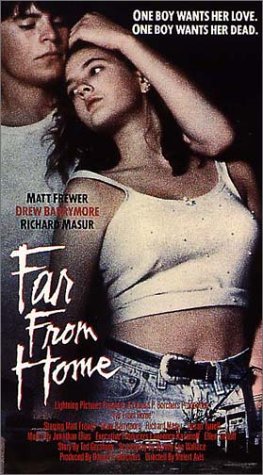
Take 1989’s Far From Home, for instance.
Far From Home is set in perhaps the sleaziest trailer park in America. This place sits in the middle of the Nevada desert and is run by chain-smoking Agnes Reed (Susan Tyrrell), who has a voice like a bullfrog, a daughter (Stephanie Walski) who is obsessed with watching TV and eating fishsticks, and a delinquent teenage son named Jimmy (Andras Jones).
The only law is provided by Sheriff Bill Childers (Dick Miller), who has a squad car but apparently no deputies. Childers is gruff but not that bad of a guy once you get to know him. However, he’s also played by Dick Miller and we all know better than to depend on Dick Miller to maintain the peace.
There’s a gas station nearby. A mellow Vietnam vet named Duckett (Richard Masur) owns it. Duckett is always willing to be helpful but he rarely has any gas. This is one of those small towns where the gas truck apparently only rolls in every two months or so. Still, Duckett’s a nice guy and he’s full of stories about how the government used to do atomic bomb tests in the surrounding desert.
(The scenes where Duckett drives around the desert feel somewhat out of place but they’re still enjoyable, due to Masur’s eccentric performance.)
Living in the trailer park, there’s a lot of odd people. Some of them are permanent residents while some of them are just temporarily stranded. 14 year-old Pinky (Anthony Rapp, who would go on to appear in Dazed and Confused and Rent) lives with his mother and is a permanent resident. His mother is rarely seen, though occasionally she can be glimpsed through a window, propped up in front of the TV. Pinky says that, when he was a kid, he and Jimmy were best friends. But now, Jimmy and Pinky are enemies.
And then there’s Amy (Jennifer Tilly) and Louise (Karen Austin), who are just waiting for enough gas to come in to be able to get Amy’s car to start running again. Louise is intelligent and responsible. Amy is flighty and undependable. As soon as one of them accidentally pulls the handle off the driver’s side door, you just know one of them is going to end up getting trapped in that car at a bad moment.
When Far From Home opens, two newcomers have moved into the trailer park. Writer, divorced father, and self-described “former angry young man” Charlie Cox (Matt Frewer) has just spent a month with his 13 year-old daughter, Joleen (Drew Barrymore, who was 14 when she made Far From Home). It hasn’t exactly been a great vacation and it doesn’t get any better when Charlie’s car runs out of gas. Joleen is about to turn fourteen and she doesn’t want to spend her birthday in a crummy trailer park with her incredibly dorky dad.
However, both Jimmy and Pinky are happy that Joleen will be spending at least a day or two at the trailer park. At first, Joleen crushes on Jimmy and then, after Jimmy reveals himself to be aggressive and unstable, she crushes on Pinky, who protects her from Jimmy. One of the two boys is so obsessed with Joleen that he is willing to commit murder to keep her from leaving the trailer park. But which one?
(It’s actually pretty obvious but you probably already guessed that.)
Far From Home is a film about which I have mixed feelings. On the one hand, the movie’s totally predictable. Characters do dumb things for no real reason beyond needing to move the plot forward. Charlie’s parenting abilities change drastically from scene to scene. A traumatized character goes from catatonic to recovered to catatonic again with no real explanation.
One of my main issues with the film is that there’s no real surprise about who the killer turns out to be. Even worse, once the killer’s identity is revealed, the killer suddenly turns into one of those psychos who can come up with a dozen one-liners while trying to kill someone. I mean, seriously, who does that? Are movie psychos required to take a year’s worth of improv clubs and do an apprenticeship with the Upright Citizens Brigade before they’re allowed to pick up a knife? If I was the type to commit murder (and I’m not but let’s just say that I was), I would be too busy trying to make sure everyone was dead to be witty. I’d save the jokes until I was safely on a beach somewhere, drinking pink lemonade and keeping an eye out for Ben Gardner’s boat. That’s just me, I guess.
And yet, there’s a part of me that really likes this stupid, stupid movie. It’s a surprisingly well-directed film, full of artfully composed shots. The trailer park really does take on a life of its own and the film also makes good use of a nearby abandoned apartment building. It’s a great location and, occasionally, it lends the film a dash of surrealism. (Of course, I guess you could legitimately ask who would build an apartment complex in the middle of the desert, especially one that’s still humming with radiation from the Atomic bomb tests, but let’s not.) Richard Masur, Dick Miller, and Susan Tyrrell all give good performances. For that matter, the same is true of Anthony Rapp and Andras Jones. Neither Rapp nor Jones are to blame for the fact that they were let down by a weak script.
Though I doubt either one of them would describe Far From Home as being their proudest cinematic achievement, Matt Frewer and Drew Barrymore are totally believable as father and daughter. In the end, that’s why I like this movie. Whenever I’ve watched Far From Home, I’ve always been able to relate to Joleen. When I was thirteen, I basically was Joleen.
Fortunately, though, I was never found myself stranded in a trailer park full of homicidal maniacs.
With the Trancers series done, I’ve decided to move onto the Angel series. I honestly had no idea what I was in for here. The box art appears to have a 12 year-old on the cover once as “High School Honor Student by day,” and then “Hollywood Hooker by night.” The DVD has the first three films on it. I’m quite sure that the girl on the cover is neither Donna Wilkes, Betsy Russell, or Mitzi Kapture.
Anyways, as I watched it, I knew this movie reminded me of a film I saw late last year. It took me some time because this movie is so subtle about it. Then it came to me. That movie of course being Crackdown Mission (1988).
Crackdown Mission (1988, dir. Godfrey Ho)
Why not? Might as well have been. That’s the Godfrey Ho movie where he spliced Pierre Kirby into the Taiwanese film Girl with a Gun (1982).
Girl with a Gun (1982, dir. Yao-Chi Chen)
Girl with a Gun was a Taiwanese remake of Ms. 45 (1981).
Ms. 45 (1981, dir. Abel Ferrara)
Ms. 45 being Abel Ferrara’s reworking of Death Wish (1974).
Death Wish (1974, dir. Michael Winner)
Death Wish arguably getting the pivotal opening rape from A Clockwork Orange (1971).
A Clockwork Orange (1971, dir. Stanley Kubrick)
You can go on and on with this. There’s also Rape Squad (1974), Fighting Back (1982), the Death Wish sequels, and so many more of these things. Heck, Death Wish even got a porno version called Sex Wish (1976). We even got the kiddie version, as I recall, of this same thing one year after Angel with The Legend of Billie Jean (1985).
If I got Gary on the line, he could probably take me back even further with movies like Something Wild (1961) or other films I don’t recall. Don’t need to though because this movie takes you back about as far as you can go anyways.
The movie opens up and we meet our lead character Angel, played by Donna Wilkes–and what the hell is that?
I would say that Donna Wilkes playing a 15 year-old at the age of 23 was a product of sleazy 80s movies, but I’d be lying through my teeth because of this.
The Poor Little Rich Girl (1917, dir. Maurice Tourneur)
Mary Pickford was 24 when she played the role of a little girl.
As for the child prostitute bit, let’s get that out of the way too because it goes back almost as far as well.
Baby Face (1933, dir. Alfred E. Green)
That’s the scene where we find out her father has been pimping her out since she was 14 years old. Barbara Stanwyck was 25 when she did Baby Face.
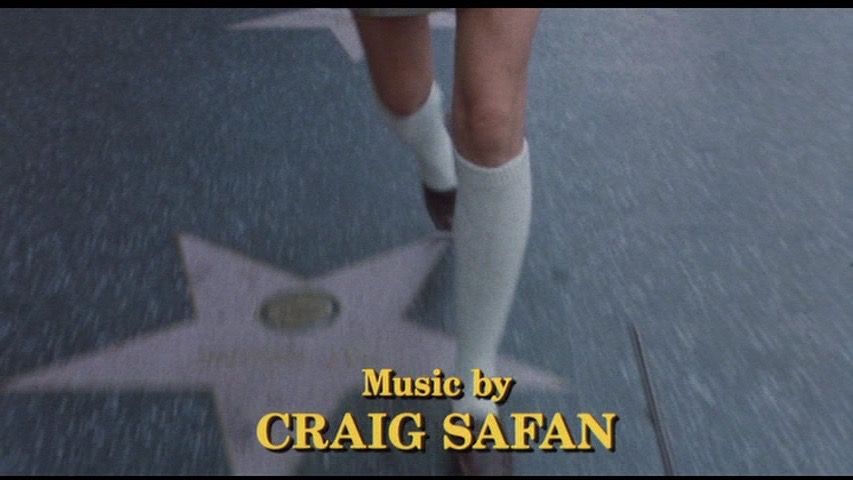
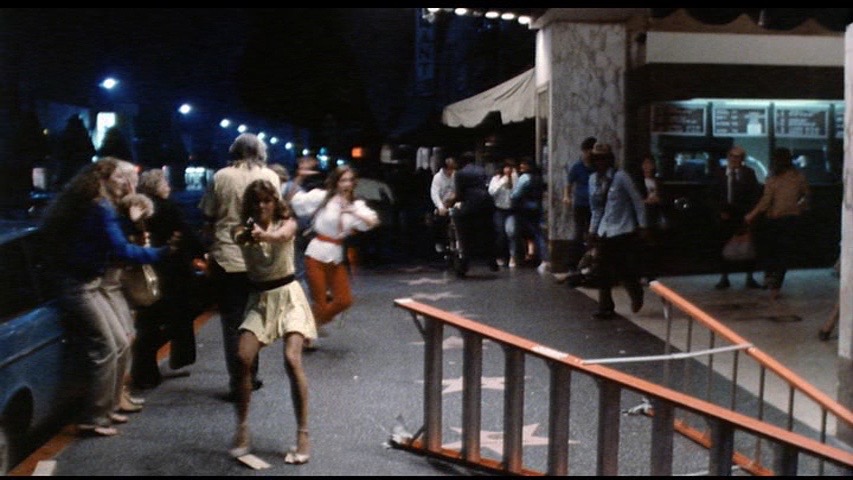
After seeing Angel come out of where she lives, we see her walk part of the Hollywood Walk of Fame.
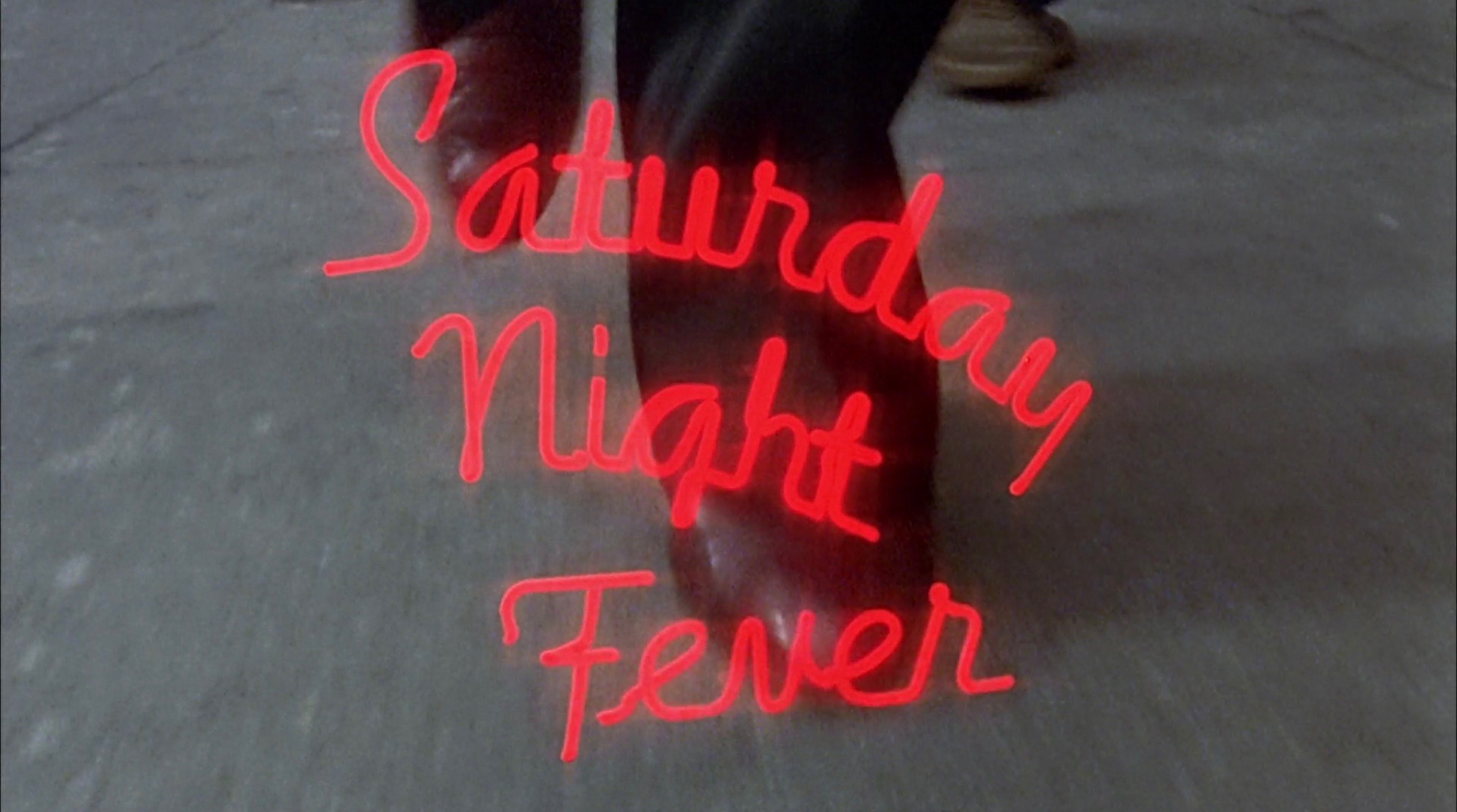
Along with these shots of her feet, we also see her say hi to some people cleaning Rex Allen’s star, fix her hair in a window, and then board a school bus. The music plays sad and tragic. It’s hardly upbeat, but was this meant to be a Saturday Night Fever reference? As I recall, Tony Manero is a similar character to Angel.
Saturday Night Fever (1977, dir. John Badham)
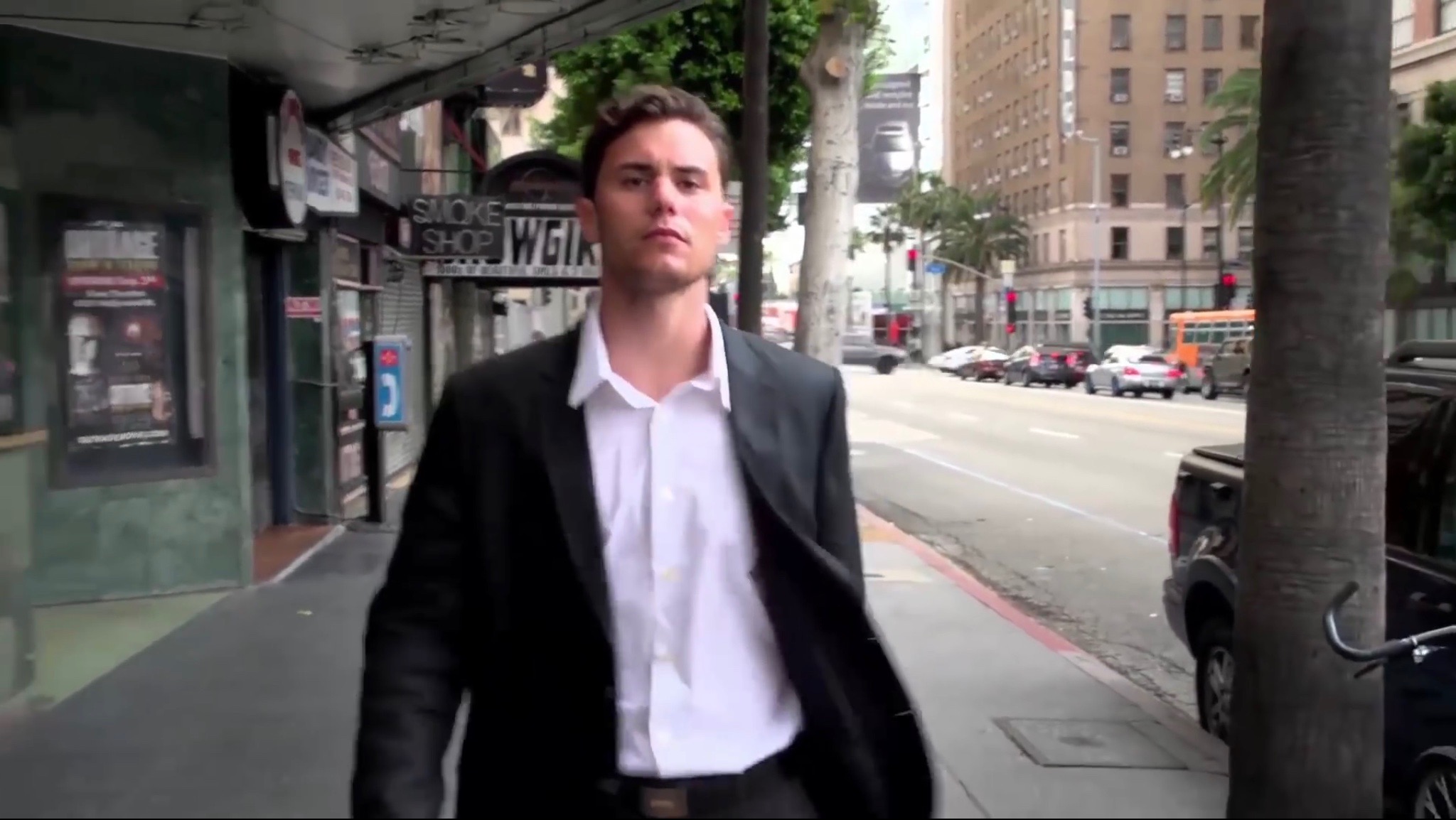
I would say that I wasn’t really sure, but considering the opening walk in Birdemic 2 was intended to be a Saturday Night Fever reference,…
Birdemic 2: The Resurrection (2013, dir. James Nguyen)
then I think I am safe saying it is a reference to that movie.
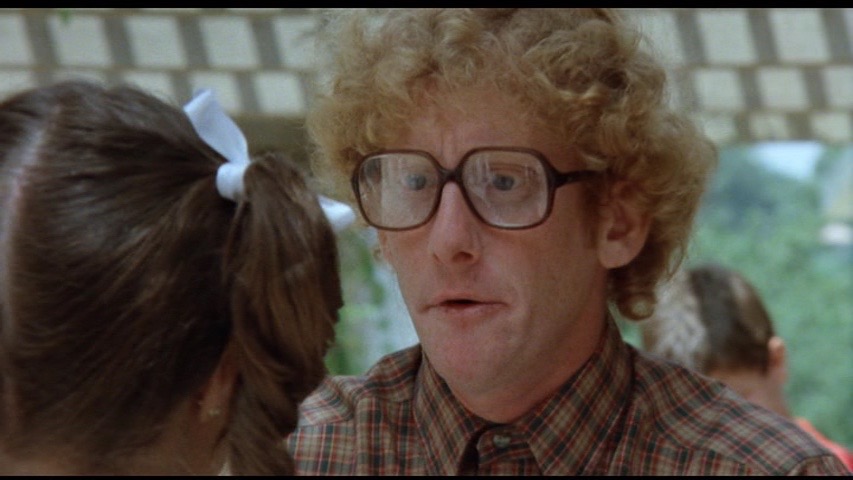
After getting her homework assignment, we meet this guy…
who looks like he got lost on his way to the Revenge of the Nerds (1984) set. He is here to make it clear that Angel is more mature than her age, but that she is keeping up the illusion that she is still very much a little girl. He tries to ask her out, but she turns him down saying her mother doesn’t like her dating. Now without any time wasted, we cut to home, she dolls up, and we’re out to the streets within the first 8 minutes of the movie.
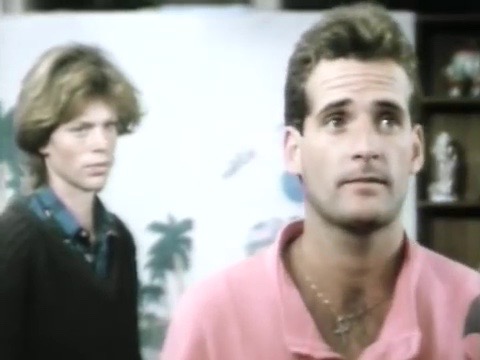
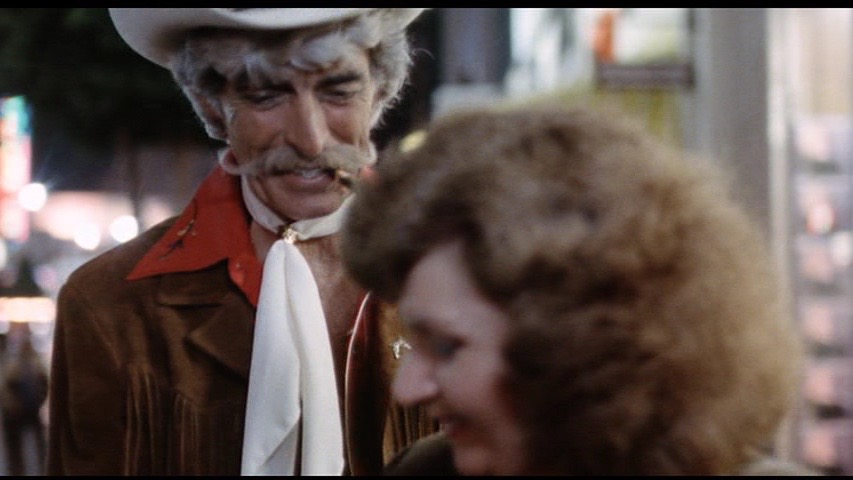
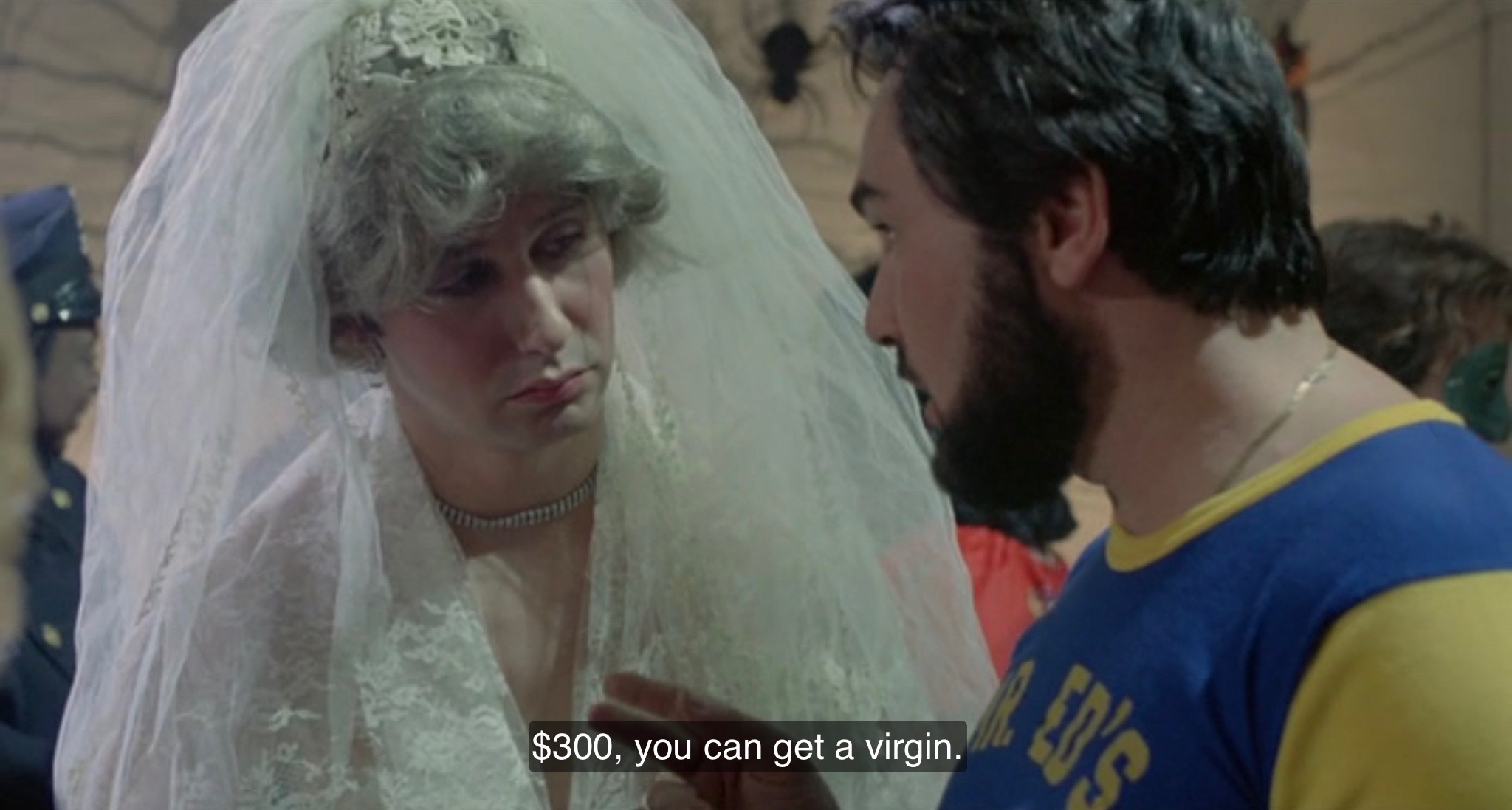
We immediately meet Kit Carson played by Rory Calhoun probably because Bill Williams, who played Kit Carson on TV, had stopped acting in 1981 after making Night of the Zombies (1981) and Goldie and the Boxer Go to Hollywood (1981). Given the titles, and that they starred porn star Jamie Gillis and O.J. Simpson respectively, I’m sure Bill would have done this movie if he could have. Rory Calhoun will be our reference to silent era cowboys for the movie. In particular, Tom Mix. Yes, he brings up Tom Mix so we are sure to get the reference. He also wears the white hat.
You got this so far? Donna Wilkes is Mary Pickford and Rory Calhoun is Tom Mix. Who’s next?
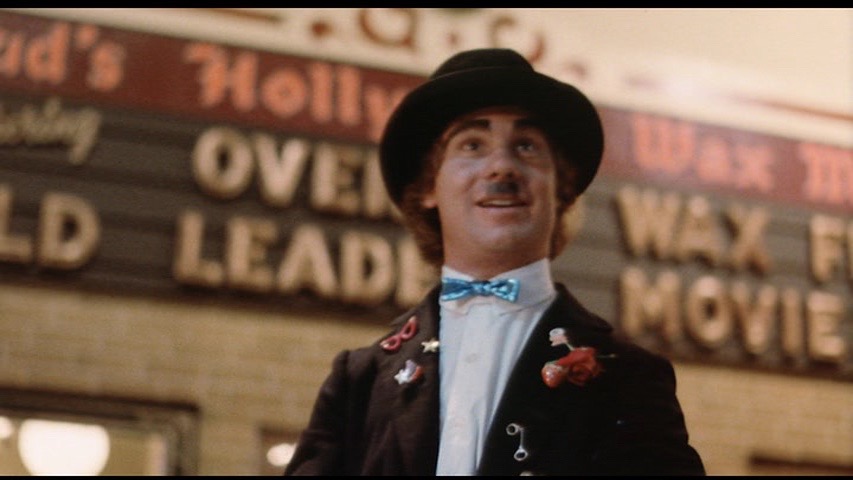
Charlie Chaplin of course!
I believe the movie wants these portions of the film to blur the lines between people peddling sex, and other people peddling Old Hollywood nostalgia. All of this going on while walking on stars for people who are dead, long forgotten, live far from this seedy place, or are going out on sad ends to their careers in their old age.
We see a variety of other colorful characters too. The movie makes sure we hear Kit tell the cops that he has fake bullets in his guns for foreshadowing purposes. A guy who looks like Jim Varney tries to hit on her. Then after turning down one guy, we see Angel riding with a much older guy. However, she sees right through him and figures out he’s a cop. That’s when we meet the another main character of the film named Mae played by Dick Shawn. How are we introduced to him?
He tells Angel not to let “fatso go yet”, sticks his head in the window, and tells him, “Why don’t you go home now and spank your monkey numb nuts!” That way know right off the bat that he is very protective of Angel.
Next we are introduced to Lt. Andrews…
played by none other than Cliff Gorman. Emory from The Boys in the Band (1970).
The Boys in the Band (1970, dir. William Friedkin)
It’s no coincidence that they introduce Mae back to back with Lt. Andrews seeing as Mae and Emory are similar characters.
You want to hear something really odd? Maud Adams’ first role listed on IMDb is an uncredited appearance in The Boys in the Band.
The Boys in the Band (1970, dir. William Friedkin)
The odd part is that Maud Adams is the villain in the third Angel movie.
Angel III: The Final Chapter (1988, dir. Tom DeSimone)
There’s one more connection here that’s worth mentioning. One of the movies Dick Shawn did in between It’s a Mad, Mad, Mad, Mad World (1963) and Penelope (1966) was a film called A Very Special Favor (1965). A Very Special Favor starring who else but Rock Hudson. The Rock Hudson movie where he actually says this.
A Very Special Favor (1965, dir. Michael Gordon)
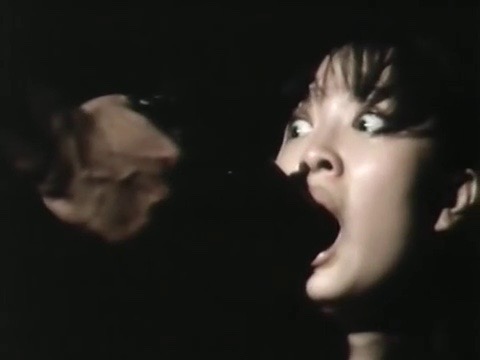
Andrews is here to tell us about a killer on the loose who is murdering hookers. He gives us some info about him like he’s probably bisexual, a necrophiliac, and other things. Honestly, that stuff will barely play into this movie at all. It certainly won’t add anything material to the film. Now we cut to said killer played by John Diehl.
Most people probably remember him from Miami Vice. I’ve never watched the show though. I know, tsk tsk to me. He plays every serial killer from every 80s and early 90s movie ever made that had such a character in it. I’ll show you just how much of a stereotype he is later on. You’d think Mae was the major stereotype of the film, but it’s the killer.
Now we get a tender moment between Chaplin, who is called Yo-Yo Charlie (Steven M. Porter), and the soon to be dead hooker named Crystal (Donna McDaniel). According to IMDb, Yo-Yo Charlie will make a return in the sequel. That’s not good. Anyways, he gives her a spinning top, she is soon picked up literally and figuratively by the killer, and then stabbed in the back. I actually like what they did here. In any other movie her death would have started the film to be the opening kill, which also would have established there’s a killer on the loose. Here her death has meaning, still kicks off the plot, and foreshadows a much more important death later in the film that bookends this opening kill. We also have warmed up to her in the short time we have known her so the silent stab in the back actually has some bite and we feel for Charlie when he finds out she’s dead. It helps to set a different tone for the movie than a slasher film.
Then we see the killer with her body.
That will be the last time you see any reference to the necrophilia thing. It’s one of those things in here that makes me feel the movie was rushed because it will suddenly have amnesia about something that seems like it would be pretty important.
Then we cut back to the streets so we can hear Rory Calhoun drop some more names. He mentions Ken Maynard, Buck Jones, and I believe he is about to say William S. Hart when Angel sticks her finger in his back so I can make a reference to Field of Dreams (1989).
Field of Dreams (1989, dir. Phil Alden Robinson)
Field of Dreams (1989, dir. Phil Alden Robinson)
We have one final major character to be introduced to at this point. That’s why Mae and Angel go back to where they live so we can meet the landlord named Solly played by Susan Tyrrell. Mae accuses her of making the movie Truth (2015), but…
it turns out she is simply doing foreshadowing by numbers. She calls it Fruit With Gun. Mae calls it “shit.” Solly also has a gun about half the size of Angel for later plot convenience.
Now we get a couple of short scenes of Angel at home to start to reveal her background that will explain why her mother and father aren’t around. It’s also there so that we know that both Angel and the killer have troubled backgrounds when it comes to their parents. Except they have dealt with it in completely different ways, but ways that have both lead them to the streets. That’s when we get this scene.
Yep, he makes out with an egg while a creepy picture of him and his mother hangs in the background till he crushes the egg, then kisses the picture. This movie came out in 1984. By 1986 they were already making fun of this exact kind of character.
Ruthless People (1986, dir. Jim Abrahams, David Zucker, & Jerry Zucker)
Ruthless People (1986, dir. Jim Abrahams, David Zucker, & Jerry Zucker)
Ruthless People (1986, dir. Jim Abrahams, David Zucker, & Jerry Zucker)
Ruthless People (1986, dir. Jim Abrahams, David Zucker, & Jerry Zucker)
Might as well be the Bedroom Killer from Ruthless People (1986).
At this point we are about 25 minutes into the movie so it’s like it all of a sudden wakes up and remembers she’s supposed to be a high school student so we better cut back there now. Sometimes there’s an actual reason, and other times it is just there to work naked ladies into the movie because they could have done the scene without having them there. This time around we meet Ric who will be our Biff Tannen for the movie except with little to no plot significance.
You might recognize actor David Underwood if you owned a Sega CD back in the day.
Sewer Shark (1992, dir. John Dykstra)
It’s a shame he didn’t overact this part like he did Ghost in Sewer Shark.
We also meet Patricia Allen played by Elaine Giftos who works for Angel’s school.
She’s here so that the film will have a way of having Angel’s secret about not having her parents around anymore come out and give the last kill an extra punch to the stomach. Throughout this movie I kept thinking I had seen her in something else. Apparently that place was a single episode of Magnum P.I.
Magnum P.I.
I’m not sure what that says about me other than I must like that show more than I thought I did.
Now we finally come around so that our characters can discover the hooker from the beginning has been murdered. Charlie is quite broken up about it. He’s even holding the top he gave her, which is now covered in blood. Mae, Angel, and Kit have a run in with Andrews about their friend being murdered. But with no wasted time at all, we are reintroduced to another unimportant hooker friend from the beginning who runs right over to the killer and leaves with him. In short order she’s dead.
We see Angel arrive with a client who has a Quebec license plate?
Your guess is as good as mine about that one. He finds the dead hooker, then Angel finds her too. The movie cuts to the killer bare ass naked scrubbing himself. The scene seems to go on forever. You’d think this is some sort of I need to wash myself clean thing, but just like the necrophilia bit, it doesn’t amount to anything. At times it feels like there was originally a script for this movie that didn’t include his character because he almost feels like an afterthought. That, or there was a script that did have more for his character, but was cut so this film would only get an R rating.
Now we get one of several scenes in this movie that seem to only exist to remind us that Cliff Gorman, Dick Shawn, Rory Calhoun, and Susan Tyrrell are good actors. Say what you will about the movie, Donna Wlikes, and the fact that Lisa hasn’t reviewed her comeback film 90210 Shark Attack (2014), but they surrounded her with quality.
After Angel gets harassed by Sewer Shark, we cut to the locker room to see cheerleaders getting dressed. It’s weird because it suddenly feels like you’ve slipped out of Angel and into Debbie Does Dallas (1978).
We get a scene of our killer at a porno theater to remind us that Taxi Driver (1976) exists. Would have made my day if he were watching Bat Pussy (1973). He’s arrested and brought in for a lineup so that he can break free to nearly kill Angel and Andrews. This is when the movie gets on the fast track to its conclusion. This is only at about the halfway point, but the remainder of the film will be everything unraveling till Angel is pushed past the tipping point and decides to go Ms. 45 on the streets to get the killer.
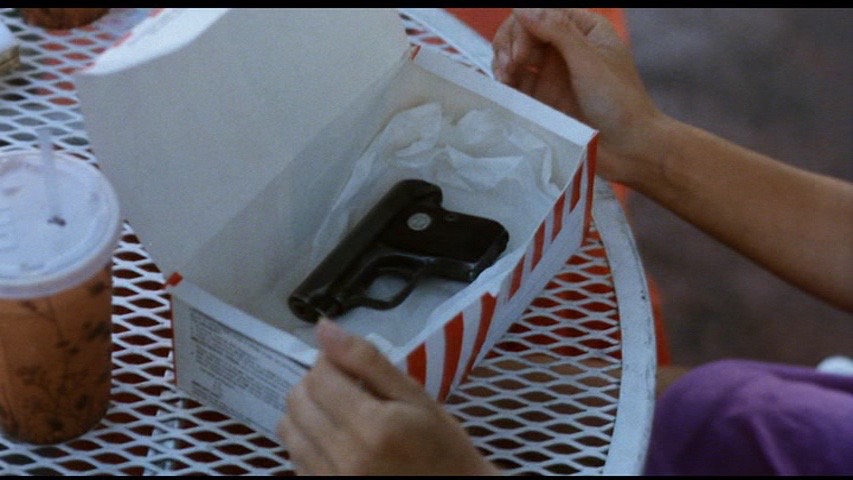
After we find out that Angel has been on the street since she was 12, the next important scene is between Mae and Angel. Angel buys a gun…
so that we can then see her visit a church and nearly drop it in the “Offerings” box. She comes close, but puts some money into it instead. Then empowering music plays as we get a long shot of her walking from the back to the front of the church.
Angel pays a visit to Kit’s place now. Not really so we can see her get a shooting lesson, but so that we can setup the ending by making us aware that Kit does indeed know how to shoot. He carries fake bullets when he works the streets, but the guns are real.
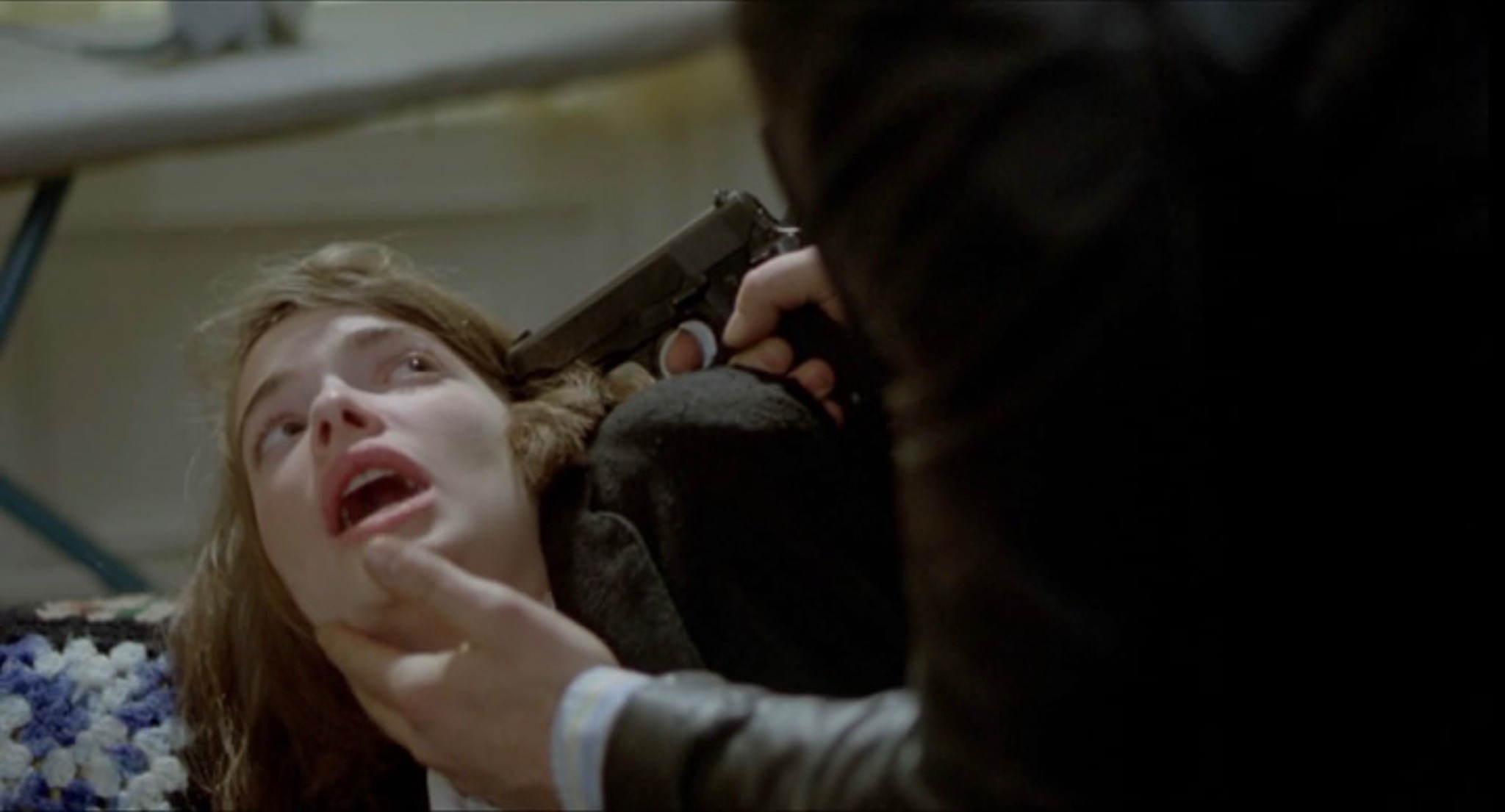
Now Angel gets kidnapped by Sewer Shark and his gang just so that we know that she not only has the gun and has been shown how to use that gun, but is willing to fire it if necessary. It’s a minor scene that doesn’t have much importance to the film in the end. Unlike the next scene when it cuts to naked women in the locker room showering. Actually this scene does serve a purpose beyond naked women. It’s there so that we can overhear that Sewer Shark has spread rumors about her, which ultimately leads Patricia to find Angel’s gun. To toss an extra cherry on top of her trauma, the Andy Dick looking guy from earlier actually tries to buy her services. It’s all enough that she now goes to Andrews to talk to him about what’s going on.
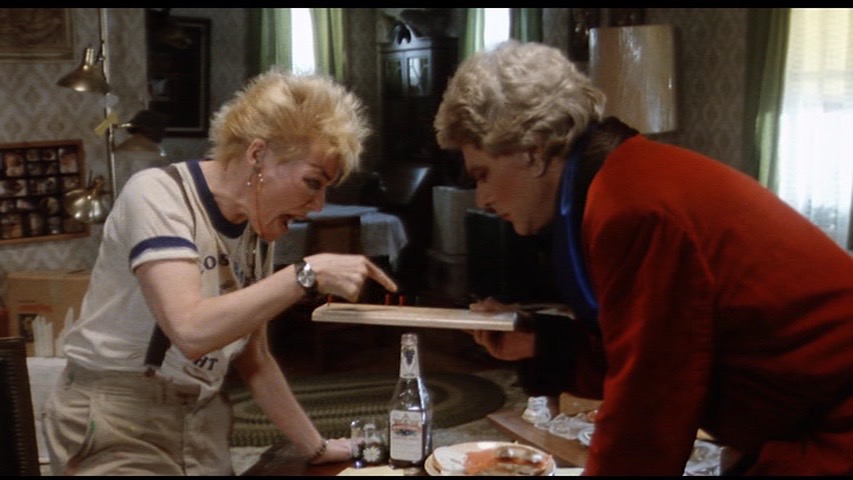
Now the film loops us back to the death of Crystal. It starts with Mae and Solly arguing over a game of cribbage like an old married couple. They are funny in this scene. Just like I could go for a TV Show made up of Bea Arthur tending bar from The Star Wars Holiday Special, I could also go for a whole movie with these two.
This scene is the equivalent of Charlie giving the girl his spinning top. We also get a scene where Mae tries to cover for Angel when Patricia comes to visit by pretending to be her mother. That works about as well as trying to convince the killer who now comes for Mae that it matters that he is a guy.
Look familiar?
Ms. 45 (1981, dir. Abel Ferrara)
Ms. 45 (1981, dir. Abel Ferrara)
They both die, but the difference is that they stuck in the conversation with Patricia here to remind us that Mae doesn’t deserve this whereas Ms. 45 edges in this one-sided conversation…
Ms. 45 (1981, dir. Abel Ferrara)
so that we know it’s okay that he was shot and killed. That’s most likely why we first met Mae looking like that guy in this movie.
You could even make an argument that the character of Mae and the casting of Cliff Gorman is the LGBTIQ response to that final scene where she guns down the man dressed as a woman, then adds on that she is shocked when a genetic girl (a betrayer of the cause?) stabs her in the back. This movie even won Best Feature at the San Francisco International Lesbian & Gay Film Festival so it’s not reaching too much on my part.
This is the last straw for Angel. She takes Solly’s giant gun to the streets in order to chase down the killer. They do it complete with repeating the opening scene, except with her walking us following her from behind, at night, in her night clothes, and armed.
Her already fractured innocence now gone.
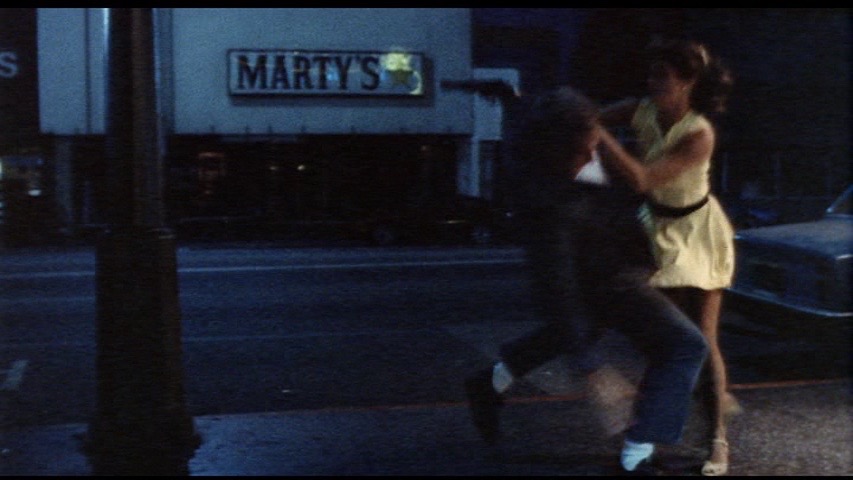
He probably would have gotten away hiding amongst the Hare Krishnas, but he comes out and tries to attack her with his knife. All the while, Andrews chasing after both of them along with Kit. There is a goof during this chase. She shoots at him here.
However, when they cut to this shot, she appears to have teleported away.
Then they cut back there to show she is indeed still around.
This is one of those parts where the film again reminds you it was probably made quickly.
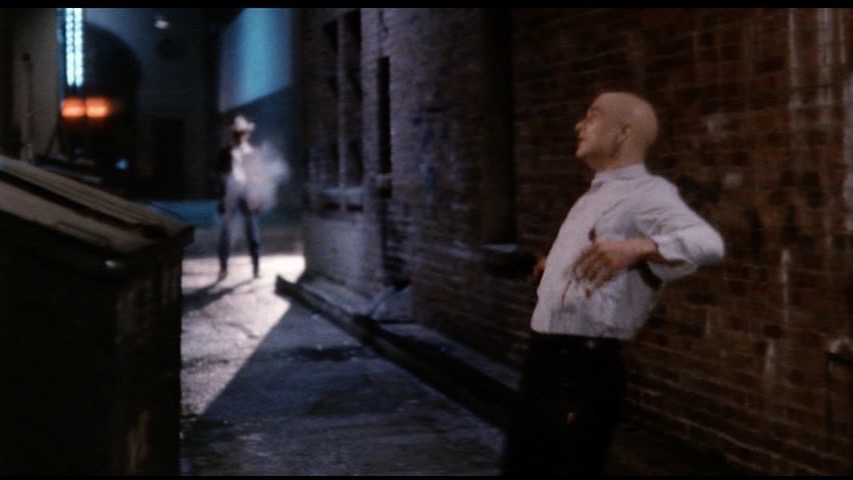
Seeing as it is the 80s, there is always a secluded alleyway or parking lot for the movie to go. We see Kit shot down before Andrews comes in to take shots at the bad guy and check on Kit. Kit tells him to go after Angel. The chase continues into another alleyway where the film comes its conclusion. Andrews calls to Angel, but she ignores him. The killer grabs Angel and shoots Andrews in the arm. She breaks free, causing Andrews to cover her to take any bullets, but doesn’t have to because Kit rises to the occasion to save both of them.
That’s when the movie essentially has its version of the ending of Targets (1968). Kit and Andrews look at him perplexed as the killer dies saying “It hurts. It hurts.”
With the plot finished, and a cowboy in the picture, they walk off into the not sunset of a neon lit alleyway end.
That’s the first Angel movie. Apparently, Ross Hagen was in here somewhere as “Urban Cowboy.” I have no idea where he was in this film.
The movie as a whole isn’t too bad. They certainly knew what they were doing when they picked the references, the shots they used, the casting, and surprisingly good main song for the movie. I also love the street life shots. I’m a sucker for movies that do that. I also liked the way they juxtaposed innocence in Angel with those who have lost theres to one degree or another while having Angel’s character make that journey herself walking down the Walk of Fame as a schoolgirl to a hooker with a gun. It seems that now days when I write one of these long looks at movies that probably don’t deserve this kind of attention, I either find they are much worse than I thought like Trancers 6 or much better than I thought like with this movie.
It is very much a movie of its time. The world had just come out of two decades of turmoil and was suddenly thrown into one that seemed to want to pretend the previous twenty years didn’t happen. It was also a time when you had a new breed of youth still co-existing with people who were from a time very far removed from the 80s as represented by Kit. To give you an example, Lillian Gish who was born in 1893, was not only alive when this came out, but made two more movies after it before dying in 1993. Mary Pickford had only died 3 years prior to this in 1979. Charlie Chaplin died 7 years prior in 1977.
Movies too had strayed for two decades into cinema the likes of which hadn’t been seen in the United States since movies like Baby Face an other pre-codes of the early 30s. However, after The Godfather and Star Wars films were so successful, the studios returned to the kind of films they made prior to the lifting of the production code. The difference being that they were no longer bound by such a code, but by the purse strings of whoever was funding the picture. That, and on occasion the clout of people working on the film, such as a directors like Tarantino.
Overall, I’d recommend seeing Angel. Especially as a counterpart to Ms. 45 (1981). Just fair warning again, it will feel rushed at times. I have a feeling that, just as with Trancers, this series will drop to watchable next, dreadful with the third film, and unbelievably bad with the fourth film which my “Angel Collection” triple feature doesn’t even acknowledge exists.
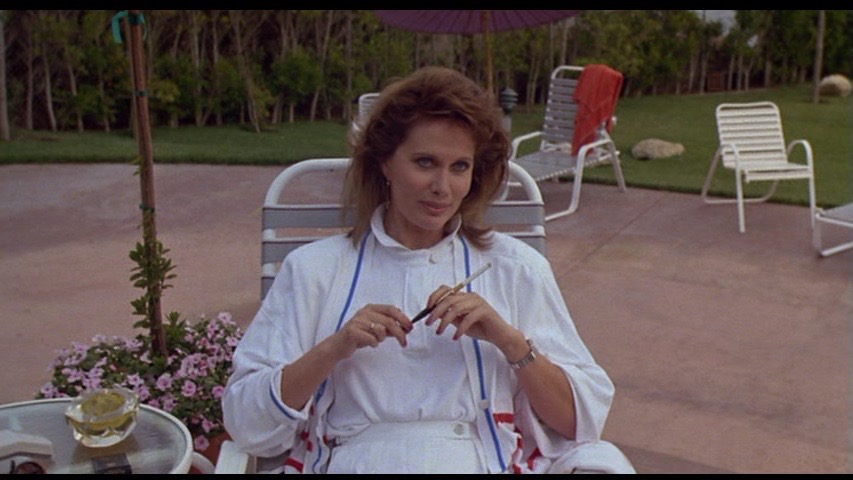
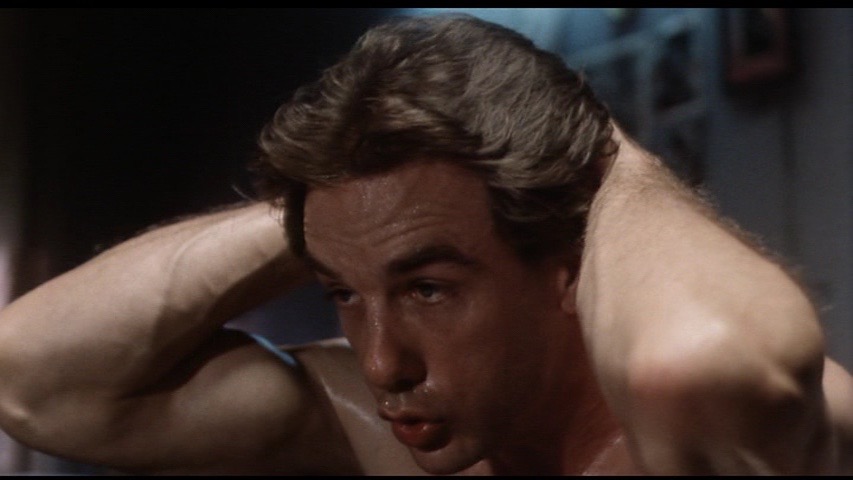
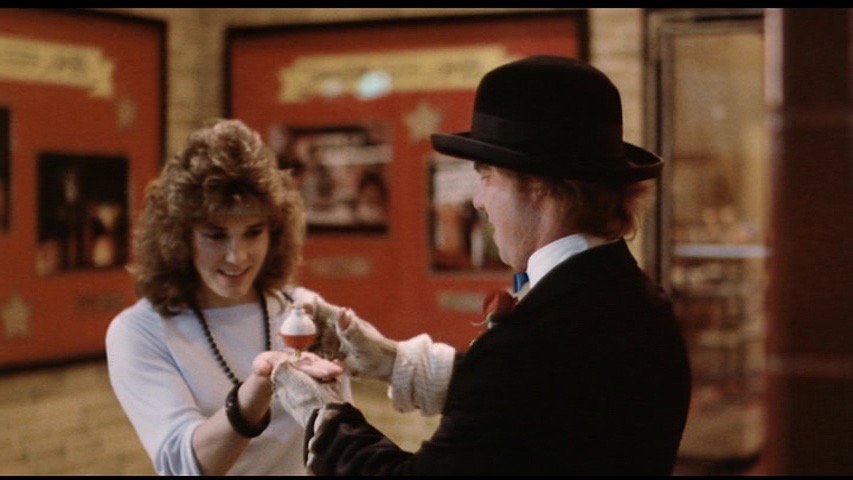
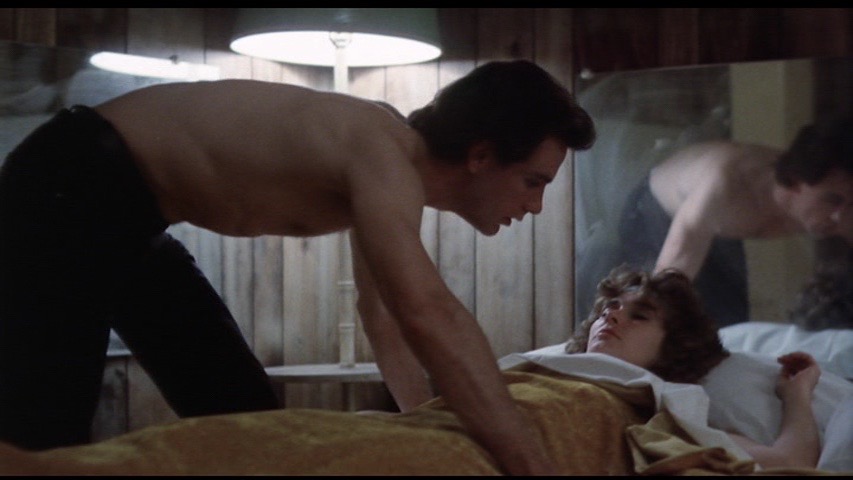
 Today is Stacy Keach’s 84th birthday.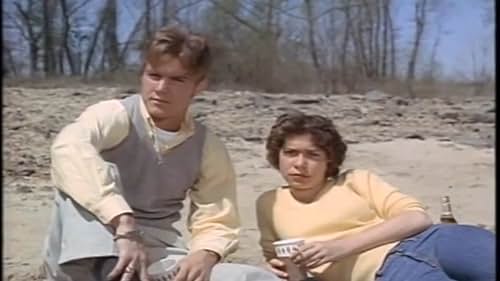

















 Through the Shattered Lens