Sundance Film Review: Old Enough (dir by Marisa Silver)


(As I sit here writing this, the Sundance Film Festival is currently in full swing in Utah.  Starting last Thursday with Blood Simple, I have been reviewing films that originally made a splash at Sundance.)

As I mentioned in my review of Circle of Power, the Sundance Film Festival was not always the Sundance Film Festival.  For the first few years of its existence, it was known as the US Film Festival.  It wasn’t until 1984 that the US Film Festival became the Sundance Film Festival.  (And let’s be honest — as far as names go, Sundance is a huge improvement over its generic predecessor.)  That year, the inaugural Sundance Grand Jury Prize was awarded to a coming-of-age story called Old Enough.

Old Enough is a New York movie, one that follows Lonnie (Sarah Boyd) and Karen (Rainbow Harvest) over one eventful summer.  Lonnie is 12 years old.  She lives in a nice apartment and she attends an exclusive private school.  She has a close relationship with her mother (Susan Kingsley) while her father is a stuffy snob.  From the minute that Lonnie first sees Karen, she wants to be her best friend.  Karen is a year or two older and her family is definitely not rich.  Karen is uninhibited and, on the outside at least, totally confident.  Lonnie is envious of Karen’s freedom.  Karen is envious of Lonnie’s stability.  From that, an unlikely friendship is born.

At first, the film focuses on how much Lonnie looks up to Karen.  Karen wears makeup so Lonnie starts to wear makeup.  Karen is Catholic so Lonnie decides to be Catholic as well.  Karen shoplifts so Lonnie gives it a try.  Karen tries to dress like Lonnie and she even tries to navigate the streets of New York with the same confidence.  It’s only later in the film, when Lonnie attempts to introduce Karen to her friends from school, that it becomes clear that Karen is as out of place in Lonnie’s world as Lonnie is in Karen’s.

The film is at its best when it concentrates on the friendship between Karen and Lonnie.  There’s a wonderful scene where Karen and Lonnie go up to the roof of Karen’s apartment building and take in the beautiful view of New York City at night.  It’s a scene that perfectly captures what it’s like to be young and to know that there’s an amazing world out there, waiting for you to discover it.  And then there’s an extended shoplifting scene, one that I absolutely loved even if it did bring back enough memories to make me cringe just a bit.

Old Enough struggles during it second half, when the focus shifts from Karen and Lonnie’s friendship to Lonnie’s crush on Karen’s older brother, Johnny (Neil Barry).  Johnny, however, is obsessed with the new neighbor (Roxanne Hart), who may be having an affair with Karen’s father (Danny Aiello).  Those scenes feel a bit forced, as if Robert McKee suddenly popped up and said, “Time for Act III!”

No, the heart of the film is in Karen and Lonnie’s friendship.  Both Sarah Boyd and Rainbow Harvest gave very naturalistic and believable performances as the two unlikely friends.  By the end of the movie, you’re happy they got to spend a summer together even though you know they probably won’t still be friends in another five years.  It’s a sweet movie, one that provides a very realistic portrait of growing up.

If you’ve never heard of Old Enough, you’re not alone.  Until I started doing research for these reviews, I had never heard of it, either.  Some times good movies are forgotten.  That’s why it’s important to always keep looking.

As of this writing, Old Enough can be viewed on YouTube.

Previous Sundance Film Reviews:

  1. Blood Simple
  2. I Don’t Feel At Home In This World Anymore
  3. Circle of Power

Sundance Film Review: Circle of Power (dir by Bobby Roth)


With the Sundance Film festival currently taking place in Utah, I am currently reviewing films that originally made a splash at the Sundance Film Festival!

(a.k.a. Circle of Power, Mystique, Naked Weekend, and probably a handful of other titles)

The Sundance Film Festival wasn’t always the Sundance Film Festival.

Up until 1984, it was known as the US Film Festival.  Because of the involvement of Robert Redford, it was something of a big deal but still nowhere as big a deal as it is today.  In fact, many of the films that were showcased and celebrated at the US Film Festival have slipped into obscurity.  While winning an award at the US Film Festival may have been nice a ego boost for an independent filmmaker, it certainly didn’t bring a film anywhere near the amount of attention that winning at Sundance does now.

Take the long and strange saga of Circle of Power, for instance.

From my own research, it appears that Circle of Power was originally filmed in 1980.  At that time, it was called Mystique.  It premiered at the Chicago International Film Festival in 1981.  A year later, under the title Circle of Power, it played at the US Film Festival.  It was awarded the Dramatic prize (which was the forerunner for Sundance’s Grand Jury Prize).

After that, it still took Circle of Power two years to achieve national distribution.  In 1984, when it was reviewed by Roger Ebert, the film had been released as Naked Weekend, a title that was as commercial as it was misleading.  (There is nudity in the film but probably not the type of nudity that Naked Weekend‘s audience was expecting.)  By the time the film was finally released on VHS, it had picked up yet another title: Brainwash.

That’s the poster for Brainwash at the top of this video.  There are two images on that poster.  One is of a woman holding a riding crop and showing off her bra.  The other is of a naked man in a cage.  Only the latter image actually appears in the movie.

The film’s distributors were obviously trying to sell Circle of Power as an exploitation film.  Actually, it’s not.  It’s … well, it’s hard to describe what exactly it is.  It starts out with a title card, informing us that what we’re about to see is based on a true story.  The rest of the film deals with a group of executives and their wives who are required to spend the weekend attending a “training course” at a beautiful hotel.  The weekend gets off to a good start, with lots of dancing and laughing.  Of course, none of the executives seem to notice that the hotel staff is watching them with a mix of scorn and pity.

(The film continually contrasts the privileged white executives with the largely black and Hispanic hotel staff.)

Before the training sessions begin, all of the executives and their wives are forced to sign a paper that states they understand that they will be psychologically and physically abused over the weekend.  Only one executive objects and he is quickly bullied into signing by his co-workers.  Apparently, they can’t do the training unless everyone agrees to sign.

The men and the women are separated.  (Interestingly, all of the executives are men.)  The men are “trained” by Bianca Ray (Yvete Mimieux, who is chilling in her final performance to date) while the women are left with Jordan Carelli (John Considine).  The training turns out to be a combination of ego stripping and physical abuse.  One overweight executive (Walter Olkewicz) is ordered to strip naked and is then locked in a cage, where food is dumped on him.  An alcoholic is forced to lay down in a coffin.  Soon, everyone is covered in bruises.  What’s remarkable is that only one executive and his wife actually seems to find any of this to be objectionable.  In fact, everyone else reacts to the abuse by hugging their abusers and crying for joy.

It’s a strange little film, one that often seems to be unsure of what it’s saying but which, at the same time, still possesses an undeniable power.  The film may be 38 years old but brainwashing is a timeless subject.  One need only spend an hour or two on twitter to see how easily people can be brainwashed.  While the film probably disappointed those seeking a naked weekend, it’s still an undeniably watchable oddity.

Previous Sundance Film Reviews:

  1. Blood Simple
  2. I Don’t Feel At Home In This World Anymore

Sundance Film Review: I Don’t Feel At Home In This World Anymore (dir by Macon Blair)


(With the Sundance Film Festival currently taking place in Colorado, I am currently reviewing films that originally made a splash at Sundance!)

This is a sad story.

I Don’t Feel At Home In This World Anymore created quite a stir when it premiered at Sundance last year.  It may be hard to believe but, for a brief while, this film has just as much Sundance buzz as both Mudbound and Get Out.  It even won the Dramatic Grand Jury Prize, which has helped to launch many independent films into the public consciousness.

So, why isn’t I Don’t Feel At Home In This World Anymore a better known film?

Unfortunately, the distribution rights for this film were purchased by Netflix.  With very little fanfare and, as far as I can tell, not even the briefest of theatrical releases, Netflix started streaming I Don’t Feel At Home In This World Anymore on February 24th.  With Netflix putting most of its promotional muscle behind Mudbound, I Don’t Feel At Home In This World Anymore has been somewhat overlooked.  You can watch it, of course.  You can go on Netflix and you’ll find it sitting there with Sandy Wexler and maybe a Uwe Boll dragon movie.  Obviously, some distribution is better than no distribution and I Don’t Feel At Home In This World Anymore is probably too quirky of a movie to have ever set the box office on fire but still, it’s hard not to feel that this movie deserved better.

It tells the story of Ruth (Melanie Lynesky), a nursing assistant who is having a bad day.  One her patients dies.  She has to deal with an elderly racist.  She gets stuck in traffic and can only watch helplessly as a truck spews toxic exhaust into the environment.  When she stops off at a bar and tries to read book, a stranger casually tells her how the it ends.  As you can guess from the film’s title, this is not the world in which Ruth wants to live.  While she’s not the type to demand perfection, would it kill people to be just a little bit considerate?

Things get even worse when Ruth returns home and discovers that someone has broken into her house.  Whoever it was didn’t get away with much, just some medication, some silverware, and Ruth’s laptop.  The police are indifferent and basically blame Ruth, telling her that it’s her own fault for leaving her door unlocked.  Her neighbors are even less helpful, all claiming that they didn’t see anyone breaking into Ruth’s house.  No one seems to care.

No one but Tony.

Tony (who is played by Elijah Wood) is one of Ruth’s neighbors.  He likes to listen to heavy metal music.  He likes to work out.  He claims to be an expert in martial arts.  We’ve all known someone like Tony.  However, it turns out that Tony is the only person as upset about the break-in as Ruth is.

Tony and Ruth work together to try to track down Ruth’s stuff.  It starts out fairly simple but then gets progressively more complicated (and violent) as things go on.  Ruth and Tony become unlikely heroes.  (In one of the film’s more memorable moments, Ruth witnesses a sudden burst of violence and reacts by throwing up.)  The world may tell Ruth and Tony that they should just accept things the way that they are but Ruth and Tony aren’t willing to do that…

I Don’t Feel At Home In This World Anymore was directed by Macon Blair, who previously starred in the thematically similar Blue Ruin.  It’s not a perfect film, of course.  There are a few uneven moments but, overall, the film is strong enough that I can’t wait to see what Blair follows it up with.  The best thing about the film is that it provides lead roles to Melanie Lynesky and Elijah Wood, two quirky and appealing actors who rarely seem to get the parts that they really deserve.  As played by Lynesky and Wood, both Ruth and Tony are so likable and sincere in their desire to make the world a better place that you can’t help but wish the best for both of them.

I Don’t Feel At Home In This World Anymore is a good film and definitely one that deserves more attention than it’s received.  It’s on Netflix so, the next time you’re trying to decide what to watch, why not take a chance on it?

Previous Sundance Film Reviews:

  1. Blood Simple

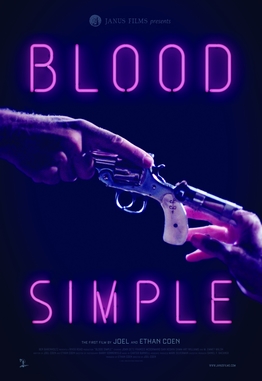
Sundance Film Review: Blood Simple (dir by Joel Coen)


(The 2018 Sundance Film Festival opens tonight!  Over the years, Sundance has become the premiere festival for independent film.  Not only have some of the best American films ever made premiered at Sundance, but it’s become the first stop in many a successful Oscar campaign.  Manchester By The Sea, Whiplash, Brooklyn, Beasts of the Southern Wild: all of them started their journey to a best picture nomination at Sundance.  For the duration of this year’s Sundance Film Festival, from today to the 28th, I’ll be reviewing films that first made a splash at Sundance.)

Blood Simple is an essential film.

If you love American movies, this is a movie that you have to see.  A delirious tribute to film noir, it’s a film that takes place in the darkest corners of America.  This is a film that shows that stories of love, betrayal, and murder can be just as complicated in the middle of America as in California and New York.

If you’re fascinated by the history of indie cinema, Blood Simple is a film that you have to see.  Joel and Ethan Coen, at a time when they were best known for their work with director Sam Raimi, created a trailer for Blood Simple long before they shot the actual movie.  They used this trailer to raise the film’s small budget.  Blood Simple was not only their directorial debut (though only Joel received a directorial credit, while the screenplay was credited to Ethan) but it was also both the feature debut of Frances McDormand and cinematographer (and future director) Barry Sonnenfeld’s first major credit as well.

If, like me, you love films about Texas, Blood Simple is an essential.  Long before they made No Country For Old Men, the Coens filmed Blood Simple in Texas.  Texas is as much a character in Blood Simple as Minnesota and the Dakotas were in Fargo.  Along with their twisty crime plots, Fargo, No Country, and Blood Simple all share a similarly cynical and fatalistic view of human nature, one that is perfectly reflected by the bleak locations where their stories take place.  Watching Blood Simple, it’s easy to imagine that, once the film ended, it fell to No Country‘s Sheriff Ed Tom Bell to laconically look over the carnage and try to figure out what the Hell just happened.

Like many Coen Brothers films, Blood Simple starts out simply and then gets progressively more and more complicated.  Almost all of those complications are due to a combination of human stupidity and greed.  Abby (Frances McDormand) and Ray (John Getz) are having an affair.  Abby’s husband, Marty (Dan Hedaya), owns the bar where Ray works as a bartender.  Marty hires a sleazy private detective named Loren Visser (M. Emmett Walsh) to kill Abby and Ray.  Visser has other plans.  By the end of the movie, almost everyone is dead but no one’s sure why.

The film largely serves as a showcase for Walsh, so much so that McDormand, Hedaya and Getz run the risk of getting lost in the shuffle.  That’s a shame, because all three give excellent performances.  McDormand brings strength and determination to the role of Abby.  Meanwhile, both Getz and Hedaya play two very familiar types.  Anyone who has spent any time in Texas will immediately recognize the characters played by Getz and Hedaya.  Ray may not be the smartest guy in the world but he’ll keep your car running and your glass full.  He’s probably never going to amount too much but he’s what is universally known as a good guy.  On the other hand, Marty, as played by Hedaya, is perhaps one of the most pathetic characters to ever appear in an American film.  Film noirs are full of betrayed husbands but it’s hard to think of a bigger loser than Marty.  Marty is the guy who tries to act tough but even he secretly knows that no one will ever take him seriously.  With the combination of his northern accent and his pathetic attempts to dress “western,” Marty is an outsider in Texas, one who is too stupid to realize just how far outside he actually is.

That said, the film is dominated by M. Emmett Walsh.  As played by Walsh, Loren Visser is one half sleazy redneck and one half demon from Hell.  Speaking in a sarcastic drawl and seemingly amused by all the chaos he has created, Walsh turns Visser into a truly fascinating villain.  He may be evil but you can’t stop watching him.  Walsh’s best moment is also his last in the film, a sarcastic one-liner that suggests that everything that has happened was caused more for his own amusement than anything else.  Visser is clever but not even he can escape the random whims of fate.

Violent and, as is typical for the Coens, darkly humorous, Blood Simple won the Grand Jury Prize at the 1985 Sundance Film Festival.  Though it was only a modest box office success, it not only launched the careers of the Coen Brothers but continues to be on the most influential independent films ever made.  The film remains impressive today.  Whenever I see it, I’m always stunned to see how, even with their first film, the Coens had already developed their own very unique aesthetic.

Blood Simple is an essential film.

Here’s The Trailer For Manchester By The Sea!


Hey, do you remember when — for a day or two — everyone was saying that Manchester By The Sea was going to be this year’s film to go from being acclaimed at Sundance to being nominated for best picture?

It’s easy to forget because, as acclaimed as Kenneth Lonergan’s latest film was, it was quickly overshadowed by Nate Parker’s The Birth of a Nation.  Once Nation had its Sundance premiere, people stopped talking about Manchester and it was pretty much assumed by just about everyone that Nation — and not Manchester — would follow in the footsteps of Beasts of the Southern Wild, Boyhood, Whiplash, and Brooklyn as this year’s Sundance Oscar contender.

But then, a few months ago, we learned that both Nate Parker and Jean Celestin, who has a story credit for Nation, were accused of rape in 1999.  Parker was acquitted on legally dubious grounds (he and the victim has consensual sex before the rape) while Celestin was convicted and spent a few months in jail before having his conviction overturned on appeal and being granted a new trial.  The victim, who said that she had been harassed by both Parker and Celestin, declined to testify at the new trial and, in 2012, committed suicide.

Since that news has come out, there’s been a lot of think pieces on whether or not it’s possible to separate a work of art from the artist and whether or not a critic should even attempt to do so.  It’s starting to look doubtful that The Birth of a Nation is going to get the Oscar push that so many people were expecting.  Fox Searchlight spent a lot of money to acquire the rights to the film and now, they seem to just be planning on quietly dumping it into theaters on October 7th.

Which means, with The Birth of A Nation quietly being pushed to the side, Manchester By The Sea is, once again, the Sundance film with all the Oscar buzz.  I’ve heard the film is absolutely incredible.  (For the record, I’ve also heard the same thing about The Birth of a Nation.)  A lot of people feel that Kenneth Lonergan deserved some Oscar consideration for Margaret, and probably would have received it if he hadn’t developed a reputation for being difficult.  (It took Lonergan 5 years to come up with a final cut of Margaret that he was willing to release.)  Manchester By The Sea could be Lonergan’s opportunity for industry redemption.

Here’s the trailer:

2 Trailers: The Sessions and Alex Cross


A frequently asked question: When is John Hawkes going to win an Oscar?

Ever since I first saw Winter’s Bone back in 2010, I’ve wondered just when exactly John Hawkes is going to finally win an Oscar.  Unfortunately, he did not win for Winter’s Bone and his chilling work in Martha Marcy May Marlene was ignored.  This year, however, he’s back with The Sessions.  In this film, Hawkes plays a 38 year-old man who is confined to an iron lung and who is attempting to lose his virginity with the help of William H. Macy and Helen Hunt.

The Sessions has been getting a lot of buzz since it premiered on Sundance.  That, quite frankly, makes me wary because I’ve come to learn that you have to take Sundance acclaim with a grain of salt.  If Cannes is where people go to be insanely critical, Sundance has a deserved reputation for going overboard when it comes to praise.  However, I will take a chance on anything featuring John Hawkes and, just judging from the trailer, it looks like both The Sessions and John Hawkes could be contenders when it comes time to hand out Oscar nominations.

A less frequently asked question: When is Tyler Perry going to win an Oscar?

Most people would probably answer that question by replying, “Never,” and they could very well be correct.  I have to admit that I’ve never actually sat through any of Tyler’s Perry’s films and, to be honest, I’ve never really had any desire to.  That said, I’ve always been fascinated by Perry’s success and I can’t help but admire the fact that he’s not shy when it comes to self-promotion.

In the upcoming Alex Cross, Tyler Perry will step into a role that was previously played by Morgan Freeman and, if nothing else, it’ll add fuel to the debate as to whether or not Perry is a legitimate acting talent or just a smart businessman.  To be honest, the trailer for Alex Cross plays less like a movie trailer and more like a commercial for a movie on Chiller.  I think that’s largely because of the presence of TV-movie mainstays like Matthew Fox and John C. McGinley.  Still, chances are, Alex Cross will be the first exposure that I (and a lot of other people) get to Tyler Perry as an actor as opposed to just a personality.