In this slow but amiable film, Paul Newman plays Jim Kane. Kane is a down-on-his luck cowboy who finds himself in Arizona with nearly a dollar to his name. Because Kane’s a likable sort, he has people who are willing to help him out but eventually, he finds himself with no choice but to accept a job offer from Stretch Russell (Wayne Rogers) and shady rancher Bill Garrett (Strother Martin). Kane agrees to Mexico to round up a heard of cattle. Helping Kane out on the job is an old friend by the name of Leonard (Lee Marvin).
Pocket Money was the last script to be written by Terrence Malick before Malick began his own directing career and the script’s dialogue shows off Malick’s skill at capturing the unique dialect and sound of the Southwest. It’s an episodic film, where the emphasis is more on the journey than the destination and it could be argued that the movie never really reaches its destination. The plot is far less important than the way Kane and Leonard talk to each other and view the world around them. Pocket Money is not for everyone. It’s the type of movie that will inspire some to complain that nothing really happens. For fans of Newman and Marvin, though, there’s a lot of enjoyment to be found. Newman and Marvin reportedly did not get along during shooting but that didn’t do a thing to harm their chemistry in their scenes together. This film reunites Paul Newman with Cool Hand Luke director Stuart Rosenberg and and also with two co-stars from that film, Strother Martin and Wayne Rogers. Newman gives a relaxed and likable performance. Lee Marvin gets to show his skill with comedy. If you’ve ever wanted to see Lee Marvin ride a horse while wearing a suit, this is the film for you.
Pocket Money was the first film to be produced by First Artists, a production company that was started by Paul Newman, Sidney Poitier, Barbra Streisand, Steve McQueen, and Dustin Hoffman. The company closed its doors in 1980 but not before giving the world not just this movie but also The Getaway, Straight Time, The Gauntlet, An Enemy of the People (starring Steve McQueen), The Life and Times of Judge Roy Bean, and The Gumball Rally, amongst others.
“We’ve got to start thinking beyond our guns. Those days are closin’ fast.” — Pike Bishop
Sam Peckinpah’s The Wild Bunch stands out as a landmark in the Western genre, famous for its daringly harsh depiction of both violence and the fading mythos of the American West. Rather than following the traditions of earlier Westerns, the film presents a gritty portrait of aging outlaws on the edge of extinction, wrestling with a society that has evolved past them. It’s a movie that’s difficult to shake, both for its unapologetic style and the unresolved feelings it leaves long after the final shots ring out.
At its core, the story centers on Pike Bishop and his band—a crew of seasoned criminals aiming for one last grand heist as modernity encroaches on their world. Hoping to pull off a train robbery, they end up entangled in deeper complications after being betrayed and soon are thrust into the turbulence of the Mexican Revolution. Peckinpah builds a narrative where clear-cut morality falls away. The criminals and those pursuing them, supposed bringers of justice, are equally compromised and dangerous. This balancing act challenges the audience to reassess their sympathies, since the characters rarely line up as traditional heroes or villains.
The film’s notoriety is inseparable from its treatment of violence. In an era when Westerns often depicted gunfights as almost bloodless, The Wild Bunch arrived blazing with slow-motion fatalities, realistic wounds, and chaos that feels nearly documentary. Peckinpah didn’t intend to sugarcoat death; the film’s fight scenes are designed to unsettle rather than thrill, making viewers register the true cost of violence on screen. The movie’s most infamous sequences, particularly the opening and closing shootouts, still provoke debate over whether their artistry justifies their brutality. Peckinpah reportedly wanted to expose the real consequences of violence, not celebrate them, and the resulting imagery remains both striking and disturbing decades later.
Beyond its bloodshed, the film is packed with melancholy, exploring the futility and obsolescence of its central figures. The Wild Bunch themselves—Pike, Dutch, Lyle, Angel, and others—all feel the weight of their era’s end. They are not just outdated in terms of time; their entire way of life has been mechanized and modernized beyond their grasp. The film depicts this through powerful imagery, from horses being supplanted by cars and trucks to rifles giving way to machine guns. This mechanization highlights that Pike and his men live in a world that has moved on, leaving them behind. Their code of honor and rough camaraderie are relics in a brutal, mechanized landscape that favors efficiency and merciless violence. The emergence of rapid-fire weaponry and vehicles is more than a backdrop; it symbolizes their growing irrelevance and the passing of a wild, untamed frontier.
Technically speaking, The Wild Bunch is as impressive as it is influential. The cinematography captures wide Mexican landscapes with dust and sunlight, conveying both beauty and bleakness. The editing—particularly in the action scenes—was ahead of its time, with its expressive use of multiple camera angles and slow-motion adding an almost ballet-like rhythm to chaotic violence. The music, a mix of Jerry Fielding’s score and traditional Mexican songs, deepens the film’s sense of place and loss. All of this technical prowess merges in set pieces that are still studied by action directors today.
One of the film’s most enduring legacies is its profound influence on a slew of filmmakers in the years following its release. Directors like Martin Scorsese, Quentin Tarantino, and John Woo have all cited The Wild Bunch as a key inspiration, particularly in how it reshaped the depiction of violence and complex characters onscreen. Peckinpah’s innovative use of slow motion during action scenes transformed gunfights into sequences that feel almost balletic, bringing an eerie beauty to brutality. This technique became a hallmark of John Woo’s work, where slow-motion shootouts are choreographed with a dance-like precision, making the violence stylized yet emotionally impactful. Meanwhile, Scorsese and Tarantino embraced the moral ambiguity and character complexity Peckinpah championed, pushing their own stories beyond clear-cut good and evil. Through these directors and many others, The Wild Bunch continues to resonate and shape modern cinema.
The performances in The Wild Bunch are integral to its powerful impact, with its ensemble cast bringing layered humanity to otherwise rough, sometimes brutal characters. William Holden leads as Pike Bishop with a mix of weary charisma and existential urgency, embodying a man caught between the fading wild past and a ruthless present. Holden’s Pike is not just a leader of outlaws, but a man wrestling with his own moral contradictions—as loyal and protective as he is capable of cold violence. This complexity allows the character to stay compelling rather than becoming a cliché tough guy.
Ernest Borgnine as Dutch Engstrom offers a grizzled, weary presence, conveying the toll that years of violence have taken on his spirit, while Warren Oates imbues Lyle Gorch with a volatile and rebellious energy that adds tension within the gang. His brother, Tector Gorch, played by Ben Johnson, brings a contrasting steadiness, portraying a man caught between loyalty and survival. Robert Ryan’s portrayal of Deke Thornton, the relentless bounty hunter, stands out as a tragic figure torn between his past friendship with Pike and his duty. This character conflict gives the story a deeper emotional layer and adds weight to the relentless pursuit central to the plot.
Supporting performances by Edmond O’Brien as Freddie Sykes and Jaime Sánchez as Angel enrich the group dynamic, each adding distinct personality traits that feel authentic and lived-in. The chemistry between the cast helps ground the film’s heavy themes in real human experience, making the characters’ struggles with obsolescence and loyalty resonate beyond the screen.
However, despite the strong male performances, the film’s treatment of female characters is notably sparse and limiting. Women in the film often fall into marginal roles, lacking development or agency, which reflects the gender dynamics of many Westerns from the era but feels particularly dated today.
For viewers seeking straightforward heroism or moral clarity, The Wild Bunch can be a challenging experience. Its bleak, nihilistic worldview and refusal to deliver easy answers may leave some feeling drained. The story culminates in a violent, unresolved climax with no tidy resolution, emphasizing loss and the end of an era. But it is precisely this rawness and technical mastery that keep the film compelling and worthy of close viewing.
The Wild Bunch demands you shed simple notions of good versus evil and prepare for a rough, often brutal ride. It’s a story about men fighting not just other men but inevitability—caught between their own fading values and the relentless march of modernization and change. Peckinpah doesn’t offer comfort; instead, he forces the viewer to reckon with violence’s cost and the price of nostalgia. Even with all its grit and flaws, the film’s artistry and influence remain undeniable, securing its status as a masterwork that redefined Westerns and action cinema alike. It’s a wild ride that continues to inspire and provoke long after the credits roll.
Today would have been director Stuart Rosenberg’s 98th birthday. Our scene of the day come from one of Rosenberg’s best-known and best-remembered films, 1967’s Cool Hand Luke.
This is a scene that featured the line that’s been kept alive by cops, drill sergeants, and angry teachers to this day.
In honor of Kim Darby’s 78th birthday, I’m sharing one of the highlights of her film career. In this scene, young Mattie Ross (Darby) shows Colonel G. Stonehill (Strother Martin) that her bargaining skills are way beyond her years! I especially love TRUE GRIT because the story opens in my home state in Fort Smith, Arkansas, before heading west in search of Tom Chaney! As a matter of fact, the author of the TRUE GRIT novel, Charles Portis, is one of the greatest authors from the state of Arkansas.
Enjoy one of many great scenes from the classic western, TRUE GRIT!
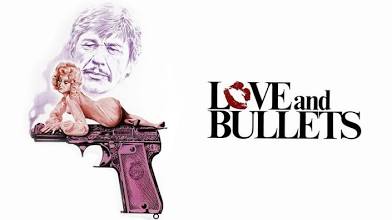
Charles Bronson is an Arizona cop who goes to Switzerland to bring back a gangster’s girlfriend (Jill Ireland). The gangster (Rod Steiger) sends a hitman (Henry Silva) to kill her so she can’t tell his crime secrets to the authorities.
This isn’t one of Bronson’s best films, but it’s still a fun movie to watch on a chilly, rainy day. There are some good action scenes set in various cold & snowy European locations. This is Bronson in “Bond” mode which is kind of fun and different. And what can you say about a stuttering Rod Steiger screaming at his advisors about the meaning of “love.” It’s fun stuff when you like Steiger as much as I do. I do deduct half a star because Steiger gets so mad at one point that he turns over a table with some of the biggest, most scrumptious looking shrimp I’ve ever seen. That was completely uncalled for and wasteful, but not quite as wasteful as Bronson and Henry Silva in the same movie without an epic battle of some sort. The fact that they didn’t fight it out on the Matterhorn itself can only be described as a missed opportunity.
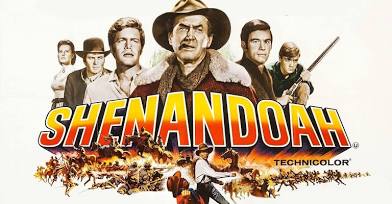
Jimmy Stewart plays Charlie Anderson, the patriarch of a large farming family in Virginia during the time of the Civil War. His family doesn’t own slaves, so he doesn’t figure it’s any of their business what all the fighting is about. He wants to keep working the land in hopes that the war will pass them by. Besides, he has six sons, a daughter, and a daughter in law that he wants to keep safe. He’s trying to keep the family together on his own as his beloved Martha had passed away sixteen years earlier giving birth to their youngest son, who we only know as Boy (Phillip Alford). Aside from the war that’s going on all around them, things seem pretty good for the Anderson’s. They all sit down for a big delicious meal every night. They attend Church every Sunday where they’re usually late and given the side-eye by Pastor Bjoerling (Denver Pyle). One of the sons, James Anderson (Patrick Wayne) and his wife Ann (Katharine Ross), have a precious newborn baby to take care of. The beautiful daughter Jennie (Rosemary Forsyth) is being courted by, and eventually marries, a lovestruck confederate officer named Sam (Doug McClure). Unfortunately the war won’t just go away, and when Boy is taken prisoner by Union soldiers, Charlie can’t stand idly by any longer. They head out to find him and bring him home.
In the guise of an entertaining semi-western, SHENANDOAH does a great job of illustrating how futile and randomly tragic war can be. The movie starts out lighthearted and fun as the family goes about its normal life, with Jimmy Stewart’s Charlie Anderson giving his homespun advice and rolling his cigars. This is a self-sufficient family that loves, respects and enjoys each other even if they don’t agree on everything. But the war keeps inching its way into their lives. First in the form of small group of confederate soldiers who come by to get some water and try to convince the boys to join up. None of the boys will join up, but they do help bury the soldiers when they’re ambushed and killed just down the road. Next a group of men come to the ranch to try to confiscate their horses for the Union army. Of course, Charlie Anderson isn’t going to let that happen and this turns into the type of brawl that seems to come right out of John Wayne western comedy like MCLINTOCK. Everybody joins in with the participants punching and being punched repeatedly, while Boy keeps getting knocked into the horse trough. This shouldn’t be a surprise because Director Andrew V. McLaglen directed MCLINTOCK and many other John Wayne films. Finally, Boy is taken prisoner because he is wearing a confederate cap that he found floating down the steam while he was out fishing one day. Once Charlie and most of his family head out to search for Boy, the movie begins a turn into tragedy. I won’t give the specifics away, but some members of the family will die, and not a single one of their deaths will be based on the actual fighting of a war. Rather, their deaths will be based on the chaos and depravity that surrounds the war. It’s tough to see, especially when they were all so happy just a little bit earlier. For me, the movie’s changes in tone make the tragedy more powerful and really drive home its message about the futility of war. But the Anderson family, like the United States of America after the Civil War, is made up of tough, resilient folks, and the movie ends on a hopeful note that definitely brought some extra moisture to my eyes.
Jimmy Stewart commands the screen in SHENANDOAH. You simply can’t take your eyes off of him, and his performance alone would make the movie worth watching. But with its powerful message, excellent cast, and solid direction, the movie is much more than just Stewart’s strong performance. I highly recommend it.
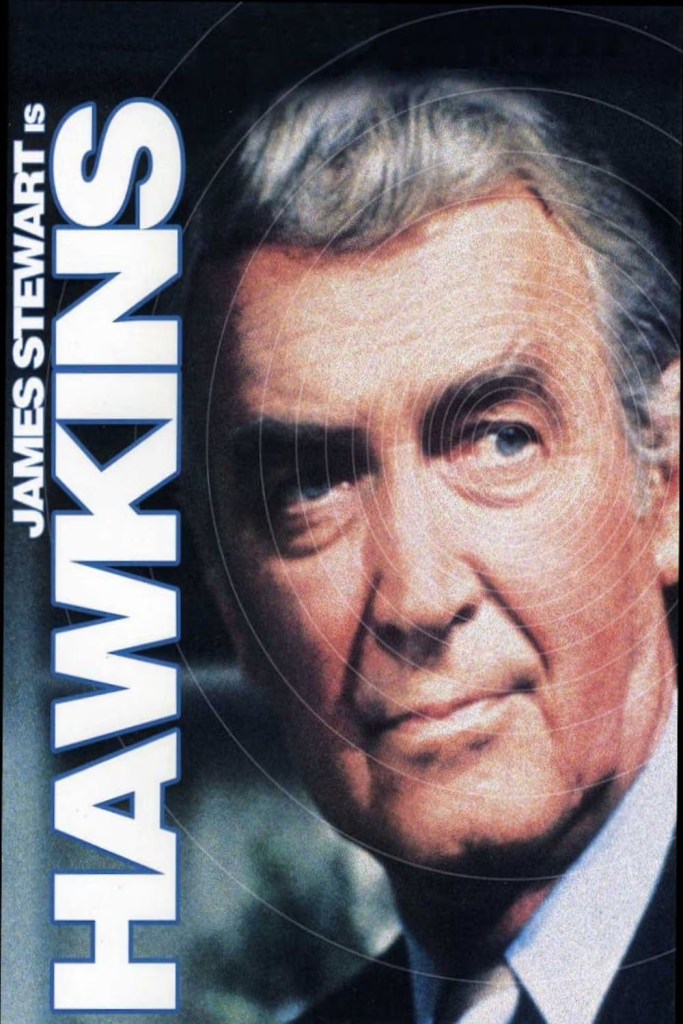
In this pilot episode of the TV-Movie series HAWKINS, Jimmy Stewart plays Billy Jim Hawkins from the fictional town of Beauville, West Virginia, who just happens to be the best defense lawyer in the business. A former prosecutor who changed sides, he has a perfect record for getting his clients off. Billy Jim gets a call to come out to Los Angeles when an heiress, Edith Dayton-Thomas (Bonnie Bedelia), is charged with the murder of her dad, stepmom, and stepdaughter. Billy Jim and his team, which is basically just his cousin R.J. Hawkins (Strother Martin), set about getting to know all the people in her life. There’s the family lawyer Carl Vincent (Robert Webber) who’s been dipping his hand in the family till while also carrying on an affair, much to the chagrin of his wife Vivian (Antoinette Bower). There’s Edith’s aunt Julia (Kate Reid), who doesn’t seem to have a very strong opinion of her now deceased brother in law and was seen arguing with him on the day of his murder. And there’s Edith herself, whose diary would indicate that she hated her dad and her stepmom so much that she wanted them dead. She also just happens to have the reputation for being a little strange and / or crazy. The evidence seems to be stacked against Edith, but Billy Jim doesn’t get to charge those extremely high legal fees for nothing. If anyone can get to the bottom of the case, it’s him.
I’ll just go ahead and say that Jimmy Stewart and the character of Billy Jim Hawkins are a match made in heaven. Any person who has seen him in the classic Otto Preminger film ANATOMY OF A MURDER (1959) knows how great he is at playing a down home defense attorney. He excels in the role, and he’s reason alone to invest in the DVD collection from Warner Brothers Archive like I did several years back. It’s so fun watching him question people in his easy going, slow talking, country boy way which almost always leads to the discovery of exactly what he needs to know. And Strother Martin is perfect as his cousin and associate, one of 174 first cousins, according to Billy Jim himself. You see, one of the interesting things about Billy Jim’s family is that he’s one of 14 kids, with 52 nieces and nephews to go along with all those first cousins. That’s some fun character history for a guy like me, whose mom is one of 15 kids, and I also have tons of first cousins. Stewart and Martin are a perfect duo, and their sharing of different theories as the episodes progress make up some of the best scenes. Add to Stewart and Martin a solid group of guest stars in this episode including Bonnie Bedelia (DIE HARD), Robert Webber (THE DIRTY DOZEN), Kate Reid (THIS PROPERTY IS CONDEMNED), and Antoinette Bower (THE EVIL THAT MEN DO), and you can’t help but have an entertaining show. There’s never any doubt that Stewart is going to uncover the murderer, but the fun of course is in seeing how he puts all the clues together.
HAWKINS: Death and the Maiden is the first of eight “Hawkins” TV movies starring Jimmy Stewart in 1973 and 1974. The character of Billy Jim Hawkins is a clear pre-cursor to the character of Matlock that Andy Griffith would have so much success with a little over a decade later. In a strange move at the time, CBS chose to alternate HAWKINS on Tuesday nights with a series of SHAFT TV movies. Imagine wanting to watch SHAFT only to turn on your TV to discover Jimmy Stewart and Strother Martin solving murder mysteries, or Vice-Versa. Conventional wisdom suggests that this release strategy was probably confusing to the respective audiences for the shows based on their vastly different demographics. I personally think they both sound awesome, but I can see how pairing such different shows in this way could have been a problem for the ratings. Regardless of its short lived tenure, if you’re a fan of Jimmy Stewart, you need to watch HAWKINS. Each episode is a joy to behold.
The unique character actor, Strother Martin, is established as one of the most quoted people to ever grace the silver screen. His line from COOL HAND LUKE (1967), “What we’ve got here is… failure to communicate” ranks as number 11 on the American Film Institute’s list of the 100 greatest movie quotes of all time! He’s an incredibly talented man, and every time I see him pop up on an old TV show or movie, I smile.
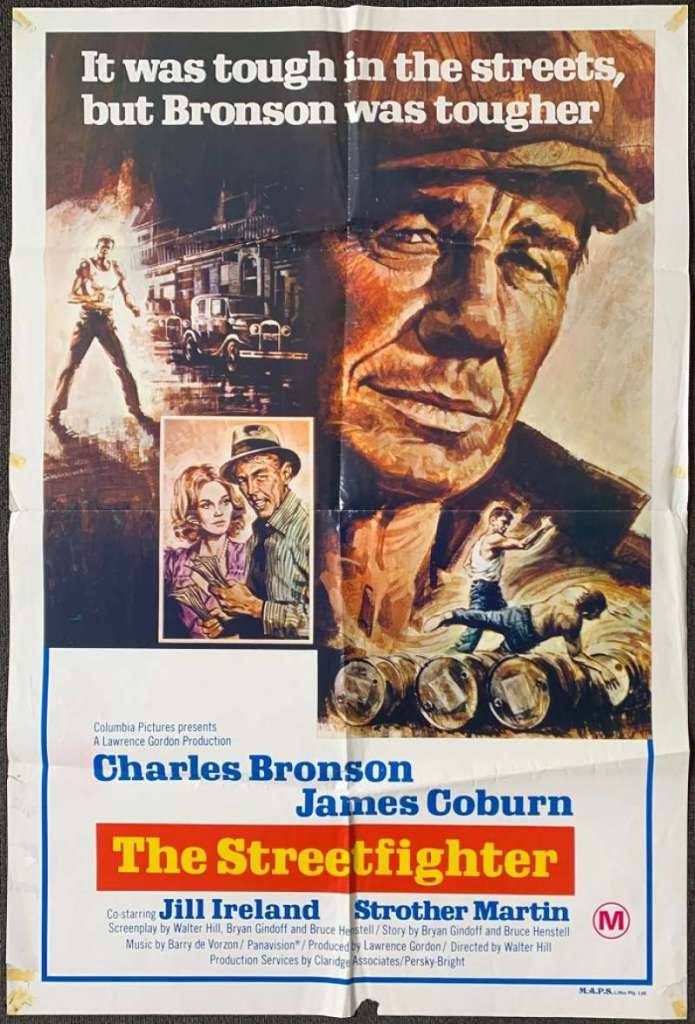
My personal favorite film of all time is HARD TIMES (1975) starring Charles Bronson, James Coburn, Jill Ireland, and yes, Strother Martin. He is so good as Poe, Charles Bronson’s cut man, who also happens to be a recovering drug addict. HARD TIMES is Walter Hill’s debut film, and Hill couldn’t have picked a better cast to introduce himself to the world. It’s my opinion that Martin’s unique talents are a perfect compliment to Bronson’s strong, silent persona, and James Coburn’s motormouth, business man. I think it’s one of his best performances.
My favorite scene with Bronson and Strother Martin in HARD TIMES is the scene where they first meet. Unfortunately, I couldn’t find it on YouTube so I’m sharing this scene where Bronson collects their earnings from a guy who cheated them earlier in the day. Martin’s character isn’t featured in this scene, but he’s always right there with Bronson as a loyal friend. On what would have been Martin’s 106th birthday, I just wanted to take a moment to remember and appreciate him for his great work.
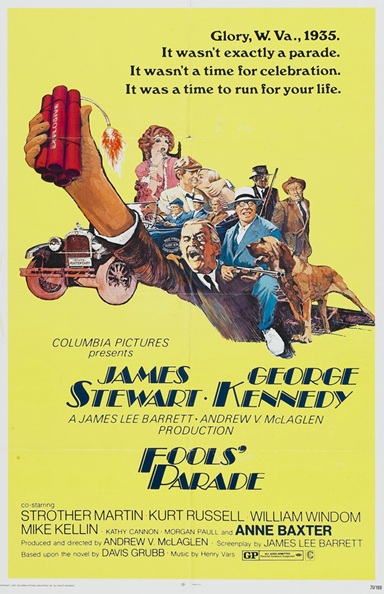
Three men are released from the West Virginia state penitentiary and given a train ticket out of town by the prison captain, Council (George Kennedy). The men are a bank robber named Lee Cottrill (Strother Martin), a young man named Johnny Jesus (a young Kurt Russell), and a courtly older man named Mattie Appleyard (James Stewart). Despite his polite tone of voice and his folksy manner, Appleyard is actually the most notorious of the three men being released. Convicted of murdering two men, Appleyard has spent the past 40 years in prison. Both Appleyard and Cottrill are looking to go straight. Every day of his sentence, Appleyard worked and earned money. Along with a glass eye, Appleyard leaves prison with a check for $25,000 dollars. Appleyard plans to cash the money at the bank and then open a store with Cottrill.
Unfortunately, Appleyard has been released at the height of the Great Depression. The streets are full men desperately looking for work. People will do anything to feed their families or to make a little extra money. Salesman Roy K. Sizemore (William Window) transports guns and dynamite. Willis Hubbard (Robert Donner) works as a conductor on the train. Aging prostitute Cleo (Ann Baxter) offers to sell the virginity of her adopted daughter, Chanty (Katherine Cannon). Junior Killfong (Morgan Paull) sings on the radio and occasionally takes on deadlier work with his friend, Steve Mystic (Mike Kellin). As for Captain Council, he’s decided that he’s going to make his money by ambushing the train carrying the three men that he has just released from prison. After killing the men, Council will cash Appleyard’s check himself.
Of course, it doesn’t quite work out as simply as Council was hoping. Willis Hubbard has a crisis of conscience and lets Appleyard, Cottrill, and Johnny know what Council is planning. The three men narrowly make their escape but Council frames Appleyard for a murder that he didn’t commit. Now wanted once again, the three men must not only get the money but also clear their names. It won’t be easy because, as Hubbard explains, they may be free from the penitentiary but now, they’re trapped in “the prison of 1935.”
Fools’ Parade really took me by surprise. I watched it because it featured two of my favorite actors, James Stewart and Kurt Russell. And both Stewart and Russell give very good performances in the film. Stewart was always at his best when he got a chance to hint at the melancholy behind his folksiness and the young Kurt Russell plays Johnny with a sincerity that makes you automatically root for him. For that matter, the normally sinister Strother Martin is very likable as Lee Cottrill, a bank robber who is still struggling with the idea of going straight. But, beyond the actors, Fools’ Parade is a genuinely sad portrait of desperate people trying to survive. At one point, Sizemore and Cottrill watch as their train passes a camp of people who have been displaced by the Great Depression and it’s even implied that the villainous Council has some regret over what he’s become. (There’s a small but poignant scene in which Council and Cleo acknowledge the passage of time and, for a minute, the viewer realizes these two people were, at one time, maybe as idealistic and optimistic as Johnny.) It’s a well-acted film, one in which moments of humor are mixed with moments of true sadness. I may have picked the film for Jimmy and Kurt but, in the end, the film’s story and performances drew me in. The 63 year-old Stewart proved that he could still give a memorable performance and the 20 year-old Kurt Russell proved that he was a future star in the making. If you haven’t seen it, this is definitely a film to check out.
Walter Hill celebrates his 83rd birthday on January 10th, 2025. He has made so many great films in his career, but the one that stands out the most to me is his directorial debut from 1975, HARD TIMES, with Charles Bronson, James Coburn, Jill Ireland, and Strother Martin. The film was known as THE STREETFIGHTER in some parts of the world, like England, but due to Sonny Chiba’s “Street Fighter” movie from around the same time, the producers decided to go with HARD TIMES in America.
Here are a few more interesting facts about Hill’s directorial debut:
Chaney (Bronson) was originally supposed to be a much younger man, with Jan-Michael Vincent being considered for the role.
Charles Bronson was 52 years old when he made HARD TIMES. According to Hill, Bronson “was in remarkable physical condition for a guy his age…. He had excellent coordination, and a splendid build. His one problem was that he was a smoker, so he didn’t have a lot of stamina. I mean, he probably could have kicked anybody’s ass on that movie, but he couldn’t fight much longer than 30 or 40 seconds.”
According to Hill, Charles Bronson was easier to work with than James Coburn. Hill would say “Bronson was a very angry guy who didn’t get along with a lot of people. The only reason I can tell you he and I got along well was he respected that I wrote the script. He liked the script. I didn’t try to get close to him. Kept it very business-like. I think he liked that. James Coburn, who everybody liked and got along well with, he and I did not get along well. I think he was not in a good mood about being in a movie with Charlie, it was second banana. He had been up there more, and his career was coming back a bit. I don’t think he was wild about being second banana. But Charlie was a big star… and when things had seemed to not be working well, or there was some impasse, Charlie would come down hard on my side. That was a tipping point”.
Walter Hill thought the project could become more “up market” if he made it more like a Western and set it in the past. Hill incorporated elements of an earlier Western he had written, “Lloyd Williams and his Brother”. He wrote it in a style inspired by Alex Jacobs–“extremely spare, almost Haiku style. Both stage directions and dialogue.”
The settings for the Capcom arcade game Street Fighter are taken right from HARD TIMES. This film is titled “The Street Fighter” in Japan, and the game designer was instructed to take inspiration from this film. He did just that and copied many of them directly.
I’m so thankful for Walter Hill and HARD TIMES. In fact, it’s my all-time favorite film, as well as the first review I ever published for The Shattered Lens.
So, if you like movies like HARD TIMES, THE DRIVER, THE WARRIORS, THE LONG RIDERS, SOUTHERN COMFORT, 48 HRS., EXTREME PREJUDICE, and RED HEAT, join us in celebrating the great director Walter Hill on his 83rd birthday. He has brought me countless hours of joy over the years!
Here’s a trailer from the Masters of Cinema for HARD TIMES…
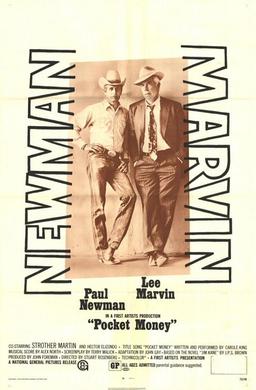 In this slow but amiable film, Paul Newman plays Jim Kane. Kane is a down-on-his luck cowboy who finds himself in Arizona with nearly a dollar to his name. Because Kane’s a likable sort, he has people who are willing to help him out but eventually, he finds himself with no choice but to accept a job offer from Stretch Russell (Wayne Rogers) and shady rancher Bill Garrett (Strother Martin). Kane agrees to Mexico to round up a heard of cattle. Helping Kane out on the job is an old friend by the name of Leonard (Lee Marvin).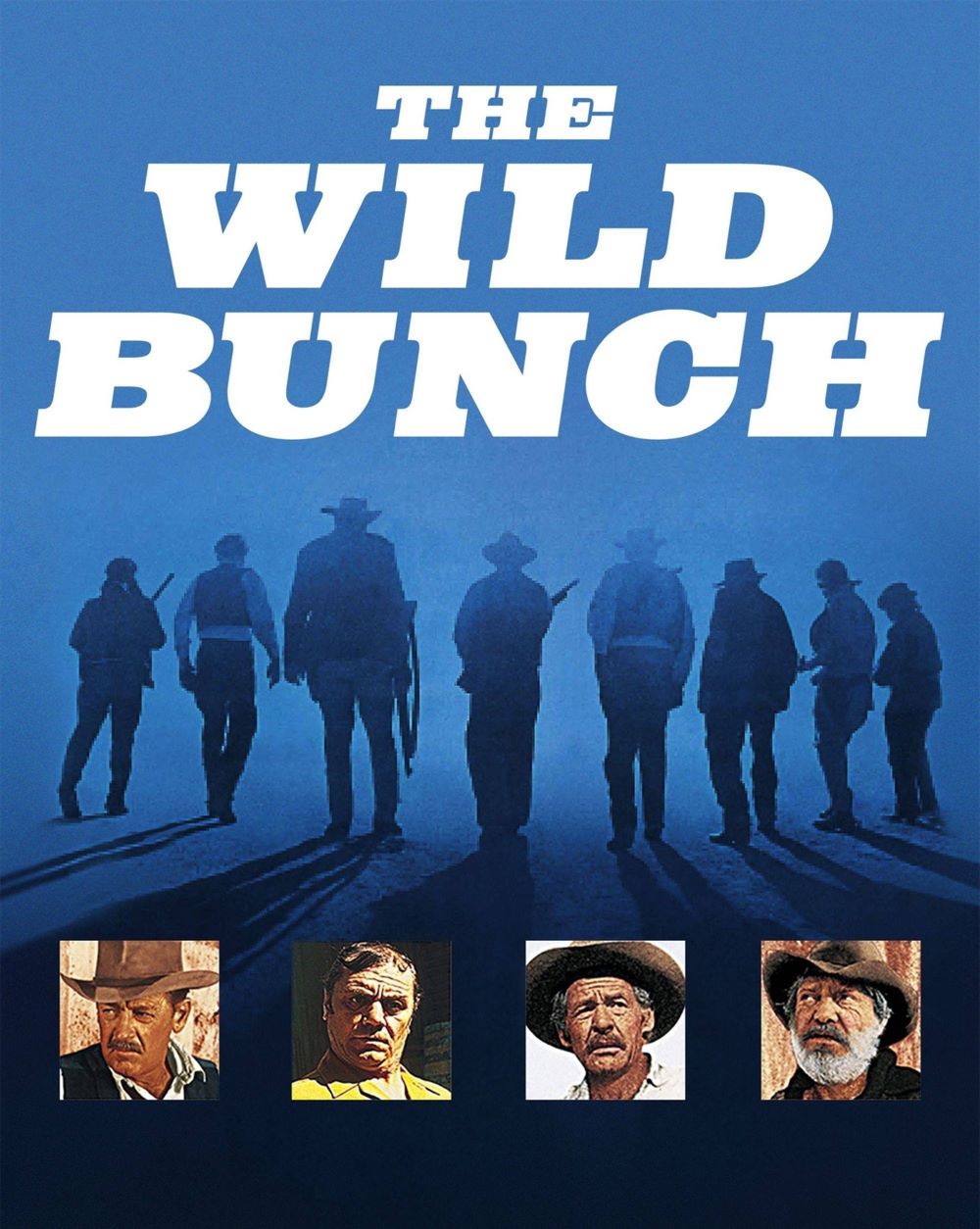

 Through the Shattered Lens