Brian Kelly (Christian Slater) is a California skater with a rebellious attitude and an adopted Vietnamese brother named Vinh (Art Chudabala). When the movie starts, all Brian cares about is not selling out and finding empty pools to skate. He even hires an airplane to fly him and his friends over Orange County so they can get a bird’s-eye view of the layout. Vinh is more worried about his job with the Vietnamese Anti-Community Relief Fund. The fund has been set up to send medical supplies to Vietnam but, when Vinh comes across a discrepancy in the shipping records, he realizes that something else is going on. When Vinh turns up dead in a hotel room, everyone else may believe that it is suicide but Brian knows that his brother was murdered. With the help of his fellow skaters and a sympathetic cop (Steven Bauer), Brian sets out to bring his brother’s killers to justice.
I was surprised when I watched Gleaming the Cube because it turned out to be much better than I was expecting. The movie is justifiably best known for its skating sequences, which were shot by Stacy Peralta and which featured pro-skaters Mike McGill, Rodney Mullen, and Gator Rogowski doubling for Slater in some of the film’s more spectacular stunts. (Tony Hawk plays one of Slater’s friends.) Slater, himself, learned how to skate for the movie and looks far more comfortable and natural on his board than Josh Brolin did in Thrashin’. Beyond the spectacular skating, Gleaming the Cube is energetically directed and surprisingly well-acted. A pre-stardom Christian Slater gives one of his best and most natural performances as Brian, playing the role without any of the tics or affectations that later came to define his career. Of its type, Gleaming the Cube is a classic.
Who was the boss of bosses? According to this movie, he was Paul Castellano. A cousin-by-marriage to the notorious crime boss Carlo Gambino, Castellano grew up in New York City and first became a made man in the 1930s. After four decades of loyal service, Castellano succeeded Carlo as the boss of the Gambino Crime Family. As portrayed in this movie, Castellano attempted to keep the Gambinos out of the drug trade and tried to steer both his biological and his crime family into legitimate businesses. However, not everyone appreciated Castellano’s vision of the future and, in 1985, he was assassinated on the orders of his eventual successor, John Gotti.
Considering that this biopic was made for TNT and was directed by Dwight H. Little (who was best known for directing films like Halloween 4 and Free Willy 2), it’s probably not surprising that not a single mob cliché goes unturned in Boss of Bosses. At first, I had a hard time accepting Chazz Palminteri as Castellano because Palminteri sounded exactly like Joe Mantegna voicing Fat Tony on The Simpsons. Once I got over the vocal similarities, I saw that Palminteri was actually giving a very good, noncartoonish performance as Castellano but the film itself never convinces us that Castellano was anything more than a forgettable placeholder between the reigns of the legendary Gambino and the flamboyant Gotti.
Boss of Bosses, which is also known as Godfather of New York, is currently available on YouTube.
I have mixed feelings about Steven Soderbergh. On the one hand, his talent cannot be denied and you have to respect the fact that he’s willing to take chances and make films like The Girlfriend Experience and The Informant. On the other hand, he’s also the director who has been responsible for overrated messes like Contagionand utter pretentious disasters like Haywire. And it doesn’t help that Soderbergh’s fanbase seems to be largely made up of the type of hipsters who end up leaving comments under the articles at The A.V. Club. Some people mourned Soderbergh’s retirement. Personally, I think he made the right decision. He retired before his misfires ended up outnumbering all of his masterpieces.
The thing about Soderbergh is that his good films are so good that it makes it all the more frustrating to watch his failures. If Soderbergh was just your typical bad director than a film like Contagion wouldn’t be as annoying. But this is the man who also gave us Traffic!
And Traffic is a very good film.
First released in 2000, Traffic attempted to deal with the American war on drugs, a war that the film suggests might not even be worth fighting. (Full disclosure: I support the legalization of drugs and, for that matter, just about everything else. And yes, I am biased towards films that agree with me. So is every other film critic out there. The difference is that I’m willing to admit it.) Traffic won four Oscars, including Best Director and Best Supporting Actor for Benicio Del Toro. It was also nominated for best picture but lost to Gladiator.
Traffic tells three, barely connected stories. Each story is given its own distinct look, feel, and color scheme. And while it takes a few minutes to get used to film’s visual scheme, it ultimately works quite well. Though all of the film’s characters share the same general existence, they live in different worlds. The only thing linking them together is drugs.
Judge Andrew Wakefield (Michael Douglas) is a judge on the Ohio Supreme Court who has recently been named as the new drug czar. However, while Judge Wakefield is going around the country and talking to politicians (Harry Reid shows up playing himself and is just as creepy as always), his daughter Caroline (Erika Christensen) is dating Seth (Topher Grace) and getting addicted to cocaine and heroin. When Caroline run away, Judge Wakefield recruits Seth and, using him as a guide, searches the ghetto for his daughter.
The Wakefield scenes are bathed in cold and somber blues. They’re beautiful to look at but, in some ways, they’re also some of the weakest in the film. The whole plotline of Caroline going from being an innocent honor’s student to being a prostitute who sells her body for heroin feels a lot like the notorious anti-drug film Go Ask Alice. At the same time, it’s interesting and a little fun to see Topher Grace playing such a little jerk. Grace gets some of the best lines in the film, especially when he attacks Wakefield’s feelings of smug superiority.
In the film’s second storyline, two DEA Agents (Don Cheadle and Luis Guzman) arrest drug trafficker Eddie Ruiz (Miguel Ferrer). Eddie works for the Ayala syndicate and, once he’s arrested, he turns informant. Drug lord Carlos Ayala (Steven Bauer) is arrested. While Carlos sits on trial, his pregnant wife (Catherine Zeta-Jones) and his sleazy business associate (Dennis Quaid) struggle to hold together the business and find a way to kill Ruiz before he can testify.
This storyline is filmed in bright and vibrant colors and why not? The Ayalas are rich and, unlike the Wakefields, they don’t feel the need to hide their material wealth. This is actually probably my favorite storyline, largely because it’s the best acted and the most entertaining. Miguel Ferrer, in particular, steals every scene that he’s in. The scene where he explains the economics of being a drug trafficker is fascinating to watch.
The Ayala storyline may be my favorite but the film’s most thought-provoking storyline is the third one. Taking place in Mexico, it stars Benicio Del Toro as Javier Rodriguez, a casually corrupt police officer who gets recruited to work for General Salazar (Tomas Milian), who is heading up Mexico’s war on the cartels. Following the orders of Salazar, Javier captures assassin Frankie Flowers (Clifton Collins, Jr.) who is then savagely tortured by Salazar until he turns informer. Javier comes to realize that Salazar is actually working for one of Mexico’s cartels. When he decides to inform on Salazar, he puts his own life at risk.
The Mexico storyline is also the harshest and visually, it reflects that fact. The heat literally seems to be rising up from the desert and the streets of Tijuana. It takes a few minutes to adjust to the look of the Mexico scenes but, once you do, they become enthralling.
And Traffic, as a film, is undeniably enthralling as well. Soderbergh deftly juggles the multiple storylines and brings them together to create a portrait of a society that’s being destroyed by the efforts to save it. Hopefully, if Soderbergh ever does come out of retirement, he’ll give us more films like Traffic and less films like Contagion.
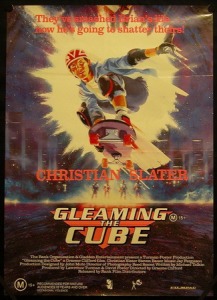 Brian Kelly (Christian Slater) is a California skater with a rebellious attitude and an adopted Vietnamese brother named Vinh (Art Chudabala). When the movie starts, all Brian cares about is not selling out and finding empty pools to skate. He even hires an airplane to fly him and his friends over Orange County so they can get a bird’s-eye view of the layout. Vinh is more worried about his job with the Vietnamese Anti-Community Relief Fund. The fund has been set up to send medical supplies to Vietnam but, when Vinh comes across a discrepancy in the shipping records, he realizes that something else is going on. When Vinh turns up dead in a hotel room, everyone else may believe that it is suicide but Brian knows that his brother was murdered. With the help of his fellow skaters and a sympathetic cop (Steven Bauer), Brian sets out to bring his brother’s killers to justice.
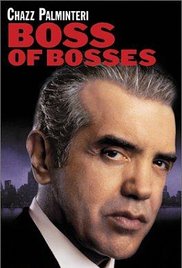 Who was the boss of bosses? According to this movie, he was Paul Castellano. A cousin-by-marriage to the notorious crime boss Carlo Gambino, Castellano grew up in New York City and first became a made man in the 1930s. After four decades of loyal service, Castellano succeeded Carlo as the boss of the Gambino Crime Family. As portrayed in this movie, Castellano attempted to keep the Gambinos out of the drug trade and tried to steer both his biological and his crime family into legitimate businesses. However, not everyone appreciated Castellano’s vision of the future and, in 1985, he was assassinated on the orders of his eventual successor, John Gotti.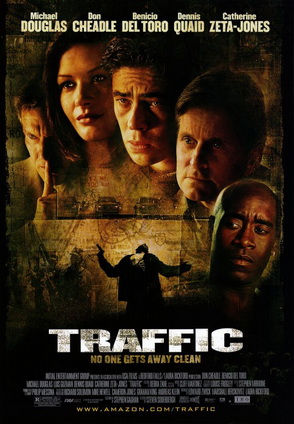
 Through the Shattered Lens