During a routine flight from Montreal to Edmonton, the two pilots (played by William Devane and Scott Hylands) discover that they do not have enough fuel to make it to their destination. Their aircraft was one of the first in the fleet to use the metric system but a conversion era led to the ground crew measuring the plane’s fuel in pounds instead of kilograms. With the help of an air traffic controller (Nicholas Turturro), the pilots try to land their plane before it falls out of the sky.
Based on a true story, Freefall is one of the many airflight disaster films that were made for television in the 80s and 90s. (Not surprisingly, the genre became less popular after 9-11.) The emphasis is on the pilots and ground control remaining calm and professional in the face of seemingly insurmountable odds. While Devane and Hylands look for a place to land, flight attendant Shelley Hack keeps the passengers from panicking. In typical disaster movie style, the passengers have their own dramas that are wrapped up as they wait for the plane to either land or crash. It’s a low-budget movie but the cast does a good job. William Devane is one of those actors who just looks credible flying an airplane.
The movie’s main lesson? Don’t use the Metric System unless you absolutely have to,
In 1967, a group of young men arrive at the Marie Corp. Recruit Depot in San Diego. Tyrone Washington (Stan Shaw) is a drug dealer from Chicago who tells everyone not to mess with him and who soon emerges as a natural born leader. Dave Brisbee (Craig Wasson) is a long-haired hippie who tried to feel to Canada and who shows up for induction in handcuffs. Vinny Fazio (Michael Lembeck) is a cocky and streetwise kid from Brooklyn. Billy Ray Pike (Andrew Stevens) is a country boy from Texas. Alvin Foster (James Canning) is an aspiring writer who keeps a journal of his experiences. Sgt. Loyce (R. Lee Ermey, making his film debut) molds them into a combat unit before they leave for Vietnam, where they discover that all of their training hasn’t prepared them for the reality of Vietnam.
TheBoysInCompanyC has the same basic structure as Stanley Kubrick’s Full Metal Jacket, right down to R. Lee Ermey playing the tough drill sergeant. The sharp discipline of basic training is compared to the chaos of Vietnam. Ermey always said that he was playing a bad drill sergeant in FullMetalJacket because he tore down the recruits but never bothered to build them back up. In TheBoysInCompanyC, Ermey plays a good drill sergeant, one who is tough but fair and who helps Washington reach his potential. It doesn’t make any difference once the company arrives in Vietnam, though. Both The Boys In Company C and FullMetalJacket present the war in Vietnam as being run by a collection of incompetent officer who have no idea what it’s like for the soldiers who are expected to carry out their orders.
Of course, TheBoysInCompanyC is nowhere near as good as Full Metal Jacket. Full MetalJacket was directed by Stanley Kubrick and it’s a chilling and relentless look at the horrors of combat. TheBoysInCompanyC was directed by Sidney J. Furie, a journeyman director who made a lot of movies without ever developing a signature style. The basic training scenes are when the film is at its strongest. When the company arrives in Vietnam, Furie struggles with the story’s episodic structure and it can sometimes be difficult to keep track of the large ensemble cast. The Vietnam sequences are at their best when the emphasis is on the soldiers grumbling and bitching as their officers send them on one pointless mission after another. The soccer game finale tries to duplicate the satire of the football game that ended Robert Altman’s M*A*S*H but it does so with middling results. TheBoysinCompanyC is a collection of strong moments that never manage to come together as a cohesive whole.
The movie is still important as one of the first major films to be made about the war in Vietnam. However, it’s since been overshadowed by The Deer Hunter, Apocalypse Now, Platoon, and, of course, Full Metal Jacket.
Today is actor Andrew Stevens’ 70th birthday. I grew up watching Stevens in the Charles Bronson films 10 TO MIDNIGHT (1983) and DEATH HUNT (1981), the movie I’m reviewing today. I also enjoyed watching him in Brian De Palma’s THE FURY (1978). Later in his career he stepped behind the camera where he produces and directs mostly low budget films. As of this writing, he’s still going strong, and he’s built quite a nice career. And for me, my appreciation all started because he worked with Charles Bronson when he was in his twenties!
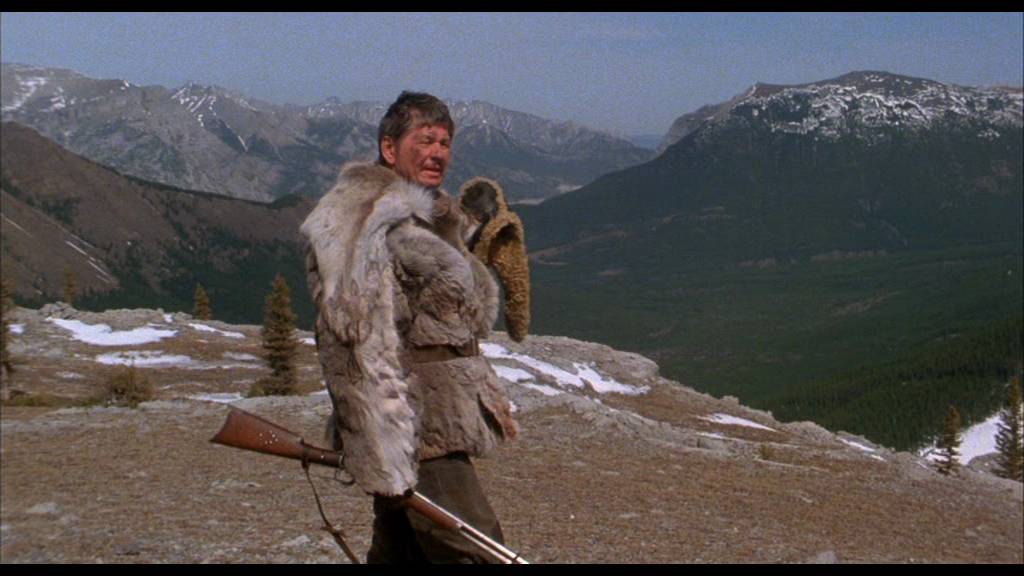
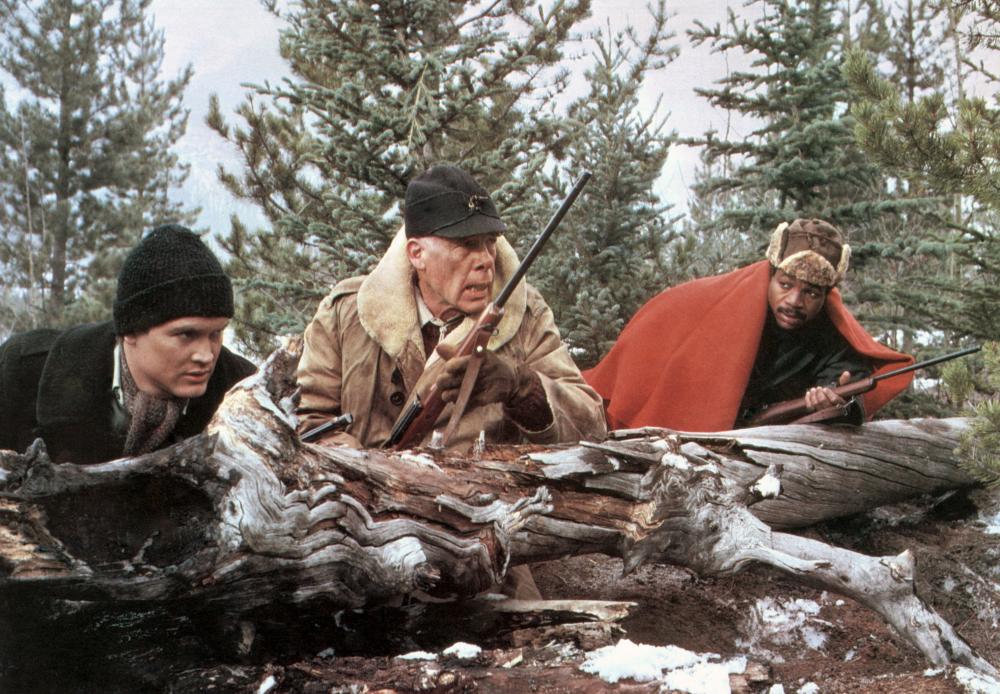
In the “based on a true story” DEATH HUNT, Charles Bronson plays trapper Albert Johnson, who lives in the Yukon Territory in the year of 1931 and just wants to be left alone. Early in the film, Johnson comes across a vicious dogfight and rescues one of the participants who’s almost dead. The problem is that the dog belongs to a piece of shit named Hazel (Ed Lauter), and even though Johnson pays him for the dog, Hazel heads to town and tells Sergeant Edgar Millen (Lee Marvin), of the Royal Canadian Mountain Police, that Johnson stole his dog. Millen doesn’t have time for Hazel’s B.S., so he tells him to go on. Millen would rather drink whiskey and hang out with his friends and co-workers in town. These people include the experienced tracker Sundog, aka George Washington Lincoln Brown (Carl Weathers), a young fresh-faced constable with the RCMP named Alvin Adams (Andrew Stevens), his latest lover Vanessa McBride (Angie Dickinson), and everyone’s favorite sidepiece, the Buffalo woman (Amy Marie George). Not willing to let things slide, Hazel and his men go up to Johnson’s cabin and start some more trouble, and one of his buddies gets his scalp shot off by the more than capable Johnson. Even though the entire mess has been started by Hazel and his crew of goons, who include character actors William Sanderson and Maury Chaykin, Millen is forced to try to bring Johnson in, so they can straighten everything out. When it seems Johnson may be about to go in with Millen, one of Hazel’s dumbass men opens fire, and all hell breaks loose. In the aftermath, Johnson escapes, kicking off a massive manhunt across the mountains and wilderness of the Yukon Territory!
DEATH HUNT is an awesome film, primarily because it pairs Charles Bronson, as the tough mountain man, against Lee Marvin, as the seasoned lawman who probably has only one chase left in him. This is a match made in heaven, and even though the two stars share little screen time, the icons dominate each frame of the film. Their characters respect each other and you get the feeling the two men, who couldn’t be more different in real life, probably felt the same way about each other. The remainder of the cast is filled with so many recognizable names and faces. I’d say the the best performances outside of Bronson and Marvin come from Carl Weathers, Andrew Stevens and Ed Lauter. I like the camaraderie that Weathers shares with Marvin, and of course he’s a lot of help when the action starts. Initially, Stevens seems like he’s going to be another “new kid” who’s too inexperienced to be of much help, but he proves to be more than capable by the end of the film. And good grief is Lauter good at playing a piece of crap! Everything about Hazel is cruel, sadistic, and ignorant, and he plays the part perfectly. A scene where a bullying Hazel gets his comeuppance at the hands of the young Adams (Stevens), is a highlight of the film. Sadly, Angie Dickinson, one of the most beautiful women in the history of cinema, is somewhat wasted in her small, unimportant role. I still like seeing her though, even if the part is beneath her.
Aside from the phenomenal cast that Director Peter R. Hunt (DR. NO and THUNDERBALL) was able to assemble, there are other good reasons to watch DEATH HUNT. I love movies that are filmed outside of the city, and you can’t get much further out of the city than the Canadian Rocky Mountains. This setting provides plenty of beauty, but its frozen landscape and bitter conditions also allow for a sense of loneliness, isolation and desperation to seep in for the various characters as the manhunt stretches out over time. There is also some rugged and violent action spread out through the film. I was caught off guard the first time I watched the film by some of the more graphic violence in the action scenes. I’ve already mentioned Bronson’s character basically blowing a guy’s head off, and there’s another scene involving William Sanderson getting his arm caught in a trap. These scenes make my toes curl up just thinking about them. The action highlight occurs when the men think they have killed Johnson in an explosion, to only have him emerge from the smoke and flames of his decimated cabin with slow motion shotgun blasting. It’s an incredibly badass moment in the movie and in Bronson’s overall filmography. Finally, the story is interested in contrasting the old ways of doing things, as exemplified by Bronson and Marvin, versus the new ways of doing things, as exemplified by the young Stevens and a hotshot pilot (Scott Hylands) who is called in to help with the search. Edgar Millen is somewhat of a dinosaur who isn’t ready to truly move into the 20th century. He wants to catch Johnson through old-fashioned, out maneuvering him in the wilderness, while Stevens’ character brings in a radio and the expertise to use it, and Hylands tries to locate him and gun him down from high in the sky. These two schools of thought clash and play out to varying degrees of success and failure as the chase rushes toward its conclusion.
DEATH HUNT is not a perfect film by any stretch of the imagination, but it’s been one of my favorite Bronson films since I first saw it the mid to later 80’s. Just seeing Bronson and Marvin together on screen, in a rugged, violent, badass story, goes a long way with me. It’s as simple as that! See the trailer below:
If you’re in Texas or Arkansas today, I hope you’re keeping as bundled up as Charles Bronson in DEATH HUNT. It’s cold out there people! Keep safe and stay home if at all possible! We don’t know how to drive in this weather!
Enjoy DEATH HUNT’s trailer below! Charles Bronson and Lee Marvin are as tough as it gets!
Welcome to Retro Television Reviews, a feature where we review some of our favorite and least favorite shows of the past! On Sundays, I will be reviewing the made-for-television movies that used to be a primetime mainstay. Today’s film is 1972’s The Glass House! It can be viewed on YouTube.
The Glass House starts with three men arriving at a location that will define the next few months of their lives.
Brian Courtland (Clu Gulager) is a veteran of the Vietnam War. He spent part of his service working as a guard in the brig. Now that he’s back in the United States and in need of a regular paycheck, he has gotten a job working as a prison guard. Courtland is not naive about where he’s going to be working or who he is going to be working with. But he is an idealist, one who tries to treat everyone fairly and who hopes that he will be able to do some sort of good in his new position.
Alan (Kristoffer Tabori) is a young man who has been arrested for selling marijuana. He is quiet and just hoping to serve his time and then get on with his life. His fellow prisoners have different plans for him.
Finally, Jonathan Paige (Alan Alda) is a liberal professor who, in a moment of rage, accidentally killed a man in a fight. Convicted of manslaughter, Paige enters the prison in a daze and cannot stop flashing back to the one moment that changed his life forever. Paige is assigned to work in the pharmacy, where he meets a prisoner-turned-activist named Lennox (Billy Dee Williams). Paige struggles to retain his humanity despite the harsh conditions.
All three of the men find themselves having to deal with the attentions of Hugo Slocum (Vic Morrow), the predatory “king” of the prison. Slocum expects Paige to help him run drugs though the the pharmacy. Slocum preys on Alan and sends his gang to punish him when Alan refuses Slocum’s advances. And Slocum expects that Courtland will just be another corrupt guard who agrees to look the other way when it comes to Slocum’s activities. Courtland, however, turns out to have more integrity than anyone was expecting.
The Glass House opens with a title card, informing the viewer that the film was shot at an actual prison and that the majority of the people in the film were actual prisoners. Not surprisingly, The Glass House does feel authentic in a way that a lot of other films about incarceration does not. The prison is claustrophobic and dirty, with every crack in the wall reminding the prisoners and the viewer that no one cares about what happens there. The extras have the blank look of men who understand that showing any emotion will be taken a sign of a weakness. Made in 1972, at a time when America was still struggling to integrate, The Glass House takes place in an almost totally segregated world. The black prisoners stick together. The white prisoners stick together. Everyone understands that’s the way that it will always be and, as we see by the end of the film, that’s the way the guards and the warden (Dean Jagger) prefer it because that means almost any incident can be written off as a being “a race riot.”
The real actors amongst the population do a good job of blending into the surroundings. Alda, Williams, and Tabori all give good performance while Vic Morrow is truly menacing in the role of the vicious Slocum. Slocum may not be particularly bright but, because he has no conscience, he is uniquely suited to thrive in a world with no morality. The film’s best performance comes from Clu Gulager, who does a great job of portraying Courtland’s growing disgust with how the system works.
Though it’s over 50 years old, The Glass House is a still a powerful look at life on the fringes. Society, for the most part, doesn’t really care much about what happens to the incarcerated. This film makes a strong case that we probably should. One is left with little doubt that, even if relatively harmless prisoners like Paige and Campbell survive being locked up with men like Slocum, they’ll still be incapable of returning to the “real world” afterwards. The viewer, like Brian Courtland, is left to wonder how much corruption can be tolerated before enough is enough.
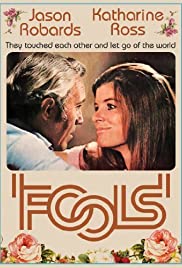
In this self-conciously hip and with-it portrait of life in San Francisco at the tail end of the hippie era, Jason Robards plays Matthew South, a veteran B-movie actor who is fed up with everyday life and who is prone to long monologues about how the machines are taking over. (Just imagine how Matthew would feel about the world today.) When Matthew gets into an argument with two people in a park, Anais Appleton (Katharine Ross) comes to his rescue and soon, they’re in the middle of a falling in love montage. Actually, there are several falling in love montages and they’re almost all scored by Kenny Rogers and the First Edition. It’s easy listening with a hippie tinge.
Fools follows Matthew and Anais as they wander around San Francisco and have several strange encounters, none of which make much sense. For instance, there’s a scene where two FBI agents suddenly burst into the room and then admit that they’re at the wrong address. Why is that scene there? What does it mean? Later, Matthew and Anais go to a dentist and they listen to a patient try to seduce her psychiatrist (who is played by Mako). Why is that scene there? What does any of it mean? Everywhere that Matthew and Anais go, they see evidence that society is dumb and that the answer to all life’s problems is a love song from Kenny Rogers. Matthew never stops talking and Anais never stops looking pretty (she’s Katharine Ross after all) but neither ever becomes a strong enough character to ground Fools in any sort of reality. It’s a movie that preaches nonconformity while so closely imitating A Thousand Clowns and Petulia that the entire thing feels like plagiarism.
Anais has a husband, an emotionally distant lawyer named David (Scott Hylands). David isn’t prepared to let Anais leave him, no matter how tired she is of their marriage. He hires a detective to follow Anais around. It all leads to an act of violence that doesn’t fit the mood of anything that’s happened before. Cue another falling love montage before the end credits role.
Fools is one of those films that probably would never have been made without the success of Easy Rider. Everyone wanted a piece of the counterculture in 1970 and Fools tries so hard that it’s painful to watch. Of course, neither Matthew nor Anais are really hippies. They do eventually come across some hippies playacting in the street. One of them is played by future David Lynch mainstay Jack Nance so that’s pretty cool. Otherwise, Fools deserves to stay in 1970.
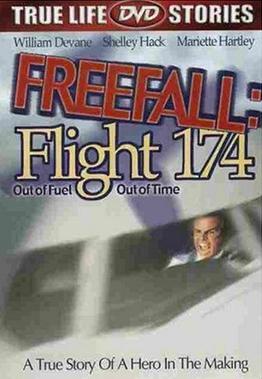 During a routine flight from Montreal to Edmonton, the two pilots (played by William Devane and Scott Hylands) discover that they do not have enough fuel to make it to their destination. Their aircraft was one of the first in the fleet to use the metric system but a conversion era led to the ground crew measuring the plane’s fuel in pounds instead of kilograms. With the help of an air traffic controller (Nicholas Turturro), the pilots try to land their plane before it falls out of the sky.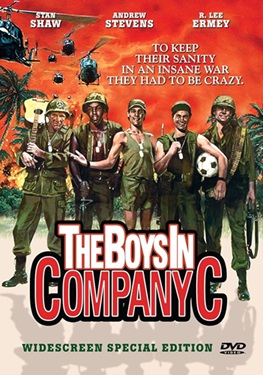


 Through the Shattered Lens