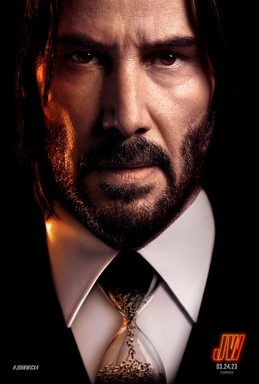
John Wick: Chapter 4 (dir. by Chad Stahelski) Review


“Those who cling to death; live. Those who cling to life; die.” – Caine

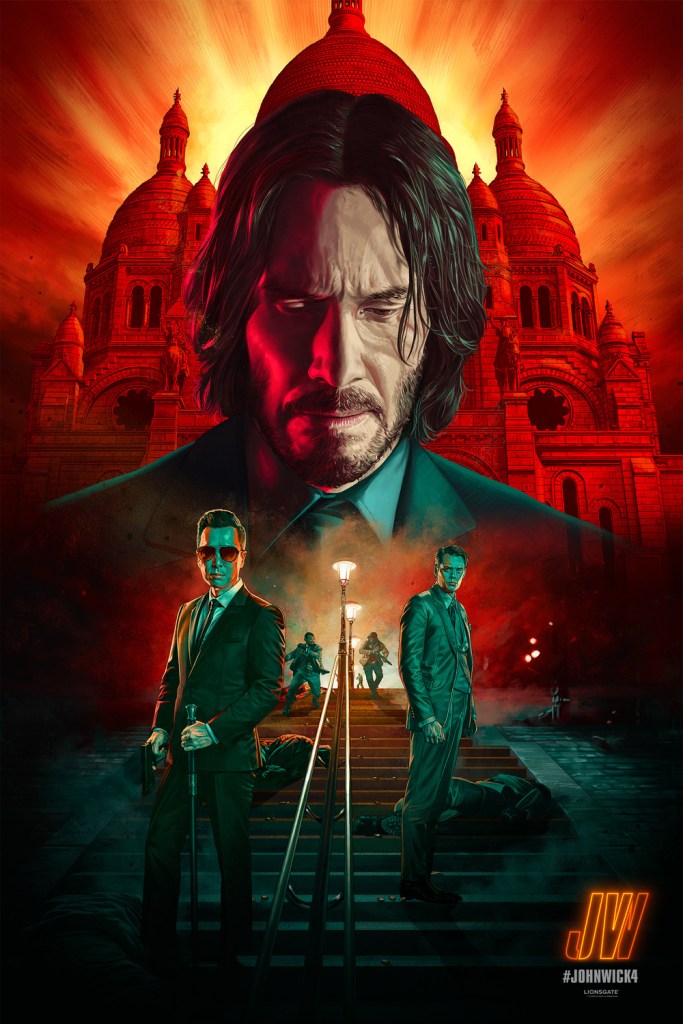
John Wick: Chapter 4 is the kind of action movie that doesn’t just lean into the spotlight—it steps into it, throws a flak vest over its suit, and then spends the next three hours filleting an entire world of assassins with brutal, balletic precision. At this point in the franchise, you’re either all‑in on the rules of the High Table, the Continental, and Wick’s endless mourning for his wife Helen, or you’re just here for the sheer spectacle of seeing Keanu Reeves beat up a continent’s worth of bad guys. The film not only respects that split audience, it tries really hard to satisfy both with a mix of operatic emotion, globe‑trotting locations, and a ridiculous amount of meticulously choreographed carnage.

One of the first things that stands out in John Wick: Chapter 4 is how much the world has expanded since the first film. The script doesn’t reinvent the core idea—Wick wants out, the system wants him broken, and the only way he can be free is by killing his way to the top—but it does layer on new zones, new factions, and a whole supporting cast of assassins who feel like they’re pulled out of their own B‑movies. From Morocco to Berlin, from New York to Paris, the film leans into a kind of hyper‑theatrical world‑building where every hotel lobby, nightclub, and underground fighting arena looks like it was designed by a comic‑book artist with a fetish for brutalism and neon lighting. That’s not a bad thing; it makes the universe feel lived‑in, even if it occasionally borders on self‑parody. The film also shuffles in a few fresh faces that give the usual assassin lineup some new flavors, including Donnie Yen as Caine, the stoic, blind assassin who carries both lethal efficiency and a quiet moral weight; Hiroyuki Sanada as the disciplined Shimazu, whose traditional demeanor and craftsmanship with a sword add a very grounded, almost old‑world element to the chaos; and Rina Sawayama as the high‑ranking assassin Akira, whose presence brings a mix of ruthless professionalism and a genuinely intriguing emotional arc that doesn’t feel like an afterthought.

There’s also Scott Adkins playing against his usual type as Killa Harkan, the head of the German Branch of the High Table, showing up in a surprisingly decent‑looking fat suit that gives him a grotesquely imposing presence while still hinting at the physicality audiences know from his other action roles. The character leans into the film’s tendency toward the theatrical, but he’s not just a walking gag; he fits into the world as one of the more visually exaggerated enforcers of the High Table’s rule. Alongside him, Shamier Anderson brings a lean, relentless energy as the Tracker, Wick’s shadowy, almost dog‑like pursuer whose loyalty to the system makes him more than just another interchangeable goon, while Marko Zaror crops up in the Berlin arena sequences as a brutal, wiry fighter whose style adds yet another distinct flavor to the movie’s unusually diverse fight roster. Taken together, these additions don’t just pad the body count; they give the film a sense that the John Wick universe is big enough to host everyone from classical swordsmen to modern martial‑arts specialists and even a few horror‑movie‑style fanatics, all orbiting the same doomed man.

The villain this time around is the Marquis Vincent Bisset de Gramont, played by Bill Skarsgård, and he’s the kind of High Table emissary who exists purely to make John’s life harder while reminding the audience that the system is more bureaucratic than it is mysterious. He’s got the cold, manipulative air of a corporate executive who’s never actually touched a gun but still has the power to ruin people’s lives on paper. His presence allows the film to spend more time on the politics of the assassin underground, which in turn forces John to pull in a wider network of allies, return favors, and, in a few cases, rebuild old friendships that were already on thin ice. That network includes the Bowery King, Caine, and the rest of the new cast, all of whom add texture to the usual slug‑fest even if the plot’s core emotional arc is still very much about a man who keeps remembering the wife he can’t get back.

Where Chapter 4 really flexes its muscles is in the action, and nowhere is that more obvious than in the extended Paris set‑piece that basically becomes the film’s centerpiece. It starts on the open city streets at night, with Wick already on the move, guns blazing and bodies piling up as the camera weaves through car‑chase energy and close‑quarters shoving. The chaos then escalates when the sequence shifts to the Arc de Triomphe roundabout, where the circular layout turns the whole area into a spinning, three‑dimensional shooting gallery. Cars whip around the monument, bullets ricochet off stone and metal, and the sheer spatial awareness of the choreography makes it feel like you’re watching a real‑time videogame map being systematically cleared in concentric circles, except the “map” is an iconic piece of Parisian infrastructure.

The escalation doesn’t stop there. The action migrates into a mostly empty, half‑abandoned apartment complex that feels like a brutalist concrete maze, each floor and hallway turning into a new arena for sprinting, reloading, and last‑minute dodges. The geography of the building becomes a character of its own, with shots that snake down stairwells, peer through doorways, and frame John as a lone figure ducking and weaving through a vertical death‑trap. It’s inside this apartment complex that the film drops one of its most memorable visual flourishes: a frenetic, prolonged shootout using dragon’s breath shotgun shells—incendiary rounds that send flaming pellets spraying outward—captured from an isometric, top‑down angle that directly evokes the look of indie action‑game favorites like The Hong Kong Massacre. The camera rides high above each room as Wick storms through, watching clusters of fire and bullets explode outward in geometric patterns, turning the interior layout into a living level map. It’s a moment that feels less like traditional cinema and more like a loving, hyper‑stylized homage to the way videogames can turn gunplay into a choreographed light show.

The final stretch of this extended Paris gauntlet is the brutal climb up the Rue Foyatier stairway to the Sacré‑Cœur steps, where the film’s choreographic and camera work reach their most expressionistic peak. The wide shots of Paris looming below, the narrowing of the stairway itself, and the way the camera sometimes drifts into an almost dreamlike, slightly elevated angle all combine to make the sequence feel like an endurance ritual rather than just another fight. By the time Wick reaches the top—after being hurled back down and forced to claw his way up again—the audience feels just as exhausted as he looks, which is exactly the point.

That’s part of what makes the film work when it isn’t just going hand‑to‑hand with you for nearly three hours. Beneath all the shooting and stabbing, John Wick: Chapter 4 is also quietly insistent on the idea that this is a tragedy. John Wick isn’t just a guy who happened to fall into a secret society of killers; he’s a man who has been reshaped by grief, loss, and the realization that every compromise he’s made along the way has only made his cage tighter. The film doesn’t over‑explain this; instead, it lets you watch him limp, cough up blood, and drag his battered frame through one more ambush, as if his body is the only thing strong enough to keep him breathing. The supporting characters—especially those tied to the High Table or to his past, including the newer faces like Caine, Shimazu, Akira, Killa Harkan, the Tracker, and the arena fighters—get a few moments to show that they’re not just cannon fodder, either. They have responsibilities, hierarchies, and codes that clash with the arbitrary cruelty of the Table, even if most of them still end up in the path of Wick’s bullets.

On the flip side, the movie is also unapologetically aware of how silly it is. There’s a knowing winking about the dialogue, the neon‑lit set designs, and the way lines like “You have until sunrise” are delivered with the gravity of a Shakespearean prophecy. The film doesn’t try to make you forget that this is ultimately a high‑end first‑person‑shooter turned into a live‑action ballet. It leans into the absurdity of escalating stakes, the way the world keeps conspiring to throw more and more assassins at John, and the fact that even when he’s bleeding out, he still insists on finishing a fight with a signature flourish. For some viewers, that will feel like a strength, a kind of self‑aware celebration of the genre. For others, it’ll feel like the moment the franchise tips from cool to camp, especially when the pacing starts to drag a bit in the middle section and the mix of formal duels, fat‑suited branch leaders, and endless negotiations begins to feel a little overstuffed.

The film’s length is its biggest liability. At around 169 minutes, John Wick: Chapter 4 is not shy about giving you more than enough time to live inside its world, but it also doesn’t always feel like it needs every last minute. The middle act, in particular, spends a lot of time on formalities, treaties, duels, and metaphysical negotiations with the High Table, which can slow the momentum when what you really want is for John to do another hallway‑fight or another truck‑pile‑up. There are times when the script feels like it’s stretching itself out to keep the spectacle going rather than tightening the storytelling, and that’s when the silliness of it all—like the deliberately over‑the‑top presence of Killa Harkan and the packed gallery of new faces—can start to work against the emotional weight the film is trying to build. A leaner, more ruthless edit would probably make the overall experience feel sharper and more focused.

Still, there’s a lot to admire in what the film manages to pull off. The sound design, the camera work, and the way the choreography is almost always shot in wide, relatively clear takes all combine to make the action feel substantial rather than edited into incomprehensible chaos. The supporting cast—Donnie Yen, Hiroyuki Sanada, Rina Sawayama, Scott Adkins, Shamier Anderson, Marko Zaror, and others—add texture and personality to a world that could otherwise feel like a series of interchangeable goons. They’re not just there to get shot; they’re there to give the film a sense of a larger, more complicated ecosystem of killers, each with their own rules and reasons.

In the end, John Wick: Chapter 4 is less a strict narrative continuation and more of a cinematic endurance event. It doesn’t reinvent the franchise, but it pushes the Wick formula into more extreme, more theatrical, and more emotionally committed territory. It’s messy in places, overstuffed in others, but it also has a few moments of pure, jaw‑dropping action that will probably end up in “best of the decade” lists among genre fans, especially that Paris mega‑set‑piece that starts on open streets, spirals through the Arc de Triomphe, invades an empty apartment complex for that dragon’s‑breath top‑down firefight, and climaxes on the Rue Foyatier stairs. If you’re someone who cares about emotional coherence and tight plotting, the film will probably test your patience. If you’re someone who’s here for the ballet of bullets, the operatic bloodshed, the eccentric new cast, and the sight of Keanu Reeves refusing to stay down no matter how many times the universe tries to kill him, then John Wick: Chapter 4 is a pretty satisfying send‑off—or at least a very loud, very stylish stop on the way there.

Weapons used by John Wick throughout the film

  • Glock 34 (TTI Combat Master Package) – His primary pistol early on, including the Morocco sequence against the new Elder and during the Osaka Continental battle.
  • Agency Arms Glock 17 – Used by Wick during the garden fight at the Osaka Continental after he takes it off a High Table enforcer.​​
  • TTI Pit Viper – The “hero gun” of the movie, custom‑built for Chapter 4, used heavily in the Paris staircase and duel lead‑up sequences.
  • Thompson Center Arms Encore pistol – custom-made single-shot pistols created specifically for the Sacre-Couer duel.
  • TTI Dracarys Gen‑12 – The dragon’s‑breath shotgun he grabs during the Paris apartment sequence, used in the isometric top‑down “videogame” style scene.
  • Spike’s Tactical Compressor carbine – Used by Wick after he takes it from High Table enforcers during the Osaka Continental fight.

John Wick Franchise (spinoffs)
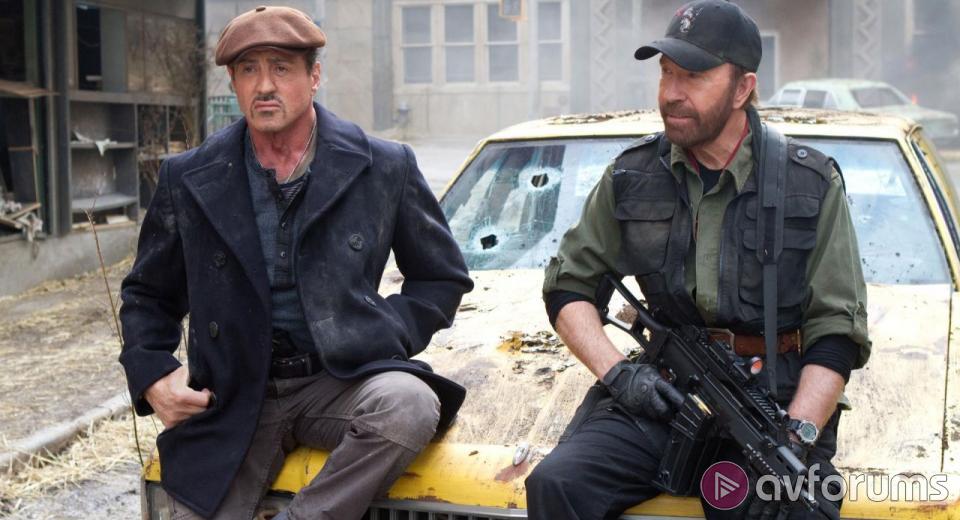
Brad reviews THE EXPENDABLES 2 (2012), starring Sylvester Stallone! 


I was the target audience for the “Expendables” movies. From the first time I ever heard of the concept, I was all in and gladly told everyone I knew about the upcoming movie. Just the prospect of a big time action movie in 2010 starring Sylvester Stallone and bringing back so many of my favorite actors of the 1980’s and 1990’s was just too good to pass up. After reading updates on the project for at least a year, I was so ready when THE EXPENDABLES (2010) finally hit theaters on August 13, 2010. I don’t remember if I made it to the theaters on opening night, but if not, I definitely made it soon thereafter. Unfortunately, a year of building up my expectations also made it impossible for the movie to completely live up to them. I enjoyed the film and bought the blu ray as soon as it was available, but it just wasn’t everything I hoped it would be. I don’t think anything could have lived up to my expectations to be completely honest. THE EXPENDABLES 2 (2012) came out a couple of years later, and with Jean-Claude Van Damme and Chuck Norris added to the cast, I was ready to go again, albeit with admittedly lower expectations. 

THE EXPENDABLES 2 follows our group of elite mercenaries led by Barney Ross (Sylvester Stallone) and Lee Christmas (Jason Statham) as they head to Albania for CIA operative Church (Bruce Willis) to retrieve a box from a downed airplane. We find out that the box contains a computer that knows the exact location of 5 tons of weapons grade plutonium. The mission goes to pot when the team encounters the ruthless Jean Vilain (Jean-Claude Van Damme), the leader of a terrorist group, who forcibly confiscates the computer and then kills one of the expendables to teach them some “respect.” Obviously, this doesn’t set well with Barney and he decides the best option for payback is to “Track them, find them, and KILL them!” The remainder of the film follows the team as they try to do just that and stop Vilain from selling the plutonium to the highest bidder. They also get some timely help from fellow badasses like the “lone wolf” Booker (Chuck Norris) and Trench (Arnold Schwarzenegger). 

THE EXPENDABLES 2 is my favorite film of the franchise, and that’s why I decided to review it today, on Sylvester Stallone’s 79th birthday. The “Expendables” franchise was designed to bring back the nostalgia of 80’s and 90’s action films, and in my opinion, this first sequel gives me what I was actually wanting from the first film. Taking over from Stallone, Director Simon West assembles a film with explosive action scenes, cartoonishly evil villains, cheesy one-liners and over-the-top violence that doesn’t try to be anything more than what it is. The movie leans hard into its glorious, nostalgic absurdity and as a guy who grew up on these guys and their action films, I pretty much enjoyed every moment! 

THE EXPENDABLES 2 doesn’t work without the cast of action movie veterans who bring back good movie memories just by showing up on screen. As a massive collector of Blu rays and DVD’s, I own a physical copy of just about every movie made by Sylvester Stallone, Bruce Willis, Arnold Schwarzenegger, and Chuck Norris during their 80’s and 90’s heydays. Most of these discs replaced a previously owned VHS tape, and each of these actors has their own “section” in my collection. These are the movies, along with those of actors like Charles Bronson and Clint Eastwood, that I revisit the most every year. I’m a huge fan of Hong Kong cinema and Jet Li as well, but his role here is just a cameo at the beginning of this installment. Jean-Claude Van Damme has ended up showing such strong staying power in his career, and his performance as the villain is a true highlight for me. Also, my son, who would have been around 12 when this came out, had just discovered the “Chuck Norris Facts” and he loved telling me his favorites. That silly pop culture phenomenon brought a whole new level of fun to Chuck’s extended cameo in this film. I did want to shout out Dolph Lundgren and Jason Statham as well. I may not put them on as high a pedestal as some of the others, but they’re still awesome! Is THE EXPENDABLES 2 the best work of any of these actors? Of course the answer is no, but the filmmakers dredged up my memories in just the right way and gave me 103 minutes of fan service and fun! 

With all that said, I do understand that a person who doesn’t carry nostalgic memories of action films gone by may not enjoy THE EXPENDABLES 2 near as much as I did. The film relies on nostalgia, and without that, the plot itself is very thin and many of the lines will come across as head-scratching clunkers. Even so, most action fans should still enjoy the non-stop sensory assault and violence served up by true genre pros. I loved it and offer no apology for that! 

#MondayMuggers present AVENGEMENT (2019) starring Scott Adkins!


Every Monday night at 9:00 Central Time, my wife Sierra and I host a “Live Movie Tweet” event on X using the hashtag #MondayMuggers. We rotate movie picks each week, and our tastes are quite different. Tonight, Monday June 23rd, we are showing AVENGEMENT (2019) starring Scott Adkins, Craig Fairbrass, Thomas Turgoose, and Nick Moran.

Convicted felon Cain Burgess (Scott Adkins) escapes prison and heads out to take revenge on those he holds responsible. The consensus on Rotten Tomatoes is as follows:

“AVENGEMENT compensates for a lack of narrative originality with thrilling sequences of violent, bone-crunching action, elevated by Scott Adkins’ brutally intense performance.”

So, if you like “violent, bone-crunching action,” it sounds like we have the movie for you! Join us tonight for #MondayMuggers and watch AVENGEMENT! It’s on Amazon Prime. The trailer is included below:

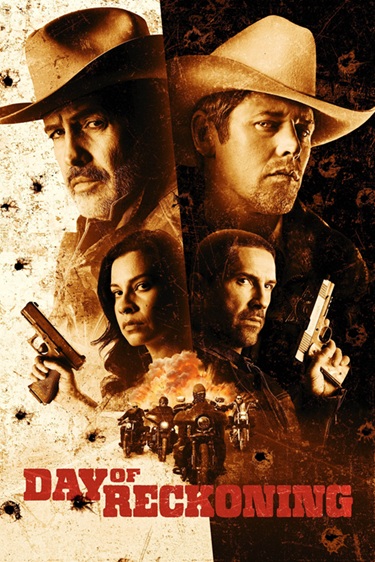
I Watched Day of Reckoning (2025, Dir. by Shaun Silva)


In this modern day western, Billy Zane plays a U.S. Marshal who recruits a down on his luck sheriff (Zach Roerig) to help him capture a banker robber (Scott Adkins).  Zane goes out to Adkins’s ranch and holds Adkins’s wife (Cara Jade Myers) hostage.  Roerig is not okay with this, especially since he thinks that Zane and his men have ulterior motives for wanting to track Adkins.  Eventually, some other yahoos show up, all wanting to join Zane’s posse, setting up a final violent showdown and Roerig having to decide which side he’s on.

Day of Reckoning had the right, dusty look and the acting was decent but it took forever for the action to actually start.  Instead, there were way too many scenes of Roerig bonding with Myers, who spent nearly the entire running time handcuffed in a bathtub.  Scott Adkins is a martial artist who has a huge online following but he didn’t get to show off any of his skills in the movie so I’m not sure what the point of casting him was.  Trace Adkins (no relation to Scott) and Mike Wolfe (from American Pickers) are also in the movie and I’m always happy to see them.  Rapper Yelawolf, who was supposed to be the next big thing 15 years ago, is also in Day of Reckoning.  He plays the imaginatively named Wolf.  I liked Billy Zane’s performance but it was mostly just because he was Billy Zane.  (I even liked him in Titanic because it’s impossible not to like Billy Zane.)  There’s nothing that interesting or surprising about his character.  It’s obvious that he’s going to turn out to be bad from the first moment he shows up.

Once the action does start up, it’s decent.  I just wish there had been more of it and less scenes of everyone standing around giving each other the evil eye.


The Films of 2024: One More Shot (dir by James Nunn)


It’s the night of the President’s State of the Union address and it appears that someone is planning to blow up the capital and spare everyone from having to sit through it.  (Personally, I’ve always found the pomp and circumstance surrounding the State of the Union address to be the opposite of what the Founding Fathers probably envisioned.  Presidents should go back to just sending Congress a note at the start of the year.)  Unfortunately, the bomb itself is radioactive so, though Americans will be spared the speech, Washington D.C. will still be reduced to an atomic wasteland.  Canceling the speech and the special Congressional session seems like an obvious solution but the President’s approval ratings are tanking and he’s hoping a good State of the Union will energize his reelection campaign.

Navy SEAL Jake Harris (Scott Adkins) has been tasked with escorting terrorist suspect Amin Mansur  (Waleed Elgadi) from Poland to Washington so that CIA director Mike Marshall (Tom Berenger, looking generally annoyed) can interrogate Mansur about the location of the bomb.  A Baltimore airport has been cleared out so that Mansur can be transferred to FBI custody with as little attention as possible.  Marshall takes a few minutes to yell at Jake, because this is an action film and action heroes always get yelled at by their superiors.  No sooner has Jake been yelled at then a bunch of mercenaries attack the airport.  It turns out that they also want Mansur and they’re willing to kill everyone in the airport to both get him and to make sure that the bomb is properly delivered.

Jake finds himself fighting for his life and also in the position of having to protect the terrorist that he brought to America.  However, as the night progresses, Jake discovers that Mansur is not the terrorist mastermind that he assumed and that the mercenaries are working for an enemy who is very close to home.

One More Shot is a sequel to 2021’s One Shot and, like that film, it’s shot and edited to make it appear as if the action is playing out in one continuous take.  The camera never seems to stop roaming through the airport, occasionally catching a mercenary or sometimes even Jake hiding in the shadows and waiting for a chance to attack.  It’s a gimmick but it’s an undeniably effective gimmick, one that is especially well-used in the film’s many battle scenes and which keeps the audience on its toes.  One More Shot has some of the most effective gunfights that I’ve recently seen and a lengthy sequence where Jake, Mansur, and a few others attempts to drive their way through a gauntlet of mercenaries is as genuinely exciting as anything you’d expect to find in an action film with bigger budget.

In the end, One More Shot feels like a video game come to life, with everything that implies.  One More Shot is an unapologetic action film, which is to say that this is not the film to watch if you’re looking for extensive character development or a nuanced debate about terrorism and American foreign policy.  We don’t really find out much about Jake Harris, other than the fact that he’s a good shot and he’s not easily intimidated.  Of course, that’s all we really need to know.  It’s an exiting 100 minutes and that’s all that it really needs to be.

The Films of 2024: Lights Out (dir by Christian Sesma)


Duffy (Frank Grillo) is haunted by the past.  When he was serving in the U.S. military, he watched as his friends and fellow soldiers were killed in battle.  Now that he’s back in America, he’s haunted by the memories and the trauma has left him incapable of finding peace.  He’s angry and paranoid and restless.  He drifts around the country, making whatever money that he can as a gambler.  But when a poker game at a Los Angeles roadhouse leads to a physical confrontation, Duffy is offered a new opportunity.

Max (Mekhi Phifer) watches as Duffy defends himself and is impressed with what he sees.  Max is a ex-con who works as a recruiter for underground fight clubs.  Max recognizes the source of Duffy’s anger because Max’s brother was also a veteran who returned to America carrying the mental and physical scars of war.  Max feels that he failed his brother but maybe he can make up for it by saving Duffy’s life.  Max recruits Duffy as a fighter and gives him a place to live.  Duffy and Max soon find themselves in conflict with an evil gym owner (Dermot Mulroney, making the most of a rare villainous role) and a corrupt cop (Jaime King) who is secretly in charge of the town’s underground fight scene.

Lights Out is a fast-paced and occasionally self-aware B-movie.  I always find movies like this fascinating because they present a world where there’s an underground fight club located in every backroom and lumber yard.  Don’t get me wrong.  I’m not saying that there aren’t underground fight clubs.  I’m sure they’re out there and I’m sure that there are some dangerous people involved in promoting them.  I’m just saying that I kind of suspect that there might not be as many of them as there tends to be in the movies.  I always find it interesting that so many underground fight clubs seem to have a “fight until the death” rule.  I mean, it seems to me that would cause you to quickly run out of fighters.  I also wonder what people do when they want to start an underground fight club but they don’t have access to an abandoned warehouse or any acquaintances in the Russian Mafia.  I guess those people are just screwed.

While Mulroney and King definitely make an impression as the two over-the-top villains, Lights Out is dominated by Frank Grillo.  Grillo has been lucky enough to be blessed with a down-to-Earth screen presence that allows him to be likable while also leaving little doubt that he is someone who can handle himself in a fight.  He has the weathered good looks of some one who has seen some things but who hasn’t yet surrendered his humanity.  He’s like the modern day version of one of those wonderful character actors who used to populate the gangster movies of the 1930s.  Grillo’s tough sincerity and streetwise persona is well-used here.  John Garfield had his Body and Soul.  Frank Grillo has his Lights Out.

Film Review: John Wick: Chapter Four (dir by Chad Stahelski)


Yesterday, I finally watched the hit film of March 2023, John Wick: Chapter Four.  It left me overwhelmed and I mean that in the best possible way.

The film picks up where the last film left off.  John Wick (Keanu Reeves), the dog-loving, formerly retired professional hit man, is still traveling the world and killing the leaders of the High Table.  As becomes apparent from the start of the film, it’s a bit of a fool’s errand as killing one leader only leads to another leader being installed.  When John travels to Morocco to kill the leader known as “The Elder,” he discovers that the Elder he knew is gone and has been replaced with a new Elder.  He still kills the new Elder because that’s what John Wick does.  He kills people.  He’s a literal killing machine, one who audiences like because he loves dogs, is still mourning for his dead wife, and he’s played by Keanu Reeves.  On paper, the relentless and ruthless character of John Wick is horrifying.  But, when he’s played by Keanu Reeves, he becomes the killing machine that audiences can’t help but love.

The arrogant and brilliantly named Marquis Vincent Bisset de Gramont (Bill Skarsgard, giving a wonderfully hissable performance) is currently in charge of the efforts to track down and kill John.  The Marquis establishes himself as being evil by not only killing Charon (Lance Reddick) but also blowing up the Continental.  Upset by the murder of Charon and the destruction of his business, Winston (Ian McShane, playing his role with the perfect amount of wounded dignity) tells John that he can end his entire war with the High Table by challenging the Marquis to a duel.  Unfortunately, to do that, John has to convince another criminal organization to sponsor him and just about criminal organization on the planet wants John did.  To make things even more difficult, the Marquis has brought the blind assassin, Caine (the incredible Donnie Yen), out of retirement to track down John.  Caine and John are old friends but Caine knows that his daughter will be killed unless he kills John.

Clocking in at 169 minutes, John Wick: Chapter Four is a big, flamboyant, and at times overwhelming production.  John Wick travels across the world and every country in which he finds himself is home to someone who wants him dead.  And since everyone that John Wick knows seems to have a unlimited supply of guards and henchmen, the fights are nonstop and the violence is over the top but the film is so energetic and cheerfully excessive that it’s never boring.  Each fight scene feels like it could be a separate film on its own, with each member of the cast getting a chance to show off what they can do.  The water-filled fight in a Berlin night club is the film’s best moment but it’s closely followed by an extended combat sequence that’s set in a hotel in Japan.  With its vivid cinematography and ornate production design and its spectacular stunts, John Wick Chapter 4 is a work of pure cinema, an thrill ride of glorious excess.  Along with providing an ending to John Wick’s story, it also pays tribute to everything that audiences love about action cinema.  It’s a film for people who love action and, even more importantly, it’s film that has as much love for its audience as it does for itself.

The film ends on a note of apparent finality, one that becomes more ambiguous the more that one examines it.  This may be the last chapter of John Wick’s story or it may not.  (Considering the film’s box office and critical success, I suspect that it will not be the last.)  John Wick Chapter Four serves as a fitting (if perhaps temporary) end to the saga and also a tribute to both the action aesthetic and Keanu Reeves’s innate likability. 

Keanu Reeves returns in the John Wick 4 Trailer!


The High Table would like a word with John Wick.

I’m surprised there’s anyone left to fight, but on hand, we have Natalia Tena (Game of Thrones), Bill Skarsgard (Barbarian), Hiroyuki Sanada (The Wolverine), Scott Adkins (Accident Man), Clancy Brown (Thor: Ragnarok) and the legendary Donnie Yen (Ip-Man, Rogue One). They join the original cast that includes Keanu Reeves, Laurence Fishburne, Lance Reddick, & Ian McShane.

John Wick: Chapter 4 is set to release in theatres on March 24, 2023.

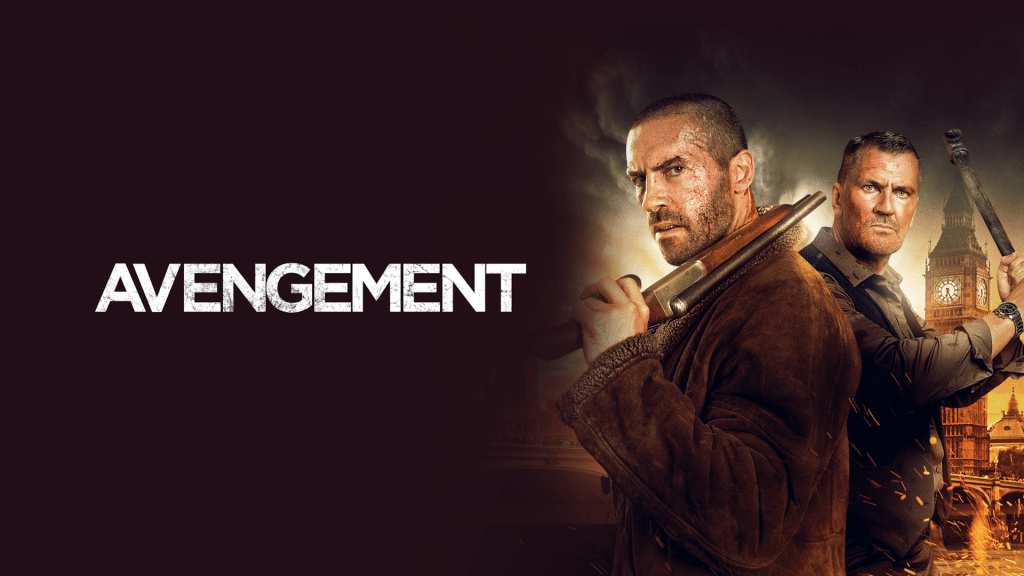
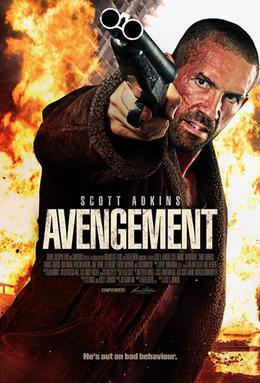
The TSL’s Grindhouse: Avengement (dir by Jesse V. Johnson)


I’m not really sure if “Avengement” is actually a word but, regardless, that’s what Cain Burgess is determined to get.  AVENGEMENT!

Martial artist Scott Adkins plays Cain in this 2019 British film.  When we first meet Cain, he’s in prison but that quickly changes once he manages to escape.  Cain heads to a pub, one that’s owned by his brother, Lincoln (Craig Faibrass).  After he’s taken everyone in the pub hostage, we learn about how Cain not only came to be a prisoner but also how he ended up with some rather prominent facial scars.  It turns out that Cain likes to tell a story and, for whatever reason, the gangsters are willing to sit around and listen.  Through the use of flashbacks, we see how Cain went from being an innocent martial artist to being the most feared man in prison.  We see how he learned to kill and how not even getting acid thrown in his face could slow him down.  Cain’s a scary dude and he’s out for revenge!  Or avengement!

Of course, we also can’t help but notice that a lot of Cain’s adventures feel as if they’ve been lifted from other British crime films.  The talkative gangsters bring to mind the films of Guy Ritchie.  A lengthy chase scene owes more than a little to the opening on Trainspotting.  Even the fight in the pub owes a bit to the finale of Shaun of the Dead.  It’s all a bit familiar but then again, that’s part of the appeal of the modern British crime thriller.  We watch these films specifically for the posh villains and the pub fights and the often indecipherable dialogue.  The familiarity is often exactly what the viewer is looking for.  (That said, I was a little bit surprised by the lack of Russian mobsters wearing track suits.  That was a missed opportunity.)  I think the other reason why Americans, in particular, like British gangster films is the novelty of seeing that British gangsters can be just as unnecessarily violent as American gangsters.  It’s nice to be reminded that America isn’t the only country that breeds violence.

Speaking of violence, Avengement is a very violent film and it’s also often a very bloody film.  When you consider how much of the film takes place in prison, it’s not surprising that there’s a lot of stabbings.  (What is somewhat surprising is that there are also a lot of stabbings outside of prison, even when there are guns nearby.)  I’m usually not a fan of gratuitous violence but Avengement handles it all with a certain wit.  The violence is so over-the-top that it’s hard not to suspect that the filmmakers are commenting on the excessive nature of other British gangster films.  There’s a lengthy montage of Cain just fighting anyone who comes near him and it goes on for so long that it actually becomes somewhat humorous.  It’s hard not to feel at least a little admiration for Cain’s determination to start a fight with every single person that he sees.  He certainly doesn’t give up.  Scott Adkins is a gymnast, along with being a martial artist, and there’s a grace to his movements that comes through even when the film is at its most brutal.  Early on, I joked that the film would only work if its ultraviolent protagonist turned out to be likable and strangely enough, that’s exactly what happened.  Scott Adkins, to my surprise, turned out to be not only an exciting fighter but also a pretty good actor.  He shows enough screen presence in Avengement to make viewers hope that he’ll someday get a major action role.

Avengement is a ferocious but entertaining and unpretentious action film.  Watch it.  Experience it.  Just don’t worry about trying to understand what everyone’s talking about.  Just assume that everyone has a reason to want Cain dead and Cain has a reason to want the same for everyone else and there should not be any trouble at all.

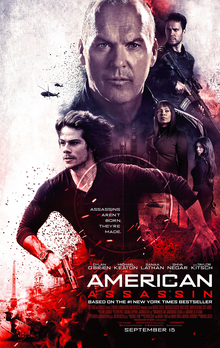
Playing Catch-Up With The Films of 2017: American Assassin (dir by Michael Cuesta)


Probably the best thing about American Assassin is how simple it is.

The film opens on the beach, with Mitch Rapp (Dylan O’Brien) asking his girlfriend to marry him.  No sooner has she accepted than suddenly, terrorists are washing up on the beach and, in a genuinely frightening scene, shooting everyone that they see.  Mitch is wounded.  His girlfriend is killed.

Mitch seeks revenge against the man who killed his “future wife” (to borrow a phrase from The Room) but U.S. Special Forces kill the terrorist seconds before Mitch gets the chance.  However, the CIA is so impressed, by Mitch’s single-minded and obsessive desire for revenge, that they recruit him to join Orion, a black ops unit.  Under the guidance of grizzled veteran, Stan Hurley (Michael Keaton), Mitch becomes an American assassin.  His first mission?  To stop a renegade mercenary known as the Ghost (Taylor Kitsch).

In many ways, American Assassin feels like a throwback to the action films of the early aughts.  There’s none of the moral ambiguity of the Bourne films and Mitch Rapp never indulges in any of the self-loathing that’s marred the Daniel Craig James Bond films.  Remember how Bond got drunk and tried to interrogate that rat in SPECTRE?  Judging from American Assassin, that’s something Mitch Rapp would never do.  And, if he ever did, Stan Hurley would probably tell him to stop whining and get back to work.

In American Assassin, the bad guys are undoubtedly the bad guys and the good guys are undoubtedly the good guys and, while that may not be the approach that leads to Academy Awards and overwhelming critical acclaim, it still makes for an undeniably entertaining movie.  Director Michael Cuesta does a good job with the action scenes and he gets good performances from the entire cast.  Taylor Kitsch is far more compelling as a villain than he ever was in any of his heroic roles and, not surprisingly, Michael Keaton steals the whole show as the tough but caring Stan Hurley.  Michael Keaton is definitely one of the best actors working today.  He can slide seamlessly from a prestige drama like Spotlight to an action film like American Assassin to a comic book film like Spider-Man: Homecoming and he can do it without missing a beat.  Those are three very different films and Keaton was the best thing in all of them.

And, finally, we have Dylan O’Brien.  Last year, as we all know, O’Brien was seriously injured while filming the third Maze Runner film.  At the time, it was announced that O’Brien’s injuries were “substantial but not life threatening” but I know there was a feeling that his career might be over.  Even though American Assassin was not his first film since getting injured, it was his first starring role and I have to admit that it was good to see O’Brien back and looking good.  O’Brien brought a lot of gravity to the role of Mitch Rapp.  He had the haunted look of a man obsessed with revenge.  When I saw O’Brien in The Maze Runner and, before that, in Teen Wolf, I thought he was a pleasant young actor but, in American Assassin, he gives his most mature performance to date.  With American Assassin, Dylan O’Brien grows up.

As I said, American Assassin is a simple film.  There’s not much going on beneath the surface and it you’re looking for anything deeper than pure entertainment, you might want to look elsewhere.  American Assassin is what it is and makes no apologies.  What it does, it does well.