Earlier today, Jeff and I saw Ex Machina and we thought it was brilliant! Now, before I (among others here at the TSL) get around to posting a full review later this week, I thought I would share a scene that I loved from the film. This is the scene that, when it happened, everyone in the theater suddenly realized that they were watching a movie that they would never forget.
I’m not going to go into the details of just why Oscar Isaac and his “friend” are dancing in this scene. For now, all that’s important is that they are.
As I sit here typing this at nearly 2 in the morning, this is what our front yard currently looks like:
Now, admittedly, this is nothing compared to what fellow TSL writers Pantsukudasai56 and Leon The Duke are having to deal with up in Massachusetts. However, Erin and I live in Texas, where we consider 90 to be a cold front. So, to us, that is a lot of snow!
(Add to that, it’s still coming down…)
As I watched the flakes fall and I realized that our cat’s outside water bowl had now disappeared under a mountain of snow, I couldn’t help but think of one of the best (and most snow-filled) films ever made, 1996’s Fargo. Fargo is a film about many things: greed, love, home, fate, guilt, and innocence. It’s also a film that’s full of snow.
And tonight’s Scene That I Love comes from Fargo. When people talk about Fargo, they always seem to mention the woodchipper scene, the accents, and maybe the scene where William H. Macy flees the interview. However, for me, the film’s best scene comes towards the end. As Marge Gunderson (Frances McDormand) drives Gaer Grismund (Peter Stomare) to jail, she reflects on everything that’s happened.
Even though I’ve seen Fargo several times, this scene still always gets to me. First off, there’s always a part of me that’s scared that Grismund is somehow going to attack Marge from the backseat. But, beyond that, this is the scene where Marge reminds us that, for all the bad in the world, there’s still good as well.
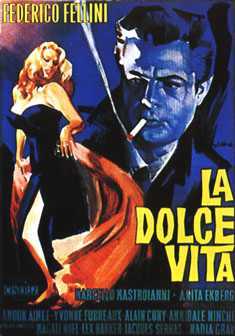
This famous and iconic scene is taken from Federico Fellini’s 1960 film, La Dolce Vita. The film follows tabloid journalist Marcello (Marcello Mastroianni) over the course of 7 days and 7 nights. He spends the 2nd day pursuing a famous actress named Sylvia (Anita Ekberg). As the day comes to an end, he finds Anita wading into the Trevi Fountain.
As famous and celebrated as this scene is, it’s often forgotten that it ultimately ends with Sylvia being slapped by her loutish boyfriend, Robert (Lex Barker). That slap is not included in the video below but that’s okay. For today, at least, let’s allow Sylvia her happiness.
I really probably shouldn’t share this scene until I actually post my review of The Perks of Being A Wallflower. But I’ve still got three other Back to School films to review before I get to Perks and I want to share this scene now! In this dance scene that I love, Emma Watson and Ezra Miller take over the dance floor in spectacular fashion!
I just heard that, earlier today, the legendary character actor Eli Wallach passed away at the age of 98. Wallach made his film debut in 1956’s Baby Doll and made his final film appearance 54 years later in Wall Street: Money Never Sleeps. I have to admit that I don’t really remember much about Wall Street or Wallach’s performance in the film. However, I do remember his wonderful cameo appearance in The Ghost Writer.
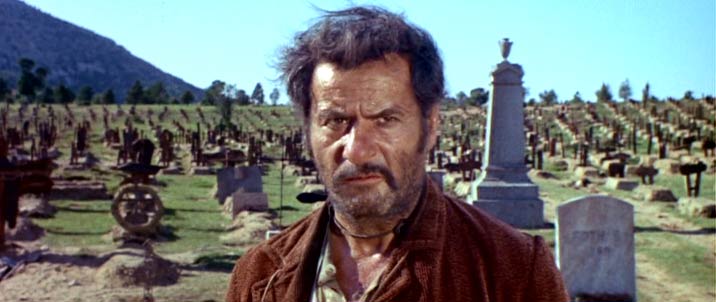
And, of course, everyone remembers Eli Wallach’s best role, that of Tuco inSergio Leone’s classic spaghetti western The Good, The Bad, and the Ugly. In the role of a comedic yet ruthless bandit, Wallach brought a lot of life to Leone’s epic portrait of greed in the west. His unabashedly flamboyant performance provided a wonderful (and much-needed) contrast to the more stoic performances of Clint Eastwood and Lee Van Cleef.
For me, the best scene in The Good, The Bad, and the Ugly is one in which not a single bullet is fired nor a word uttered. In this scene, Tuco has finally discovered the cemetery where a stolen shipment of gold has been buried. All he has to do is find Arch Stanton’s grave and he’ll be a very rich man. What Tuco did not take into consideration was just how many other graves there would be in the cemetery.
This is a rare moment in the film in which Tuco is not speaking but just watch Wallach’s performance here to see how much a great actor can do with just body language and facial expressions. (Needless to say, Ennio Morricone’s classic score helps out as well.)
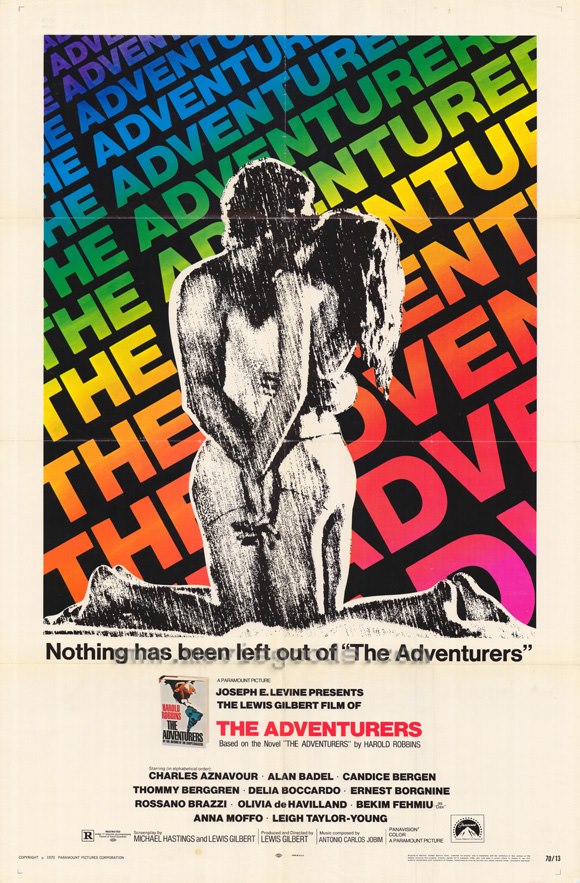
I’ve never actually seen The Adventurers but everything that I’ve read about it (and the film is mentioned in just about every “Terrible Movie” book that I own) would seem to suggest that this 1970 film is pretty bad. In fact, just about every review that I’ve read has referred to the film as being lurid, trashy, melodramatic, and over-the-top.
However, that’s not really a problem for me. That’s what a lot of people say about the Valley of the Dollsand that’s one of my favorite movies, precisely because it is so lurid and ludicrous. (Lurid and ludicrous are two Ls that equal love, as far as I’m concerned.)
I was recently doing a YouTube search on The Adventurers and I came across the following video, which is described as being the “amazing fashion show from Lewis Gilbert’s The Adventurers.” Having watched the video, I can agree that this fashion show is pretty amazing. In fact, it pretty much epitomizes everything that I love about the over-the-top, big budget event films of the late 60s and early 70s. As I watched this scene, I especially enjoyed the random jump cut and the unnecessary use of the split screen. It’s just so 1970!
I may not have seen the entire film but this scene from The Adventurers is still a scene that I love.
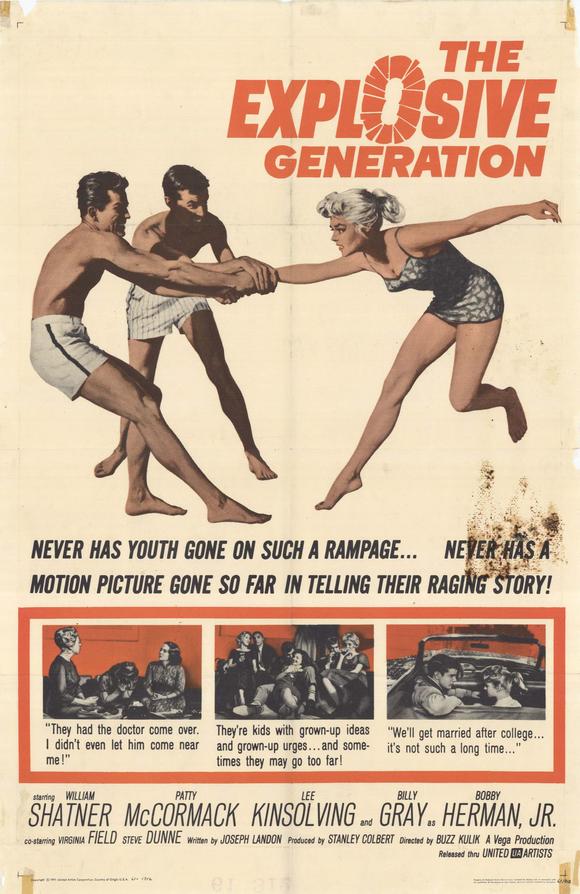
Ever since I first saw it on TCM last year, The Explosive Generation has been a favorite of mine.
This 1961 film deals with sex, peer pressure, censorship, juvenile delinquency, and civil disobedience. The Explosive Generation is one of those films that was made to try to understand the wild and crazy youth of the early 60s, with their crazy rock and roll music, hip way of talking, and their habit of occasionally showing up for high school in a coat and tie. As is typical of low-budget youth films of the period, the film is occasionally clueless and occasionally insightful. In short, it’s a lot of fun and, if you’re a history nerd like I am, it’s a valuable time capsule for the way the world used to be (or, at the very least, the way that people used to think the world was).
Even better, it stars a youngish, intense, and slim William Shatner as an idealistic high school teacher who encourages his students to have a frank and honest discussion about sex. If The Intruder(which was made roughly around the same time) is a film that proves that Shatner was capable of being an intelligent and insightful actor, The Explosive Generation is all about Shatner being Shatner. This performance is everything that you’ve probably come to expect from William Shatner and, as a result, it transcends mundane concepts like good and bad.
Below are two scenes of William Shatner dealing with the Explosive Generation. Be sure to keep an eye out because I’m sure The Explosive Generation will show up on TCM again at some point in the near future!
I can still remember the day that my high school history teacher decided to teach us about World War I by showing my class the final episode of the classic BBC sitcom Blackadder Goes Forth. At first, I was just happy to get a chance to watch television in class but, by the end of the episode, I was simply devastated.
There’s something very appropriate about the fact that one of the best depictions of the futility and destructiveness of war came at the end of a comedy.
And during this Memorial Day weekend, as we pay respect to the men and women who have died in the course of fighting the countless number of wars that have been waged over the course of this country’s history, it seems to me that this final scene is far more eloquent about the costs of war than I could ever hope to be.
This latest scene that I love is for all of you Godzilla fans out there! In this scene from 2004’s Godzilla: Final Wars, the original Japanese Godzilla takes on his American counterpart, Zilla. Needless to say, it’s not an evenly matched battle.
Zilla, of course, starred in Roland Emmerich’s Godzilla, a film that is often cited as being one of the worst of the 90s. Will the upcoming Godzilla film help to erase memories of Zilla? We’ll find out on May 16th!
For now, enjoy the original kicking the imposter’s ass!

 Through the Shattered Lens