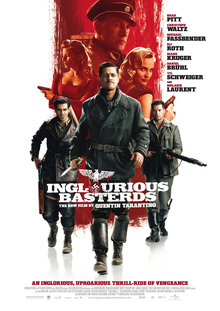
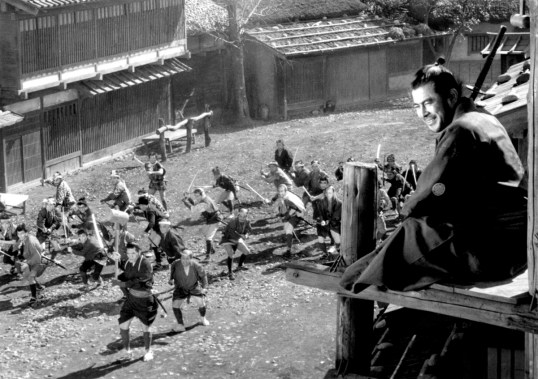
Today would have been Lee Van Cleef’s 101st birthday.
Today’s scene that I love features Van Cleef as the title character in 1969’s Sabata. In this scene, he faces off in a duel with William Berger’s Banjo. Even when he’s playing the good guy, like in this film, Lee Van Cleef leaves no doubt that he’s not someone you want to mess with.
Today would have been Diane Keaton’s 80th birthday.
In today’s scene that I love, from 1972’s The Godfather, Keaton plays Kay Adams Corleone, the wife of Michael (Al Pacino). In this scene, Michael has “allowed” Kay to ask him about the family business. She asks him if he had his brother-in-law, Carlo, killed. Michael says, “No.” Kay is relieved …. until she steps out into the hallway and realizes, as the door is shut in her face, that her husband just lied to her.
This is a beautifully acted scene and one of the most powerful endings in film history.
Today’s scene that I love comes from the 1985 film, Rambo: First Blood Part II. In this scene, Sylvester Stallone’s John Rambo — having survived being abandoned yet again in Vietnam — let’s the CIA knew exactly what he thinks about their operation. As directed by George Pan Cosmatos and performed by Stallone, this scene is pure 80s action.
If you ever meet James Cameron, remind him that he wrote the script for this film and see how he reacts.
The final moments of Sergio Leone’s epic 1984 gangster film, Once Upon A Time in America, are filled with questions and mysteries.
The final moments of Sergio Leone’s epic 1984 gangster film, Once Upon A Time in America, are filed with questions and mysteries.
In 1968, who did Noodles (played by Robert De Niro) see standing outside of Max’s mansion? When the garbage truck pulled up, did the mysterious man get in the truck or was he thrown in by some unseen force?
Why, in 1968, did Noodles see a car from the 1920s, one that was full of people who appeared to be celebrating the end of prohibition? Was the car really there, in 1968, or was it an element of Noodles’s past as a gangster suddenly popping into his mind?
Once Upon A Time In America (1984, dir by Sergio Leone, DP: Tonino Delli Colli)
When we then see a young Noodles in an opium den, are we flashing back to the 1920s? Is Noodles remembering the past or is it possible that we’ve been in the 20s the whole time and all of the scenes set in 1968 were actually only a drug-induced dream?
Why, with men looking to kill him and all of his friends apparently dead, does Noodles suddenly smile at the end of the film? Is that sudden smile a result of the drugs or is there something else going on?
Once Upon A Time In America was Sergio Leone’s final film. It’s one that he spent decades trying to get made and, once it was finally produced, it was butchered and re-edited by a studio hacks who demanded that the film tell its story in a linear style. Leone was reportedly heart-broken by how his film was treated. Some have speculated that his disappointment may have even contributed to the heart attack that eventually killed him. It was only after Leone passed that his version of Once Upon A Time In America became widely available in the U.S. This enigmatic epic continues to spark debate. One thing that can’t be denied is that it’s a brilliant film.
As today is Leone’s birthday, it only seems appropriate to share a pair of scenes that I love, from the ending of Once Upon A Time In America.
In honor of National Speed Limit Day, today’s scene that I love features Burt Reynolds breaking the speed limit over and over again in 1977’s Smokey and the Bandit. This scene is almost enough to make me want to go on a road trip.
Well, the clock has now struck midnight on the West Coast and that officially means that it is 2026 in the United States! What better way to start things off than by sharing a scene that I love from one of the greatest and most important films of all time, 1974’s The Godfather Part II?
The scene below takes place on New Year’s Eve. The scene starts in 1958 and it ends in 1959. Michael Corleone (Al Pacino) and his brother Fredo (John Cazale) are in Havana at the invitation of Hyman Roth (Lee Strasberg). Roth know that Cuba could be a gold mine for the American mob but Michael, from the start, realizes that the country’s corrupt government is on the verge of collapse and that it’s about to be replaced by something even worse. (Admittedly, that’s my opinion. Director Francis Ford Coppola had a much higher opinion of Castro and the communists than I did.) Tragically, it’s also in Havana that Michael realizes that Fredo betrayed him to his enemies. On December 31st, 1958, as the new year is celebrated in Havana, the rebels ride into the city. While the President of Cuba prepares to announce that he will be fleeing the country, Michael confronts his brother and tells him that he knows the truth. Later, as they both attempt to flee the country, Michael and Fredo see each other on the streets. Fredo runs from Michael, refusing his offer to help. Though Fredo would eventually return to the family, the film’s ending revealed Fredo’s first instinct was the correct one.
Here’s a scene that I love, featuring great work from both Al Pacino and the brilliant John Cazale:
The Poseidon Adventure (1972, dir by Ronald Neame, DP: Harold E. Stine)
It’s nearly time!
As they prepare to count away the last few seconds of 2025 on the West Coast, here’s a scene from one of the greatest New Year’s Day films ever made. Indeed, just as Die Hard is a great Christmas film, then 1972’s The Poseidon Adventureis a great New Year’s film.
So, let’s join with Gene Hackman, Ernest Borgnine, Stella Stevens, Shelley Winters, Red Buttons, and a host of other familiar faces as we count down. 2026 will undoubtedly bring some tidal waves but I remain confident that we will not be tipped over!
Ever since Werner Herzog’s Bad Lieutenant: Port of Call New Orleans was first released in 2009, people have debated the symbolism of the iguanas on the coffee table. Are they just a sign that Nicolas Cage’s bad lieutenant is totally high or do they have a deeper meaning? Myself, I’m not even going to try to guess. All I know is that the lieutenant eventually came to appreciate their presence.
Today’s scene that I love is from F.W. Murnau’s classic, Nosferatu. The film is 103 years old but scenes like the one below continue to inspire nightmares.
Believe it or not, when Duck Soup was initially released in 1933, it was considered to be something of a failure. Especially when compared to previous Marx Brothers films, it was seen as being a box office disappointment. The critics didn’t care much for it, either. They felt that the film’s political satire was preposterous and tasteless. Critics in 1933 attacked Duck Soup for being a cynical, anti-government satire released during the Great Depression.
Of course, today, Duck Soup is justifiably viewed as being a classic comedy. It’s certainly my favorite Marx Brothers film. In the classic scene below, Harpo pretends to be Groucho’s reflection in a shattered mirror. It’s a marvelous piece of physical humor so enjoy it!