4 Shots From 4 Films: Special Dancing Edition


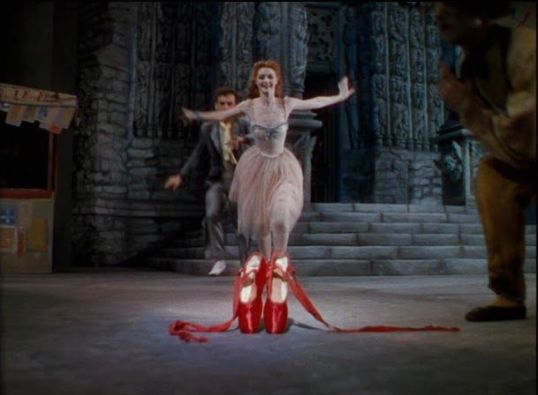
4 Shots From 4 Films is just what it says it is, 4 shots from 4 of our favorite films. As opposed to the reviews and recaps that we usually post, 4 Shots From 4 Films lets the visuals do the talking!

4 Shots From 4 Films

The Red Shoes (1948, dir by Michael Powell and Emeric Pressburger, DP: Jack Cardiff)

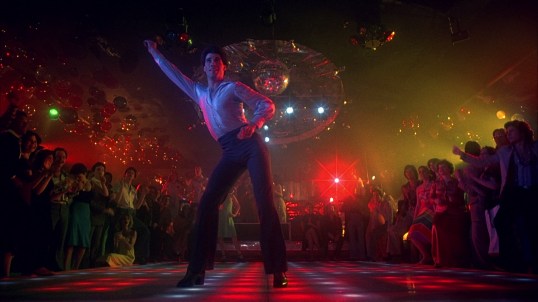
Saturday Night Fever (1977, dir by John Badham, DP: Ralf D. Bode)

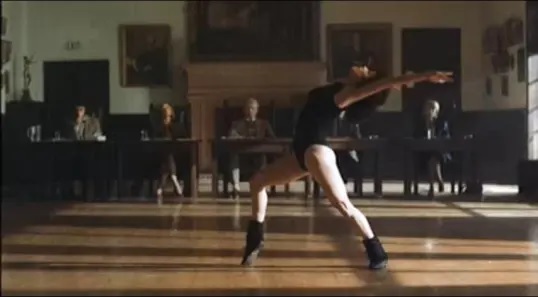
Flashdance (1983, dir by Adrian Lyne, DP: Donald Peterman)

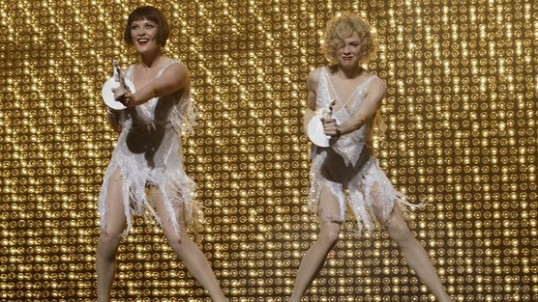
Chicago (2002, dir by Rob Marshall, DP: Dion Beebe)

Live Tweet Alert: Join #FridayNightFlix for Saturday Night Fever!


As some of our regular readers undoubtedly know, I am involved in a few weekly live tweets on twitter.  I host #FridayNightFlix every Friday, I co-host #ScarySocial on Saturday, and I am one of the five hosts of #MondayActionMovie!  Every week, we get together.  We watch a movie.  We tweet our way through it.

Tonight, at 10 pm et, I will be hosting the final #FridayNightFlix of 2022!  The movie? 1977’s Saturday Night Fever!

If you want to join us this Friday, just hop onto twitter, start the movie at 10 pm et, and use the #FridayNightFlix hashtag!  It’s a friendly group and welcoming of newcomers so don’t be shy.

Saturday Night Fever is available on Prime and Paramount!  See you there!

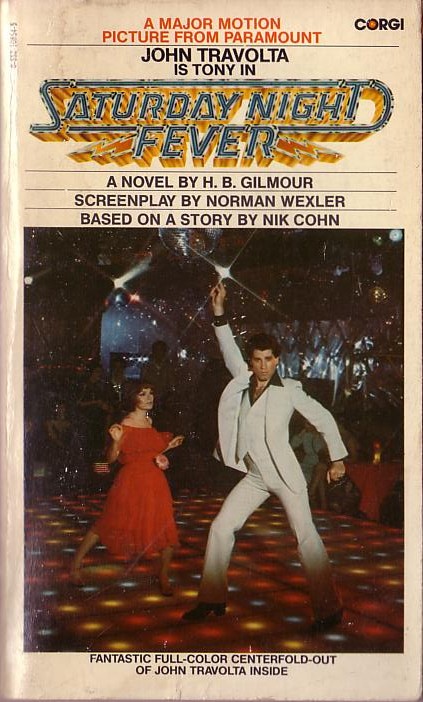
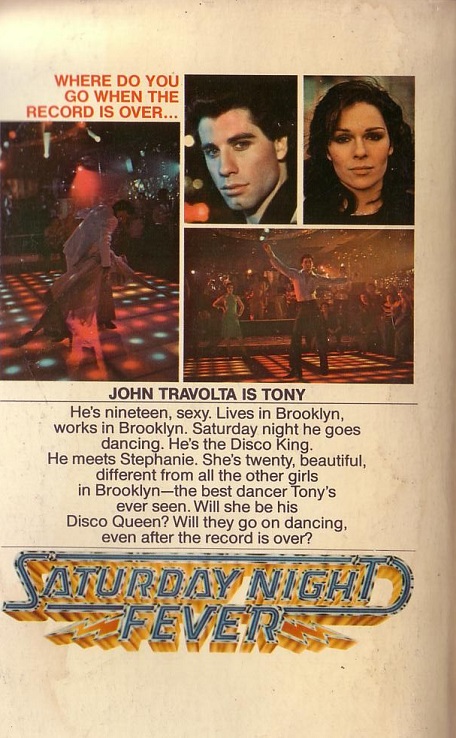
Book Review: Saturday Night Fever by H.B. Gilmour


About two years ago, I came across a paperback sitting on the shelf of a Goodwill in Dallas. It was the novelization of the 1978 film, Saturday Night Fever. Naturally, as soon as I saw it, I knew that I had to buy it.

Novelizations of popular films are always an interesting read. Since they’re usually based on the early drafts of a film’s screenplay, the novelization will often include extra scenes or details that may have not been apparent in the film itself. Often, things that may have been left unclear in the completed film will be cleared up in the novelization. At the same time, as a writer, I always find it interesting to see whether or not the author of a novelization can succeed at putting their own spin on familiar material.

Take the Saturday Night Fever novelization. There are two things that everyone automatically thinks about whenever they think about Saturday Night Fever as a film. They think about the Bee Gees soundtrack and they think about the scenes of John Travolta dancing. Obviously, with the novelization, there is no soundtrack. The Bee Gees aren’t even mentioned in the book. As for Travolta’s dancing, the book doesn’t go into a great deal of detail beyond acknowledging that Tony Manero is a good dancer and that everyone wants to join him out on the dance floor. But Gilmour wisely doesn’t try to describe any of Tony’s dance moves. Instead, he focuses on how Tony feels when he’s the center of attention.

Indeed, the entire novelization focuses on Tony as a character. We spend a lot of time inside of Tony’s head and it’s not always a pleasant place to explore. At the same time, we also discover that Tony isn’t quite as clueless as he sometimes comes across as being in the movie. From the start, he knows that he’s going nowhere and he knows that his friends are losers. Without Travolta’s charismatic performance or Staying Alive playing as he struts across New York, Tony often comes across as being an even bigger jerk in the novel than he does in the movie. And yet, we still sympathize with him because the novel makes clear that Tony understands, more than his family and his friends, that he’s trapped in a life that doesn’t provide much hope. Saturday Night Fever is a dark film, even with the music. In novel form, it becomes downright existential in its portrait of Brooklyn as being a Hellish prison, both a location and state-of-mind from which there is little chance of escape.

Tony’s family is a bit more abusive in the novel, which makes the film’s famous “watch the hair” dinner scene a bit more difficult to laugh at. The novelization spends a lot of time on Tony’s brother and his decision to leave the priesthood. In the movie, Frank, Jr. just kind of vanishes. In the book, it’s explained that he went to a sort of halfway house for former priests. I assume this was all stuff that was in the screenplay but cut from the actual film. One can see why it was cut but, at the same time, it was still interesting to learn a bit more about Tony and his family.

In the end, it’s not a bad novelization. At 182 pages, it’s a quick read and it not only does a good job of showing what exactly Tony is escaping from when he gets out on the dance floor but it also provides some new insight into the story. (Of course, the majority of that insight deals with Tony being a misogynistic homophobe but, then again, that’s pretty much who he was in the film too. The book just makes it even clearer, as well as showing that Tony’s prejudices are largely due to where he’s from and how he’s been raised.) It’s a good companion piece to the film and a good collector’s item. The copy that I found still had a pull-out poster of John Travolta in the middle of it!

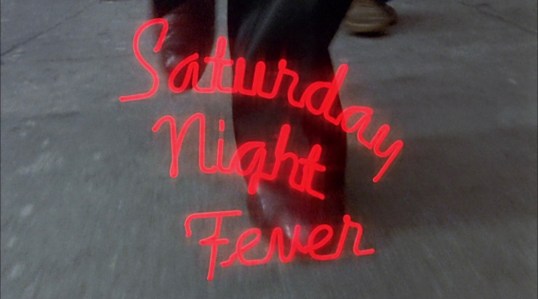
Scenes That I Love: The Opening Credits of Saturday Night Fever


Saturday Night Fever (1977, dir. John Badham)

Today is John Travolta’s birthday!

In honor of this day, here’s a scene that I love, the opening credits of Saturday Night Fever.  Watch as John Travolta, playing the role of Tony Manero, walks down the streets of Brooklyn, not letting the fact that he’s carrying two cans of paint do anything to lessen his strut.  Watch as Tony puts a down payment on a pair of shoes!  Thrill as Tony buys two slices of pizza!  Cringe as Tony bothers a woman who wants absolutely nothing to do with him!

This is one of the greatest introductions in film history.  Not only does it set Tony up as an exemplar of cool but it also subverts our expectations by revealing just how little being an exemplar of cool really means.  I always relate to the woman who gets annoyed with Tony and tells him to go away.  I know exactly how she feels, as does any woman who has ever been stopped in the middle of the street by some guy who thinks she has an obligation to talk him.  It doesn’t matter how handsome he is or how much time he obviously spent working on his hair.  He’s still just some guy carrying two buckets of paint and acting like she should be flattered that he spent half a minute staring at her ass before chasing after her.  For all of his carefully constructed attitude, Tony comes across as being a rather ludicrous figure in this introduction.  He carries those cans of paint like he’s going to war and you secretly get the feeling that he knows how silly he looks carrying them but he’s not going to allow anything to get in the way of his strut.

The rest of the film, of course, is about presenting who Tony actually is underneath the disco facade and it’s not always a pretty picture.  I actually discussed this with some friends this weekend while we were listening to combination of disco and punk music.  Saturday Night Fever has a reputation for being a fun dance movie but actually, it’s an extremely dark and rather depressing movie.  The opening song isn’t lying when it says that “I’m going nowhere.”  Tony is lost and, despite what happens in the sequel, he’s probably never going to escape his circumstances.  Even though he clearly wants to be a better person, you’re never quite convinced that he has what it takes to truly do that.  At least he can strut a little while waiting for the world to end.  It takes guts to give an honest performance when you’re playing as imperfect a character as Tony Manero but Travolta pulls it off.  (We won’t talk about some of the films that he made in the years immediately after this one.  Eventually, he did make a comeback with Pulp Fiction and spent several years again appearing in good films.  And then somehow, last year, he ended up starring in The Fanatic.  Oh well.  66 is not that old and I’m sure Travolta has more than one comeback within him.)

Anyway, happy birthday to John Travolta!  And here is today’s scene that I love:
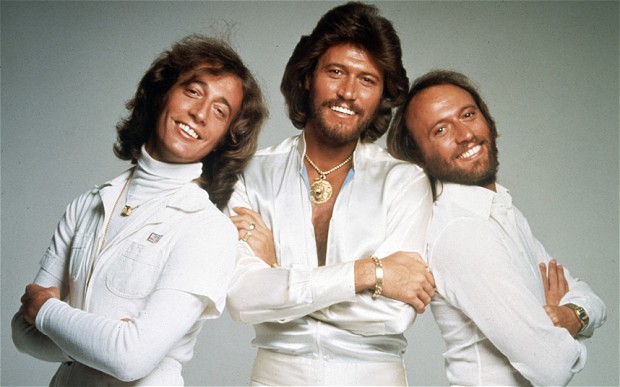
Song of the Day: Stayin’ Alive (by Bee Gees)


beegees_2301140b

The last week or so we’ve seen Lisa Marie review two films which shares a close connection with the latest “Song of the Day.”

First there was her review of Saturday Night Fever by John Badham. Then she follows it up with the so very awful, but mesmerizing sequel by Sylvester Stallone, Staying Alive. The original film had as part of it’s disco-based soundtrack the song “Stayin’ Alive” by the group Bee Gees. The sequel literally borrows the song’s title and just runs with it.

The song itself has become not just a classic, but has also become part of pop culture both good and bad. It’s been portrayed as a great example of the disco-scene of the mid-to-late 70’s, but also become a sort of a joke to some.

No matter where one stands on the merits of this song it’s one hell of a catchy one. No matter how much we all fail every guy will try to hit the high notes achieved by Barry Gibbs. We never succeed, but we never fail not to try over and over as we sing along.

Stayin’ Alive

Well, you can tell by the way I use my walk
I’m a woman’s man, no time to talk
Music loud and women warm,
I’ve been kicked around since I was born

And now it’s all right, it’s OK
And you may look the other way
We can try to understand
The New York times effect on man

Whether you’re a brother or whether you’re a mother
You’re stayin’ alive, stayin’ alive
Feel the city breaking and everybody shaking
And were stayin’ alive, stayin’ alive
Ah, ha, ha, ha, stayin’ alive, stayin’ alive
Ah, ha, ha, ha, stayin’ alive

Well now, I get low and I get high
And if I can’t get either, I really try
Got the wings of heaven on my shoes
I’m a dancing man and I just can’t lose
You know it’s all right, it’s ok
I’ll live to see another day
We can try to understand
The New York times effect on man

Whether you’re a brother or whether you’re a mother
You’re stayin’ alive, stayin’ alive
Feel the city breakin and everybody shakin
And were stayin’ alive, stayin’ alive
Ah, ha, ha, ha, stayin’ alive, stayin’ alive
Ah, ha, ha, ha, stayin’ alive

Life going nowhere, somebody help me
Somebody help me, yeah
Life going nowhere, somebody help me
Somebody help me, yeah.
Stayin’ alive

Embracing the Melodrama Part II #57: Saturday Night Fever (dir by John Badham)


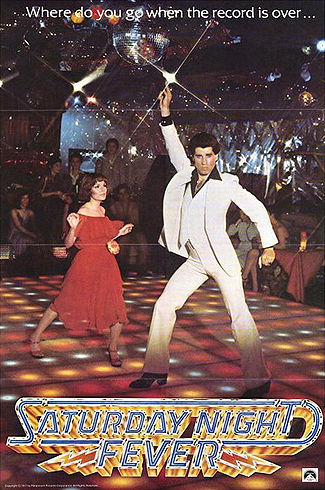
Saturday_night_fever_movie_posterHere’s a little bit of trivia about the iconic 1977 film Saturday Night Fever.

First off, according to the imdb, Saturday Night Fever was the first mainstream Hollywood film to ever use the term “blow job.”  That actually took me by surprise.  I mean, with all of the risks that the major studios took in the 70s, it still took them until 1977 to have someone say “blow job” in a movie?  But somehow, it seems appropriate that it would turn up in Saturday Night Fever.  We tend to think of Saturday Night Fever as being a movie where the soundtrack is nonstop disco and John Travolta dances in that iconic white suit.  But actually, Saturday Night Fever is a film about four guys who neither understand nor respect women.

When Tony (John Travolta), Joey (Joseph Cali), Double J (Paul Pape), and Bobby (Barry Miller) go down to that disco, it’s because they want to get laid.   Joey and Double J take turns having sex with insecure Annette (Donna Pescow) and, afterwards, Tony scornfully ask her if she‘s proud of herself.  When Bobby discovers that his girlfriend is pregnant, he is so terrified of having to be a father that he becomes suicidal.  As for Tony, he looks down on the women who are so eager to dance with him.  When he enters a dance contest with Stephanie (Karen Lynn Gorney), he can’t handle the fact that she wants more out of her life than just being his latest partner.

So, it makes sense that this would be the first mainstream movie to feature someone talking about a blow job because that’s what these boys are obsessed with.  Sexually primitive, hypocritically puritanical, and emotionally repressed, a blow job is all the intimacy that these boys can handle.

Another piece of trivia: while John Travolta was always the first choice for Tony Manero, several actors were seen for the roles of Joey and Double J.  At one point, both Ray Liotta and David Caruso were nearly cast in the role of Tony’s friends.  Imagine this: in some alternative universe, while white-suited John Travolta rules over the dance floor, Ray Liotta and David Caruso are standing in the background and cheering him on.

Of course, if Liotta and Caruso had been cast, it would be a totally different movie.  Whenever you watch Saturday Night Fever, you’re surprised by how much John Travolta totally dominates the film.  Even though the film devotes a good deal of time to Annette, Stephanie, Bobby and to Tony’s brother who has recently left the priesthood, Tony Manero is the only character that you remember.  That’s largely because Travolta is the only one of them who gives a truly memorable performance.

In theory, it’s easy to laugh at the thought of Travolta in that white suit, striking a dramatic pose on that cheap-looking dance floor.  But then you watch the film and you realize that Travolta truly did give a great performance.  And, to your surprise, you don’t laugh at Tony with his white suit because you know that the only time Tony has any control over his life is when he’s dancing.  He may work in a paint store.  He may regularly get slapped around by his family.  He may not be very smart or sensitive.  But when Tony’s dancing, he’s a king and you’re happy that he at least has one thing in his life that he can feel good about.

Even if he is kind of a jerk.

Of course, it helps that Tony is a really good dancer.  There’s actually a lot more going on in Saturday Night Fever than you might think but ultimately, it’s a dance movie and it’s one of the best.

Dance Scenes I Love: Saturday Night Fever


70s_films_saturday_night_fever1

There’s no way that you can post a series of classic dance sequences without including at least one scene from Saturday Night Fever.  Even though this scene is nearly 40 years old, it still perfectly captures the excitement and the promise and the pure exhilaration of spending a night out dancing.

That said, I still don’t understand how anyone could mistake John Travolta for Al Pacino.