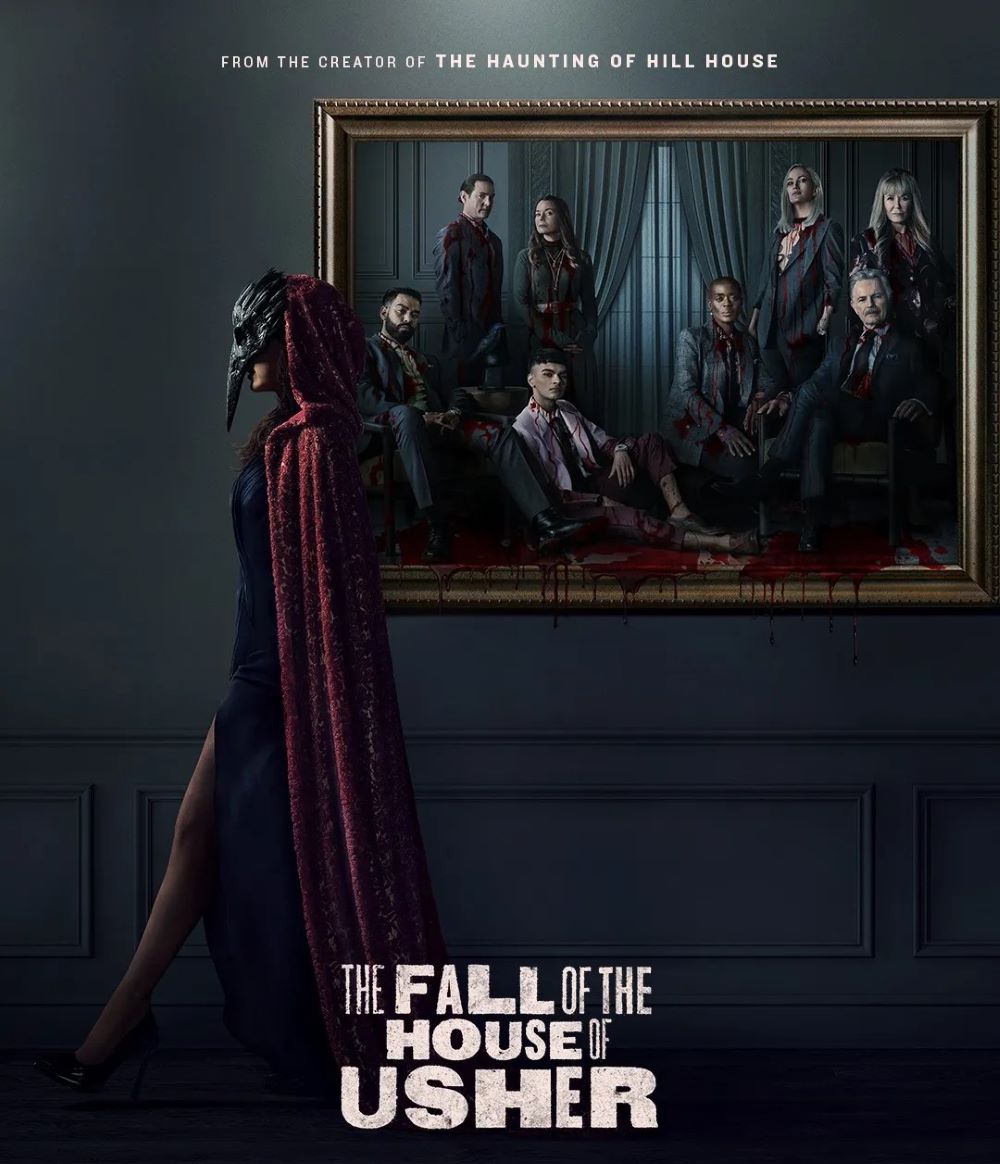
Review: The Fall of the House of Usher (by Mike Flanagan)


“If pain and suffering were the kisses of Jesus, then he kissed the living fuck out of my mother.” — Roderick Usher

The Fall of the House of Usher delivers Mike Flanagan’s signature blend of gothic dread and modern moral reckoning, reimagining Edgar Allan Poe’s tales as a savage family implosion tied to corporate excess. This Netflix miniseries unfolds over eight taut episodes, framing the confessions of a pharmaceutical tycoon as his bloodline meets grisly, poetic ends. It balances sharp satire with emotional undercurrents, though its heavy-handed messaging and repetitive structure occasionally blunt the impact.

Roderick Usher, now a hollowed-out patriarch, recounts his empire’s collapse to a relentless prosecutor in the crumbling family mansion, flashing back to decades of ambition, betrayal, and supernatural intervention. His twin sister Madeline, the brains behind their Fortunato Pharmaceuticals fortune, shares equal narrative weight, their pact with a enigmatic figure sealing a curse that claims each heir in turn. The setup echoes Poe’s original story but explodes it into a sprawling anthology, with every installment riffing on a different work from the author’s macabre catalog. This structure keeps the momentum high, turning personal flaws into fatal traps, yet it risks formula once the pattern of vice-reveal-demise becomes predictable.

A standout early episode channels The Masque of the Red Death, where a debauched heir’s orgiastic gala spirals into carnage, blending excess with infectious horror in a sequence that’s equal parts thrilling and grotesque. Later, Goldbug skewers influencer wellness culture through a sibling’s pyramid-scheme downfall, its tech-glitch kills inventive and on-theme. These Poe-infused vignettes shine when they lean into visceral spectacle—impalements, immolations, animalistic frenzies—elevating routine family feuds into something operatic. However, weaker entries, like those fixated on lab accidents or courtroom paranoia, feel more procedural than poetic, diluting the supernatural menace amid procedural tangents.

Flanagan’s direction thrives in the atmospheric details: opulent sets that rot from within, shadows pooling like guilt, a score that swells with mournful strings underscoring inevitable doom. Performances anchor the excess, with Carla Gugino’s shape-shifting Verna stealing scenes as a devilish facilitator—charming one moment, apocalyptic the next. Bruce Greenwood lends Roderick a defeated majesty, his monologues on greed and legacy landing with gravitas despite their length. Mark Hamill’s fixer adds gravelly comic menace, a cold pragmatist navigating the Ushers’ moral sewer. The younger cast fares variably; some heirs pop as vicious caricatures—the coke-fueled playboy, the ruthless scientist—while others blur into interchangeable privilege.

Thematically, the series wields Poe’s obsessions—entombment, madness, retribution—against Big Pharma’s sins, drawing parallels to real-world opioid scandals without subtlety. Roderick and Madeline’s rise from rags via a addictive painkiller mirrors ethical shortcuts in pursuit of immortality, their “house” both literal estate and dynastic delusion. Verna embodies karmic balance, not mindless evil, her interventions exposing how wealth insulates sin until cosmic debt collectors arrive. This critique bites, especially in rants decrying humanity’s commodification of suffering, but preachy asides can halt the dread, turning horror into TED Talk territory. Flanagan fans will recognize his grief motifs, here twisted into generational poison rather than personal catharsis.

Pacing falters in the midsection, where flashbacks to the Ushers’ origin drag against the ticking present-day trial. The frame narrative, while elegant, withholds twists too long, making early hours feel like setup over payoff. Gorehounds get inventive set pieces, from pendulum blades to heart-pounding pursuits, but scares prioritize irony over outright terror—less Hereditary shocks, more Final Destination comeuppance. For a one-season arc, it wraps tightly, circling back to Poe’s raven as a symbol of unending loss, though the finale’s revelations feel more intellectually tidy than emotionally shattering.

As adaptation, it honors Poe’s spirit over fidelity, cherry-picking motifs from tales like The Tell-Tale HeartThe Black Cat, and The Pit and the Pendulum to fuel a contemporary revenge saga. Purists might chafe at the liberties—Poe’s claustrophobic intimacy traded for ensemble sprawl—but the result captures his misanthropy, updating crumbling aristocracy to cutthroat capitalism. It’s Flanagan’s angriest work, swapping supernatural melancholy for gleeful vengeance, yet retains his humanism: even monsters get poignant final beats, hinting at redemption’s flicker amid ruin.

The Fall of the House of Usher polarizes like much of Flanagan’s output—loved for audacity, critiqued for indulgence. Its ensemble and kills draw praise, but detractors note tonal whiplash between camp and sincerity. For horror enthusiasts craving literary flair over found-footage tropes, it’s a feast; casual viewers may tire of the lectures. Compared to Flanagan’s Hill House or Midnight Mass, it’s less introspective, more punitive, trading tears for dark laughs at the mighty’s tumble.​

Ultimately, the miniseries succeeds as pulpy prestige, a bloody valentine to Poe that indicts modern excess without fully escaping melodrama’s clutches. Its highs—Gugino’s tour de force, baroque deaths, thematic ambition—outweigh the bloat, making it binge-worthy for gothic fans. In Netflix’s crowded horror slate, it stands out for wit and wickedness, a flawed but ferocious reminder that some houses, and legacies, deserve to fall.
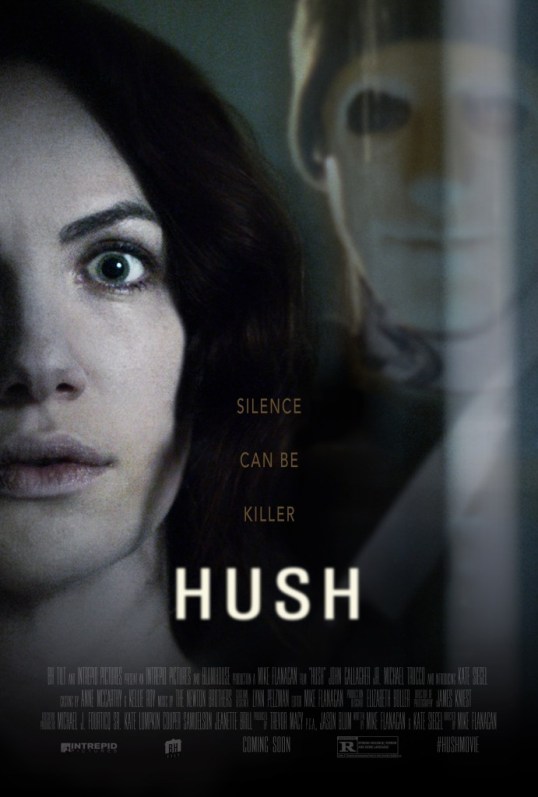
The Things You Find On Netflix: Hush (dir by Mike Flanagan)


Hush_2016_poster

Let me start by stating the obvious.  I have seen a lot of horror movies.  I love horror as a genre and, in fact, it was my love of horror that first led to me becoming a film blogger in the first place.  I have seen a lot of scary and shocking images onscreen.  I know the experience of watching a movie and screaming.  I also know the experience of watching a horror movie and being bored out of my mind.

I have also seen a lot of home invasion movies.  The home invasion genre is not a complicated one.  A group of people are isolated and trapped in their home while, outside, some terrible menace tries to enter the house.  Night of the Living Dead is a home invasion film.  The final 20 minutes of Straw Dogs (both the remake and the original) are home invasion films.  Michael Haneke made two of the ultimate home invasion films with two separate versions of Funny Games.  And, of course, we can’t talk about the home invasion genre without mentioning the brilliant You’re Next.

The home invasion genre works so well because, at its center, is a very real fear: the fear that, even within our own home, we are not safe.  When I get home, I am practically obsessive about checking to make sure that I always close and lock the door behind me but really, what good would that really do if someone was determined to get in?  Like everyone, I chose to believe that things like a locked door or a closed window is going to keep me safe but, honestly, if someone wants to get in, they’re probably going to find a way.  Locks and alarms and calls to 911 can only do so much.  Perhaps for that reason, home invasion movies always frighten me.  I can watch a zombie graphically devour someone in an Italian horror film and it doesn’t bother me at all.  But a well-directed home invasion movie?

That’ll keep me up for a week!

(And I know what you’re saying: “Lisa, if home invasion movies scare you so much, why do watch them?”  It’s a legitimate question and it’s something that I’ve often wondered myself.  I think, ultimately, it comes down to this: the only way to conquer our fears is to face them.)

With all that in mind, allow me to now come to the point of this review.  Last night, I watched Hush, which was just recently released by Netflix.  Hush is a home invasion movie.  Kate Siegel (who also co-wrote the script) plays Maddie, a writer who has been deaf and mute since she was 13 years old.  Still dealing with the a bad break-up, Maddie lives in an isolate cabin in the wilderness.  By day, she works on her second novel and occasionally visits with her neighbor.  And by night — well, on this particular night, she finds herself being watched by a man.

The Man (who is played by John Gallagher, Jr.) wears a white mask that gives him a permanent smile.  He carries a crossbow with him, a crossbow that has 8 notches on it.  When we first meet the man, he’s stabbing Maddie’s neighbor, Sarah (Samantha Sloyan), to death.  And now, he’s turned his attention to Maddie…

I say this without hyperbole: Hush is one of the scariest home invasion movies that I’ve ever seen.  The plot may occasionally seem familiar but director Mike Flanagan keeps things moving at an almost unbearably intense pace and he creates an atmosphere of such dread that you never feel truly safe assuming that anyone is going to survive the movie.  John Gallagher, Jr, who speaks with a deceptively soft voice, is terrifying as the Man.  The fact that he has no motives beyond his own sadism makes him all the more frightening.

But, ultimately, the reason the film works so well is because of Kate Siegel.  Kate Siegel gets an introducing credit in this film.  According to the imdb, Hush is not her first film but that introducing credit still feels appropriate.  Siegel is wonderful in the role of Maddie, giving a performance of such ferocity and empathy that Hush announces that a major talent has arrived and that Kate Siegel is a force to be reckoned with.

Hush is not always an easy film to watch.  The violence is visceral, the often spurting blood looks real and, when bones were snapped, it sounded disturbingly authentic.  Throughout the entire film, I found myself wondering what I would do if I was Maddie.  I cheered whenever it appeared that she might be able to escape the Man and I screamed whenever it became clear that she would not.  This is an intense and frightening home invasion film and one that all horror fans should see.  Hush captures our most primal fears and makes us wonder if we have what it takes to conquer them.

Hush will undoubtedly give me nightmares but I’ll take them.

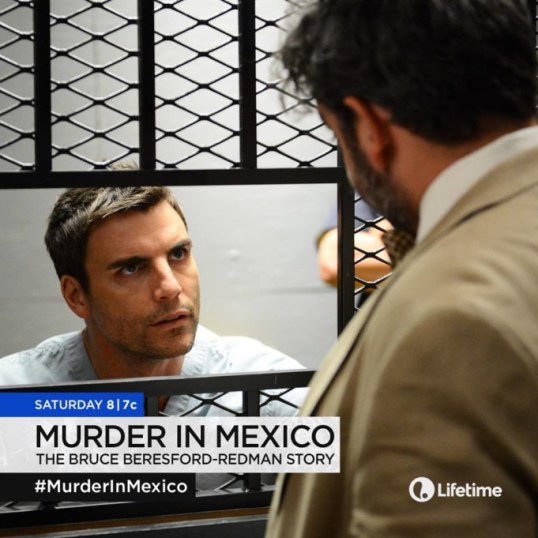
What Lisa Watched Last Night #140: Murder in Mexico (dir by Mark Gantt)


Last night, I watched the latest Lifetime original film, Murder in Mexico!

MiM

Why Was I Watching It?

I may be on vacation but that doesn’t mean that I’m not going to watch and live tweet the latest Lifetime film!

What Was It About?

This was one of those based-on-a-true-crime-story Lifetime productions!  Bruce Beresford-Redman (Colin Egglesfield) is a successful reality TV producer who has trouble being loyal to his wife (Leonor Varela).  When they take a vacation in Cancun, Bruce’s wife is murdered and Bruce quickly becomes the number one suspect.

What Worked?

Colin Egglesfield and Leonor Varela were both well-cast.  Also, the scene where Bruce crosses the Mexico-US border reminded me of the border scenes from No Country For Old Men.

What Did Not Work?

Just speaking as somebody who enjoys live tweeting Lifetime films, it’s always hard to know how to deal with these “true crime” movies.  The whole point of live tweeting is to be snarky and that can be difficult when you’re talking about real murderers, real victims, and real children who will now grow up without their mom and knowing their dad is in prison.  For that reason, Murder in Mexico was not as fun to live tweet as A Deadly Adoption or The Unauthorized Full House Story.

Beyond that, it was hard not to feel that Bruce Beresford-Redman and his crimes were not worthy of the attention that this movie gave to him.  The film attempted to make him interesting by playing up his past as a reality tv producer and trying to maintain some ambiguity as to whether or not Bruce was actually guilty but, ultimately, Bruce just came across as your standard cheating asshole.  In the end, both his guilt and his motives were too obvious to be intriguing.

“OH MY GOD!  Just.  Like.  Me!” Moments

In 2008, I went to Cancun for Spring Break and it was a blast!  Seriously, I had a great time and did a lot of things that I probably shouldn’t post in public.  However, none of those things involved murder and I suppose that’s a good thing.

Lessons Learned

Once a cheater, always a cheater.