Film Review: Atlas Shrugged, Part II (dir by John Putch)


2012’s Atlas Shrugged: Part II picks up where Part I left off.

The time is still the near future.  (Part I specifically set the story as taking place five years into the future.  Part II declines to use a specific date but it does feature some news personalities playing themselves so it’s still clearly only meant to be a few years from 2012.)  The economy has gotten even worse.  The poor are only getting poorer while the rich are getting richer.  Under the direction of Head of State Thompson (Ray Wise) and his main economic advisor, Wesley Mouch (Paul McCrane), the government has nationalized nearly every business.  Halfway through the film, Thompson declares a national emergency and uses the Fair Share Law to invoke Directive 10-289.  All inventors, businessmen, and other creative people are required to sign their patents over to the government and to stop trying to develop now techniques.  Wages are frozen.  No one can be fired and no one can be hired.  Creative thinking is discouraged.  Asking questions or expressing doubt is forbidden.  People are encouraged to snitch on anyone not following the Directive.  Thompson and Mouch insist that it’s for the “good of the people,” and anyone who disagrees runs the risk of being dragged into court and sent to prison for ten years.  Meanwhile, gas now costs $42.00 a gallon.  One of the funnier moments of the film features someone paying $865.72 to fill up a truck.

Dagny Taggart (Samantha Mathis), the Vice President of Taggart Transcontinental Railways, is still trying to discover who invented an experimental motor that she found hidden away in a mine.  The motor could potentially change the way that goods are transported but it appears to be missing one component.  Unfortunately, all of the great scientists and inventors have been vanishing, with many of them leaving behind notes that ask, “Who is John Galt?”  Meanwhile, Dagny’s lover, Hank Rearden (Jason Beghe), fights to protect Rearden Metal from being taken over by the government and Dagny’s brother, James (Patrick Fabian), sells out to Wesley Mouch with the end result being that there’s no one left at Taggart Transcontinental with the intelligence or the experience necessary to keep two trains from colliding in a tunnel.

Given that Ayn Rand herself was an atheist who wrote very critically of religion, it’s interesting how much of Atlas Shrugged: Part II feels like one of those evangelical films where the Rapture comes and the entire world falls apart because all of the believers have suddenly vanished.  In the case of Atlas Shrugged, the world falls apart because all of the creatives and all of the leaders of industry and all of the innovative thinkers have abandoned it so that they can create a new community with John Galt.  (They’ve “stopped the motor of the world.”)  In many ways, this is the ultimate in wish fulfillment, a way of declaring, “They’ll miss me when I’m gone!”  Indeed, the majority of people who keep a copy of Rand’s novel displayed on their bookcase do so because they believe that they would be one of the lucky ones who was approached by Galt.  No one expects that they’ll be the person left behind to try to run the railroad.  It’s a bit like how like the most strident Marxist activists always assume they’ll be the ones organizing the workers as opposed to being a worker themselves.

Not surprisingly, the same critics who attacked Part I didn’t care much for Atlas Shrugged Part II.  When I first saw it, I thought the film was a bit too long and I was annoyed that, with the exception of a few minutes at the end, the film didn’t really seem to move the story forward.  At the same time, just as with the first film, I appreciated the fact that the second film was proudly contrarian in its portrayal of the government as being inherently incompetent.  After all, this was 2012, back in the “good government” era, when a lot of people still reflexively assumed that the government was staffed only by hyper-competent policy wonks who knew what they were doing and who were only concerned with making sure that “the trains ran on time,” to borrow an old expression.

Rewatching the film this weekend, I have to say that I actually appreciated Atlas Shrugged Part II a bit more than the first time I watched it.  Yes, Part II was still a bit too long and the domestic drama between Hank and his wife fell flat but Part II is still a marked improvement on the first film.  Some of that is because Part II had a higher budget than Part I and, as a result, it didn’t look as cheap as the first film.  The corporate offices looked like actual corporate offices and the factories looked like real factories.  Secondly, the second film had an entirely different cast from the first film.  Samantha Mathis, Jason Beghe, and especially Patrick Fabian were clear improvements on the actors who previously played their roles.  That’s especially important when it comes to Mathis and Beghe because, as opposed to the first film, Part II convinces the viewer that  Dagny and Hank actually are as important as they think they are.  When the trains collide in the tunnel, the viewer never doubts that Mathis’s Dagny could have prevented the disaster if not for the government’s attempts to force her out of her own company.  As well, the viewer never doubts that Beghe’s Hank would fight to the end to protect his business, even if it means prison.  One wouldn’t have necessarily believed that while watching the first film.

Finally, having lived through the COVID era, the film’s portrait of government overreach and incompetence feels a lot more plausible when watched today.  One doesn’t have to be a fan of Rand’s philosophy or agree with her solutions to see the parallels between Directive 10-289 and the policies that led to children being kept out of schools and numerous small business having to shut their doors.  In an era when most people’s faith in governmental institutions has been broken to such an extent that it might never be fixed in our lifetime, Atlas Shrugged Part II resonates.  Whereas the film once felt subversive, now it feels downright prophetic.

Film Review: The Thing Called Love (dir by Peter Bogdanovich)


First released in 1993 and directed by Peter Bogdanovich, The Thing Called Love takes place in Nashville, the city that, for many people, has come to define Americana.

Of course, for those who actually love movies, it’s difficult to watch any film about Nashville and the country music scene without being reminded of Robert Altman’s American epic, Nashville.  Much like Nashville, The Thing Called Love follows a group of wannabes, stars, writers, and performers.  However, whereas Robert Altman used the city and its residents as a way to paint an acidic portrait of a nation struggling to find its way in an uncertain new world, The Thing Called Love is far less ambitious.

The Thing Called Love centers around Miranda Presley (Samantha Mathis).  Miranda is from New York but she loves country music.  She comes to Nashville to try to sell her songs and become a star.  Instead, she ends up working as a waitress at the “legendary” Bluebird Cafe.  While she waits for her big break, she meets two other aspiring writer/performers, Linda Lu (Sandra Bullock) and Kyle Davidson (Dermot Mulroney).  Kyle falls in love with Miranda but Miranda falls in love with and marries James Wright (River Phoenix, brother of Joaquin).  Unfortunately, while James is talented, he’s also a bit of a jerk.

The Thing Called Love aired on TCM last year and I can still remember checking out the #TCMParty hashtag on twitter while the film was airing.  The majority of the comments were from people who loved TCM and who couldn’t understand why the channel was showing this rather forgettable movie.  The answer, of course, is that the film was directed by Peter Bogdanovich and Bogdanovich was one of the patron saints of TCM.  Along with being responsible for some genuinely good films (Targets, The Last Picture Show, Paper Moon, Saint Jack, Mask, The Cat’s Meow), Bogdanovich was also a very serious student of the history of film.  Up until he passed away in January, Bogdanovich was a familiar and welcome sight on TCM.  Listening to him talk about John Ford, Alfred Hitchcock, and especially Orson Welles was always a delight.

Unfortunately, as Bogdanovich himself often admitted, the majority of his later films failed to reach the heights of his earlier work and that’s certainly the case of The Thing Called Love.  It’s not so much that The Thing Called Love is bad as it’s just really forgettable.  There’s very little about the film that suggests that it was directed by cineaste who was responsible for The Last Picture Show.  Samantha Mathis is likable but a bit bland in the role of Miranda while River Phoenix plays James as being such a jerk that you really don’t care about whether or not he finds success.  From what I’ve read, Phoenix based his performance on watching Bob Dylan in the documentary Don’t Look Back.  Dylan is notably mercurial in that documentary but, it should be noted, that Dylan eventually abandoned that persona once he realized that it was a creative dead end.

To be honest, I think the film would have worked better if Samantha Mathis had switched roles with Sandra Bullock.  This was one of Bullock’s first films and she steals every scene in which she appears, giving an energetic and likable performance as someone who never allows herself a single moment of doubt or despair.  As opposed to the self-loathing Phoenix and the bland Mathis and Mulroney, Sandra Bullock represents the hope and optimism that Nashville is meant to symbolize.  In the end, her performance is the best thing about The Thing Called Love.

Cleaning Out The DVR: This Is My Life (dir by Nora Ephron)


(Lisa is currently in the process of trying to clean out her DVR.  She has over 170 movies recorded and she’s trying to get them all watched before the beginning of the new year!  Will she make it?  Keep checking the Shattered Lens to find out!  She recorded the 1992 dramedy This Is My Life off of Indieplex on March 20th.)

This Is My Life tells the story of Dottie Ingels (Julie Kavner).  Dottie may be stuck working in a dead end job at a cosmetics counter but she dreams of becoming a successful comedienne.  She even entertains her customers, who all seem to be delighted to put off making their purchases so that they can listen to an aspiring star tell corny jokes that were probably considered to be dated even at the height of vaudeville.  Most of Dottie’s jokes deal with raising her daughters — Erica (Samantha Mathis) and Opal (Gabby Hoffman) — on her own.  Times may not be easy but … well, actually, as portrayed in this movie, times are remarkably easy for a single mom with a job in retail.  It’s certainly easier for Dottie than it ever was for my mom.

Anyway, Dottie’s aunt dies and leaves her some money, so Dottie moves herself and her daughters to New York City so that she can pursue her comedy career.  With the help of an eccentric agent (Dan Aykroyd) and his assistant (Carrie Fisher), Dottie starts to find success as a performer but her daughters also start to resent the fact that their mother is no longer around as much as she used to be.  While Dottie is getting invitations to appear on late night talk shows, Erica and Opal are feeling neglected.  Finally, they decide to run away from home and head upstate to see their father, little realizing that he may not have room for them in his new life.

This Is My Life is one of those films that could only have been made by someone totally in love with the concept (as opposed to the reality) of show business.  While Dottie does have to sacrifice to find success, the film has no doubt that the sacrifices are worth it.  As played by Dan Aykroyd, Dottie’s agent is a big lovable eccentric who just wants the best for all of his clients.  In fact, everyone in this movie just wants the best for Dottie.  As a result, the film is so good-natured that you kind of feel guilty if you don’t force yourself to love it.  At the same time, it’s such an unabashedly sentimental movie that it’s difficult to take any of its conflicts seriously.  It’s like a fantasy of what it’s like to be an aspiring star in New York.  Making her directorial debut, the famous writer Nora Ephron laid on the schmaltz so thick that, for the majority of the film, there’s not even a hint of a rough edge or a ragged corner.  This is a film that really could have used a little more profanity.  And while Julie Kavner is undoubtedly a funny actress, she’s never believable as a stand-up comedienne.  (At least not a successful one…)

That said, there were a few things that I did like about This Is My Life.  Mathis and Hoffman are believable as sisters and there’s a natural poignancy to the scenes where they manage to track down their father.  I related to those scenes and they brought tears to my mismatched eyes, not that it’s particularly hard to do that.  Otherwise, This Is My Life felt like a typical directorial debut: heartfelt, uneven, well-intentioned, and just a little too heavy-handed.

Horror On TV: Night Visions 1.1 “The Passenger List” (dir by Yves Simoneau) and “The Bokor” (dir by Keith Gordon)


Do y’all remember an old show called Night Visions?

Night Visions was a horror anthology show that ran for a season in 2001.  It got some good reviews as a summer replacement series but it struggled to find an audience.  After the 9-11 attacks, the show was preempted for three weeks straight and, when it finally did come back, I imagine that viewers weren’t really in the mood for a horror anthology, not when they had real-life horror to deal with on a daily basis.

And so, Night Visions was canceled but apparently, it still has a strong cult following.

Below is the very first episode of Night Visions.  It originally aired on July 12th, 2001 and it tells two stories.  In the Passenger List, a man investigating a plane crash starts to doubt his own sanity.  In the Bokor, a group of medical students make the mistake of cutting into the cadaver of a powerful voodoo priest.  Mayhem follows.

From what I’ve seen on YouTube, it looks like Night Visions was actually pretty good so enjoy this episode!

(And yes, each episode was hosted by Henry Rollins.)


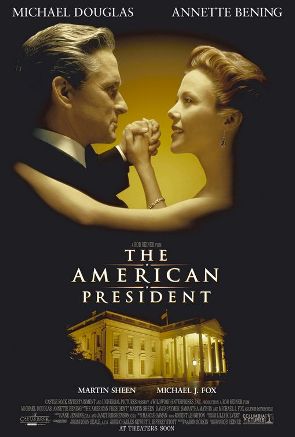
Shattered Politics #56: The American President (dir by Rob Reiner)


The_American_President_(movie_poster)

Way back in October, around the same time that I first decided that I would do a series of reviews of political films and that I would call it Lisa Gets Preachy (subsequently changed to Shattered Politics), I noticed that the 1995 film The American President was scheduled to be shown on TVLand.

“Hey,” I said, “I’ve definitely got to watch and review that!”

So, I set the DVR and I recorded The American President.

And then, I just left it there.

You have to understand that it’s rare that I ever leave anything unwatched on my DVR.  Usually, within an hour of recording a program, I’ll be watching it.  I have even been known to go so far as to make out very long lists of everything that I have on the DVR, just so I can make check them off after I’ve watched.  As a general rule, I am way too obsessive compulsive to just leave anything sitting around.

But, for whatever reason, I could never work up any enthusiasm for the prospect of actually watching The American President.  I knew that, eventually, I would have to watch it so that I could review it.  Unlike those folks criticizing American Sniper on the basis of the film’s trailer, I never criticize or praise a film unless I’ve actually watched it.  But  I just couldn’t get excited about The American President.

Can you guess why?  I’ll give you a hint.  It’s two words.  The first starts with A.  The second starts with S.

If you guessed Aaron Sorkin, then you are correct!  Yes, I do know that Sorkin has a lot of admirers.  And, even more importantly, I know that it’s dangerous to cross some of those admirers.  (I can still remember Ryan Adams and Sasha Stone insanely blocking anyone who dared to criticize the underwritten female characters in Sorkin’s script for The Social Network.)

But what can I say?  As a writer, Aaron Sorkin bothers me.  And since Sorkin is such an overpraised and powerful voice, he’s that rare scriptwriter who can actually claim auteur status.  The Social Network, for instance, was not a David Fincher film.  It was an Aaron Sorkin film, through and through.

And, after having to deal with three seasons of the Newroom and countless Aaron Sorkin-penned op-eds about why nobody should be allowed to criticize Aaron Sorkin, I’ve reached the point where dealing with all of Aaron Sorkin’s signature quirks is a bit like listening to the drill while strapped into a dentist’s chair.  I am weary of pompous and egotistical male heroes who answer every question with a sermon.  I am tired to endless scenes of male bonding.  I have had enough with the quippy, quickly-delivered dialogue, all recited as characters walk down an endless hallways.  I have no more sympathy for Sorkin’s nostalgic idealism or his condescending, rich, white dude version of liberalism.

Most of all, I’m sick of people making excuses for an acclaimed, award-winning, highly-paid screenwriter who is apparently incapable of writing strong female characters.  I’m tired of pretending that it doesn’t matter that Aaron Sorkin is apparently incapable of viewing female characters as being anything other than potential love interests or silly distractions who need to be told to go stand in a corner while the menfolk solve all the problems of the world.

Fortunately, as a result of The Newsroom, quite a few critics are finally starting to admit what they always knew to be the truth.  Aaron Sorkin is not the messiah.  Instead, he’s a somewhat talented writer who doesn’t understand (or, in my opinion, particularly like) women.  At his best, he’s occasionally entertaining.  At his worst, he’s pompous, didactic, and preachy.

And, of course, Aaron Sorkin is the man who wrote The American President.

So, The American President just sat there until a few days ago when I sighed to myself and said, “Okay, let’s watch this thing.”  As I watched it, I promised myself that I would try to see past the fact that it was an Aaron Sorkin-penned film and just try to judge the film on its merits.

But here’s the thing.  It’s nearly impossible to separate one’s opinion of Sorkin from The American President.  If you didn’t know that Sorkin had written The American President, you’d guess it after hearing the first few lines of dialogue.  The film, itself, was directed by Rob Reiner but it’s not as if Reiner is the most interesting of directors.  (What’s odd is that Reiner’s first films — This Is Spinal Tap, The Princess Bride, Stand By Me — are all so quirky and interesting and are still so watchable decades after first being released that you have to wonder how Reiner eventually became the man who directed The Bucket List.)  In short, The American President is totally an Aaron Sorkin film.

President Andrew Shepherd (Michael Douglas) is a liberal Democrat who, as he prepares to run for a second term, has a 63% approval rating.  However, when Shepherd decides to push through a gun control bill, he finds that approval rating threatened.  And then, when he listens to environmental lobbyist Sydney Wade (Annette Bening) and tries to push through legislation to reduce carbon emissions, his approval rating is again threatened.  And then, to top it all off, he starts dating Sydney.  It turns out that Sydney has protested American policy in the past.  And, since this is an Aaron Sorkin film, everyone outside of the Northeast is scandalized that President Shepherd is having premarital sex in the White House.

And, to top it all off, there’s an evil Republican named Bob Rumson (Richard Dreyfuss) who wants to be President and is willing to use the President’s relationship with Sydney to further his own evil Republican ambitions.

But, ultimately, it’s not just those evil Republicans who make it difficult for Sydney and the President to have a relationship.  It’s also the fact that the President agrees to a watered down crime bill and that he does not hold up his end of the bargain when it comes to reducing carbon emissions.

“You’ve lost my vote!” Sydney tells him.

But — fear not!  There’s still time for President Shepherd to give a speech that will be so good and so brilliant that it will, within a matter of minutes, totally change every aspect of American culture and save the day.  How do we know it’s a great speech?  Because it was written by Aaron Sorkin!

Actually, I’m being too hard on the film and I’ll be the first admit that it’s because I’m personally not a huge fan of Aaron Sorkin’s.  But, to be honest, The American President is Aaron Sorkin-lite.  This film was written before the West Wing, before the Social Network, before that Studio Whatever show, and before The Newsroom.  In short, it was written before he became THE Aaron Sorkin and, as such, it’s actually a lot less preachy than some of his other work.  It’s true that, much like The Newsroom, The American President is definitely Sorkin’s fantasy of how things should work but at least you don’t have to deal with Jeff Daniels throwing stuff or Emily Mortimer not knowing how to properly forward an email.

Instead, it’s a film that will probably be enjoyed by those who share its politics.  (And, make no mistake, The American President is more interested in politics than it is in the love story between Andrew and Sydney.)  Michael Douglas does well in the role of the President.  Meanwhile, Annette Bening is so likable and natural as Sydney that it almost make up for the fact that she’s yet another Sorkin woman whose existence is largely defined by looking up to her man while inspiring him to do the right thing and forgiving him when he doesn’t.  Personally, I would have been happy if the film had ended with Sydney telling the President, “Thanks for finally doing the right thing but I have a life of my own to lead.”

But that wouldn’t be the Sorkin way.